Rail veterans over 60 don’t book like everyone else. They don’t start with a departure time or a pretty route map. They start with the small, unglamorous stuff, like a dropdown, a birthday, or a room on the right level of the train. Those details quietly decide what the whole trip costs and how it feels.
Some of the perks below vanish if you skip a single checkbox. One depends on a birthday that arrives earlier than you’d expect. And one has nothing to do with money at all, yet it’s the reason people who try it keep saying they should have gone sooner. Here’s what the fine print and the rulebooks actually say.
#18 – The Two-Second Checkbox That Quietly Trims Your Fare
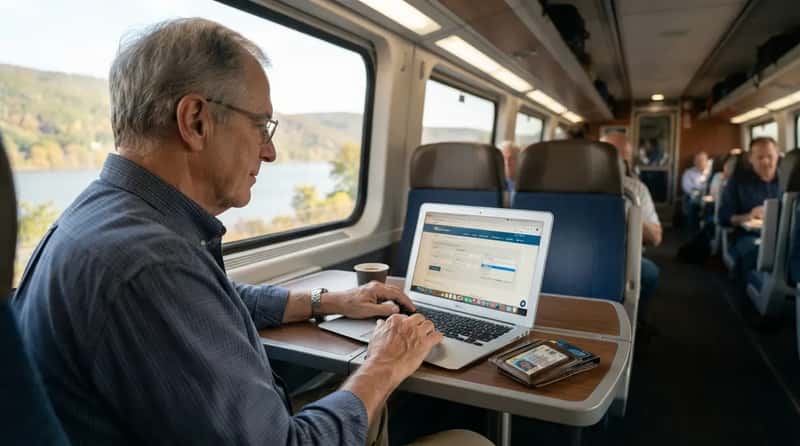
The cheapest move on Amtrak’s website is a dropdown most people skip. Amtrak gives travelers 65 and older 10% off the lowest available rail fare on most trains. But you have to select “Senior” as your traveler type or the discount never shows up. Once you do, it applies automatically and appears on the purchase confirmation page.
Veterans set this before they even look at departure times. Amtrak requires valid proof of age when you buy the ticket and again on board the train, so the photo ID goes in the wallet first. Skip the checkbox and you pay full price without ever knowing.
But that’s nothing compared to the state that lowers the age even further (#17)…
#17 – The California Route That Sets Its Own Senior Age
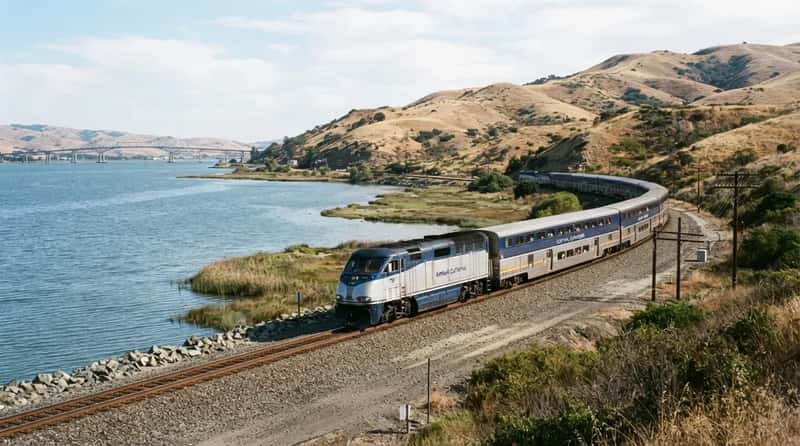
Age 65 isn’t the magic number everywhere in America. On the Capitol Corridor, a 168-mile route in Northern California, adults 62 and older are eligible for a 15% discount. That’s a bigger cut, three years earlier, than the national Amtrak deal. Regional services often write their own rules.
Experienced riders check the route-specific page before assuming the standard senior rate is their best option. Sometimes the local offer wins. Sometimes it doesn’t stack with anything else, and Amtrak notes that discounts may not be combinable with other offers. The smart move is to read both and compare.
Quick Compare
- Standard Amtrak senior fare: age 65+, 10% off the lowest available rail fare
- Capitol Corridor: age 62+, 15% off
- The takeaway: a younger age and a deeper cut, but only on this one route
Next up is a route where the discount kicks in at 60, and most people never notice (#16)…
#16 – The Border-Crossing Train That Treats You as a Senior at 60
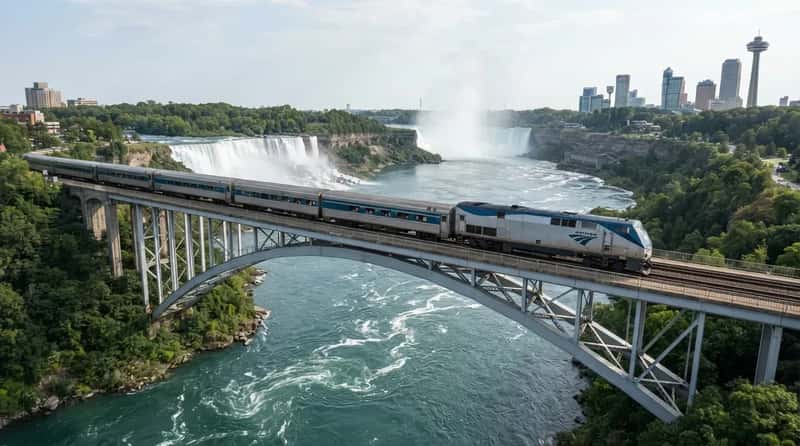
Turn 60 and one kind of Amtrak trip suddenly counts you as a senior. On cross-border services operated jointly by Amtrak and VIA Rail Canada, the 10% Senior discount applies to travelers 60 and over. That’s five years earlier than the standard Amtrak cutoff. The Maple Leaf is one example of this kind of service.
Anyone in their early 60s who has dreamed of seeing Canada by rail should book this first. It’s a rare window where the age rules work in your favor. Bring the right ID for the border, and check current entry requirements before you go.
Across the Atlantic, there’s a card you can buy before you’re even eligible (#15)…
#15 – The Railcard You Can Buy Before the Birthday
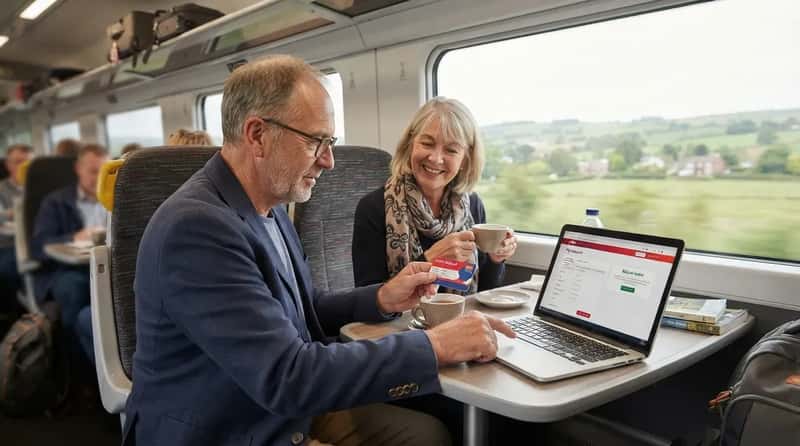
In Britain, the smartest 60th birthday move is made early. The Senior Railcard is an annual card for people 60 and over that discounts certain rail tickets in Britain. You can buy it up to two weeks before your 60th birthday if you purchase online, and it only becomes valid from your birthday onward.
Here’s the catch: you can’t buy one in advance from a rail station. Once you have it, you save one-third on Standard and First Class Anytime, Off-Peak and Advance fares. Visitors should read the terms closely. LNER says the card is for people aged 60 and over who live in the UK, while another retailer says international visitors can buy one too. Check before you pay.
But the real math shows up when you compare one-year and three-year cards (#14)…
#14 – The Three-Year Card That Beats Buying Three Separate Ones
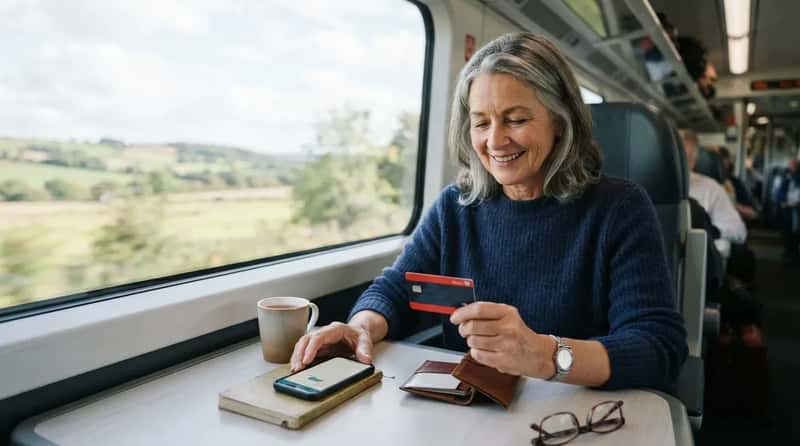
Most people don’t realize the longer card is the better deal. A Senior Railcard costs £35 for one year or £80 for three. The three-year option saves £25 compared with buying three individual cards. It also means no renewing every year.
Frequent riders book it first because the savings begin on the first trip. The three-year card is only available online, and prices change, so confirm the figure at checkout. Occasional travelers might reasonably start with the one-year version.
Then there’s the mistake that catches even careful travelers with the digital version (#13)…
#13 – The Photo and ID Sorted Before You Reach the Platform

A digital Railcard sounds effortless until the setup goes wrong. It lives on your phone, in the Railcards section of your Trainline account. You need a passport-style photo saved to your device, plus a valid passport or driving licence as proof of eligibility. Get that done at home, not on a chilly platform with a train pulling in.
And here’s the twist. Once a digital Railcard has been downloaded, it can no longer be refunded. You also need to carry the device it’s stored on to show an inspector if asked, so a dead phone battery becomes a real problem. On the plus side, the card can still be used with tickets bought elsewhere.
The next item is about timing, and it changes when you should travel (#12)…
#12 – The Off-Peak Timing That Makes the Discount Work Harder
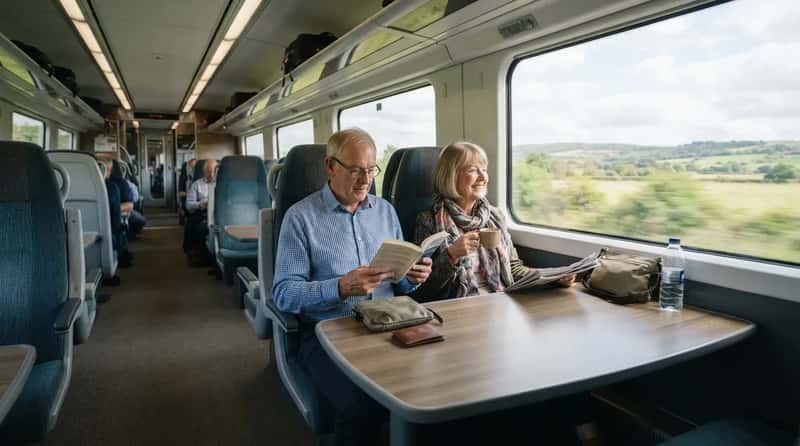
A discount is only useful when you can actually use it. The Senior Railcard works for discounted fares at off-peak times, weekends, and public holidays. The only restriction is weekday morning peak services on journeys made wholly within the London and South East Railcard area. Outside that, it works almost any time.
Retirees have the one advantage commuters don’t: a flexible calendar. That’s why experienced travelers book the midday or weekend train first. The seats tend to be less crowded, and the prices are friendlier.
Now for a debate that splits seasoned travelers right down the middle (#11)…
#11 – First Class at the Same Discount: Smart Upgrade or Waste?
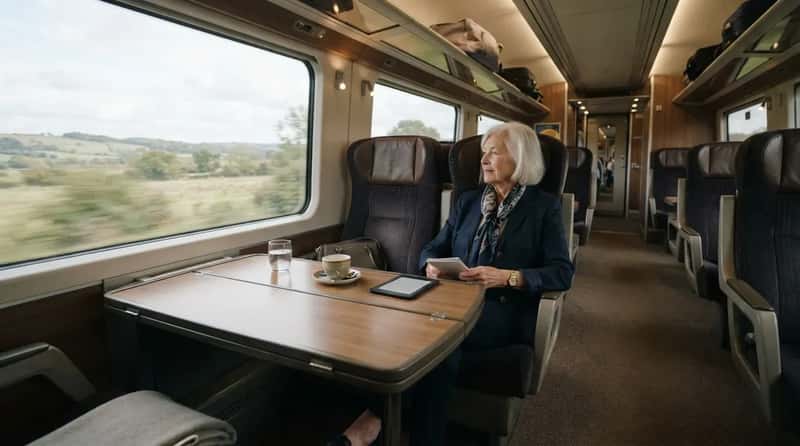
Here’s a fact many people miss. The Senior Railcard gives the same one-third discount on First Class as on Standard. That covers First Class Advance and Anytime fares. The discount doesn’t shrink just because the seat is nicer.
This is where opinions clash. Some travelers argue First Class is wasted money on a short hop, since the extra cost never pays back. Others say the extra space is the only thing that makes a long day of travel bearable. The honest answer depends on the fare gap on your specific route, so compare both before booking.
At a Glance
- Who it’s for: travelers aged 60 and over
- The saving: one-third off eligible Standard and First Class fares
- Cost: £35 for one year or £80 for three
- When it works: off-peak, weekends and public holidays
- Buy it early: online, up to two weeks before your 60th birthday
Back in the U.S., the next pick involves stairs, and it’s the one people regret most (#10)…
#10 – The Lower-Level Room That Skips the Stairs
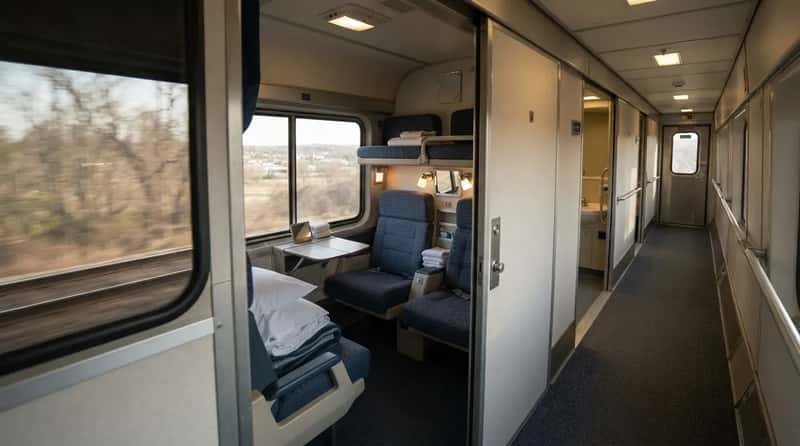
Many first-time sleeper riders learn this one the hard way. Superliner roomettes are on both the upper and lower levels. A lower-level roomette may be a better option if you can’t use the stairs or prefer not to, and your attendant can deliver your food.
One independent booking guide names booking an upper-level roomette with mobility issues as a common mistake, describing the stairs as narrow and steep. That’s a third-party view, not Amtrak’s. It still lines up with common sense, especially on a moving train.
Then comes a choice that looks like a bargain and often isn’t (#9)…
#9 – The Bedroom That Makes the Roomette Look Like a False Economy
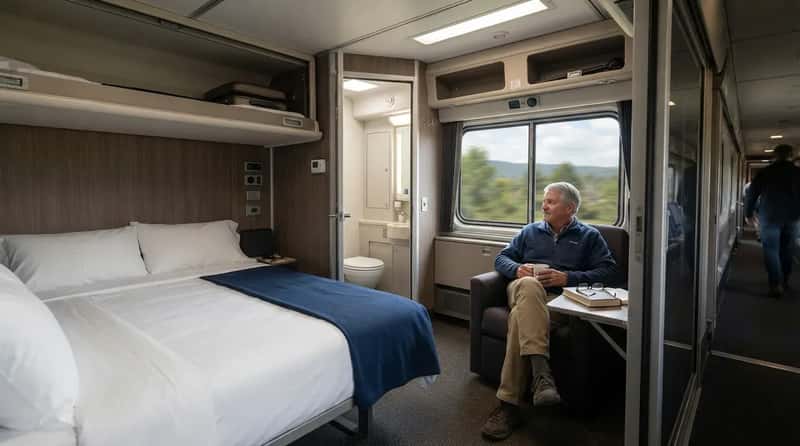
Bigger really does change the trip. Amtrak says a Bedroom provides twice the space of a Roomette. Each one is 6’6″ by 7’6″. Bedrooms also have a private in-room toilet, which roomettes don’t.
The counterargument is fair. Traveling solo in a roomette is easier than it sounds. You don’t need to climb into the upper bunk, because the lower seats convert to a bed and the upper bunk can hold luggage. Still, some riders call the roomette a false economy on a two-night trip.
But for some travelers, there’s a room designed around entirely different needs (#8)…
#8 – The Accessible Bedroom Built for a Wheelchair
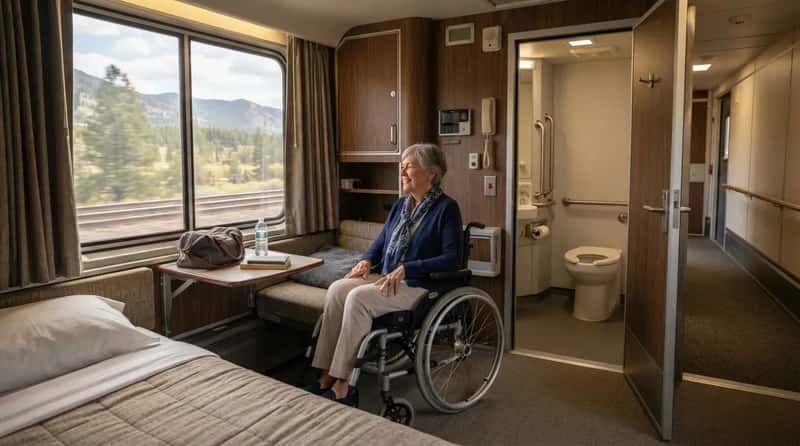
This room is designed for a completely different kind of trip. Accessible Bedrooms are on the train’s entry level and have ample space for a wheelchair. The bathroom setup varies by train. Viewliner rooms have a private restroom with a shower, while Superliner rooms have a private restroom with sink and toilet and access to shared showers.
Here’s the part people overlook. Once onboard, most wheelchair access is limited to the boarding area and the passenger’s seating or private room areas. Depending on the train’s equipment, there may be options to move to a meal service car at a station stop.
And the next one matters just as much if a four-legged companion is coming along (#7)…
#7 – The Service Animal Detail Settled at Booking
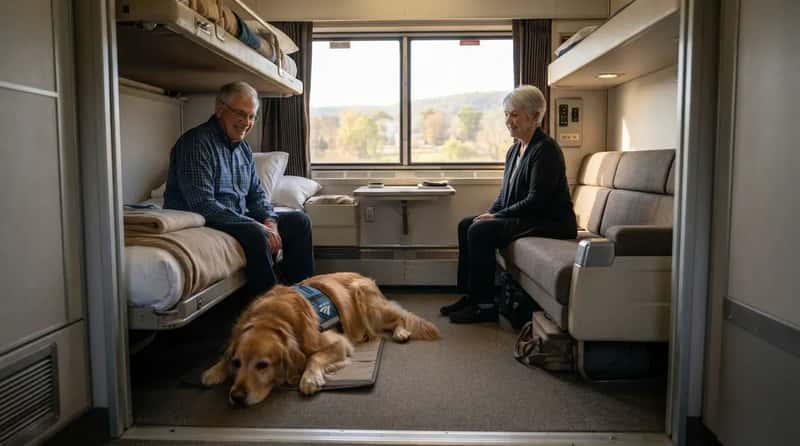
A service animal changes which room makes sense. Include your animal in the reservation by completing the booking questionnaire. Amtrak’s line, 1-800-USA-RAIL, handles accommodations such as accessible seating space for large service animals. An accessible room’s larger floor space suits service animals better than a standard roomette.
Station stops need a plan too. The animal must stay on the floor and can’t sit on seats or beds. Tell the conductor when boarding if you plan to walk your animal during station stops, and your sleeping car attendant can help coordinate those stops with the conductor.
Now for the reason veterans reserve sleepers so early, and it isn’t just crowds (#6)…
#6 – The Sleeper Booked Early, Because the Senior Discount Won’t Cover It
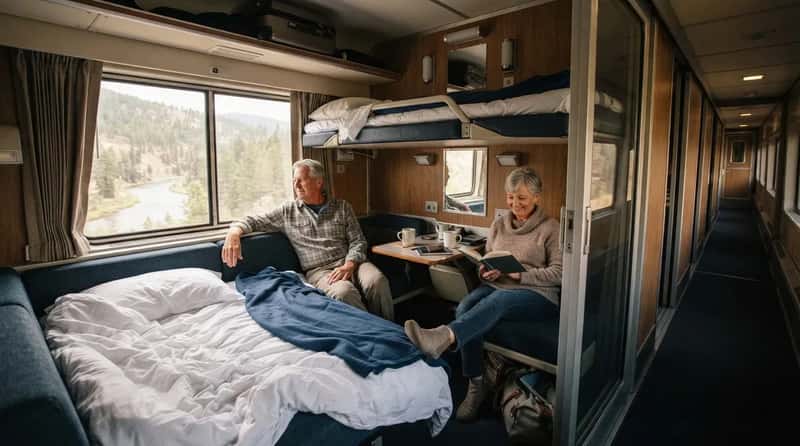
Here’s the truth about sleeper pricing. Amtrak says a private room fare depends on when you travel, where you’re going, and how many people are with you. It’s often best to book early to secure the best fare. And Amtrak’s senior discount page says the discount doesn’t apply to sleeping accommodation charges.
One third-party guide claims the discount does cover sleeper cars. Trust Amtrak’s own page and confirm at checkout. The same independent guide calls waiting too long the number one mistake, because sleeper cabins are limited and priced dynamically.
But what the room includes might change how you compare prices (#5)…
#5 – The Room That Comes With Dinner Already Paid For
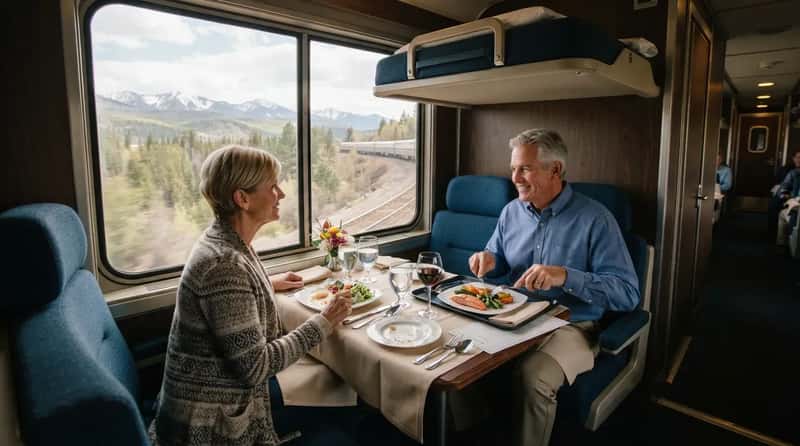
Coach and sleeper prices aren’t an apples-to-apples comparison. Onboard meals are included when you travel in a private room. That means breakfast, lunch and dinner on a long route are already covered. Add that up before deciding a room is too expensive.
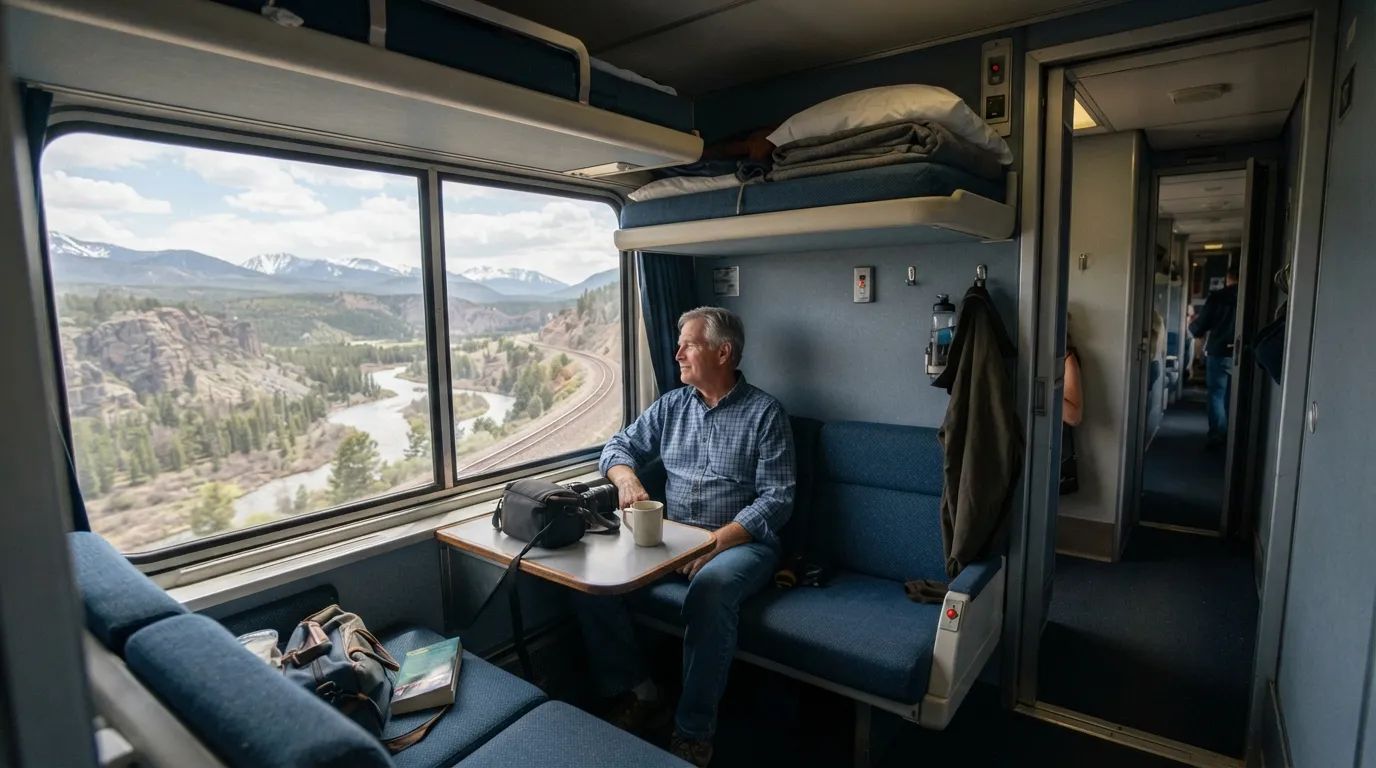
The roomette itself is simple. It has two comfortable seats by day that become upper and lower beds at night. Each room has a big picture window and access to shared restroom and shower facilities. For a multi-day trip, the value math looks very different once meals are in the picture.
And the perks don’t stop when you step into a big station (#4)…
#4 – The Station Lounge Most Coach Passengers Never See
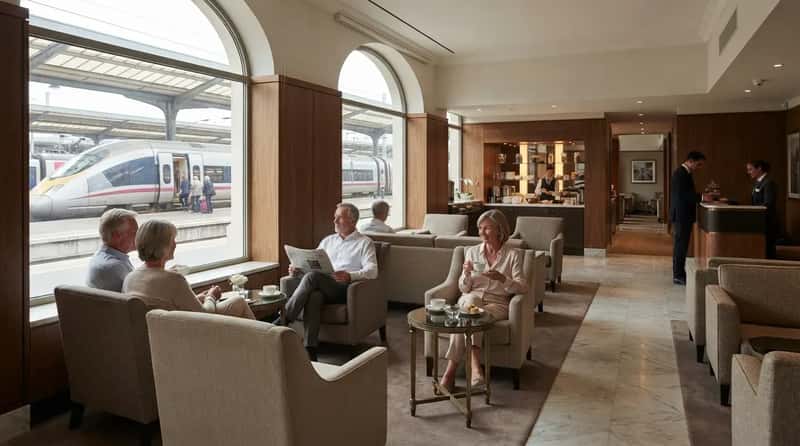
Some of the best perks happen before you even board. All customers in private rooms receive complimentary lounge access at major stations, plus priority boarding. The lounges are for private-room travelers, not everyone on the train.
They’re more useful than they sound. Lounges offer comfortable seating, refreshments and a dedicated agent before your trip, when making connections and upon arrival. On a long layover, that beats a crowded waiting area. Priority boarding also helps anyone with heavy bags or a slower pace.
Worth Knowing
- Who gets in: private-room customers only
- Where: major stations, not every stop
- What you get: comfortable seating, refreshments and a dedicated agent
- Bonus: priority boarding when it’s time to head for the train
Not everyone wants a bed, though, and the daytime pick might surprise you (#3)…
#3 – The Business Class Seat for the Long Daytime Haul
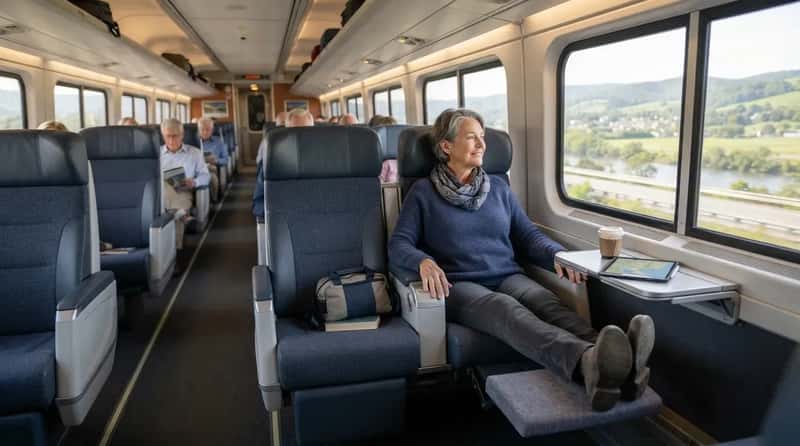
Not every trip needs a private room. For day travel, Business Class offers wider seats and more legroom than Coach. That’s one independent guide’s description, and Amtrak’s own senior page also highlights wide seats and extra legroom on long-distance trains.
Here’s the opinion that splits riders. Some say Business Class is a poor buy on a short hop, where the extra cost buys very little. Others say it’s the best value on a six-hour daytime run. The gap between fares on your route usually settles the argument.
But the second-strongest pick has nothing to do with the seat at all (#2)…
#2 – The Attendant Who Makes Your Bed While You Eat Breakfast
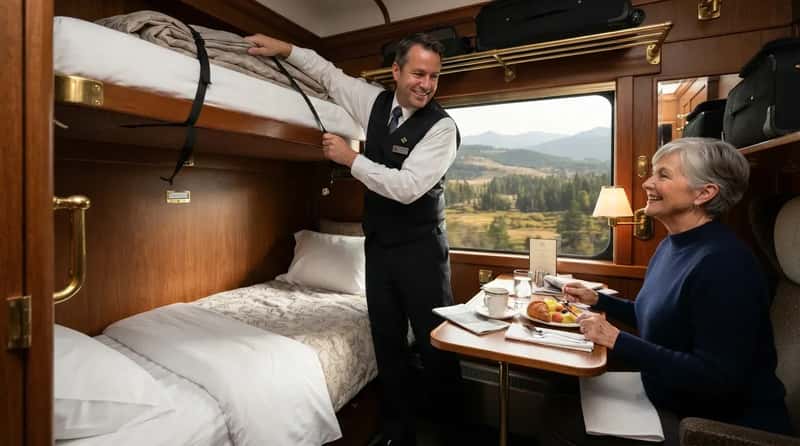
This is the perk people mention years later. A dedicated First Class attendant provides turndown service, assists with meals and helps with luggage. It’s personal help, built into the room.
One reviewer’s account shows how it works. The attendant welcomed them shortly after boarding and took their dinner orders. He set up the beds both nights and put them away during breakfast. For anyone with a sore back or knees, that’s the difference between real rest and wrestling with a folding bunk.
And the very first booking veterans make is the one everyone else keeps postponing (#1)…
#1 – The Long-Distance Roomette on the Trip You Keep Putting Off
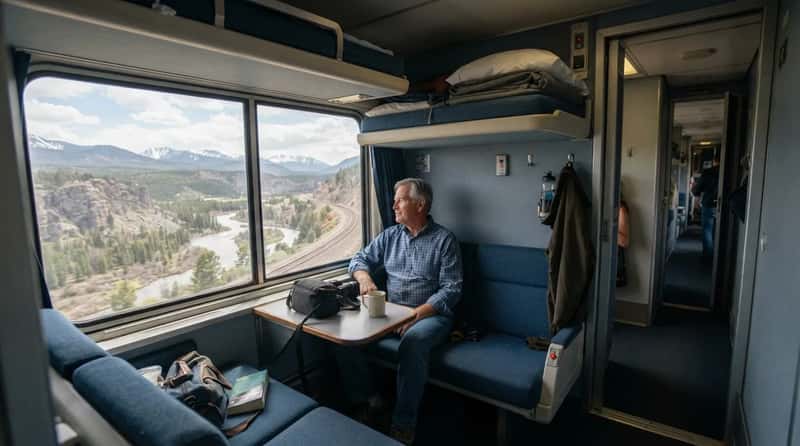
The truth is, the first thing seasoned travelers book is the trip itself. Roomettes are available on all long-distance routes, including the Empire Builder, California Zephyr and Southwest Chief. Every room has a big picture window. By day it’s a seat. By night it’s a bed.
Amtrak itself makes the case plainly. Airfares are high and airports are crowded. Driving long distances can be stressful and costly. Every other item on this list only helps if you actually go, and the trip you keep saying you’ll take next year rarely gets easier to fit in.
Fast Facts
- Where: roomettes are offered on all long-distance routes
- Famous picks: Empire Builder, California Zephyr, Southwest Chief
- By day: two comfortable seats facing a big picture window
- By night: upper and lower beds
- Included: onboard meals for private-room travelers
The real secret isn’t one perk. It’s the order. Veterans select “Senior” before comparing fares, check the age rules on every route, and buy railcards before the birthday. They lock in the right room, stairs or no stairs, well ahead of time.
They also know the senior discount doesn’t cover sleeping accommodation charges, so early booking becomes the savings tool. The meals, lounges and attendant come bundled with a private room, and they’re easy to overlook until you add them up. Which of these would you have booked first, and which one surprised you?