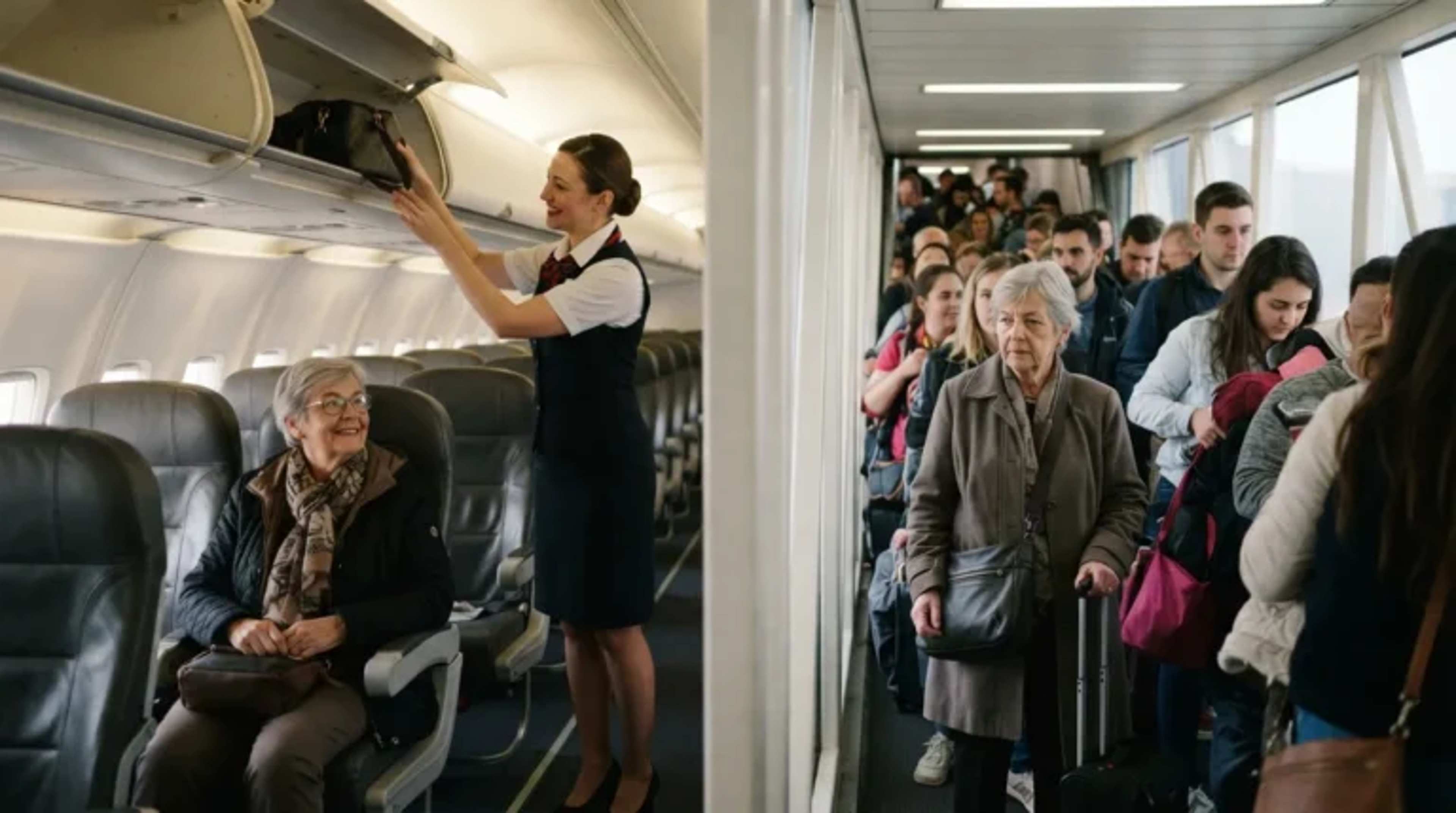
Most people assume the special treatment ends the second a gate agent finishes calling first class. But for travelers over 60, a whole second layer of service is running quietly in the background, one that never gets its own announcement. It’s not favoritism, and it’s not luck. It’s a mix of federal law, airline policy, and gate agents choosing to do more than the script requires.
Some of these accommodations are legal rights hiding in plain sight, disguised as small kindnesses. Others are one-sentence requests that unlock benefits most flyers never even think to ask for. Here’s what’s actually happening at the gate that the loudspeaker never mentions.
#18 – They Roll Out a Free Wheelchair Before You Even Ask Twice
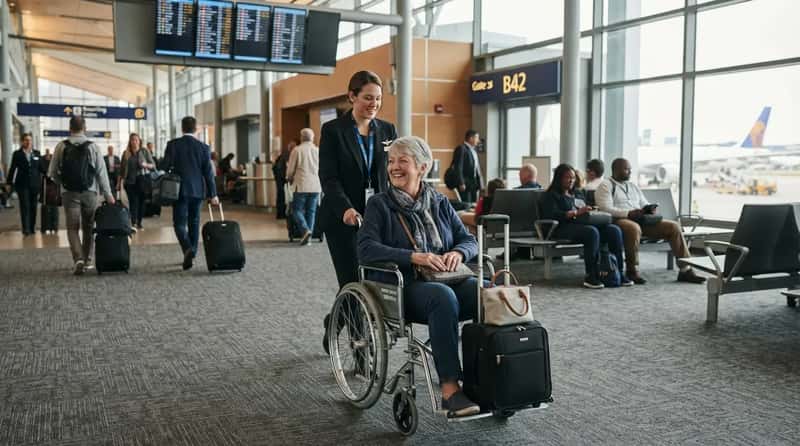
Here’s what most people over 60 miss: you don’t need to own a wheelchair or use one at home to request this service. Most major airports offer wheelchairs that carry passengers from curbside drop-off all the way to the gate, and it costs nothing. Gate agents and ramp staff coordinate this the moment a request comes in, whether it was called in ahead of time or asked for at the counter.
The surprising part is how flexible the service actually is. You can request it for one leg of a trip and skip it on the way home if you’re feeling stronger, and nobody will question the change. Airport staff have seen every version of this request, so there’s no need to prove anything to get the help rolling.
#17 – They’ll Let You Keep Your Shoes On, But There’s a Catch Nobody Explains
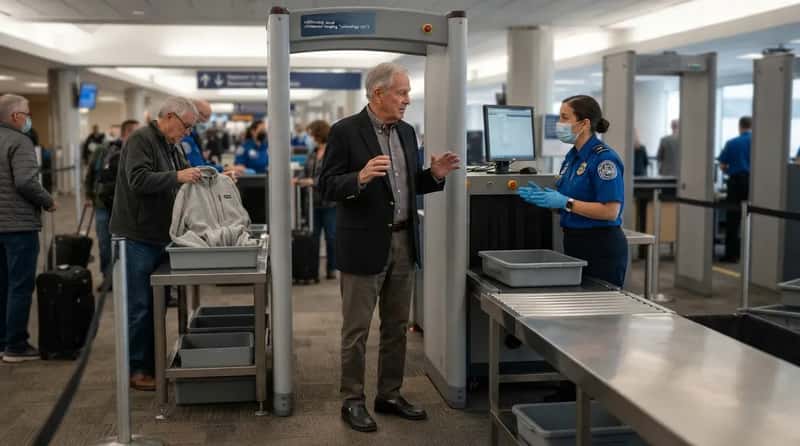
This one throws off frequent flyers who assume TSA rules are identical for everyone. Some travelers can leave their shoes on, though light jackets still have to come off for Advanced Imaging Technology screening, a distinction most people over 60 never hear explained clearly. Gate and security staff quietly walk older travelers through this exact nuance so nobody gets caught off guard mid-line.
What’s often left out is that this shoe courtesy is specifically for passengers 75 and older, not everyone over 60. Plenty of travelers in their sixties don’t qualify yet, which is exactly why agents rarely announce it out loud. They’d rather explain it one traveler at a time than create confusion in a packed checkpoint line.
#16 – Pre-Boarding Exists, But They Won’t Say It Out Loud Unless You Ask First
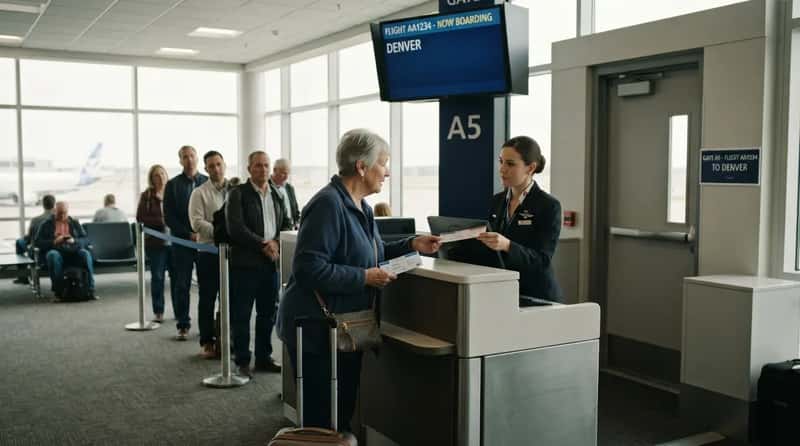
This might be the biggest blind spot in senior travel. Airlines aren’t required to make a general pre-boarding announcement, even though they’re encouraged to offer it alongside other special boarding groups. In practice, that means the option can come and go without a single word over the speaker.
Gate agents will honor the request instantly if you simply walk up and say you need extra time, but they’re not going to volunteer it to a quiet line of passengers. Carriers are required to offer pre-boarding to anyone who self-identifies at the gate as needing more time or help boarding, stowing equipment, or getting seated. The catch nobody explains is right there in that phrase: self-identify means you actually have to say something.
#15 – They Check Your Walker or Scooter Free, and It Doesn’t Touch Your Baggage Limit
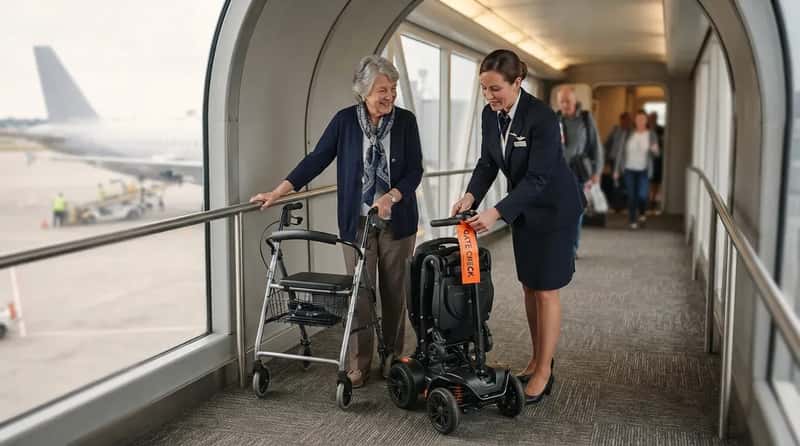
This is one of the more financially useful secrets on this list. Under the Air Carrier Access Act, U.S. airlines must let passengers check wheelchairs, scooters, walkers, and other medical devices at the gate for free, and it never counts as one of your checked bags. Gate agents process this constantly, but it rarely gets announced because it’s handled one traveler at a time.
What catches people off guard is how seamless the handoff feels. You use your own equipment right up to the jet bridge door, then it’s tagged and waiting for you the second you land. No fee, no separate line, no extra paperwork beyond a quick tag at the gate.
Fast Facts
- Wheelchairs, scooters, and walkers check for free under the Air Carrier Access Act
- Checked medical equipment never counts toward your baggage limit
- You keep using your own device until the jet bridge door
- Equipment is tagged and ready for pickup the moment you land
#14 – They Reserve Your Overhead Bin Space Before General Boarding Even Starts
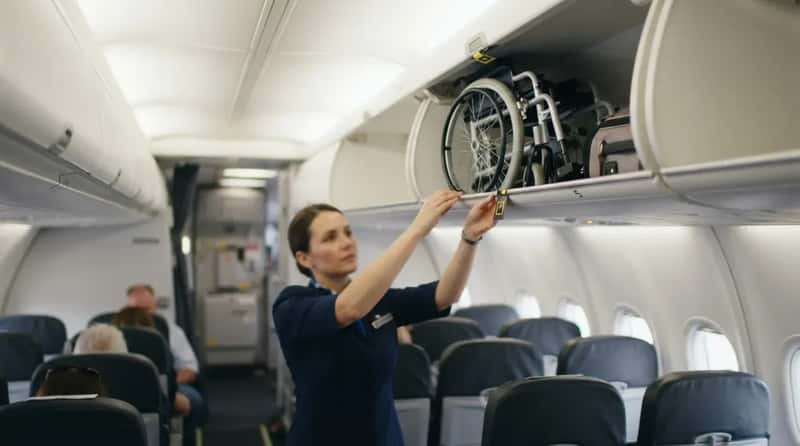
Most passengers assume overhead space is first-come, first-served. For travelers who pre-board with a mobility device, that’s not entirely true. Collapsible wheelchairs and other assistive devices get priority for in-cabin storage over other passengers’ bags when the traveler chooses to pre-board, a detail gate agents enforce quietly rather than broadcast.
This matters more than people realize on full flights, where bins disappear within minutes of general boarding. By the time the announcement calls “Group 4,” that protected space is already spoken for. It’s a small procedural rule with a very real practical payoff for anyone who can’t easily lift a bag overhead.
#13 – One Quiet Sentence at the Counter Can Bump You to a Better Seat for Free
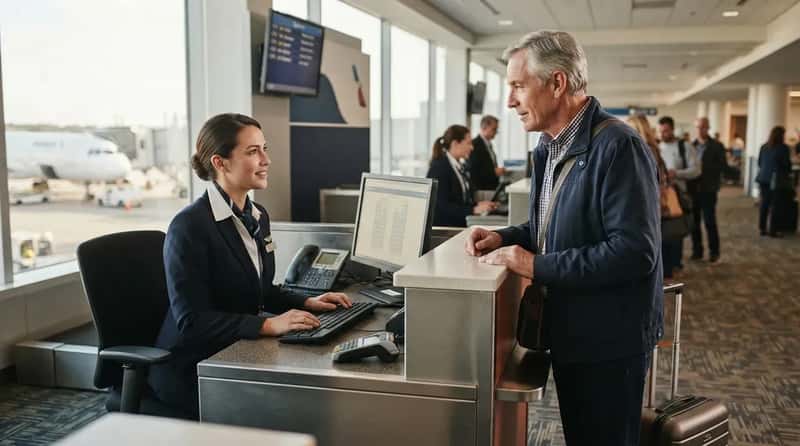
This is the request almost nobody makes, and it’s costing travelers money they didn’t need to spend. Asking about mobility needs directly at the counter, instead of through an app, is where real flexibility lives, because that face-to-face moment is where agent discretion actually kicks in.
A calm, specific request often works better than a formal one. Travelers who mention needing a bit more room to move safely sometimes get moved closer to the front for free, in a seat that would otherwise carry a $40 upgrade charge. Gate agents have that discretion, but they’re not going to offer it unprompted to every passenger in line.
#12 – They Wheel Out a Special Chair That Carries You Straight to Your Seat
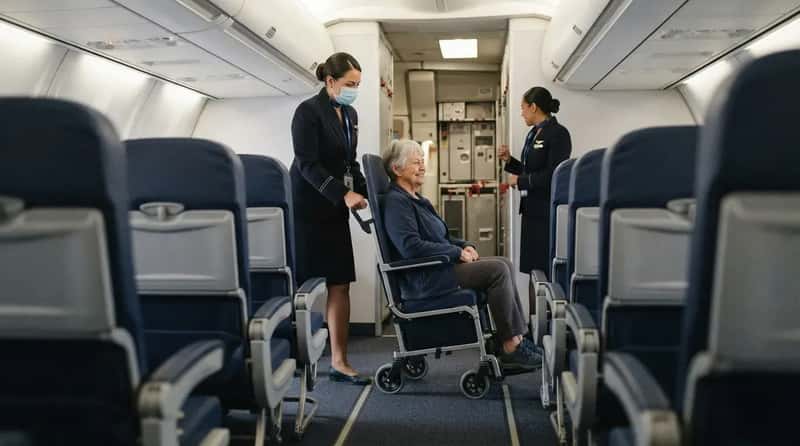
This piece of equipment surprises a lot of first-time senior flyers because nobody explains it in advance. Staff arrange a narrow aisle chair that safely transports a passenger from the gate onto the aircraft and directly into their seat, usually before general boarding even begins.
It’s a small, specialized chair built to fit down a narrow airplane aisle, something a regular wheelchair simply can’t do. Gate agents time this transfer to happen with minimal onlookers, typically just before the main cabin door opens to the crowd. It’s efficient, dignified, and almost never mentioned over the loudspeaker.
#11 – They Offer a Private Pat-Down Instead of Forcing You Into the Scanner
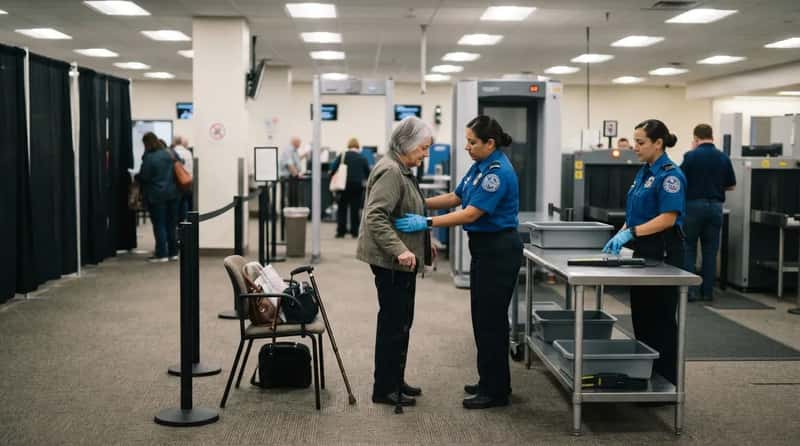
Most people assume everyone goes through the same body scanner, but that’s not accurate for travelers with mobility limitations. Passengers who can’t walk through the screening device without assistance are offered a pat-down search instead, and it’s arranged quietly rather than announced to the whole checkpoint line.
The process is more accommodating than most people expect. Security staff will assist with a modified screening, and a passenger may be offered a pat-down or another alternative process instead of the standard scan. Gate and security staff coordinate this together so nobody is left standing awkwardly while it gets sorted out.
#10 – The Help Doesn’t Stop When the Plane Lands – They Walk You to Your Bags
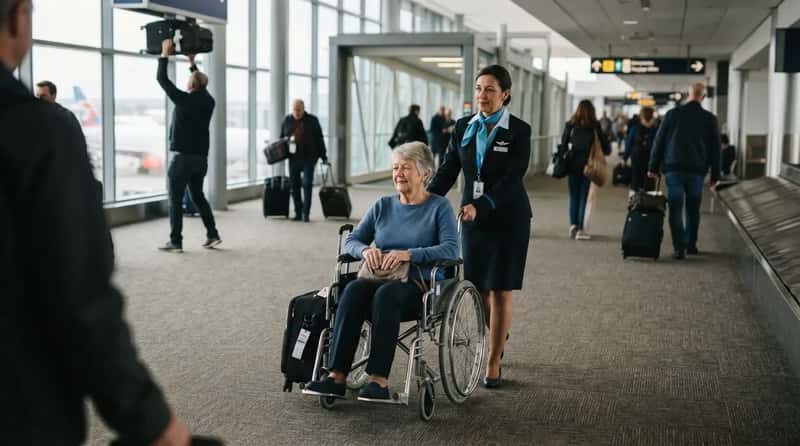
The assistance doesn’t end at the jet bridge, which surprises travelers who assume the service stops the moment the plane touches down. Wheelchair help is available on arrival to guide passengers to baggage claim and pickup areas, and staff coordinate this the moment the aircraft door opens, often before the rest of the cabin has even stood up.
For connecting passengers, the escort goes even further. Staff meet the traveler right at the aircraft door and walk them to baggage claim or their next gate. This end-to-end coverage rarely gets mentioned in any boarding announcement, yet it’s one of the most consistently used services in senior travel.
#9 – The Help Actually Starts at Check-In, Not at the Gate
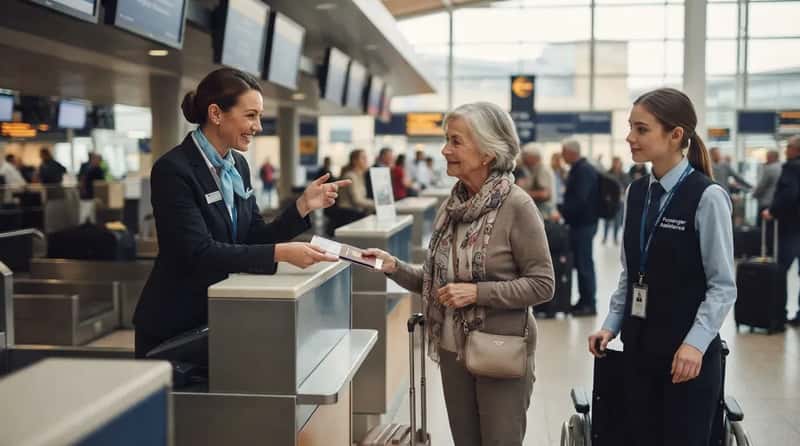
Many travelers think gate agents are the only ones involved, but the process actually begins much earlier. Guided help through the airport starts at check-in and continues through security, boarding, and the walk to the seat, handled as one continuous handoff between staff members rather than separate favors at each stop.
This removes a huge, invisible source of stress: not knowing who to ask next. Once a request is logged at check-in, it follows the traveler like a digital breadcrumb trail. Every staff member along the way already knows to look out for them, without a single word ever said publicly.
#8 – They Radio for an Electric Cart the Moment They See a Half-Mile Walk Ahead
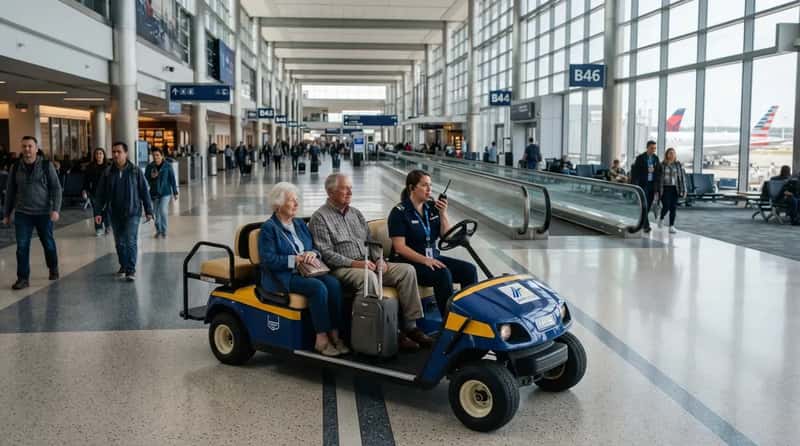
Massive terminals are one of the quiet dangers of modern air travel for older passengers, and airlines know it well. Some airlines provide electric carts depending on terminal size, dispatched by gate agents the moment they spot a long walk ahead on the boarding pass.
This isn’t a service most people think to request because it’s rarely advertised at check-in. Gate agents often flag it proactively for connecting flights in sprawling hub airports, where a “quick” transfer can secretly mean a twenty-minute walk. It’s one of the few accommodations that’s frequently offered rather than asked for.
Worth Knowing
- Some hub airports stretch well over a mile between connecting gates
- Cart availability depends on the specific terminal, not the airline as a whole
- Gate agents can radio ahead for a cart without any advance request from you
- Carts are most commonly used on tight connections in sprawling hub airports
#7 – A Delay Can Trigger Rebooking Priority and a Hotel Voucher You Never Knew Existed
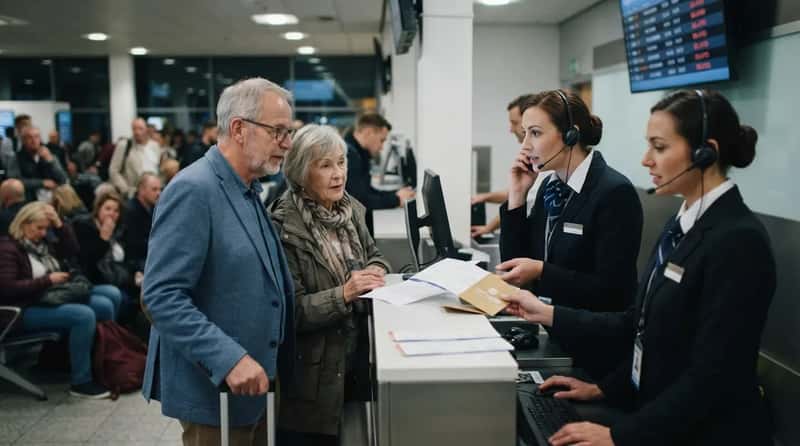
When flights fall apart, most passengers assume everyone waits in the same miserable line. That’s not how it’s supposed to work for travelers with documented medical needs. Federal rules require airlines to give these travelers priority during long delays and cancellations, including earlier rebooking, hotel vouchers for overnight delays, and help arranging meals or transportation.
Gate agents rarely announce this protection because it applies case by case, not to the whole terminal. These protections fall under the Air Carrier Access Act and DOT consumer rules, and invoking them usually just means calmly explaining the hardship a long delay would create. Most travelers over 60 have no idea this leverage even exists.
Quick Compare
- Standard delay: passengers wait in the general rebooking line with no priority
- Documented medical need: earlier rebooking priority under federal rules
- Standard delay: overnight hotel costs fall on the traveler
- Documented medical need: airlines may provide a hotel voucher and help with meals or transportation
#6 – They’ll Quietly Block You From the Exit Row, Even If You Ask Nicely
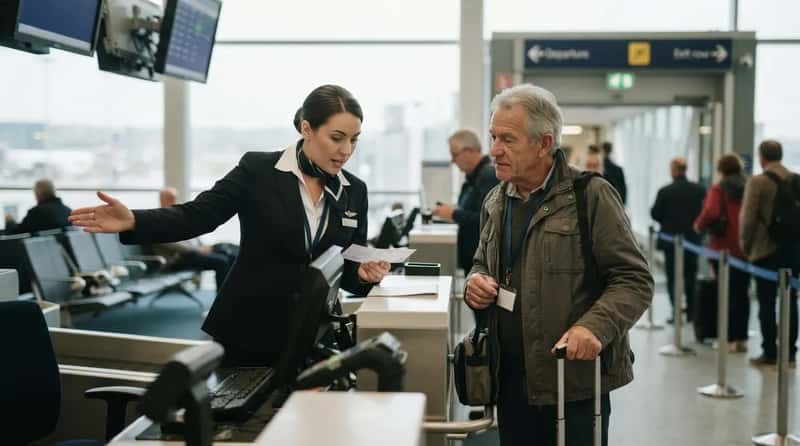
This is the accommodation that occasionally causes friction, and it’s rarely explained ahead of time. Gate agents are firm about it for safety reasons: passengers who pre-board due to a need for assistance are told plainly that they can’t sit in an exit row, no matter how much extra legroom the seat offers.
This isn’t a judgment call agents enjoy making, and it’s never personal. Exit row rules exist because passengers seated there may need to operate a heavy door in an emergency, and airlines take that seriously enough to reassign seats on the spot. It’s one of the few times a gate agent will say “no” firmly, even to a polite, well-meaning request.
#5 – They Flag Your Tight Connection and Have Someone Waiting Before You Land
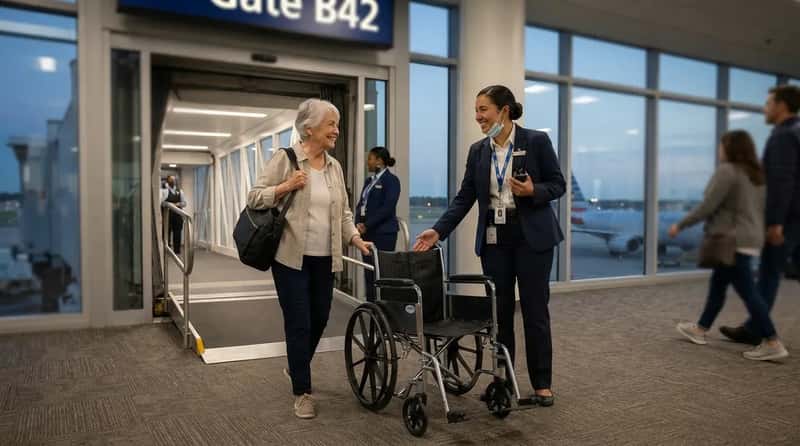
Nobody announces this over the intercom, but gate agents frequently notice when an older passenger’s layover is uncomfortably short. When that happens, staff quietly radio ahead so a wheelchair, cart, or escort is already waiting the moment the traveler steps off the jet bridge, instead of making them wait to be found.
The goal is to get someone to that gate before the door even opens, not after.
Common airport ground-crew practice
This small act of coordination can be the difference between making a connection and missing it entirely. It’s never guaranteed and never promised at booking, but experienced gate staff treat it as basic professional courtesy for travelers who clearly need the extra minutes.
#4 – Your Medication Sails Past the Liquid Limit Without a Second Look
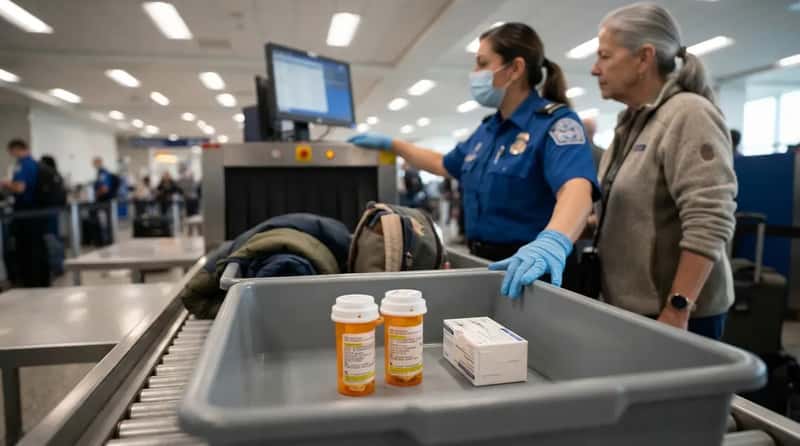
Most flyers over 60 don’t realize how much flexibility exists here, because it’s never spelled out at the gate. Prescription medications are exempt from the limits that apply to carry-on liquids, as long as the medicine stays in its original labeled container.
Gate agents and TSA officers handle this quietly rather than explain it to the whole line, which is exactly why so many travelers over-pack tiny travel bottles out of unnecessary caution. Travelers should simply notify the TSA officer of medical items like syringes, IV bags, or pumps they want to carry on. A short heads-up is usually all it takes.
#3 – They Give You a Private Safety Briefing If You Can’t Hear the Announcement
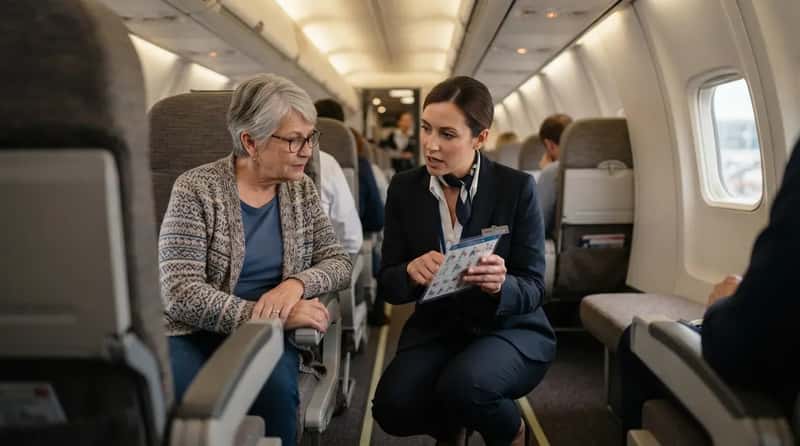
This one rarely gets attention because it happens one-on-one rather than over the speaker. Airline staff are trained to flag a team member if a passenger has vision or hearing limitations, so a proper safety briefing gets delivered quietly at the seat instead of shouted across the cabin.
This detail matters more than it seems. Even passengers who don’t need physical assistance are encouraged to mention if they’re deaf or hard of hearing, since it helps ensure they actually receive the safety briefing and important flight updates. It’s an easy thing to miss, and an easy thing to fix with one sentence.
#2 – Your Travel Companion Can Board With You, Even If Their Group Hasn’t Been Called
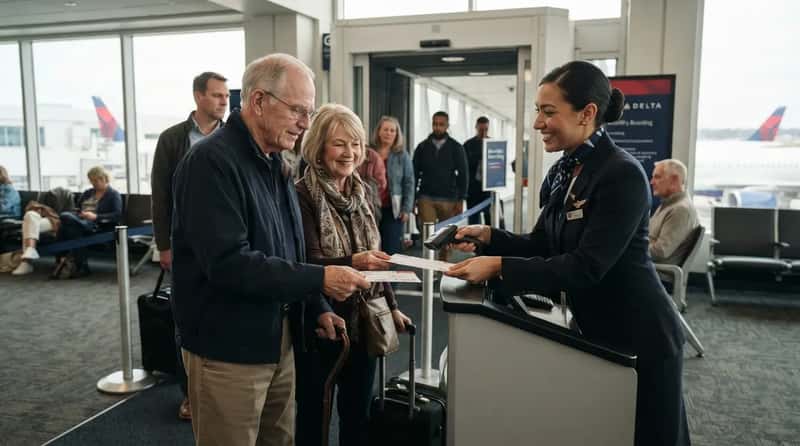
Traveling with a spouse, adult child, or friend adds a layer of comfort most older travelers rely on, and gate agents generally accommodate it without making a scene. When one traveler qualifies for pre-boarding due to mobility needs, staff will typically let one companion board alongside them, even if that companion’s group hasn’t been called yet.
This isn’t always guaranteed and can vary by airline or even by the individual agent, which is exactly why it’s never promised at check-in. Still, most gate staff understand that separating a nervous traveler from their support person defeats the entire purpose of pre-boarding. A simple, polite mention at the podium is usually enough to keep everyone together.
#1 – None of This Is a Favor – It’s a Legal Right Almost Nobody Cashes In
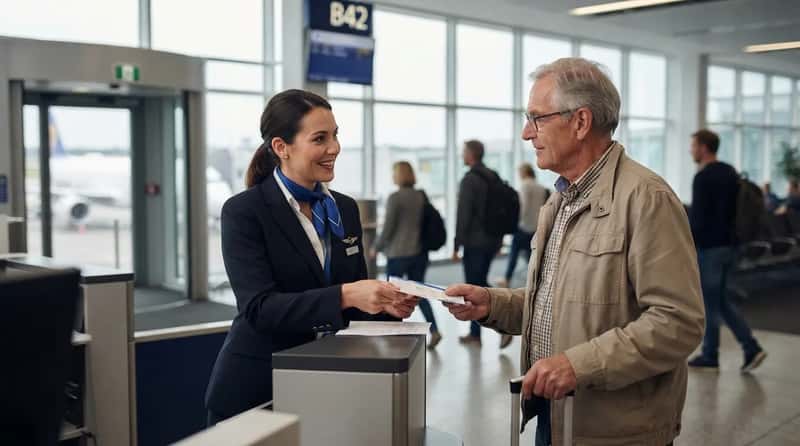
This is the detail that changes everything, and almost nobody hears it explained out loud. Airlines are required by law to give guided help through the airport to travelers who need it, and it isn’t a favor, it’s a service that starts at check-in and continues through security, boarding, and the walk to the seat.
Most travelers over 60 quietly accept help as a kindness, when it’s actually a federally protected right they’re entitled to ask for directly. Gate agents know this, which is why they rarely hesitate when someone simply states what they need. The politeness in the exchange is real, but the obligation behind it is legal, not optional.
At a Glance
- Guided airport help is required by law, not offered as a courtesy
- The Air Carrier Access Act protects device checking, boarding help, and seating accommodations
- Coverage runs from check-in through security, boarding, and the walk to your seat
- Almost every benefit on this list starts with the traveler simply asking
None of this gets announced over the loudspeaker because it isn’t meant to be a public performance. It’s meant to be handled quietly, one traveler at a time. Almost every accommodation on this list exists because a passenger asked, not because an agent offered first, and that one sentence is the whole trick.
If you’re flying with a parent, a grandparent, or you’re the one over 60 yourself, the entire trip can look different the moment you say what you need out loud.