There is an unspoken rulebook in air travel that nobody hands you at the gate. Frequent flyers – the ones logging 50,000 to 100,000 miles a year, practically living in terminals and cabins – have memorized every page. And the gap between what casual flyers think is fine and what actually makes a road warrior’s eye twitch is wider than most people expect.
The wild part? Most of these habits aren’t dramatic meltdowns. They’re small, quiet, everyday moves that turn a four-hour flight into something that feels like twelve. Some of them you’ve probably done without realizing it. And the person in the window seat? They clocked it immediately.
#19 – Showing Up Unprepared for Security Like It’s Your First Time Ever

The scene is painfully familiar: someone reaches the TSA bin and suddenly discovers they have a full water bottle, a laptop buried under three sweaters, a belt still on, and absolutely no plan. The line backs up to the departure board while they perform a full unpacking ceremony that could have been avoided in about 90 seconds at home. Security procedures haven’t changed meaningfully in two decades – there is no excuse for treating the checkpoint like a surprise.
Being unprepared doesn’t just cost you time. It costs everyone behind you time, and every frequent flyer in that line is running a silent, precise calculation of how many minutes you just stole from their morning. Liquids in a clear bag. Laptop on top. Belt in your carry-on before you leave the house. That’s it. The people who do it right barely break stride.
Fast Facts
- TSA screens millions of travelers daily – national volumes are near record highs heading into 2026.
- At off-peak times, many travelers clear security in 15 to 30 minutes; busy hubs can spike well beyond that.
- TSA PreCheck and Global Entry holders use dedicated lanes and avoid most standard-line slowdowns.
- Liquids rule: containers must be 3.4 oz or less, all fitting in one clear quart-sized bag – unchanged for 20+ years.
#18 – Gate-Crowding Before Your Boarding Group Is Even Called
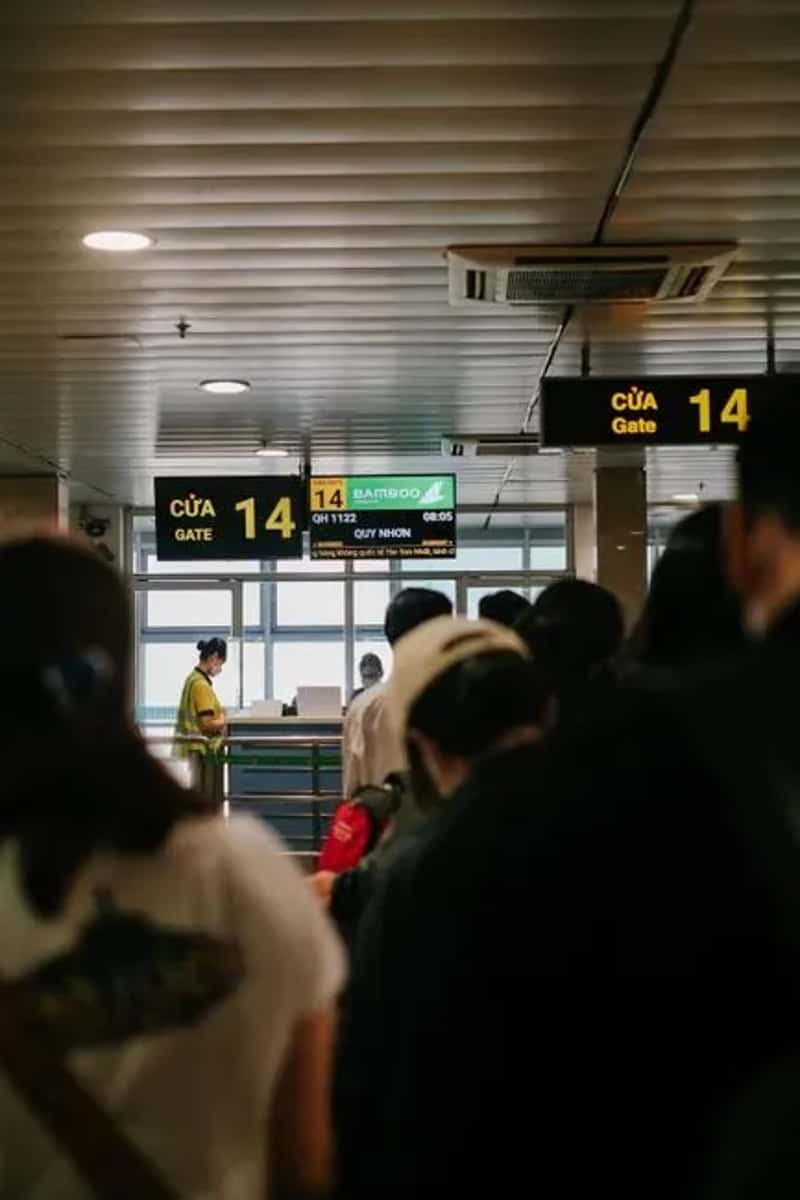
Airlines invented boarding groups for a reason. Yet the instant a gate agent lifts the microphone, a wall of people materializes at the jetbridge door like it’s a Black Friday sale. In a survey of 9,000 global travelers, cutting in line at boarding ranked as the single most annoying airport habit – cited by 48% of respondents. Frequent flyers watch this stampede happen on every single flight and say nothing. But they notice everything.
The logic people use – “I just want to be ready” – actually creates the gridlock it’s supposedly avoiding. The crowd blocks genuine priority passengers from reaching the agent, clogs the jetbridge before the previous group has stowed their bags, and slows boarding for the entire plane. Seasoned travelers hang back, stay seated, and board when their group is called. It’s one of the clearest signals that someone actually knows what they’re doing up there.
At a Glance: How Passengers Actually Board
- 48% – stay seated and wait for their boarding group (Opodo survey, 9,000 travelers)
- 23% – “hoverers” who stand near the queue and wait for the right moment
- The remaining share jumps in early regardless of group assignment
- Gate crowding by non-priority passengers is the #1 most-cited airport annoyance globally
#17 – Hogging the Overhead Bin With a Bag That Should Be Under the Seat
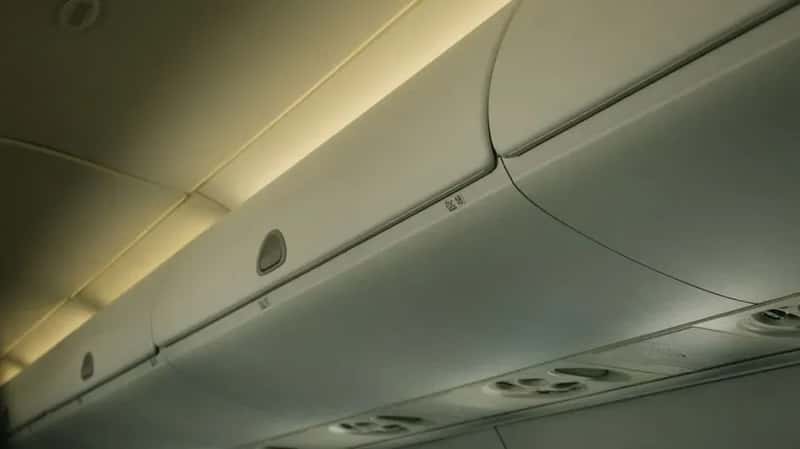
Frequent flyers have a name for this: bin stuffing. It happens when a passenger shoves their personal item – a soft tote, a small backpack, a jacket bundled into a ball – into the overhead bin even when there’s perfectly good space under the seat in front of them. The consequence cascades through the entire boarding process: passengers who board later with legitimately large bags find no space and end up gate-checking luggage they planned to keep.
Watching someone load a duffel, a coat, a tote bag, AND a roller into one bin while 40 people shuffle in the aisle behind them is its own kind of slow-motion disaster. Frequent flyers who travel with a personal item and a carry-on know exactly what fits where and plan it before they even leave home. The overhead bin is shared real estate – not a personal storage unit for the row.
Quick Compare: Carry-On vs. Personal Item
- Carry-on bag – goes in the overhead bin; typically max 22 x 14 x 9 inches (most U.S. airlines)
- Personal item – goes under the seat in front of you; purses, laptop bags, small backpacks
- Most airlines allow one of each in economy at no extra cost
- Gate-checking bags at the last minute slows boarding and contributes to cascading flight delays
- Bin stuffing with personal items is the leading cause of overhead space running out mid-boarding
#16 – Reclining During Meal Service Without a Single Word of Warning
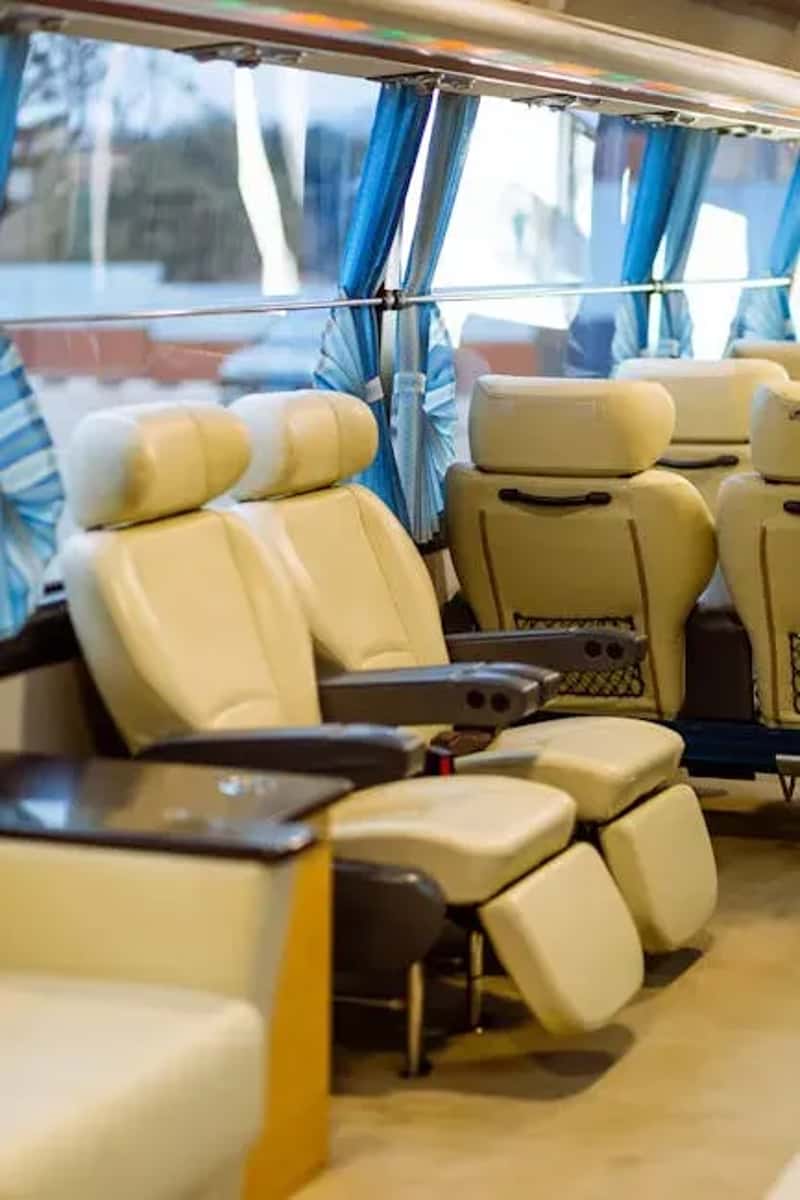
Reclining itself isn’t the crime. The crime is doing it without checking – especially when the person behind you has a tray table up and a full cup of coffee on it. A sudden, unannounced recline can send that drink straight into someone’s lap. It takes five seconds to glance back and ask. Skipping those five seconds can ruin another passenger’s meal and their mood for the rest of the flight.
More than half of surveyed flyers say a passenger fully reclining their seat is unacceptable – rating it as more irritating than removing shoes or socks. The general rule that experienced travelers follow is simple: recline slowly, do it deliberately, and never during meal service without a heads-up. Two inches of consideration at 35,000 feet goes an enormous distance.
#15 – The Seat-Swap Hustle Where You’re Always Trading Down
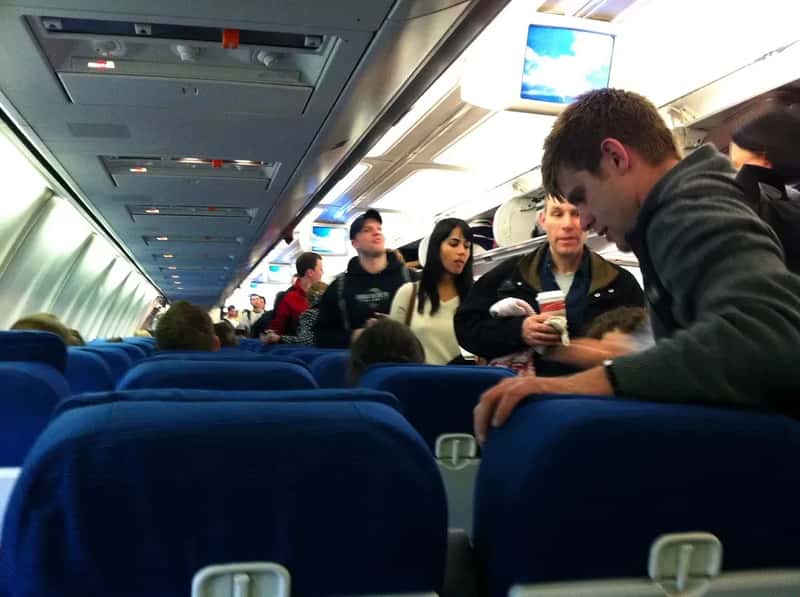
Someone boards, stops at your row, and asks if you’ll swap your aisle seat so they can sit next to their travel companion – who is in a middle seat three rows back. Frequent flyers have been cornered by this move more times than they can count, and they see it coming the moment the person slows down in the aisle. The etiquette rule is clear and almost universally ignored: you can ask for a swap, but only if you’re offering something equivalent or better. A middle seat is not a lateral trade.
The pressure is real – nobody wants to feel like they’re separating a family. But the people making the ask often booked late, skipped the seat selection fee, or simply didn’t plan ahead. A survey found that 31% of U.S. adults considered asking someone to leave a reserved seat and swap places to be an offensive breach of flying etiquette. Book your seats in advance. That’s the solution, and frequent flyers know it.
#14 – Playing Audio Out Loud Without Headphones
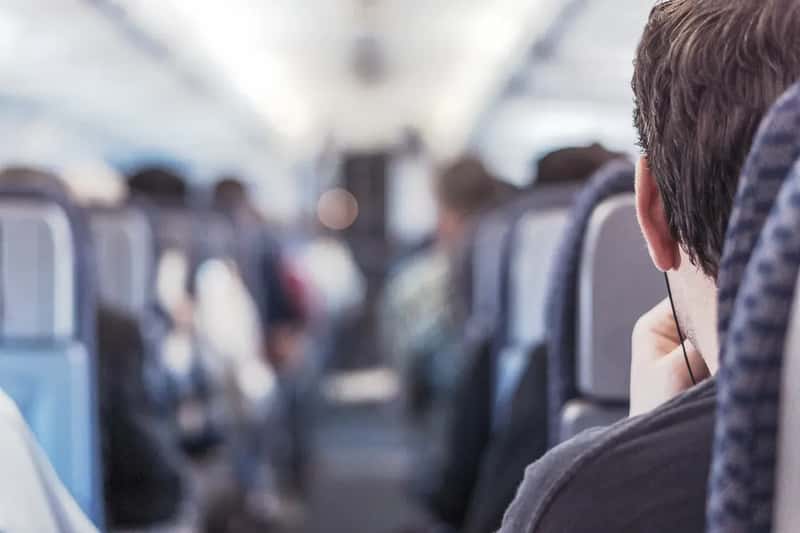
Nothing signals “I stopped thinking about the people around me” faster than blasting a podcast or a mobile game on full speaker volume inside a pressurized metal tube. Almost six in ten travelers – 59% – say they are genuinely annoyed by passengers who don’t use headphones while watching or listening to media. That makes it one of the most universally disliked behaviors in the entire cabin, and the number tracks with what flight attendants consistently describe as a top complaint.
Many carriers actually have a policy prohibiting playing devices on speaker, meaning you’re not just being inconsiderate – you may be violating the airline’s rules. One flight attendant with nearly 40 years of experience put it plainly: “No one else wants to hear what you’re listening to.” Frequent flyers pack headphones the same way they pack a boarding pass. It’s not optional. It’s just part of flying around other human beings.
#13 – Spreading Your Bags Across Four Empty Seats at a Packed Gate
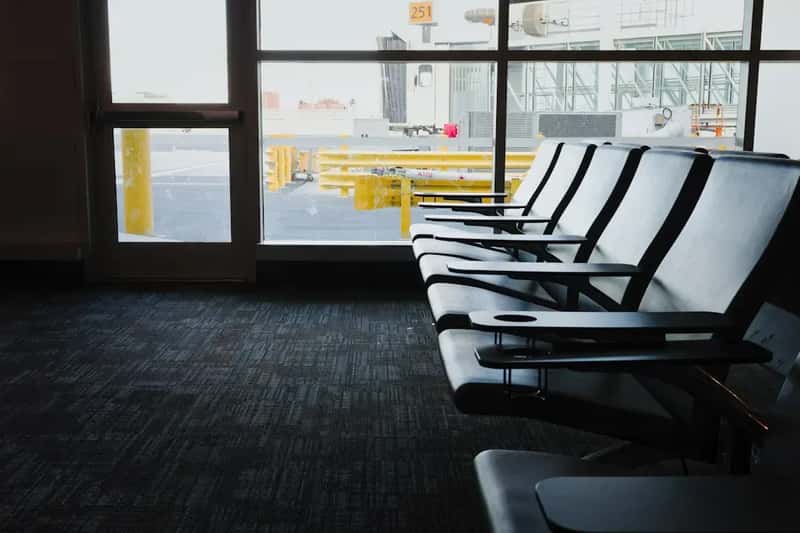
Airports are chronically short on seating, especially during delays. So when one person drops their carry-on, jacket, coffee, and laptop bag across four seats to build a personal fortress – while other passengers scan the gate desperately for somewhere to sit – it registers as one of the most passive-aggressive moves in air travel. In a global survey, 45% of respondents said they hated people who block seats with belongings while those seats sit empty.
Frequent flyers, who spend meaningful chunks of their lives in terminals, find this habit particularly exhausting because it happens constantly and there’s no real recourse. The seat hoarder is almost always oblivious, scrolling their phone while tired travelers stand directly next to them. Moving your bag takes one second and costs nothing. The frequent flyer across from you will notice – and quietly respect you for it.
Worth Knowing: The Top Gate & Cabin Annoyances by the Numbers
- 48% – cutting in line at security or boarding (Opodo, 9,000 travelers)
- 45% – blocking seats with bags at the gate
- 42% – leaving trash behind in the cabin or gate area
- 40% – making loud speakerphone calls in shared spaces
- 19% – standing too close to the baggage carousel (the least-cited grievance)
#12 – Keeping Headphones In When the Flight Attendant Is Standing Right There
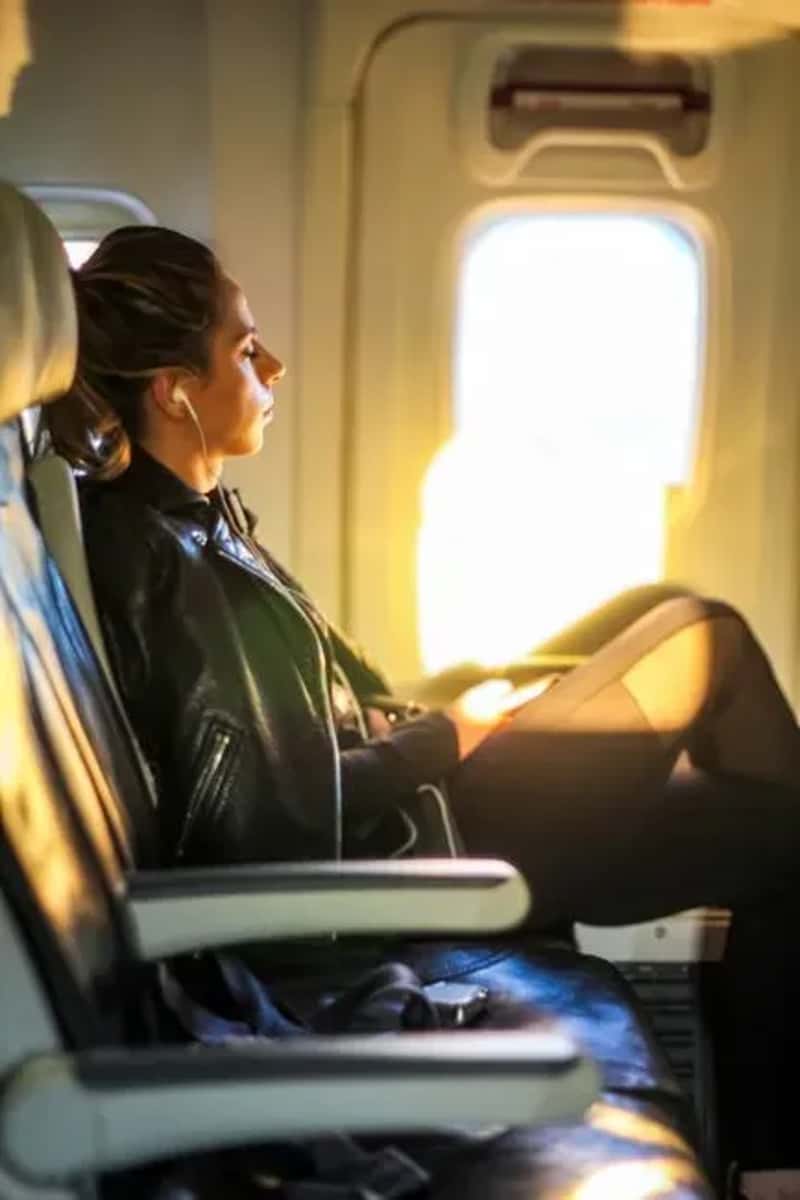
There’s a version of headphone etiquette most casual flyers miss entirely: knowing when to take them off. Wearing noise-canceling headphones during a flight is completely correct behavior. Keeping them in while a flight attendant stands at your row asking for your drink order – and making her repeat herself twice while you hold up one finger – is something else. One veteran flight attendant named it directly as one of her biggest pet peeves: passengers “not taking out your headphones when we come to your row to ask if you want anything to drink or eat.”
Flight attendants are running dozens of repetitive interactions across a full plane on a tight schedule. They are also the people responsible for your safety in an actual emergency. Popping one earbud out and making eye contact takes half a second. Frequent flyers do it automatically and don’t think twice about it. The people who don’t do it stand out in a way they probably don’t intend to.
#11 – Cracking Open Strong-Smelling Food in a Sealed Cabin
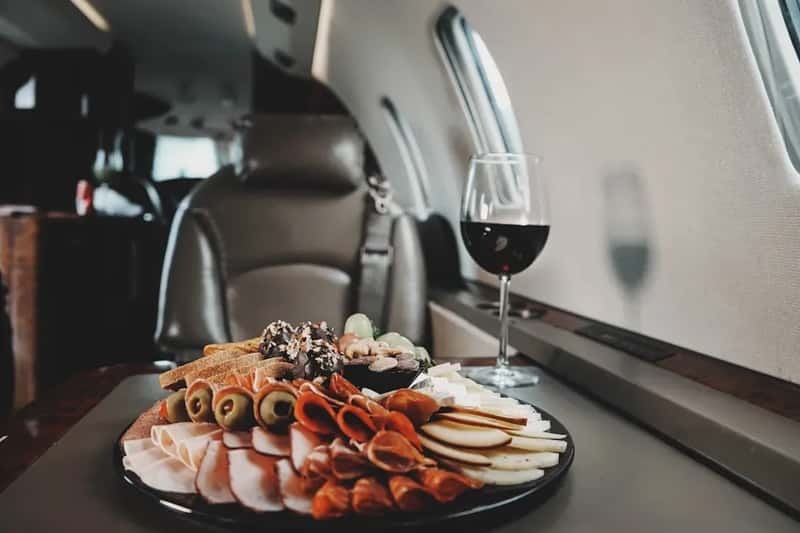
The airplane cabin is a sealed environment with limited airflow and no escape routes. Opening a container of fish, hard-boiled eggs, or heavily spiced takeout into that air is the olfactory equivalent of a hostage situation – the smell doesn’t stay at your seat, it announces itself to the entire section within about 90 seconds. Nearly 40% of Americans identify eating pungent food as one of the most annoying plane etiquette violations, and experienced travelers understand exactly why.
Frequent flyers operate by an unspoken rule that’s worth stating out loud: if your food would turn heads in an elevator, it stays in the terminal. Eat it before you board or save it for after you land. The airport has restaurants, fast food, and coffee for a reason. Nobody on that plane agreed to share your lunch.
#10 – Yanking the Seat Back to Pull Yourself Up
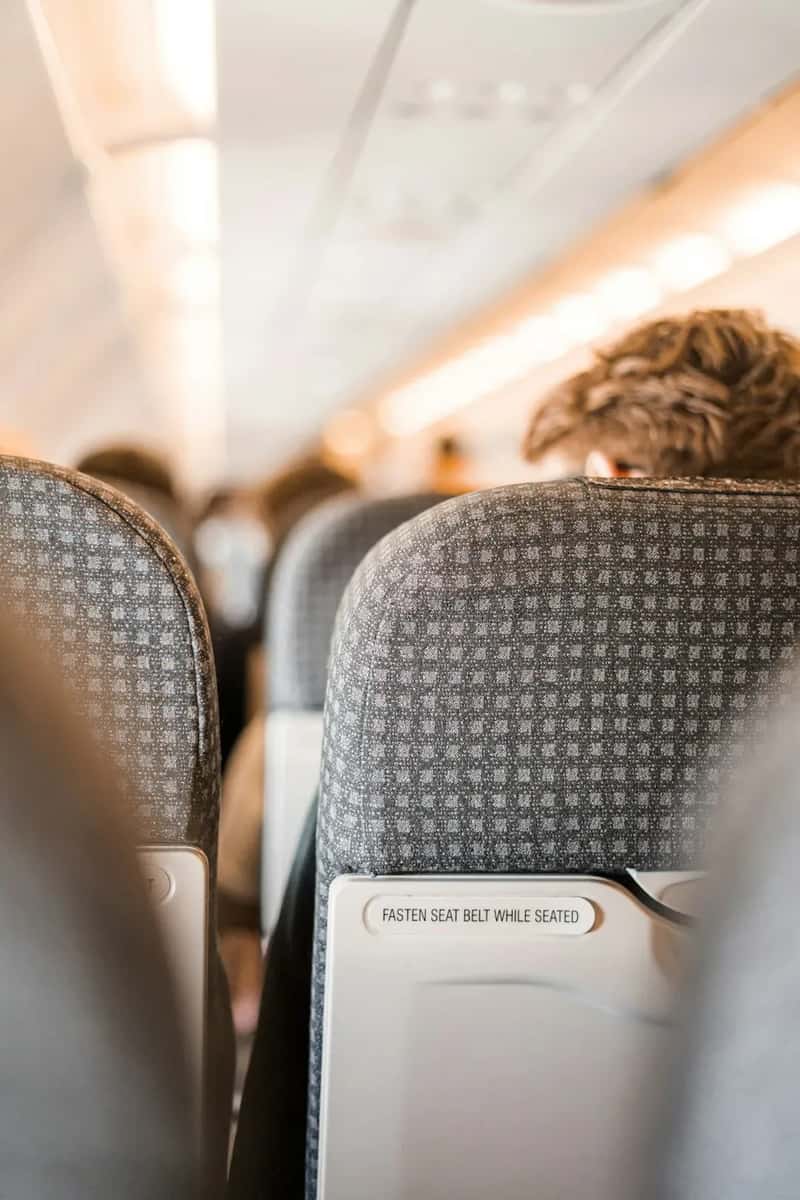
Every frequent flyer has felt this one – the sudden, violent yank on the top of their seat as the passenger behind them hauls themselves to standing. It jerks your head forward, disturbs whatever you were doing, and if you were asleep, it jolts you wide awake with a jolt of confusion and irritation. The move transfers all of the person’s weight directly onto another passenger’s headrest, which is attached to the seat that passenger is currently sitting in.
Planes have aisle-adjacent grab points, and the armrest of your own seat can do most of the stabilizing work. Using the seat in front of you as a personal handle is the kind of thing frequent flyers track mentally every single time it happens – and it happens on almost every flight. The person in front of you feels every single one.
#9 – Clipping Nails or Running a Full Grooming Session at Your Seat
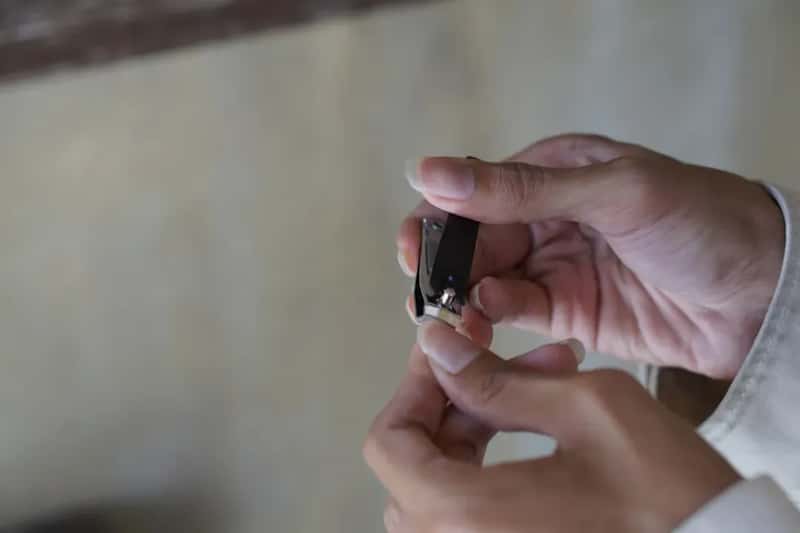
This one belongs in a category of its own. Touching up lip balm is fine. Combing your hair is borderline. But clipping fingernails – or, in the truly legendary offenses, toenails – at your seat on a commercial flight crosses a line that frequent flyers unanimously agree should never exist in the first place. The sound alone is alarming. The visual is worse. And the question of where those clippings land is something nobody in that cabin should have to contemplate.
Personal grooming in public – including nail clipping – is considered unacceptable by more than 55% of consumers globally. This is not a gray area. The airplane seat is a shared space inches from another human being. Frequent flyers who witness this happening react with a specific brand of quiet horror – a stare that holds just a beat too long before they put their headphones back in and try to erase what they just saw.
Why It Stands Out: The Grooming Offenses, Ranked by Cabin Reaction
- Toenail clipping – the unanimous apex offense; produces visible horror across multiple rows
- Fingernail clipping – almost as bad; the sound alone causes a row-wide cringe
- Spraying perfume or cologne – a sealed cabin has nowhere for the scent to go
- Flossing at the seat – technically quiet, universally unsettling
- Full hair brushing – borderline; the strands that fly are the problem
#8 – Running a Full Speakerphone Call at the Gate
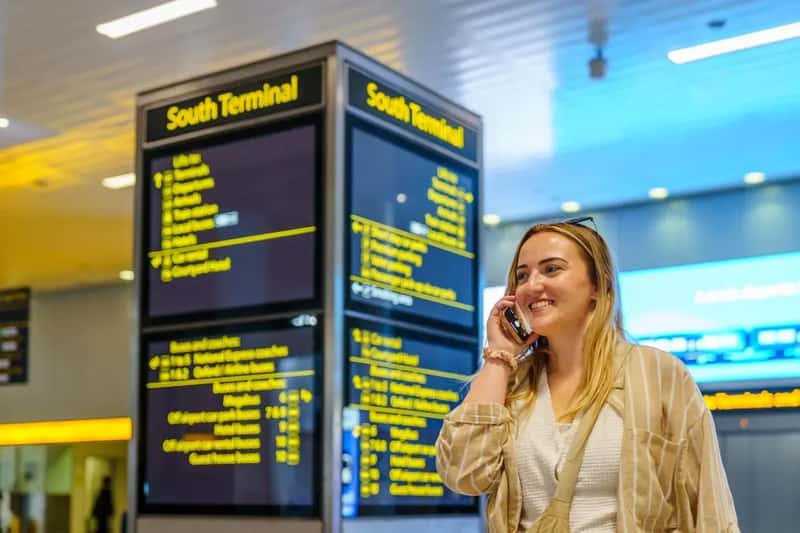
The gate area is a shared space where dozens of tired travelers are reading, charging devices, or just sitting in peace before boarding. The person who plants themselves in the center of the seating area and conducts a loud speakerphone call – complete with the other party’s voice bouncing off every hard surface – is operating in a completely different social reality from everyone around them. Globally, 40% of travelers find people speaking loudly on speakerphone to be genuinely vexing.
Frequent flyers who practically live in airports have a specific, worn-down exhaustion with this behavior because it happens on every trip and there is no real recourse. The rule is simple: take the call, but hold the phone to your ear. The rest of the gate did not consent to being part of your conversation, your business meeting, or your cousin’s ongoing family drama. Everyone can hear you. That’s the whole problem.
#7 – Ignoring the Safety Demonstration Loudly and Completely

Here’s where the data gets interesting: frequent flyers themselves are actually split on this one. Many seasoned road warriors tune out the safety demo after their hundredth flight – which technically puts them in the same category they judge in others. But there’s a real difference between a veteran who has memorized the exit row procedure cold and a first-time flyer who is loudly chatting or laughing through the demonstration. Every airplane and airline is unique, and these briefings provide specific information that matters in an actual emergency.
Frequent flyers are actually more likely than people who rarely fly to say it’s acceptable to ignore the safety demo – 32% versus 16% among infrequent flyers. That gap is the blind spot of over-familiarity, and flight attendants notice it. Passengers in exit rows who visibly ignore the briefing – an exit row that requires active participation in an emergency – draw quiet, sustained attention from the crew for the rest of the flight. That attention is not the good kind.
#6 – Leaving a Pile of Trash Stuffed in the Seatback Pocket
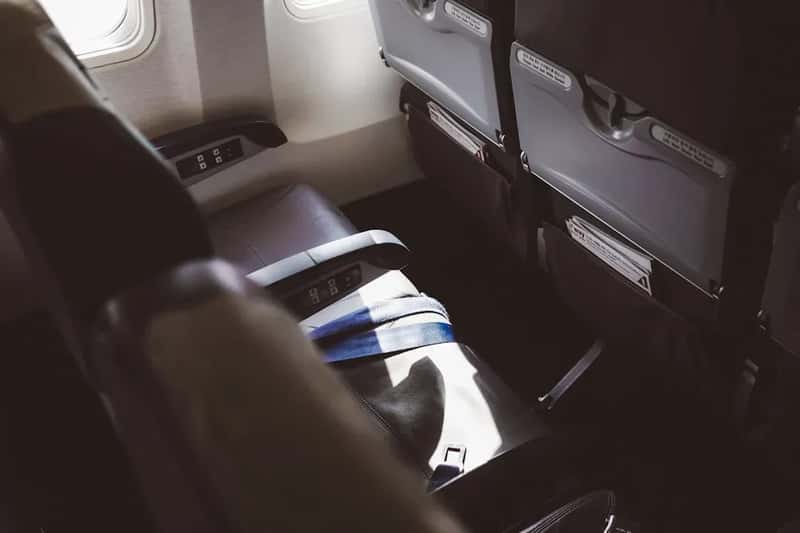
The seatback pocket was designed for the safety card, the in-flight magazine, and maybe a water bottle. It was not designed to be a personal trash compactor for used napkins, empty snack wrappers, boarding pass stubs, and the remnants of a terminal meal. Turnaround time between flights is often 30 to 45 minutes – which means the mess you leave directly affects the next passenger’s experience, and the flight attendants are racing the clock to address it.
Flight attendants consistently name stuffed seatback pockets among their top deplaning frustrations. Frequent flyers tend to keep their space clean throughout the flight – not because anyone is watching, but because they’ve sat down in someone else’s leftover mess enough times to know exactly how it feels. When the flight attendant comes down the aisle with the trash bag before landing, that is your moment. Use it every time.
#5 – Taking Shoes and Socks Off and Going Fully Barefoot

Few things provoke a faster collective cringe in an airplane cabin than watching someone peel off shoes AND socks and then pad barefoot toward the lavatory. The floor of a commercial aircraft is genuinely not clean – bacteria and viruses accumulate in ways most passengers prefer not to think about. Going barefoot forces everyone around you to think about it. Thirty-five percent of surveyed passengers rated removing footwear entirely as one of the most offensive airplane etiquette breaches on the list.
And then there is the apex offense: the bare foot that creeps over the seat back and settles onto the armrest of the row in front. It happens. It gets photographed. It goes viral. Every frequent flyer in the surrounding rows experiences a moment of shared, silent solidarity in the collective horror of watching it unfold in real time – and absolutely nobody says a word, because what would you even say.
#4 – Springing Up the Instant the Wheels Touch Down
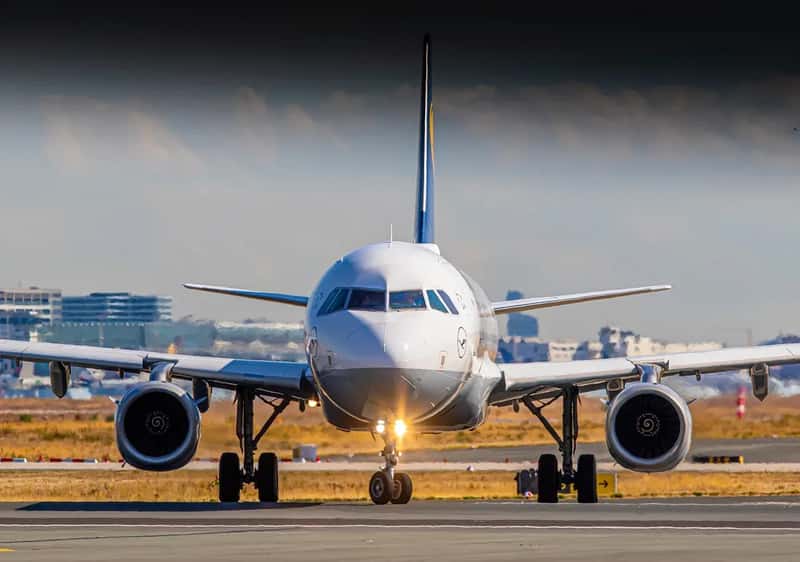
The wheels hit the runway, and before the engines have even spooled down, the cabin erupts – seatbelts snapping open, overhead bins flying up, people lunging into the aisle like the starting gun just fired for a race nobody signed up for. Frequent flyers know, without exception, that standing up immediately does not get you off the plane faster. The door doesn’t open any sooner. The jet bridge doesn’t extend on your schedule. You are standing in a tube, slightly hunched, accomplishing nothing.
Beyond the futility, standing before the aircraft has fully stopped carries genuine safety risk – unexpected deceleration happens, and the flight attendants need all passengers seated until the plane comes to a complete stop. Proper etiquette is to stay seated, gather your things calmly, and move when your row’s turn comes. Experienced travelers have timed this. They arrive at baggage claim at virtually the same moment as the person who was first in the aisle. Almost always.
#3 – The Armrest Power Grab That Leaves the Middle Seat With Nothing
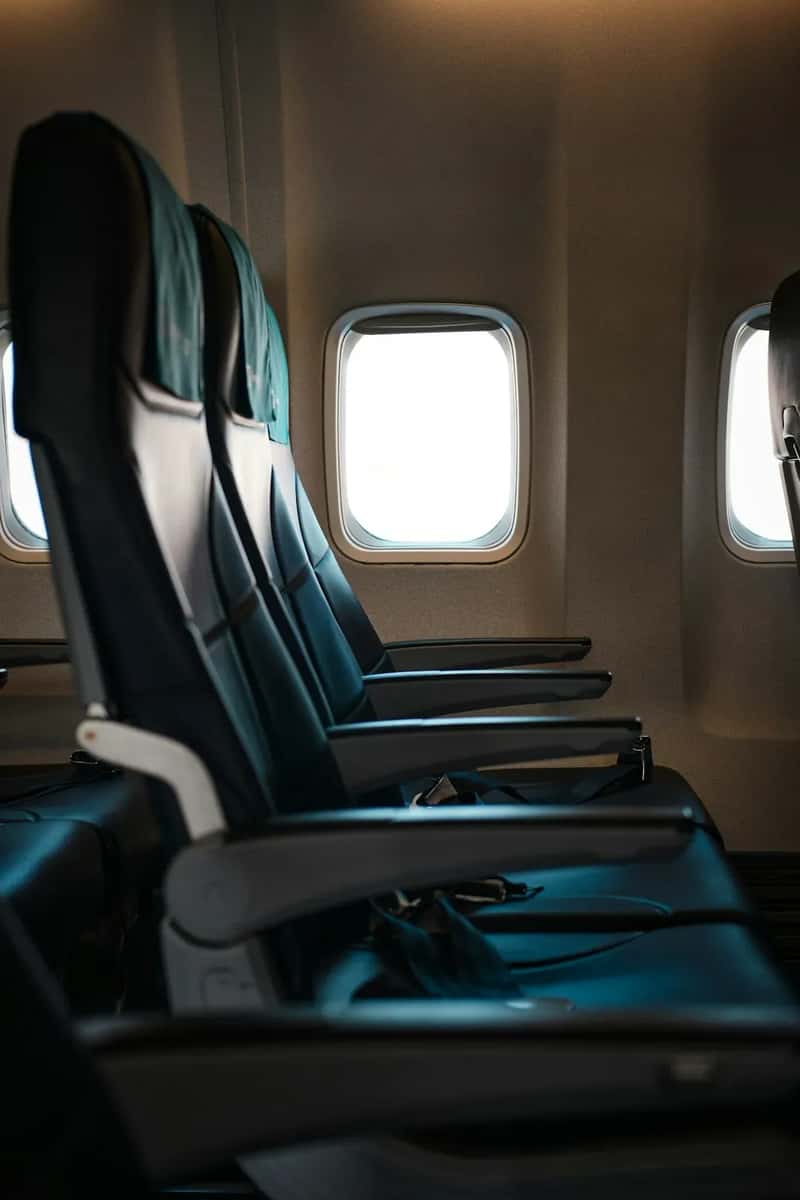
The armrest conflict is one of the most loaded micro-battles in modern air travel, and the unwritten rule is surprisingly clear once you’ve heard it: the middle seat passenger has armrest priority. They’re in the most cramped position with no window, no aisle, and no easy exit. Frequent flyers know this rule. Casual travelers routinely ignore it, planting both elbows on both armrests without a second thought and leaving the middle passenger with nowhere to put their arms for the next three hours.
Survey data shows an equal share of respondents found fellow passengers using both armrests to be a genuine etiquette violation. As one long-haul in-flight service manager put it: “In the middle seat, they’ve got nowhere to lean. Go on – let them use the armrest.” Veteran flyers yield the armrest to the middle seat almost instinctively. It costs them very little. To the passenger trapped in the center, it means everything.
In the middle seat, they’ve got nowhere to lean. There are no hard-and-fast rules, but you do have to feel for the passenger who ends up in the middle. Go on – let them use the armrest.
Long-haul in-flight service manager
#2 – Hitting the Call Button for Things You Could Easily Handle Yourself
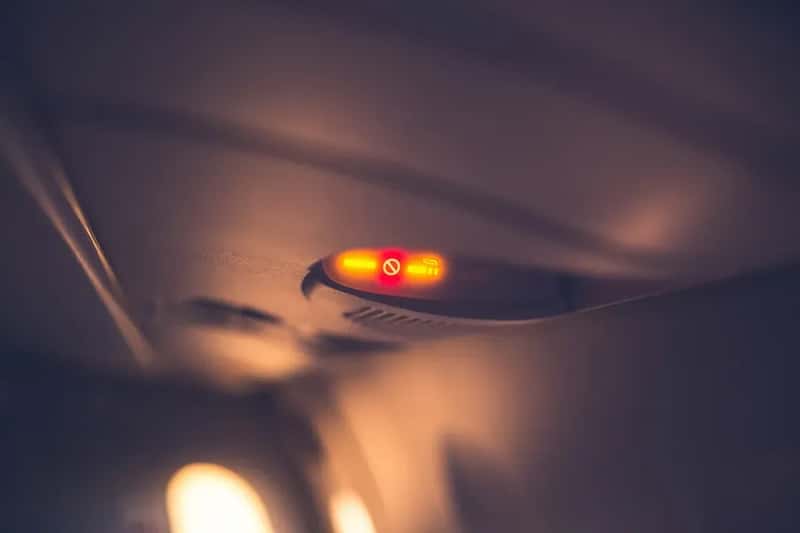
The call button is not a concierge service. Flight attendants report that call button usage has risen dramatically – one told USA Today it’s up roughly 40% compared to previous years. And a significant share of those calls are for things passengers could easily handle themselves: Wi-Fi questions answered in the seat pocket card, snacks available at the open galley, entertainment systems with on-screen tutorials. A flight attendant’s primary responsibility is the safety of every person on that aircraft – not being on-call for snack delivery.
Frequent flyers reserve the call button for genuine needs: a drink refill, a medical concern, something they cannot resolve on their own. That level of awareness is the clearest professional difference between a passenger who earns quiet respect from the crew and one who earns something harder to describe but equally unmistakable. Flight attendants remember. And the flight is long.
Worth Knowing: When the Call Button Is Actually Appropriate
- Medical concerns or physical discomfort that needs crew assistance
- A genuine spill or safety issue at your seat
- A drink refill when the galley cart is not in the aisle
- Turbulence-related questions when the seatbelt sign has just come on
- Not appropriate: Wi-Fi passwords, blanket requests mid-boarding, snacks visibly stocked in the open galley
#1 – Being Rude or Dismissive to the Flight Crew
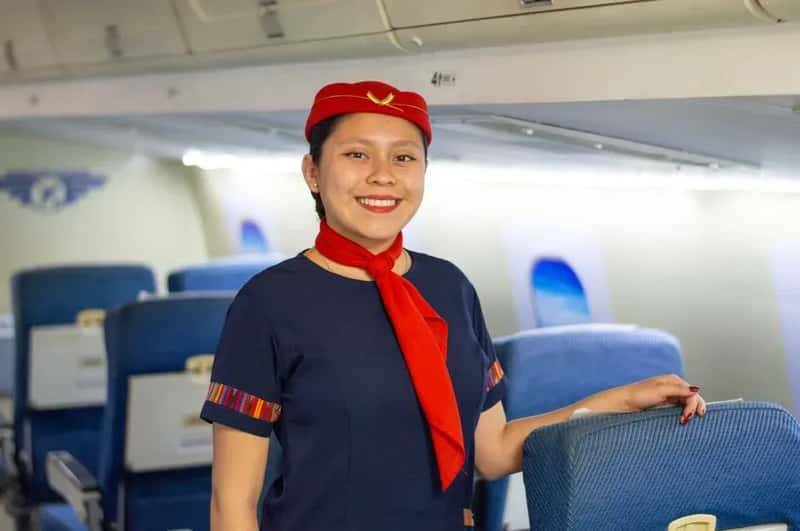
Every other habit on this list is annoying. This one is a character reveal. The way a person treats a flight attendant – someone doing a physically demanding, often thankless job at 35,000 feet – tells every frequent flyer nearby everything they need to know about that passenger. The clipped one-word order instead of a request. The eye roll when the cart is out of ginger ale. The finger snap. Road warriors who fly a hundred flights a year almost universally make a point of warmly greeting every crew member at boarding – not as a strategy, but because they’ve watched enough flights to understand what these people actually deal with every single day.
Global survey data shows that aggressive or drunk behavior directed at crew is the single least acceptable airplane behavior – rated completely unacceptable by more than half of all respondents. But you don’t have to be drunk to be dismissive. The small moment of genuine kindness – eye contact, a real thank-you, basic human decency – costs nothing and lands differently than most passengers ever realize. That’s the habit that actually separates an experienced traveler from everyone else on that plane. It always has been.
The thread running through all 19 of these habits is the same thing: awareness of the people around you. Frequent flyers aren’t judging because they’re superior – they’re judging because they’ve been on the receiving end of every single one of these, hundreds of times over. The good news is that almost everything on this list costs nothing to fix. It just takes about five seconds of thinking before you act.