Getting around in a foreign country can make or break a travel experience. You might have the perfect itinerary, the best hotel, and gorgeous weather, but if you spend three hours waiting at a broken-down bus stop or miss a connection because the timetable is printed only in a local dialect, none of that really matters.
Public transport is one of those topics that travelers tend to underestimate – until they land somewhere and realize their options are a mystery. From the most jaw-dropping rail systems in the world to countries where a rental car is honestly your only sane choice, the gap between the best and worst is enormous. Let’s dive in.
🥇 Japan – The Gold Standard of Getting Anywhere, Anytime

If you’ve ever heard someone rave about Japanese trains, believe every single word. The Shinkansen bullet train is famous for reaching speeds up to 320 km/h and maintaining a punctuality record with average delays of under one minute. Think about that for a second. The closest thing in daily life to this kind of precision is probably an atomic clock, not a train.
In fiscal year 2023, the number of passengers carried via railway transportation in Japan amounted to approximately 22.61 billion, increasing from around 21.05 billion in the previous year. That growth is not coincidence – it reflects genuine public trust in the system. Tokyo Metro handles approximately 7.6 million passengers a day, making it one of the busiest and most efficient in the world.
In Japan, trains aren’t just the most common form of transportation, nor simply the most efficient; rather, Japan’s rail system is a model for reducing emissions, smoothing congestion, and building resilient cities. The future looks even more exciting: JR East plans to introduce driverless Shinkansen trains in the mid-2030s, beginning with partially automated trains on some routes from 2028.
A striking example of efficiency in the Japanese rail system is the famed “Seven-Minute Miracle,” referring to the rapid cleaning process performed on the Shinkansen trains – despite the quick turnaround time, cleaning crews manage to thoroughly clean and prepare each train for its next journey in just 7 minutes. Honestly, most offices are messier after a full day than one of these trains after a 300-person journey.
🥈 Switzerland – Clock-Face Trains in the Alps
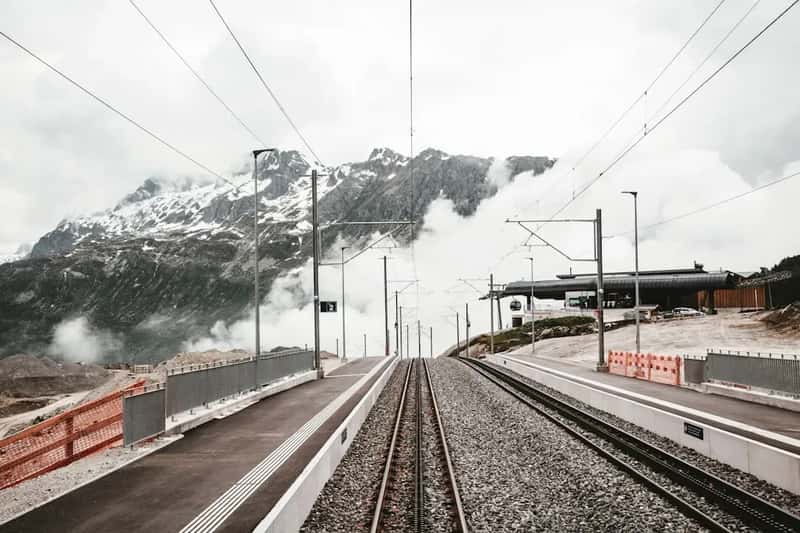
Switzerland doesn’t just have excellent public transport. It holds the world record for it. Data for 2024 shows that each inhabitant of the Alpine country traveled an average of 2,519 kilometers by train, surpassing the historic record set before the pandemic in 2019. That’s more than the distance from London to Casablanca, covered by train, per person, per year.
The system is built upon the principle of Taktfahrplan, or clock-face scheduling, ensuring services on all lines depart at the same minute past every hour or half-hour, creating seamless and predictable connections between intercity, regional, and S-Bahn services. It’s the transport equivalent of a Swiss watch – no coincidence there. In 2024, SBB alone carried a record 1.39 million passengers per day, reflecting sustained growth in usage driven by reliable scheduling, national half-fare discounts, and multimodal ticketing.
In 2024, SBB’s customers reported a connection punctuality of 98.7%, meaning 98.7% of all connections were able to be made. Missing a connecting train in Switzerland is apparently a rare event. Fare integration through systems like the SwissPass allows a single ticket or subscription to be valid across trains, buses, trams, and even boats, removing friction and encouraging public transport as the default choice for mobility.
🥉 Singapore – The World’s Most Efficient Urban Transit
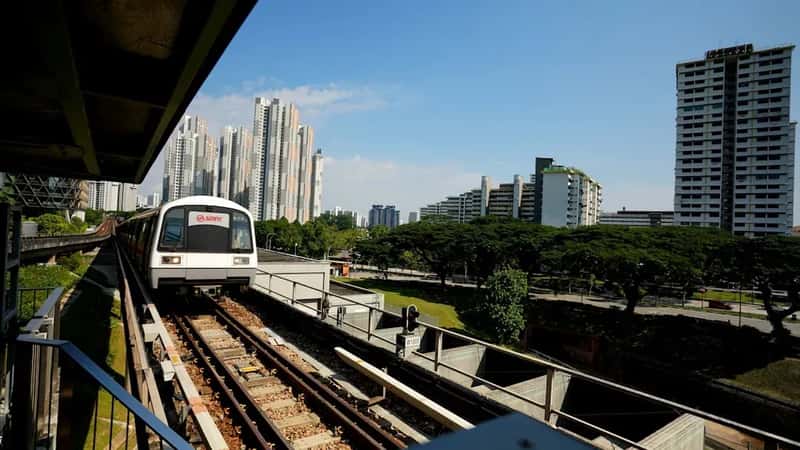
Let’s be real: Singapore is a city-state, not a sprawling continental nation, but that’s almost the point. In the 2024 edition of the Urban Mobility City Ranking, Singapore claimed the top spot for public transit, earning recognition as having the best public transport system in the world. That’s the most comprehensive international assessment currently available.
Singapore’s Mass Rapid Transit (MRT) system covers almost every corner of the city-state with over 230 km of track as of early 2025, with trains arriving every 2 to 3 minutes during peak hours, and the system is known for its accessibility, cleanliness, and air-conditioned comfort. In a tropical climate, that last detail is no small thing.
At the heart of Singapore’s success is its extensive MRT network, which has been a global leader in automation since 2003. The Urban Mobility Readiness Index rated systems based on quality of infrastructure, social impact, market appeal, operational efficiency, and innovative network developments, and for its 2024 edition introduced a new sub-index focusing on technology adoption, assessing readiness for AI, autonomous vehicles, and air taxis. Singapore topped that too.
4. South Korea – The Connected Society
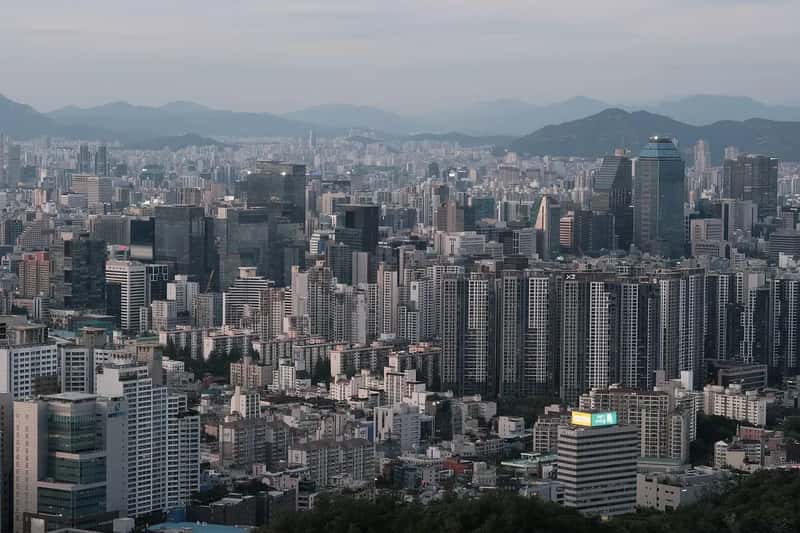
South Korea leads global public transport usage, with roughly two in five commuters relying on transit systems. Seoul Metro operates over 23 lines and 650 stations, handling about 8 million daily riders as of February 2025, according to Seoul Metropolitan Government data. That’s an almost incomprehensible scale of daily movement.
The system is lauded for its affordability, safety, and ultra-fast Wi-Fi throughout stations and trains, with timetables being precise and trains running every 2 to 5 minutes during rush hours. Connectivity in South Korea isn’t just a transport concept, it’s almost a cultural value. In a 2024 global survey by UITP, Seoul ranked in the top three for urban transit user satisfaction.
The integrated T-money payment system works across all modes of transport, creating seamless transfers. Tap a single card on the subway, the bus, and the bike-share all in one day. No separate apps, no separate tickets, no confusion. That’s the kind of integration that makes everyday travel feel effortless for residents and tourists alike.
5. Hong Kong – 99.9% On Time, Every Time
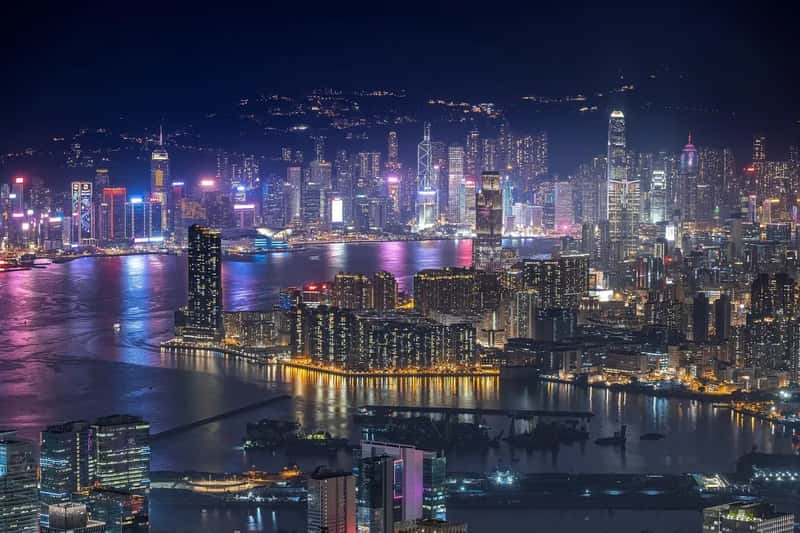
Hong Kong’s transport reputation is almost legendary. Hong Kong’s Mass Transit Railway (MTR) is the backbone of the city, with 99.9% on-time performance in 2024, according to MTR Corporation’s annual release, and the network spans 11 lines and over 250 km, moving 5.6 million passengers daily as of November 2025. That on-time figure is not a marketing slogan. It’s a verified operational metric.
Seventy-five percent of the population is within one kilometer of a station due to the vast scale of the metro system. Think of that like a city where almost everyone lives within a ten-minute walk of a perfectly punctual train. A whopping 98 percent of locals surveyed said they’re happy with Hong Kong’s public transport. That kind of satisfaction rate is virtually unheard of anywhere in the world.
The system’s reliability makes it genuinely faster to take public transit than to drive in many situations. Prices range from $0.50 to $7.50 for most journeys, making it one of the most affordable premium transit systems on the planet. For travelers, Hong Kong is a dream to navigate.
6. France – High Speed Between Cities, Complexity Within Them

France has two sides to its transport story, and they’re worth separating. France’s TGV high-speed trains, capable of 320 km/h, connect the country’s regions efficiently, with over 110 million passengers in 2024 per SNCF’s statistics. Traveling from Paris to Lyon takes roughly two hours by train – the same journey by car takes five.
Paris boasts Europe’s second-busiest metro, with 1.5 billion annual rides, and its RER suburban trains reach deep into surrounding areas. The city has one of the most extensive systems in Europe, with more than 300 stations spread across several metro lines, and despite its vastness, the metro is surprisingly simple to use, reasonably priced, and able to transport people practically anywhere in a matter of minutes.
Here’s the thing though: outside of Paris and the major TGV corridors, rural France can feel like a completely different country. Smaller towns rely heavily on regional trains and buses that run infrequently. Looking at European capitals, northern and western European cities reported higher satisfaction with public transport, while southern and eastern European urban centers exhibited lower satisfaction rates – and regional France sometimes fits that second description surprisingly well.
7. Germany – Affordable Revolution, Imperfect Execution
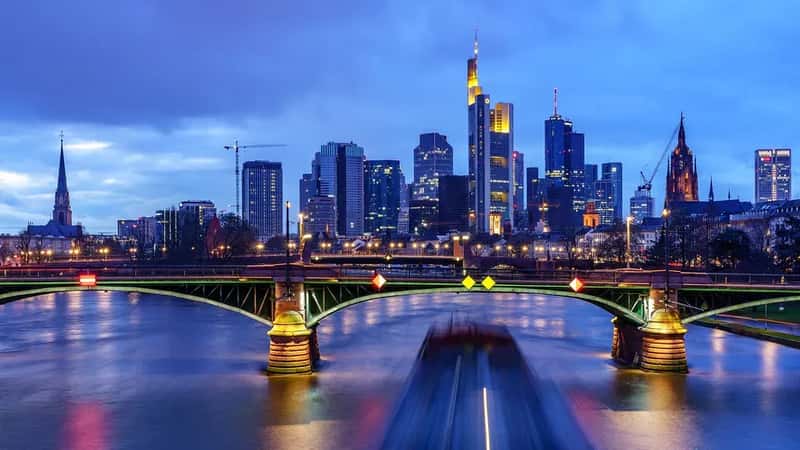
The introduction of Germany’s unified ticket system in May 2023 transformed public transport accessibility, offering passengers a discounted monthly pass covering all public bus and rail transport nationwide for forty-nine euros. It was arguably the boldest public transit pricing experiment in modern European history, and ridership surged almost immediately.
Germany’s ambition is genuinely impressive. The infrastructure, especially the ICE high-speed network connecting Berlin, Frankfurt, Munich, and Hamburg, is fast and comfortable. The challenge is reliability. Delays on the Deutsche Bahn network became a persistent story through 2024, with the aging infrastructure struggling to keep up with rising passenger demand.
It’s hard to say for sure exactly how much delay costs Germany economically, but the frustration is real and widely documented. Zurich, just across the Swiss border, continues to invest in the future of its public transport, and in 2024, the city approved expansion plans including the addition of two new tram lines – a subtle but pointed contrast with Germany’s infrastructure backlog. Germany remains a worthwhile transit destination, especially for city-hopping tourists, just factor in buffer time.
8. Brazil – A Tale of Ambition vs. Reality

Brazil’s transport situation is one of the most striking contrasts on this list. Rio de Janeiro has the worst public transport service among the 74 cities assessed in one major global study, amassing a score of 86.26. The irony is that Rio technically has seven transit modes including light rail, metro, train, bus, ferry, gondola, and funicular – so it’s not a lack of options, it’s a lack of functionality.
A metropolitan population of about 13 million people is just too much for the city to serve efficiently, and it takes an average of 19 minutes just to board public transport, with a 95-minute average commute, while 32 percent of those who use the public system spend more than 2 hours on the road. That’s a working day swallowed by simply getting to work.
São Paulo is described by transport users as one of the worst overcrowded and insufficient railway systems in the world, with city streets described as very narrow and extremely disorganized. São Paulo’s elite is known to use helicopter transport to get around in order to avoid the chaos. When the wealthy response to traffic is a helicopter, that tells you everything about the ground-level experience.
9. Bolivia – Adventure Travel for the Transport-Brave

At the bottom of this ranking sits Bolivia, and honestly, getting around here is less a logistical exercise and more a full-contact adventure sport. Public transport in Bolivia is described as generally safe but tricky, confusing, chaotic, and at times eventful – timetables are not available online and all information is in Spanish, so if you cannot speak the language, you’re going to need help.
Travelers are known to be left stranded for hours due to unrest, and buses are usually unable to travel during those times. Unlike other countries that have fixed traveling times, Bolivia has no fixed time schedules. Imagine planning a connection with no departure time. That’s the daily reality here. The world’s most dangerous road found in Bolivia is called the Camino de la Muerte, about 38 miles long passing through the Bolivian Amazon region, and the vast amount of rain received in the region makes it even more treacherous and dangerous.
Bolivia is a country of extraordinary natural beauty – the salt flats of Uyuni, the Amazon basin, Lake Titicaca. None of that is diminished by the transport challenges. It’s simply honest to say that navigating Bolivia requires flexibility, patience, some Spanish, and a tolerance for the unexpected that most travelers on tight schedules simply don’t have. Arrive with low expectations and a sense of humor and you might just love it anyway.
Final Thoughts: Where You Go Shapes How You Move
The gap between Japan or Switzerland and Bolivia is not just about money or technology. It reflects decades of policy priorities, population density, geographic challenges, and how much a government genuinely invests in moving its people efficiently. The Urban Mobility Readiness Index looked at the public transport systems of 70 major cities and rated them based on criteria including quality of infrastructure, social impact, market appeal, operational efficiency, and innovative network developments. Those criteria reveal that great transport is never just one thing.
For travelers in 2026, the takeaway is practical. Countries ranked at the top of this list reward spontaneity – you can arrive at a train station in Tokyo or Zurich without a plan and be somewhere magnificent within an hour. Countries at the bottom reward preparation, local knowledge, and time buffers measured in days, not minutes.
Whether that sounds like freedom or a nightmare probably says more about you as a traveler than about the country itself. What kind of journey are you planning next?