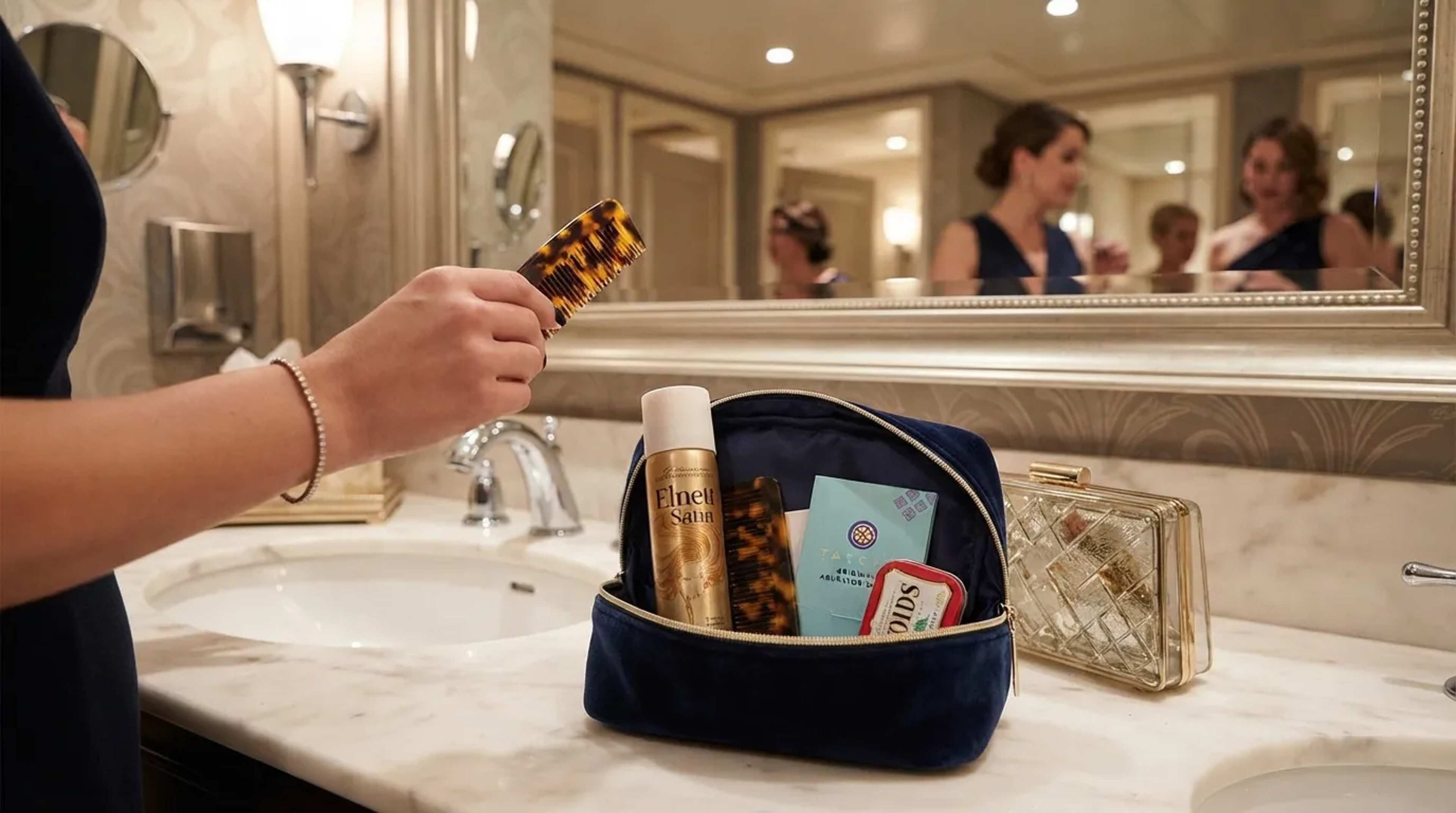
Most first-time cruisers spend weeks agonizing over which formal outfit to bring, then step onto the ship and immediately regret every choice that actually mattered. The truth is, the difference between a smooth week at sea and a frustrating one rarely comes down to clothes. It comes down to a handful of small, unglamorous items that seasoned cruisers never sail without.
These aren’t the things travel blogs usually mention, and cruise lines certainly aren’t advertising them in the brochure. They’re the quiet fixes for problems first-timers don’t even know exist yet, the kind you only learn after your third or fourth trip. Here’s what veteran cruisers actually pack, counting down to the one item nobody expects.
#21 – The Ziplock Trick That Saves Your Jewelry
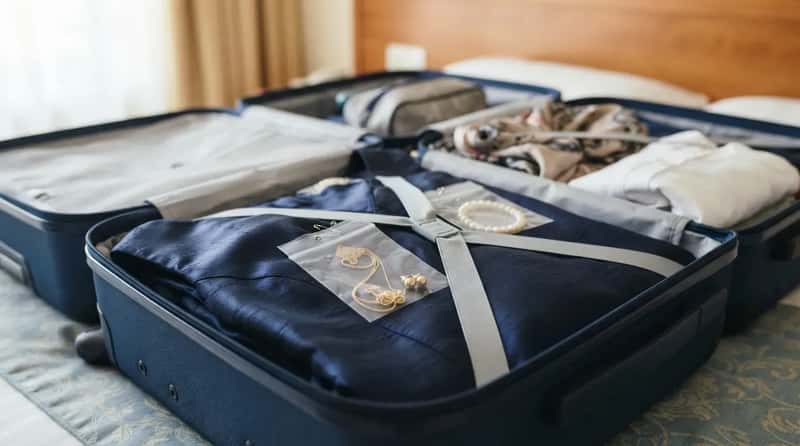
Veteran cruisers know tangled necklaces and lost earring backs ruin more formal nights than bad weather ever will. Instead of tossing jewelry loose into a suitcase pocket, they pin each piece directly to the outfit they’ll wear it with or seal it inside its own small bag. If you have a necklace or earrings that you plan on wearing with an outfit, simply pin it to the fabric or drop it in a plastic baggie before you pack.
It sounds almost too simple to matter, but first-timers rarely think about it until they’re digging through a snarled mess of chains ten minutes before dinner. The five-second fix eliminates an entire category of cruise-morning chaos before it even starts.
#20 – The Power Strip Rule That Trips Up Everyone
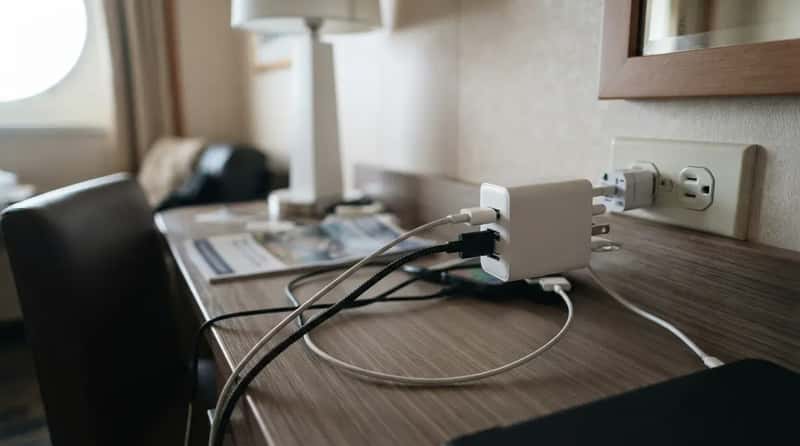
First-timers almost always pack the wrong charging setup, and it can get confiscated at security. Regular surge-protected power strips are banned on nearly every major cruise line, which catches new cruisers completely off guard. A basic non-surge multi-port USB charger keeps every device powered without violating ship policy.
Veterans learned this lesson the hard way, usually after watching security pull their strip aside for inspection. Most cabins only offer two or three usable outlets for an entire family, which is exactly why a cruise-approved power bar has become a non-negotiable packing item. Getting stopped at security over a ten-dollar power strip is one of the most avoidable embarrassments of embarkation day.
#19 – The Adapter First-Timers Never Think They’ll Need
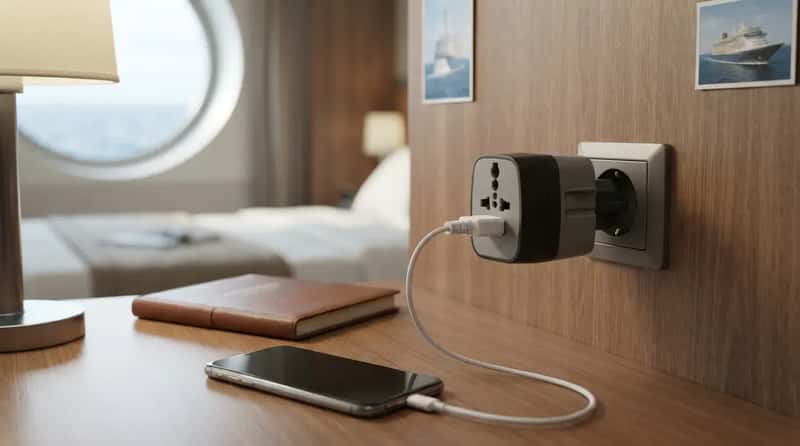
Cruisers assume every outlet on an international ship will match their phone charger, and that assumption backfires constantly. Cabins often have a mixture of US, UK, and European sockets, but rarely all three in one room. A single mismatched plug can mean a dead phone for an entire port day.
Veteran cruisers throw a compact multi-country adapter into their bag without a second thought, because they’ve been burned before. It weighs almost nothing and takes up no real space. One overlooked socket type can leave your whole cabin without power for the night.
Fast Facts
- US-style outlets typically use two or three flat prongs
- UK-style sockets use three rectangular prongs and a different voltage
- European round two-prong outlets show up more often than most travelers expect
- A single all-in-one adapter usually costs less than a specialty coffee onboard
#18 – Foldable Hangers Nobody Tells You to Bring

Cabin closets are notoriously small, and the handful of hangers provided rarely covers a week’s worth of outfits for two people. First-timers usually don’t realize this until they’re standing in front of an empty rod on night one, suitcase still half full.
Stewards will bring more if you ask, but that request takes time you don’t always have on a busy embarkation day. Packing your own lightweight foldable hangers means you’re unpacked and settled while everyone else is still waiting. A five-dollar pack of hangers solves a problem most people don’t see coming until they’re mid-unpack.
#17 – Packing Cubes That End Suitcase Chaos
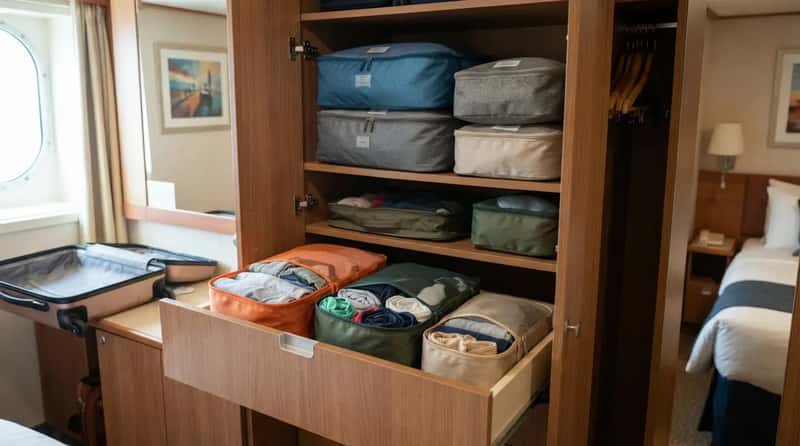
Veteran cruisers don’t just pack cubes for the flight, they use them as the entire storage system inside the cabin. Instead of folding clothes into drawers, they pull a cube out, unzip it, and slide it straight into a shelf or drawer as-is.
First-timers tend to unpack the traditional way, spending their first precious hours at sea folding clothes instead of exploring the ship. With color-coded cubes, a whole family can be fully unpacked in under ten minutes. That’s the difference between finding the pool deck by noon and still fighting with a suitcase at three.
#16 – The Stain Pen Every Veteran Keeps in Their Bag
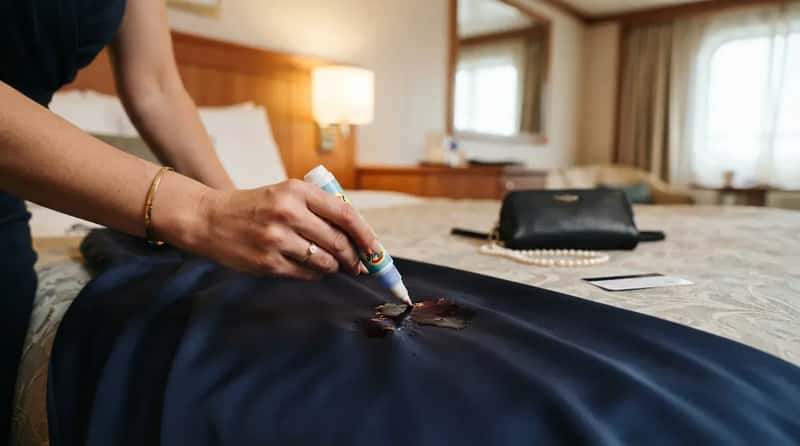
Formal night wine spills and buffet mishaps are practically a cruise tradition, and first-timers almost never plan for them. A tiny bleach or stain-removal pen can rescue an outfit that would otherwise be ruined for the rest of the trip.
Veteran cruisers treat this as non-negotiable packing, right up there with sunscreen and a phone charger. A two-dollar pen has saved more formal-night photos than anyone wants to admit.
#15 – Ear Plugs for the Noise Nobody Warns You About

Cabin walls on most ships are thin, and hallway noise doesn’t stop just because it’s midnight. First-timers often assume their room will feel as quiet as a hotel, and it rarely does.
Late-night groups returning from the casino, ice machines down the hall, and noisy neighbors can all disrupt sleep fast. Veterans pack a pair of ear plugs almost as automatically as they pack a toothbrush. A single restless night can wreck an entire sea day.
#14 – The Straw Hack That Untangles Every Necklace
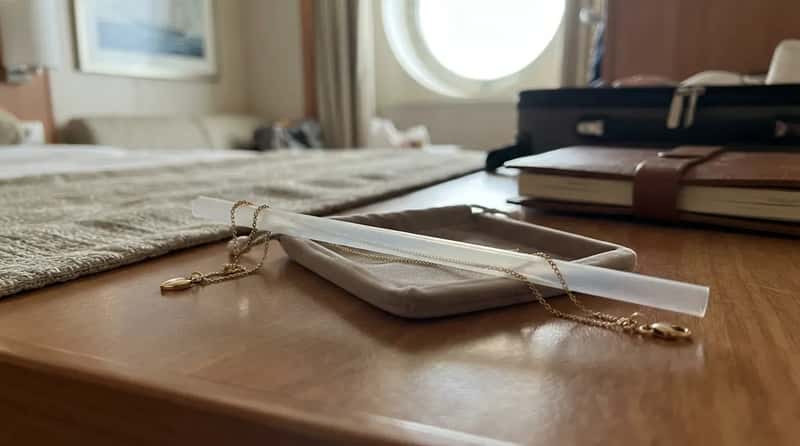
Anyone who’s ever dug through a jewelry bag knows the frustration of a knot that took an hour to fix. Veteran cruisers use an oddly simple trick: threading a necklace chain through a plastic straw before packing it, so it can never knot in the first place.
It costs nothing and takes ten seconds to set up, yet almost no first-timer has heard of it before their first trip. One drinking straw eliminates the most annoying five minutes of any formal-night prep.
#13 – Sticky Notes for Cabin Communication
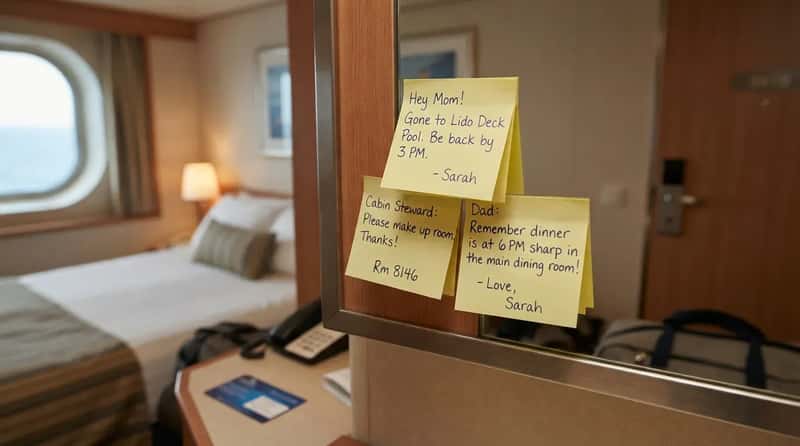
Cabins are small, schedules rarely line up, and phones don’t always have signal onboard. Veteran cruisers pack a small pad of sticky notes just for leaving quick messages for a cabin attendant or roommate.
It’s a low-tech solution to a modern problem, but it works every single time without relying on WiFi packages or app notifications. First-timers usually figure this out the hard way, after missing a roommate at the pool for hours. A stack of sticky notes replaces an entire onboard WiFi package for basic communication.
#12 – Door Magnets With One Big Exception

Every cabin door on a ship looks nearly identical, which makes finding your own a genuine challenge after a few drinks or a long excursion day. Veteran cruisers personalize their door with a magnet, since it sticks without damage and helps kids spot their room instantly.
Not every line allows it, though. Norwegian Cruise Line does not permit any type of door decoration, and first-timers rarely check this rule ahead of time. One cruise line’s strict no-decoration policy catches more families off guard than any other rule on this list.
#11 – Reef-Safe Sunscreen for Excursion Day

First-timers usually pack whatever sunscreen is already in the bathroom cabinet, then get turned away at the excursion dock. Regular sunscreen contains chemicals that damage coral reefs, and tour operators in destinations like Hawaii and parts of the Caribbean now enforce reef-safe rules strictly.
Veteran cruisers pack reef-safe sunscreen exclusively, knowing a regular bottle might get confiscated or simply be unusable on excursion day. An entire snorkeling trip can be ruined by the wrong bottle of sunscreen.
Worth Knowing
- Hawaii’s first sunscreen ban, which blocked the distribution and sale of products containing oxybenzone and octinoxate, went into effect on January 1, 2021.
- Maui County went further and added octocylene to its ban.
- Big Island’s non-mineral sunscreen ban took effect on December 1, 2022 and requires mineral-only ingredients
- Many tour operators will not allow guests into the water if their sunscreen does not meet their reef-safe guidelines.
#10 – Their Own Shampoo, No Matter What the Ship Provides

First-timers assume the shower dispensers will be fine for a week, then regret it by day three. Even when a cruise line provides shampoo and body wash, the free stuff is usually generic and rough on longer hair.
Veterans never trust the built-in dispensers for anything beyond a backup. They pack their preferred products in small travel bottles and skip the guesswork entirely. Generic shower products are one of the most common regrets among new cruisers.
#9 – Small Bills for Ports That Don’t Take Cards

First-timers step off the ship assuming every vendor accepts a tap-to-pay card, and that assumption costs them at almost every port. Local markets, street food stalls, and tip jars often run cash-only.
Veteran cruisers always carry a stash of small bills specifically for these moments, separate from their onboard spending. It’s a tiny habit that saves an embarrassing standoff with a vendor who only takes cash. A missing five-dollar bill can mean walking away from the exact souvenir you wanted.
#8 – A Waterproof Bag for Every Bottle in the Toiletry Kit

Cabin bathrooms get warm, pressure changes happen, and toiletry bottles leak more often on ships than at home. First-timers rarely think about this until they open their suitcase to a shampoo disaster.
Veterans double-bag anything liquid, treating it as basic insurance rather than an extra step. It takes thirty seconds and saves an entire outfit from getting ruined in transit. A single leaked bottle can destroy clothes packed nowhere near the toiletry bag.
#7 – Highlighters for the Daily Planner
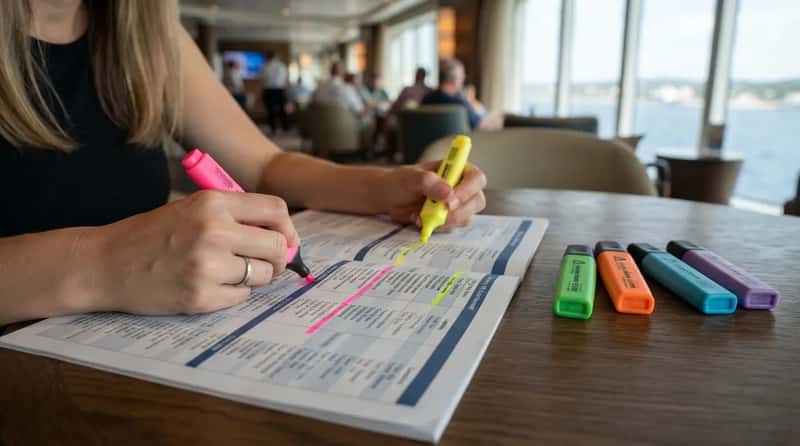
Every ship hands out a daily schedule packed with dozens of activities, and first-timers usually skim it once and forget half of it. Veteran cruisers bring highlighters specifically to mark what matters most to each person in their group.
Families often use a different color per traveler so no one misses their favorite show or trivia session. It sounds almost childish until you’ve watched an entire family miss the one activity everyone actually wanted. A two-dollar highlighter prevents missing the one show everyone wanted to see.
#6 – The Portable Fan That Blocks Hallway Noise

Cabins run warmer than expected, and the white noise from a small fan does double duty most first-timers never anticipate. A lightweight travel fan keeps the room comfortable when the AC struggles to keep up.
Many ships buzz with nightlife well past midnight, and not everyone in the hallway is quiet about it. A small fan masks that noise and keeps sleep undisturbed. One small fan solves both the temperature problem and the noise problem at once.
#5 – A Backup Pair of Sunglasses, Always
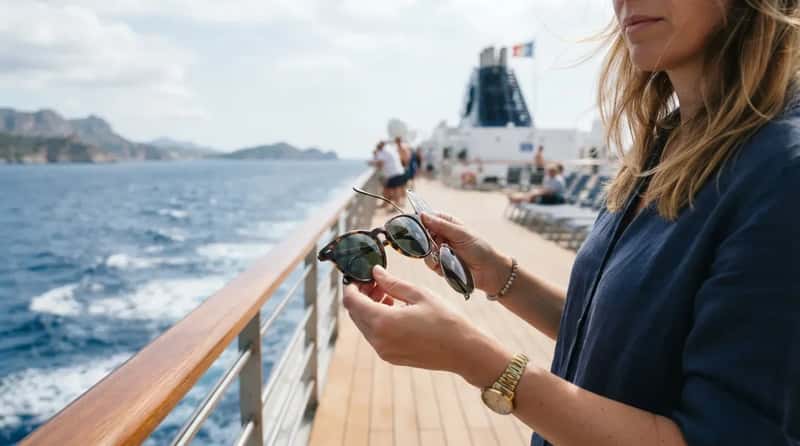
Sunglasses fall overboard more often than most first-timers realize, usually during a windy deck moment or a splash from the pool. Experienced cruisers now pack a cheap backup pair specifically so one careless moment doesn’t ruin the whole trip.
It’s a habit born from experience, not paranoia, since replacing sunglasses onboard usually means paying triple the price at the gift shop. One traveler learned this after assuming her “floating” sunglasses actually floated, a mistake that left that pair somewhere in the Mediterranean. A five-dollar backup pair has saved more vacations than anyone expects.
#4 – A Lanyard for the Card You’ll Use Constantly

The cruise card functions as your room key, wallet, and boarding pass all in one, yet first-timers often lose track of it within hours. Not all cruise lines provide a lanyard, and some charge a fee to buy one onboard.
Veterans wear theirs from the moment they board until the moment they leave, since it’s used constantly for drinks, spa treatments, shops, and getting back into the cabin. Losing this single card can lock you out of your own cabin and your own spending account.
At a Glance
- Doubles as room key, ID, and onboard credit card
- Not every cruise line includes a lanyard for free
- Misplacing it can mean a trip to guest services mid-vacation
- Worn constantly, it’s the one item veterans never leave in the cabin
#3 – The Carry-On That Saves Embarkation Day
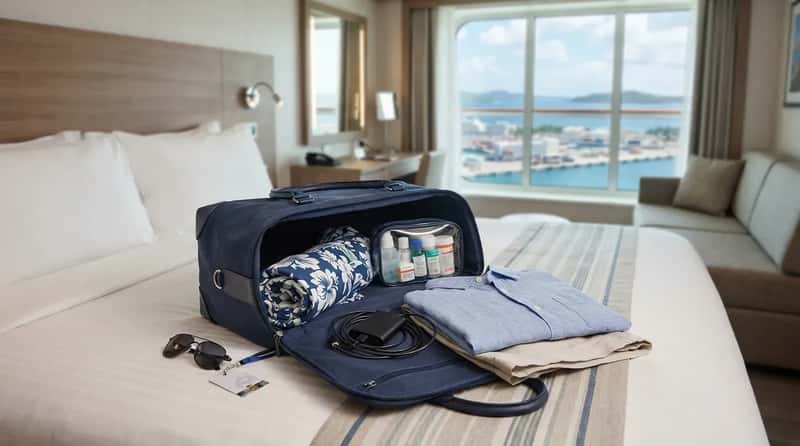
Checked luggage doesn’t reach cabins for hours after boarding, which blindsides almost every first-timer. First-time cruisers often forget to pack an embarkation-day carry-on bag, then get stuck in travel clothes until dinner.
Veteran cruisers pack a swimsuit, medications, chargers, and a change of clothes in that one bag without fail, every single trip. Skipping this one bag means spending your first pool hours in airport clothes.
#2 – An Over-the-Door Organizer That Isn’t Just for Shoes
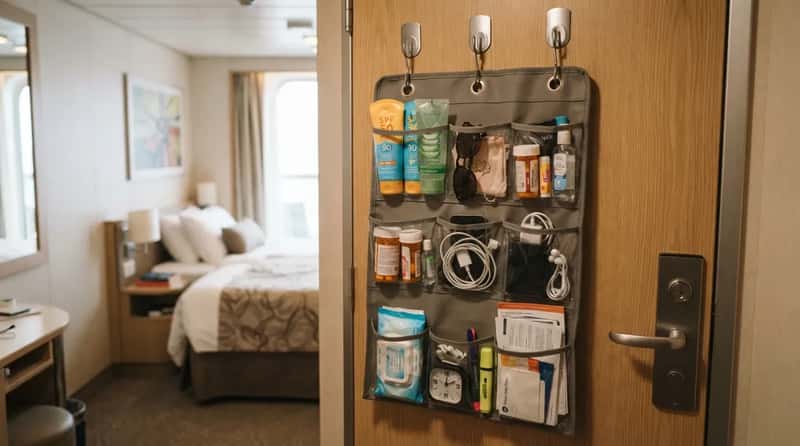
Veteran cruisers don’t use this for shoes at all. They hang it for sunscreen, medications, jewelry, and chargers, turning a blank door into instant storage a tiny cabin desperately needs.
The real trick is how it attaches, since most cruise lines don’t want it hooked over the actual door. Instead, veterans affix the organizer with magnetic hooks, and a set of strong magnets keeps it firmly in place for the whole cruise. One organizer eliminates almost every “where did I put that” moment of the entire trip.
#1 – Magnetic Hooks, Because the Whole Ship Is Steel

Most first-timers have no idea that cruise cabin walls, doors, and even ceilings are made of steel behind the paint and wallpaper. Nearly every major cruise line allows magnetic hooks onboard, and once veterans discover this, they never cruise without a bag of them again.
A handful of strong magnets can turn one of the smallest rooms you’ll ever sleep in into a fully organized space, holding towels, hats, and bags off the floor and off the furniture. The single most requested cabin item among veteran cruisers isn’t furniture at all, it’s a magnet.
Why It Stands Out
- Works on walls, closet doors, and even ceilings without a single hole
- Costs a few dollars for a set that lasts the entire cruise
- Frees up shelf and floor space instantly in a room with almost none
- Needs no tools, tape, or approval from a steward to set up
None of these 21 items show up on a typical first-timer’s list, and that’s exactly why they matter. The gap between a smooth cruise and a frustrating one usually isn’t about money spent or excursions booked. It’s about a lanyard, a fan, a few strong magnets, and the small habits nobody explains until you’ve already learned them the hard way.
Veteran cruisers didn’t start with this list either. They built it one forgotten item, one gift-shop overpay, and one sleepless night at a time. Now you get to skip straight to the parts that actually work.