Most people assume museum docents are glorified hall monitors in comfortable shoes, quietly killing time between exhibits. The reality is almost the opposite: they’re trained educators and preservation advocates who spend entire shifts absorbing cringe-worthy visitor behavior behind a frozen, professional smile.
Ask docents off the record what actually happens on the gallery floor, and the stories get uncomfortable fast – touching, sneaking, talking over tours, and worse. We tracked down the behaviors that come up again and again, ranked from mildly annoying to the one that quietly breaks a docent’s heart every single shift.
#21 – Skipping Every Single Introductory Panel

Most visitors blow right past the most important text in the entire building without a second glance.
One museum staff member explained on Reddit: “Everyone walks past the signs and texts that’ll give an overall introduction to what you’ll see coming in.” That same staffer noted guests often leave feeling confused and say there wasn’t much to see – a problem that’s almost entirely self-inflicted.
A staff member at another museum added that guests don’t have to read every panel, but reading the introductory one at least helps orient them. That one minute of reading up front can completely transform the next ninety minutes of wandering.
Docents who spend hours preparing contextual tours genuinely wince when visitors sprint past the very setup that would make everything click. It’s like skipping the first chapter of a mystery novel and then complaining the ending made no sense.
Skipping the intro panel is forgivable ignorance. What visitors do next is a different level of disregard entirely.
#20 – Touching Everything Within Arm’s Reach
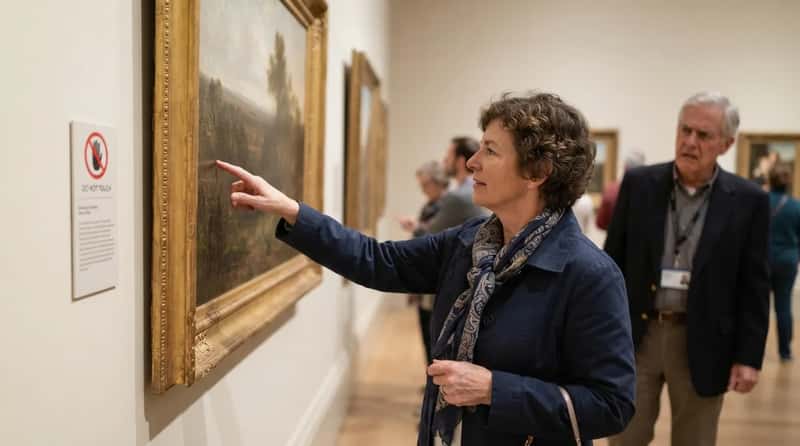
The “do not touch” signs are not decorative suggestions – but you’d never know it from watching visitors in action.
Many artworks and historical pieces are fragile and irreplaceable. The natural oils and dirt on our hands, even when invisible, can cause long-term damage, discoloration, or erosion.
Visitors should also avoid touching frames, platforms, labels, and display cases used to protect the objects on display. A simple rule applies: unless it’s explicitly stated that touching is safe, assume it isn’t.
Docents watch this happen dozens of times per shift. The worst part? Many touchers do it while making direct eye contact with the “DO NOT TOUCH” sign, as if daring the universe to react.
If touching is this common, wait until you hear how visitors treat the camera rule.
#19 – Using Flash Photography After Being Told Not To

Every museum posts the rule. Docents repeat the rule. Visitors fire the flash anyway – usually seconds later.
Flash is prohibited because the intense light from a camera can cause cumulative, irreversible damage to light-sensitive materials like paintings, textiles, photographs, and historical documents. Over time, repeated exposure leads to fading, discoloration, and slow degradation.
A single flash carries UV and infrared energy that can trigger chemical reactions inside the materials of an artwork. Think of it as a subtle, continuous sunburn for the objects.
One flash might seem negligible, but consider the thousands an object could endure over its lifetime if unrestricted photography were allowed. Docents are stuck in an awkward loop: explain the rule politely, then watch the same person shrug and try again from a slightly different angle.
Cameras are one thing. Unsupervised kids are an entirely different category of chaos.
#18 – Letting Kids Run Completely Unsupervised
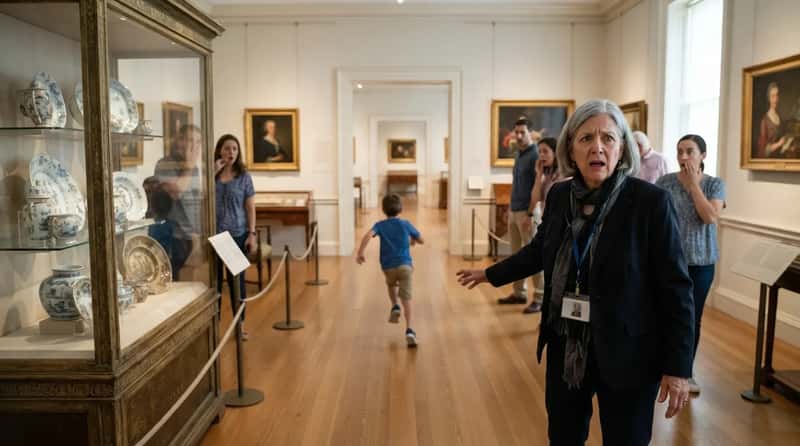
Nothing clears a room of docent composure faster than a sprinting six-year-old in a gallery full of 300-year-old ceramics.
Museum staff say the worst incidents almost always start with an unsupervised kid. In one documented case, parents let their child run wild inside a museum holding priceless pieces once owned by George Washington.
Staff repeatedly asked the parents to calm the child down. They just nodded and did nothing – until the kid threw himself into a historically significant chair flagged for restoration, damaging it in a completely preventable moment.
Experts encourage parents to talk to kids about museum rules before arriving – quiet voices, no running, no touching. That prep takes two minutes in the parking lot and spares everyone a crisis.
Fast Facts
- Many museums offer family activity backpacks or scavenger-hunt guides designed to keep kids engaged without touching displays.
- Some institutions schedule quieter, family-friendly hours specifically for younger visitors.
- A short rules conversation before entering can prevent most of the supervision issues docents report.
- Many museums include a dedicated hands-on children’s gallery, giving kids a “yes touch” outlet elsewhere in the building.
What docents dread most isn’t the kid – kids are curious, and that’s genuinely wonderful. It’s the parent watching the chaos unfold with the serene detachment of someone who has fully outsourced parenting to the universe.
Kids at least have an excuse. Adults who tune out their own guided tour do not.
#17 – Treating the Docent Tour as Optional Background Noise

Signing up for a guided tour and then holding a side conversation through the entire thing is a special kind of oblivious.
If there’s an opportunity for a guided tour, the key is keeping your voice down and actually listening. Talking during these tours distracts other visitors and the talker – it’s genuinely hard to absorb information while holding a separate conversation.
Docents often spend dozens of hours preparing a single tour script. They notice when half the group is murmuring about dinner plans during a pivotal moment in history.
They keep smiling. They keep talking. But they notice – especially when the visitor who talked through the whole tour catches up afterward and asks the exact question that was answered seven minutes earlier.
Ignoring a tour is rude. Climbing on the exhibits is a different level of problem.
#16 – Climbing On or Sitting On Displayed Objects
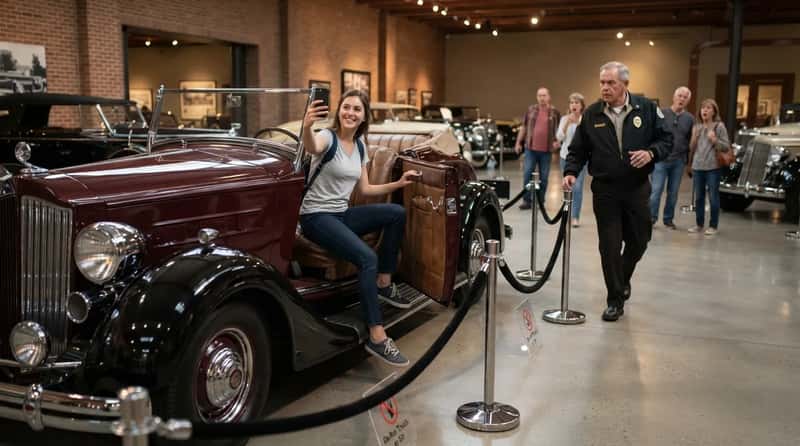
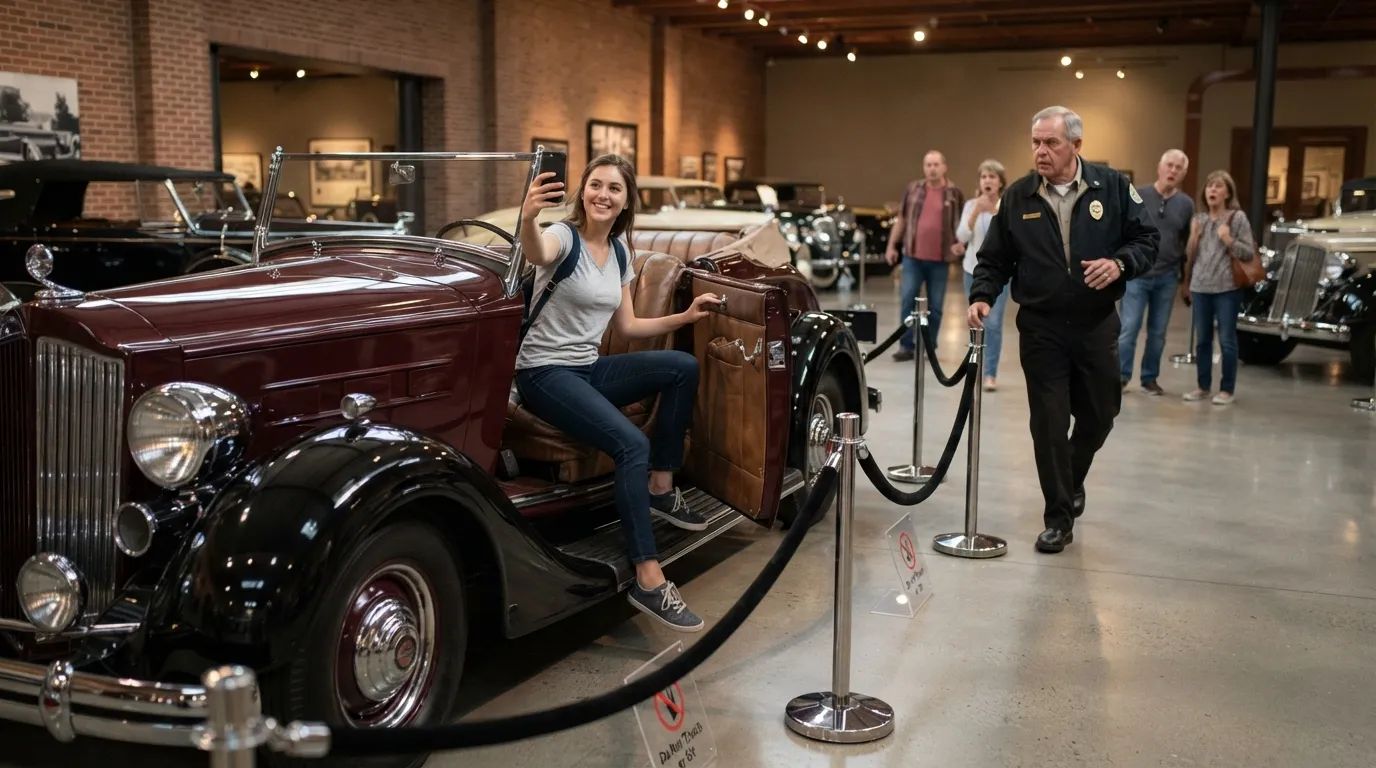
If it looks like furniture, some tourists will treat it like furniture – regardless of its age, fragility, or the five signs surrounding it.
One visitor was documented climbing onto a classic car on display for preservation, just to get a photo – and had done it on multiple cars before staff intervened. Guides say “just one quick photo” is the excuse they hear right before something gets damaged.
National Park Service protocols explicitly direct staff to keep visitors out of reach of exhibited objects, and to make sure no one leans against or sits on chairs, cabinets, and tables on display.
Social media has turbocharged this behavior. The perfect “vintage car selfie” is worth, to some visitors, the risk of a multi-thousand-dollar conservation bill – which, of course, they’ll never pay.
Sitting on the artifacts is bad. Talking over them at full volume creates a whole different kind of headache.
#15 – Talking at Full Volume in Quiet Gallery Spaces
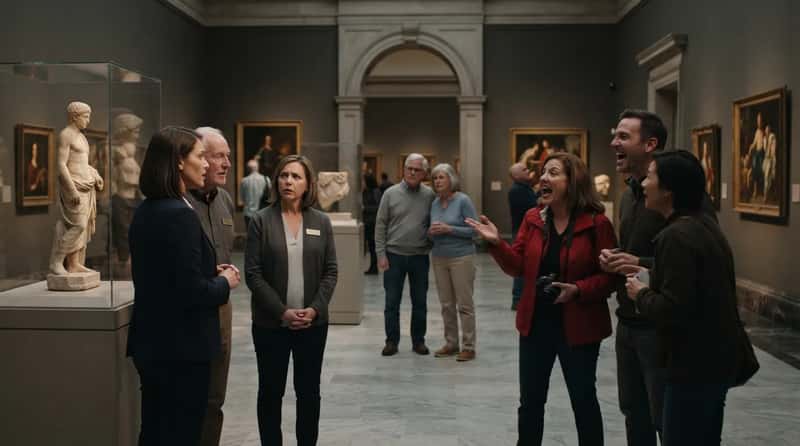
Museums aren’t libraries with a strict silence rule, but they’re also not sports bars – a distinction some visitors apparently never received.
Museums are places of learning and reflection, and keeping noise levels down matters. Talking loudly, blasting a phone speaker, or making other loud noises disrupts everyone trying to enjoy the space.
Docents mid-explanation routinely have to raise their voices, or simply pause, because someone five feet away is recapping last night’s TV drama at full volume. Group visitors sometimes turn the gallery into a social venue without even noticing.
They’re having a great time. Everyone around them is not – and docents must somehow manage that gap without starting an incident.
Loud talking is annoying. Demanding answers a docent has no way of knowing is a whole different frustration.
#14 – Demanding Information Docents Cannot Possibly Have

Docents are knowledgeable, often deeply so – but some visitors treat them like an all-knowing oracle for any question their brain produces.
Common requests include asking a docent for directions to a different museum across town, restaurant recommendations mid-tour, or the exact sale price of a piece on loan from a private collector. These questions aren’t insulting – they’re just completely outside the scope of what anyone in that building can answer.
Worse is the aggressive variant: a visitor asks an obscure technical question, hears an honest “I’m not certain about that specific detail,” and responds with visible contempt, as if the docent personally failed them.
A docent’s job is to educate, facilitate, and connect. It is not to serve as a human search engine with infinite recall of every fact tangentially related to the building.
Unanswerable questions are one thing. Ignoring an entire gallery for one famous piece is another kind of miss altogether.
#13 – Crowding the Most Famous Piece and Ignoring Everything Else
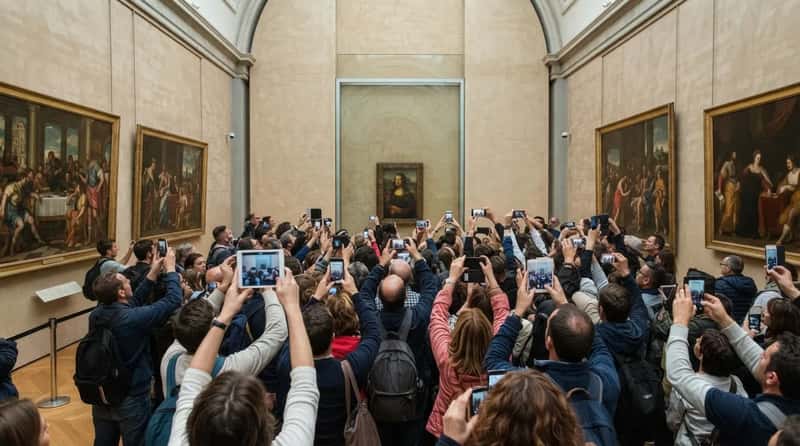
Every major museum has one: the single work everyone elbows toward while an entire gallery of equally remarkable pieces sits in empty silence ten feet away.
The Mona Lisa is the textbook case, but this plays out at nearly every institution with a “famous” anchor piece. Visitors find the crowd, insert themselves into it, photograph the piece from behind seventeen other phones, and leave without glancing at what’s on either side of it.
Wanting a great view of a masterpiece is understandable, but blocking others by standing too long in front of a single exhibit is genuinely inconsiderate. Docents know the surrounding collection deeply, and they watch visitors ignore it with heroic patience.
Many curators deliberately place secondary masterworks near the “crowd magnet,” hoping visitors will look sideways. Most don’t – the secondary works wait in dignified silence, seen mainly by the staff.
Crowding a masterpiece is annoying. Sneaking snacks past security is a whole different kind of risk.
#12 – Bringing In Food or Uncovered Drinks
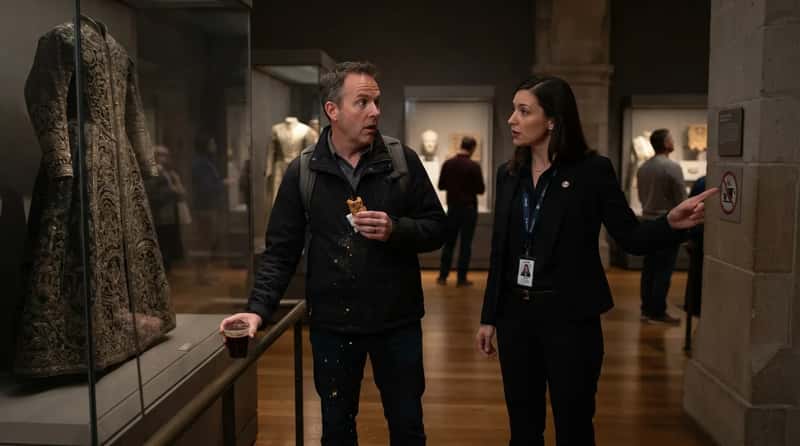
Crumbling granola bars and open coffee cups aren’t technically weapons, but in a room full of ancient textiles and open artifacts, they function like one.
Museums restrict food and drinks in gallery spaces for the same reason conservation labs do: crumbs attract insects, liquids cause catastrophic damage, and airborne particles from “dry” snacks can settle on porous surfaces. A spilled coffee near an open manuscript display isn’t an inconvenience – it can be irreversible.
Docents and guards frequently intervene when visitors sneak water bottles, smoothies, or snacks through gallery doors. The visitors almost always look genuinely surprised this is a rule, even though the signs have been posted at every entrance for decades.
The most common defense: “It’s just water.” Conservators, who’ve spent careers rehydrating and de-acidifying artifacts, would very much like a word.
Quick Compare
- Inside the galleries: no food and no open drinks, almost everywhere, no exceptions.
- Museum cafes: food and drinks welcome, usually just steps from the exhibit halls.
- Sealed water bottles: often fine tucked in a bag, rarely allowed open near displays.
- Coat and bag check: typically free, and it solves the snack problem before you even step inside.
Sneaking snacks is one thing. Swinging a three-foot metal pole through a gallery is another.
#11 – Using Selfie Sticks and Tripods Without Permission
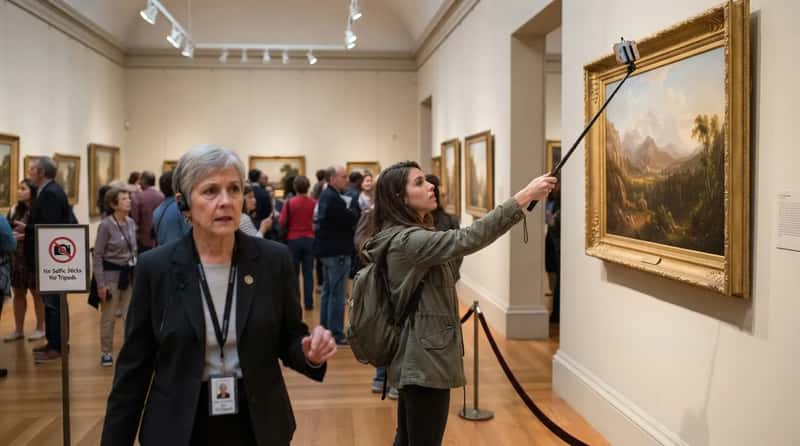
To a museum docent, a selfie stick is roughly equivalent to swinging a three-foot aluminum arm through a room full of priceless objects – because that is exactly what it is.
Tripods, monopods, and selfie sticks obstruct pathways, create tripping hazards, and risk damaging artwork if mishandled. Most museums prohibit them without prior special permission.
The Smithsonian Security Conference highlighted a rise in bold visitor behavior driven largely by social media. Some selfie-seekers wait for guards to turn a corner so they can get close to artwork, or even sit on a priceless piece in a furniture gallery, just to get the shot.
Docents have developed what might be called “selfie stick radar” – a peripheral awareness of anyone reaching into a bag and pulling out something telescoping. The walk-and-talk pauses, the intervention happens, and the smile stays in place the entire time.
Selfie sticks are obvious. Leaning on display cases is the quiet version of the same problem.
#10 – Leaning Against Display Cases and Gallery Walls
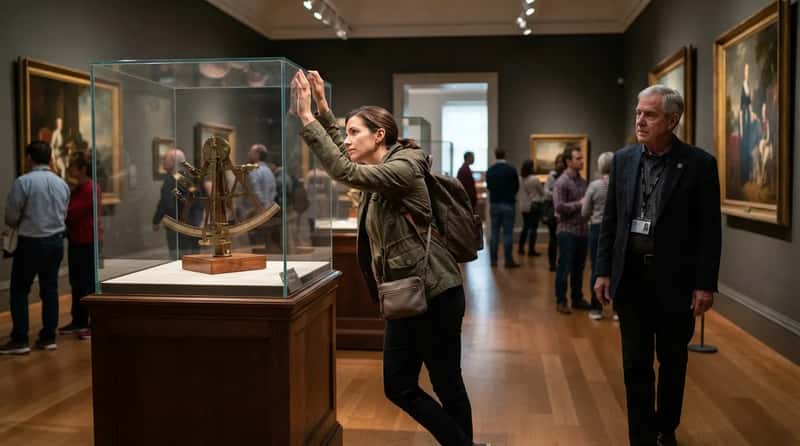
Display cases are not benches. Gallery walls are not leaning posts. And yet, after the first hour of walking, many visitors apparently forget both facts.
Leaning or touching fragile display structures can cause accidents or damage. Cases can wobble dangerously under pressure, and even brief contact can misalign sensitive internal lighting or dislodge small components.
It’s good practice to maintain a safe viewing distance at all times. Leaning too close could trip alarms, block others’ views, or cause an accidental bump – a good rule of thumb is staying behind any rope or barrier provided.
The docent’s challenge is that leaning looks passive and harmless, which makes calling it out feel disproportionate – even as the case is slowly pushed a millimeter off its base by someone checking their texts.
Leaning is a quiet problem. Rushing through the entire building is a louder, more common one.
#9 – Rushing Through the Entire Museum in Under an Hour
The “I did the Met in forty-five minutes” approach to museum-going is the cultural equivalent of eating at a Michelin-star restaurant and swallowing everything whole.
Even the best-curated museum can’t do its job if visitors aren’t doing theirs. Ignoring signs, touching fragile objects, or rushing through an exhibit all undermine the entire experience.
Docents design tours with pacing in mind – a deliberate rhythm of reveal, context, and reflection. When a visitor sprints through that structure, they strip the meaning from every object they technically “saw.”
The brutal irony: visitors who rush and leave early are also the most likely to call the museum “not that impressive” afterward. The experience they dismissed as thin was actually just the experience they refused to have.
Worth Knowing
- Many museum professionals suggest exploring two or three galleries deeply rather than attempting the entire building in one trip.
- Special or ticketed exhibits often reward a slower pace, since they’re typically built as a curated narrative rather than a checklist.
- A repeat visit, when possible, tends to leave a far richer impression than one rushed marathon walkthrough.
- Starting with a single wing and building outward beats trying to cover the whole map in one pass.
Rushing is a self-inflicted wound. What visitors say out loud in front of famous art is a different kind of cringe entirely.
#8 – Loudly Declaring That a Famous Work “Looks Smaller in Person”
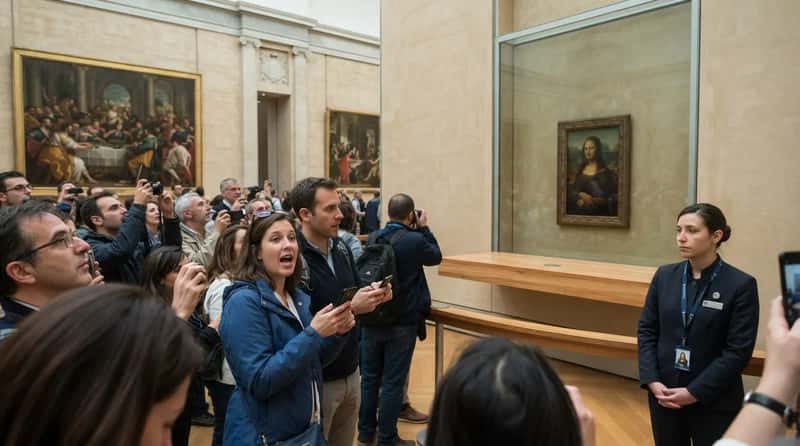
This observation gets delivered, in museums worldwide, with the energy of someone uncovering a conspiracy – as though they’re the first to notice, and the docent must be informed immediately.
The Mona Lisa, the Winged Victory, the Rosetta Stone – nearly every iconic work draws visitors announcing their size-based disappointment at conversational volume. Docents have heard this so often they’ve likely developed a reflex to suppress the eye-roll.
What these visitors are actually reacting to is the gap between digital reproduction and physical presence – ironically one of the most interesting things about experiencing art in person. But that observation requires slowing down, not immediately measuring expectations against reality.
Experienced docents have a graceful answer ready: scale, brushwork, texture, varnish – things no screen can transmit. Most visitors, having delivered their verdict, don’t stay for the reply.
Complaining about size is loud but harmless. Physically walking into a tour in progress is a different kind of disruption.
#7 – Walking Into the Middle of an Active Docent Tour
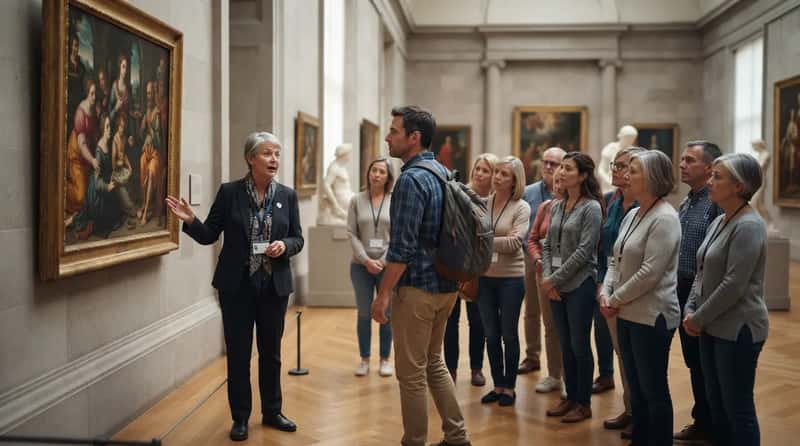
There’s a particular kind of visitor who sees a group listening intently to an expert and decides that’s the perfect moment to step between the speaker and the audience for a closer look at the wall behind them.
Docents running tours carefully manage pacing, sight lines, and group dynamics. A stranger wandering into the physical center of that arrangement doesn’t just block the view – it breaks the collective attention the docent spent fifteen minutes building.
The etiquette is simple: if you want to listen, join from the edges and stay quiet. If you don’t, walk around the group instead of treating an active presentation like an obstacle course.
Most docents handle it with a gracious pause and gentle redirect. A few have mastered simply talking louder and continuing without acknowledgment – which is, honestly, the most professional possible response.
Interrupting a tour is careless. Photographing the label instead of the art is a quieter version of missing the point.
#6 – Photographing the Label Instead of Actually Looking at the Piece
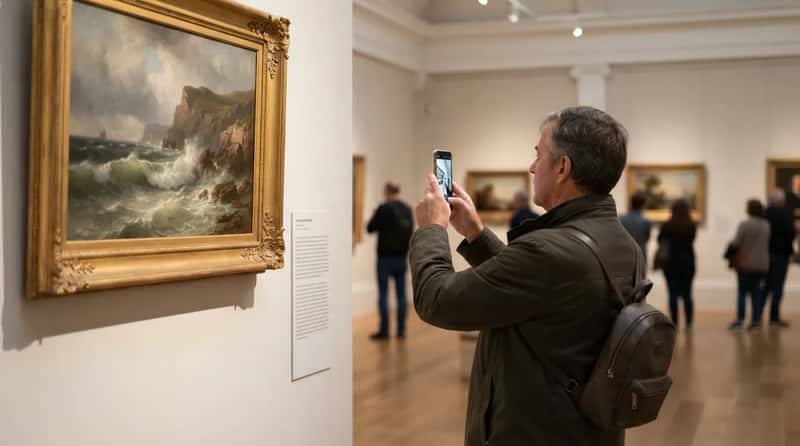
The modern museum workaround: point phone at the placard, photograph it, walk away, and congratulate yourself on “getting” the exhibit.
This is the inverse of what docents spend their careers facilitating. The label is the entry point, not the destination – the goal is to read it, absorb the context, then let that change how you look at the actual object in front of you.
Some visitors photograph labels for good reasons: poor eyesight, wanting to research later, noting a reference. But plenty simply photograph and move, treating information capture as a substitute for the experience rather than a supplement to it.
Don’t let documentation stop you from being fully present. Sometimes putting the phone away and simply absorbing the artwork in the moment is the most rewarding choice.
At a Glance
- Reading a label first, then studying the object, tends to build deeper understanding than photographing and moving on.
- Many museum apps let visitors bookmark object information for later, cutting down the urge to photograph every placard.
- Putting the phone away for even a few minutes in front of one piece is a small habit that changes the whole visit for many people.
Skipping the art for the label is a small loss. Arguing with the docent about facts is a bigger one.
#5 – Challenging the Docent’s Facts Mid-Tour
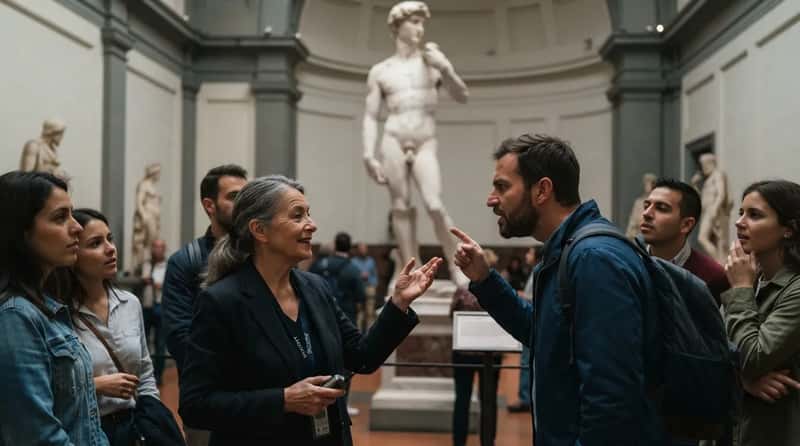
Every docent has encountered the visitor who’s done twenty minutes of research online and arrived ready to dispute trained experts.
Clarifying questions are genuinely welcome – good docents love an engaged audience. What they don’t love is being interrupted mid-tour by someone announcing, with total confidence, that the date or attribution is wrong, based on nothing more reliable than a travel blog skimmed at breakfast.
The professional response is usually a calm acknowledgment. The internal experience is significantly less calm, since these are people who’ve read primary sources, attended training, and often hold advanced degrees.
Docents are human and occasionally make errors. The respectful approach is a quiet word after the tour – not a public challenge mid-sentence meant to showcase the visitor’s own knowledge to the group.
Arguing with a docent stings. A ringing phone at full volume is a more universal irritation.
#4 – Using a Phone Call at Full Volume Inside a Gallery

The ringtone alone is bad enough. The full speakerphone conversation about a mortgage refinancing is something else entirely.
Museum galleries are acoustically reflective – hard floors, high ceilings, minimal soft furnishing – so a single loud phone conversation carries remarkably far. Docents in adjacent rooms can often hear every word, and so can every other visitor within a wide radius.
Most museums post “please silence your phone” signage at every entry point. Most visitors see it, nod mentally, then answer their phone at full volume eleven minutes later because the call feels important and the sign has been filed under “rules for other people.”
The docent’s dilemma is real: intervening means stopping mid-explanation and risking a confrontation with someone telling their cousin about a plumbing issue. Museum professionals stress how influential one negative experience can be – in the social media era, a single complaint can spiral into a compound effect of bad reviews.
Phone calls are loud but temporary. What comes next is a pattern that repeats even after visitors are told to stop.
#3 – Sneaking Attempts After Being Explicitly Told No
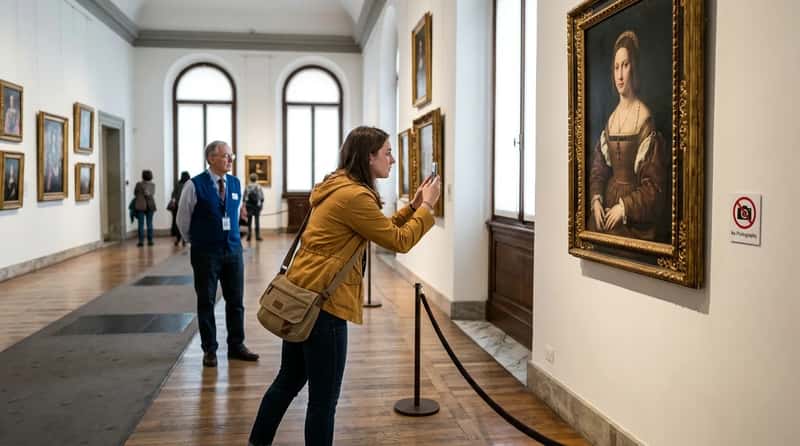
The rules are posted, the docent has explained, the guard has intervened – and five minutes later, the visitor tries again from a different angle, hoping no one is watching.
Visitors are becoming bolder in their quest for the perfect “post-worthy” picture. Some wait for guards to round a corner so they can get close to artwork, or sit on a priceless piece in a furniture gallery, just to get the shot.
This escalating boldness, documented at the Smithsonian Security Conference, represents a meaningful shift in visitor behavior. The calculation seems to be that the Instagram post is worth the risk of a warning – and the warning isn’t a consequence anyone genuinely fears.
The calculus changes when damage actually happens. A single incident can cost tens of thousands of dollars to repair, and the visitor who sneaked the photo rarely pays a cent of it.
Sneaking around the rules is bold. Blaming the museum for your own disengagement is somehow worse.
#2 – Ignoring the Docent Entirely and Then Complaining the Visit Was Confusing
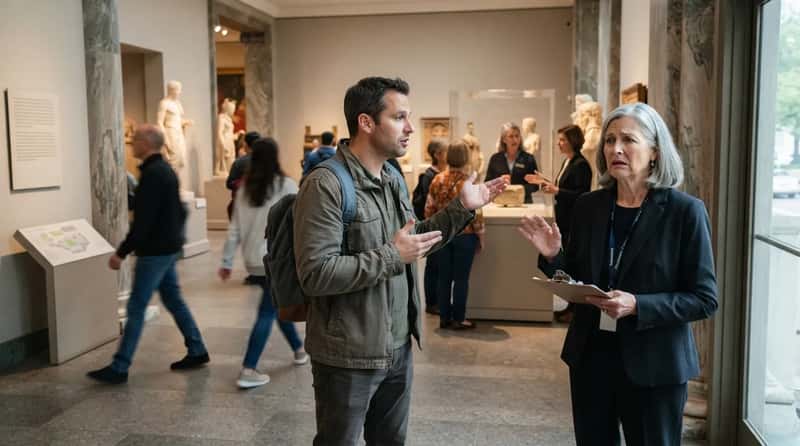
This one stings on a specific, personal level for anyone who has ever put real work into preparing a visitor experience.
The pattern is consistent: visitors bypass orientation, skip the guided tour, ignore the panels, move through at speed, then find a staff member on the way out to express disappointment. The museum “didn’t have much.” It was “hard to follow.” It “wasn’t very interesting.”
All of this gets delivered with the confidence of a genuine review, with zero awareness that the visitor systematically skipped every tool the museum provided. It takes a team of thoughtful professionals working together to make each visit meaningful from the moment guests walk through the door.
Docents watch this happen constantly, and they’re required, professionally, to respond with patience rather than a quiet inventory of every resource that visitor walked past on the way in.
That one is frustrating. But there’s a final behavior docents say cuts even deeper – and it happens almost every single day.
#1 – Treating the Docent Like Invisible Staff Rather Than a Human Expert

This is the one that docents – when they’re being fully honest – say hurts the most. And it happens constantly.
It shows up in small ways: visitors who talk over the docent mid-sentence, or who make eye contact, register that a human is speaking, and look back at their phone anyway.
It shows up when someone asks a question, receives a detailed answer, and walks away before the last word is finished. It shows up when a visitor asks for bathroom directions mid-tour with another group – not out of urgency, but because they never registered the context they were interrupting.
Most of the people staffing museum galleries are paid modestly, even as museums position themselves as educational institutions, and many programs rely on volunteers entirely. Docents often bring decades of expertise and genuine passion for the subject, and receive barely a nod of acknowledgment from the people they’ve prepared to serve.
Some visitors see guards and docents – so often silent and composed – as more furniture than human. That’s a misconception: many speak with real passion about the exhibitions and feel personally responsible for the visitors in front of them. Treating them as invisible is the single behavior most likely to quietly hollow out the experience for everyone in the room, including the visitor doing it.
The Bottom Line
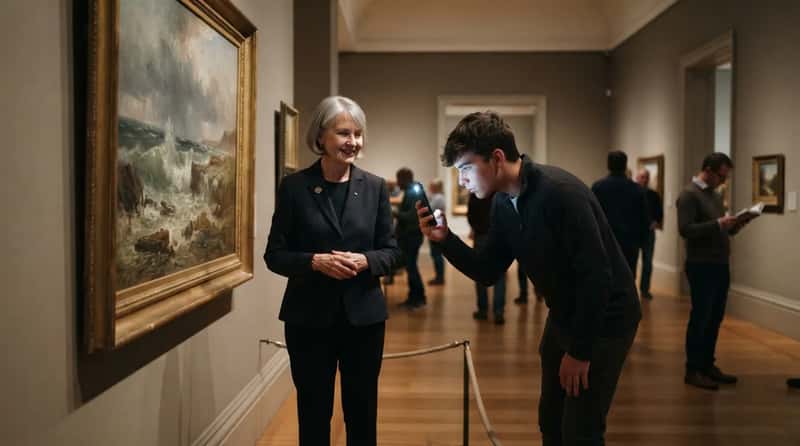
Museum docents are not hall monitors. They’re trained educators, cultural advocates, and patient professionals who absorb an extraordinary volume of oblivious, preventable behavior every single shift, with a professional smile locked in place the whole time.
The patterns repeat everywhere: touching what shouldn’t be touched, photographing instead of looking, rushing through what was built for slow attention, and treating the most knowledgeable person in the room as invisible. None of it is malicious – most of it is simply unaware.
The fix is almost embarrassingly simple: slow down, read the signs, turn off the flash, keep your hands to yourself, and thank the person who actually knows why every object in that room matters. You’ll have a better visit, they’ll have a better day, and something irreplaceable survives intact for the next person who walks through the door.
Have you witnessed any of these in the wild – or been guilty of one yourself? Drop it in the comments.