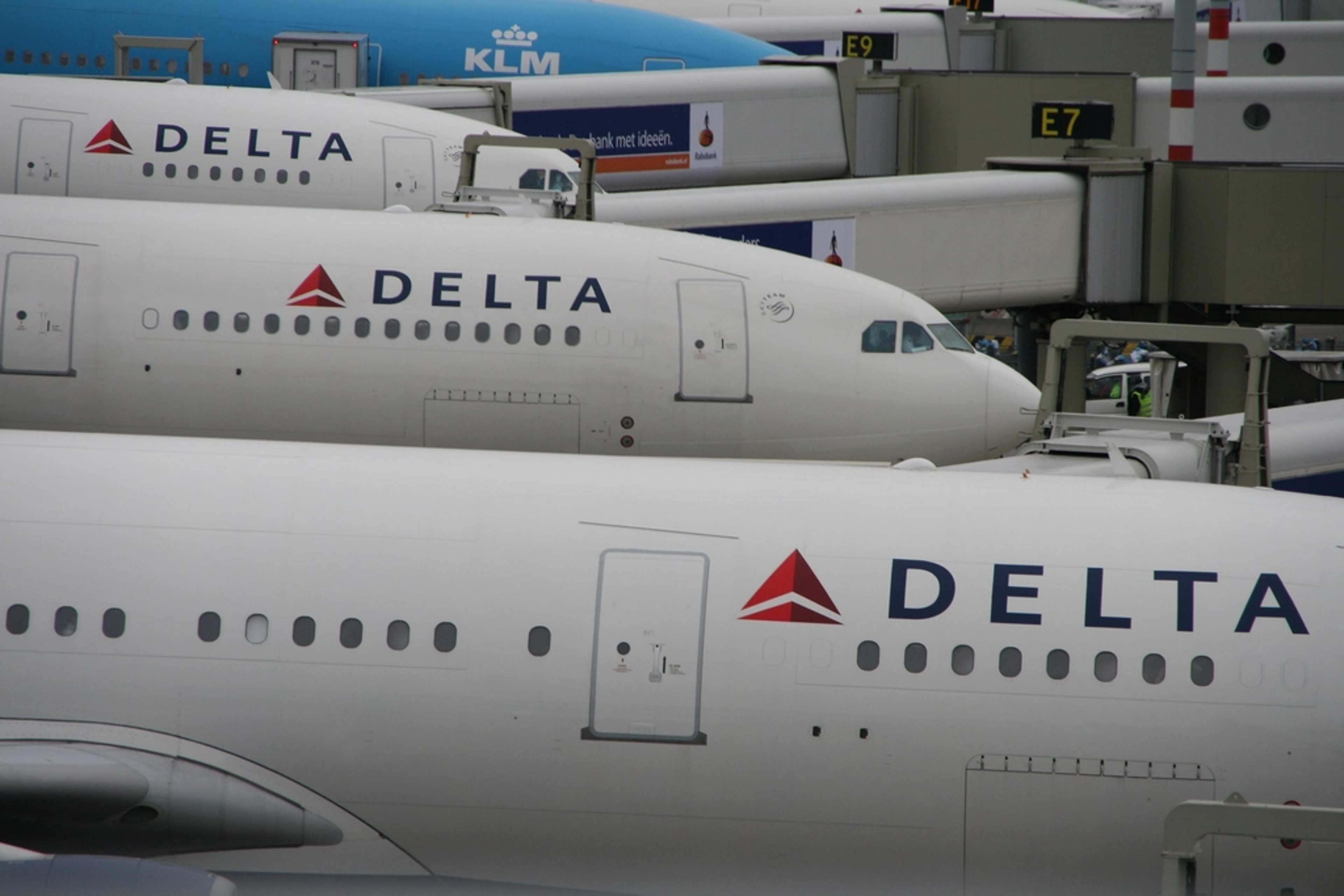
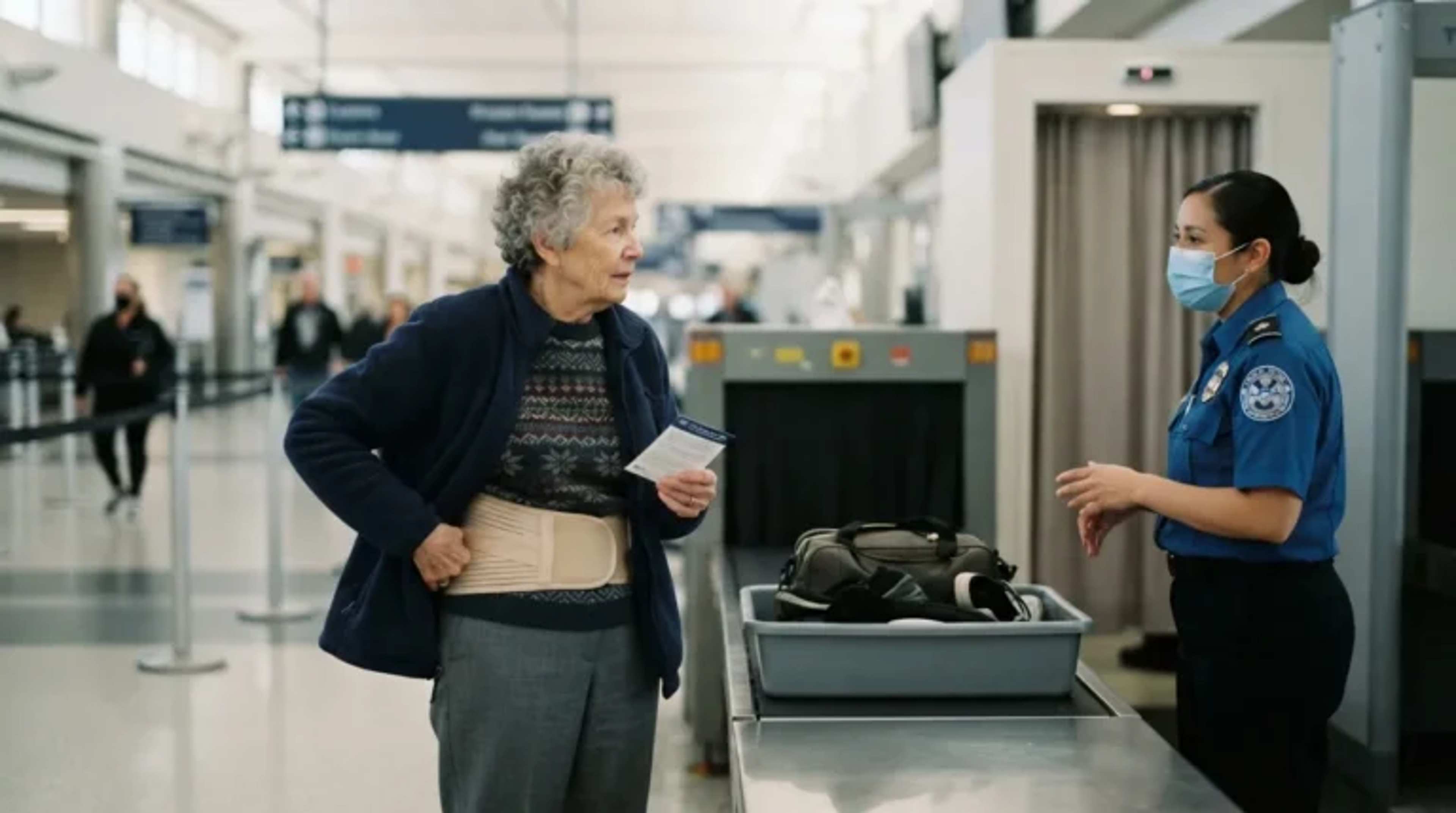
Most travelers assume the worst that can happen to a checked bag is a scuff mark or a slightly late arrival at the carousel. Baggage handlers who spend their shifts hauling suitcases through freezing rain and blistering heat see something far worse: a steady stream of reckless packing choices that cause real injuries, real fires, and real losses.
Some of these habits are so common that handlers have stopped being surprised by them, even as they keep causing the same chaos flight after flight. What actually happens to your suitcase between check-in and the carousel is rarely explained to passengers, and once you know it, you may never pack the same way again.
#22 – The “Just One More Pair” Shoe Habit That Silently Wrecks Your Packing

Shoes are the single most common source of wasted space and unnecessary weight in checked luggage. Travel experts consistently flag footwear as the worst offender among the unnecessary items people cram into their suitcases. A single extra pair rarely feels like a big deal on its own, which is exactly why the habit spirals out of control.
The real damage shows up cumulatively: three or four “just in case” pairs can add several pounds before you’ve packed a single shirt. That weight creep is often the difference between a bag that clears check-in cleanly and one flagged as overweight at the counter. It also crowds out space for anything you actually pick up on the trip. Handlers don’t see the shoes, but they absolutely feel the extra pounds those shoes add to every bag they lift that day.
#21 – The Twin Black Suitcase Nobody Can Tell Apart On the Carousel
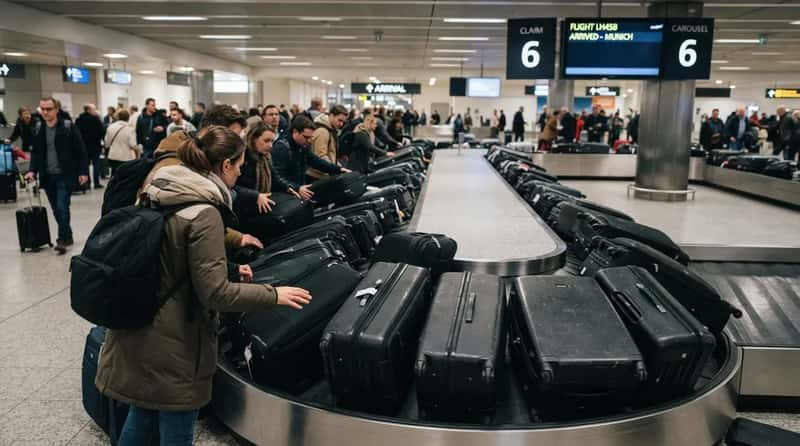
Plain black hard-shell suitcases are the most popular style sold, which means dozens of nearly identical bags can hit the same carousel on a single flight. Without any distinguishing mark, travelers linger at baggage claim scanning bag after bag, unsure which one is theirs. That hesitation causes pileups and slows down the entire claim area for everyone else waiting behind them.
Handlers see this confusion play out constantly, especially on connecting flights where dozens of similar bags land within minutes of each other. Not labeling your luggage makes it much harder to spot on the belt, and standing there scanning a black suitcase that looks like everyone else’s causes delays for other passengers too. A single bright strap or tag solves a problem most travelers don’t realize they’re creating. But there’s a twist here that trips people up even worse than an unmarked bag, which is next.
#20 – Grabbing the Wrong Bag Type for the Wrong Trip
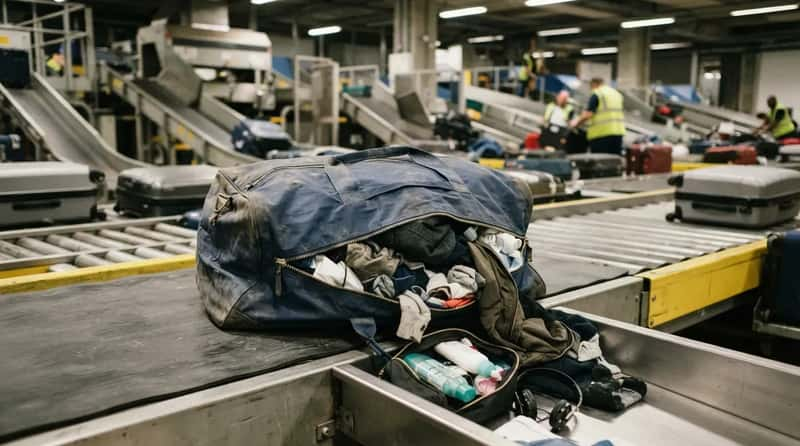
Not every suitcase is built for every kind of travel, yet most people buy one bag and use it for everything from a weekend road trip to a three-week international haul. Choosing the wrong bag is one of the biggest packing mistakes travelers make, and you can do everything else right but it won’t matter if the piece of luggage itself is subpar. A flimsy frame or weak zipper simply isn’t rated for repeated conveyor-belt impacts.
Soft-sided bags flex and compress well for space efficiency but offer little protection for anything breakable inside. Hard-shell cases protect fragile items but sacrifice packing flexibility and can crack under a hard drop. Handlers say the mismatch between bag type and trip type is one of the most preventable causes of damage they see. The next habit on this list is even easier to avoid, and even more commonly ignored.
#19 – Checking More Bags Than Your Allowance Instead of Consolidating
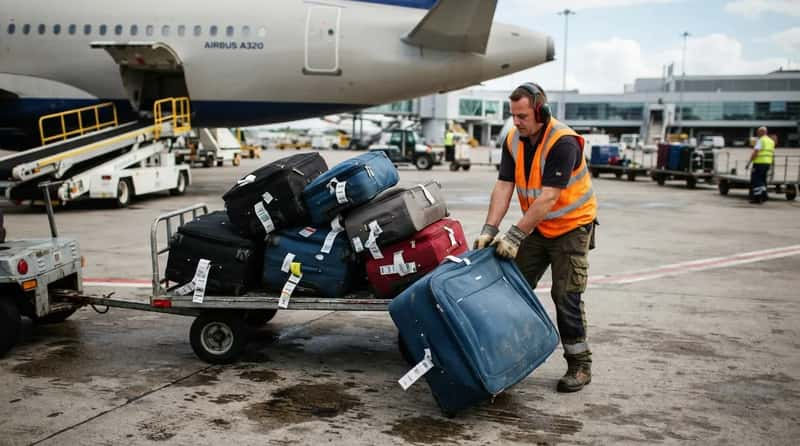
There’s a meaningful difference between an overweight bag and too many bags, and most travelers don’t realize both trigger separate fees and separate handling headaches. A traveler with one bag over the weight limit has overweight baggage, while a traveler with three bags when only two are allowed has excess baggage, and both come with additional fees. Handlers still have to move every single one of those bags regardless of which rule you broke.
Extra pieces mean extra lifts, extra scans, and extra chances for something to get separated from your itinerary during a transfer. Consolidating into fewer, well-packed bags is consistently easier for handlers to load correctly than splitting the same items across more pieces. It also reduces your own risk of one bag simply not making the connection. Speaking of connections, dangling straps cause a very different kind of problem.
Quick Compare
- Overweight bag: One bag over the limit, one flat fee
- Excess baggage: More pieces than your ticket allows, a separate fee per extra bag
- Either way: Handlers still have to lift, scan, and load every single piece
#18 – The Dangling Duffel Straps That Turn Into Conveyor Belt Traps
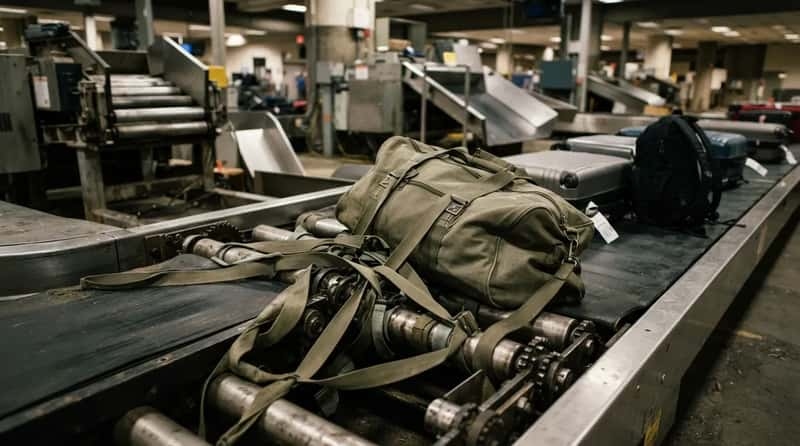
Soft duffel bags with loose straps, buckles, or hanging pockets look casual and convenient, but they’re a nightmare on a moving belt system. Strollers, car seats, and other odd-shaped gear become a problem when they aren’t wrapped, since straps catch on belts and buckles get stuck, slowing the whole line down. The same physics apply to any bag with loose external hardware.
A single snagged strap can jam a conveyor system and stall loading for an entire aircraft, not just your bag. Handlers routinely have to stop the line to physically free a strap that’s wrapped around moving machinery. Tucking straps in or buckling them down before drop-off takes ten seconds and prevents a delay that can ripple through dozens of other passengers’ bags.
#17 – Old Flight Stickers Still Stuck to the Shell
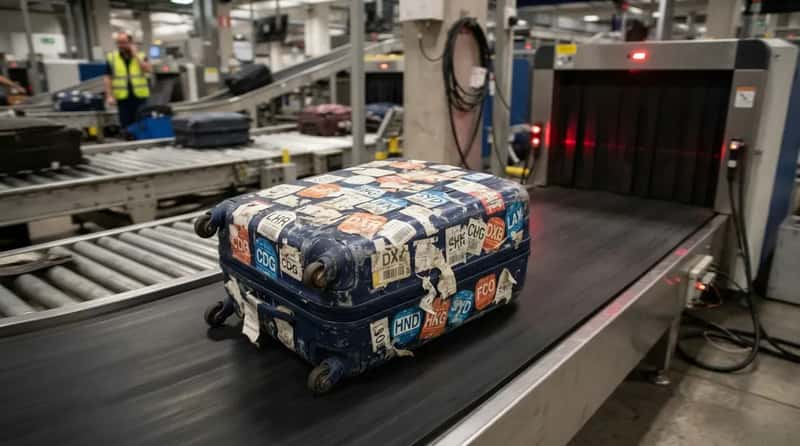
That collage of destination stickers on a well-traveled suitcase might look charming, but it’s actively working against you at the scanning stage. Barcode and RFID scanners rely on clean surfaces to read tags correctly, and old adhesive labels confuse the system more often than travelers assume. A bag that can’t be read automatically doesn’t just sit there quietly waiting.
If a bag can’t be scanned automatically, it can end up in manual processing, and that could mean the bag doesn’t make it onto the flight at all, which is exactly why old stickers should be peeled off before you travel. That single overlooked detail sends more bags to manual handling than most travelers would ever guess. Manual processing takes longer, adds more human touchpoints, and increases the odds your bag misses a tight connection entirely.
#16 – The Ribbon “ID Hack” That Actually Slows Your Bag Down
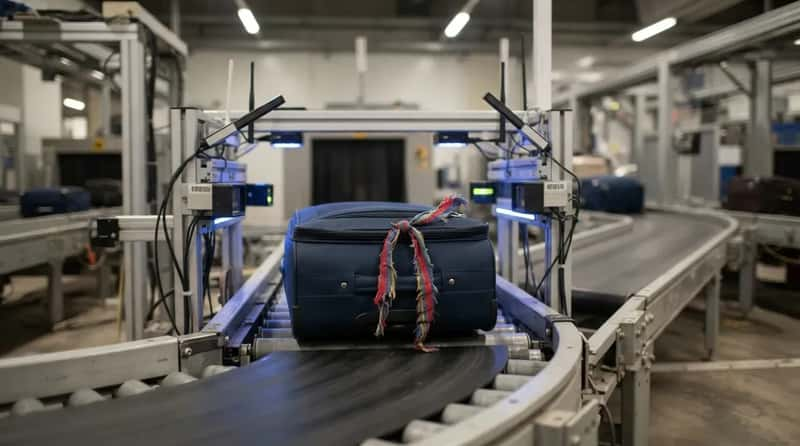
Tying a colorful ribbon to your suitcase handle feels like a clever, low-cost way to spot your bag instantly on the carousel. A Dublin Airport baggage handler revealed that this popular trick often backfires in a way almost nobody expects. Ribbons tied onto suitcases to help identify them can actually interfere with the bag being scanned properly in the baggage hall.
The dangling fabric interferes with the same automated scanning systems that stickers confuse, pushing the bag into slower manual review. A hack designed to save you thirty seconds at the carousel can cost your bag its spot on the flight entirely. A brightly colored hard tag attached flat to the handle achieves the same identification goal without the scanning risk. Combination locks create a related but very different kind of frustration.
#15 – Cheap Combination Locks That Get Cut Off Without Warning
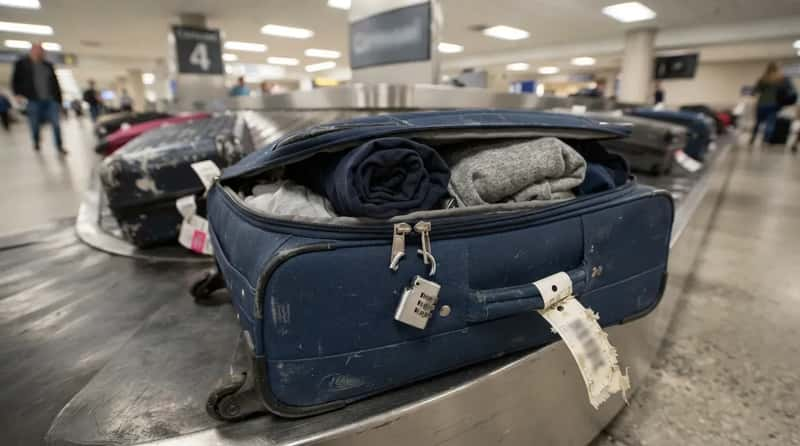
Non-approved locks feel secure, but security agencies have full legal authority to cut them off any bag flagged for a physical inspection. Travelers who use bargain locks instead of officially recognized ones often return to a suitcase that’s been forced open and left unsecured for the rest of its journey. There’s rarely any warning before this happens.
The lock most people trust to protect their belongings is frequently the first thing sacrificed the moment a bag needs a manual check. Once a lock is cut, the zipper pulls have nothing holding them together for the remainder of transit, transfers, and loading. A recognized lock avoids that outcome entirely and still gets removed for inspection, just without the destruction.
#14 – The Oddly-Shaped Bag That Breaks the Loading Tetris
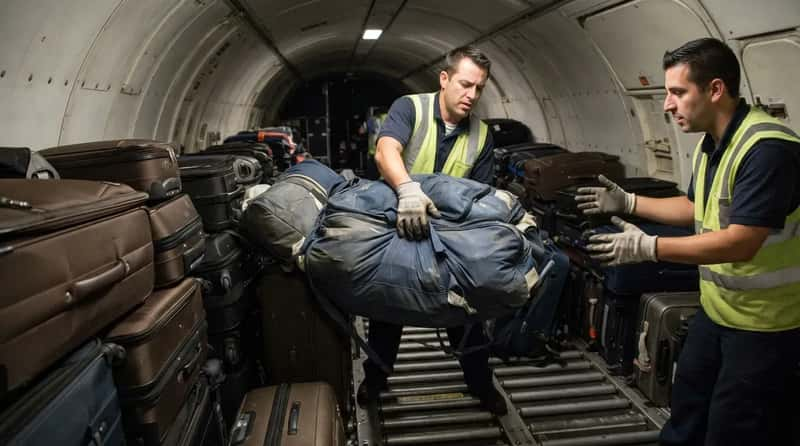
Loading an aircraft cargo hold is a genuine puzzle, and handlers describe the process in almost exactly those terms. Crews are given strict instructions to fit bags by weight, size, and shape, and some bags simply don’t fit cleanly, which delays the process, especially during short turnarounds. A lumpy, overstuffed, or unusually shaped bag ruins that geometry fast.
One misshapen suitcase can slow down loading for the entire aircraft, not just the passenger who packed it. Bulging exterior pockets, protruding straps, or items shoved in at odd angles all make a bag harder to stack securely. A firm, evenly packed bag that holds its rectangular shape is far easier and faster for handlers to fit into tight cargo space.
#13 – Wrapping Strollers and Car Seats Without Plastic Film
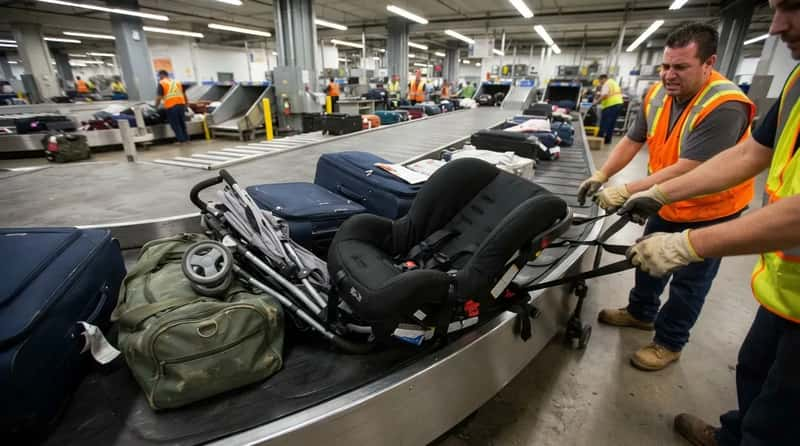
Parents traveling with strollers or car seats often assume gate-checking them bare is fine since the items are bulky and obviously not luggage. Handlers see this differently, because unwrapped gear with straps, wheels, and buckles causes exactly the same conveyor problems as a duffel bag with loose straps. Any odd-shaped gear left unwrapped becomes a snag risk the moment it hits the belt.
Airports frequently offer plastic wrap stations for exactly this reason, and using one takes only a couple of minutes before boarding. Wrapped gear moves through the system dramatically faster than bare gear, which handlers otherwise have to physically untangle by hand. Skipping the wrap doesn’t just risk damage to the stroller itself; it risks slowing down loading for the whole flight.
#12 – Overstuffing Until the Zipper Becomes the Weak Link
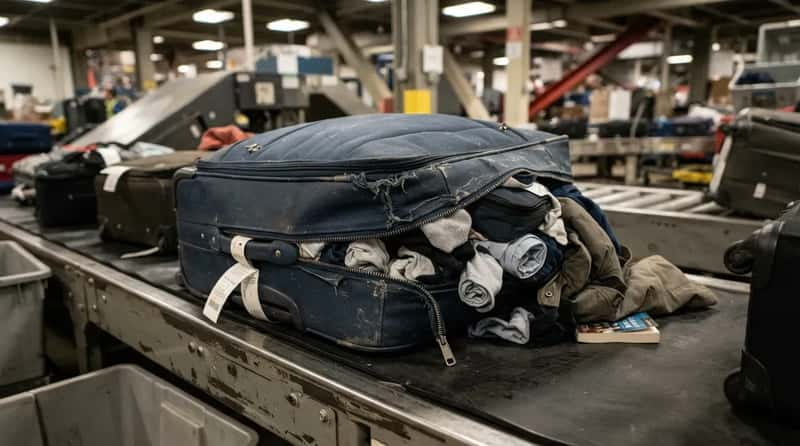
A suitcase zipper is rarely the strongest part of the bag, yet it’s routinely asked to hold together far more weight and pressure than it was designed for. Overstuffed bags bulge at the seams the moment they’re set down on a conveyor belt, and repeated jostling during transit only adds more strain. Once a zipper pull separates mid-transit, everything inside is exposed for the rest of the journey.
Handlers say split zippers are one of the most common types of in-transit damage they encounter, and it’s almost always preventable. A bag that closes with visible strain at check-in has almost no margin left for the pressure of stacking, sorting, and repeated handling. Leaving a little slack in the packing gives the zipper room to survive the trip intact.
#11 – Packing Full-Size Liquids Like They Won’t Leak
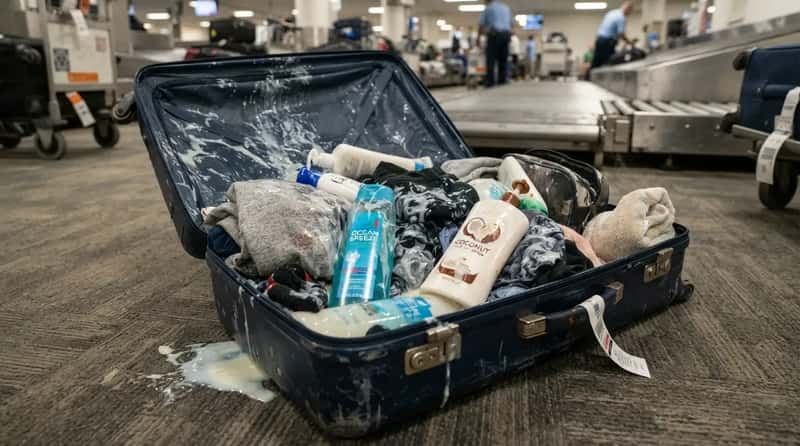
Full-size shampoo, lotion, and toiletry bottles crammed into a checked bag are a leak risk multiplied by every bump, drop, and stack that bag endures. Anything larger than 3.4 ounces has to be stowed in checked baggage unless it’s medicine or baby food, which is exactly why so many full-size bottles end up buried in checked luggage in the first place.
A single cracked cap doesn’t just ruin your own clothes; leaking liquid can seep through a bag’s shell and stain or damage whatever is stacked directly against it in the cargo hold. Handlers routinely find bags that have leaked onto neighboring luggage they never touched or packed. Solid toiletry alternatives or travel-size bottles sidestep this risk entirely, and they weigh less too.
Fast Facts
- Anything over 3.4 ounces must ride in checked luggage, not carry-on
- Medicine and baby food are the only common exceptions to that rule
- Solid sticks and travel-size bottles cut both leak risk and weight
#10 – Trusting a Soft-Sided Duffel With Anything Fragile
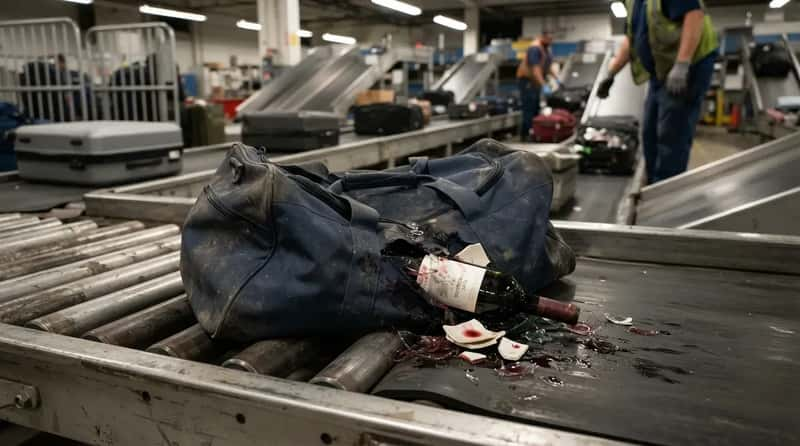
Soft-sided bags are excellent for maximizing space, but they offer almost no structural protection against impact, and handlers are refreshingly blunt about this tradeoff. A soft case works fine if you don’t mind your stuff being compressed, and it tends to be more space efficient in the hold, but anything fragile really needs a hard case to keep it protected.
A soft duffel provides essentially zero cushioning against the drops, stacks, and belt impacts that happen dozens of times per bag, per flight. Wine bottles, ceramics, electronics, and souvenirs packed in soft-sided luggage are far more likely to arrive cracked or crushed. If the item inside genuinely matters, the shell around it matters just as much.
#9 – Not Checking the Banned Items List Before You Zip Up
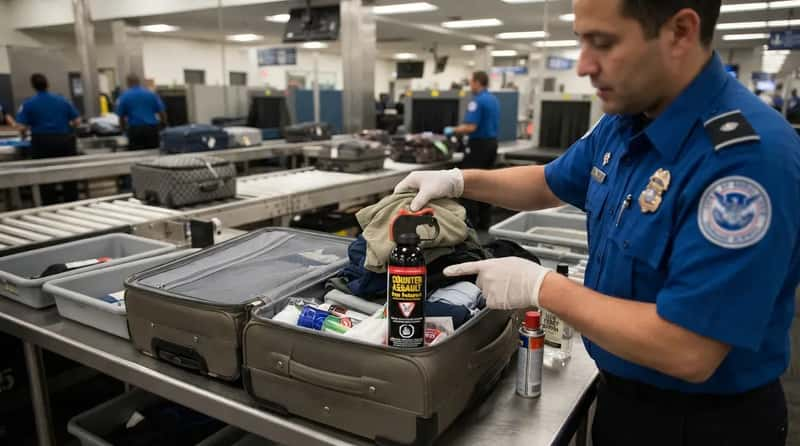
Many travelers assume prohibited items are limited to obvious things like firearms, but the actual list is longer and stricter than most people expect. Items like bear spray, alcohol over 140 proof, butane, cooking spray, and lighter fluid are completely banned by the TSA, and not knowing better isn’t accepted as an excuse, with penalties that can rack up to over $17,000.
A single overlooked item hiding in an otherwise normal bag can trigger a civil fine that dwarfs the cost of the flight itself. Beyond the financial hit, a flagged bag typically gets pulled for manual inspection, which delays that traveler and every bag processed behind them. A two-minute list check before zipping up avoids the entire scenario.
#8 – Skipping the Bathroom Scale Before You Leave the House
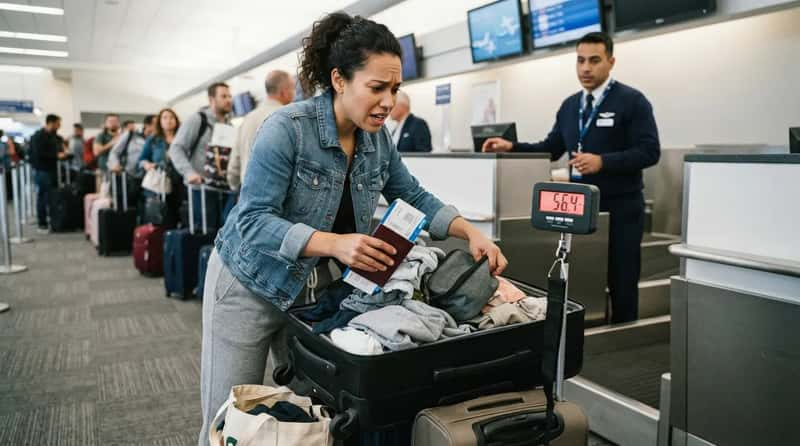
Guessing a suitcase’s weight instead of actually weighing it is one of the most avoidable mistakes travelers repeat trip after trip. Weighing with a digital scale before you leave home and aiming for 48 to 49 pounds leaves room for last-minute additions without tipping into overweight territory.
Without that step, the first real weigh-in happens at the check-in counter, often with a line building behind you. Repacking on the spot to shed a few pounds is one of the most common causes of missed bag-drop cutoffs at busy airports. A five-dollar luggage scale at home prevents a scramble that can genuinely cost you your flight.
#7 – Overloading Every Exterior Pocket Until the Bag Won’t Sit Flat
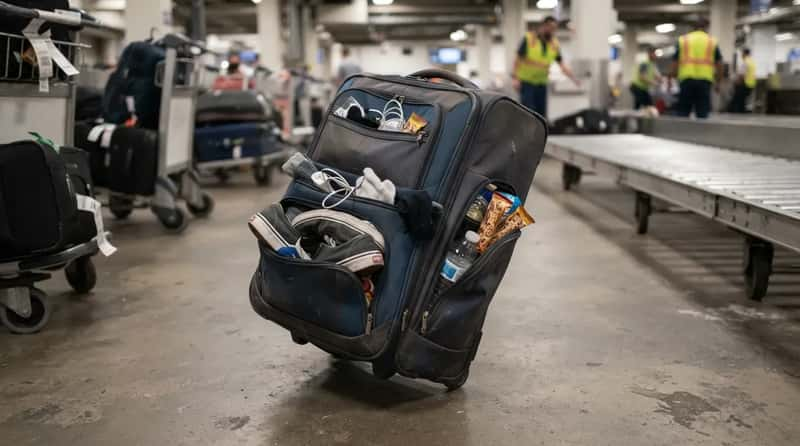
Front pockets and side compartments feel like free extra space, so travelers stuff them with chargers, snacks, and shoes until the bag no longer sits flat on its base. That imbalance matters far more in a cargo hold than it does rolling through an airport terminal.
An unevenly loaded bag is harder for a handler to stack securely, and it’s more likely to shift or tip during transit than a bag packed to sit flush. It also strains the same zippers already carrying the load of an overstuffed main compartment. Distributing weight toward the center of the bag, rather than the outer pockets, keeps it stable through every stage of handling.
#6 – Packing Real Valuables Where You Can’t Watch Them
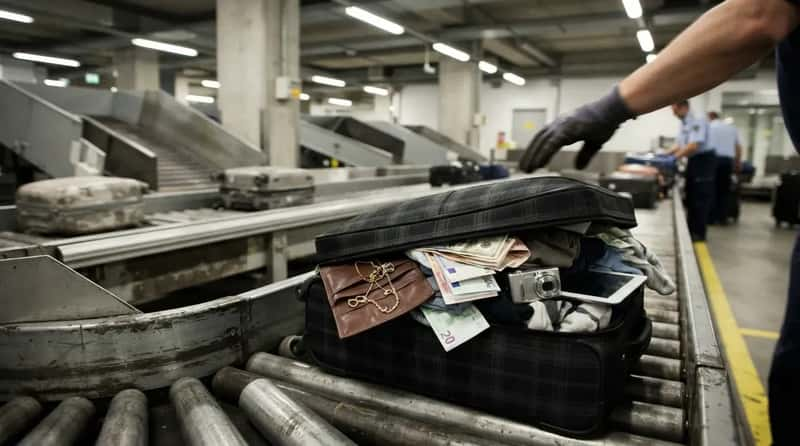
Jewelry, cash, electronics, and anything genuinely irreplaceable belong in a carry-on, yet plenty of travelers still tuck them into checked luggage out of convenience. Checked bags pass through more hands, more scanners, and more transfer points than anything kept in the cabin, and every one of those touchpoints is a chance for something to go missing.
Mishandling data shows transfers are consistently the riskiest stage, and connecting itineraries multiply the number of handlers who touch a bag before it reaches you. Keeping valuables in carry-on doesn’t just protect them from theft; it protects them from ever being separated from you in the first place, regardless of what happens to the checked bag itself.
Worth Knowing
- Checked bags pass through more scanners, transfer points, and hands than carry-ons ever do
- Jewelry, cash, and electronics are the easiest items to lose track of once out of sight
- Carry-on placement protects valuables even if the checked bag itself is delayed or lost
#5 – Trusting Bargain Wheels and Handles With Airport-Grade Abuse
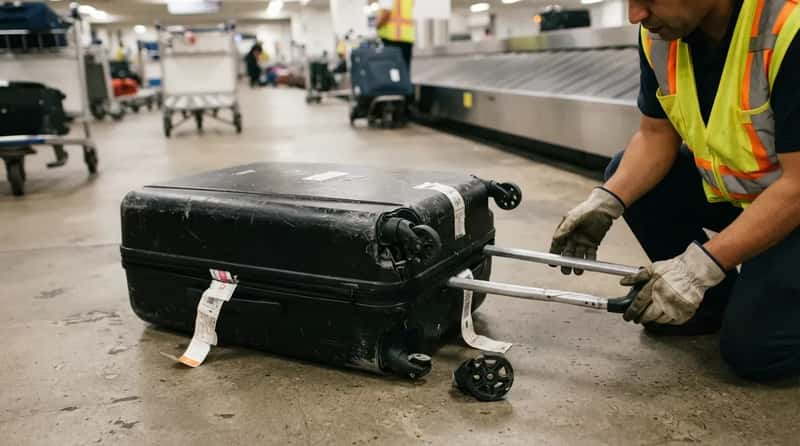
A suitcase’s wheels and telescoping handle absorb an enormous amount of repeated force between the curb, the belt, the cargo hold, and the return trip to the carousel. Budget hardware simply isn’t built for that cycle repeated dozens of times per trip, let alone hundreds of trips over a bag’s lifetime.
Handlers see snapped wheels and jammed handles constantly, and it’s almost always the cheapest components on the bag that fail first. A bag that rolls smoothly in a store aisle can behave very differently after being dropped from a belt or stacked under heavier luggage. Investing in sturdier hardware pays off precisely because it’s the part of the suitcase doing the most physical work.
#4 – Sending a Bag With No Name, No Number, No Backup ID
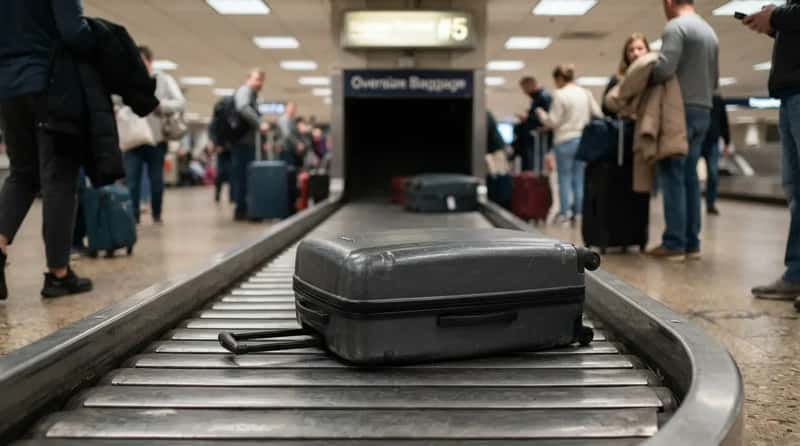
Every checked bag relies on a printed tag that can tear, smear, or fall off entirely somewhere between check-in and the carousel. Not properly labeling luggage for easy identification is a common mistake, and while it may not seem like a big deal at first, it can cause serious problems and delays down the line.
Without a backup ID inside or a visible tag on the outside, a bag that loses its printed tag becomes essentially anonymous the moment it’s separated from the system. A single piece of paper with your name and phone number tucked inside the bag can be the only thing that reconnects you with it. It costs nothing and takes seconds, yet a huge share of travelers skip it entirely.
#3 – Treating a Connecting Flight Like It’s a Direct One
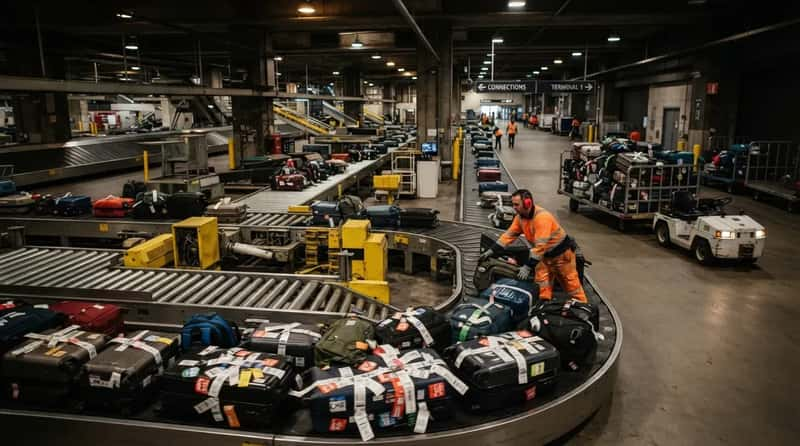
Passengers routinely pack the same way for a one-stop international itinerary as they would for a nonstop domestic hop, without realizing how different the risk actually is. International travel remains a much bigger problem point than domestic flying, with a global mishandled baggage rate of 9.12 per 1,000 passengers for international flyers compared to 1.65 for domestic, and North America mishandling two bags per 1,000 domestic flyers versus 11.6 per 1,000 international flyers.
Transfers remain the biggest risk because international and connecting journeys involve more handlers, more systems, and tighter connection windows, and transfers caused 39% of all mishandling in 2025. That single statistic means a connecting itinerary is roughly seven times riskier for your bag than flying nonstop. Packing a little extra padding and keeping essentials in your carry-on matters far more on connecting routes than most travelers assume.
#2 – Loading a Suitcase to the Exact Weight Limit and Assuming You’re Fine
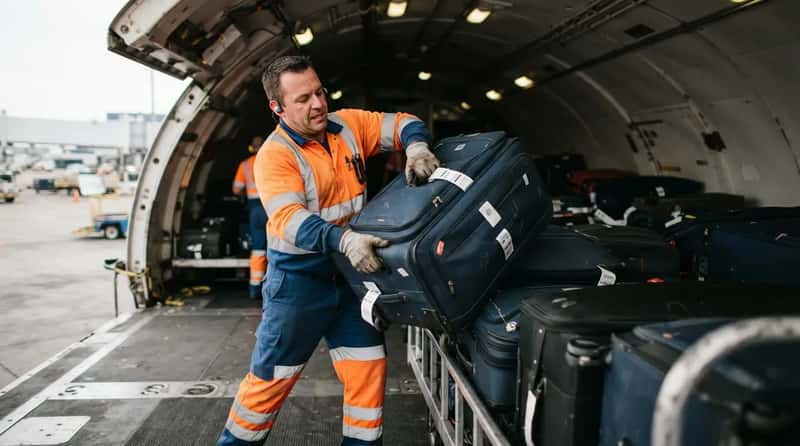
Cutting it as close as possible to 50 pounds feels like a smart way to avoid fees, but it ignores the actual reason that number exists in the first place. Most carriers set the standard checked bag limit at 50 pounds for economy class, and weight limits exist partly because ground handling crews have their own ergonomic weight limits for lifting.
Over half of baggage handlers report pain in the shoulders, knees, and lower back, and those with 20 years of employment or more have double the incident rate of low back pain compared to handlers with less than three years on the job. A bag packed to the exact legal maximum is still a bag a real person has to physically lift, twist, and stack, sometimes hundreds of times in a single shift. Shaving even five pounds off a heavy bag makes a measurable difference to the person actually carrying it.
At a Glance
- Standard checked bag limit: 50 pounds for most economy tickets
- Over half of baggage handlers report shoulder, knee, or lower-back pain
- Handlers with 20+ years on the job report double the low-back injury rate of newer hires
#1 – Packing a Spare Battery Pack in the Bag You Never See Again
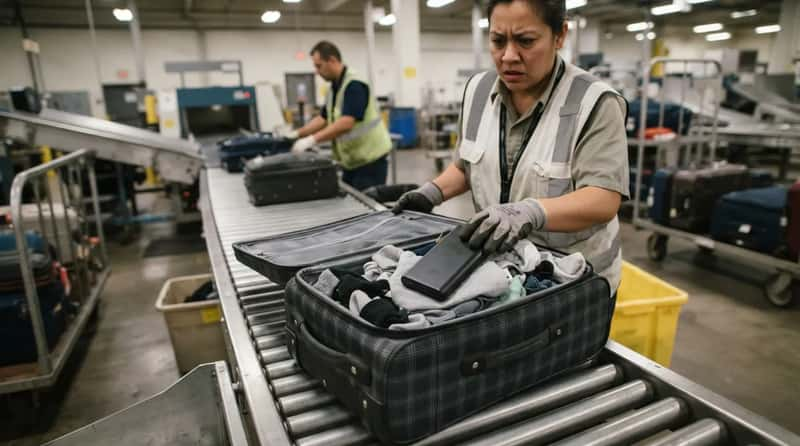
Of every habit on this list, this is the one aviation regulators consider serious enough to have banned outright. As of March 1, 2025, TSA rules prohibit passengers from packing portable chargers, power banks, and cellphone battery charging cases with lithium-ion batteries in checked luggage, and this rule also applies to spare external lithium batteries.
The move followed a string of incidents in which devices containing lithium batteries overheated on commercial aircraft, including one that caused a fire and forced an evacuation of an aircraft in South Korea in January 2025. Spare lithium ion and lithium metal batteries, including power banks and cell phone battery charging cases, must now be carried in carry-on baggage only. Once a bag is sealed in cargo, nobody, not a handler and not a flight crew, can respond if a battery inside it starts to overheat. That single rule change is the clearest sign yet of how seriously the industry takes what actually goes wrong in a checked bag.
Every habit on this list shares the same root problem: travelers pack for convenience at the counter without thinking about the six, eight, or twelve hours their bag spends completely out of sight. Baggage handlers see the consequences of that gap every single shift, from strained backs lifting bags stuffed past their limit to bags pulled for manual scanning because of a ribbon or an old sticker.
The good news is that nearly every item here has a simple, nearly effortless fix. Which one of these habits did you have no idea about? Drop it in the comments.