From your seat, a coach driver’s job looks simple: steer, brake, repeat. Look closer and you’ll find a second job running underneath the first, one that involves stairs, clocks, restrooms and tired legs. It rarely gets announced, and almost nobody applauds it.
Practices vary by company and country, but the same quiet habits keep showing up on senior-heavy tours. A few of them involve a legal clock ticking in the driver’s head, and one involves a handoff most passengers sleep right through. The strangest part is how much of it happens while everyone else is looking out the window.
#22 – The Patient Pause at the Bottom Step
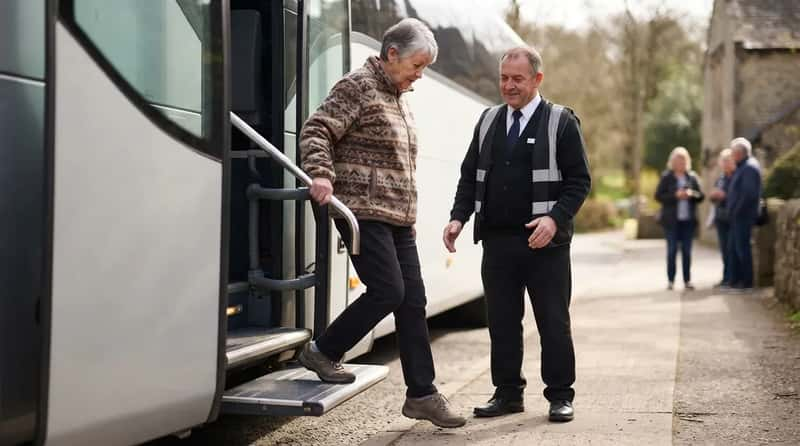
The first kindness of the day happens at the door. Coach steps are steep and the last drop is often uneven, so many older passengers turn to face the steps and grip the rail. Good drivers don’t hurry that moment.
Charter guidance says to look for drivers willing to slow down for boarding and deboarding rather than rushing the process. That isn’t just politeness. Falls are the leading cause of injury for adults 65 and older, and the slowest step is usually the safest one.
But the next habit is easy to miss unless you’re watching the driver’s hands…
#21 – The Hand That Hovers but Never Grabs
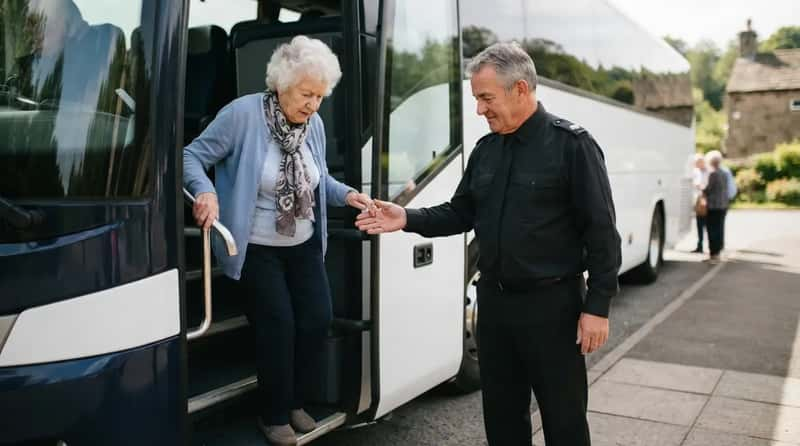
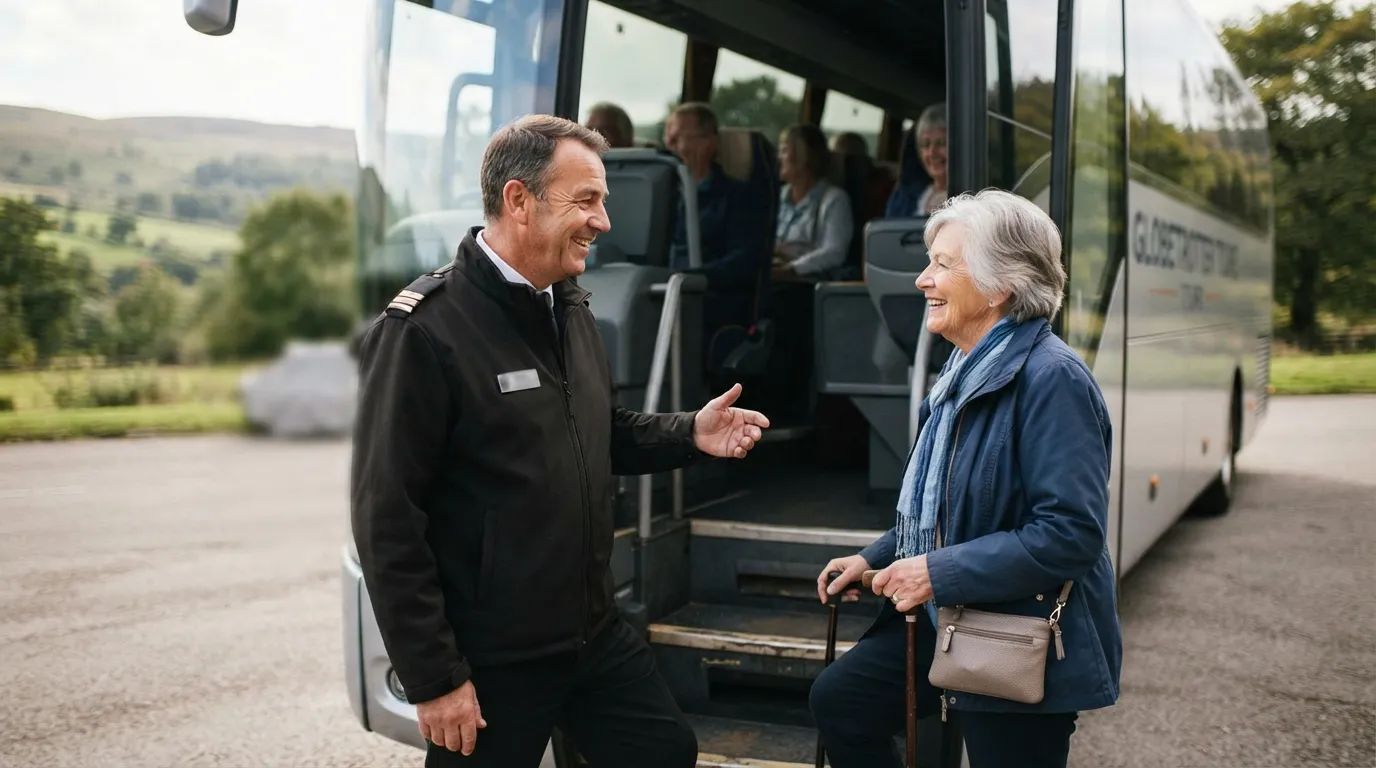
Watch a veteran driver at the door and you’ll notice something subtle. They stand close, but they don’t take over. That nearness lets the passenger decide whether to reach out.
The choice matters more than people realize. Many older travelers don’t want to be handled like luggage. A steady presence offers help without announcing that help is needed. Experienced drivers pick that etiquette up on the job, not from a manual.
Next up is something the whole coach feels but rarely credits…
#20 – The Gentle Brake Nobody Applauds
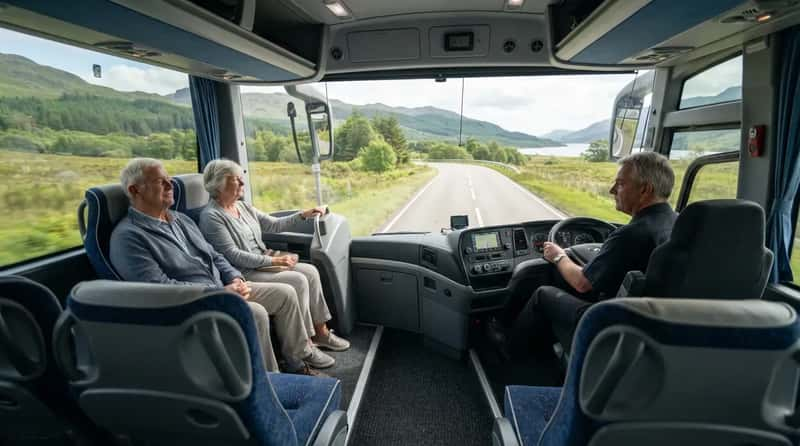
Smooth driving is secretly a form of service. Coach aisles are narrow and the vehicle sways, which is why drivers generally want passengers seated while underway. Anyone who has stood to reach an overhead bag knows exactly why.
Plenty of seasoned riders argue that the smoothness of a ride says more about the driver than the road. That’s an opinion, but it’s a common one on tour. A driver who eases off early gives everyone time to grab a seatback. Nobody claps for a smooth stop, and that’s how you know it worked.
Another quiet habit starts with a question every driver hears…
#19 – The Same Announcement, Said Twice
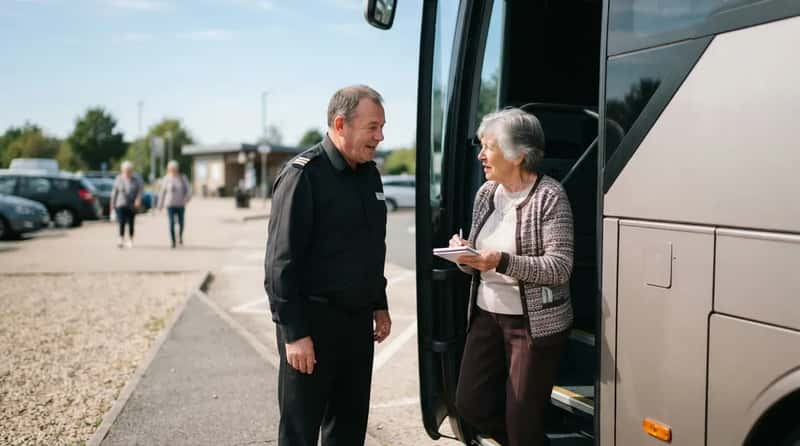
Ask a driver “What time are we leaving?” and you’ll likely get the answer twice. The question often lands before both feet are on the pavement, and many older travelers repeat the time back to be sure. Drivers know repetition prevents the one thing that wrecks a schedule: a missing passenger.
Some riders write the time on the itinerary or in a small notebook, and a good driver waits while they do. One clear answer, repeated, can save ten minutes of searching a rest stop later. It’s cheap insurance for everyone on board.
And the next one touches the biggest worry on any long ride…
#18 – The Quiet Shortcut When Someone Looks Uncomfortable
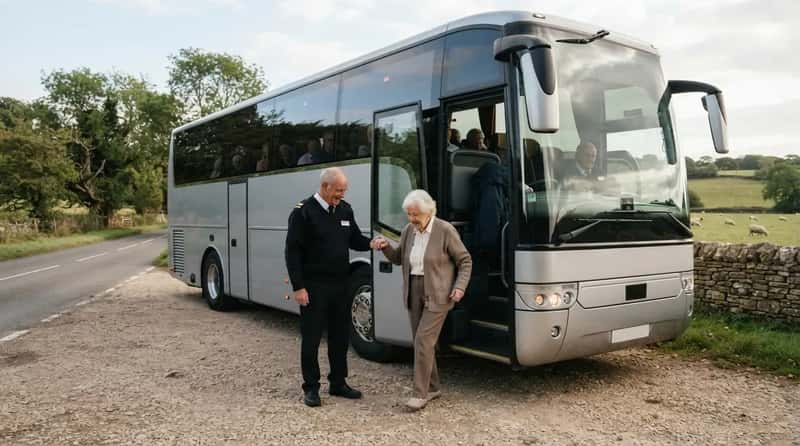
Restroom anxiety is the unspoken stress of long coach days. Riders who can’t use the onboard lavatory usually wait for scheduled stops of 20 to 30 minutes, spaced every two to four hours. That’s a long wait when your body disagrees.
Veteran drivers reportedly shorten that gap the moment they notice an older rider looking uncomfortable. No announcement, no fuss. They find the next safe place to pull over a little sooner, and most passengers never realize the schedule bent for someone else.
But where the driver chooses to stop can matter even more…
#17 – The Detour Around the Chaotic Truck Plaza

Not every rest stop is created equal. Unfamiliar truck plazas are more disorienting than people admit, especially for older travelers walking slower than the crowd. Crowded forecourts, moving vehicles and long walks to the restroom add up fast.
Experienced drivers know which stops are calm and which are chaos, and they steer older passengers away from the worst ones. It’s local knowledge you can’t see from the window. It’s also one of the biggest differences between a rookie and a veteran.
Quick Compare
- Calm stop: room to park, a short walk to the restroom, space to move at your own pace.
- Chaotic plaza: crowded forecourt, moving vehicles, a long trek inside and back.
- The veteran’s pick: the stop that costs the least stress, even when it isn’t the closest.
Then there’s a rule most passengers get completely wrong…
#16 – The Break Isn’t a Favor, It’s the Law
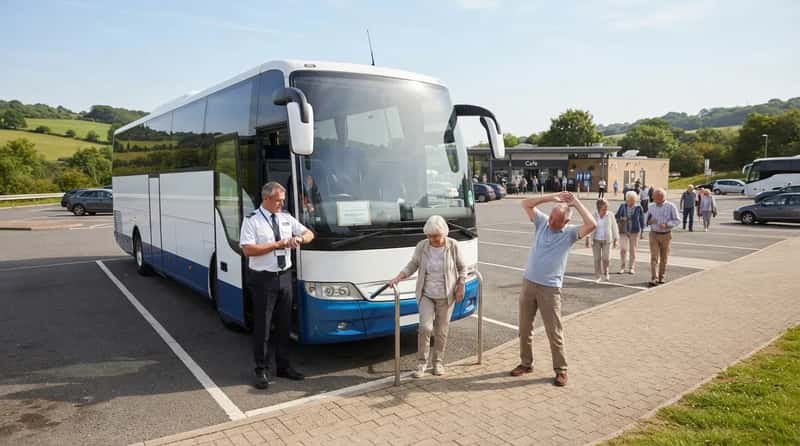
Many passengers assume stop length is flexible. It isn’t. Under EU rules, a driver must take a break of at least 45 minutes after 4.5 hours of driving. U.S. operators work under their own federal limits, but the point is the same: the break is a legal obligation, not a courtesy.
For older riders, that built-in rhythm is a hidden benefit. Regulated breaks mean regular chances to stand, stretch and use the restroom. The rules were written to prevent driver fatigue, but they happen to protect stiff knees too.
The next habit happens in the minutes after you step off the coach…
#15 – The Parking-Lot Lap Drivers Let You Finish
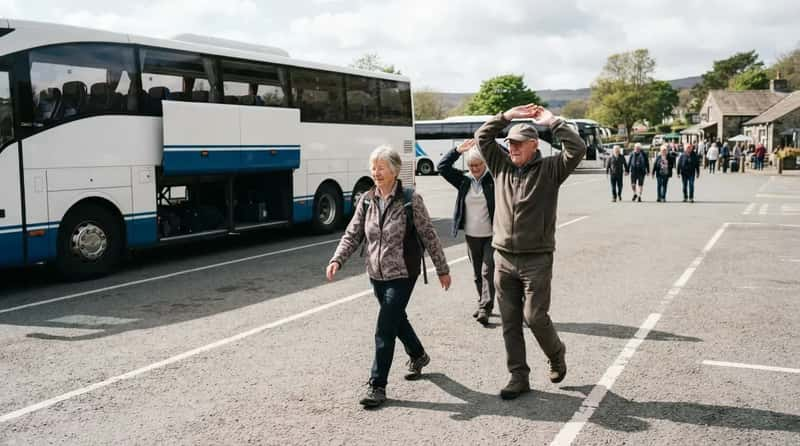
Before heading for the café, plenty of older travelers do something small. They walk a slow lap, swinging their arms and flexing their ankles. It looks odd until you remember how long they’ve been sitting.
Smart drivers don’t rush it. They give the group a clear return time and leave room for the lap. Those few minutes of walking can make the next two hours of riding noticeably easier. The driver gets a more comfortable coach, and passengers get a better ride.
Which brings us to the seat everyone argues about…
#14 – The Front-Row Secret Most Tourists Fight Over Wrong
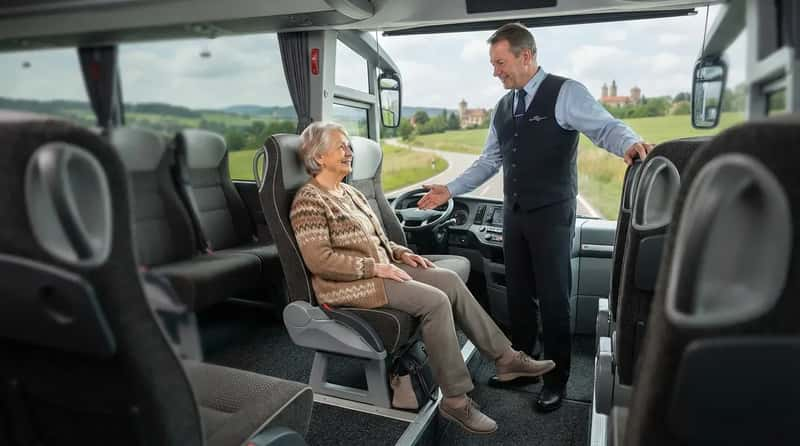
Many travelers see the back of the coach as the fun zone. Many drivers would argue it’s the worst place for a sore back. Front rows are known for the least jolt and the quickest access to the driver, which is why operators often reserve them for riders who need them.
Aisle seats help too. An aisle seat lets one leg extend and makes exiting at stops easier. A driver who quietly steers a stiff passenger toward the front is doing real work, whether anyone notices or not.
The next job is physical, and it usually happens out of sight…
#13 – The Luggage Lift You Never Asked For
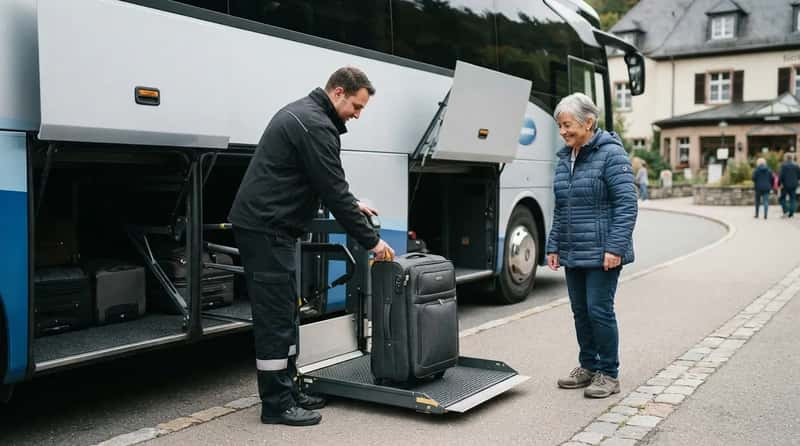
Heavy bags are a quiet problem on tour days. On many escorted trips, the driver or tour staff handles the luggage bay. Whether bags reach your room depends on the operator, which is why travelers are told to ask before booking.
When the service exists, it’s one of the biggest unseen kindnesses on tour. Nobody has to lift a suitcase over a curb or wrestle it up steps. Drivers who’ve loaded hundreds of bags also know which ones are heavy, and they place those where they won’t be hard to reach.
And then there’s a feature the law requires on many coaches…
#12 – The Wheelchair Lift Few Passengers Ever See
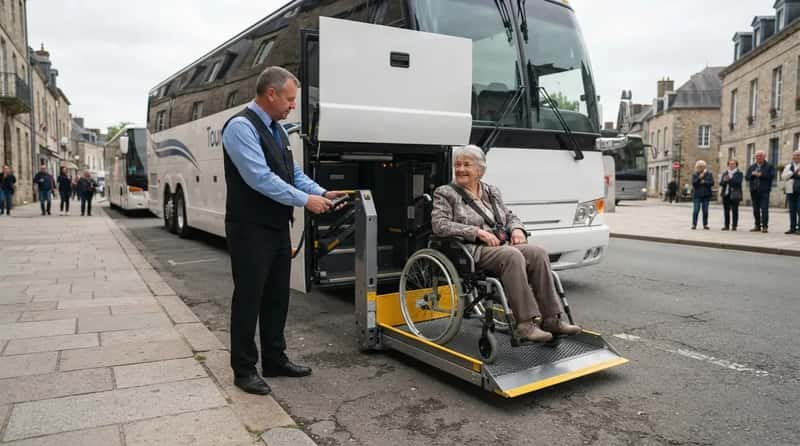
Most riders never see the lift in action. For those who need it, it changes the whole tour. U.S. rules require new over-the-road coaches to be accessible, and large operators must provide accessible service when given advance notice.
Operating a lift takes practice, patience and a driver who won’t rush. Smaller or older vehicles may not have one. The truth is that accessibility depends heavily on the specific coach assigned to your tour. Drivers who run lifts regularly treat the process like a skill, not a chore.
Even the temperature on board gets managed more than you’d think…
#11 – The Thermostat Battle Drivers Quietly Referee
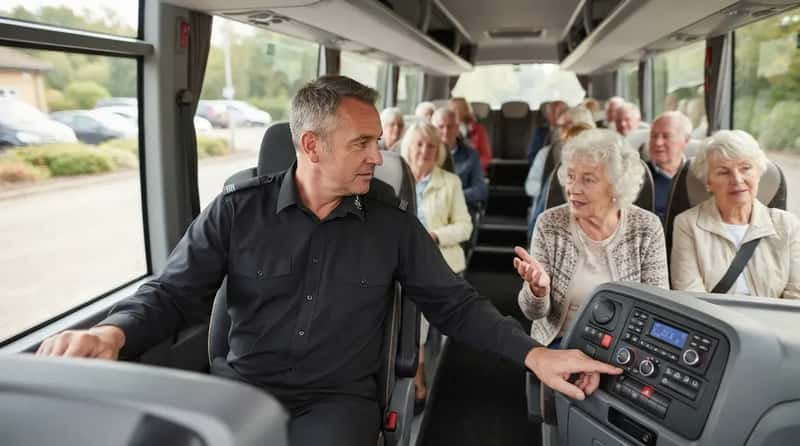
Few jobs are less thankful than setting the coach temperature. Modern coaches are usually climate-controlled to stay cool in summer and warm in winter. But a cabin with 40 people has 40 opinions.
Older passengers often feel temperature shifts more sharply, and many step off wearing a cardigan or light jacket they can shed or add. A thoughtful driver adjusts at the stop, not mid-ride, and listens when someone mentions they’re cold. It’s a tiny act, but it can shape the whole day.
Worth Knowing
- A light layer is the easiest fix, because it doesn’t need a vote from 40 people.
- Changes tend to land at stops, when doors open and everyone can feel the shift.
- A quick word to the driver beats silent shivering for three hours.
- Seats near vents can feel very different from seats mid-aisle.
The next one connects to a problem that’s hard to ignore…
#10 – The Careful Eye on Uneven Ground
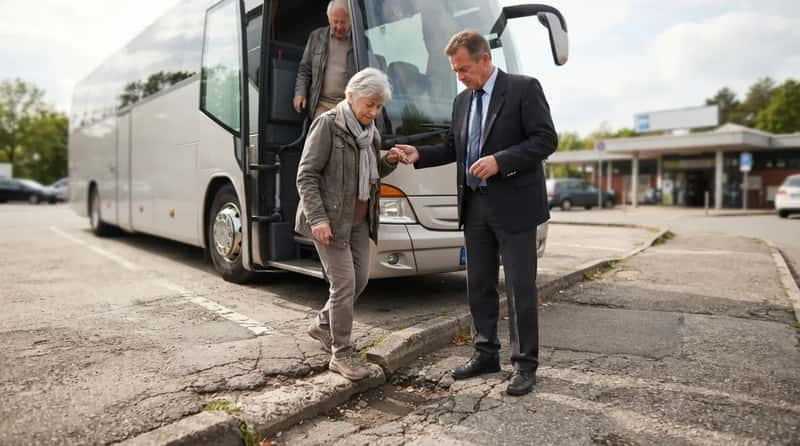
Pavement outside a rest stop isn’t always flat. Drivers know the curbs, the cracks and the slick patches. Falls take tens of thousands of older American lives every year, which is why good drivers watch the ground and not just the traffic.
Many pause, scan and guide the group toward the safest route. A passenger who stumbles on a curb may never mention it, but a watchful driver might spot it anyway. The ground is the hidden hazard on every tour.
But sitting still is its own hidden challenge…
#9 – The Stop Schedule Built Around Stiff Knees
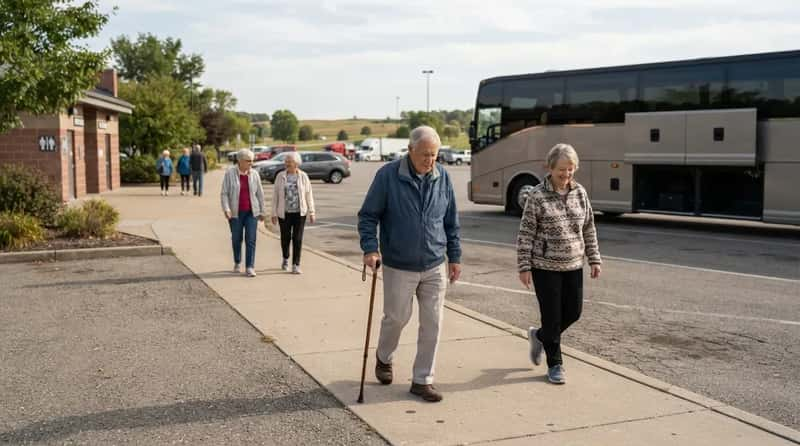
Sitting for hours takes a toll. Even on a comfortable coach, long sitting can cause stiffness, swelling or discomfort for older travelers. That’s one reason stops are spaced out at all.
Charter guidance suggests rest stops every 90 minutes to two hours on longer trips. Drivers who respect that rhythm do more than keep the schedule. They keep ankles, backs and moods in better shape for the miles ahead.
Some of the best moments happen when someone skips the stop entirely…
#8 – The Stop You’re Allowed to Skip
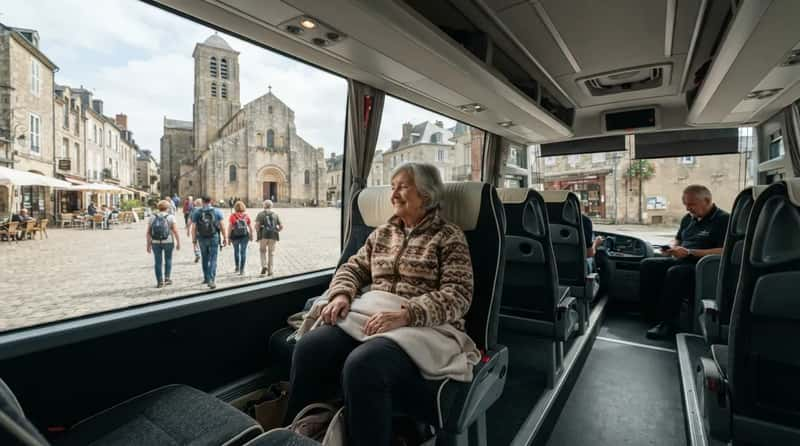
Here’s something many travelers never learn: sitting out a stop is allowed. The operator may arrange for you to rest on the bus while others explore, or let you skip a stop and rejoin the group later. Drivers are often the ones who make it happen.
Skipping excursions is completely normal, and tour directors expect it. Plenty of veterans think the “do everything” crowd gets it backwards, because pushing through every stop can leave nothing for the evening. Drivers see the tired faces at 5 p.m. and know who paced themselves.
The next habit involves something far more personal than a schedule…
#7 – The Heads-Up That Lets You Time Your Pills
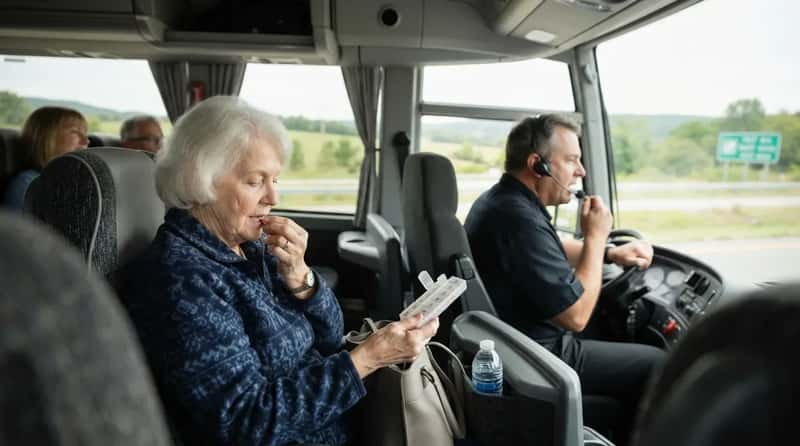
For travelers on daily medication, timing matters. Drivers often announce the next stop and how long it will last, and for anyone on a dosing schedule that’s vital information. Setting phone reminders so rest stops line up with medication times is a standard tip for older travelers.
Operators also advise asking about stops before booking. Find out how many there are, how long each lasts and how often breaks are built in. A driver who shares the plan clearly can turn a stressful day into a manageable one.
At a Glance
- Ask first: how many stops there are and how long each one lasts.
- Set reminders: match phone alarms to dose times and expected stops.
- Listen for the announcement: the next stop and its length are the key details.
- Keep it close: carry what you need in a day bag, not the luggage bay.
And behind the wheel, there’s a handoff most passengers never notice…
#6 – The Driver Swap You Never Noticed
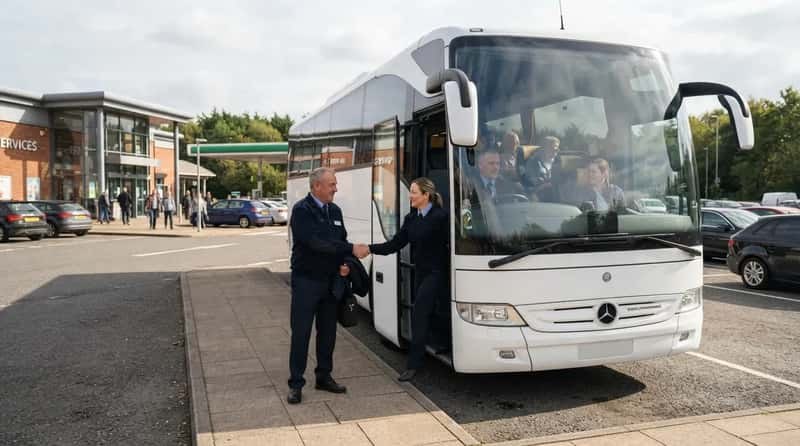
On long routes, the person who drives you in the morning may not be the one who drives you at night. Companies may send a relief driver ahead, and most passengers never notice the swap at a random rest stop.
It’s one of the quietest safety measures in the industry. A rested driver at the wheel can matter more than any feature on the coach. Passengers who nap, chat or watch scenery have no idea a handoff just happened.
Meanwhile, the driver’s clock is ticking in ways passengers rarely see…
#5 – The Clock That Keeps Running While They Wait
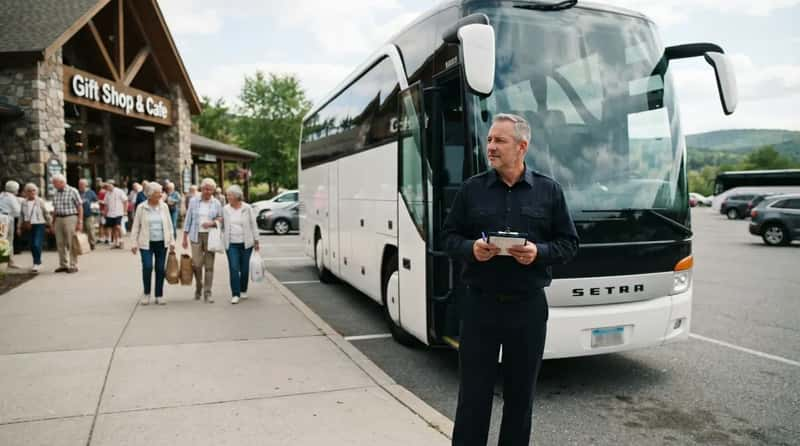
When you’re browsing a gift shop, the driver is still on the clock. On-duty time generally includes loading, unloading and waiting with the coach while passengers wander back at their own pace. Those minutes come out of a tightly regulated day.
Every extra ten minutes at a rest stop is ten minutes the driver doesn’t get back. Yet good drivers wait for slower walkers without sighing or checking their watch. That patience costs them, and they pay it quietly.
Then there’s a habit that can make or break your whole trip…
#4 – The Driver Who Remembers Your Name
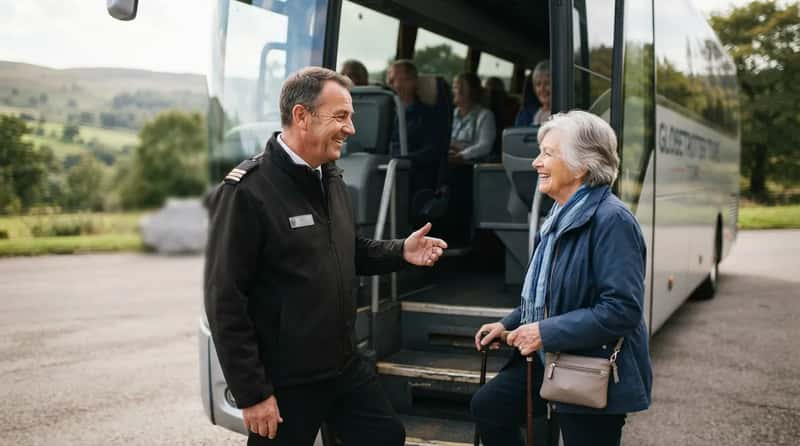
Passengers who chat with the driver tend to get something back. Many older travelers do exactly that on the way past the door. They ask how the driver slept, whether the road ahead is clear and how long the driving day will be.
A thank-you at the first stop can stay with a driver for the rest of the week. Many tour veterans also say a tip is the simplest way to show appreciation, though customs vary by operator. A driver who feels noticed tends to notice you back.
Why It Stands Out
- A name and a smile at the door turn a stranger at the wheel into someone on your side.
- Small questions about the road give drivers a chance to share what they know.
- Appreciation is rare enough on tour that people remember it.
The next one is about what happens when something feels off…
#3 – The Quiet Word to the Tour Guide
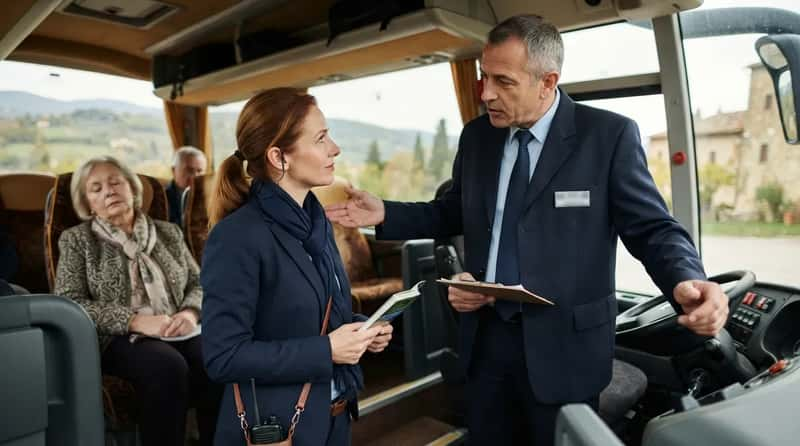
Drivers and guides work as a team. If a passenger looks pale, slow or unsteady, the driver often passes the concern along. Passengers are encouraged to tell the guide or driver how they feel, and guides are used to travelers needing to sit down.
That relay happens in seconds and rarely makes a scene. The passenger gets a seat, a break or a slower pace, and the group never learns why the next walk got shorter. The best help is the kind nobody else sees.
But the next habit is one the whole coach depends on…
#2 – The Seat-Belt Reminder That Isn’t Just a Formality
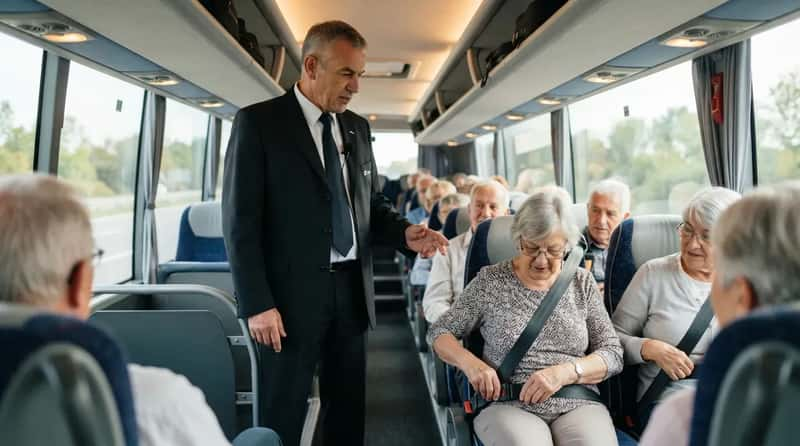
That announcement about buckling up isn’t empty routine. Federal rules have required lap-and-shoulder belts on new over-the-road coaches built since late 2016, and many drivers repeat the reminder at every departure. Older bodies are more vulnerable in a crash, which is why drivers keep saying it.
Some passengers roll their eyes. Experienced drivers say it anyway. A reminder costs five seconds, and a missing belt can cost far more. It’s one of the few times a driver sounds firm, and for good reason.
And the last item says more about drivers than any rule ever could…
#1 – The Wait Until the Last Seat Is Filled
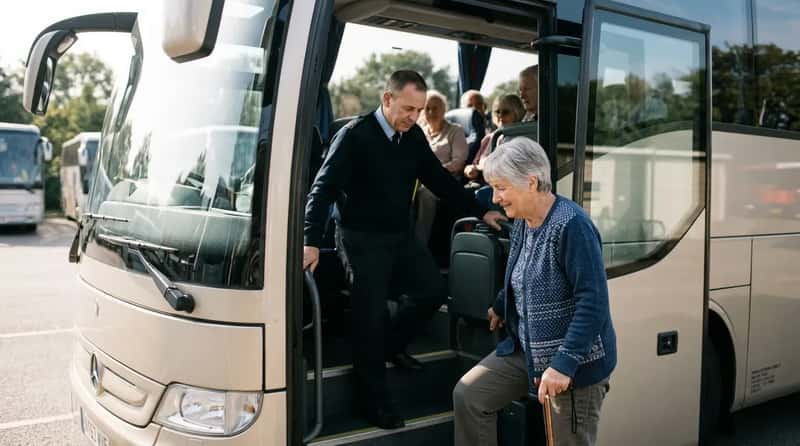
The most telling habit comes at the end of every stop. The clock is tight and the schedule is firm. Yet good drivers don’t pull out until every seat is filled. They count heads and watch the door.
The slowest walker sets the real departure time. Drivers know the day is regulated down to the minute, and they wait anyway, without comment, as the last passenger shuffles up the steps. No rule requires that kindness, and it may be the thing passengers remember most.
Most of what coach drivers do for passengers over 70 never shows up on an itinerary. They slow the boarding, shorten a gap, steer around a chaotic stop and carry the clock so nobody else has to. Practices differ between operators, so ask before you book.
Next time you climb aboard, watch the door instead of the scenery. The best part of the tour may already be happening there.