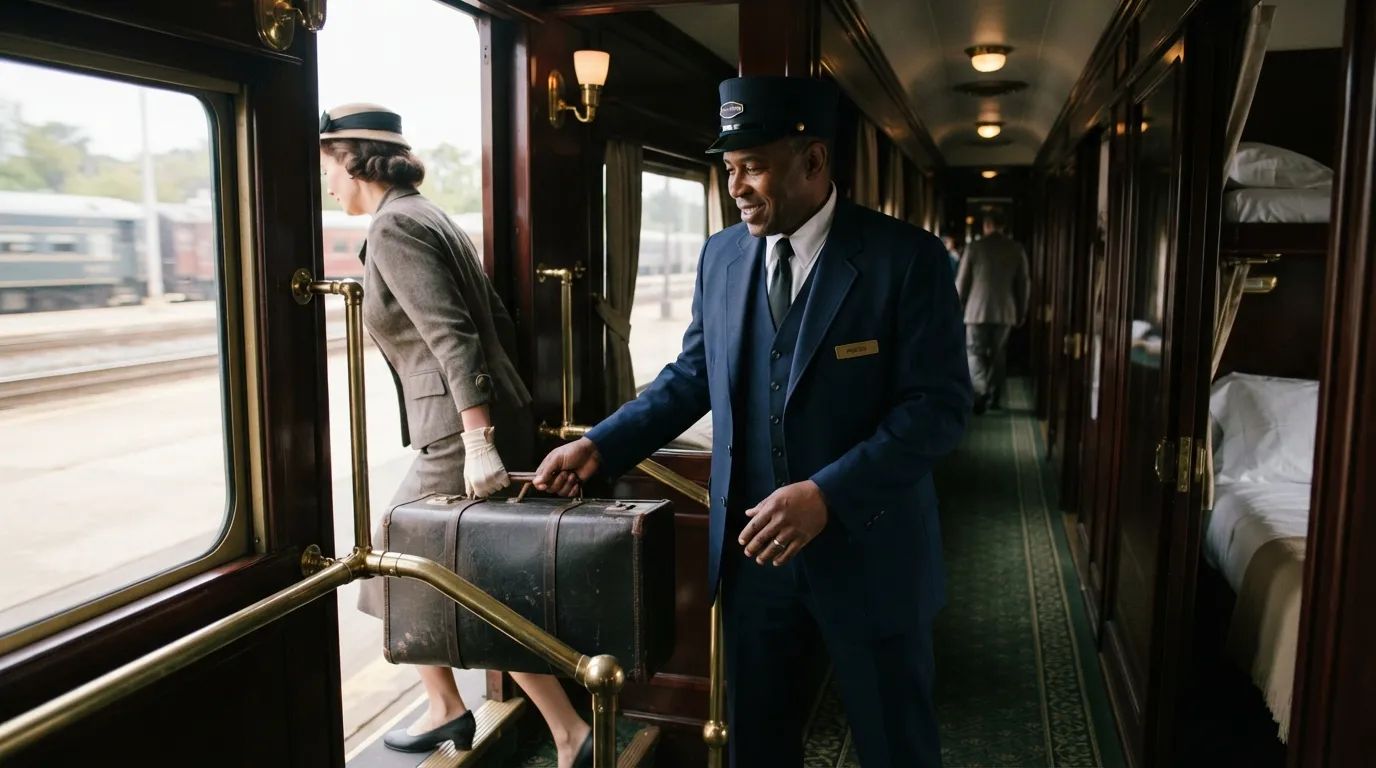
Picture a train where a uniformed man carries your bags, nobody scans them, and dinner arrives on real china while mountains slide past a glass roof. In the 1950s, that was just a Tuesday. Plenty of riders barely noticed it.
But the glamour is only half the story. Some of these perks sound invented today, and a few came with a price that nostalgia loves to skip. The strangest item on this list isn’t a luxury at all, and it’s waiting near the end.
22. Redcaps Met You at the Curb and Took Everything
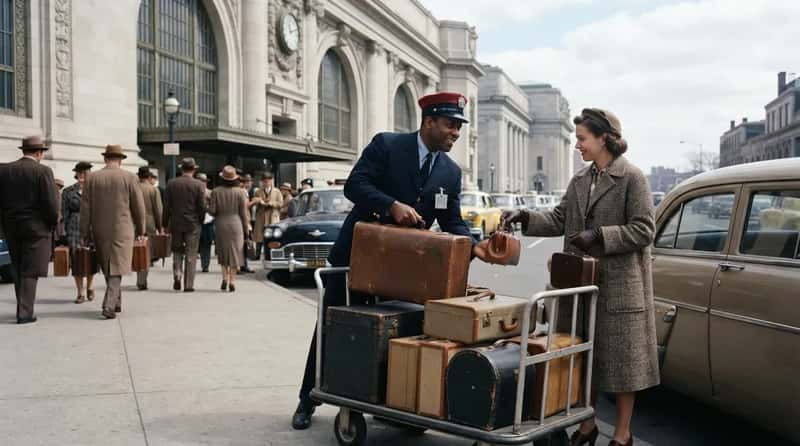
Big-city stations employed porters known as redcaps, and they were on you before you got near the platform. You handed over your bags, tipped, and followed them through the concourse with empty hands. Nobody thought of it as fancy. It was simply how you started a trip.
Today you drag your own suitcase through a terminal, squinting at a gate number. Back then, the journey began with help you never had to ask for. And that was only the first thing railroads would haul for you.
21. You Could Check a Whole Steamer Trunk Like It Was Nothing
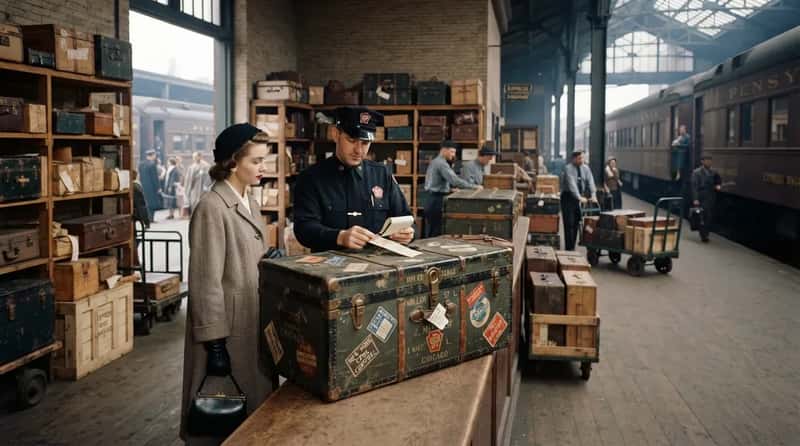
Travelers regularly checked trunks, not just suitcases, and railroads carried them in baggage cars. Families relocating, students heading off to college, and vacationers staying for weeks all relied on it. Your entire wardrobe could ride in the baggage car while you rode in comfort up front. Many stations even had baggage rooms just for holding it.
Compare that with modern travel, where bag fees and size limits dictate every packing choice. The old system treated luggage as part of the ticket, not a profit center. Yet the biggest difference wasn’t the baggage. It was what happened at the platform entrance.
20. No Metal Detectors, No ID Line, No Shoes Off
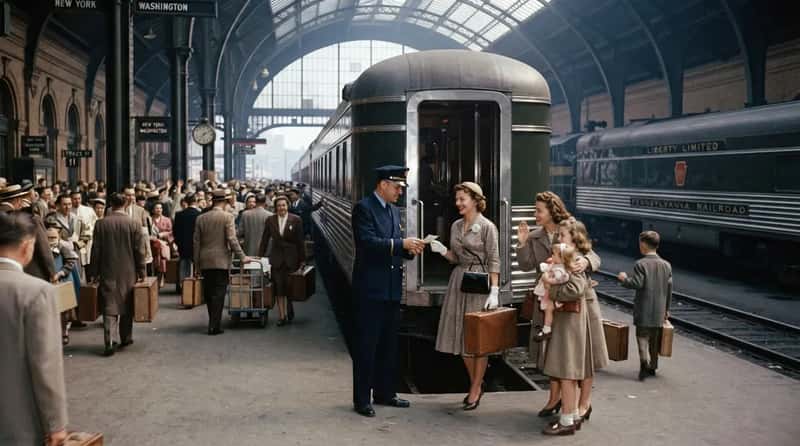
Boarding a 1950s train generally meant walking to the platform with a ticket in your hand. There were no body scanners, no liquid limits, and no checkpoint. Friends and relatives often walked you right up to the train door. Goodbyes happened on the platform, not at a security barrier.
That freedom belonged to a different era, long before modern aviation security rules. Most passengers had never heard “checkpoint” used in a travel sentence. Still, the conductor had his own way of keeping track of who was on board, and it looks strange by today’s standards.
19. Conductors Tucked Paper Slips Into Your Seat Back
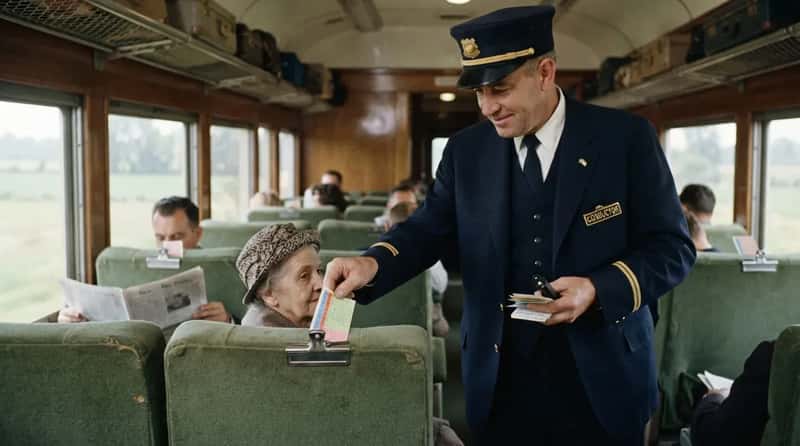
On many railroads, conductors used small paper checks to mark where each passenger was headed. They slipped them into the seat back or the luggage rack above you. It was low-tech, fast, and surprisingly effective. Your destination was literally sticking out above your head for the whole ride.
Digital scanners have replaced the whole routine. Yet that small human touch was part of why the ride felt personal. And the man holding those slips carried something else that would shock modern riders.
18. Your Train Ran on a Pocket Watch Someone Had to Certify
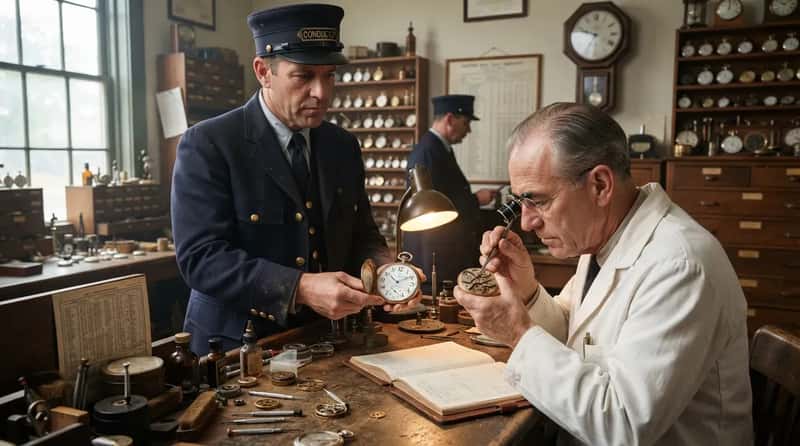
Railroad crews were expected to carry accurate pocket watches, and those watches were inspected. American railroads tightened their watch standards after a deadly 1891 collision in Kipton, Ohio, where a stopped watch was blamed. Time wasn’t a convenience. It was the thing standing between two trains on the same track.
Worth Knowing
- Cleveland jeweler Webb C. Ball became a key figure in setting railroad watch standards after the Kipton wreck.
- The commonly cited rule of thumb: a railroad watch could gain or lose only about 30 seconds a week.
- Crews had to show their watches for regular inspection, not just once.
- “Railroad grade” became a selling point that watchmakers still advertised for decades.
A watch that drifted off by even a little could be pulled from service. Today your phone keeps you on schedule without a thought. Back then, a conductor snapping open his watch was part of the ritual of departure. But the schedules he guarded weren’t as fast as the legend suggests.
17. The “Fastest” Trains Were Slower Than You Think
Ask most people about 1950s streamliners and they picture blurring speed. The truth is more modest. The 20th Century Limited covered roughly 960 miles between New York and Chicago in 16 hours, an average near 60 mph. A 1947 federal order held trains without in-cab signaling to under 80 mph.
Here’s the twist: the appeal was never really speed. It was comfort at any speed. And speaking of comfort, one habit on board would never be allowed today.
16. Smoking Was Basically Part of the Décor
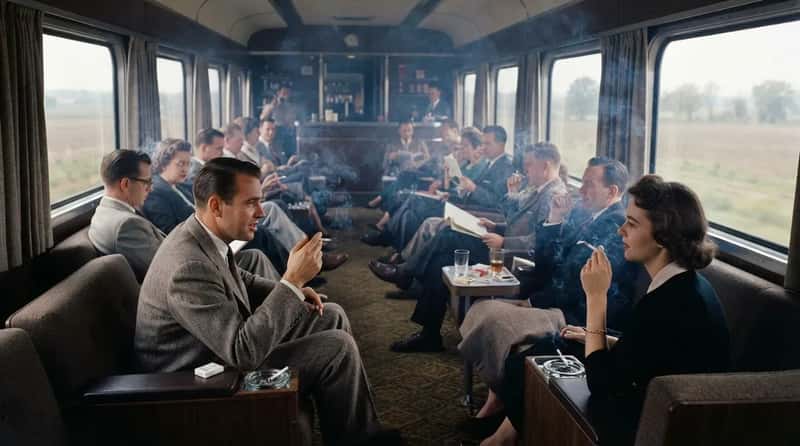
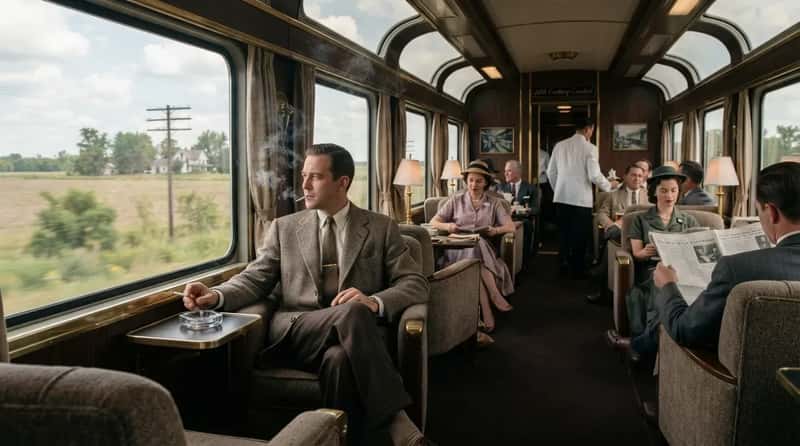
Cigarettes, cigars, and pipes were common in lounge cars and many other spaces on 1950s trains. Ashtrays were built right into the furniture. Nobody found it unusual because smoking was everywhere, from offices to restaurants. The smoke was as much a part of the atmosphere as the click of the wheels.
The U.S. Surgeon General’s landmark report on smoking didn’t arrive until 1964, which is why a hazy lounge felt so ordinary. Not every old-fashioned perk was a problem, though. Some were charmingly practical, like writing home from the window seat.
15. Free Stationery Waited in the Lounge Car
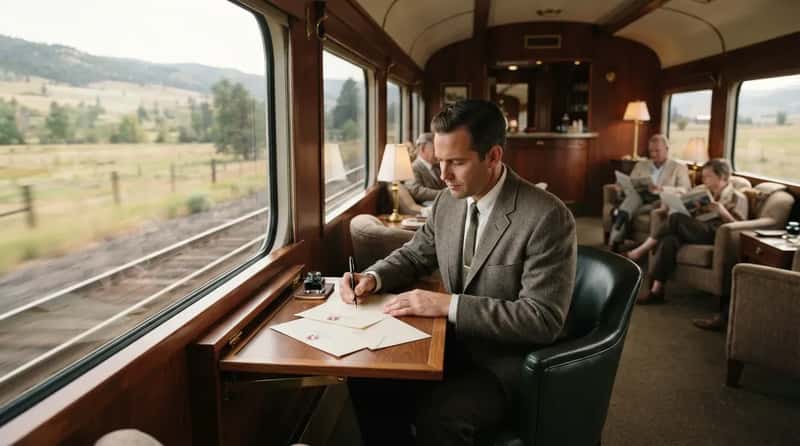
Many railroads stocked lounge and observation cars with writing paper, often printed with the railroad’s name. Passengers wrote letters and postcards while the scenery rolled by. It was a cheap way to advertise the line. It also gave riders something to do besides stare out the window.
Somewhere in an attic, there may still be a letter written at 70 mph on a train’s own letterhead. Today the equivalent is a photo posted from a phone. But some railroads went much further than paper if you had the right ticket.
14. Some Top Trains Had a Barber and a Secretary On Board
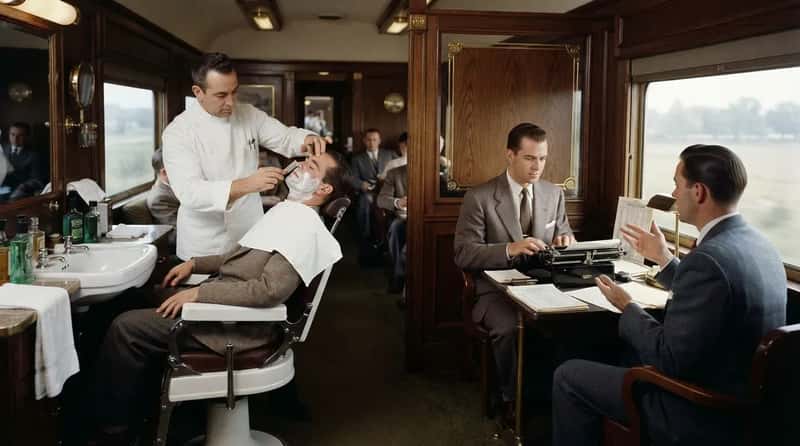
Flagship trains offered services that sound more like a hotel than a railroad. The 20th Century Limited, for example, was known for extras such as a barber and a train secretary. Business travelers could dictate letters or get a shave between cities. You could walk into a Chicago meeting looking fresh after a night on the rails.
Some rail fans argue these perks were the whole point of the train. Others say they hid a business model that was already cracking. Yet one of the strangest services wasn’t meant for passengers at all.
13. A Post Office Sorted Mail While You Slept
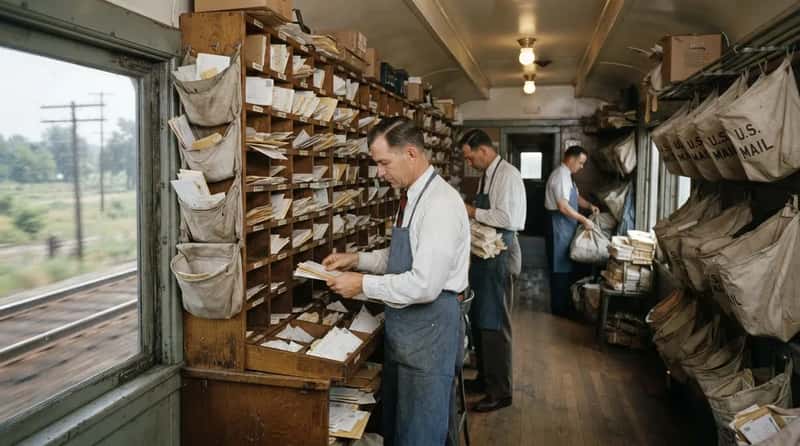
Railway Post Office cars were moving sorting rooms staffed by postal clerks. They sorted letters between stations so mail was ready to drop off the moment the train arrived. The last Railway Post Office run didn’t happen until 1977. In the 1950s, the system was in full swing.
Every train carrying mail was, in effect, a federal delivery system on wheels. Timing mattered to a lot more than the people in the seats. But the engines pulling those trains were changing fast.
12. Steam Locomotives Were Still Clanging Along
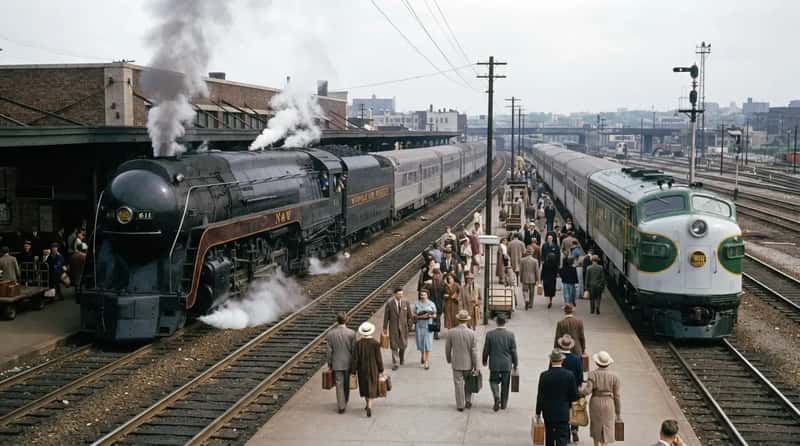
Diesels were taking over in the 1950s, but steam wasn’t gone yet. Some railroads kept steam engines running until around 1960, with Norfolk & Western among the last major holdouts. A kid in 1955 could see a sleek diesel streamliner and a coal-burning veteran in the same afternoon.
Quick Compare
- Steam: Needed frequent stops for coal and water, and crews spent hours on upkeep between runs.
- Diesel: Ran longer between servicing stops and was cleaner and quieter in the cab and the station.
- The feel: Steam meant hissing, smoke, and a whistle you could hear for miles. Diesel meant the future.
Today, steam survives mostly on heritage railways and special excursions. In the 1950s, it was the working past sharing the rails with the future. And the railroads were carrying a much heavier load than luggage.
11. Troop Trains Carried Young Soldiers Toward Korea
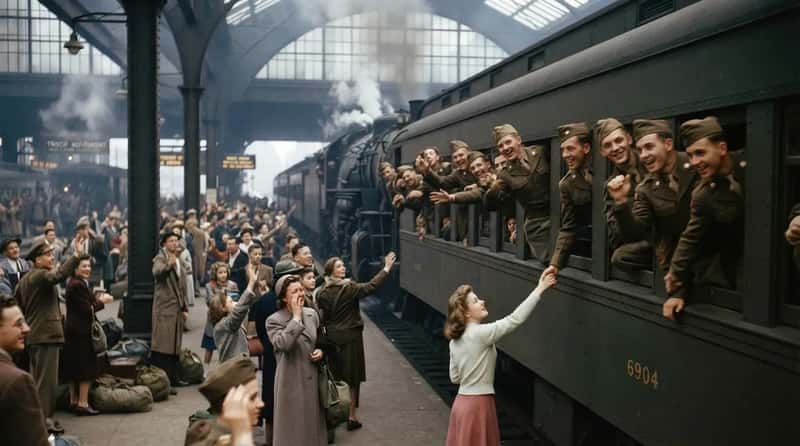
The Korean War ran from 1950 to 1953, and railroads were one of the ways service members reached their bases and ports. Passenger cars filled with young men, duffel bags, and worried families waving from platforms. Stations often became the place where a family said goodbye without knowing how the story would end.
For many veterans, the train was the first leg of a long journey. It’s a memory that rarely shows up in the glossy ads. But the trains that carried them had personalities of their own, right down to their names.
10. Trains Had Names, and People Actually Knew Them
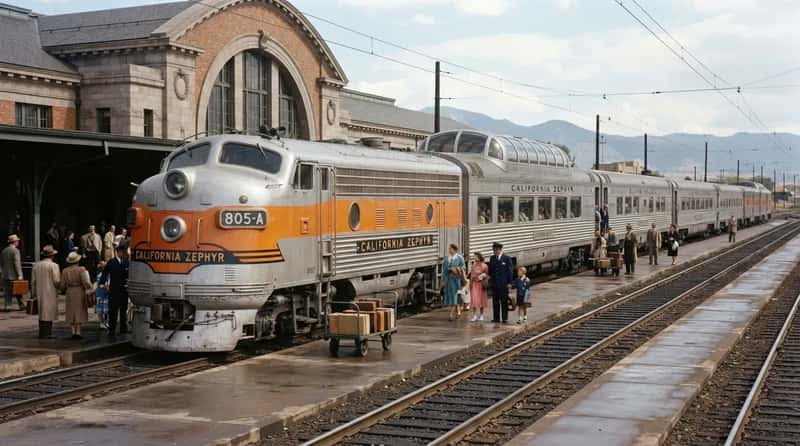
Broadway Limited. Super Chief. Empire Builder. California Zephyr. Trains of the era had names that worked like brands, and passengers had favorites. Railroads competed over identity as much as over schedules.
A few of those names still survive on Amtrak routes today, including the Empire Builder. Try naming a favorite airline flight the way you’d name a favorite train. And the most famous of them all rolled out something you’d never see at an airport.
9. The Red Carpet Was Literal
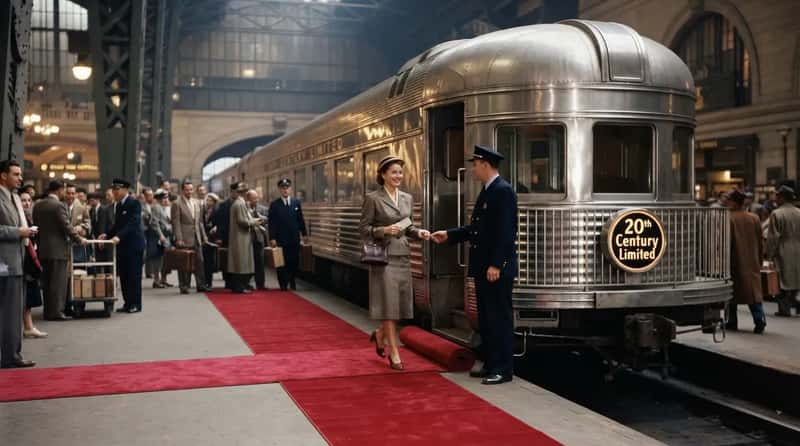
New York Central rolled out a crimson carpet for passengers boarding the 20th Century Limited in New York. The expression “red carpet treatment” is often linked to that practice. It was showmanship, and it worked. Passengers felt like celebrities before the doors even closed.
Skeptics say it was pure marketing. Fans say it’s the reason people loved the train. Either way, the spectacle didn’t end at the platform, because the back of some trains had its own stage.
8. You Could Stand Outside on the Back of a Moving Train
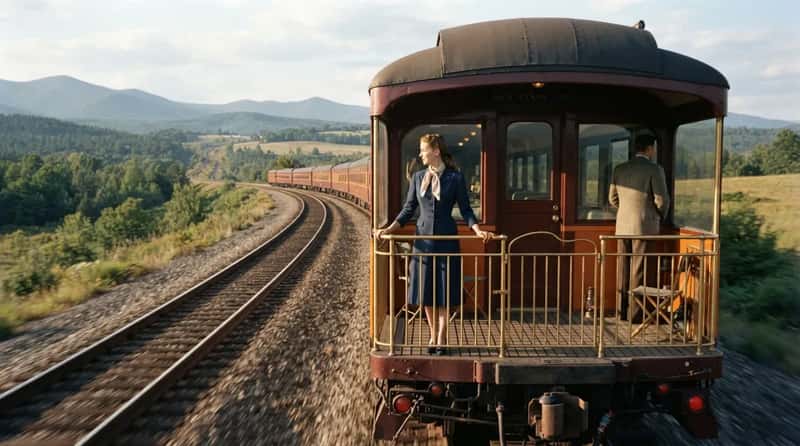
Many long-distance trains ended with an observation car, complete with an open rear platform. Passengers stepped out to watch the tracks unspool behind them. Political candidates also used those platforms for speeches at whistle-stops. You could literally stand at the tail end of a train and watch America shrink in the distance.
Modern trains almost never allow it. Safety rules, sealed cars, and different designs have taken the experience away. But the open air was nothing compared to the lounges built to soak up the view.
7. Cocktail Lounges Rolled Through the Mountains
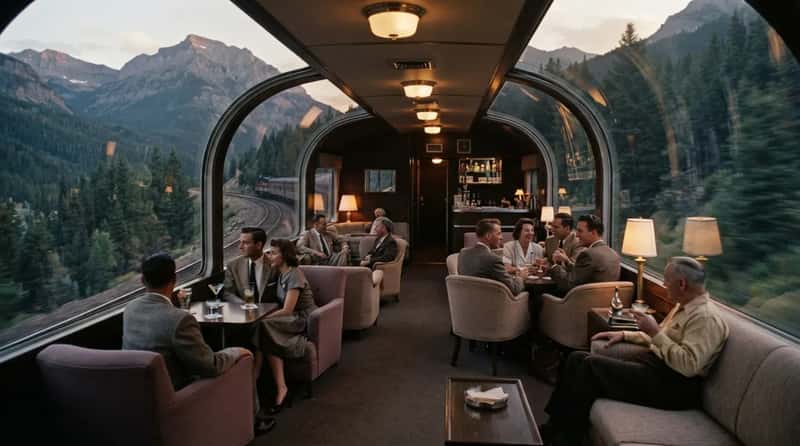
Lounge cars gave passengers a place to sit, sip a drink, talk, and watch the scenery. Some were dramatic, like the Milwaukee Road’s Skytop Lounge cars with curved glass at the rear. Strangers routinely struck up conversations and traded stories for hours. It was social travel in a way that headphones have largely replaced.
The lounge was where the day wound down for many travelers. Then came the part that would astonish anyone used to a cramped airplane seat.
6. Your Seat Turned Into a Bedroom Overnight
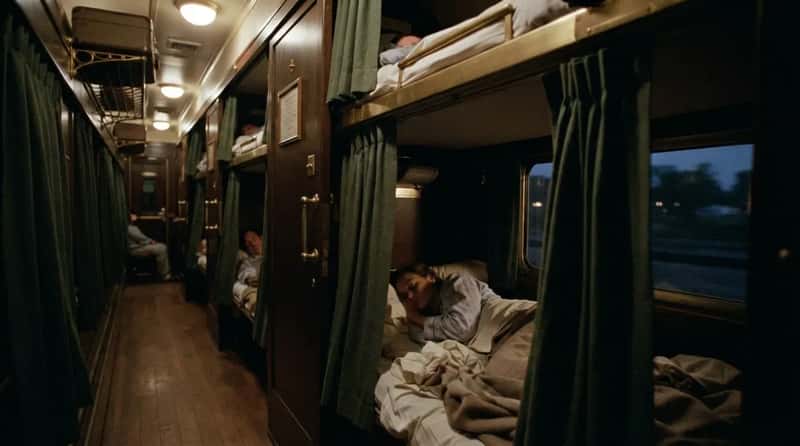
Pullman sleeping cars offered section berths with curtains, plus private roomettes, bedrooms, and drawing rooms. Passengers fell asleep in one place and woke up hundreds of miles away. A roomette could fit a bed, a toilet, and a sink in a space smaller than many closets.
Fast Facts
- George Pullman built his first sleeping car, the Pioneer, in 1865.
- In a section, daytime seats were converted into a lower berth, and an upper berth folded down from the ceiling.
- Heavy curtains, not doors, gave privacy in a section berth.
- The Pullman Company’s sleeping-car operations ended at the close of 1968.
That concept still exists on some long-distance Amtrak routes, but the 1950s network was vastly bigger. Overnight trains linked major cities across the country. And the service didn’t stop when the lights went out.
5. Someone Shined Your Shoes While You Slept
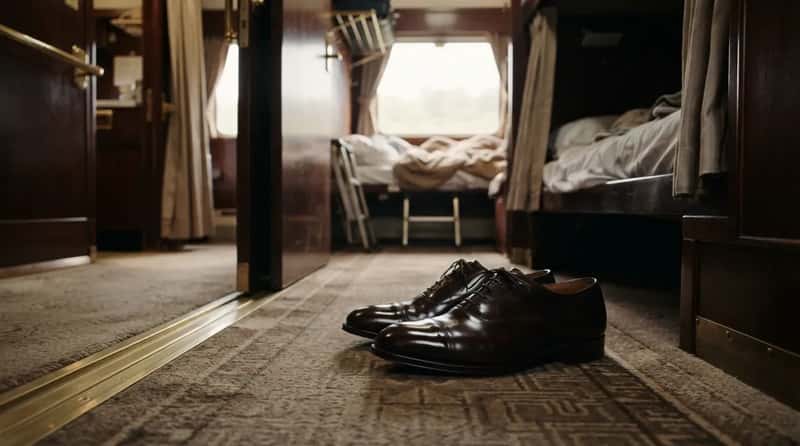
On sleeping-car routes, porters would collect shoes at night and return them polished by morning. It felt like a small piece of magic. Passengers left scuffed shoes in the aisle and found them gleaming at breakfast. Most riders never saw who did the work.
Behind that polish stood a whole workforce, and the story is more complicated than nostalgia suggests. But first, breakfast was waiting.
4. Dinner Came With White Tablecloths and Real Silver
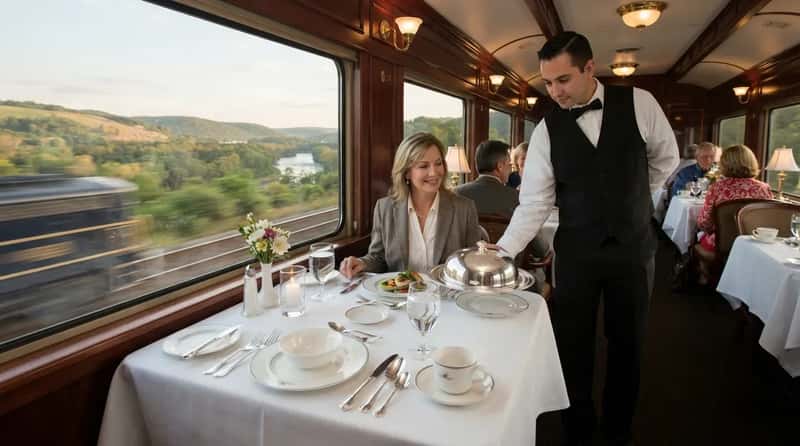
Dining cars set tables with linen, china, and silverware. Waiters served multi-course meals while the countryside slid past the window. Railroads often lost money on dining cars but kept them anyway because they helped sell tickets. The meal was part of the marketing.
Rail fans still debate whether the food was truly better or the setting just made it taste that way. Either way, the view outside your table window was about to get even more spectacular.
3. Glass Domes Let You See the Sky Above the Train
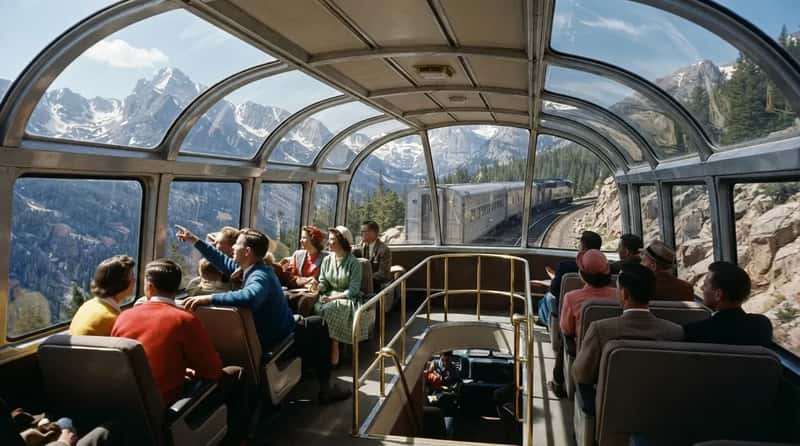
The first Vista-Dome car debuted in 1945, and the design spread through the following decade. On the California Zephyr, which launched in 1949, riders climbed stairs to an elevated glass dome. Great Northern’s Empire Builder added its own Great Dome cars in 1955. Passengers could watch mountain peaks pass overhead in nearly every direction.
Scenic travel wasn’t a side benefit. It was the product. But behind all that glass sat a harsher reality the brochures never showed.
2. In the South, the Train Still Had a Color Line
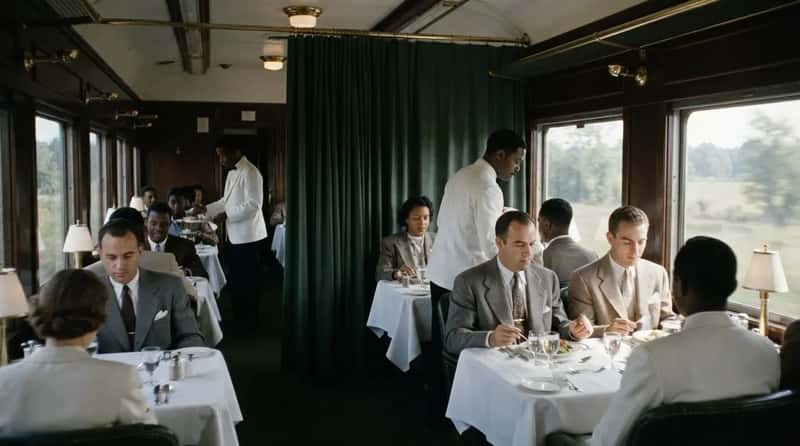
Jim Crow laws shaped train travel in much of the South. Black passengers were often forced into separate coaches or seating areas, even when they paid the same fare. In 1950, the Supreme Court ruled in Henderson v. United States that a railroad’s dining car segregation was unlawful. A single dining-car curtain had become a national legal fight.
At a Glance
- The case: Henderson v. United States, decided by the Supreme Court in December 1950.
- The target: Southern Railway dining-car rules that walled off a tiny share of seating for Black passengers.
- The catch: Local practices, like segregated waiting rooms, lingered well past the ruling.
- The follow-up: The Interstate Commerce Commission issued a broader ban on segregation in interstate travel that took effect in late 1961.
The ruling was a milestone, but the change came slowly, and the golden age was not golden for everyone. And one group of workers understood that better than anybody.
1. The Man Who Made It All Work Was Barely Called by His Name
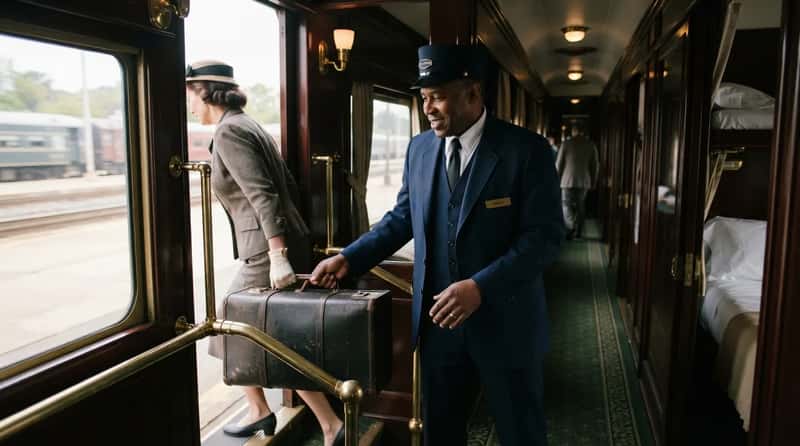
Pullman porters carried bags, made beds, served drinks, and handled emergencies. Most were Black men, and many passengers called them “George,” after the company founder, rather than by their names. In 1937, the Brotherhood of Sleeping Car Porters won a contract with the Pullman Company after more than a decade of struggle. It was a landmark victory for Black labor.
Porters helped build the Black middle class, and the union’s leader, A. Philip Randolph, later became a major civil rights figure. When people romanticize 1950s train service, this is the labor they’re romanticizing. It’s the part most passengers never fully saw.
The 1950s train was a rolling hotel, mail room, and theater. It was also slower than the legend, smokier than memory, and unequal in ways nostalgia hides. Airlines passed railroads in intercity passenger travel around 1957, and the golden age faded fast. Amtrak took over most intercity service in 1971. Which of these would you bring back first?