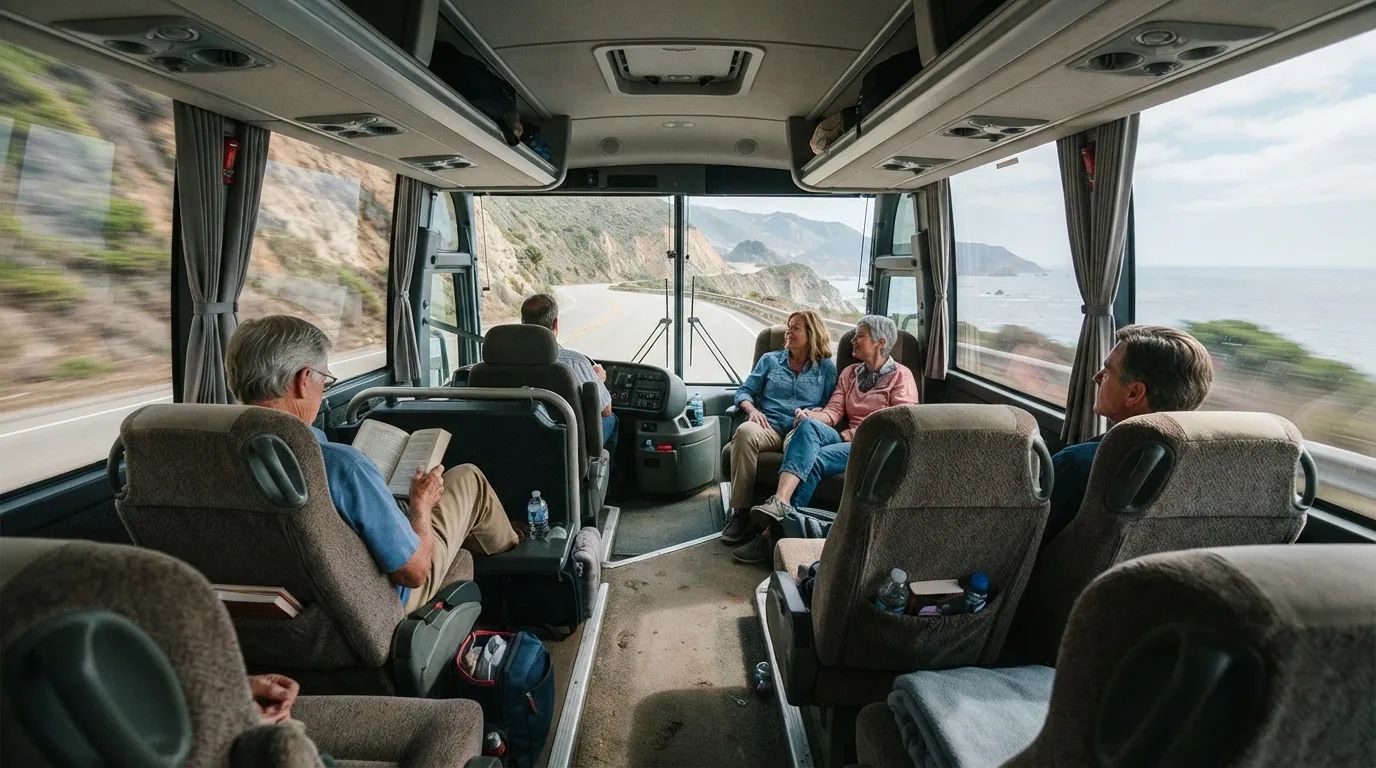
You boarded the coach picturing big views and a peaceful nap. Instead you got a seat that rattled your teeth, a vent aimed at your neck, and a gray pillar sitting right where your window should be. If that sounds painfully familiar, this list is for you: 23 seat mistakes that seasoned coach riders usually only make once.
Most people assume the only choice that matters is window or aisle. It isn’t. The real trouble hides in details you can’t see from the boarding steps, and one mistake near the end of this list has nothing to do with comfort at all.
#23 – The Back Row Looks Peaceful. It Secretly Isn’t.
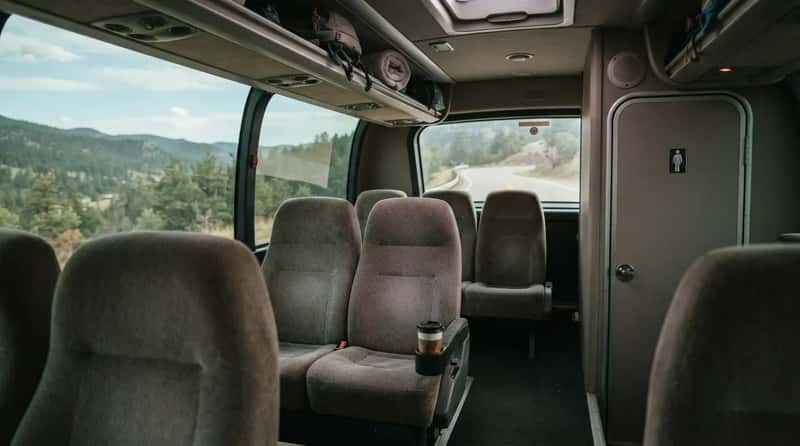
The farthest seat from the crowd is often the roughest ride on the bus. Many motorcoaches carry the engine in the back, and the last rows sit behind the rear axle, so bumps and sway can feel bigger back there than up front. People pick it for privacy, then spend the afternoon bracing their coffee.
If the coach has an onboard restroom, it’s often near that area too. That means door slams and a steady shuffle of foot traffic. General travel-health guidance for motion-sensitive riders usually favors the front or middle of a vehicle, which is the opposite of the back row.
#22 – The Wheel-Well Seat That Quietly Steals Your Legroom
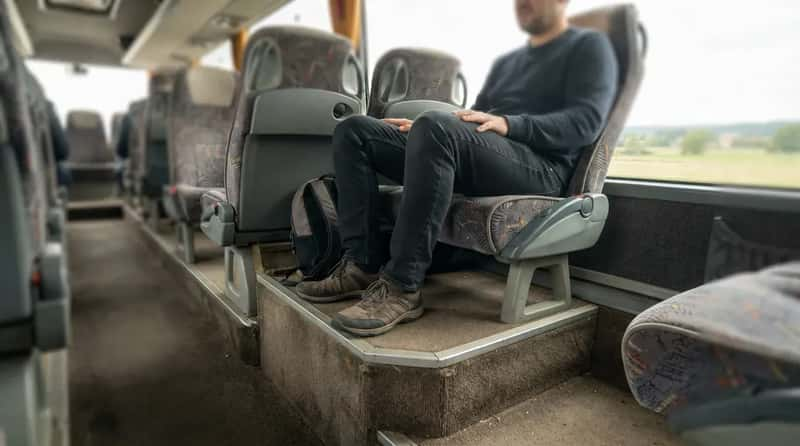
That “perfect” window seat may come with a raised floor under your feet. On many coaches, the seats above the wheel wells sit on a boxed-in platform, so your knees can end up bent at an odd angle for hours. It feels fine for ten minutes. By hour five, it feels like a punishment.
Seat layouts differ from one coach to the next, so the effect varies. Tall travelers tend to notice it first. If your feet can’t settle flat on the floor, you’re probably sitting on one.
#21 – Why the Seat Beside the Entry Steps Wears You Out
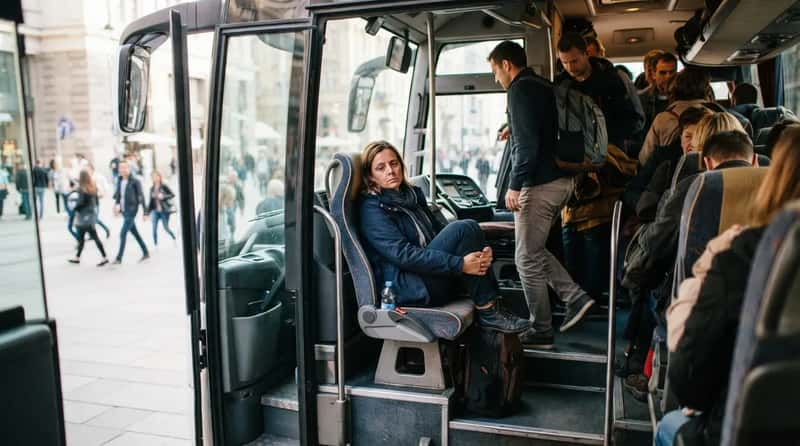
Grabbing a seat near the door seems smart, since you’ll be first off the bus. The catch is that every stop sends a parade of people past your shoulder. Each time the door opens, you get a blast of outside air, whether it’s July heat or January cold.
You also become the unofficial traffic cop, pulling your knees in for every passing traveler. Riders who want a quick exit do better in the first few rows of the main section. They still beat the line without sitting in the draft.
#20 – The Sun Doesn’t Care Which Seat You Picked
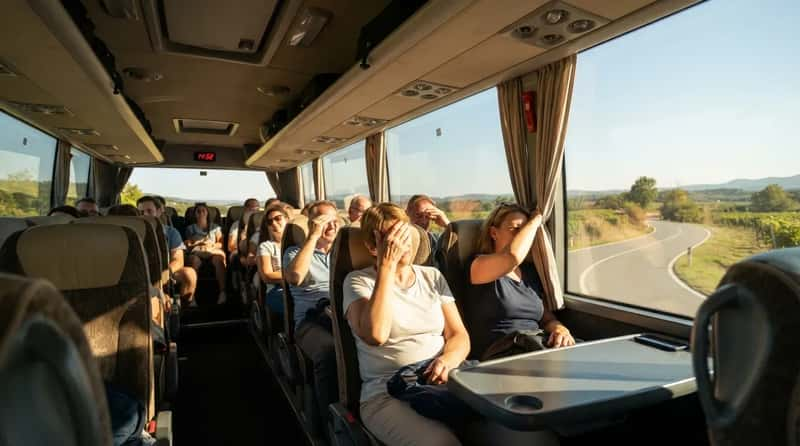
A seat that’s shady at 9 a.m. can feel like a toaster by 2 p.m. The sunny side of the coach changes with your route and the time of day. Choosing a side without checking your direction of travel is a classic first-day mistake, and by afternoon the glare has people regretting it.
Curtains help, but they also block the view you chose the seat for. Experienced travelers think about the sun before they sit, not after they start sweating.
#19 – The Front Row Isn’t the Prize Everyone Thinks It Is

Plenty of travelers treat the front row as the best seat on the bus. Many experienced riders disagree. Up there, you see every brake light, every merging truck, and every close call in full, fast-moving detail, plus you get the driver’s radio chatter.
On some tours, that row is held for the guide, or for people with motion sickness or mobility needs. Taking it without asking can lead to an awkward move on day two. The front is a gift for some riders and a headache for others.
At a Glance
- Great for: riders who get queasy and want a steady horizon.
- Not great for: anyone who flinches at heavy traffic or sudden braking.
- Often reserved: for the guide or for travelers with mobility needs.
- Smart move: ask on day one before you claim it.
#18 – Why Boarding Last Gets You the Leftover Seat
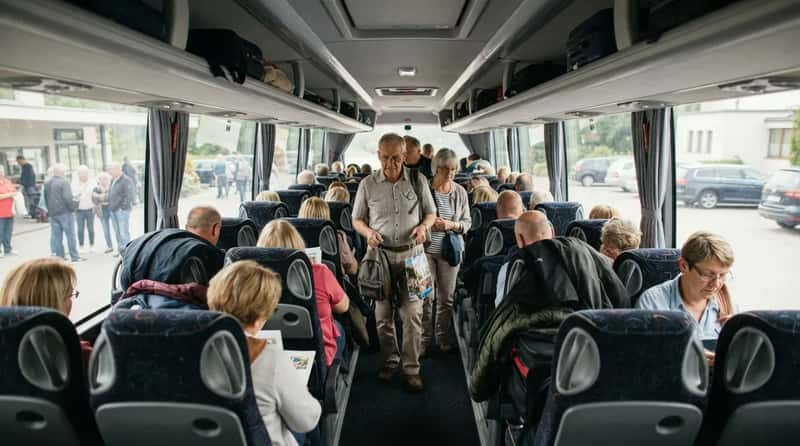
Every rest stop is a mini seat lottery. People who linger at the souvenir shop come back to find the good seats taken and their travel buddies scattered. On tours with no rotation, early boarders quietly lock in the best spots for the whole trip.
Some operators do rotate seats daily to keep things fair, so ask on day one. If yours doesn’t, the lesson is simple. Be back a few minutes early, even if it costs you one last photo.
#17 – The Window Seat Trap Nobody Warns You About
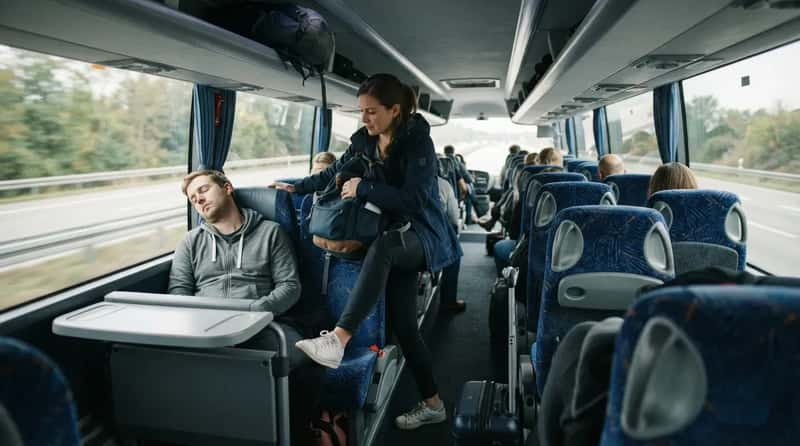
Window seats are wonderful until you need to leave. Then you’re climbing over a sleeping stranger or hovering until they wake up. On a long haul, that awkward moment can repeat several times a day, especially if you’re staying hydrated.
Rest stops are usually scheduled, but schedules slip with traffic. Seasoned travelers often claim the window only when the scenery is the star of the day. On long highway stretches, they choose differently.
Quick Compare
- Window: the best views and a place to lean, but the hardest seat to escape.
- Aisle: easy exits and extra stretch room, but you get bumped by passersby.
- The compromise: trade places with your seatmate at lunch so both of you get a turn.
#16 – The Aisle Seat That Turns Your Shoulder Into a Handrail
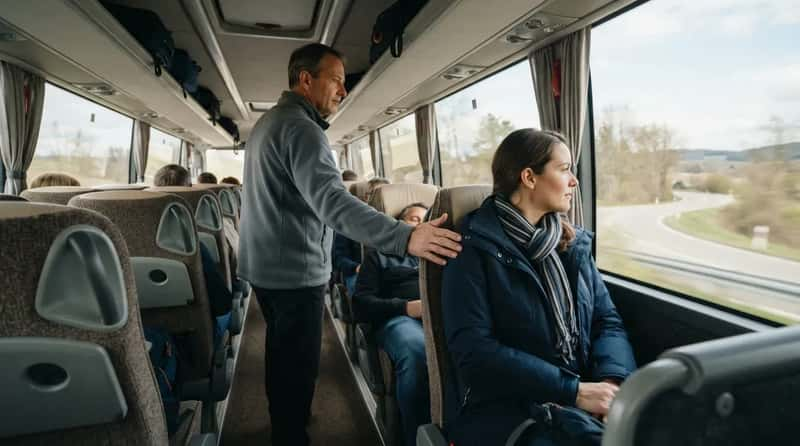
An aisle seat gives you stretch-out room and an easy exit. It also puts your shoulder and elbow in the path of everyone heading to the restroom. People steady themselves on whatever’s nearby while the coach is moving, and that’s often you.
Bags, jackets, and backpacks that stick out can snag passersby too. If you choose the aisle, keep your arms and gear tucked in. Better yet, accept that you’ll get tapped a few times a day.
#15 – Sitting Next to the Restroom Door: The Smell Is Only Half of It
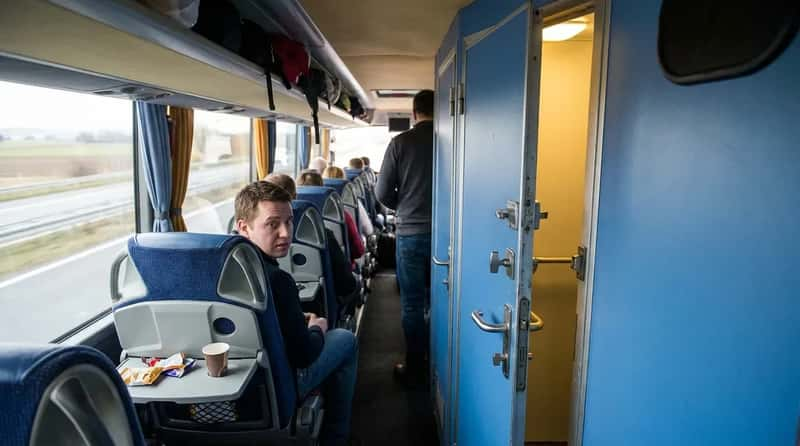
Onboard restrooms are tiny, and the area around them can get stuffy. Some operators ask riders to use the onboard restroom for emergencies only, which helps. Even so, the latch clicks, the light flickers, and someone is always waiting in line beside your elbow.
Many travelers move there because it seems convenient, and many leave after the first day. A seat a few rows away gives you nearly the same access with far fewer interruptions.
#14 – Skipping the Seat Belt Because the Bus Feels “Safe”
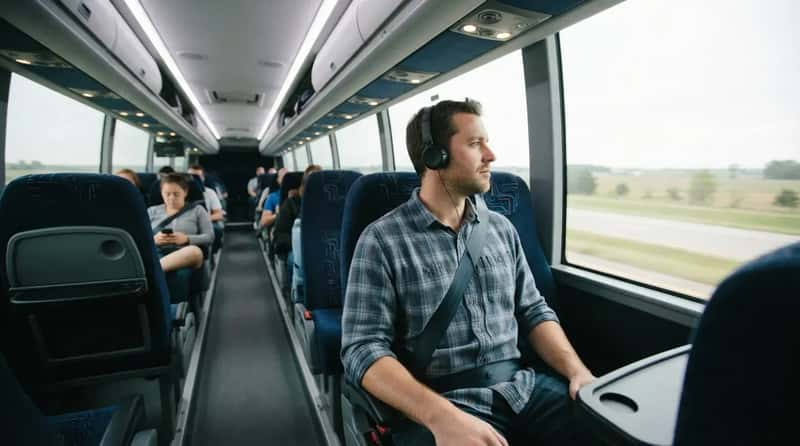
Big buses feel solid, and that’s exactly why people skip the belt. In the U.S., new motorcoaches built on or after November 28, 2016 are required to have lap-and-shoulder belts at every seat, following a federal safety rule. Safety officials had pushed for belts on large buses for years before that.
The tricky part is that older coaches can still be on the road. Check your seat for a belt and use it any time the coach is moving, even on a sleepy, straight highway.
#13 – Not Knowing Where the Emergency Exits Are
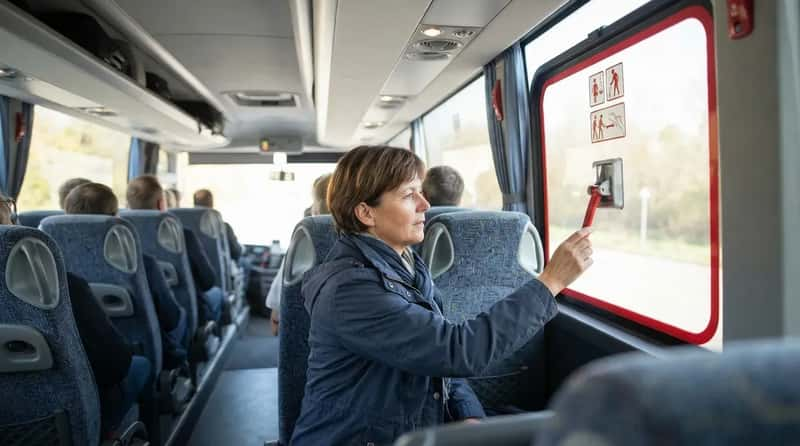
Most riders never look. Coaches typically have an emergency exit plan, such as marked windows, roof hatches, or a rear door, but few passengers can point to one without searching. In a real emergency, those seconds matter.
Take thirty seconds on day one. Find the nearest exit to your seat and note how it opens. Experienced travelers do the same on planes and trains, and it’s become second nature.
#12 – The Full Recline That Starts a Silent War
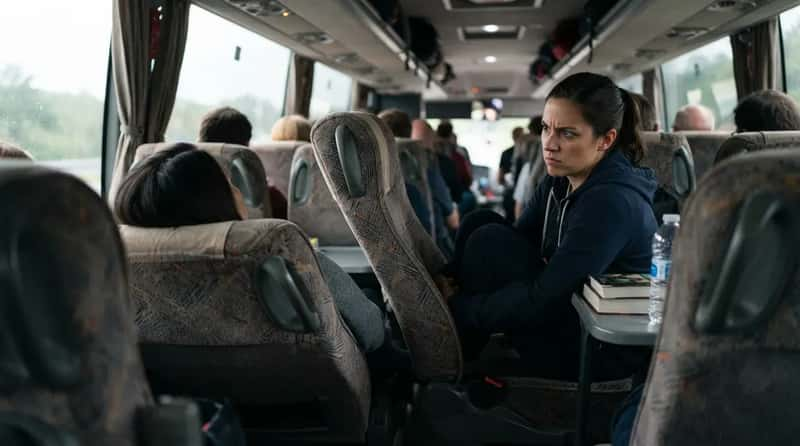
Dropping your seat all the way back is the fastest way to earn a glare from the person behind you. Coach seats have limited space, and a full recline can leave the rider behind with almost none. Some travelers argue that reclining is simply what the seat is for. Others call it bad manners on a packed coach.
Both sides have a point, and tour buses fill up fast. The experienced move is a quick glance behind you, then a gradual recline. A friendly heads-up goes a long way.
#11 – Piling Stuff on the Next Seat and in the Aisle
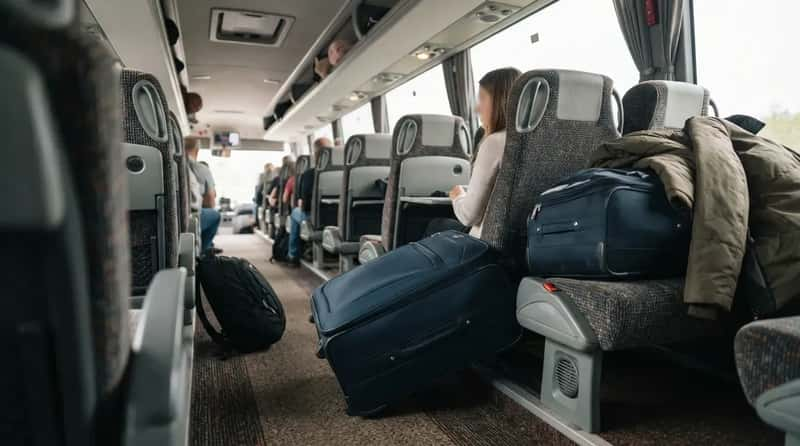
A bag in the aisle looks harmless until the coach brakes. Loose items can slide into the walkway, and that’s a trip hazard for anyone heading to the restroom. Using the empty seat beside you as a closet also sends a clear message to anyone who boards later.
Overhead racks on coaches are usually meant for small bags. Larger luggage belongs in the bay under the coach. Keep one small day bag at your feet and the rest out of the way.
#10 – Locking Your Medication in the Luggage Bay

This one gets people every trip. They load the big suitcase underneath, then realize their medicine, charger, or passport is inside. The bay is typically opened only at stops, so you can’t just ask the driver to pull over.
A missed dose or a dead phone on a long stretch may not be a catastrophe, but it’s a miserable feeling. Anything you’ll need within a few hours belongs in your seat bag, not under the floor.
#9 – Sitting Where You Can’t Hear a Word the Guide Says

Commentary is part of what you paid for. On many coaches, audio quality varies by seat, and the back rows can get muffled or echoey sound from speakers placed up front. You end up with a view and no story.
People who sit far back spend the day whispering “What did they say?” If hearing the history and tips matters to you, sit within a few rows of a speaker. Test it on the first stretch, and move if you can.
Worth Knowing
- Sound quality changes from coach to coach, so one tour’s great seat can be another tour’s dead zone.
- The first stretch of day one is your free test drive for audio.
- Guides can often adjust the volume if a few rows can’t hear.
- If you do get stuck in the back, ask for a handout or a quick recap at the next stop.
#8 – The Vent Above Your Head That Chills You All Day
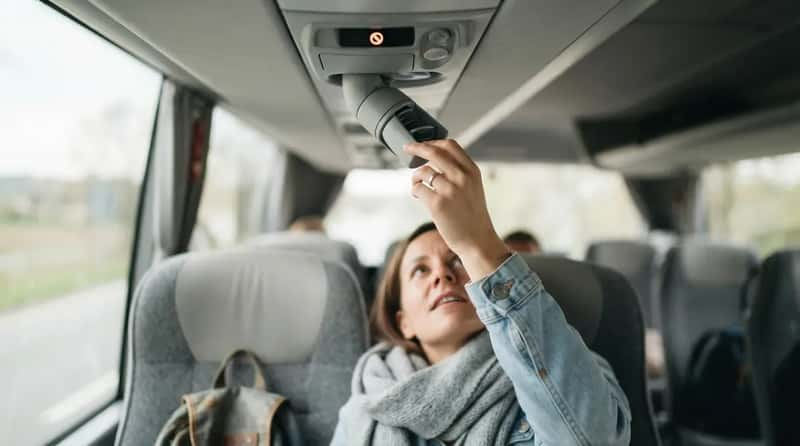
Coach air conditioning is strong, and it’s rarely the same temperature everywhere. Some travelers end up in a steady stream of cold air while others sweat two rows away. Individual nozzles above most seats help, but not everyone finds them or aims them correctly.
The fix is simple. Point the nozzle away from your face, and keep a light layer in your day bag. Experienced riders carry one even in July.
#7 – The Window Seat With a Wall Where the Window Should Be
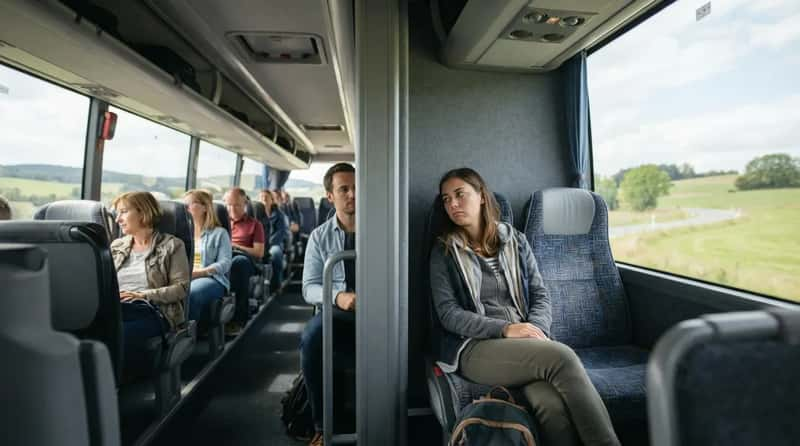
On many coaches, window spacing doesn’t line up with the seat rows. Some seats land beside a pillar instead of glass, so you picked a window seat and now you’re staring at a gray panel. It’s a small thing that ruins a big view.
You can spot it while boarding by comparing the window positions to the seats. If you’ve already sat down, don’t suffer in silence. Ask politely to swap with someone who doesn’t care about the scenery.
#6 – Why Your Coach Window Photos Come Out Ruined
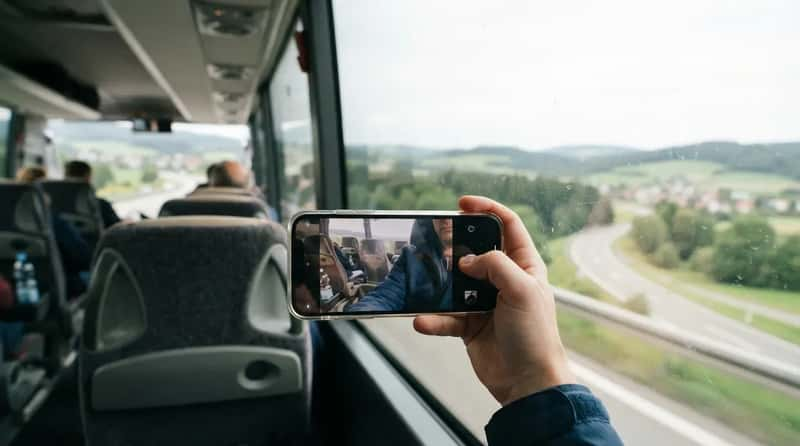
Coach windows are often tinted, and your own reflection shows up in every shot. Bright clothing and phone screens bounce off the glass, adding glare and ghost images to your pictures. By day three, many travelers have a gallery full of mirrored selfies.
Seasoned photographers press the lens close to the glass and shade it with a hand or a dark jacket. A clean, dry window helps too. Shooting through a dirty one rarely works.
#5 – Sleeping With Your Head on the Window

It looks like the classic road trip nap. In reality, glass is cold, hard, and buzzing with engine vibration. Many travelers wake up with a stiff neck and a headache, then blame the hotel bed.
A small travel pillow or rolled-up scarf makes a big difference. Keep it in your day bag, not the luggage bay. Experienced riders also skip the open-mouth snooze when strangers are seated nearby, which is just good manners.
Fast Facts
- Cushion: a small neck pillow or a rolled scarf beats bare glass.
- Light and noise: an eye mask and earplugs fit in a coat pocket.
- Where to keep it all: your seat bag, not under the coach.
- Bonus: a light layer doubles as a pillow cover and a vent shield.
#4 – Sitting Still for Hours: The Health Detail Most Tours Skip
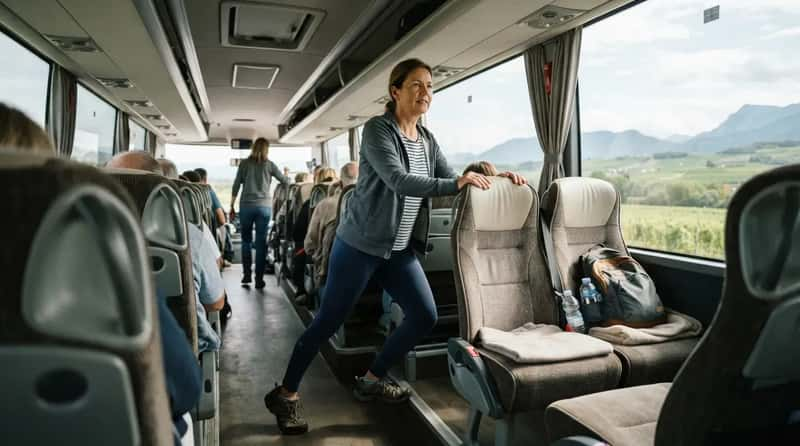
Long hours of sitting aren’t only uncomfortable. The CDC notes that travel lasting four hours or more can raise the risk of blood clots, whether you’re on a plane, train, or bus. Most travelers won’t have a problem, but the advice is easy to follow.
Stand and stretch at every stop. Flex your calves and ankles while you ride. Staying hydrated and avoiding tight clothing also helps, and anyone with a history of clots should talk to a doctor before a long trip.
#3 – Saving a Seat With a Jacket and Starting a Feud

It sounds harmless. You leave your jacket on a seat while you visit the restroom. For some travelers, that jacket is a territorial claim, and for others it’s a challenge. Plenty of coach tours have had heated moments over a hoodie and a window seat.
Opinions split here. Some say saving a seat for a quick break is fair, while others say a seat is empty until someone’s in it. The experienced approach is to settle it with a smile, not a sleeve.
#2 – Not Scouting Your Seatmate Until It’s Too Late
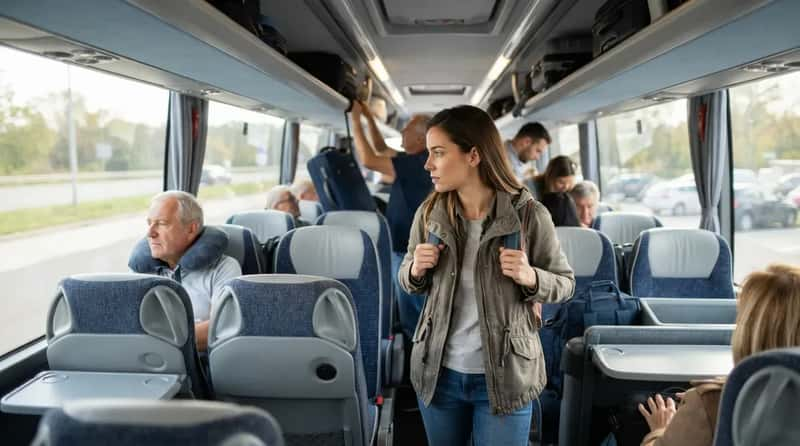
Your seat is only half the picture. The other half is who’s next to you. Early risers, light sleepers, loud talkers, and people who play videos without headphones all end up on the same coach. On day one, many travelers pick seats in a rush and stay put out of habit.
A quick chat during boarding or the first rest stop tells you plenty. Experienced travelers don’t hesitate to switch, especially when rotation is allowed. A kind request works better than days of quiet resentment.
#1 – Believing There’s One “Best Seat” for the Whole Trip
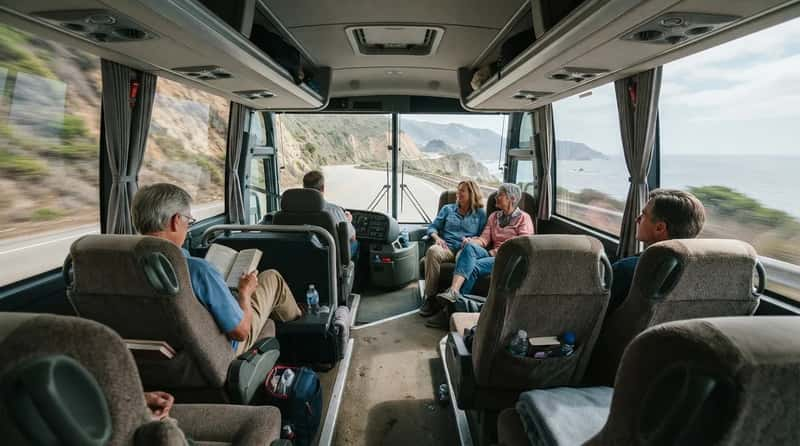
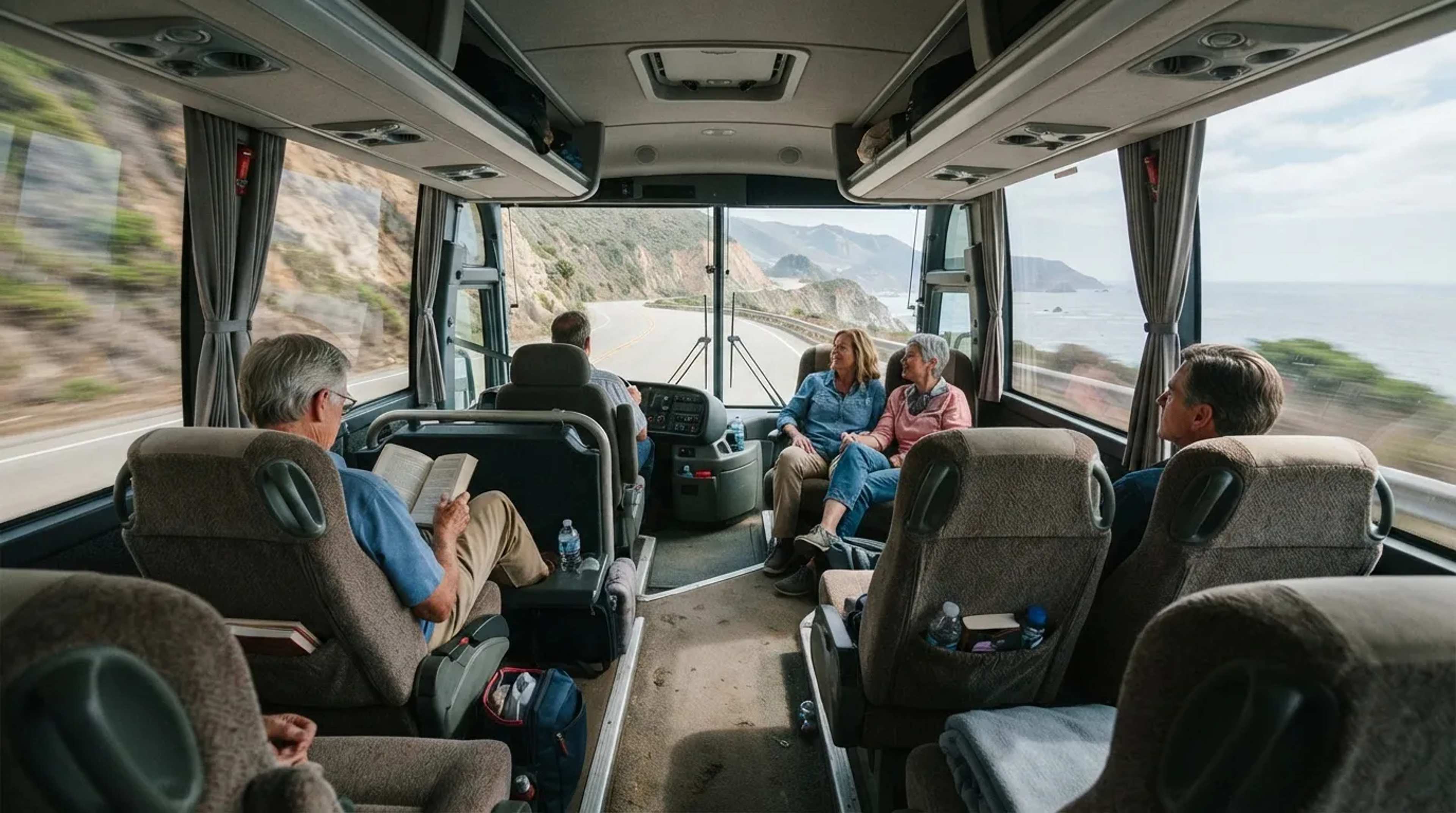
This is the mistake experienced travelers say they’d never repeat. The truth is, no seat is best for every day. A front seat helps on winding mountain roads if you’re prone to motion sickness. A window seat is perfect on a scenic coastal route. The aisle wins on a long, boring highway day.
Seasoned riders think about the day first and the seat second. They check the route, the sun, the hours on the road, and how they feel that morning. Then they pick, and they’re happy to change tomorrow.
The surprising part is how small these mistakes are and how much they can shape a day. A bumpy back row, a blocked view, a vent aimed at your neck, or a medication bottle locked under the floor can turn a scenic drive into a very long one. Belts, exits, and regular stretch breaks matter more than most people realize.
The smartest riders treat a seat like a daily decision, not a lifelong claim. Same coach, same tour, different morning, different seat. That’s usually how they end up with the best view on the bus.