Most travelers treat the gate desk like a wall – a place to hand over a boarding pass and hope for the best. But insiders say that desk is actually the single most powerful spot in the entire airport, quietly controlling everything from who gets bumped to first class to who skips the standby chaos entirely.
The catch? None of it gets offered out loud. Gate agents aren’t handing out favors to everyone in line – they’re reserving them for the small percentage of passengers who know exactly what to say, and when to say it. Here’s what airline insiders actually admit happens at that desk once you ask the right way.
#23 – They’ll Swap Your Middle Seat Before You Even Finish the Sentence
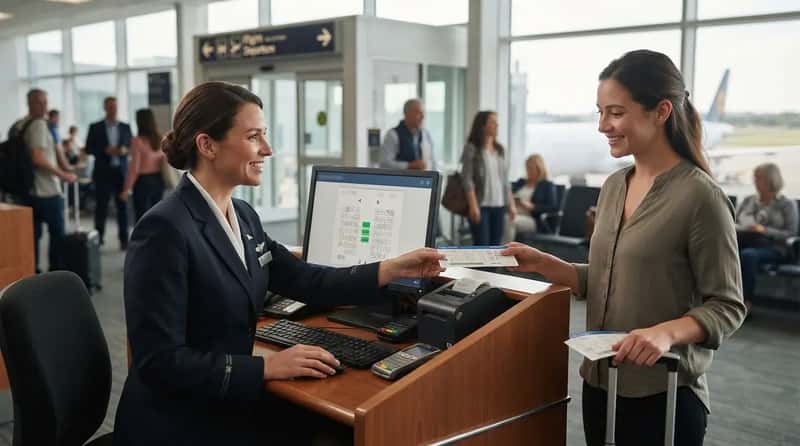
Blocked seats aren’t as locked as airlines want you to believe. Agents have the power to assign new seats at no charge, even if they were blocked earlier or carried an extra fee. That means a seat you were quoted $40 for online can quietly become free at the podium.
Agents can also dish out the popular exit rows, bulkhead seats, or point out where an empty row may be available. The trick is timing it right, not just asking louder. But #22 tops even that.
#22 – They Can Waive the Same-Day Change Fee Completely
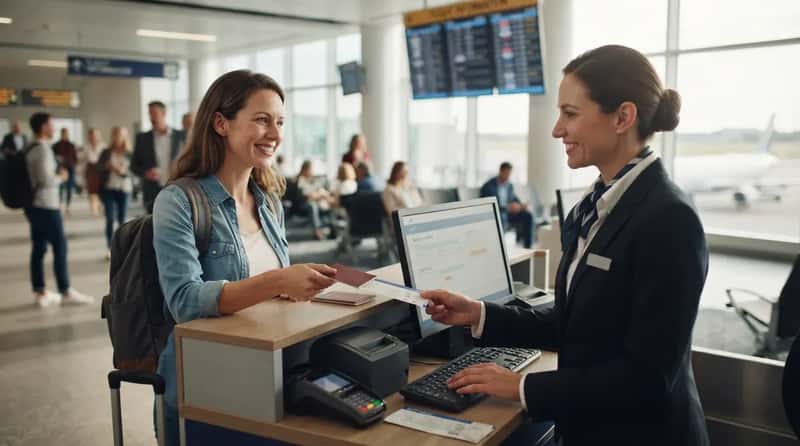
Not every airline treats a same-day flight swap as a punishment. Some airlines, like Alaska, JetBlue, and Virgin America, are known for their rather lenient policy on changing flights for free at the airport, while most other airlines charge for the last-minute change. Ask calmly, and the fee sometimes just disappears.
It helps the airline too – switching to an earlier flight helps them free up seats later in the day for passengers who may experience other delays, since an empty seat on the earlier flight otherwise flies without bringing in additional revenue. That’s mutual-benefit thinking – but #21 gets stranger.
#21 – They Can Quietly Move Your Name Up the Upgrade List
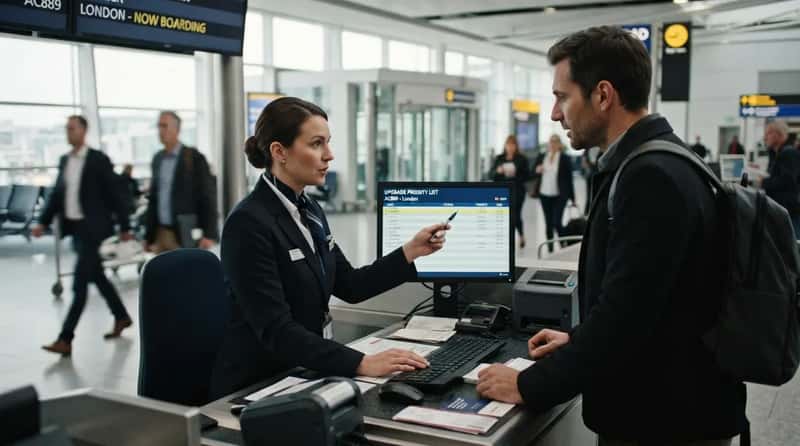
Upgrades aren’t a lottery – they follow a hidden order most passengers never see. Most airlines follow a structured upgrade hierarchy: available premium seats are generally offered first to passengers willing to purchase upgrades with cash, then to travelers redeeming loyalty points or frequent flyer miles, with complimentary upgrades typically coming later in the process.
The surprising part: elite loyalty members receive priority based on status level, while some airlines also extend upgrade benefits to active military personnel and eligible airline employees when seats remain available. A calm, specific ask can nudge you closer to the top even without elite status. And that’s just the start of the upgrade game – #20 turns it upside down.
Fast Facts
- Cash upgrade purchases are typically processed first, ahead of miles or points requests.
- Elite status members are ranked internally by tier, so a top-tier flyer often jumps ahead of a mid-tier one.
- Active-duty military and airline employees can receive complimentary upgrade priority on select carriers when seats remain open.
- Non-elite complimentary upgrades are usually the last category filled, often within the final hour before departure.
#20 – They’ll Gate-Check Your Oversized Bag Without Charging You
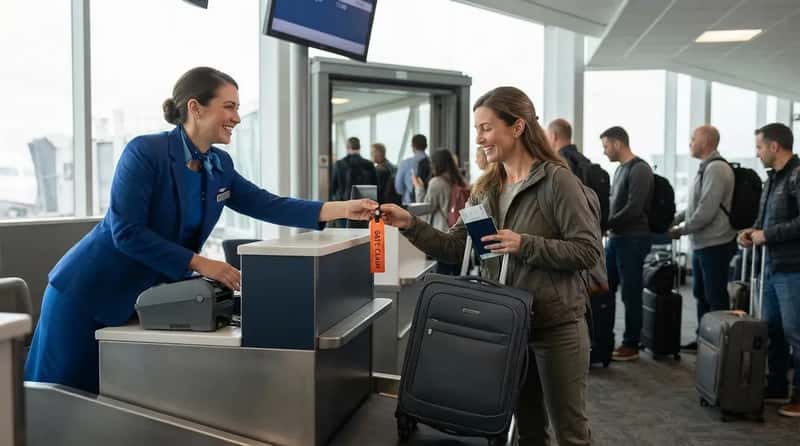
Bag fees at the gate aren’t always as fixed as they look on the airline’s website. Experienced travelers know the desk has more discretion here than the check-in counter ever admits, especially when the overhead bins are already tight.
Agents watching boarding in real time can see exactly when space runs out – and choosing to gate-check your bag for free instead of ticketing a fee is often faster for them than arguing about policy mid-boarding. Ask before you’re forced into a confrontation at row 24, and the odds shift in your favor. Wait until you see how #19 works.
#19 – They Can Activate Pre-Boarding Without a Doctor’s Note
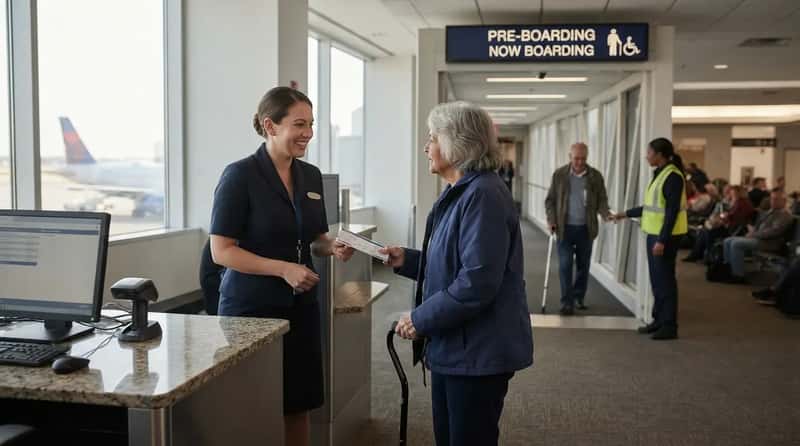
Most people assume pre-boarding requires paperwork. It doesn’t. Early boarding is available as long as you self-identify to a gate agent before boarding begins, with no doctor’s note required.
This applies whether you’re managing a mobility aid, medical equipment, or simply need extra time. The Air Carrier Access Act guarantees priority boarding and escort assistance for passengers with mobility needs, and many airlines go further than the law requires, leaving agents significant room for discretion. Which makes #18 even more surprising.
#18 – They Can Add a Free Companion to Your Pre-Board Pass
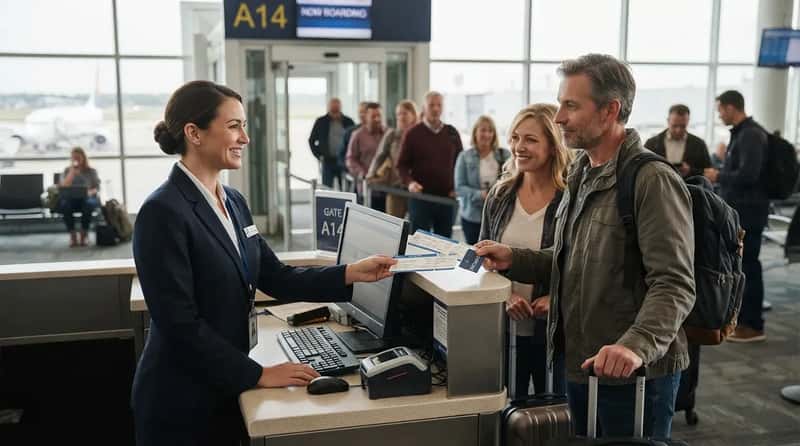
Here’s a detail almost nobody asks about: pre-boarding doesn’t have to be a solo perk. An experienced, empathetic agent will often extend early boarding to one travel companion without requiring a separate justification, especially on flights that aren’t full.
Couples and families skip this constantly because they assume the rule only covers one seat. That assumption costs them a genuinely useful benefit on almost every flight. One clear ask covers both of you – but #17 is the one nobody talks about.
#17 – One Sentence Triggers a Full Crew “Welfare Check”
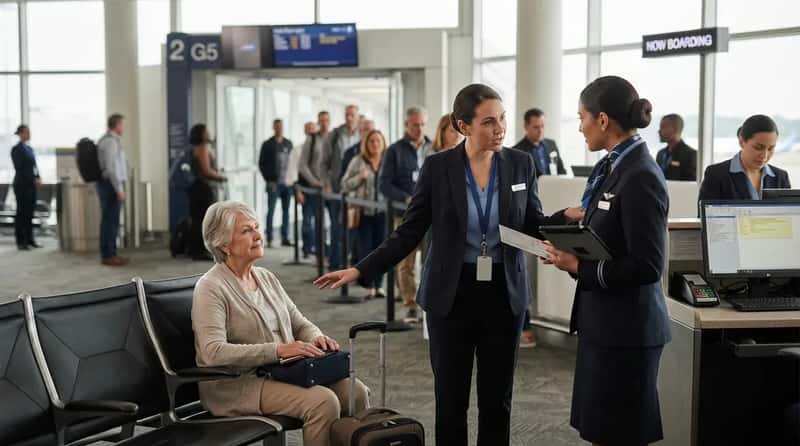
Gate agents have a quiet power most travelers never activate: flagging your seat for extra attention before you even board. A single sentence – such as mentioning you sometimes need help with an overhead bag – puts a note on your record that follows you onto the plane, activating a crew briefing, a pre-board flag, and a passenger note all at once.
Skip that sentence, and you’re just another face in line. Most travelers never say a word, then wonder why nobody checked on them. Speak up, and #16 gets even better.
#16 – They Can Reseat Your Family Together, Even on a Sold-Out Flight
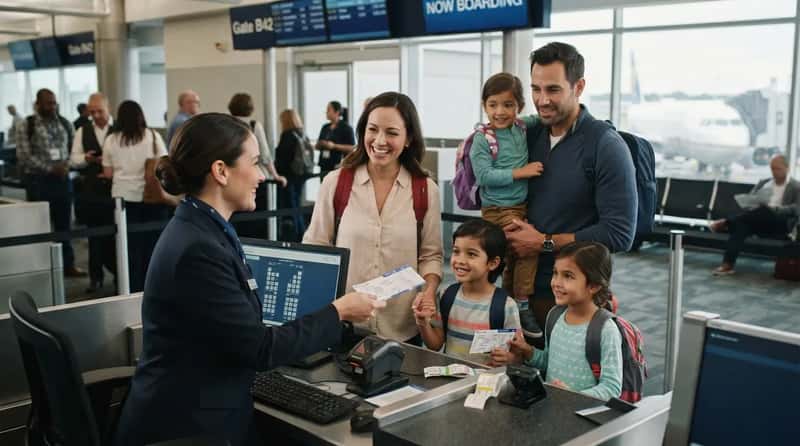
Split families are more common than most people expect on a packed plane, but gate agents can often fix it on the spot. Even when the seat map looks locked online, the desk sees inventory that never made it to the app – including seats that free up in the final boarding rush.
Asking calmly, with a clear explanation that you have small children or an elderly parent traveling with you, tends to get faster results than complaining loudly at the counter. The frustrating truth: politeness moves families faster than urgency ever does – and #15 proves it again.
Worth Knowing
- Only four airlines – Alaska Airlines, American Airlines, Frontier Airlines and JetBlue – have voluntarily banned family seating fees so far.
- Federal regulators have proposed requiring airlines to seat young children next to their parent or adult travel partner at no charge, assuming adjacent seating is available when the tickets are booked.
- The Department has published a dashboard displaying which airlines guarantee fee-free family seating at flightrights.gov.
- Until any rule takes effect, gate agents on non-guarantee airlines still have full discretion to reseat families manually when they ask.
#15 – They’ll Put You on a Free Same-Day Standby List
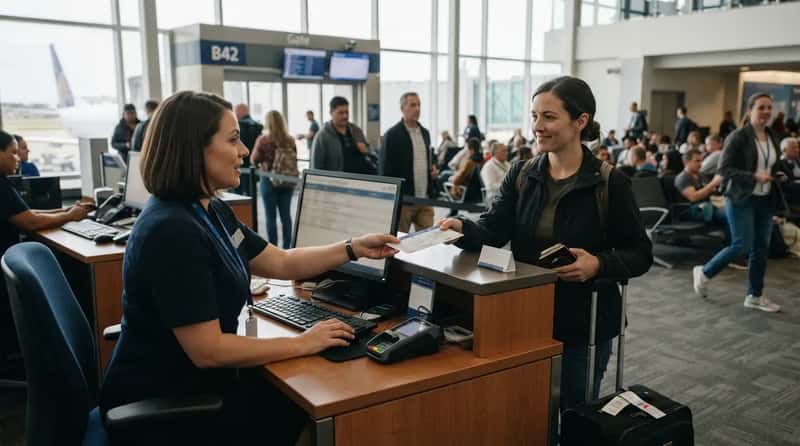
Standby isn’t just for stranded travelers – agents can add you to an earlier flight’s list without charging the standard fee, depending on the airline and how full the flight is. This is one of the least-advertised perks in air travel.
The best window to ask is right after check-in opens, before the list fills with same-day trip changes from other passengers. Arrive early, ask specifically – then wait for #14.
#14 – They Can Fix a Boarding Pass Error on the Spot
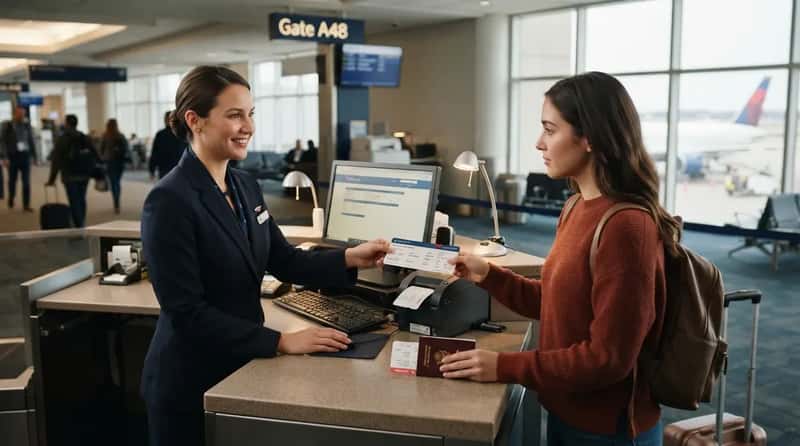
Name misspellings, wrong seat assignments, printing glitches – gate agents can override and reissue a corrected pass immediately rather than sending you back through security or customer service. Most travelers don’t realize this authority even exists at the gate.
This becomes critical closer to departure, when there’s no time to call an airline hotline. A calm, direct request – showing your ID and explaining the mismatch – usually gets resolved faster than passengers expect. It’s faster than you’d expect – and #13 is even faster.
#13 – They Can Release Blocked “Elite” Seats Close to Departure
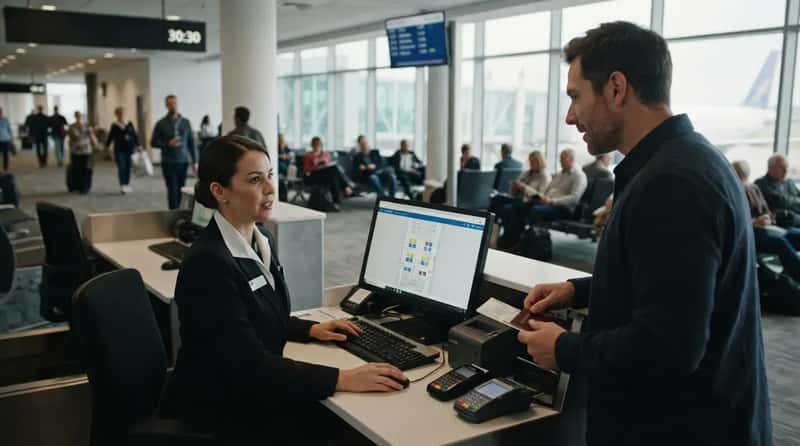
Seats marked as reserved for elite members aren’t permanently locked – they’re conditionally held. Better seats are often available close to departure since many are blocked or reserved for elites and carry an extra fee, and an opportune time to ask is around 30 minutes before departure, when many upgrades are processed and blocked seats can get released.
Ask too early, and the agent has no clarity on final elite check-ins yet. Ask right at that window, and you’re catching seats the instant they open up. Timing decides everything here – and #12 works the same way.
#12 – They Can Hand Out Meal Vouchers Before You Even Ask
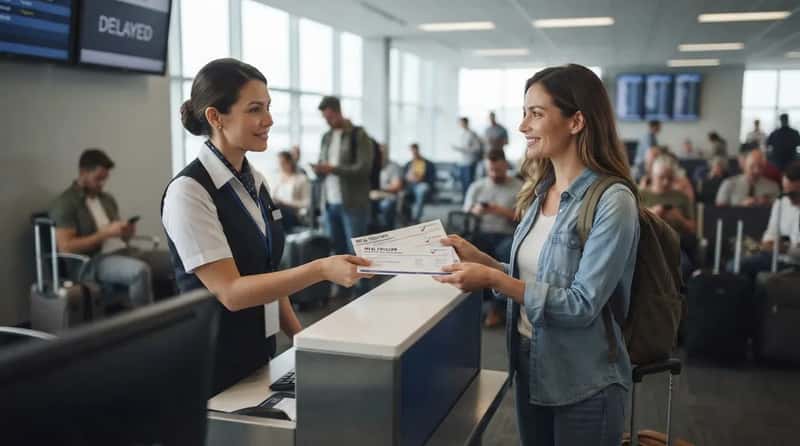
During long delays, compensation isn’t always automatic – but it’s often available if you know to request it. Airlines from the EU, and U.S. carriers operating from it, are subject to strict guidelines on what they can offer passengers during a delay, cancellation, or overbooking, though agents won’t always offer extras up front, so it helps if you ask.
The surprising part: many U.S. domestic agents have discretionary voucher authority too, even without a legal mandate. A polite, specific request during a two-hour-plus delay is far more effective than silently waiting it out. Ask and you might get more than you expect – #11 goes even further.
Quick Compare
- Under EU261, standardised compensation is €250 for short-haul flights under 1,500km, €400 for medium-haul flights of 1,500–3,500km, and €600 for long-haul flights over 3,500km, provided you arrived at your final destination 3 or more hours late.
- US domestic flights have no equivalent fixed-payout law for ordinary delays, so meal vouchers and goodwill credits ride entirely on airline policy and the mood at the podium.
- The overlap: U.S. carriers flying EU routes still owe the European compensation grid, even though they can skip it on a purely domestic hop.
#11 – They Can Rebook You on a Partner Airline During Mass Cancellations
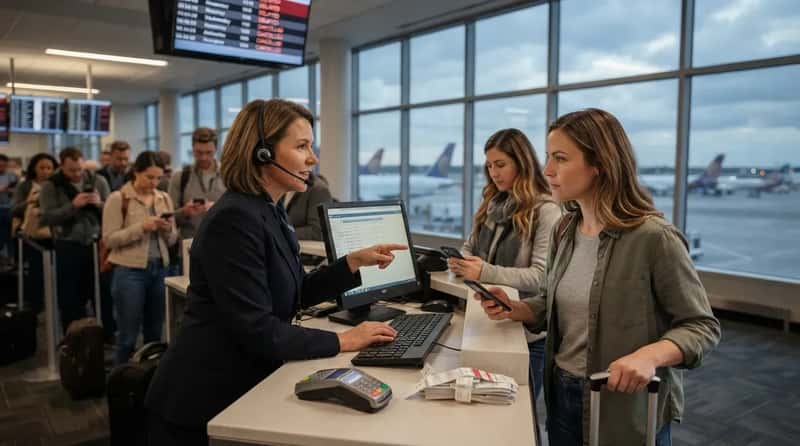
When storms or system outages cancel dozens of flights at once, gate agents have tools that outrank the airline’s own app. They can access powerful systems that show every available flight, seat, and route, making them the best ally for rebooking when a flight is delayed or canceled.
That access sometimes extends to partner or codeshare carriers your app won’t even suggest. They prioritize passengers who are prepared and know their options, so having alternate flights in mind when you approach them saves everyone time. Preparation pays off here – and #10 shows the limits of what agents can do alone.
#10 – They Can Call a Supervisor for a Lounge Pass Exception
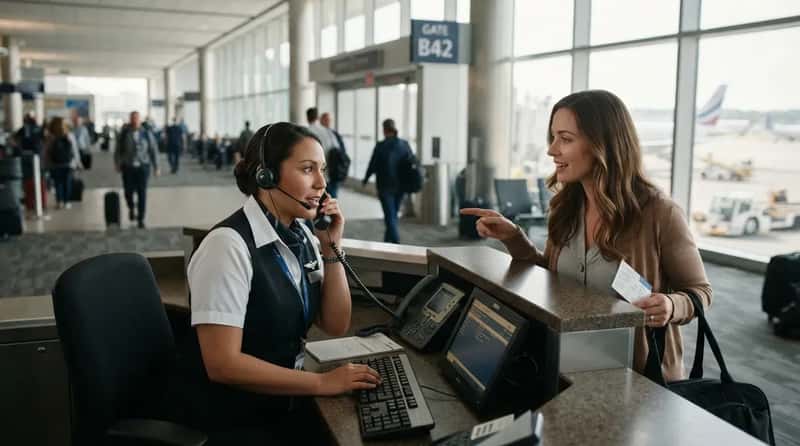
Lounge access isn’t something gate agents can grant on their own authority – but they can escalate it. Most agents don’t have access to airline lounge passes or drink vouchers, so attempts to finagle more goodies most likely will prove futile, though you could politely request that the agent ask a supervisor if it’s possible to offer more.
It’s a long shot, but it’s not zero. Framing it around a legitimate reason – a long delay, a missed connection, a medical wait – improves the odds far more than a casual ask. #9 is a much easier yes.
#9 – They Can Let You Board Early for a Fragile or Awkward Item
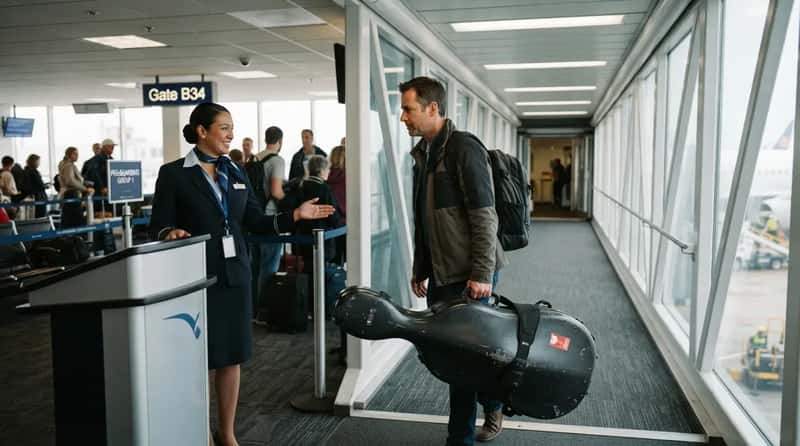
Instruments, medical devices, and oddly-shaped carry-ons get quiet priority most passengers never request. Gate agents would rather board you early and stow your item safely than deal with a gate-check argument later at the jet bridge.
This isn’t officially advertised, but it’s one of the easiest “yes” answers an agent can give, since it solves a logistics problem for them too. It solves their problem too – which makes #8 feel almost automatic.
#8 – They Can Add a Permanent “Special Assistance” Flag to Your File
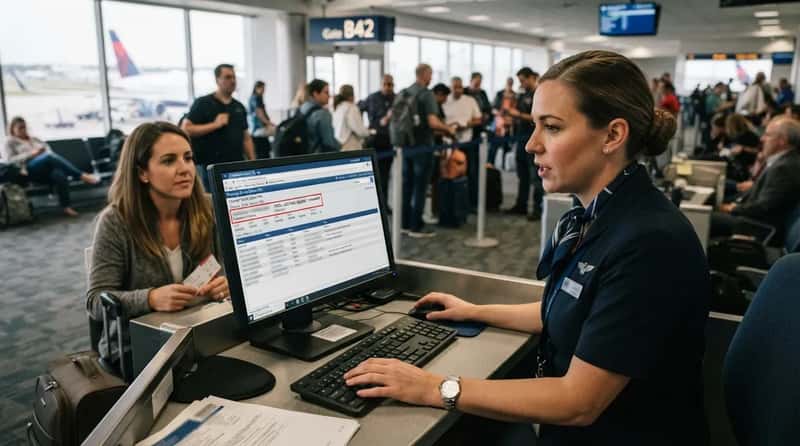
One conversation at the gate can follow you for every future flight, not just the one you’re on. It’s not luck – it’s a list of quiet courtesies, buried in federal law and airline discretion, that gate agents almost never say out loud.
Once that flag is added, every future gate agent sees it instantly, which speeds up boarding, seating, and assistance requests without you repeating your story each time. Most flyers never bother setting this up – but #7 shows why they should.
#7 – They Can Swap a Slow Wheelchair Wait for a Faster Cart
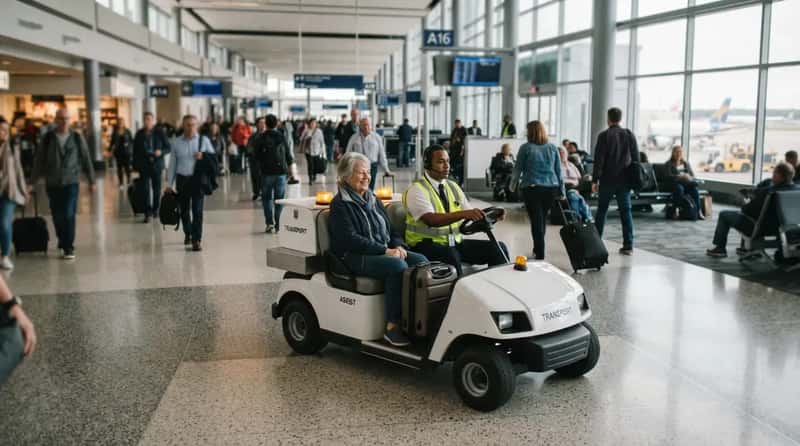
Wheelchair requests can mean long waits during peak hours, but there’s often a faster alternative agents rarely mention unprompted. Asking for a cart instead of a wheelchair often moves faster and carries zero stigma, getting you to the gate rested instead of exhausted.
Most people don’t realize: the cart option exists specifically because wheelchair staffing is often the tightest resource in the terminal. Requesting it directly, rather than waiting in the default queue, can save real time – and #6 works the same way for families.
#6 – They Can Authorize Extra Escort for Unaccompanied Minors
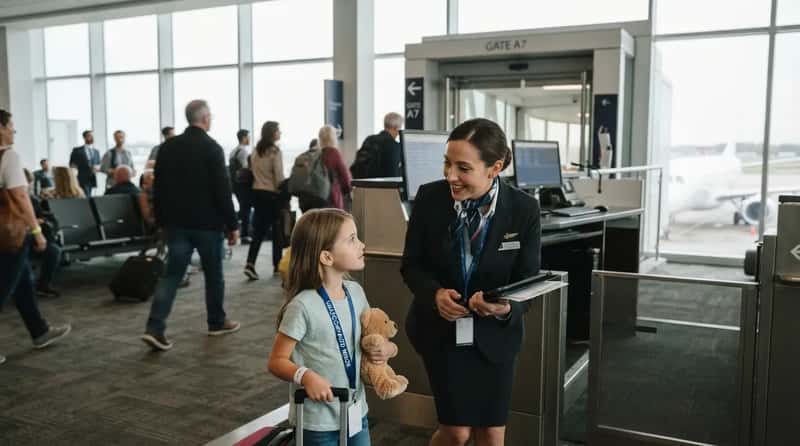
Parents rarely realize how much flexibility exists around unaccompanied minor policies once they ask directly. Gate agents can add extra check-ins, priority boarding, and a more hands-on handoff process than the standard procedure requires.
This becomes especially useful on tight connections, where a rushed gate change could otherwise mean a missed handoff. A calm, specific request at the counter – not just filling out the form – tends to get a more attentive process authorized, just like #5.
#5 – They Can Override Fare-Class Rules in a Genuine Medical Emergency
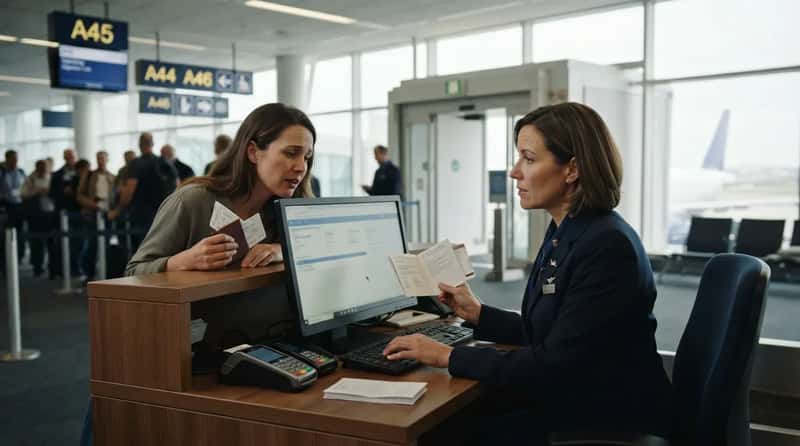
Fare rules are strict – until a real medical situation is on the table. Passengers with compelling, verifiable reasons like medical needs or family seating issues can get further by presenting documentation when appropriate.
This isn’t a loophole to exploit casually – agents can tell the difference between a genuine emergency and a convenient excuse. But when it’s real, a discreet, polite demeanor works, and #4 reveals just how much agents actually see.
#4 – They Can See Hidden Seat Inventory Your App Will Never Show
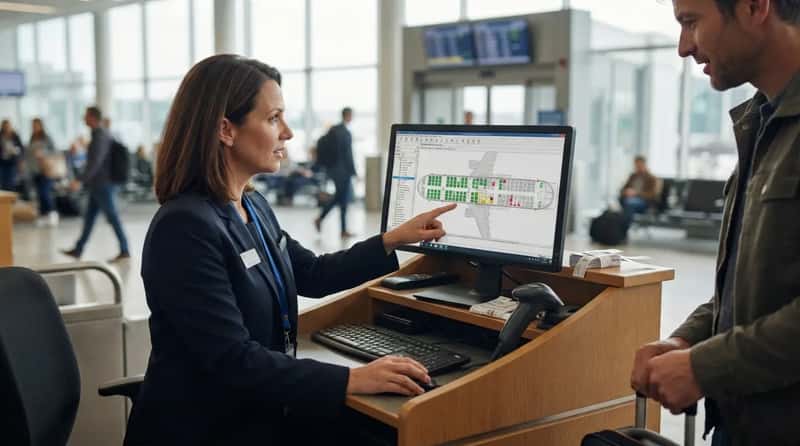
The app on your phone is often working with outdated information compared to what’s sitting on the agent’s screen. Gate agents can access hidden seat inventory and bypass certain restrictions to get you moving quicker during disruptions.
This is why calling the airline hotline during a mass delay often wastes time compared to walking straight to the podium. Staying calm, patient, and transparent about your needs helps them assist you efficiently. The podium beats the app almost every time – and #3 proves it again.
#3 – They Can Rebook You Before Your App Even Refreshes
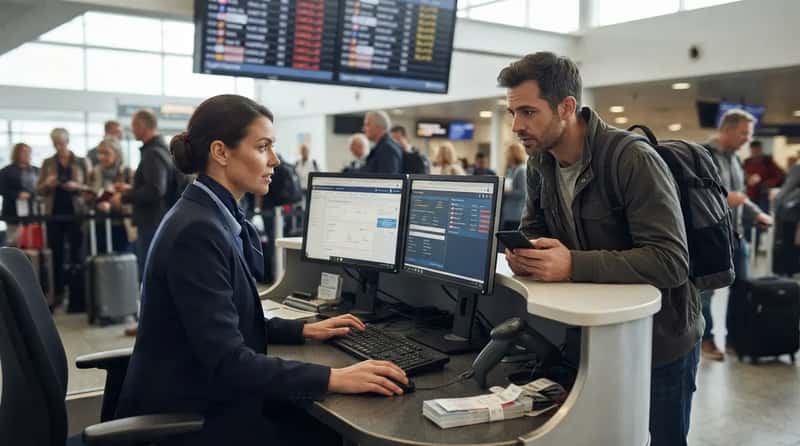
During a cancellation wave, speed matters more than most people realize – and the gate desk moves faster than the phone in your pocket. When a flight disruption occurs, gate agents have faster tools than consumer apps to rebook you, so heading straight to an agent beats wasting time on your phone.
The frustrating truth many travelers learn too late: by the time your app suggests a new flight, the good options at the gate may already be gone. Skipping the app is often the smarter move – and #2 raises the stakes even higher.
#2 – They Can Pull You Off an Overbooked Flight – With Compensation and a Say in the Rebooking
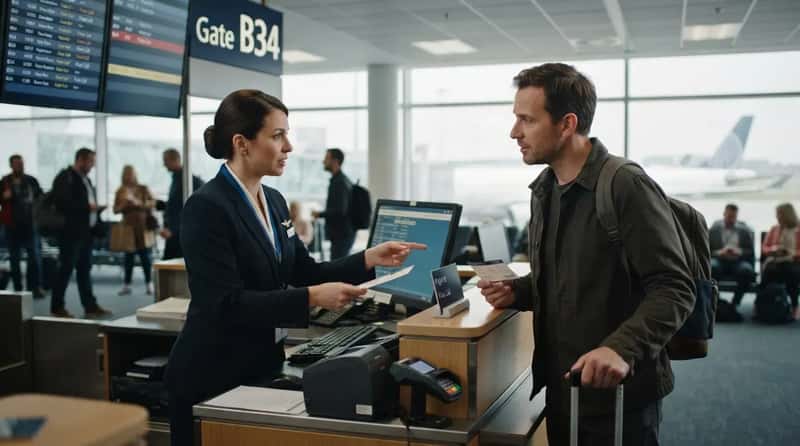
Overbooked flights create leverage most passengers never think to use. Volunteering your seat isn’t just about a travel voucher – agents often have room to negotiate exactly which flight you’re rebooked onto in exchange.
This is especially useful for flexible travelers who’d rather take a later flight with a real benefit than sit in an uncomfortable middle seat for free. Asking specifically “what can you offer if I give up my seat” opens a conversation most people never start. Most people never ask – but #1 is the one everyone secretly hopes for.
At a Glance
- Federal rules require real compensation for passengers involuntarily bumped from an oversold flight, not just an apology or a token voucher.
- This final rule raises the liability limits for denied boarding compensation that U.S. and foreign air carriers may impose from the current figures of $775 and $1,550 to $1,075 and $2,150.
- This rule is effective on January 22, 2025.
- This maximum legal required payout does not prevent airlines from offering customers more, which is exactly why volunteering strategically can beat the standard payout.
#1 – They Can Upgrade You to First Class When the Cabin Is Oversold
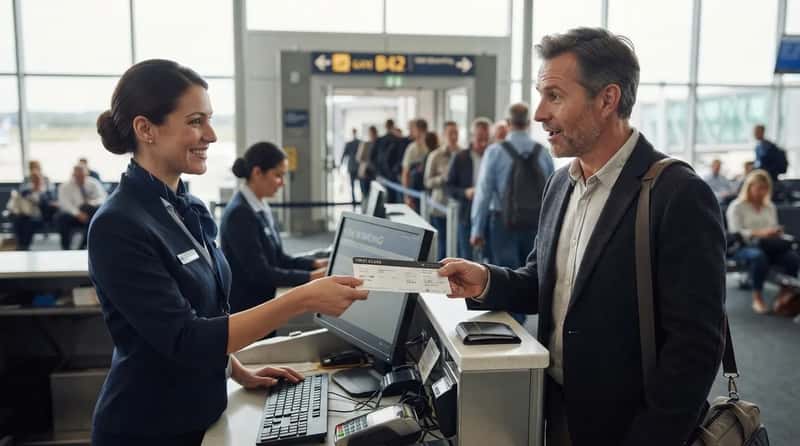
This is the one every traveler hopes for, and it’s more real than most people assume. Gate agents may be able to grant a flight upgrade if the coach section is overbooked, since their most important task is getting the plane off on time, so if seats are available up front, they may upgrade people during boarding.
Timing is everything here. Arriving a bit early at the gate, when agents are a little less frazzled, and politely mentioning you’d like to be considered if they’re upgrading passengers – then waiting until you’re one of the last to board – noticeably improves the odds. It’s not guaranteed, but it’s far from a myth.
None of these 23 moves require confrontation, elite status, or a lucky day. They require knowing what’s actually negotiable at that desk – and asking clearly, calmly, and early enough for an agent to say yes. The gate isn’t just a checkpoint. It’s the last real decision-maker between you and a better flight.
Most travelers walk past that opportunity every single time. Which one of these are you trying on your next flight? Drop it in the comments.