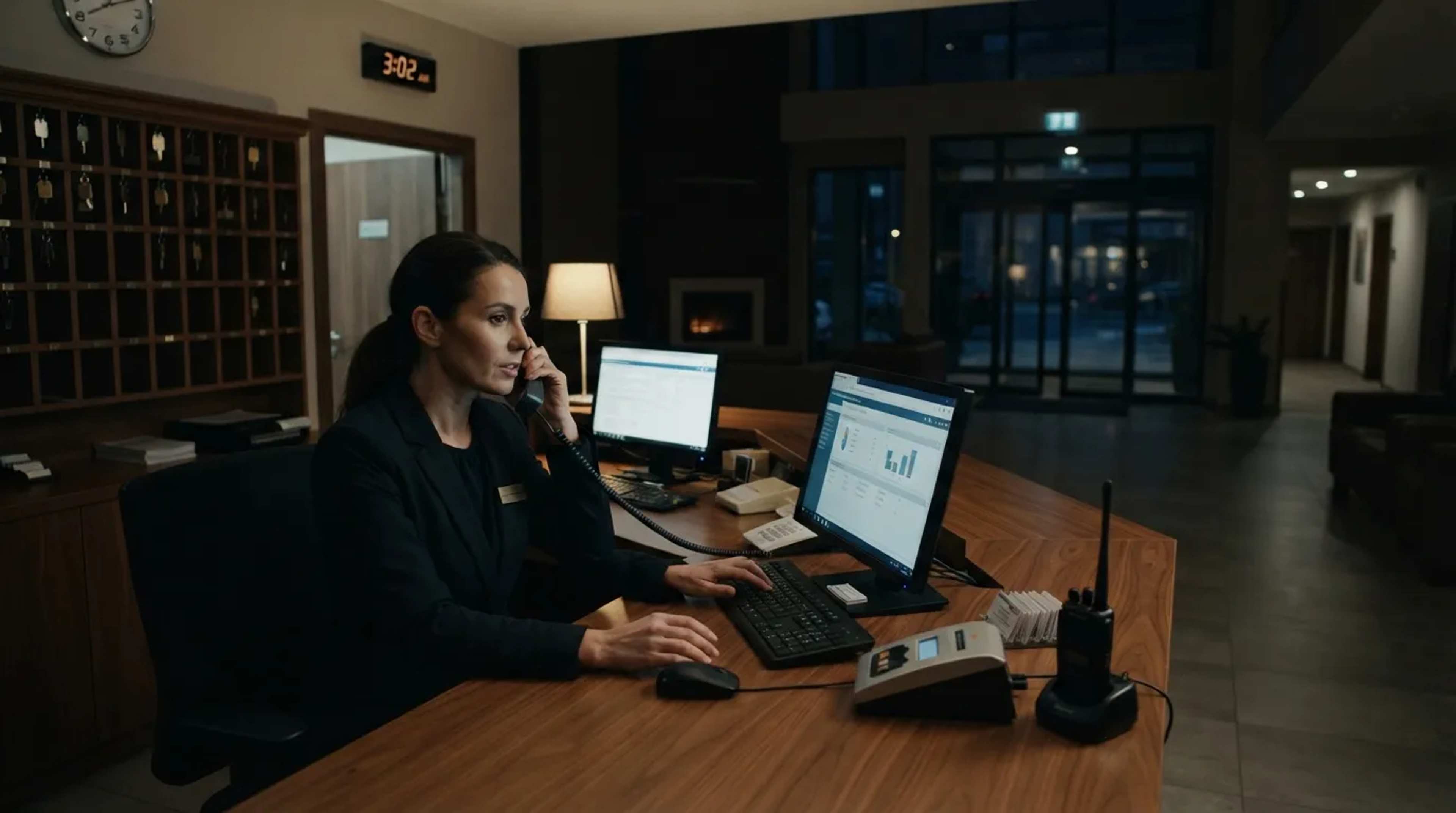
Picture a hotel at 2 a.m.: a dim lobby, one sleepy clerk, a phone nobody is calling. It’s a quiet little image, and it’s mostly wrong. The building is far from asleep. It just does its busiest work where you can’t see it.
While you sleep, the books are closing, tomorrow’s towels are tumbling, and the phone keeps ringing. Some of it is routine. Some of it gets tense fast. And the thread that ties it all together is the biggest surprise on this list, waiting at #1.
#23 – Your 1 A.M. Check-In Still Has to Land on Yesterday’s Date
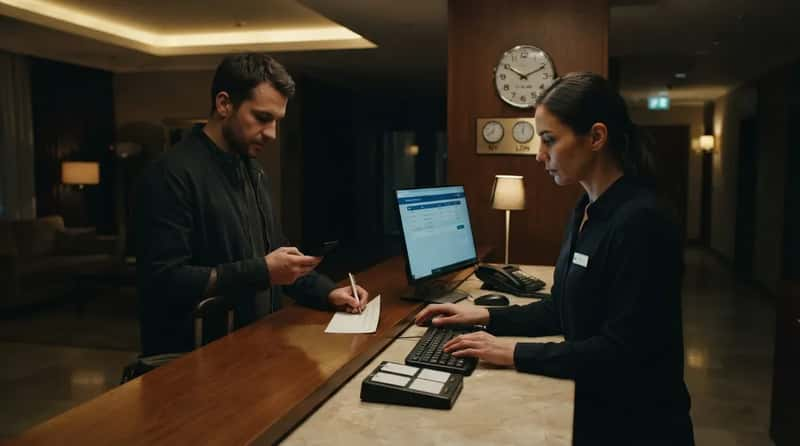
Hotels run on a “business day” that closes around midnight, and that creates a strange puzzle for late arrivals. If a guest walks in at 1 a.m., the night auditor has to check them in and make sure the stay is recorded against the night that started before midnight. The night you booked and the date on the wall clock can be two different things.
So that tired stranger at the desk isn’t just handing over a key. Someone is quietly lining the paperwork up with the right night. If it’s wrong, the numbers won’t match by morning. But the date puzzle is only the warm-up for #22…
#22 – The Cash Drawer Has to Balance Before the Sun Comes Up

The overnight shift doubles as an accounting job. Receivables have to match revenue, the cash drawer has to balance, no-shows get posted, and the day’s records roll over. Guests see a person at a desk. Behind that desk is a nightly financial close.
Many hotels fold two jobs into one seat. The same person works the front desk, balances the day’s transactions, and prepares reports for management. Nobody on the day shift sees that work, but they depend on it the second they clock in.
And the computer system has its own late-night ritual, coming up at #21…
#21 – The Hotel’s Computer “Flips the Date” While You Sleep
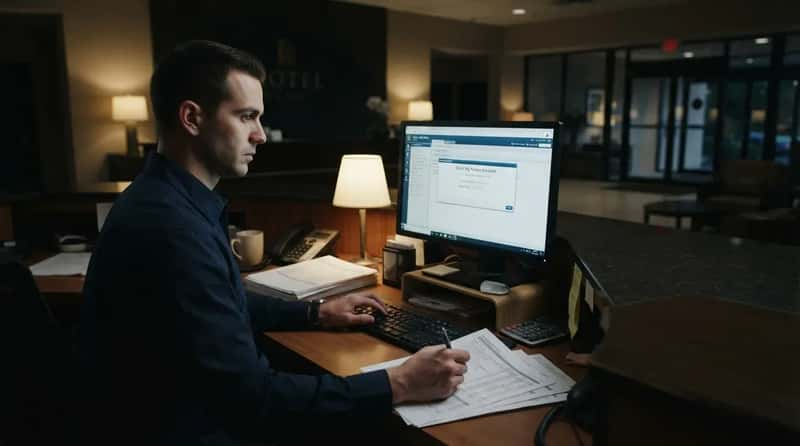
Every property management system has a daily reset. The night-audit process normally includes reviewing postings, balancing payment records, resolving exceptions, advancing the business date, and preparing reports. Think of it as the digital version of turning the page.
Fast Facts
- Postings get reviewed for errors.
- Payment records get balanced.
- Exceptions get resolved by a person.
- The business date moves forward.
- Reports are prepared for the morning team.
The exact steps vary by hotel, and brands set their own rules. What doesn’t vary is that a human has to run it and sign off. Next comes the guest who makes the 1 a.m. desk feel like an airport gate, at #20…
#20 – The Midnight Arrival Who Just Survived a Flight From Hell

The people who show up after midnight are rarely casual travelers. Overnight arrivals often include people dealing with delayed flights or marathon journeys. They want a bed and almost nothing else.
That changes the job. The night clerk isn’t selling the pool or the lobby coffee. They’re managing exhaustion, frustration, and sometimes a reservation that fell apart three time zones ago.
But late check-ins are the easy part compared to #19…
#19 – Your 5 A.M. Wake-Up Call Is Somebody’s Whole Job
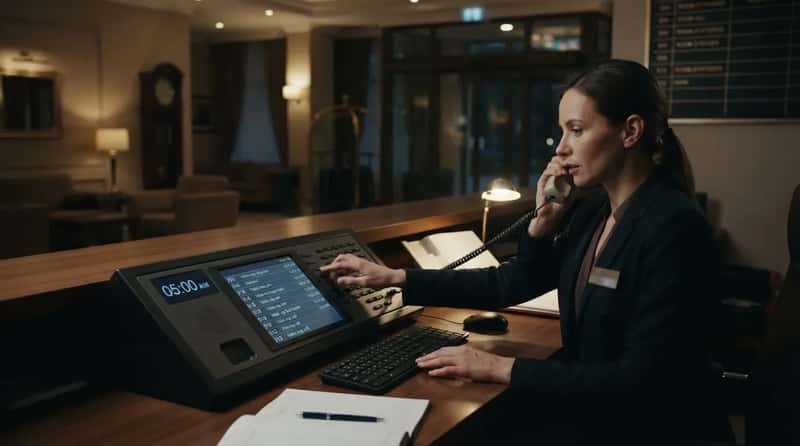
In the age of phone alarms, wake-up calls sound like a relic. They aren’t. Night auditors schedule early morning wake-up calls, along with handling bookings and answering phones.
Plenty of guests still trust the front desk more than their own phone, especially with a flight to catch. A missed call can mean a missed plane, so the stakes are bigger than they look. The next item involves a much less friendly phone call, at #18…
#18 – The 1:30 A.M. Noise Complaint Lands on One Person
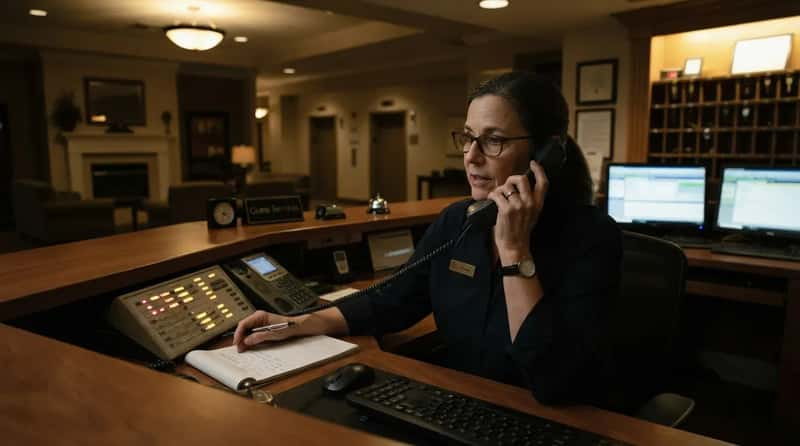
When a party gets loud, the call goes to the desk. The auditor coordinates with security if there’s a noise complaint or a guest who shouldn’t be there. That’s a lot of judgment for someone who may also be waiting on a late check-in.
Both sides of that conversation are tired, and some are angry. One phone call can decide whether a neighbor sleeps or leaves a one-star review. The clerk has to be firm without becoming the villain.
Meanwhile, something far less human can wake the whole floor, as #17 shows…
#17 – A Leaking Pipe Doesn’t Wait for Business Hours
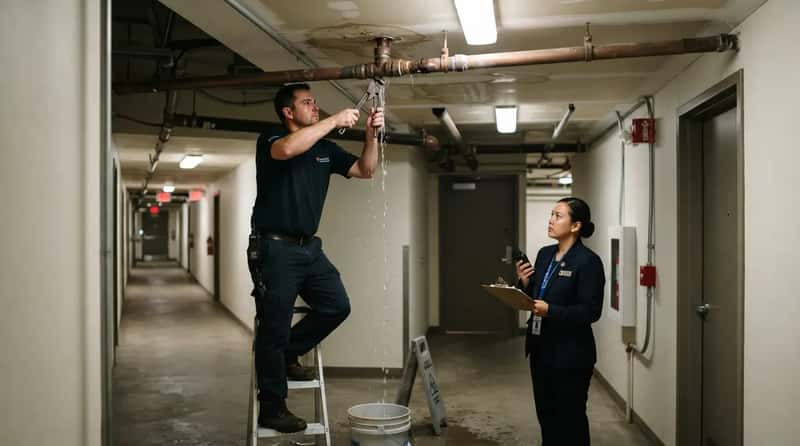
Buildings don’t break on a 9-to-5 schedule. The auditor coordinates with the on-call engineer for any HVAC or plumbing tickets. A dead air conditioner at 2 a.m. in July is a full-blown emergency to the guest in that room.
Most hotels keep engineering coverage on call rather than on the floor, which makes the desk the first filter. Someone has to decide, in minutes, whether a problem can wait or whether it’s about to flood a ceiling. At some hotels, though, there’s barely anyone to call. That’s #16…
#16 – At Small Hotels, One Person May Be the Entire Staff
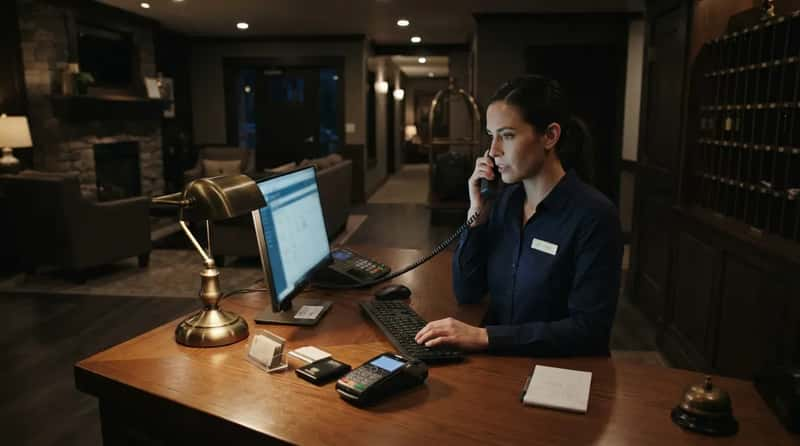
Here’s what the lobby sign never says. In smaller hotels, the night auditor is usually the only person on site during the night. That same person is the point of contact for every guest in the building.
It’s an unglamorous truth. Hotel fans love to argue about brand names and loyalty perks. Arguably, the person at the desk at 3 a.m. matters more than either one. A shift like that takes steady nerves.
And when something serious does happen, there’s a script. That’s #15…
#15 – Emergencies Follow a Script, Even at 3 A.M.
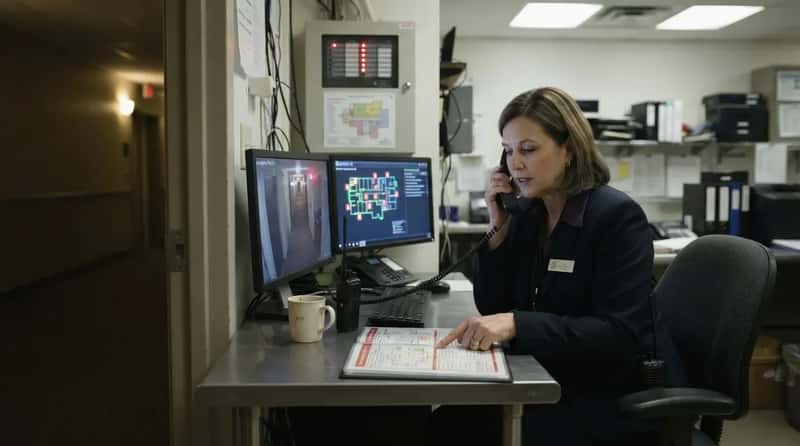
Fire alarms, medical calls, and security scares don’t check the clock. Night auditors coordinate with other departments and apply the emergency protocol when it’s needed. Following emergency procedures is a core part of the job, and hiring guides list it as something to look for when interviewing.
Most guests never see that training in action. They only see a front desk that stays calm. Calm is the product, and it’s built in drills no guest ever watches. Now let’s head downstairs, where the washers are running, at #14…
#14 – Tomorrow’s Towels Are Spinning While You Dream

The laundry room never really closes. Larger properties staff third-shift laundry attendants who process the day’s linen. And the work goes well beyond towels.
One job posting spells out the duties: treating stains, then washing, drying and folding linens, terry, blankets, coverlets and shower curtains. Your fresh sheets were someone’s 3 a.m. problem.
But someone has to get the dirty linen to the laundry first. That’s #13…
#13 – The Overnight Crew Hauls Yesterday’s Mess Out of Sight
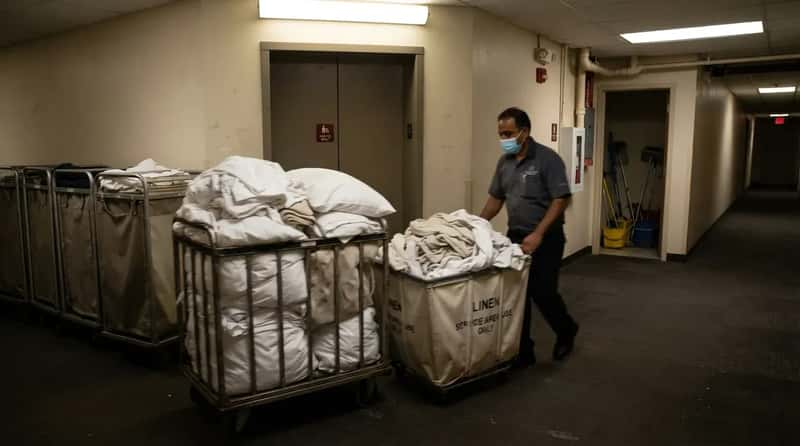
Job listings spell out the unglamorous start of the chain. Workers remove dirty linen from room attendants’ carts and closets and transport it to the laundry. It’s the part of the process nobody photographs.
At a Glance
- Dirty linen is pulled from room attendants’ carts and closets.
- It’s transported to the laundry.
- Stains are treated, then everything is washed, dried and folded.
- Carts and cart rooms get restocked to PAR levels.
The conditions can be rough, and one listing warns of a very hot work environment. Hotel “magic” often looks like one person with a cart at an hour you’d never choose. The same crew then has to restock, which leads to #12…
#12 – Housekeeping Carts Get Reloaded Before Dawn
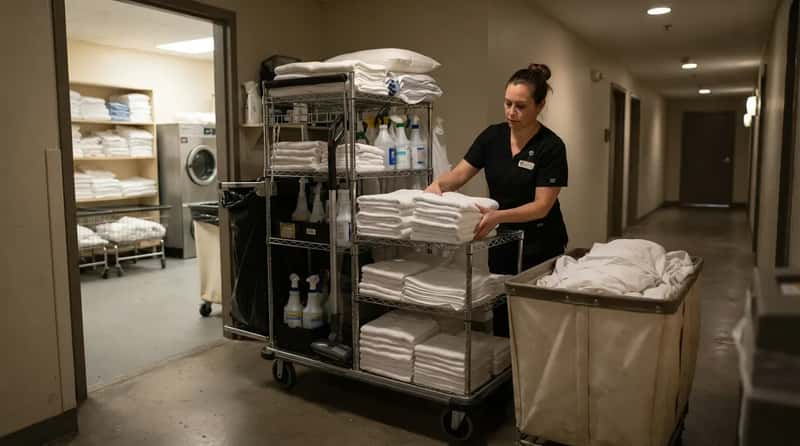
Clean linen has to end up somewhere. Overnight staff stock housekeeping carts, cart rooms and laundry rooms so supply “PAR levels” are maintained throughout the building. PAR is simply the minimum amount that must always be on hand.
When it works, you never notice it. When it fails, the morning crew runs short. A missing stack of towels can slow down an entire floor of room turnovers. The lobby gets its own overnight treatment at #11…
#11 – The Lobby Gets Reset While Nobody’s Watching
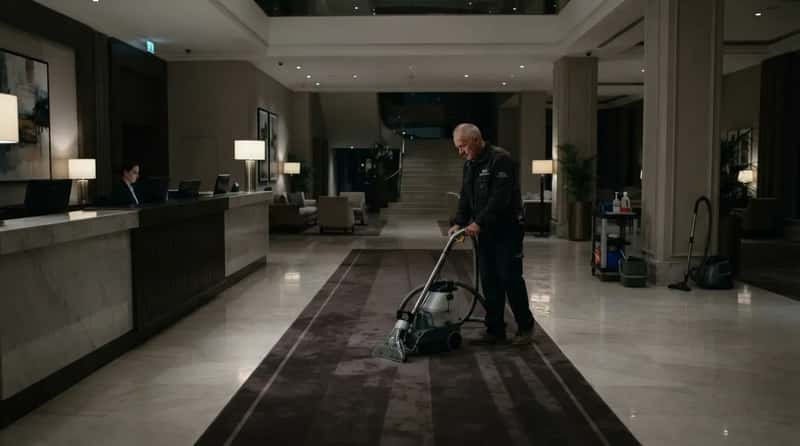
By morning, the public spaces look untouched. That takes effort. Overnight cleaners and janitors reset public areas for the morning, and their job descriptions also include back-of-house areas guests never enter.
The goal is for nothing to look like it ever happened. The best overnight work is the kind that leaves no evidence at all. The kitchen’s version of that is a lot dirtier, at #10…
#10 – The Kitchen’s Dirtiest Work Happens After Dark
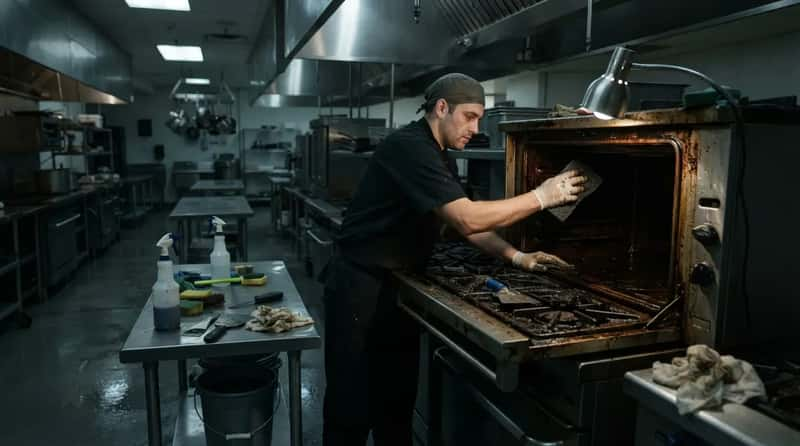
Breakfast service isn’t the hard part. Night kitchen stewards handle deep cleaning of hoods, ovens, and cooktops. Grease buildup is the kind of problem that looks small until it isn’t.
It’s heavy, hot, and invisible to guests. Nobody leaves a review about a spotless oven. Yet everyone notices if the morning rush goes wrong. The plates themselves come next, at #9…
#9 – Dishes Get Washed, Dried, and Packaged for Morning
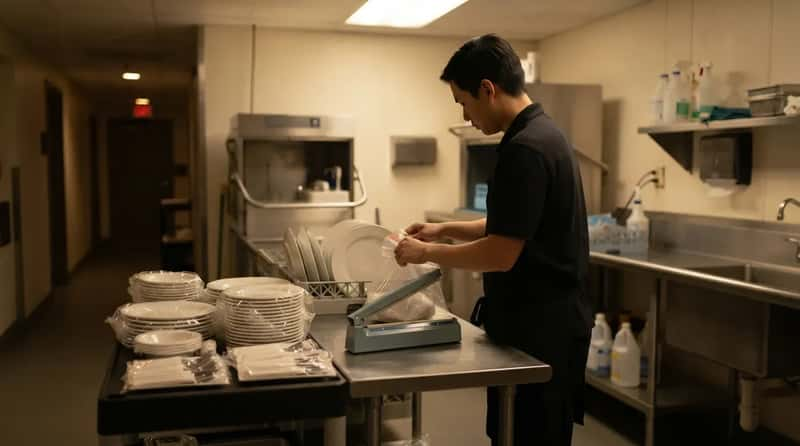
Even at hotels without a full restaurant, there are dishes. One posting for a combined night audit and laundry role lists a surprising task: the employee processes dishware by washing, drying and packaging it.
That’s the same person who checks in the late arrivals. One employee can be a desk clerk, a laundry worker, and a dishwasher in the same eight hours. And all that prep ends up on your plate at #8…
#8 – Your Hotel Breakfast Is Set Up by Someone Who Never Sees You Eat It

Grab-and-go breakfast doesn’t set itself up. Overnight employees can be responsible for setting up and maintaining it according to brand standards. Another listing includes preparing breakfast items and the breakfast area for the following morning.
Guests think of breakfast as a morning event. At many hotels, it actually begins in the dark, hours before the first coffee is poured. But nothing happens on the floor without information, as #7 explains…
#7 – The Night Desk Writes the Morning Team’s To-Do List
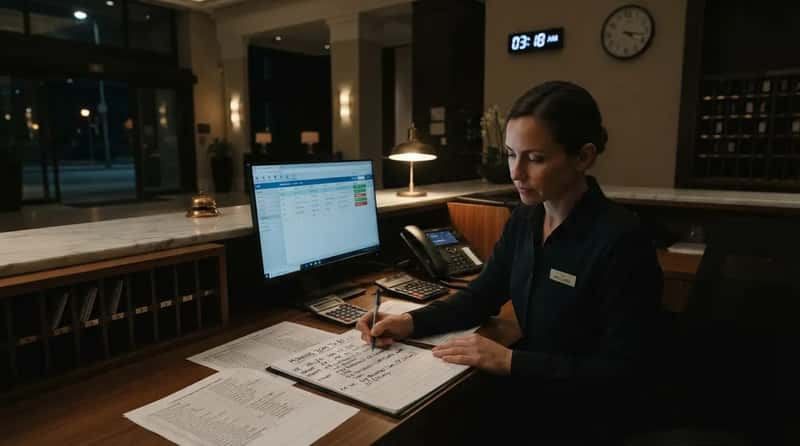
Other departments depend on overnight paperwork. The night auditor makes sure occupancy manifests are accurate and distributes them to departments like housekeeping, room service, and maintenance. If those lists are wrong, the day starts with mistakes.
Worth Knowing
- Occupancy manifests have to be accurate before they go out.
- Housekeeping, room service, and maintenance all receive them.
- Housekeeping, maintenance, and finance have the most interaction with night audit.
- A wrong list can mean a wrong start for the whole day shift.
Departments really do talk overnight. The person you assumed was alone is quietly feeding everyone else. Then there’s the bill itself, at #6…
#6 – Someone Reads the Fine Print on Your Bill While You Sleep
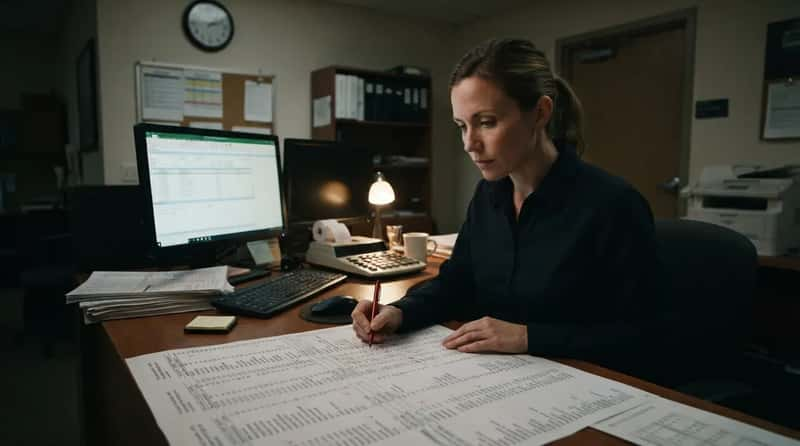
Your folio gets reviewed even if you never look at it. The auditor checks room rates, taxes, packages, deposits, food-and-beverage charges, parking, and other services. That’s a lot of line items for an overnight shift.
Charges can post to the wrong place, and errors get fixed by whoever catches them first. Many “mystery charges” are found and fixed before the guest ever wakes up. Payment problems are next at #5…
#5 – Card Batches and Billing Mismatches Get Settled After Hours
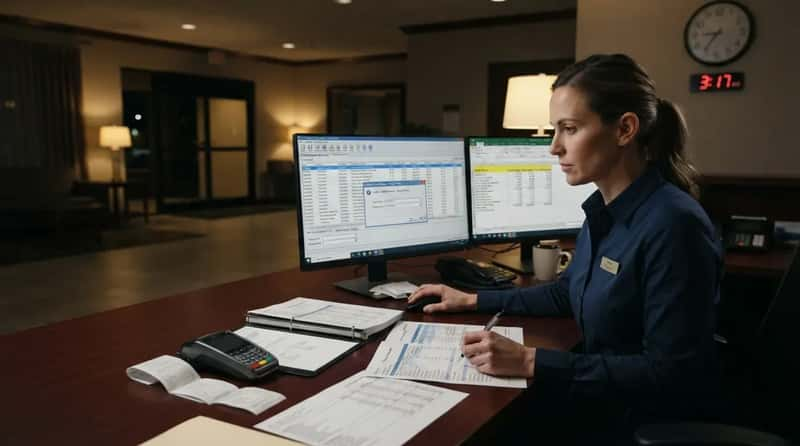
Behind every card swipe is a batch that has to close. Job descriptions list the tasks plainly. Night auditors process credit card batches, resolve billing discrepancies, and reconcile room charges, payments, and transactions every night.
It’s detail work done on very little sleep. The desk clerk is often the person who untangles a double charge. So what happens to the problems they can’t solve? That’s #4…
#4 – Unfinished Problems Get Handed to the Morning Team
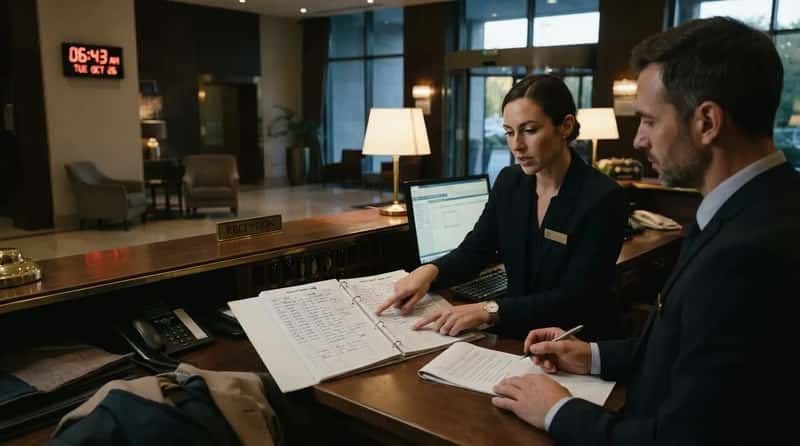
Not every issue can be fixed at 4 a.m. Typical night duties include handing unresolved issues to the morning team. That could mean a billing question, a broken fixture, or a complaint that needs a manager.
The handoff is a small act with a big effect. A well-written note can spare a guest from retelling the whole story at checkout. A lot of this work is also physically risky, which is what #3 is about…
#3 – Staff Who Enter Rooms Alone Are Supposed to Carry Panic Buttons

Safety for hotel workers became a public commitment in recent years. In September 2018, the American Hotel & Lodging Association and major brands announced the 5-Star Promise, a pledge to provide employees across the U.S. with safety devices. Hotels committed to devices for team members assigned to work in a guest room alone.
The pledge is voluntary, not a law. It also covers anti-harassment policies in multiple languages and ongoing training. When a building is quiet, a device on a worker’s belt can be the only backup. Staffing is the real pressure point, though, as #2 shows…
#2 – Overnight Is Quietly the Hardest Shift to Fill
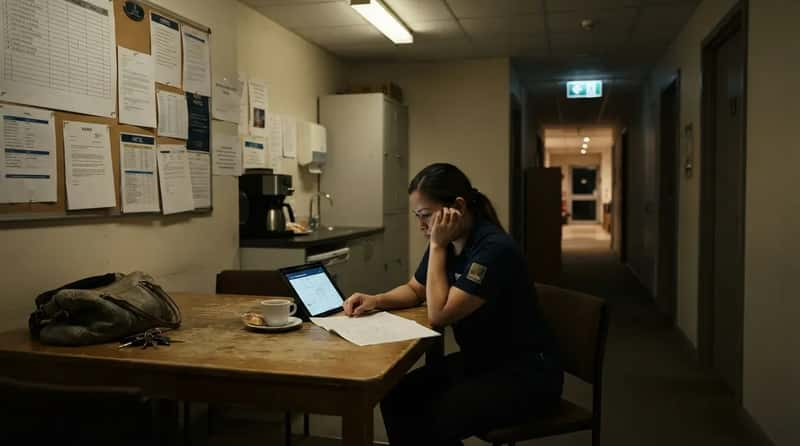
The hours are tough, and hotels know it. One hotel staffing guide says overnight positions across all departments are persistently difficult to fill. Pay varies widely by city and role.
Quick Compare
- Overnight housekeeper listing in Oklahoma: about $14.50 an hour
- Night cleaner listing in Washington, D.C.: $22.68 an hour
- The gap between those two listings: about $8.18 an hour
Two listings aren’t the whole market, but they show how wide the range can get. Arguably, the industry asks a lot of the people it can least afford to lose. The final item is the one that ties everything together…
#1 – When Something Goes Sideways at 3 A.M., One Person Is the Hotel
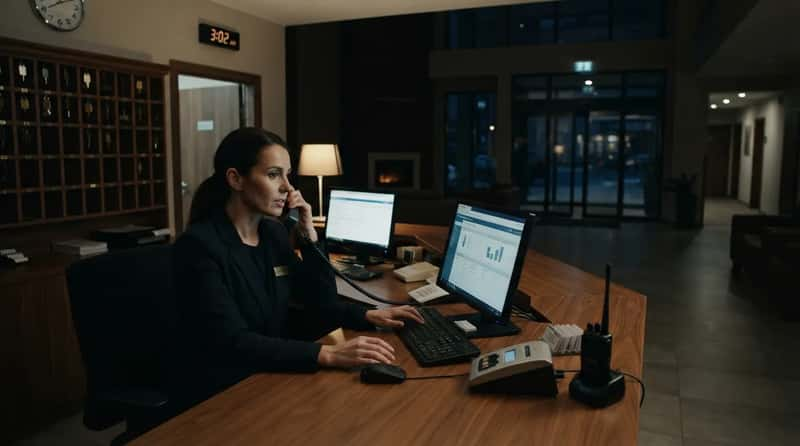
This is the part guests rarely understand. The auditor is often the most senior person on site overnight and takes the calls from housekeeping or security. Most guests are asleep by 11 p.m., but the night auditor is not.
And if anything goes sideways, that same person is frequently the only one at the desk. Whoever is on shift is the one who decides what happens next. So when the lobby looks empty at 2 a.m., it isn’t.
The night shift isn’t a pause button. It’s where the date rolls over, the books balance, the laundry gets done, the breakfast gets staged, and the emergencies get handled by very few people.
Next time a hotel feels effortless at 8 a.m., remember it wasn’t magic. Someone stayed up all night to make it look that easy.