Most people assume a scenic train ride is purely a passenger experience. But there’s a second story quietly unfolding the entire time, and it belongs to the crew.
From the California Zephyr through the Rockies to the Glacier Express winding through the Alps, attendants and conductors watch the same behaviors repeat on nearly every single run. Some are harmless quirks, some quietly delay the whole train, and a few cross lines passengers never even knew existed.
Here’s the full list, counted down from mildly annoying to the one behavior every crew member remembers by name.
23. Saving Observation Car Seats With Bags and Coats
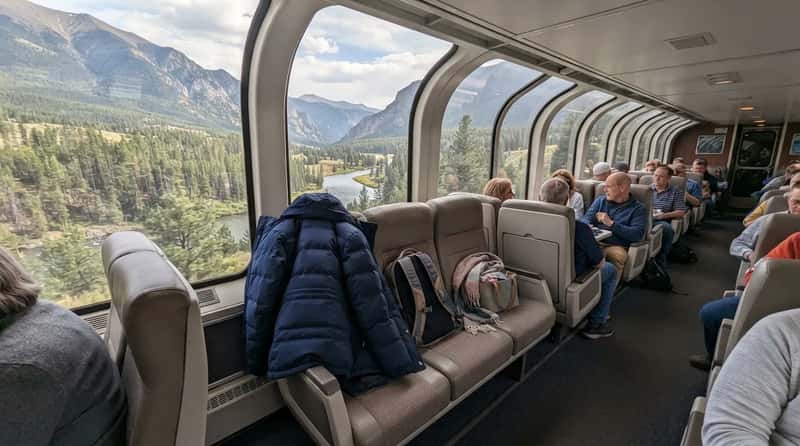
The observation car is the most coveted seat on any scenic train, and it fills up within minutes of boarding.
Passengers who drape a jacket over three seats and vanish to the dining car for an hour are doing something crews notice immediately.
On routes like the California Zephyr and the Coast Starlight, attendants make formal announcements asking passengers to take turns in the observation car during scenic segments – a rule that only exists because seat-hoarding is that common.
Leave your things unattended long enough, and don’t be surprised to find them moved to the floor. Observation lounge space is shared, and crews treat it that way.
22. Ignoring the Rotation Announcement Entirely
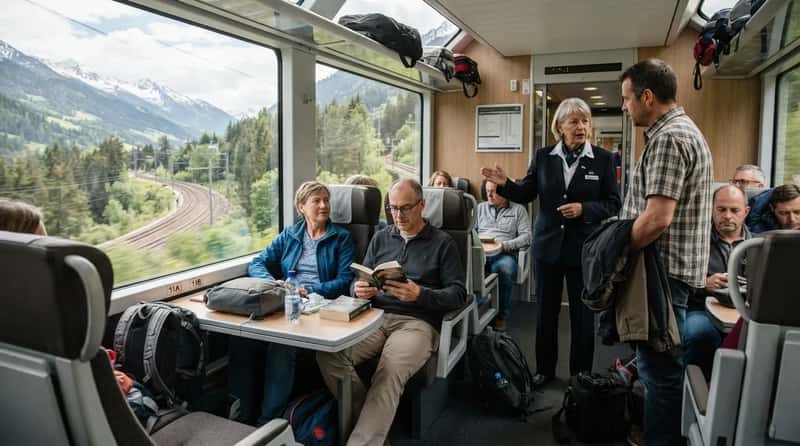
Crews don’t just notice who saves seats. They also clock who hears the rotation announcement and stays planted for three hours straight anyway.
Some groups act like the train has been chartered just for them. In those cases, staff have been heard gently reminding passengers of the one-hour limit and the no-seat-saving rule, out loud, more than once.
The trouble is that announcing a rule and enforcing it are two different things. Crews are proactive when they spot trouble early, but too often they only step in once tension has already built.
Passengers who comply the moment they hear the announcement are appreciated far more than they’ll ever know.
21. Holding a Full Speakerphone Call in the Lounge
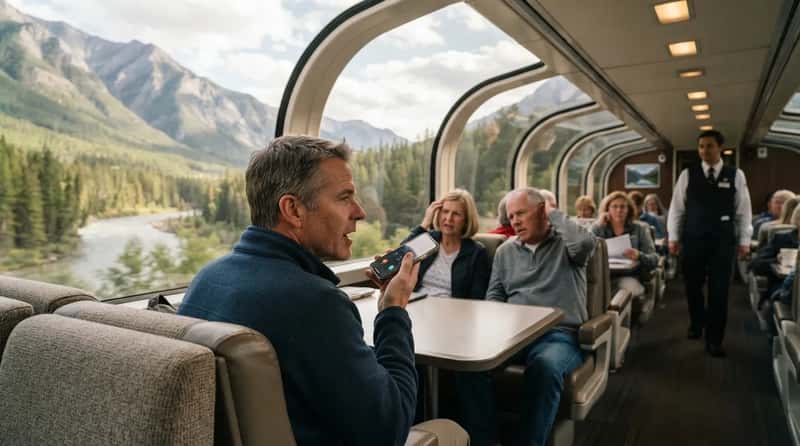
The observation car is meant to be a shared, quiet retreat for watching scenery drift by, not a personal phone booth.
Speakerphone calls rank among the most universally noticed behaviors on trains, in every class of service. One person’s call becomes the whole carriage’s problem the second the volume goes up.
On a scenic route, the effect is worse. The lounge car’s curved glass walls are built to carry sound, so what feels like a normal conversation bounces around the entire space.
Ask transit passengers what annoys them most, and loud phone calls top the list almost every time. Crews hear that same complaint from other riders multiple times a trip.
20. Placing Bags on Empty Seats
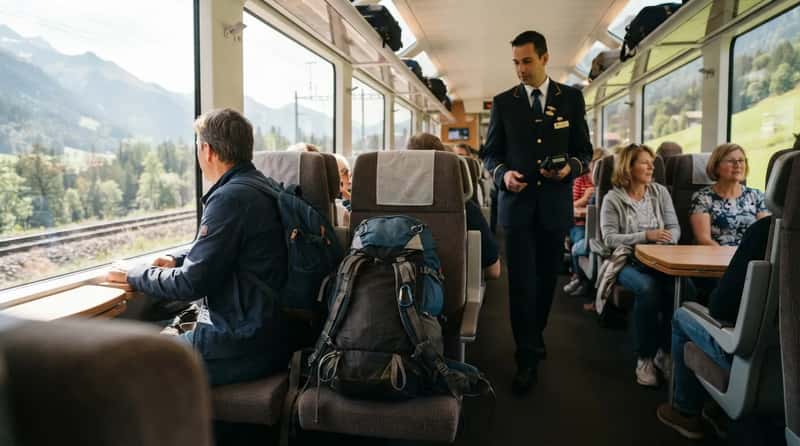
It feels harmless when the car is half-empty, but crews are trained to watch for it anyway, because it turns into a real problem the moment the train fills up.
Frequent rail riders consistently name “taking up too much space” as one of the most annoying things fellow passengers do. Seats are for people, not backpacks, especially once every row matters.
Bag bottoms have touched sidewalks, floors, and platforms before they ever land on that fabric seat. If everyone claimed extra space that way, fewer passengers would find anywhere to sit at all.
On sold-out scenic routes, conductors have to actively ask passengers to move their bags – time they’d rather spend on safety and service.
19. Standing at the Door Before Stops
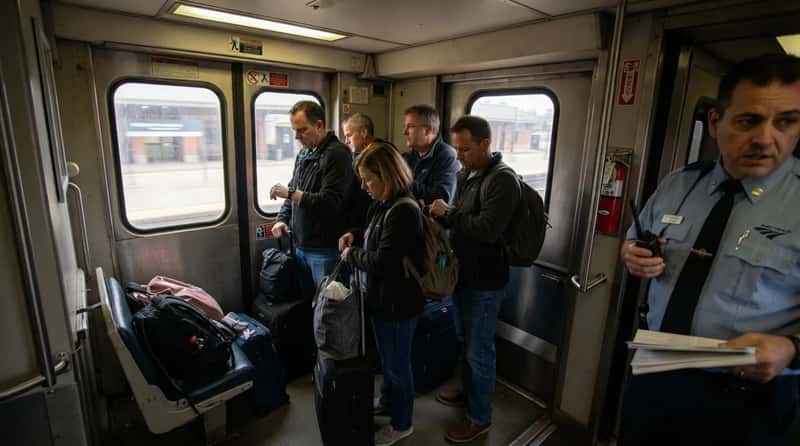
Five minutes before a station stop, a small crowd always gathers at the exit doors. It’s one of the most consistent habits crews manage on every single run.
Amtrak specifically discourages standing near doors before arrival. Conductors release passengers car by car on purpose, and staying seated until instructed is part of how they keep things safe.
On scenic routes with narrow mountain platforms or tight schedules, this matters even more. A cluster of eager passengers blocking the door can physically stop a conductor from stepping off to check the platform.
Crews notice every time, and they remember which cars needed the most managing at each stop.
Worth Knowing
- Conductors typically release passengers car by car, starting near the doors closest to station staff.
- On tight mountain platforms, only one or two doors may open at a given stop.
- Standing at the door early doesn’t speed anything up – it just blocks the aisle for the row behind you.
- The safest move is staying seated until an attendant gives the signal.
18. Rushing the Dining Car Before It Opens
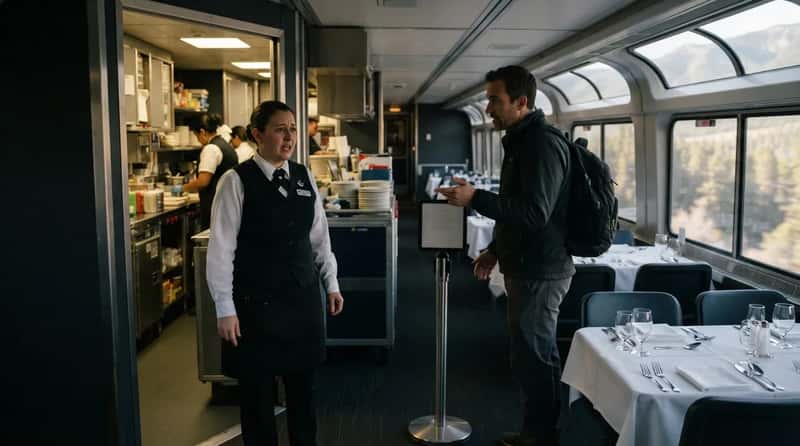
The dining car on a long-distance scenic train isn’t a walk-in restaurant. It runs on a reservation system built to keep meal service moving for hundreds of people over many hours.
Passengers who show up early and hover, or argue about their assigned time, create a ripple effect that delays everyone else’s meal. Lounge attendants are already juggling food service, souvenir sales, and table cleaning before the first reservation even starts.
Crews specifically remember passengers who try to negotiate their dining slot mid-route. It feels small to the person asking, but it adds real friction to an operation with almost no slack in it.
17. Eating Pungent Food in the Observation Car
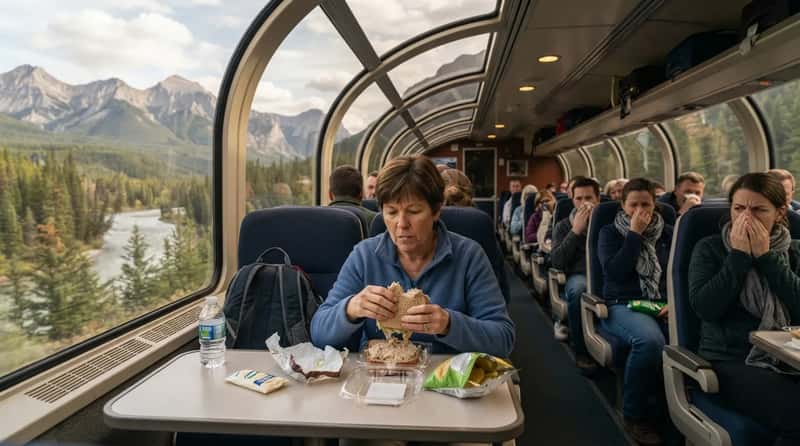
Outside food is technically allowed on most scenic trains, but there’s an unspoken rule almost everyone breaks at least once.
Strong-smelling meals like seafood or heavily spiced dishes can throw off an entire car. Crews say the smell lingers for hours in a sealed compartment long after the food itself is gone.
The observation car is especially bad for this. The glass dome that makes it perfect for viewing mountains also traps odors with impressive efficiency, and a passenger unwrapping a tuna sandwich at peak scenery time tends to clear out the seats around them.
It’s rarely intentional. Travelers just don’t think about how enclosed the space really is until the damage is already done.
16. Bringing Privately Purchased Alcohol Into Shared Cars
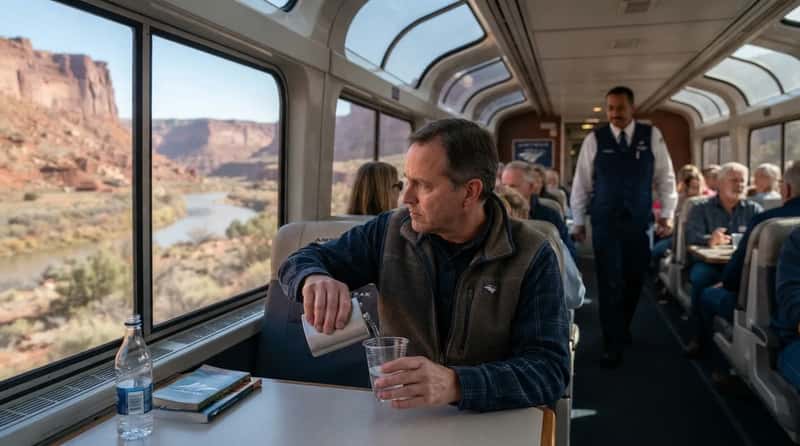
This is one that catches passengers off guard, and crews are trained to watch for it closely.
Amtrak specifically prohibits opening or drinking privately purchased alcohol anywhere outside your own sleeping car. That means no sneaking a flask into the observation car, no matter how good the canyon view looks.
Violating this policy is one of the fastest ways to get a quiet but firm word from the conductor, and repeat offenses can escalate to removal at the next stop. Crews aren’t trying to ruin anyone’s trip – they’re required to enforce it.
The irony is that the bar is usually a few steps away in the lounge car. Buying your drink onboard is always the easier path.
15. Wandering Into Crew-Only Areas
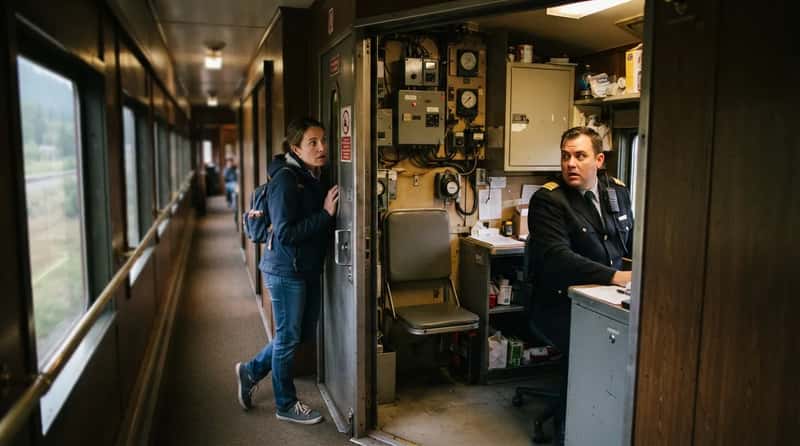
It sounds like something only a curious kid would do, but adults do it constantly on scenic routes, usually out of harmless curiosity rather than intent.
Crew-only areas often contain operational equipment, safety controls, employee sleeping quarters, and food prep spaces that passengers shouldn’t access. Wandering in can create real consequences for both the passenger and the crew member responsible for that space.
Even if it feels like a harmless peek behind the curtain, the railroad won’t see it that way. Unauthorized access is taken seriously, no matter how it was intended.
Crews quietly log these incidents, and on routes with repeat wanderers, conductors start communicating with each other between cars to keep watch.
14. Using Speakerphone or Loud Audio Without Headphones
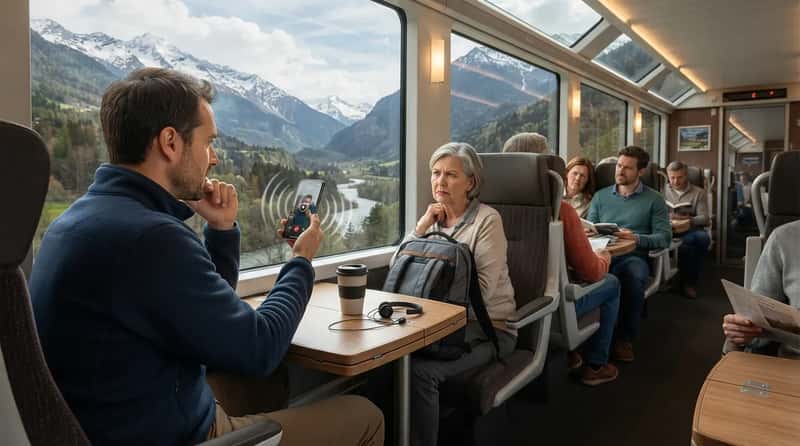
This one goes beyond phone calls. It covers anyone playing videos, podcasts, or music through their device’s speaker in a shared car.
Sound carries through thin train walls far more than people expect. Even headphones at high volume can leak, but an open speaker in a shared car is treated by crews as flatly unacceptable.
On scenic routes, this lands especially hard because many passengers booked the trip specifically for the quiet, immersive experience. A single offender can generate multiple complaints within minutes.
What feels like a private moment to one traveler becomes shared entertainment for the whole car, and it’s usually the fastest way to earn a polite but firm knock from an attendant.
13. Reclining Seats Without Checking Behind Them
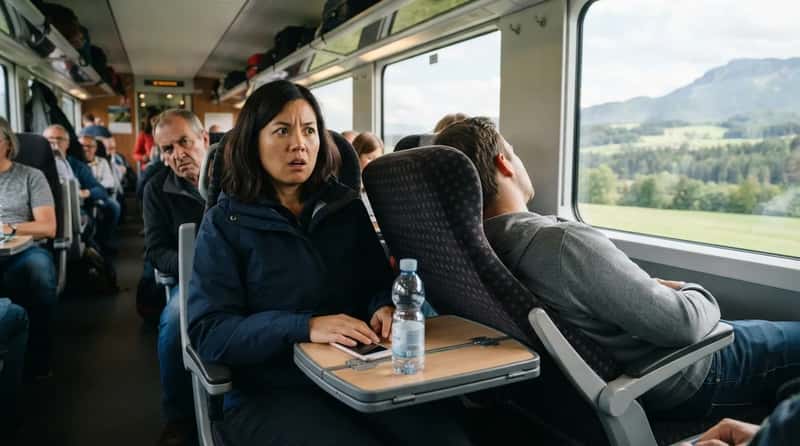
On scenic day trains, seats often recline into tight quarters, and passengers who drop them back without a glance get noticed by everyone nearby, crew included.
The reclining itself isn’t the issue. It’s the speed and the lack of any warning – a tray shakes, a laptop wobbles, a screen angle shifts before the person behind can react.
Attendants end up mediating these little conflicts more often than you’d think. A slow recline with a glance backward solves the whole problem, but crews say it’s still rare.
12. Leaving Trash Behind at the Seat
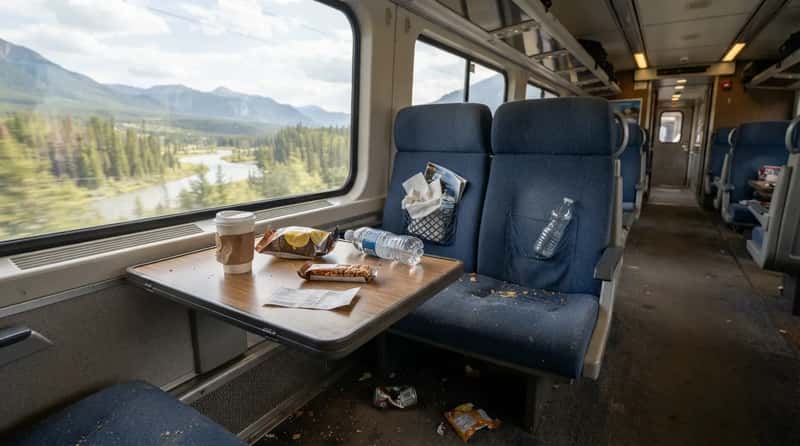
Scenic trains are not self-cleaning. Every cup left on the floor, every wrapper stuffed in a seat pocket, and every coffee lid abandoned on the windowsill gets picked up by someone whose badge doesn’t say “cleaning crew.”
On routes where the same attendant works a twelve-hour car, cleaning up after passengers who leave a mess behind is one of the most quietly noted and least appreciated parts of the job.
The attendant who clears your table with a smile and says nothing isn’t letting it go unnoticed – they’re just choosing not to say anything.
Shared restrooms deserve the same courtesy: quick, clean, and left the way you found them. Crews track this kind of small respect across an entire journey.
At a Glance
- A single attendant is often responsible for an entire car for a shift stretching many hours.
- Common items left behind include coffee cups, food wrappers, napkins, and phone chargers.
- Most crews tidy up between stops, not just at the end of the line.
- A clean seat area is one of the simplest ways to make an attendant’s day easier.
11. Asking Crew for Information They Already Announced
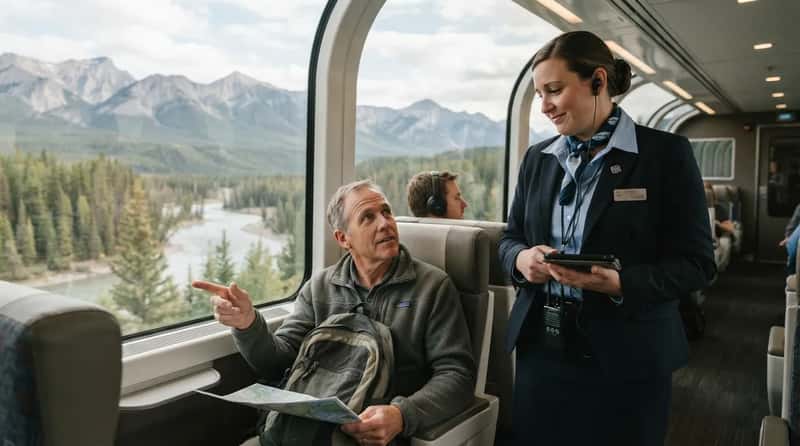
Scenic train crews narrate landmarks, arrival times, and service changes over the PA, sometimes several times per segment.
On many scenic routes, car attendants double as tour guides, which means they’re already stretched thin before a single question gets asked. Getting pulled aside repeatedly to repeat information from the last announcement is one of the job’s quiet, constant frustrations.
It’s not that crews mind helping – they genuinely don’t. But the pattern of passengers who tune out the PA and then monopolize the attendant’s time is something every crew member on a scenic route recognizes instantly.
Pay attention during the announcements. Your crew will notice, in the best possible way.
10. Letting Children Run Unsupervised Through Cars
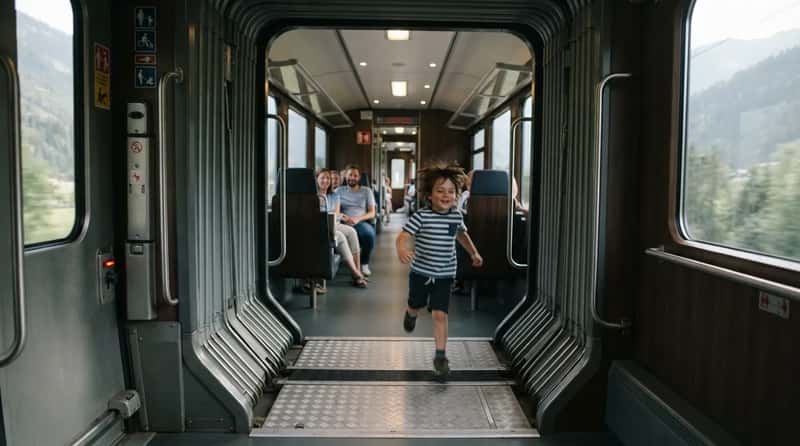
Parents on scenic trains often treat the ride as a rare break, which is completely understandable. What’s easy to forget is that a moving train car is a genuinely dangerous place for an unsupervised child.
The connections between cars are the biggest risk – heavy automatic doors, gaps, vibration, and zero padding. Crews routinely have to escort kids back from these spots, pulling them away from other duties.
Beyond the safety issue, a child running through a quiet observation car disrupts the experience for every other passenger in it. Complaints about unsupervised children are among the most common crews hear on family-heavy scenic routes.
Crews notice when parents are engaged. They notice just as clearly when they’re not.
9. Complaining About Delays as If Crew Caused Them
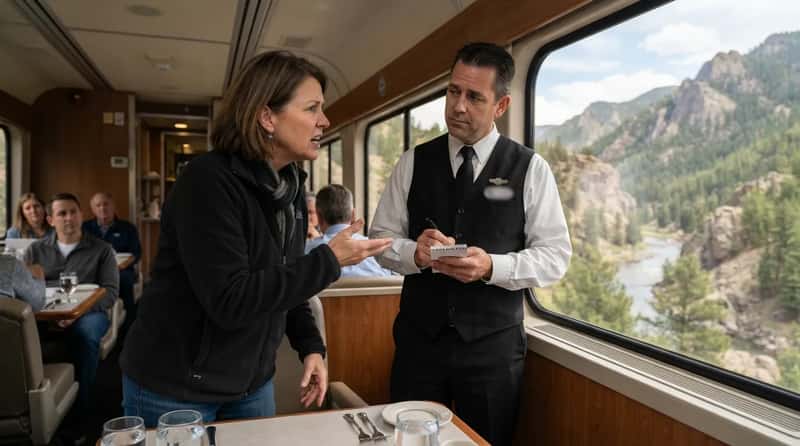
Scenic routes run through remote terrain – mountain passes, canyon corridors, coastal cliffs – where freight traffic, weather, and track conditions can cause delays that literally no one on board controls.
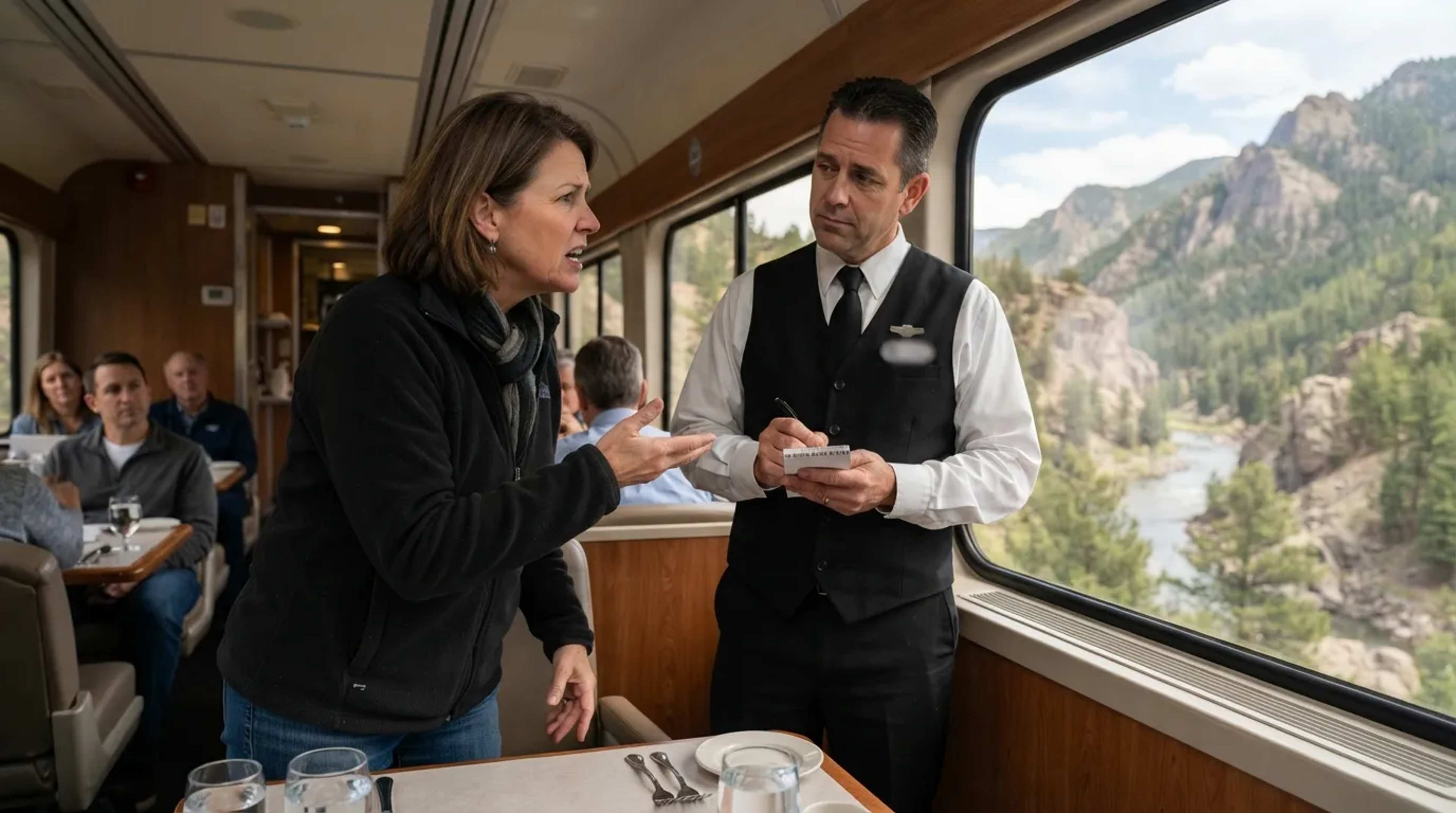
Crews understand that delays are frustrating. What they remember is the passenger who aims that frustration directly at the attendant’s face, as if the person refilling coffee somehow caused a track obstruction two states away.
Studies of train crew experience consistently show passenger conflict as one of the biggest sources of on-the-job friction, right alongside safety and platform duties. Directing raw anger at the nearest visible employee is the version crews describe most often.
A calm question about the delay is always welcomed. A demand for answers the crew doesn’t have yet is always remembered.
8. Hoarding Power Outlets for Hours
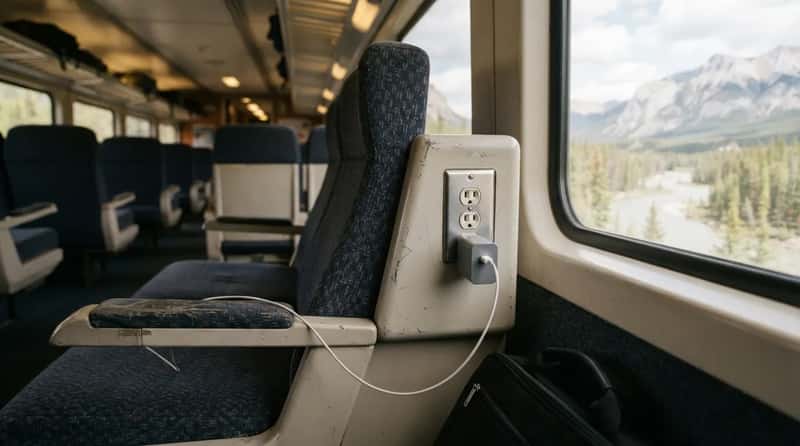
Long-distance scenic trains have a limited number of power outlets, and the etiquette around them is one of the least talked-about, most-noted behaviors crews deal with.
Sharing outlets politely is the unwritten expectation. What crews actually see is a passenger plugging in an already-charged laptop, leaving it there for four hours, then disappearing to the dining car – blocking the outlet from anyone who genuinely needs it.
It’s not the charging itself that’s the problem. It’s the combination of long occupancy and physical absence, which forces the attendant into an uncomfortable choice about whether to unplug someone else’s property.
Charge what you need, then free up the spot. It’s a small habit crews genuinely notice and appreciate.
Quick Compare
- Considerate: Charge devices in short bursts, then unplug and free the outlet.
- Frustrating: Leave a fully charged laptop plugged in for hours while away from the seat.
- Considerate: Bring a portable battery pack as backup for long scenic segments.
- Frustrating: Claim an outlet for the whole trip “just in case.”
7. Drinking Too Much From the Bar Car
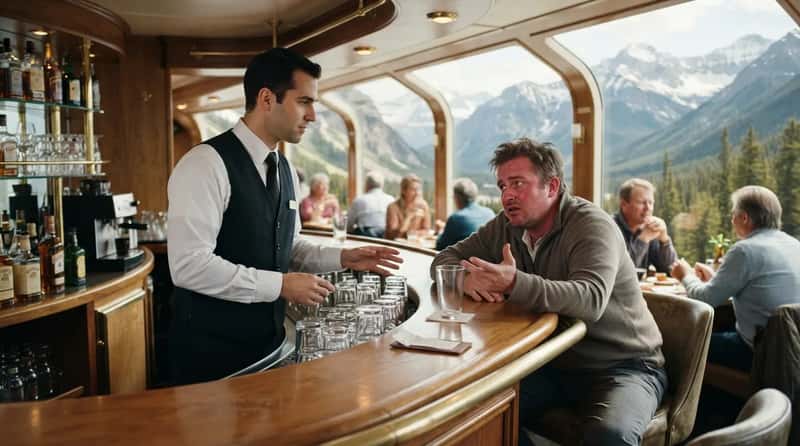
Scenic train journeys and celebratory drinking have always gone hand in hand, but there’s a line crews watch for with real professional focus.
A drink or two is part of the experience for plenty of passengers, and nobody on staff minds that. What they do mind is losing count of their limits somewhere around drink number five.
The bar attendant who suddenly seems “too busy” to pour you another isn’t actually too busy. That’s a deliberate call, and it happens more often than most passengers realize.
Passengers who get loud, argumentative, or physically unsteady get flagged between crew members in real time, quietly and fast.
6. Abusing the Profanity or Aggressive Language Rule
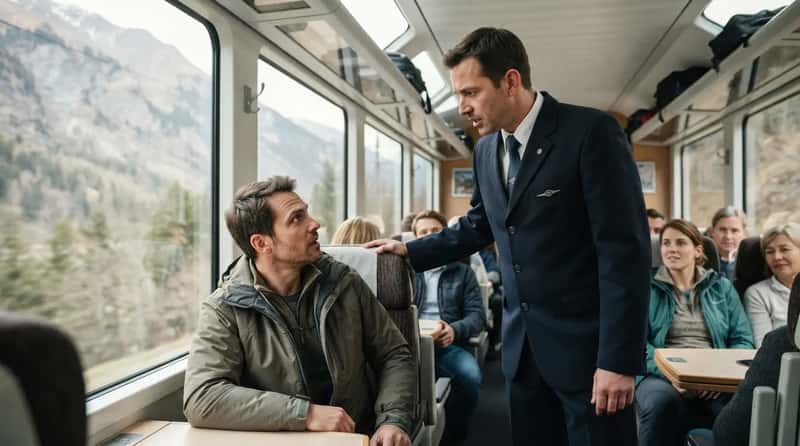
Most passengers assume swearing on a train is a minor social slip at worst. Crews know it can legally become something much bigger.
A single slipped curse word won’t get anyone banned. But staff have the authority to remove or refuse service to passengers whose language turns abusive or disruptive.
On scenic routes through remote areas, getting removed at the next stop isn’t a small inconvenience – it can mean being stranded in a town with no connecting service for hours. That’s why crews typically escalate through a quiet verbal warning before the conductor ever gets involved.
The pattern crews remember most is the passenger who tests that warning instead of accepting it. That second step always gets logged.
5. Ignoring Seat Assignment Changes Requested by Crew
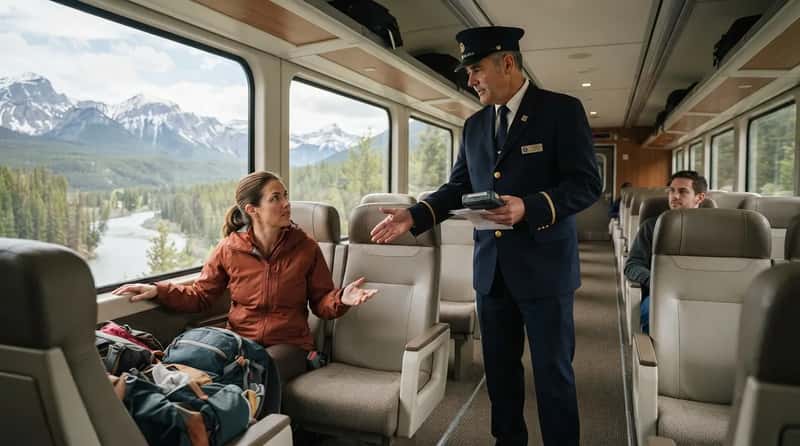
On many scenic routes, seating is only partially assigned, and conductors sometimes ask passengers to shift positions for reasons that aren’t obvious from the seat itself.
Those requests are usually tied to safety, train balance, or scheduling. Cooperating quickly keeps the whole operation running smoothly, even if the reasoning isn’t explained on the spot.
Arguing with a conductor over a seat change, especially on a train working its way through mountain terrain, creates a real operational headache, not just an awkward moment. The technical reason behind the request is usually more legitimate than it looks.
Passengers who move without demanding an explanation are quietly filed away as the easiest people on the train – a reputation that tends to pay off later in the trip.
4. Taking Photos That Inconvenience Everyone Around Them
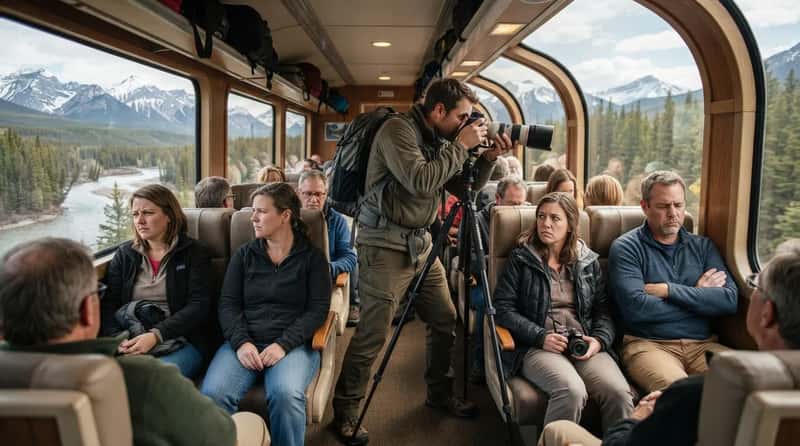
Scenic trains draw serious photographers, and crews expect that completely. What they watch closely is how far some passengers will go to get the shot.
Standing in the aisle with a full tripod during peak viewing, leaning across a stranger for a better window angle, or camping in the observation car’s central walkway – crews deal with some version of this on nearly every scenic run.
Research on passenger behavior shows that most people on a train spend real time simply looking out the window, which means one person blocking that view is affecting almost everyone in the car at once.
The passenger with the $3,000 lens who won’t step aside is one of the single most-mentioned frustrations among scenic rail crews. It manages to combine entitlement, obliviousness, and disruption in one package.
3. Treating Crew Like Personal Servants
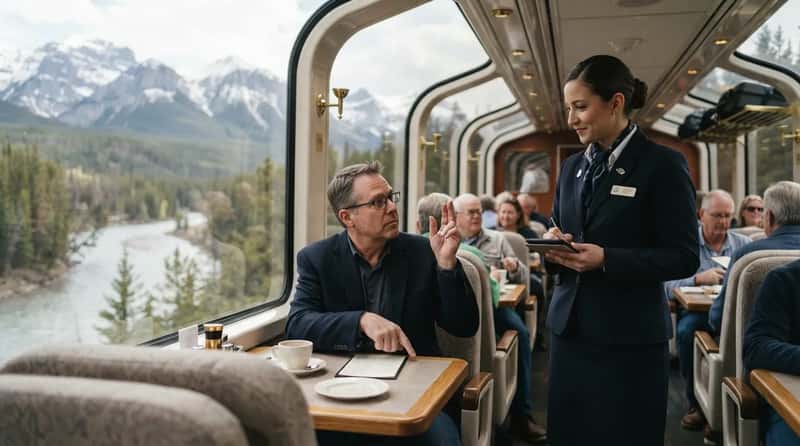
This one is quieter than the others, and arguably the most demoralizing behavior crews deal with on scenic routes.
It’s rarely one big incident. It’s the slow accumulation of a passenger who snaps their fingers for service, gives orders without eye contact, and never once acknowledges anything done for them over a six-hour journey.
Car attendants on scenic trains are already juggling safety, narration, food service, and passenger requests at the same time. A passenger who treats that as a personal concierge arrangement gets noticed, and remembered, by the entire onboard team, not just one attendant.
Crew members talk to each other constantly. The passenger who was rude in car 2 is known to the attendant in car 4 before the next stop.
Why It Stands Out
- A simple “please” and “thank you” is remembered far longer than most passengers realize.
- Crews often work the same long-distance route for years, memorizing regulars by manner, not name.
- Attendants juggle safety checks, food service, and narration duties at once – treating them as a concierge adds a task they didn’t sign up for.
- Respectful passengers often get small unprompted perks, like an extra napkin or a heads-up about a better photo window.
2. Making Repeated Complaints About Things Outside Anyone’s Control
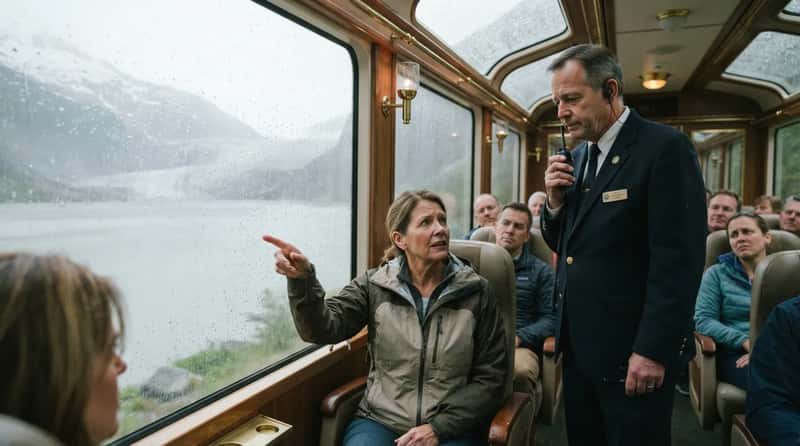
Rain blurring the view. Wildfire smoke dimming the canyon. A cloud bank parked exactly over the glacier. These are the complaints crews hear on every scenic route, and there is nothing on earth they can do about any of them.
Most crew members handle this with genuine patience, because the disappointment is real. What they quietly note is the passenger who escalates it, repeatedly and aggressively, all the way up to the conductor, as if someone owes them a refund for the weather.
Studies on passenger comfort confirm that conditions outside anyone’s control genuinely do interfere with the trip people planned for. The frustration is normal; how loudly someone expresses it is the part that varies.
The passenger who shrugs off a cloudy day and enjoys what they can see is remembered warmly by crews. The one demanding compensation for overcast skies is remembered too, just not the same way, and often discussed in the crew quarters long after the trip ends.
1. The Passenger Who Does Everything Right – and How Crews React
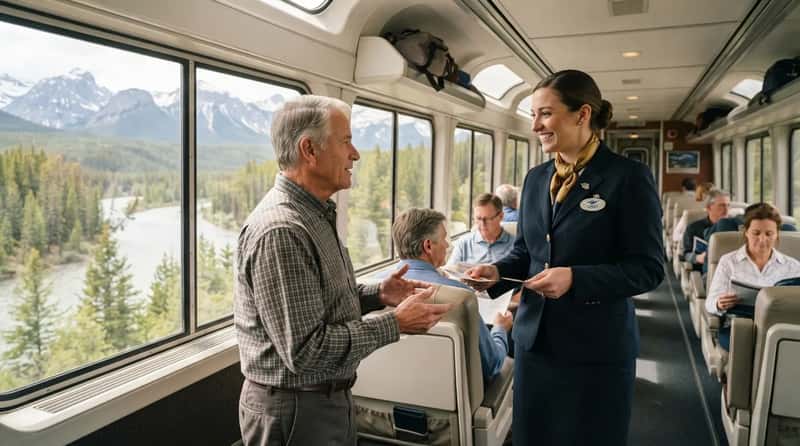
Every behavior on this list has an opposite, and that opposite is the one crews quietly treasure most.
It’s the passenger who moves their bag without being asked, listens to the PA the first time, steps back from the window when someone else wants a turn, and thanks the attendant by name. Scenic Amtrak routes combine comfort and jaw-dropping views, but the thing that actually makes a journey feel smooth is an unspoken culture of mutual respect.
Crews on long-distance scenic routes spend many consecutive hours with the same handful of passengers. The ones who treat the ride as a shared experience, rather than a transaction, stand out just as clearly as the difficult ones do.
On a six-hour mountain crossing, being quietly easy to work with is the most powerful thing a passenger can do, and it costs nothing. By the second hour, every crew member on that train will know your seat number, for all the right reasons.
The Bottom Line
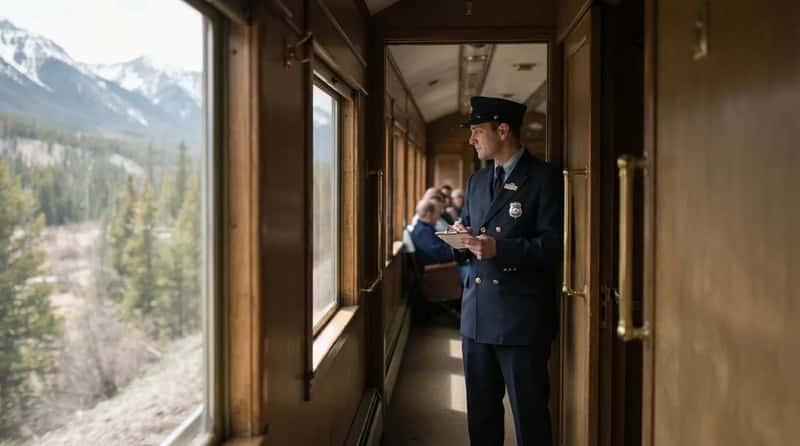
Scenic train crews are professionals doing a genuinely complex job in a moving vehicle, often in remote terrain, for hours at a stretch.
They notice the seat-hoggers, the speakerphone callers, the weather complainers, and the passengers who wander somewhere they shouldn’t. They also notice, and quietly appreciate, the ones who never make the list at all.
The most surprising part isn’t which bad habits crews track. It’s how carefully they track the good ones too, and how much that shapes the service you get for the rest of the ride.
So the next time you board, remember: somewhere in that train, a crew member is already deciding what kind of passenger you’re going to be.
Fast Facts
- (cite index=”4-5″>In 2023, Amtrak carried nearly 28.6 million passengers to their destinations.
- (cite index=”10-12″>Reservations are taken in 15-minute increments for a more pleasant dining experience, assuring passengers of receiving quality service from Amtrak staff.
- (cite index=”4-2″>You’re restricted to consuming outside alcohol in your sleeper car only – it can’t be consumed in public areas, including the cafe and dining cars.
- (cite index=”12-12″>Traditional Dining service is offered on the Auto Train, California Zephyr, Coast Starlight, Empire Builder, Floridian, Silver Meteor, Southwest Chief, Sunset Limited and Texas Eagle between San Antonio and Los Angeles.
Bonus: The Insider Trick Nobody Tells You
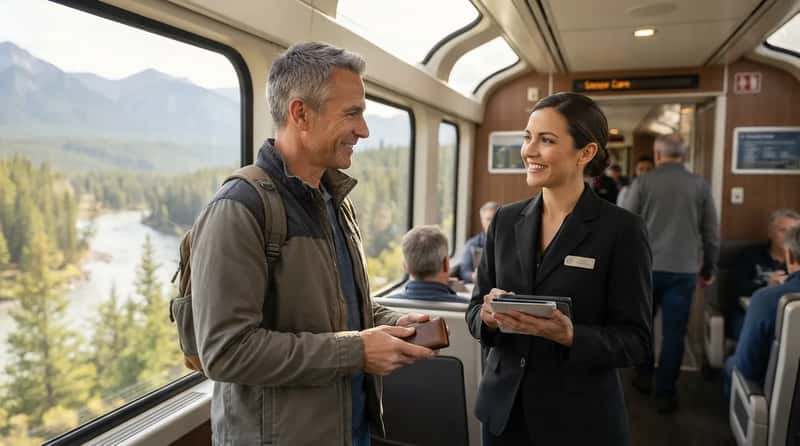
Every tip above is about avoiding mistakes. This one is about actively earning better treatment, and it works on almost every long-distance scenic route.
Introduce yourself to your car attendant by name in the first 20-30 minutes of the trip, before the rush of requests starts. Crews remember the handful of passengers who do this, because almost nobody else bothers.
- Right after boarding, say a quick hello and ask your attendant’s name – use it for the rest of the trip.
- Ask one specific, useful question early, like which side of the train has the best scenery on the next stretch.
- If you plan to tip, consider giving a small tip early in the journey rather than only at the end.
- Follow up with a genuine thank-you when they help you, even for small things.
None of this costs anything but a few seconds of effort, yet it’s the single fastest way to shift from “just another passenger” to someone the crew actively looks out for. Attendants often quietly share off-menu details – a better photo window coming up, a schedule change, a quieter car to move to – with the passengers who treated them like people from the start.
It’s the one habit on this entire list that costs nothing and pays off almost every single time.