Most flyers assume the worst thing that can happen to a suitcase is a scuffed corner or a slow lap around the carousel. Baggage handlers know better. They’ve watched bags split open on freezing tarmacs, zippers blow out mid-transfer, and “fragile” stickers get ignored in under two seconds – and almost none of it happens by bad luck.
Some of these habits are so common that ramp crews barely react anymore, even though they’re still wrecking bags flight after flight. Here’s what actually happens to your suitcase between the counter and the cargo hold, straight from the people whose job it is to load it.
#24 – The Loose Battery That Turns a Cargo Hold Into a Fire Risk
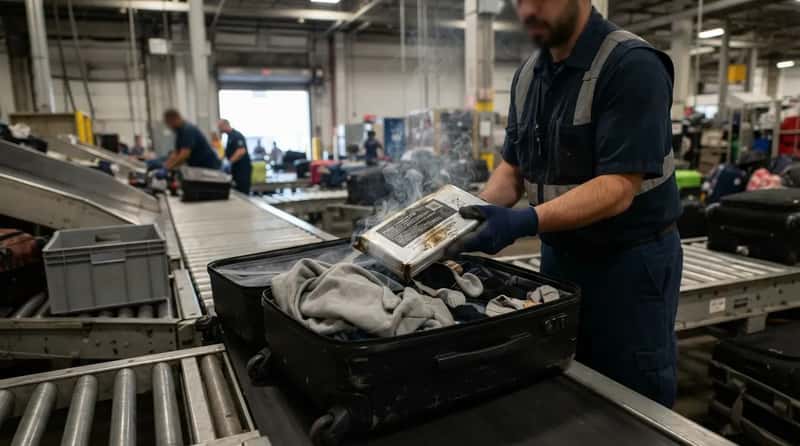
Nobody packs a spare battery thinking it’s dangerous, but handlers treat a loose one like a lit fuse. Only batteries installed inside a working device are allowed in checked luggage – loose spares aren’t, full stop.
Southwest goes even further, banning spare lithium batteries and power banks from checked bags entirely, requiring them in the cabin instead. As of March 1, 2025, TSA rules block portable chargers, power banks, and lithium-ion phone charging cases from checked luggage across the board.
#23 – The Self-Defense Spray That Never Should Have Been Checked
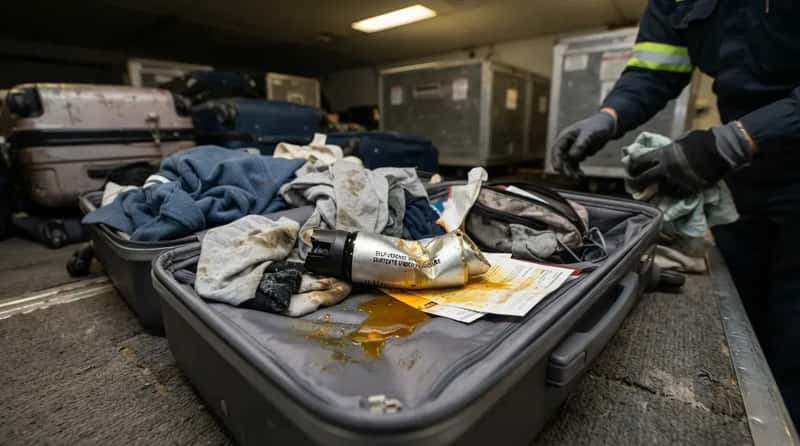
Travelers heading somewhere unfamiliar often toss in pepper spray or bear spray for peace of mind, assuming checked baggage is a safe workaround. Handlers say that assumption is exactly the problem.
Aerosol self-defense canisters aren’t a gray area – they’re flatly banned, right alongside spray paint and other flammable aerosols. A pressurized canister crushed under a stack of luggage isn’t a minor inconvenience; it’s a chemical spill inside a sealed hold, and crews have seen it happen.
#22 – The Extra Shoes Nobody Actually Wears
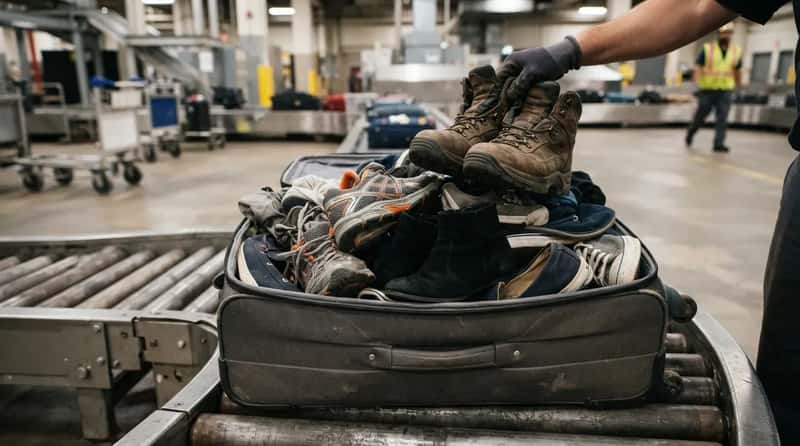
Shoes look small in a suitcase, but they’re secretly the biggest space thief on the belt. They’re the single most common source of wasted space and unnecessary weight in checked luggage.
That extra pair packed “just in case” adds real pounds fast, and handlers feel it every time they lift a bag onto a cart. Dense rubber soles and stacked footwear push suitcases toward the weight limit faster than clothing ever does – most travelers never realize shoes, not clothes, are usually why their bag gets flagged as overweight.
Fast Facts
- Most U.S. airlines cap checked bags at 50 lbs (23 kg) for standard economy fares
- Overweight fees typically run about $100 for bags between 51-70 lbs, and closer to $200 for 71-100 lbs
- Premium cabins often raise the limit to 70 lbs per bag
- One extra pair of boots or sneakers can be the difference between under and over the limit
#21 – The Ribbon Trick That Backfires at the Scanner
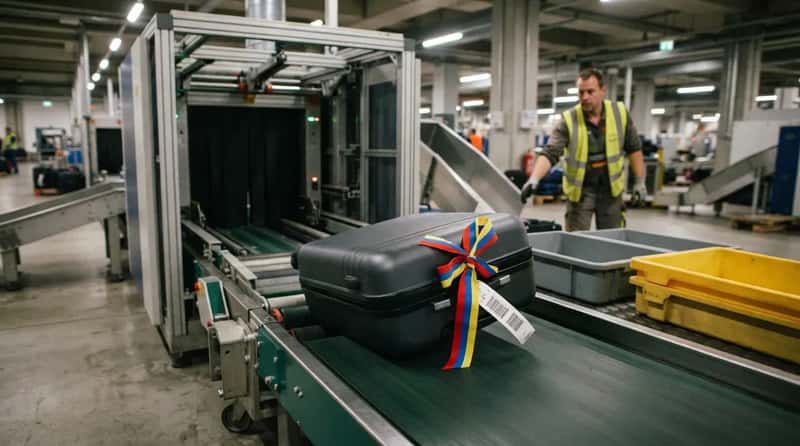
The cute ribbon tied on for “easy identification” isn’t just outdated – it’s actively working against you. “Ribbons that people tie onto their suitcases to help identify them can cause issues with the bag being scanned in the baggage hall,” one Dublin baggage handler explained.
The problem isn’t the ribbon itself; it’s what happens when the scanner can’t read the tag underneath it. “If the bag can’t be scanned automatically, it can end up in manual processing, which could mean your bag doesn’t make it to the flight,” he said. A decoration meant to help your bag get found is often the exact reason it gets stuck behind.
#20 – The Old Travel Stickers Still Confusing the Barcode Scanner
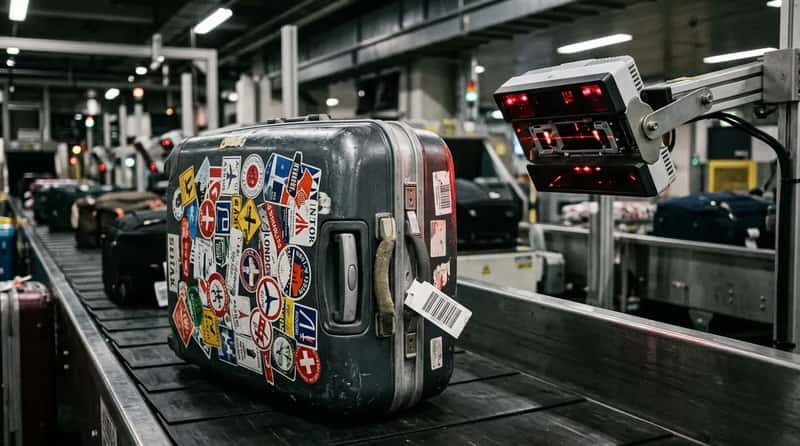
That collage of airport and city stickers looks like a badge of honor. To a barcode scanner, it looks like static.
“Take old stickers off the bag, it can cause confusion with the scanning process,” the same handler advised. Every extra sticker is one more shape competing with the actual tag for the scanner’s attention, and handlers say a clean, sticker-free shell moves through automated systems far faster than a decorated one.
#19 – Skipping the Backup ID Hidden Inside the Bag
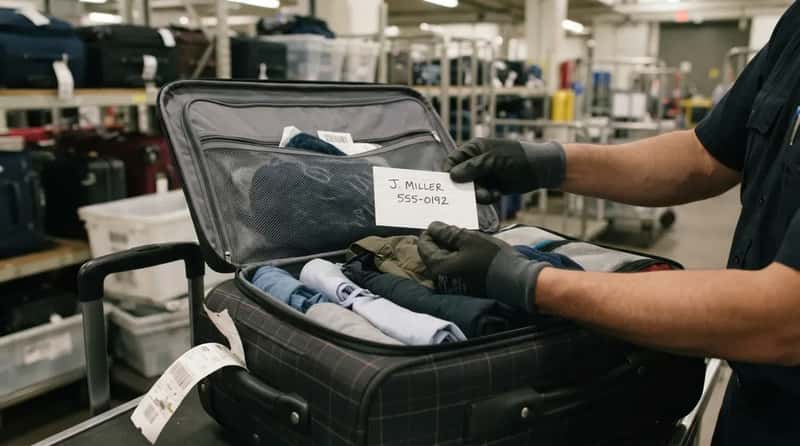
Most people rely entirely on the printed airline tag and nothing else. That’s a bigger gamble than it sounds, because paper tags rip, fade, and fall off constantly.
Without a backup ID inside, a bag that loses its printed tag becomes essentially anonymous the moment it’s separated from the system. A single index card with your name and phone number tucked inside can be the only thing that ever reconnects you with it – and it costs nothing, yet most travelers skip it entirely.
#18 – The “Fragile” Sticker Everyone Secretly Ignores
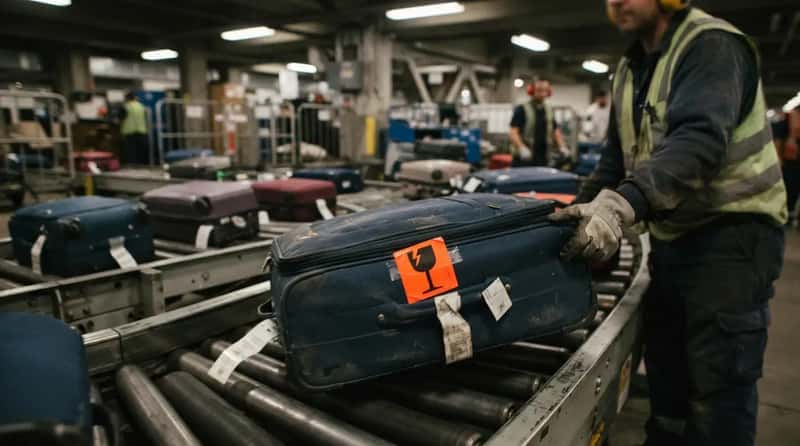
Travelers assume that little orange sticker guarantees gentle hands. Handlers say it’s basically wallpaper at this point.
Slapping a fragile sticker on your bag often does nothing, especially since so many travelers use them on things that aren’t fragile at all, which trains handlers to tune the label out entirely. If something inside genuinely needs care, telling the airline staff directly at drop-off works far better than trusting a sticker nobody believes anymore.
#17 – Strollers and Car Seats Loaded Unwrapped
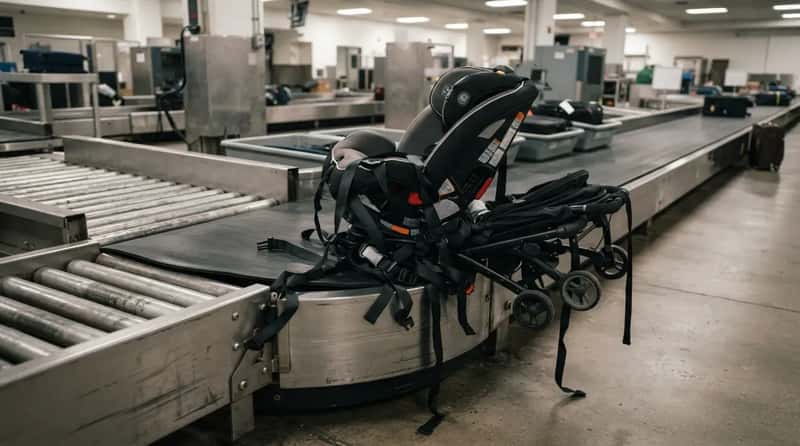
Parents hand over bulky gear at the gate assuming it’ll get extra caution. The dangling straps say otherwise.
Strollers, car seats, and odd-shaped gear cause real problems when they’re not wrapped – straps catch on belts, buckles jam, and the whole line slows down behind them. A cheap plastic wrap or gear bag prevents dangling buckles from snagging on conveyor machinery, and the gear that seems too big to lose track of is often the gear that jams the entire system.
#16 – Assuming a $2,000 Suitcase Gets Special Treatment
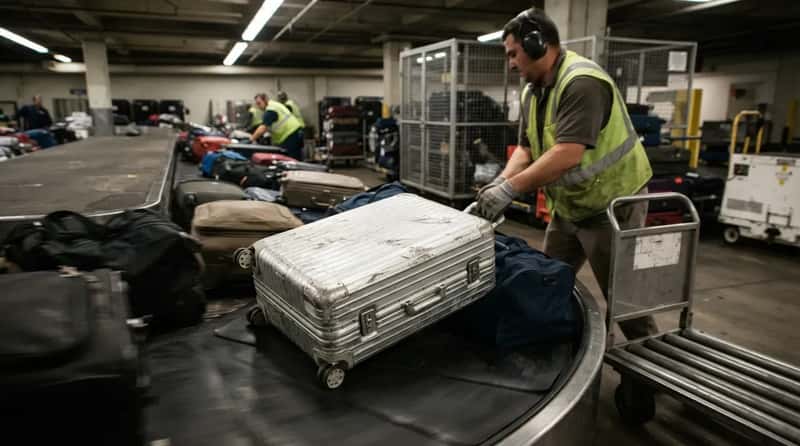
Designer luggage owners often expect their bag to be handled differently than a $40 duffel bag. It isn’t, and nobody on the ramp is checking the label.
Luggage moves fast, gets stacked hard, and takes the same hits on the belt no matter what it cost. Handlers say the priciest bags they see get scuffed just as quickly as the cheapest ones, because speed matters more than sentiment during a turnaround.
#15 – Overstuffing Until the Zipper Becomes the Weak Link
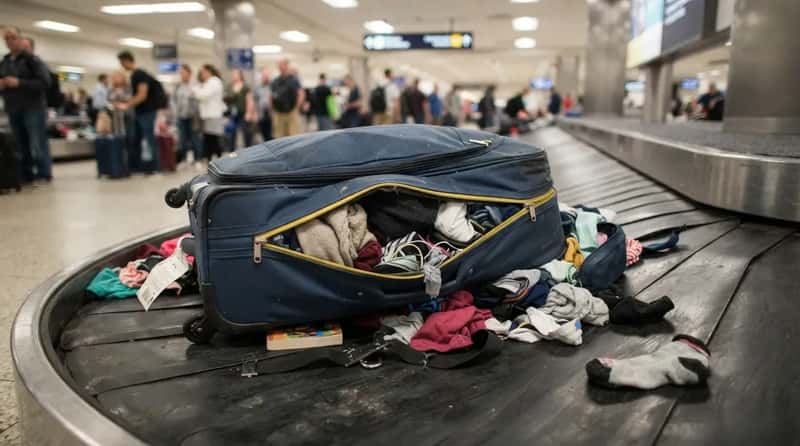
A bag packed to bursting looks impressive at home. On the belt, it’s a ticking time bomb.
When a bag is stuffed too full, the zipper is the first thing to fail, and if it splits mid-transfer, everything spills onto belts, carts, and even the tarmac in front of other passengers. Handlers say the moment they see a bag straining at the seams, they already expect it to fail before it reaches the plane.
#14 – Skipping the Cheap Lock That Actually Prevents Disaster
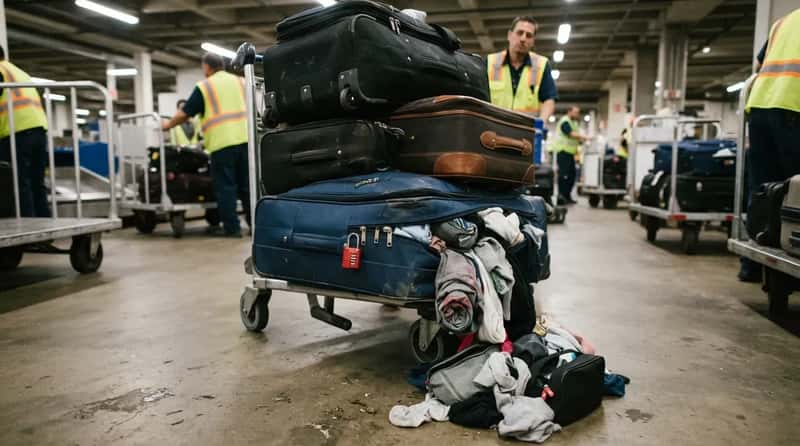
Plenty of travelers skip locks entirely, assuming zippers hold on their own. They don’t, especially under the weight of everything stacked on top of them.
A basic TSA-approved lock keeps the zipper from slipping and the bag from blowing open, and it costs almost nothing. Without one, a stuffed bag crushed under others on a cart can pop open at exactly the wrong moment – it’s the cheapest insurance in the entire packing process, yet one of the most skipped.
#13 – Packing a One-Stop Trip Like It’s a Direct Flight
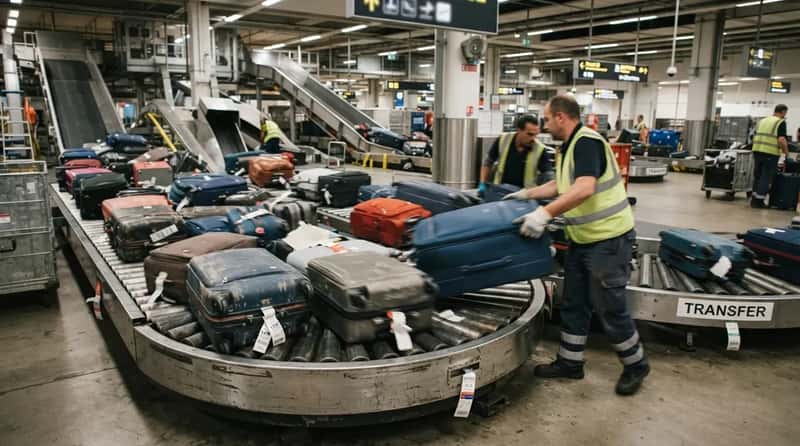
Most people pack a connecting international itinerary exactly like a nonstop domestic hop. Handlers say that’s a costly mistake most flyers don’t see coming.
Passengers routinely underestimate how different the risk actually is once a stopover enters the picture. The numbers back that up: international flights are five times more likely to lose luggage than domestic flights.
Quick Compare
- Domestic nonstop flights – the lowest overall mishandling risk
- International flights with a layover – about five times more likely to lose a bag than a domestic route
- Short connections under an hour – the biggest single risk multiplier for a missed transfer
- Every extra stop added to an itinerary – one more chance for a bag to get left behind
#12 – Trusting a Ziploc Bag to Stop a Real Leak
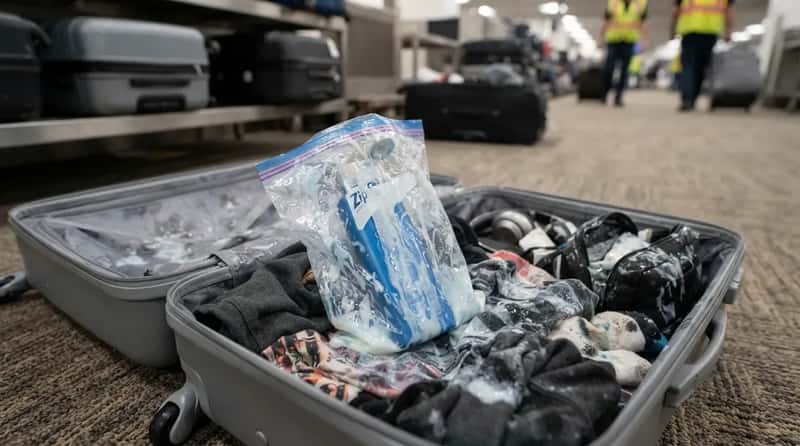
Toiletries packed loose or in flimsy bags are one pressure change away from disaster. Handlers see the aftermath more than travelers ever do.
A shampoo bottle that seals fine at sea level can leak under cargo-hold pressure and altitude shifts, soaking everything packed nearby. The 3-1-1 rule limits containers to 3.4 oz in the cabin, but checked bags have no such limit – which means bigger bottles, and bigger spills, ruining every piece of clothing packed around them.
#11 – Checking Muddy, Dirty Sports Gear
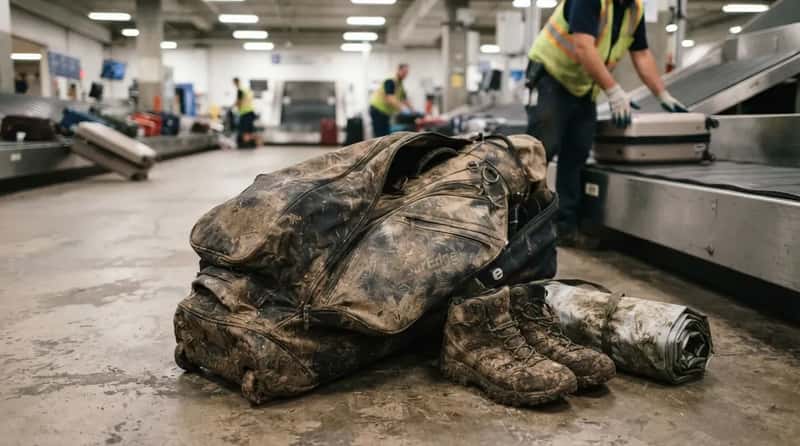
Golf bags, hiking boots, and camping gear covered in visible dirt send a subtle signal to handlers. It’s not a good one.
Gear that already looks beat-up tends to get tossed and stacked more casually than a clean bag, simply because it doesn’t register as something worth protecting. Cleaning gear before check-in isn’t just about hygiene at your destination – a muddy bag often gets treated exactly as roughly as it looks.
#10 – Choosing the Wrong Suitcase Shell for International Travel
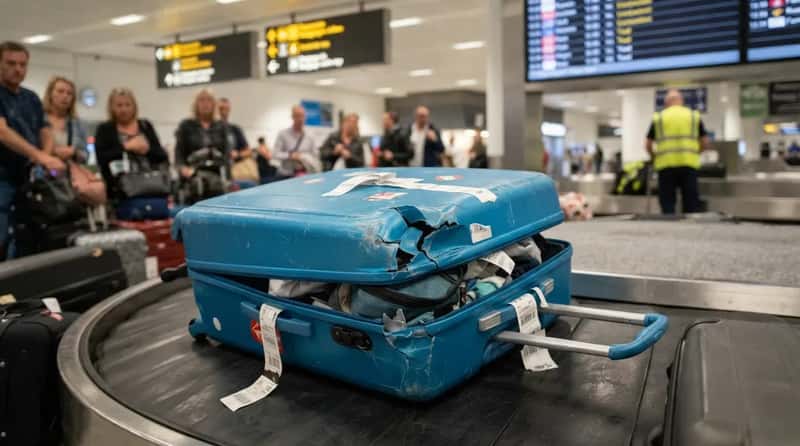
Not every suitcase is built for the same journey, and handlers can tell within seconds which ones won’t survive it. Baggage crews consistently flag thin, brittle hard-shells as the models least likely to arrive intact.
International routes involve more transfers, more handlers, and more chances for a fragile shell to take a serious hit. Choosing durability over style for long-haul trips isn’t paranoia – on routes with three or four connections, it’s just math.
#9 – Packing Irreplaceable Items in the Checked Hold
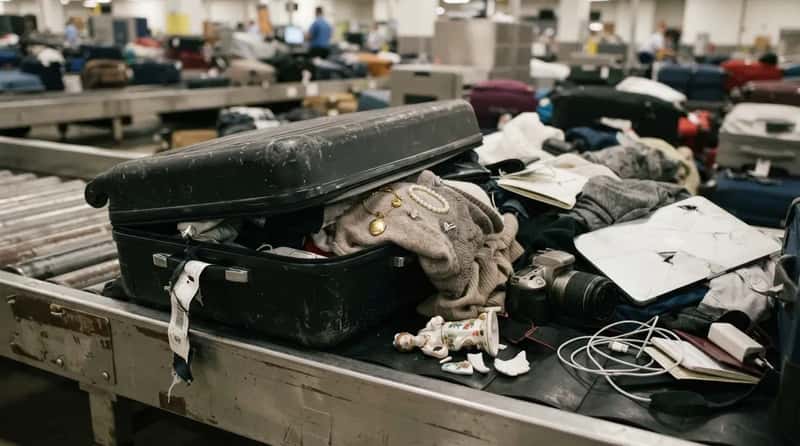
Jewelry, electronics, and one-of-a-kind souvenirs still show up in checked bags every single day. Handlers say that’s a gamble most travelers wouldn’t take if they understood the odds.
For passengers, the cost of lost luggage is personal and often unrecoverable – cherished souvenirs, essential work equipment, sentimental keepsakes that simply can’t be replaced. Anything you truly can’t live without belongs in a carry-on, not buried under three other bags in a cargo hold where sentimental value means nothing to the system trying to find it.
Worth Knowing
- Jewelry and heirlooms – nearly impossible to replace and easy to lose track of in a crowded hold
- Laptops and cameras – fragile, valuable, and frequent sources of damage claims
- Medications and important documents – should always stay within arm’s reach, not in the belly of the plane
- One-of-a-kind souvenirs – sentimental pieces no reimbursement check can truly replace
#8 – Ignoring Weight Limits Until the Counter
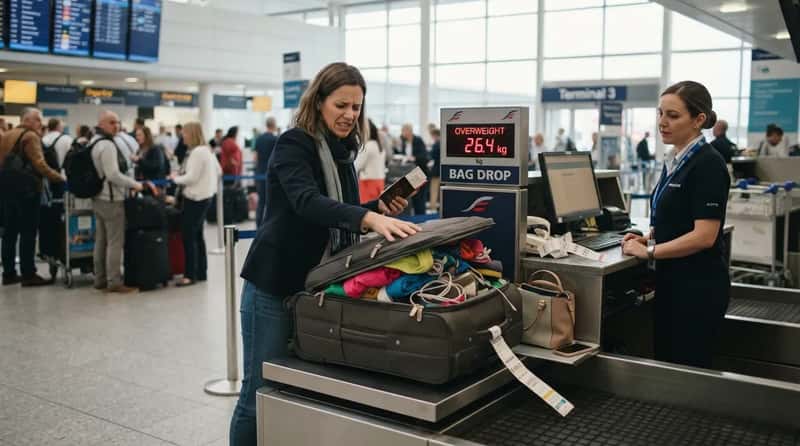
Plenty of travelers only discover their bag is overweight while standing at check-in. By then, the damage is already halfway done.
Rolling clothes helps you fit more into a suitcase, but that doesn’t mean every inch should be used, especially with heavier items. A bag pushed past its limit gets crammed onto carts at odd angles that stress the frame – a cheap luggage scale at home prevents both a surprise fee and a suitcase that arrives visibly warped.
#7 – Leaving Straps, Buckles, and Accessories Dangling
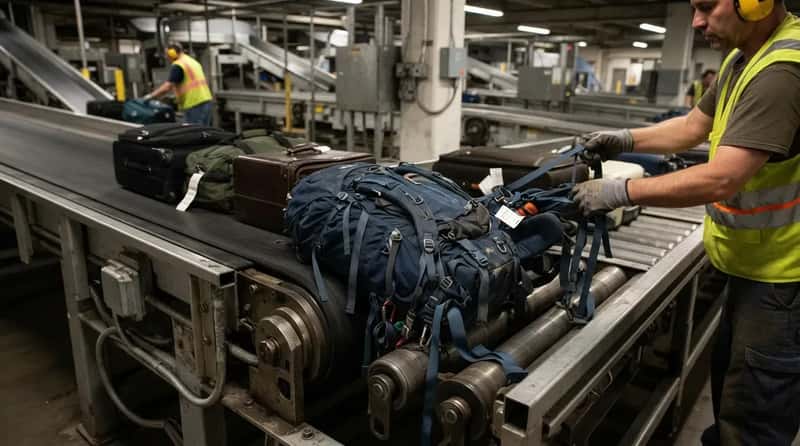
Loose straps look practical for carrying a bag. On a conveyor system, they’re a snag waiting to happen.
Handlers are given strict instructions to load bags by weight, size, and shape, and awkward bags delay the whole process. Dangling compression straps or loose external pockets throw off an otherwise smooth load during short turnarounds, and one bad shape can hold up an entire line.
#6 – Trusting Flimsy Wheels and Handles
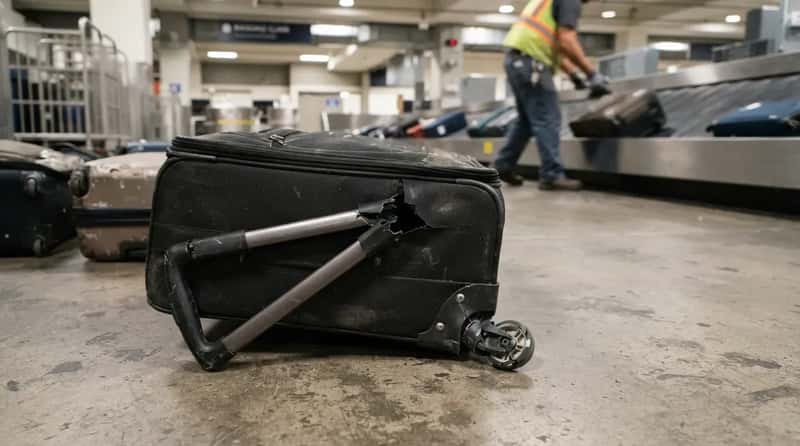
Budget suitcases often fail at the exact point travelers never inspect: the wheels and handles. Handlers stack and drop bags constantly, and weak hardware simply doesn’t survive long.
A handle that snaps under stacked weight isn’t just an inconvenience at the carousel – it makes the bag genuinely harder to move safely for everyone handling it afterward. Reinforced corners and metal-frame wheels hold up far longer under repeated impact than the plastic clip-ons found on cheaper models.
#5 – Packing Lighters and Flammables the Wrong Way
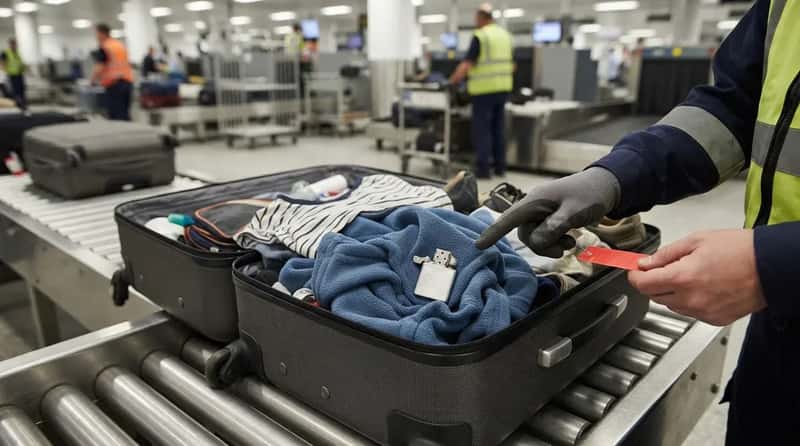
Lighters seem harmless, but the rules around them are stricter than most travelers assume. Explosives and most flammables – gasoline, lighter fluid, solvents, propane – are banned entirely from checked luggage, with one narrow exception: a disposable or Zippo lighter with no fuel in it is allowed.
A fueled lighter tossed into a jacket pocket or toiletry bag violates that rule instantly, and handlers say it’s one of the most common accidental violations they encounter. Most travelers have no idea a fueled lighter in checked luggage is treated the same as a small explosive risk.
#4 – Flying During Peak Holiday Weeks Without Extra Precautions
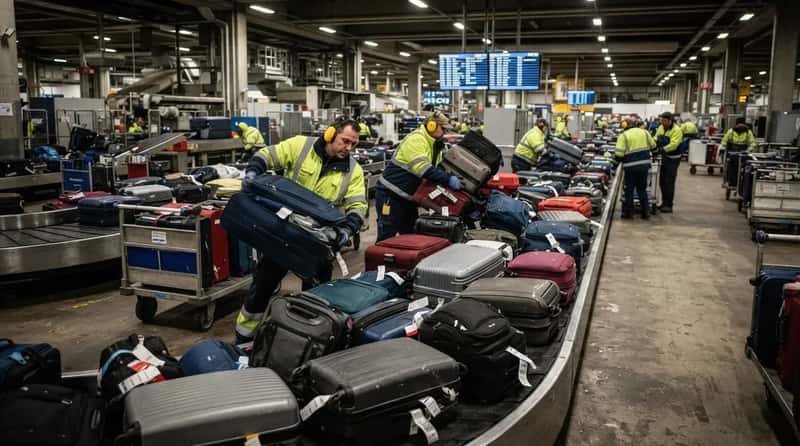
Winter travel isn’t just busier – it’s measurably riskier for your luggage. Data from one baggage-tracking service pinpointed the single worst travel date of the year as November 20, right in the heart of the holiday rush.
Winter, especially the holiday season, is a genuinely critical window for baggage management, with more connections, more volume, and tighter turnarounds all stacked against your bag. The busiest travel days of the year are also the riskiest ones for your suitcase, whether you notice it or not.
#3 – Not Checking Which Airline Actually Handles Bags Worst
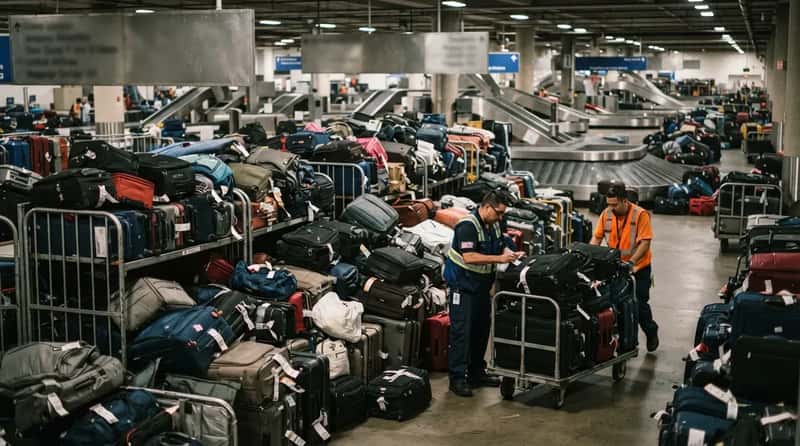
Most flyers assume mishandling rates are roughly the same across every airline. They’re not even close.
The worst-performing U.S. carrier for mishandled luggage in 2025 was American Airlines, followed by United Airlines and Envoy Air, and once branded codeshare partner numbers are folded in, the United Airlines network ranks as the worst-performing baggage network overall. Delta’s rate of 5.1 misplaced, lost, or damaged bags sits well below American Airlines’ 8.71 – meaning your airline choice can quietly double your odds of a problem before you’ve even packed a single sock.
At a Glance: 2025 Baggage Mishandling Snapshot
- American Airlines – the highest mishandling rate among major U.S. carriers
- United Airlines – close behind, with its regional network often ranking worst overall
- Delta Air Lines – consistently among the lowest mishandling rates of the big three
- Allegiant Air – repeatedly ranked among the best performers for bag handling
#2 – Booking a Tight Layover Without Realizing the Risk
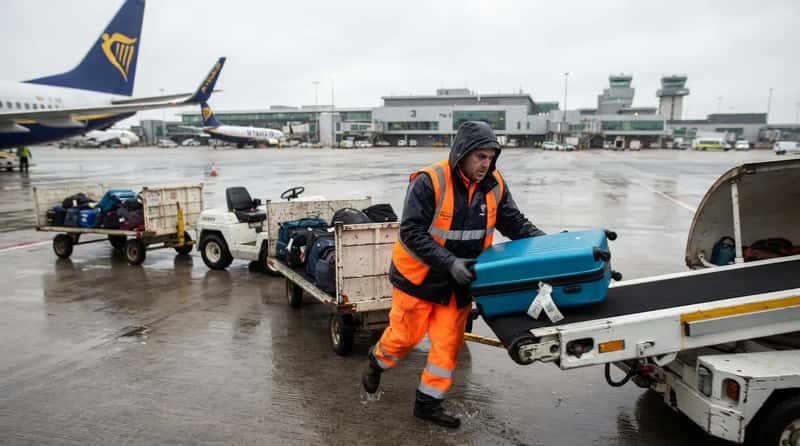
A 45-minute connection feels efficient on paper. To your suitcase, it’s the single biggest danger point in the entire trip.
63.04% of affected flights involved at least one stopover, while only 36.96% were direct – a clear sign that connections drive most baggage issues. Flights with stopovers consistently see higher delays and more lost luggage than nonstop routes, meaning a short layover doesn’t just risk your schedule; it dramatically raises the odds your bag gets left behind entirely.
If the bag can’t be scanned automatically, it can end up in manual processing, which could mean your bag doesn’t make it to the flight.
Dublin baggage handler
#1 – Believing Losing Your Bag Is Rare
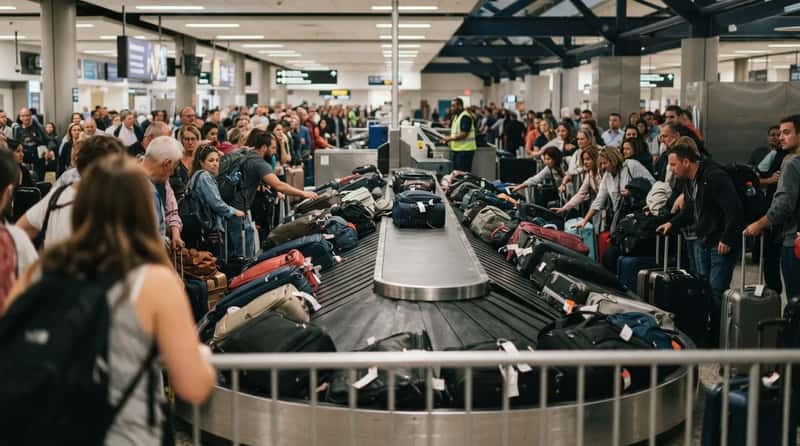
Here’s the myth almost every flyer believes: lost luggage is a rare, unlucky fluke that happens to someone else. It isn’t even close to rare on a global scale.
Approximately 1.8 million bags are lost or stolen each year, and airlines spend roughly $2 billion annually managing delayed or lost items. Globally, the mishandling rate sat at 6.3 bags per 1,000 passengers in 2024, down from 6.9 the year before – an improvement, sure, but still millions of bags disappearing every single year.
Baggage handlers aren’t trying to scare anyone off flying. They’re just tired of watching the same avoidable mistakes roll down the belt, trip after trip, year after year.
From loose batteries to tight layovers, most of these fixes take thirty seconds before you ever leave the house. The bags that arrive intact usually aren’t lucky – they’re just packed by someone who knew a little more than the person standing next to them at check-in.
Which one of these surprised you the most? Tell us in the comments, and let us know which packing habit you’re finally going to drop for good.