Everyone assumes B&B guests are the polite ones. They skipped the chain hotel for something smaller and more personal – surely that means better behavior, right?
Innkeepers will tell you it’s often the opposite. Behind the warm smiles at breakfast, they’re quietly cataloging the stolen towels, the 3 a.m. phone calls, and the guests who vanish without a word after wrecking a room.
These aren’t rumors. They’re the stories owners swap with each other at innkeeper meet-ups – the ones that never make it into a public review.
We went looking for what hosts actually say when guests aren’t listening. Here are the 24 things that still leave B&B owners speechless, counted down to the one behavior every innkeeper says they’ll never forget.
#24 – Showing Up Without Confirming an Arrival Time

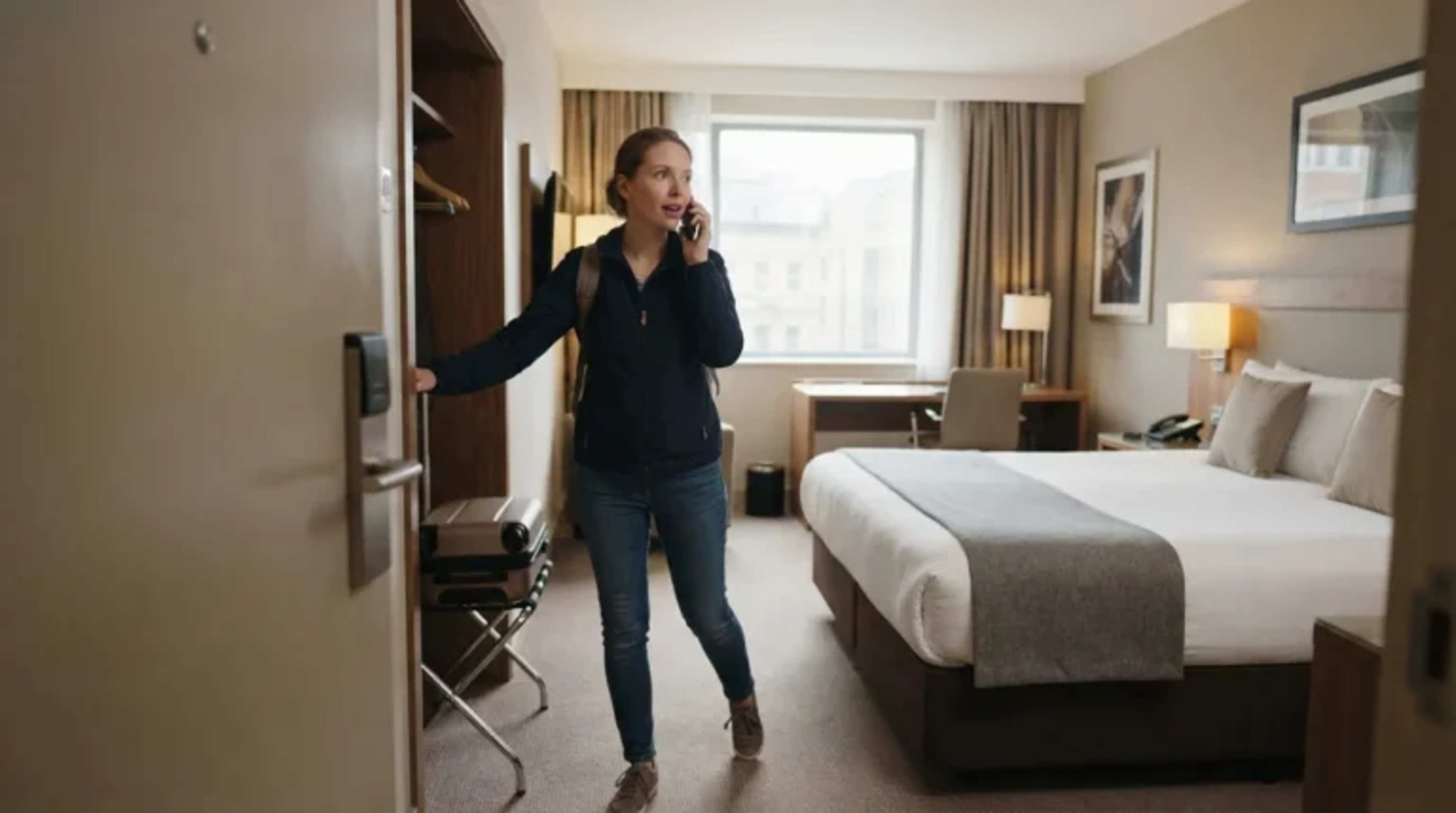
A chain hotel has a 24-hour front desk. A B&B usually has exactly one or two people, and right now they might be knee-deep in a grocery run or elbow-deep in laundry.
The single biggest gripe innkeepers report, over and over, is guests who never confirm an arrival time – or worse, guests who show up hours early expecting an instant welcome.
Picture it: the owner is mid-errand, or halfway through flipping a room, when an unannounced guest knocks and expects the red carpet treatment immediately.
A quick text the moment plans shift is all it takes to avoid becoming that guest. It costs nothing, and it’s the easiest way to start a stay off on the right foot.
That’s just the warm-up. Wait until you hear what guests think an early check-in entitles them to.
#23 – Demanding an Early Check-In Like It’s a God-Given Right

Calling at 9 a.m. to ask about a 10 a.m. check-in sounds harmless. Innkeepers say it’s one of the most exhausting requests they field.
A late arrival is manageable. An early one usually isn’t, because at that hour the owner is likely still at the store or scrubbing the very room the guest wants to walk into.
The bed that guest pictures freshly made at 10 a.m. might still have wet sheets tumbling in the dryer. One early arrival can derail an owner’s entire morning.
Asking to shift check-in or check-out times isn’t a small thing to hosts. It signals a guest who hasn’t stopped to think about how a two-person operation actually works.
Towels seem harmless too. Until you hear what some guests do to them.
#22 – Using White Towels to Remove Makeup or Tan
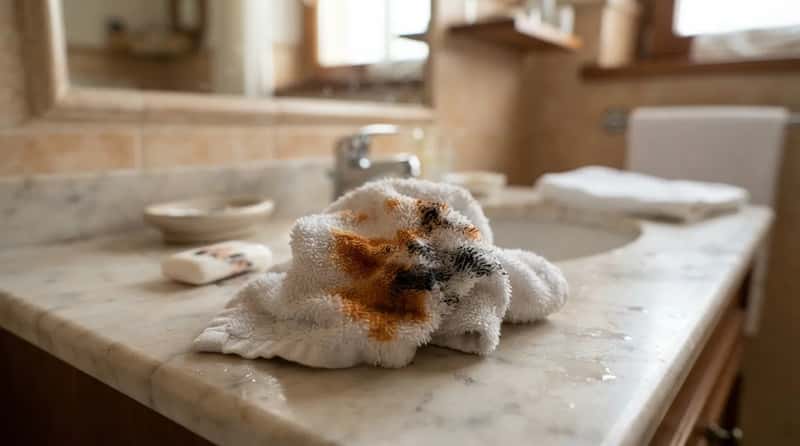
This sounds minor – until you tally what it actually costs a small property.
Self-tanning stains are a genuine sanitation nightmare for innkeepers. The discoloration is notoriously hard to lift, and plenty of linens simply get thrown away.
A big hotel swaps a stained towel without blinking. A small B&B might own six sets total, so careless treatment becomes a real financial hit.
The same goes for the crisp white washcloths – using them to wipe off makeup or scrub shoe grime is a fast way to become the guest an owner still talks about years later.
Shoes are next. And this one leaves marks that never come out.
#21 – Shining Shoes on the Good Towels
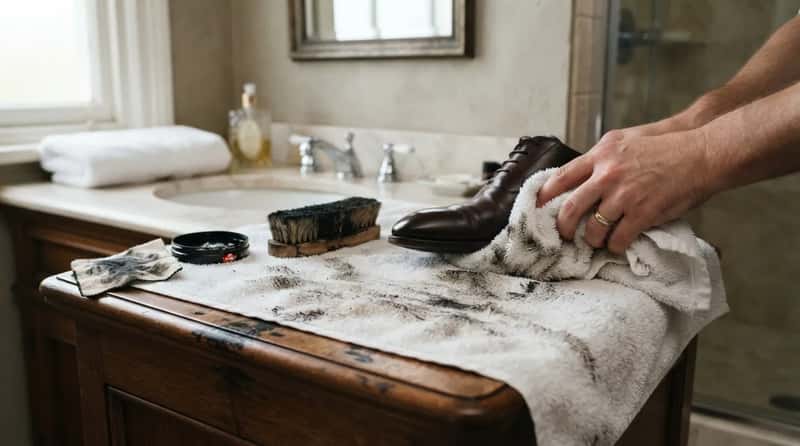
This complaint is specific enough to show up on multiple innkeeper lists, which tells you exactly how often it happens.
Guests who buff their shoes with expensive towels, or hang dripping ones over finely finished wood furniture, land near the top of what hosts say they can’t forget.
Turkish cotton towels at a boutique B&B can cost several times what a hotel towel costs. One polish session can leave a stain no wash cycle will ever lift.
The owner smiles through breakfast and says nothing. But they remember, and if a review shows up afterward, they’ve already composed their polite, pointed reply in their head.
Breakfast has its own minefield. And this one can catch a host completely off guard.
#20 – Ignoring Dietary Restriction Deadlines

Most B&B breakfasts start the night before. That’s not quaint hospitality, it’s logistics for a one-person kitchen.
Dietary restrictions are never a problem, as long as owners hear about them early. Gluten-free, vegan, vegetarian – all manageable with a day’s notice for the extra shopping trip.
Announcing a severe allergy at the table, after the eggs are scrambled and the bacon is already plated, puts the host in an impossible spot.
They’ll handle it gracefully in the moment. But this is exactly the kind of story that gets retold at every innkeeper meet-up afterward.
Speaking of that morning spread – some guests treat it like it has no bottom.
#19 – Treating Complimentary Food Like an All-You-Can-Eat Buffet

Cookies, snacks, a small wine spread – these little touches are meant to be shared by every guest staying that night, not claimed by whoever gets downstairs first.
Some guests see “complimentary” and hear “unlimited.” That mindset routinely leaves other guests staring at an empty plate.
One guest clearing the entire evening spread before anyone else comes down is the kind of quiet frustration that no five-star review can erase.
Owners restock without a word. But they know exactly whose plate came back empty, and that name comes up every time the story gets told.
Worth Knowing
- Snacks and cookies are typically meant to last the whole evening for every guest, not just early arrivals.
- Most small properties restock once a day, so an empty plate at 6 p.m. often stays empty until morning.
- Evening wine or sherry service is usually portioned per household, not per person.
- Asking “is there more?” is always welcome – quietly emptying the tray isn’t.
Then there’s the reservation that quietly grows a whole extra family.
#18 – Sneaking in Extra Guests

A reservation for two means the host shopped, cooked, and set the table for two people, not three, not four.
Hosts consistently flag guests who show up with bigger parties than they booked. One innkeeper described a small group reservation that somehow turned into a crowd of more than twenty.
At a B&B, the owner is also the cook, the cleaner, and the concierge. Every unapproved guest means extra laundry, extra eggs, and extra wear the budget never accounted for.
Some owners charge for it after the fact. Others just add the guest to their mental list, and either way, they never forget.
Laundry, it turns out, is where things get genuinely strange.
#17 – Washing Personal Laundry in the Guest Bathroom
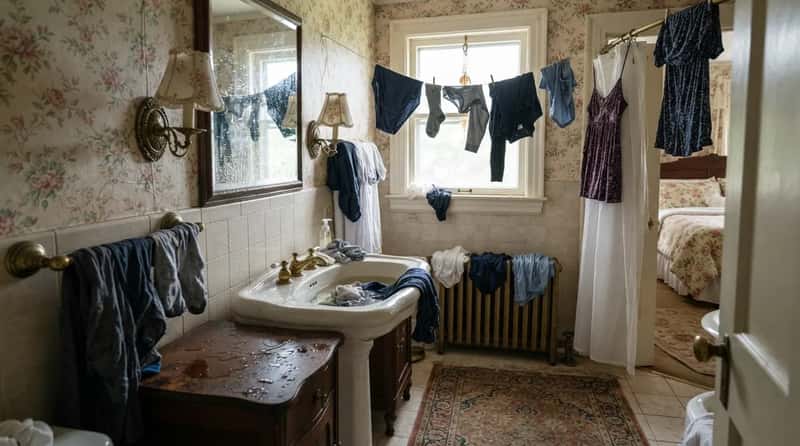
Some guests discover the sink doubles as a washing machine, then drape wet clothes across every surface in the room – radiators, chair backs, window latches, the lampshade.
A B&B is a business, but it’s also someone’s home. Guests who commandeer the laundry room don’t realize every cycle is already spoken for by the constant churn of sheets and towels.
Wet clothes draped across antique furniture aren’t just an eyesore. Moisture and old wood are a genuinely damaging combination, and some of that furniture can’t be replaced.
Owners have found dripping socks on bedposts and full outfits strung across curtain rods. At least one innkeeper swears they once found underwear drying on a ceiling fan.
Hair dye is worse. Because this stain doesn’t wash out – ever.
#16 – Leaving Hair Dye Stains in the Bathroom
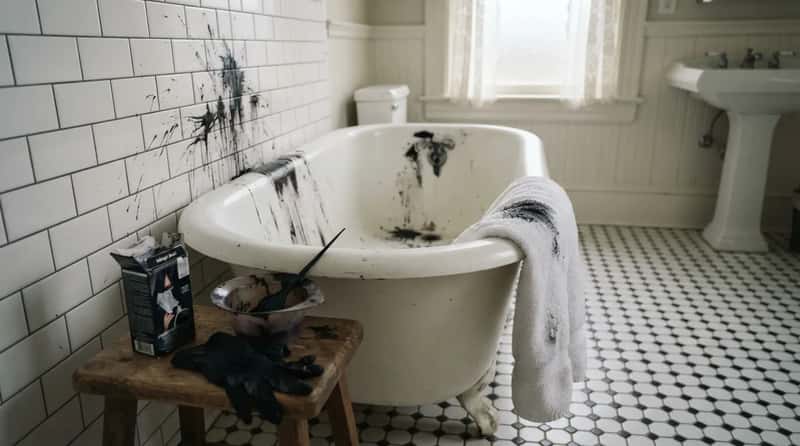
Coloring hair in a hotel bathroom is already a little much. Doing it in a B&B, where the tile and fixtures might genuinely be original Victorian pieces, is another level.
Hair dye stains on grout, wallpaper, and porcelain are a frequent complaint among hosts, and many say they’d take ruined towels over a permanently stained bathroom any day.
A stained clawfoot tub can be extremely costly, sometimes impossible, to restore. In a small B&B, that tub is often the exact feature used in the property’s marketing photos.
The host may say nothing at checkout and hand over a warm smile. The security deposit tells a very different story.
Some rooms don’t just get messy. They get abandoned.
#15 – Leaving the Room Trashed and Then Calling It “Lived-In”
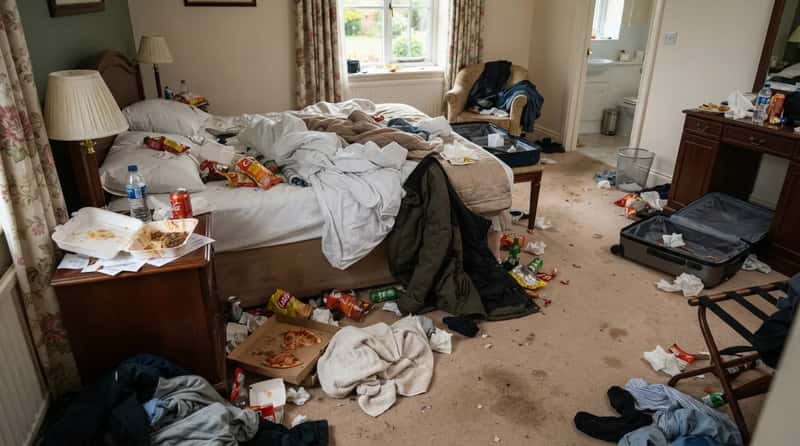
There’s a difference between a room that looks used and one that looks like it survived a small tornado.
Hosts have described peeling squashed food out of carpets and prying sticky candy off furniture after checkout. At a B&B, the owner is usually the one doing that cleaning – on their hands and knees, alone.
One recurring complaint: guests scatter trash across the entire room while the garbage can sits practically empty. That’s not carelessness, that’s indifference.
Owners budget a fixed window to turn each room before the next guest arrives. A room treated like a campsite can blow that schedule apart for hours.
Damage happens. What owners can’t forgive is what comes next.
#14 – Hiding Damage and Saying Nothing at Checkout
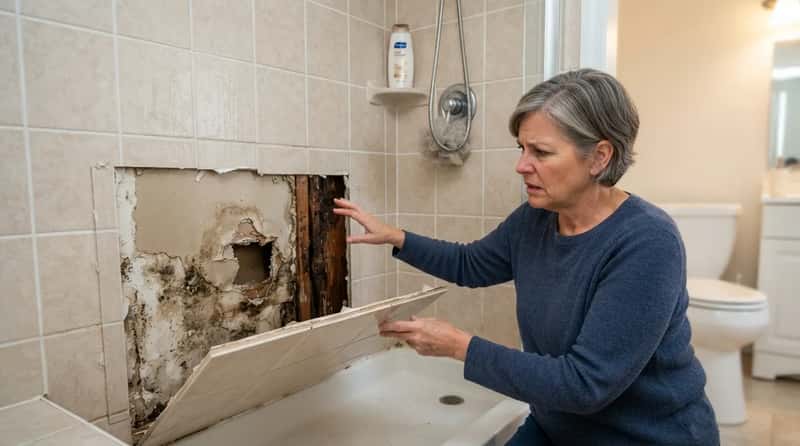
Accidents happen, and seasoned innkeepers are remarkably forgiving when a guest owns up to something right away.
What they never forget is when damage gets hidden. In one documented case, a guest chipped tile badly enough to punch a hole in a shower wall, said nothing, and the hole quietly caused thousands of dollars in water damage.
Telling the host immediately about a spill or a break is always the right move. Hosts consistently say they’d rather hear bad news in person than discover it after the next guest has already checked in.
The cover-up is always the real offense, never the accident. Owners who uncover concealed damage don’t just remember the guest – they remember it while writing the review response every future traveler will read.
Sometimes the mess left behind is simpler than damage. Just deeply unpleasant.
#13 – Leaving Dirty Bathwater in the Tub
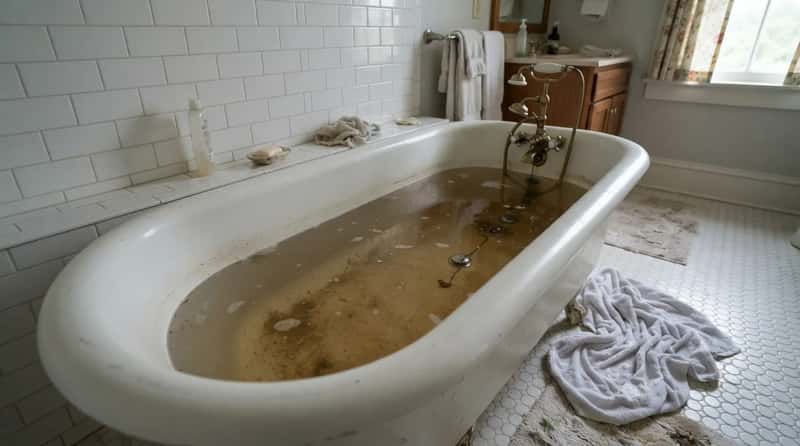
This sounds too basic to make any list. Innkeepers report it often enough that it’s a genuine, recurring grievance.
Finding a tub of cold, murky bathwater is one of the more unpleasant surprises in hospitality, because someone has to physically reach in and pull that drain stopper.
At a big hotel, housekeeping drains it and moves on without a second thought. At a B&B, that someone is often the same person who cooked your eggs Benedict an hour earlier.
It’s not just gross. It’s a small, sharp reminder of the invisible labor gap between what guests experience and what hosts actually do behind the scenes.
Bathrooms keep coming up. This next mess is the one hosts dread most.
#12 – Leaving Shaving Mess All Over the Bathroom
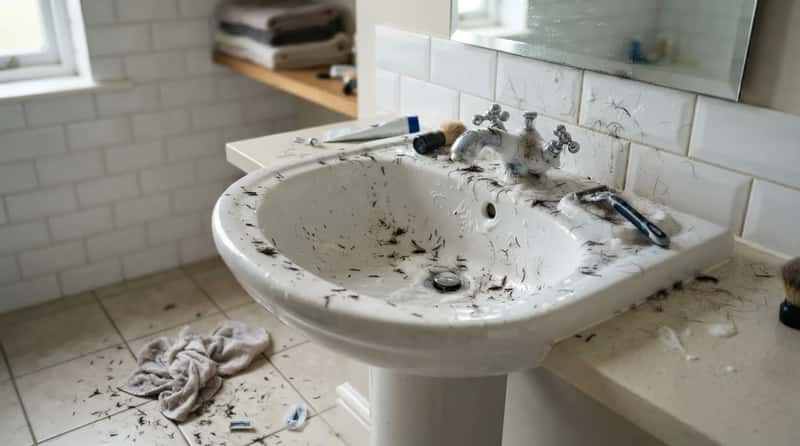
Beard trimmings in the sink, stray hairs across the floor, razor leavings on the tub’s edge – this shows up constantly across innkeeper forums.
It’s genuinely time-consuming to clean. Tiny hairs cling to every surface and often need multiple passes before a bathroom looks presentable again.
A single messy shave can add real time to a room turnover, and in a B&B with a tight window between checkout and check-in, that time simply doesn’t exist.
A quick wipe of the sink before leaving takes thirty seconds. It’s the difference between being the guest an owner recommends to friends and the guest who ends up in an article like this one.
Noise is next, and it hits differently when the owner sleeps one wall away.
#11 – Making Noise After Quiet Hours Without a Second Thought
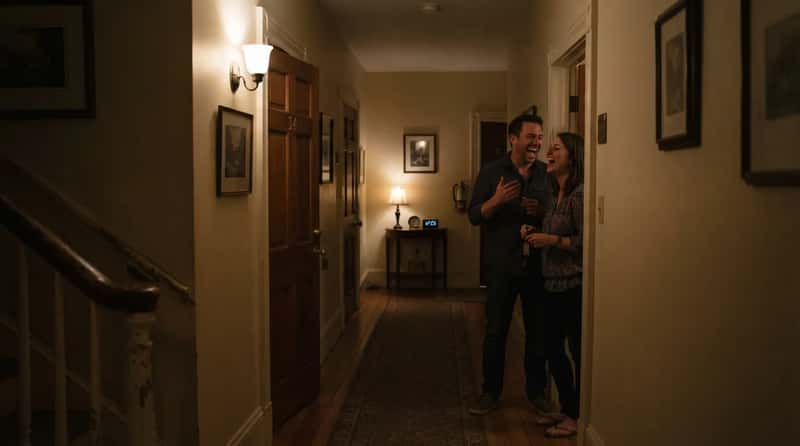
Noise complaints are universal across the entire lodging industry. But they land differently at a B&B, where the host often sleeps on the other side of a thin wall.
Picture the owner: up since 5 a.m. cooking breakfast, cleaning rooms, and prepping dinner, due to be up again at 5 a.m. tomorrow. A guest laughing loudly in the hallway at midnight isn’t a minor inconvenience, it’s a direct hit to their ability to function.
This isn’t unique to small properties, but it’s amplified there. Noise complaints remain among the top guest frustrations at properties of every price point.
The owner smiles at breakfast. But they remember exactly who kept them up, and for how long.
Fast Facts
- Most B&Bs set quiet hours somewhere between 10 p.m. and 7 a.m.
- Innkeepers are often back up by 5 a.m. to start breakfast prep.
- Older, historic homes carry sound through walls far more than modern hotel construction.
- A single loud night can disturb every other guest under that roof, not just the host.
Some guests don’t just eat breakfast. They take it with them.
#10 – Packing Breakfast Food into Pockets or Bags to Take Away

Most B&B breakfasts are made to order or portioned precisely. They’re not a buffet, and they’re definitely not meant to fuel the next two days of a road trip.
Innkeepers describe guests who load food straight off the table and tuck it under a jacket on the way out the door.
Portions are calculated to the ingredient. The owner bought exactly enough for the guests staying that morning, so slipping muffins into a pocket or wrapping bacon in a napkin “for later” is, functionally, stealing.
Innkeepers always notice. And the quiet math of “did I buy enough for tomorrow?” after a guest quietly raids the spread follows them through the rest of their morning.
Some guests take more than food. They take the owner’s phone number too, at the worst possible hour.
#9 – Calling the Owner’s Personal Number at 3 A.M. for Non-Emergencies

Most B&Bs list a contact number strictly for real emergencies – a locked door, a broken furnace, a medical situation.
Some guests treat it like a 24-hour concierge line instead. One documented case: a guest called in the small hours to announce a marriage proposal that had just been accepted, citing the guest info sheet’s line about calling if they “need anything.”
The owner, up since 5 a.m. the day before, answers warmly because that’s the job. Privately, this becomes the story told at every innkeeper gathering for the next decade.
Sweet? Sure. Appropriate? Not remotely. The unwritten rule at a B&B is simple – unless something is actually on fire, it waits until morning.
This next one is rare at a B&B, which is exactly why it’s so brazen when it happens.
#8 – Throwing an Unauthorized Party in the Room
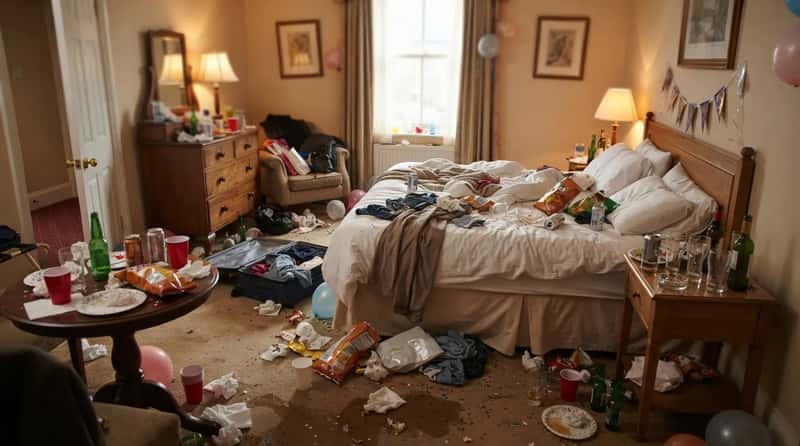
Parties are less common at B&Bs than at Airbnbs, mostly because the owner is usually right there on the property. That’s also what makes it so bold when someone tries anyway.
Some guests book claiming they want a quiet weekend. The real plan turns out to be a full gathering, and by the time cleaning arrives after checkout, the room is in shambles.
In one reported case, a guest threw an unauthorized party despite a contract explicitly forbidding gatherings, then promoted the event online and charged people to attend.
At a B&B, the owner lives there and hears everything. Most incidents are smaller – a few extra friends “stopping by,” voices carrying through a shared sitting room – but they’re still remembered, and still reviewed accordingly.
Some guests don’t stop at loud. They wander into rooms that were never theirs to enter.
#7 – Wandering Into Private Areas of the Property

A B&B isn’t a hotel. That unlabeled door at the end of the hallway is almost certainly the owner’s living quarters – their kitchen, their bedroom, their actual home.
This is the core thing guests should internalize about small properties: it’s a business, yes, but it’s also someone’s house.
Guests have wandered into owner kitchens hunting for snacks, opened unlabeled doors expecting a garden, and in a few documented cases, sat down uninvited in the owner’s personal living room to watch TV.
Owners handle these moments with patience and a gentle redirect. But the feeling of a stranger casually occupying your private space doesn’t fade quickly, and it’s absolutely something they share with other innkeepers.
Sometimes guests don’t just wander into private space. They try to claim private equipment too.
#6 – Attempting to Use the Owner’s Personal Washing Machine
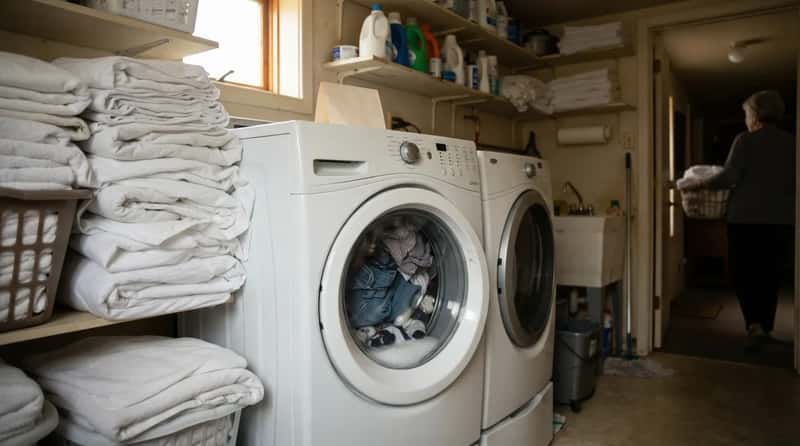
This overlaps with the laundry issue, but it deserves its own entry. It’s not hand-washing in a sink, it’s requesting, or simply commandeering, the residential machine the owner depends on to run the entire property.
The laundry equipment in a B&B is in near-constant use, cycling through sheets and towels every single day. Squeezing in a personal load interrupts that entirely.
Some guests ask politely, which is manageable. Others just start a load and walk away, leaving the owner to discover a stranger’s jeans spinning in the drum they needed for bed linens twenty minutes earlier.
A few B&Bs have started posting signs about it. That alone tells you how often this happens.
Laundry machines aren’t the only thing that quietly disappears from these properties.
#5 – Pocketing Toiletries, Robes, and Decorative Items
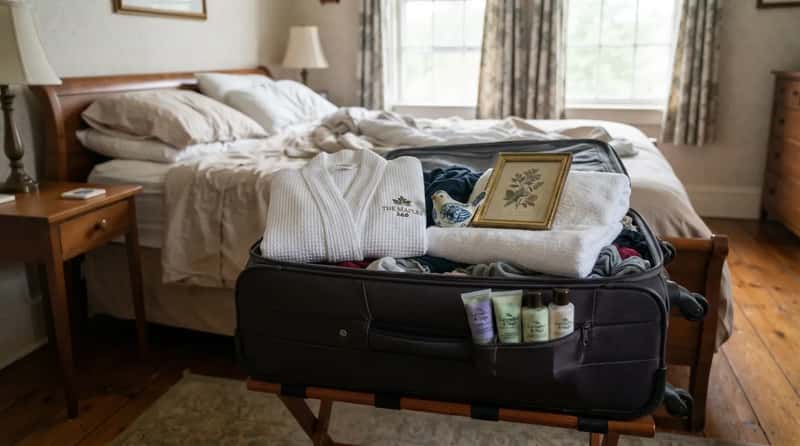
Hotel guests pocket mini shampoos by the fistful and nobody blinks. The economics of a B&B make that kind of casual take-it-and-go genuinely costly.
Innkeepers specifically warn about robes and towels vanishing “accidentally.” A large hotel can absorb that loss without noticing, but a small B&B will charge for it.
It goes further than linens. Small ornaments, framed prints, candles, even curtain panels go missing with real regularity – one host discovered a guest had stolen two of four curtain panels straight off the window.
A small B&B’s décor is often chosen and placed by the owner personally, piece by piece. Watching it leave in someone’s suitcase is a specific kind of violation no hotel theft really compares to.
Quick Compare
- Usually fine to take: unopened mini toiletries, the paper soap wrapper, local maps and brochures.
- Not fine to take: robes, towels, candles, framed art, curtain panels, decorative pillows.
- When in doubt, ask at checkout – most owners would rather sell you the candle than lose it silently.
Some guests don’t even wait to leave the property before doing damage. They do it publicly, in a review.
#4 – Writing a Scathing Review Over Something Never Mentioned to the Owner

This is the one that genuinely angers innkeepers, and it’s easy to see why.
A single public review can cost a small business thousands in future bookings, especially when the complaint was never raised in person and the owner never had a chance to fix it.
Owners read every review, word for word. They recognize the room, the date, sometimes even the guest’s name, and when the complaint was something fixable in five minutes, like a noisy radiator or a firm pillow, the silence during the stay followed by a public takedown stings in a specific way.
Raising an issue in the moment almost always leads somewhere productive. Skipping straight to a public review isn’t just unfair to the host, it’s the kind of thing they never fully let go of.
Reviews sting. But some guests find a way to hurt an innkeeper without writing a single word.
#3 – Treating the Owner Like Invisible Staff

Guests choose a B&B specifically because it isn’t a faceless chain. And then, with startling frequency, some treat the person who cooked their breakfast and washed their towels like invisible service staff.
There’s a simple truth many innkeepers wish more guests understood: hosting is not the same job as being a butler. They’re running a hospitality business that also happens to be their home and their life’s work.
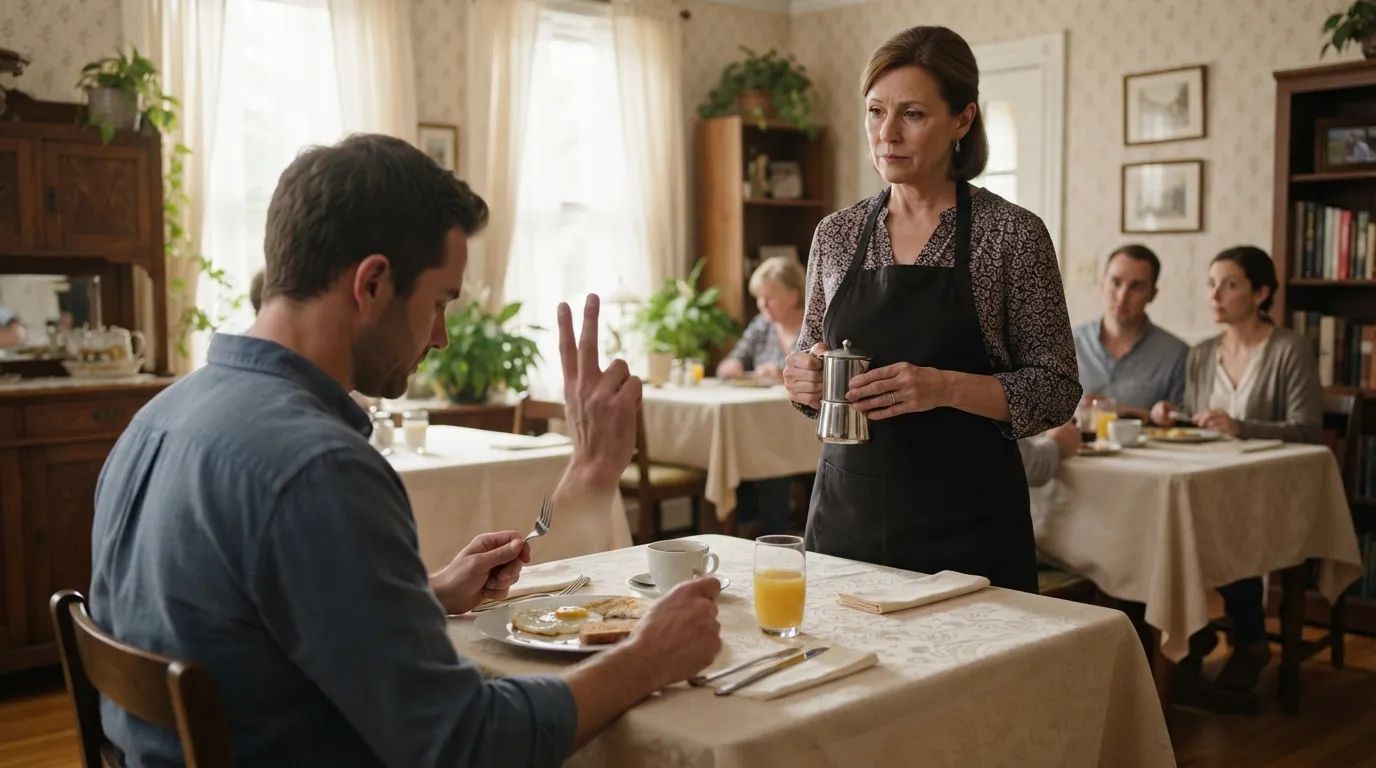
Snapping fingers at the breakfast table, giving orders without a please or thank you, spending an entire stay without a single moment of real conversation – these things get noticed, filed away, and retold. Innkeepers are often a genuine well of local knowledge and love sharing it, but a guest craving total anonymity is better off at a big hotel.
Plenty of guests treat breakfast conversation as an obligation to endure. Owners remember the warmth of every table, and the cold of them too.
Money changes everything. And this next behavior can wipe out an entire weekend’s profit in one click.
#2 – Disputing the Entire Bill Over One Minor Issue

This might be the most financially damaging behavior on the whole list, and it’s more common than owners like to admit.
A guest hits one imperfect note in a stay – an overcooked egg, a neighbor who snored, weak Wi-Fi in one corner of the room – and uses it to dispute the entire charge with their credit card company.
Some guests escalate over grievances that genuinely make hosts question their whole morning. It rarely changes anything operationally, but it becomes a story retold for years.
For a B&B running on thin margins, one full chargeback can erase the profit from an entire weekend of bookings. The owner knows exactly who filed it, exactly when, and exactly what was on the plate that morning, and they will not forget.
All of that is nothing compared to the one thing innkeepers say they can never quite let go of.
#1 – Checking Out Without a Word and Leaving the Room Devastated
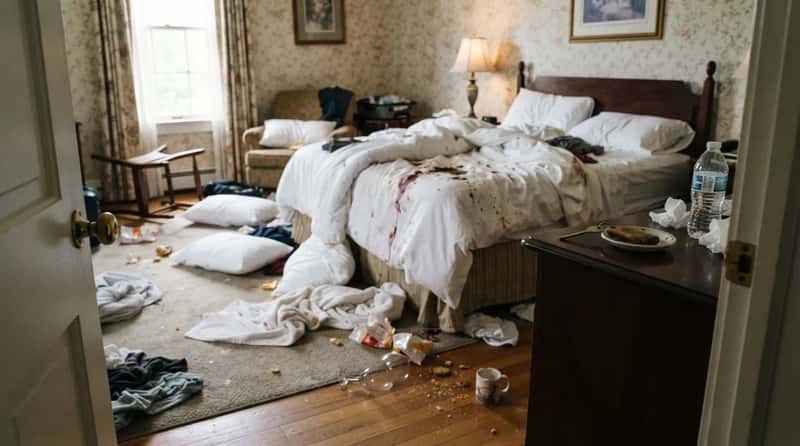
This is the one that sits heaviest with innkeepers. Not the loudest incident, not even the most dramatic theft – the silent exit after genuine destruction.
No goodbye, no thank-you, sometimes not even a note. Just a key on the dresser and a room that takes the rest of the day to restore: stained linens, moved furniture, broken personal items, food hidden in strange places.
The reason this ranks first isn’t the damage itself – owners can budget for that. It’s the total erasure of the human relationship, the sense that the guest never once thought of this as someone’s home.
An innkeeper chose this work to welcome people in and create something meaningful. The guest who leaves in silence after taking and taking is the one they talk about for years – not with anger, but with a quiet disappointment no good review ever fully erases.
The Bottom Line
Most B&B guests are genuinely wonderful, and innkeepers will tell you that too. But the ones who aren’t leave marks that go far beyond stained towels and bad reviews.
The thread running through every item on this list is the same: a failure to recognize that a B&B is someone’s home, someone’s livelihood, and someone’s daily labor of hospitality. Showing up unannounced, hiding damage, pocketing décor, or ghosting after a destructive stay aren’t just bad manners – they’re the moments owners carry with them for years.
The good news is that every behavior on this list is entirely avoidable with one simple shift in mindset. Treat the property, and the person running it, the way you’d want your own home treated by a stranger.
Did we miss one? Drop it in the comments – B&B owners, we especially want to hear from you.