You can spot them from three gates away. While everyone else is shuffling forward the second “Group 1” flickers on the screen, they’re still sitting down, scrolling their phone, completely unbothered. It’s not luck. It’s a set of small, specific habits built from hundreds of flights and just as many gate-side mistakes watched up close.
Most people assume boarding is just about getting on the plane fast. Frequent flyers know it’s actually about timing, positioning, and reading a system most travelers never bother to learn. Here’s what actually separates the calm, seasoned traveler from the anxious first-timer scrambling at the counter.
1. They Know Their Boarding Group Before the Gate Agent Says a Word
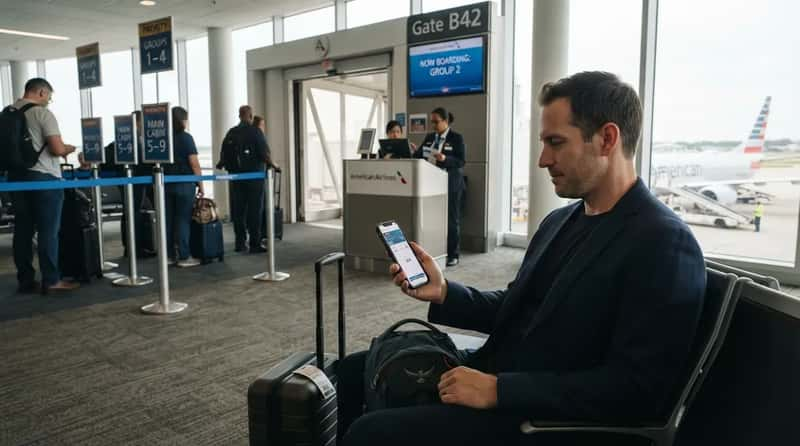
Experienced flyers check their boarding pass the moment it lands in their wallet app, not when their name gets called. They’ve memorized the difference between priority and general boarding on their airline of choice, so there’s no confused glance at the screen when numbers start flashing.
On American Airlines, that means understanding the lane system before arriving at the gate. Groups 1 through 4 board through the priority lane, while Groups 5 through 9 board through the main lane. Knowing that in advance means never awkwardly standing in the wrong line while everyone watches.
2. They Refuse to Join the “Gate Lice” Crowd
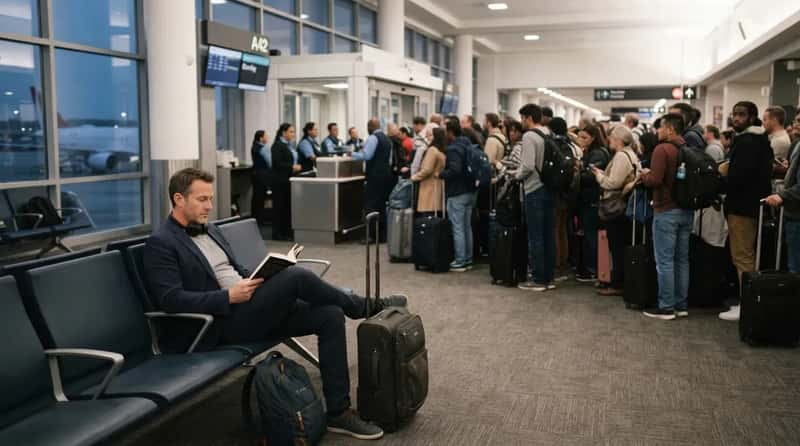
Airlines actually have a name for the herd of passengers who cluster at the gate long before their group is called: gate lice. Seasoned travelers avoid the scrum entirely, staying seated until their specific group is announced.
It’s not laziness, it’s strategy. Standing in a mob doesn’t get anyone on the plane faster; it just creates chaos gate agents have to untangle. The overhead bins fill up in boarding-group order, not standing-order, so crowding the podium accomplishes nothing except sore feet and dirty looks from staff.
3. They Have Their Boarding Pass Ready Before They’re Three People Back
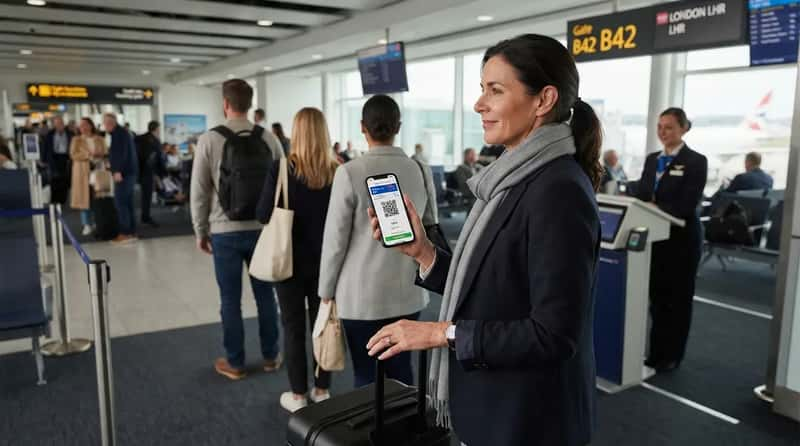
Nothing slows a line down like someone unlocking their phone, opening three different apps, and squinting for a QR code while ten people wait behind them. Veteran flyers have the pass loaded, screen brightness up, and phone in hand well before it’s their turn.
Some go further and screenshot the boarding pass, since airport WiFi and cell service near crowded gates can lag at the worst moment. It’s a small habit, but it’s the difference between a two-second scan and a thirty-second pileup.
4. They Dress for Security, Not for the Gate
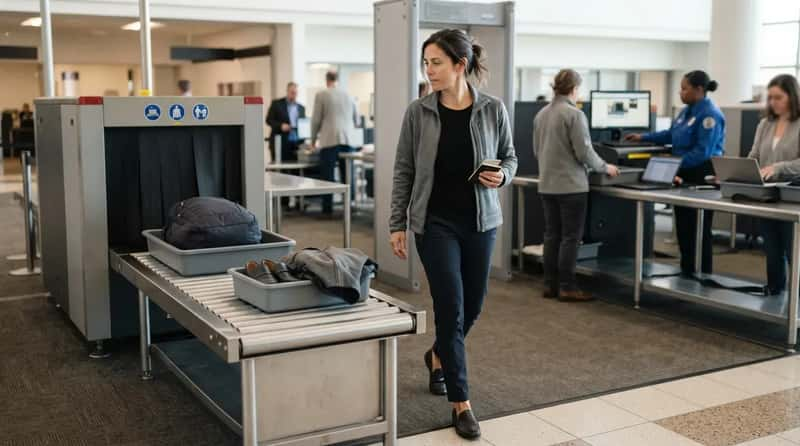
Slip-on shoes, no belt, pockets already empty into a jacket or bag pocket, experienced travelers plan their outfit around TSA before they ever think about comfort at 30,000 feet. It sounds minor, but it’s one of the biggest self-inflicted delays for first-time flyers.
They also know which pocket has their ID and which has their phone, so there’s no patting themselves down at the checkpoint. The goal is to move through security like it’s a routine, not an obstacle course.
5. They Travel With a Bag That’s Actually Sized to Fit
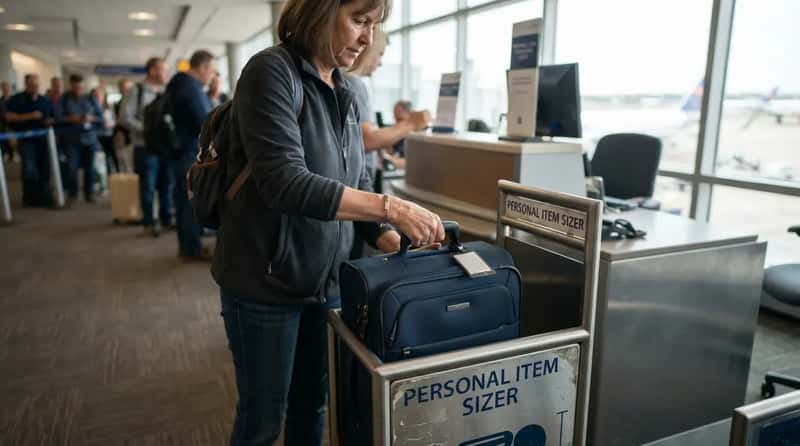
Rolling a bag up to the gate only to have it rejected by the sizer is one of the most avoidable embarrassments in air travel, yet it happens constantly. Frequent flyers measure their carry-on against airline specs before they ever leave the house.
They also know the rules differ sharply by airline and fare class. United’s Basic Economy is the most restrictive for general passengers because it does not include a carry-on bag, and passengers are limited to a personal item that fits under the seat. Show up expecting otherwise, and you’re the one gate-checking your bag for free, reluctantly.
Quick Compare
- United Basic Economy: Personal item only, no carry-on allowed
- American Basic Economy: Personal item plus a full-size carry-on included
- Standard Economy (most airlines): Personal item plus carry-on, no fare restrictions
6. They Compare Basic Economy Fine Print Before Booking, Not After
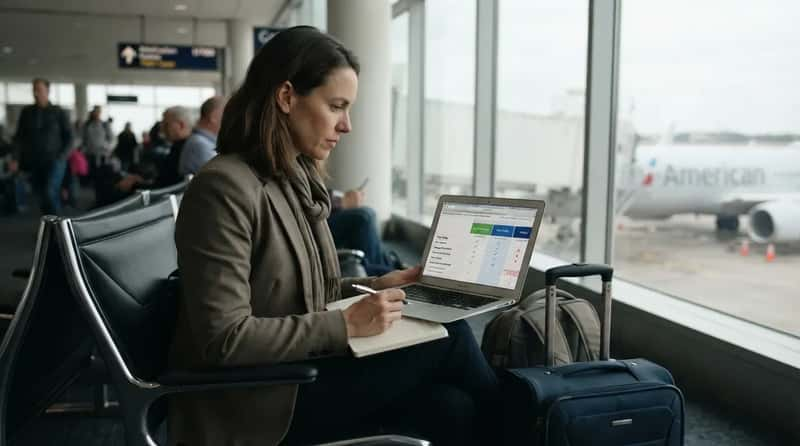
The cheapest fare isn’t always the cheapest trip, and seasoned travelers have learned that lesson the hard way at least once. They read the fare rules before clicking purchase instead of discovering the restrictions at the gate.
The differences between airlines are bigger than most travelers realize. American Basic Economy includes a full carry-on bag and personal item on every route in 2026, a meaningful win over United. That single detail changes what you can casually carry on board without paying extra.
7. They Pick Seats With Boarding Order in Mind
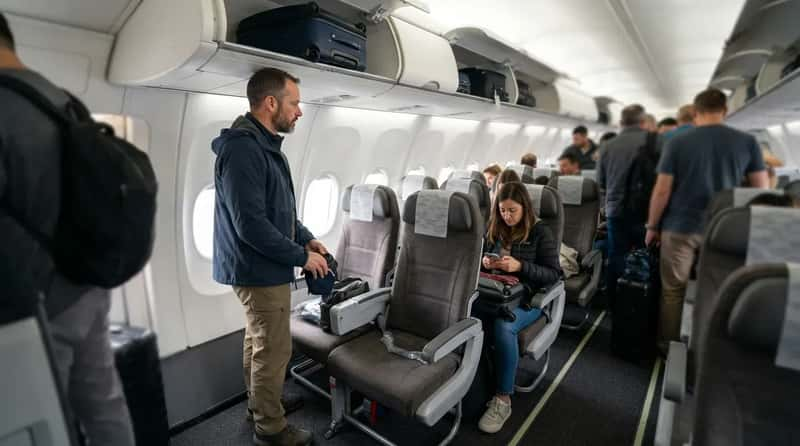
Most travelers choose a seat based on legroom or aisle access alone. Veterans now factor in how the boarding sequence actually works, because several major airlines have quietly rewritten the rules.
United has redesigned it around seat position entirely. United has 6 numbered boarding groups plus a pre-boarding call, and Groups 3 through 5 now use the WILMA system (window, middle, aisle) introduced in October 2025 to speed up the process. A window seat isn’t just quieter, it can mean boarding noticeably earlier than an aisle seat in the same cabin section.
8. They Use a Credit Card to Skip Groups, Not Cash
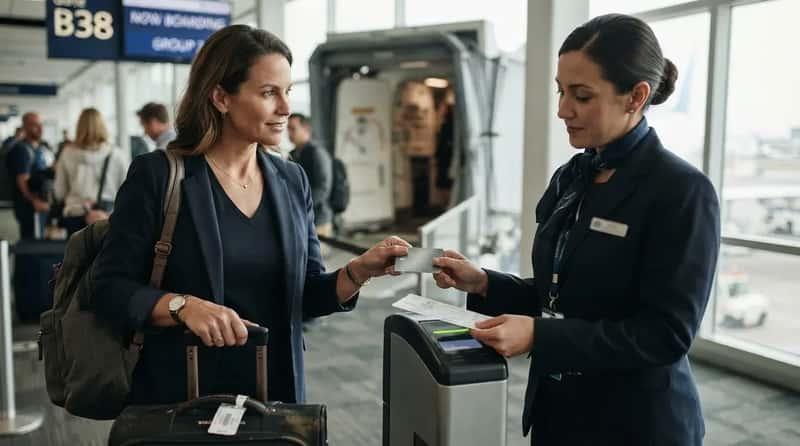
Paying for standalone priority boarding is the amateur move. Frequent flyers know the smarter play is a co-branded airline credit card that bakes boarding perks into a purchase they were already making.
The upgrade is bigger than people expect. Any Chase United card gets you Group 2, and any Delta Amex gets you Zone 5. That’s a jump of several boarding groups for a card fee that pays for itself in avoided bin anxiety alone.
9. They Never Block the Aisle Organizing Their Bag
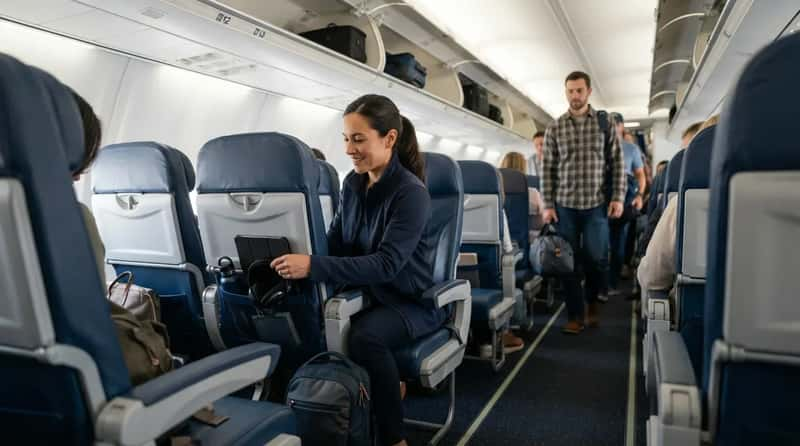
Few things frustrate a plane full of tired travelers faster than someone standing in the aisle, unzipping every pocket of their backpack while forty people wait behind them. Experienced flyers step fully into their row first, then sort themselves out.
They’ve learned to have their laptop, headphones, and water bottle already accessible before boarding even starts. It’s a small courtesy, but it’s also self-interested, nobody wants to be the person everyone silently resents for the entire flight.
10. They Know Which Lane to Stand In Without Asking
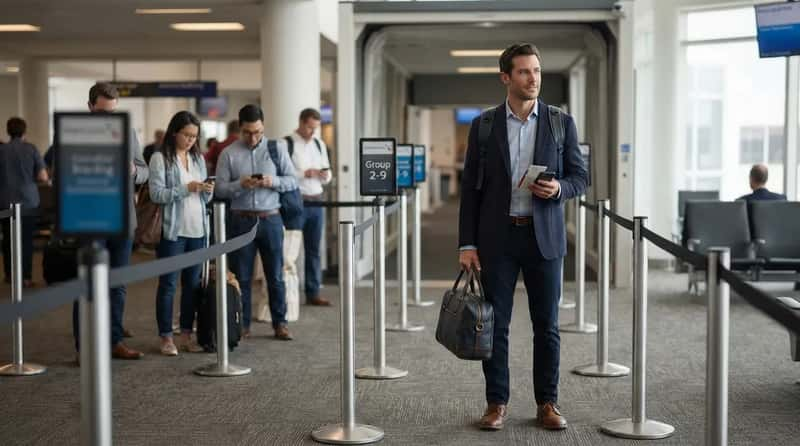
Confused passengers hovering at the gate asking “is this the right line?” are a dead giveaway of a rare flyer. Regulars already know their airline’s lane structure cold.
On American, that system got a real overhaul recently. Premium cabin passengers, think business and first class, get to preboard, a change American implemented in May 2025. Knowing that ahead of time means never accidentally cutting in front of someone who’s actually supposed to be there.
11. They Track Elite Perks Instead of Assuming They Still Apply
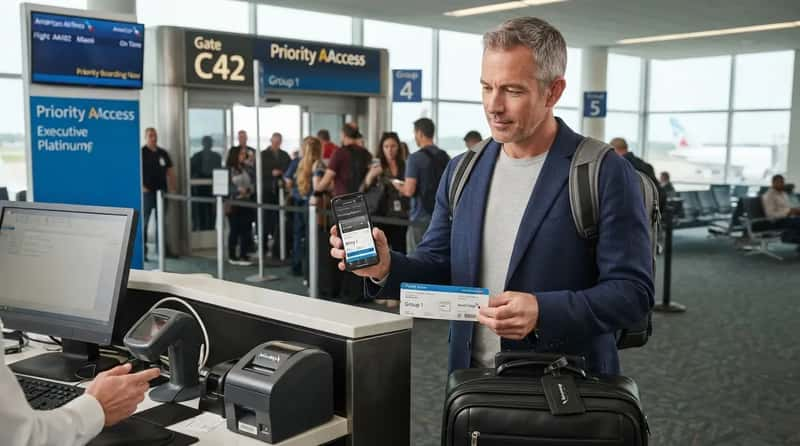
Airline loyalty programs have changed dramatically in the last two years, and the flyers who fly often are the ones actually paying attention to the fine print instead of assuming last year’s rules still hold.
Basic economy has gotten stricter across the board. Free checked bags tied to elite status still apply on basic economy, and priority boarding privileges are preserved, while AAdvantage credit cardholders also retain their boarding group benefits. Knowing exactly what survives a fare downgrade, and what doesn’t, prevents an ugly surprise at the counter.
12. They’ve Adjusted to Southwest’s New Reality
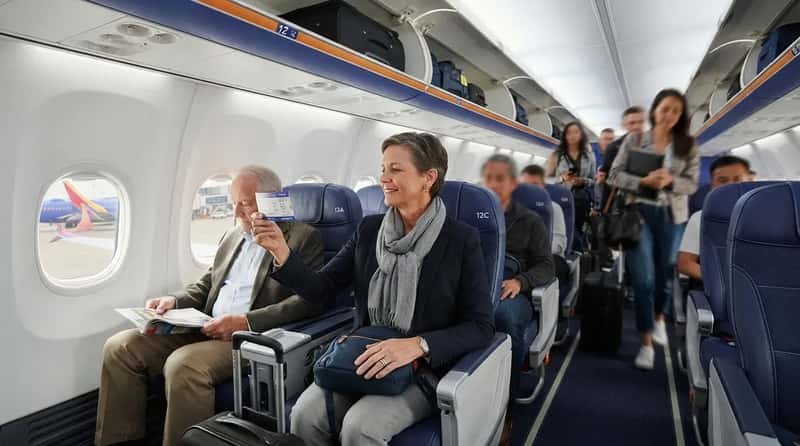
For decades, Southwest regulars had a signature ritual: check in at exactly 24 hours to grab the best boarding position. That entire skill just became obsolete, and the flyers who noticed first adapted fastest.
Southwest switched to assigned seating and 8 numbered boarding groups on January 27, 2026, and the old A/B/C open seating system is gone. Anyone still bragging about their “24-hour check-in trick” at a party is now, unknowingly, a little out of date.
13. They’ve Cracked Southwest’s New Boarding Logic
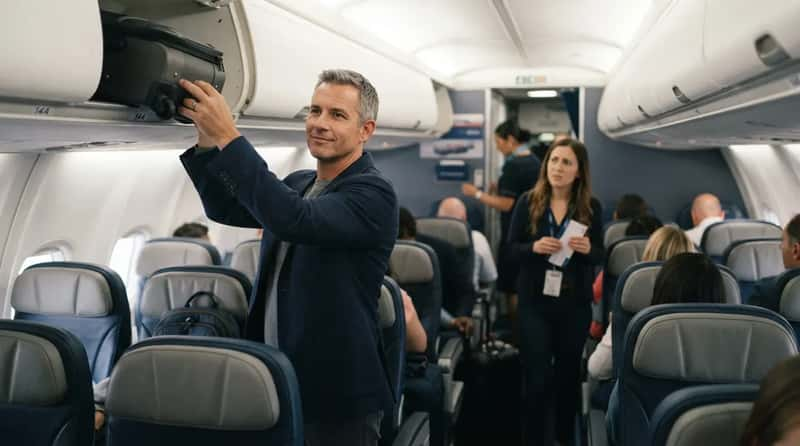
It’s not random anymore, and experienced Southwest flyers have already reverse-engineered the new system while casual travelers are still confused by the missing stanchions.
The order now follows seat type deliberately. The logic behind this is a modified “Wilma” (window-middle-aisle) approach, boarding window seat passengers first, followed by middle and then aisle, aimed at reducing the “aisle dancing” that typically slows down boarding. Book a window seat on a whim now, and you might board earlier than you expected purely by accident.
At a Glance
- Old system: Open seating, boarding order set by 24-hour check-in
- New system: Assigned seats, 8 numbered boarding groups
- New logic: Windows board first, then middles, then aisles
- Why it changed: Fewer passengers stuck “aisle dancing” while stowing bags
14. They Book Extra Legroom for the Boarding Perk, Not Just the Space
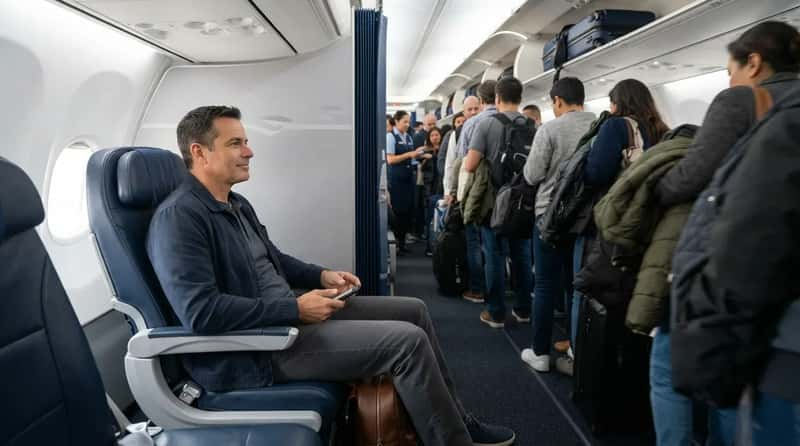
Most travelers think of extra legroom seats purely as a comfort upgrade. Regulars know it’s quietly also a boarding hack that most passengers overlook entirely.
Passengers booked in Extra Legroom seats are guaranteed a boarding position no later than Group 2. That single seat choice can move you ahead of dozens of other travelers who paid nothing extra for the privilege of standing around longer.
15. They Know Delta’s Zones Aren’t Named the Old Way Anymore
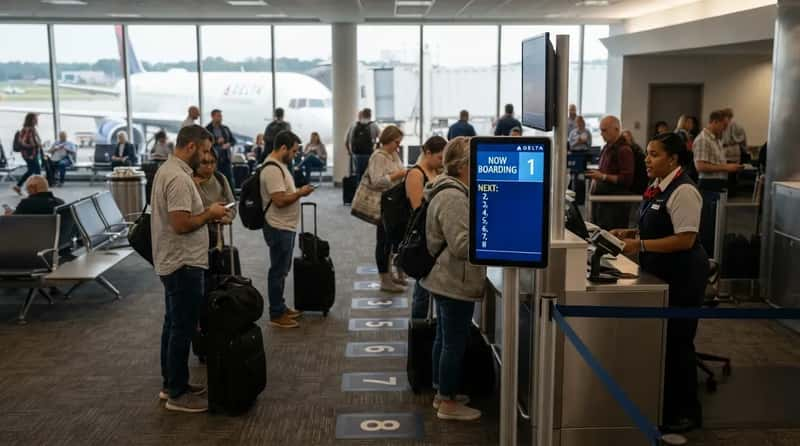
Casual Delta flyers still occasionally ask gate agents where “Zone 3” used to fit into the old named system. Regulars stopped thinking that way over a year ago.
Delta switched to a numbered zone system with 8 zones, plus pre-boarding, replacing its older named-group system in early 2025. Zone 1 is for Delta One and first class, while Zone 8 is for basic economy. Confusing the two systems at the gate is one of the fastest ways to look like you haven’t flown Delta since before the pandemic.
Worth Knowing
- Zone 1: Delta One and first class board first
- Zones 2-7: Comfort+, Main Cabin, and Sky Priority status tiers
- Zone 8: Basic Economy boards dead last
16. They Accept Being Last Without Getting Bitter About It
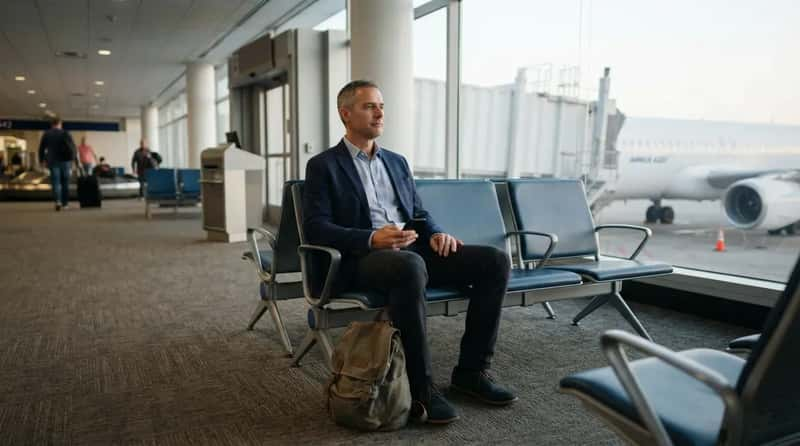
Here’s an unpopular opinion among frequent flyers: basic economy passengers complaining about boarding last have no real case. The fare was cheaper for a reason, and everyone chose that trade-off willingly.
Basic economy passengers board dead last, every single time. Veteran flyers who booked the cheap seat simply plan around it, bringing only a personal item, expecting a middle seat, and not wasting energy being annoyed at a policy they knew about at checkout.
17. They Never Fight for Overhead Space That Isn’t Theirs
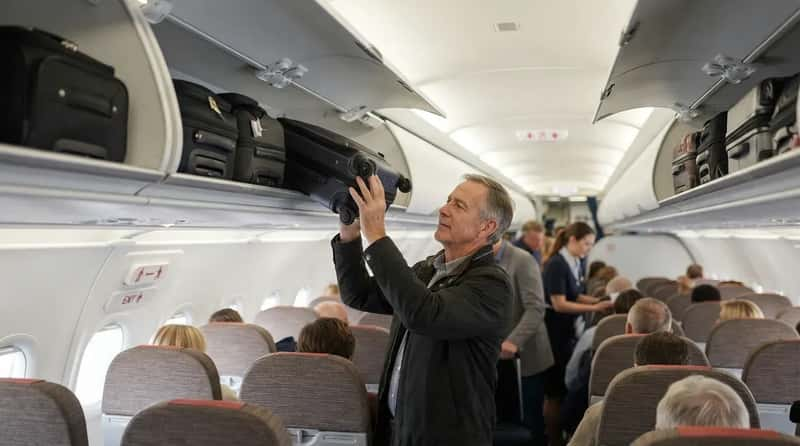
Watching someone drag a rolling suitcase past four open bins to cram it directly above their assigned seat, ten rows from where they’re actually sitting, is one of the clearest tells of an inexperienced traveler.
Regular flyers use whatever bin is nearest their actual boarding position and don’t obsess over “their” specific spot. It’s a habit built from one too many gate-checked bags after boarding too late to claim territory that was never guaranteed in the first place.
18. They Know the Family Boarding Window Isn’t a Free-for-All
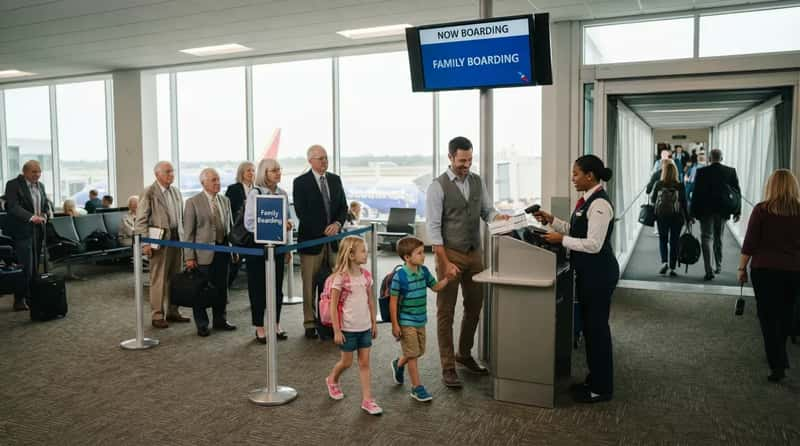
Family boarding exists for a reason, and experienced travelers respect the window without exploiting it or resenting it, both common mistakes on either side of the aisle.
Airlines have quietly strengthened these protections. Southwest will do what it can to put kids under 13 next to their parents even under randomly assigned seating. Knowing that policy exists means seasoned flyers don’t panic-book premium seats just to guarantee sitting next to their kids.
19. They Double-Check Which Family Perks Their Airline Actually Guarantees
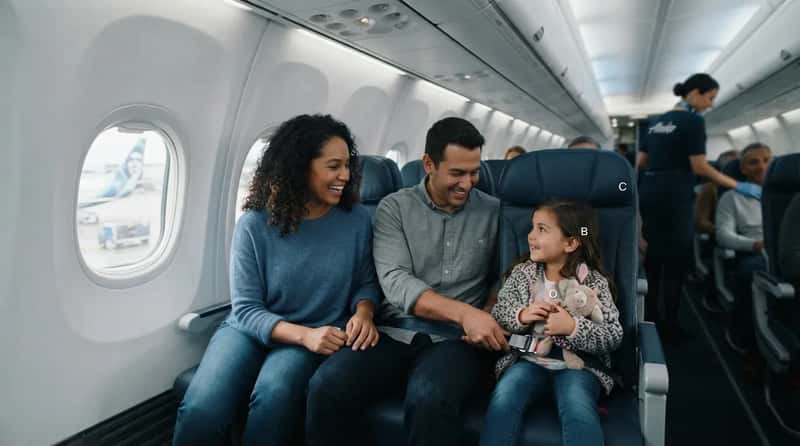
Not every airline treats family seating the same way, and the flyers who fly with children learn this distinction fast, often the hard way on a first attempt.
Alaska guarantees fee-free adjacent seating for families with young children, which puts it ahead of several competitors that only “attempt” the same thing. Frequent Alaska flyers with kids know this and plan connections around it deliberately.
20. They Pack Tighter to Dodge the New Checked Bag Penalty
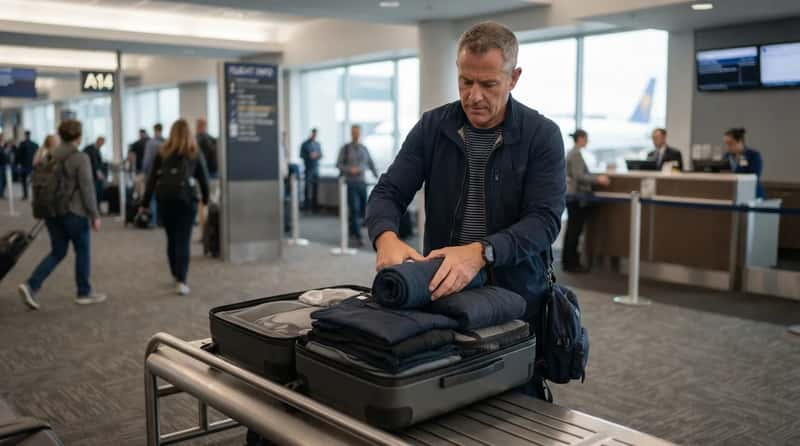
Airlines have started charging basic economy passengers more just for checking a bag, and most casual travelers have no idea this shift even happened.
Starting May 18, basic economy passengers pay $5 more per checked bag than standard economy passengers on the same flight, meaning a first checked bag can cost $50 prepaid or $55 at the airport, compared to $45 and $50 for standard economy. That’s a quiet penalty most travelers won’t discover until they’re already at the counter. Regulars pack tighter specifically to dodge it.
Fast Facts
- Basic economy bag fees run $5 higher than standard economy on the same flight
- First checked bag: $50 prepaid or $55 at the airport in basic economy
- Same bag in standard economy: $45 prepaid or $50 at the airport
- The gap applies per bag, so it adds up fast for families checking multiple pieces
21. They Never Argue With a Gate Agent Mid-Boarding
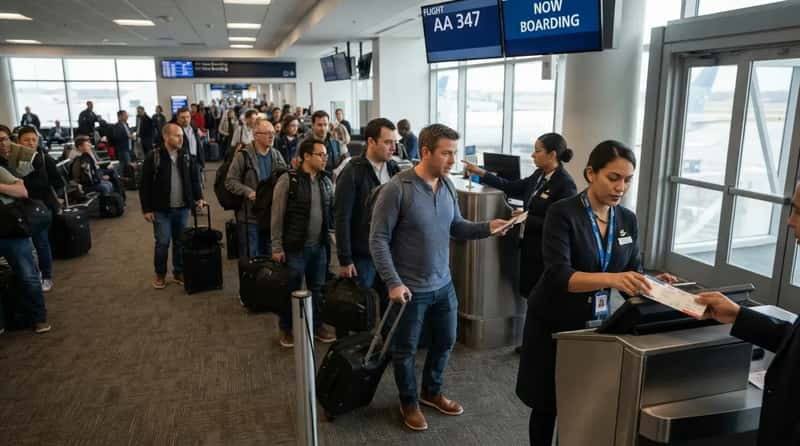
Trying to negotiate an upgrade or a seat change while the line is actively moving is a rookie mistake that slows down an entire plane and rarely works anyway.
Experienced flyers handle every request, seat changes, upgrades, special assistance, well before boarding even opens. The gate agent during active boarding has almost zero flexibility, and pushing the issue just burns goodwill you might need later.
22. They Watch for Silent Gate Changes Instead of Trusting the Board
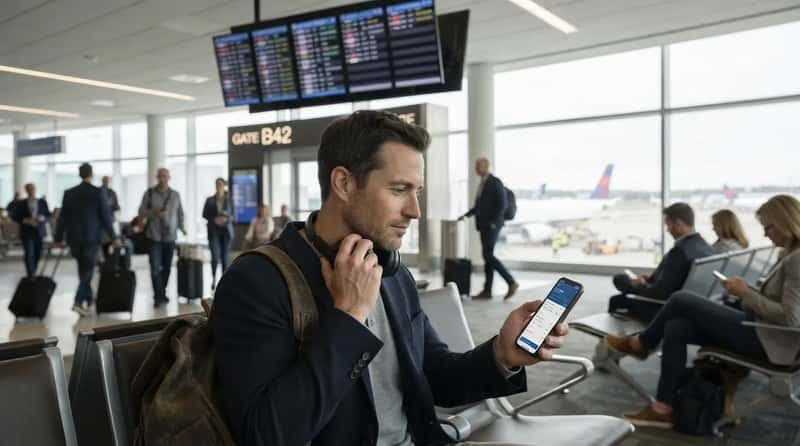
Digital boards lag. Announcements get missed in noisy terminals. Regulars glance at their airline’s app every fifteen minutes near boarding time instead of relying purely on the overhead screen.
It’s a habit born from experience, not paranoia. Gate changes happen more often at hub airports than casual travelers realize, and missing one can mean a genuine sprint across three terminals with ten minutes to spare.
23. They Know Exactly Which Card Perks Survive a Downgrade
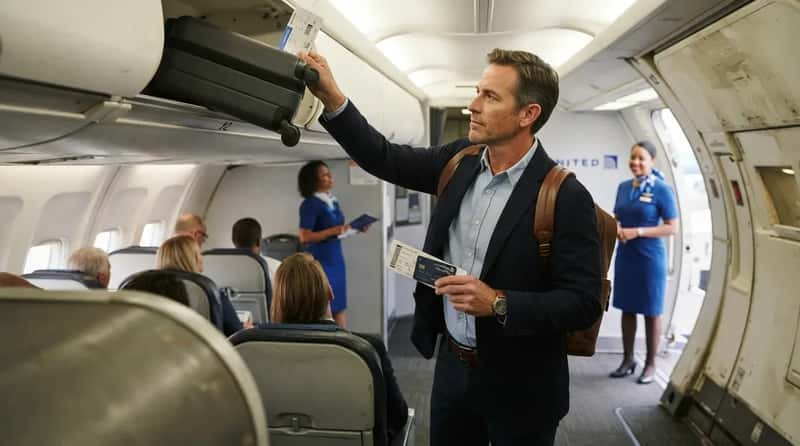
The rules around elite status and cheap fares have tightened noticeably, and the travelers who fly constantly are the ones who actually noticed the shift happen in real time.
United elites flying Basic Economy still receive a free carry-on, a free checked bag, and priority boarding. That’s a meaningful cushion most casual travelers assume doesn’t exist anymore, and frequent flyers use it deliberately when trying to save money without losing every perk.
24. They Read Every Boarding Change Before It Bites Them
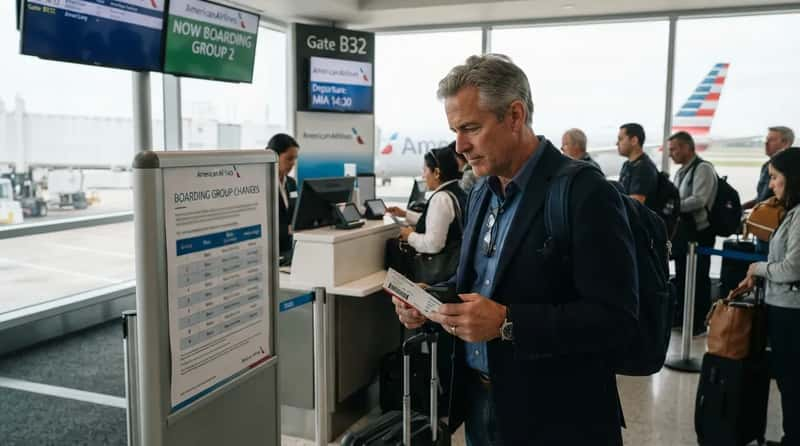
Airlines have been reshuffling boarding groups constantly, and the travelers who fly the most treat these changes like breaking news worth actually reading.
Later in 2026, AAdvantage members on a basic economy fare who do not have status or an eligible credit card will board in Group 7, instead of Group 6. It sounds like a minor shuffle, but frequent flyers know small group changes like this ripple into whether the overhead bins are empty or already full when they finally reach their row.
25. They Stay Calm Because They Know None of It Actually Matters That Much
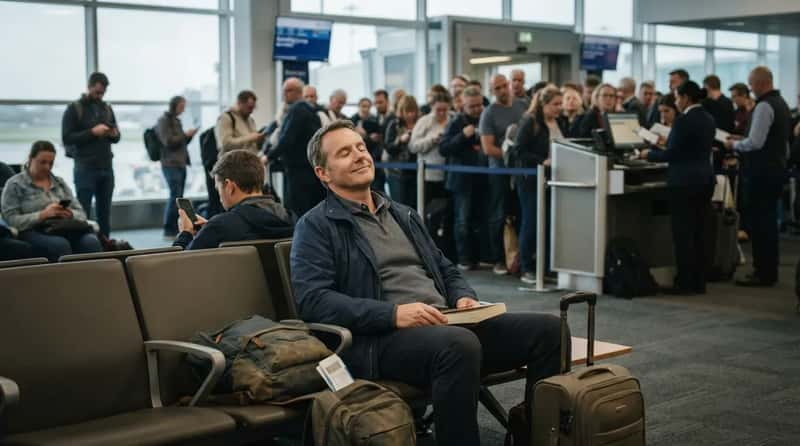
Here’s the real secret hiding behind every other habit on this list: the most experienced flyers aren’t anxious about boarding order at all. They’ve done it enough times to know a three-minute difference in boarding time has never once made or broken a trip.
That calm isn’t laziness, it’s earned. After enough flights, the frantic scramble for group position starts to look exactly like what it is: a stress response to a problem that mostly solves itself if you just sit down and wait for your number. The plane leaves at the same time either way.
Boarding hasn’t gotten simpler in the last two years, it’s gotten more complicated, more segmented, and more tied to fare class and credit cards than ever before. The travelers who look effortless at the gate aren’t lucky. They’ve simply paid attention to a system most people ignore until it costs them a bag fee or a middle seat.
None of these habits require elite status or a fat wallet. They just require noticing the small stuff everyone else scrolls past. Which one of these do you already do without thinking, and which one are you guilty of skipping? Drop it in the comments.