Most first-time cruisers think the main dining room is just where you eat dinner. Seasoned cruisers know it’s actually where the whole vacation finds its rhythm – the same table, the same waiter, the same quiet ritual repeated night after night until it feels like home. Skip these habits and you’ll still get fed. Follow them and you’ll understand why veteran cruisers call the dining room, not the pool deck, the real heart of the ship.
What’s strange is how many of these rituals have nothing to do with the food itself. They’re about timing, seating, tiny social signals, and a handful of traditions so specific that most passengers never notice them – until someone points them out. Here’s what experienced cruisers actually do differently, counting down to the one habit almost nobody expects.
#25 – They Skip the Embarkation-Day Buffet Stampede on Purpose
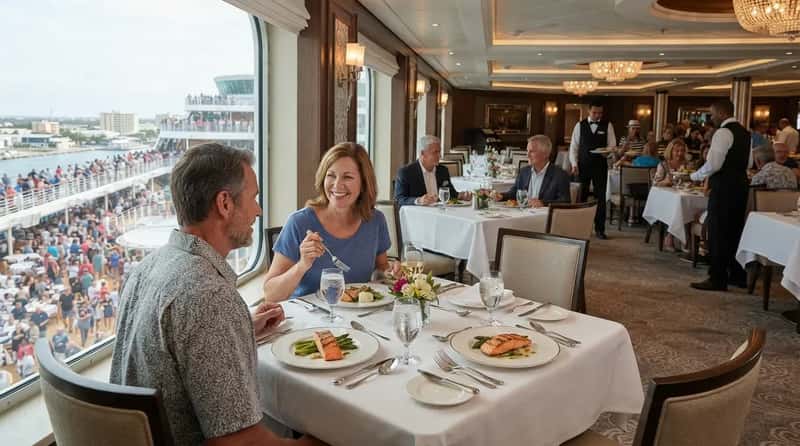
While hundreds of new cruisers sprint for the buffet the moment they board, veterans go the opposite direction. They head straight to the main dining room for a quieter first meal, with table service, real plates, and no elbow-to-elbow scramble over cold pasta. It’s a small move, but it sets the tone for the entire week.
Some treat that first sit-down meal as the unofficial start of vacation mode – the moment the trip actually begins. Meanwhile, first-timers are still hunting for a clean table and balancing plates on their laps by the pool. It’s a tiny decision, but it’s the first sign someone’s cruised before.
#24 – They Still Request “The Same Table, Every Night”
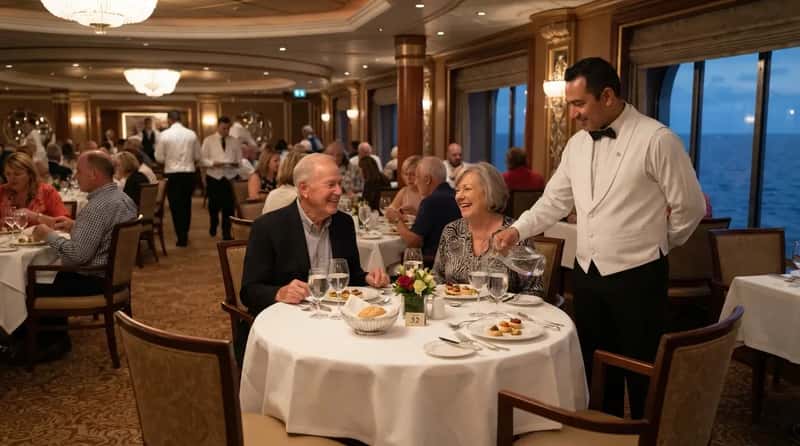
Traditional dining isn’t just a scheduling preference – it’s a loyalty ritual. Eating at the same time every night with the same tablemates and the same waitstaff builds a rhythm most people don’t expect from a cruise. Seasoned cruisers request it specifically for that reason, not out of habit.
By night three, the waiter already knows how you take your coffee and whether you’ll want extra bread. That familiarity is the whole point. Most new cruisers don’t even realize this option exists until it’s already been assigned to someone else.
#23 – They Read the Dinner Menus Before They Even Pack

This sounds obsessive until you try it. Plenty of seasoned passengers get genuine enjoyment out of scoping the main dining room menus before the cruise even starts – it becomes part of the anticipation. They’re not just planning outfits; they’re planning which night to save room for.
It’s a small ritual, but it turns a generic countdown into something specific. Instead of “day four of the cruise,” it becomes “the night with the short ribs.” Veteran cruisers treat the menu like a preview, not a surprise.
#22 – They Never Confuse “Anytime Dining” With “No Reservation Needed”
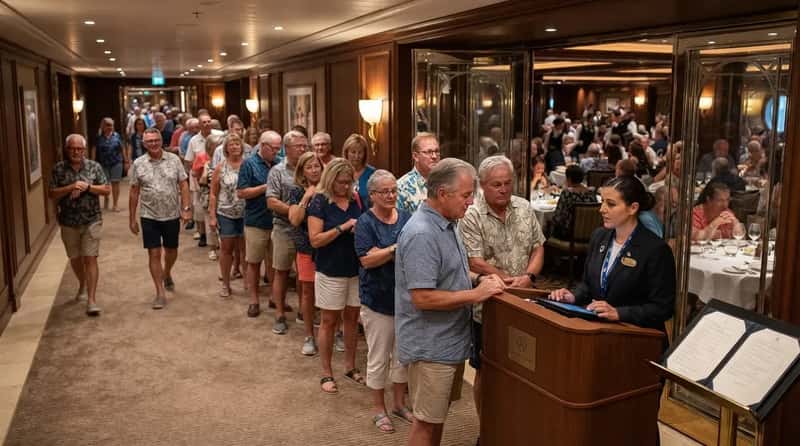
New cruisers assume flexible dining means walking up whenever they feel like it. It doesn’t always work that way. Anyone with anytime dining who arrives right when the doors open gets the shortest wait; show up during prime dinner hours and the wait can stretch far longer than expected.
Seasoned cruisers either book a slot in advance or eat early on purpose. It’s not glamorous, but it saves a 45-minute wait on a sea day. Skipping this ritual is one of the most common regrets first-timers post about afterward.
At a Glance
- Early dinner hours (around 5:30-6:30 p.m.) usually mean walking straight to a table
- Peak hours (7-8:30 p.m.) can bring waits similar to a packed restaurant on a Saturday night
- Booking a time slot through the cruise line’s app removes most of the guesswork
- Tables often open back up again after 9 p.m. for late diners
#21 – They Ask For a Table for Two – And Accept the Trade-Off
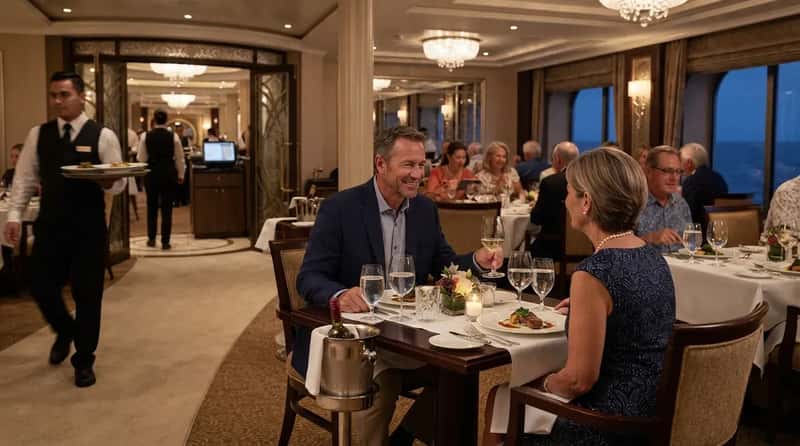
Couples who want privacy know exactly what to request, and exactly what it costs them. Guests who prefer dining with just their travel companion specifically request a table for two, knowing full well these intimate tables often sit close to walkways or service stations.
It’s a trade most veterans happily make. Quiet conversation wins over a slightly noisier spot near the kitchen door. New cruisers often don’t realize this table type has to be requested at all.
#20 – They Know Exactly Which Nights Are “Elegant,” Not Mandatory
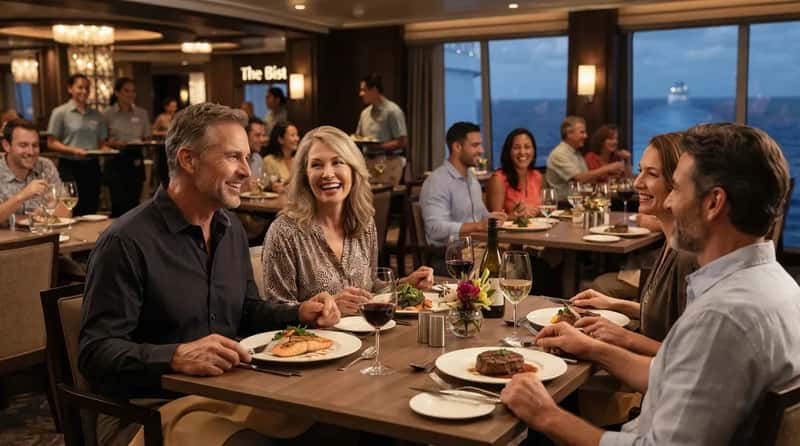
Formal night terrifies first-timers. Seasoned cruisers just shrug. Even on the most traditional ships, formal night is never compulsory, and guests who’d rather skip the spectacle can dine at the buffet, order room service, or slip into a specialty venue instead.
Knowing this ritual removes an entire layer of pre-cruise anxiety. Veterans pack one nice outfit “just in case,” not an entire suitcase of formalwear. It’s one of the most misunderstood rules in all of cruising.
#19 – They Still Dress Up Even When the Line Says They Don’t Have To
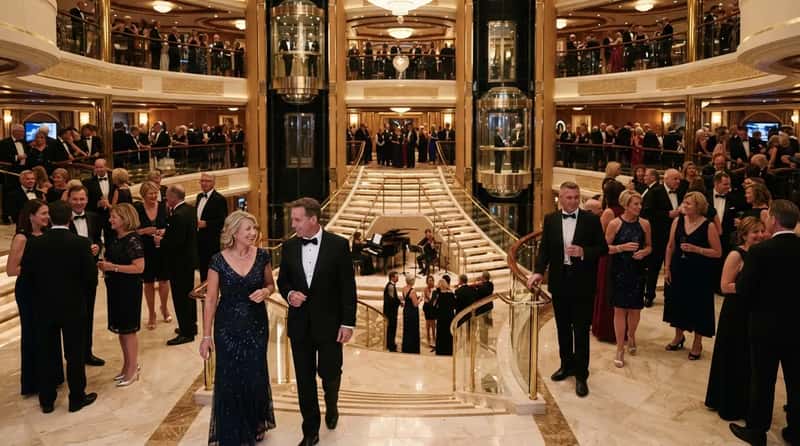
Here’s the twist: knowing formal night is optional doesn’t mean veterans skip it. Tuxedos, black ties, and gowns still fill the dining room on those evenings, and walking into the atrium on one of these nights shows just how seriously passengers take the ritual.
For many longtime cruisers, dressing up isn’t obligation – it’s nostalgia. It’s the one night that still feels like the golden age of cruising. Some genuinely look forward to it more than any port stop on the itinerary.
#18 – They Order Two Entrées Without Blinking
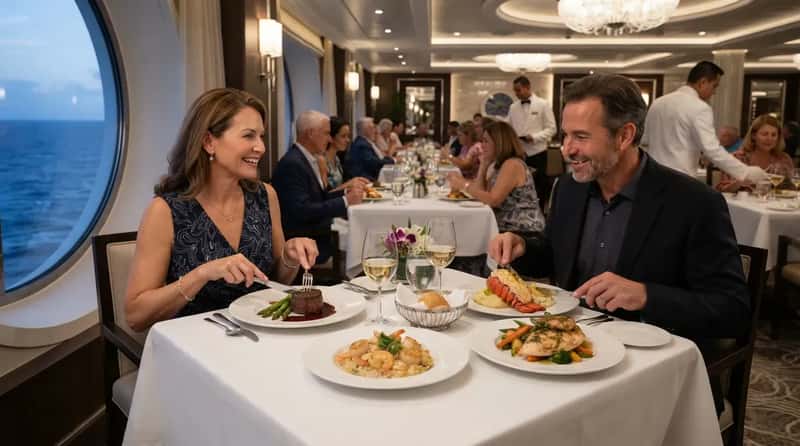
New cruisers treat the menu like a restaurant on land. Veterans know better. Both traditional and flexible dining allow ordering more than one item per course, and nobody at the table bats an eye.
It’s a small perk that most first-timers never use because they assume it’s rude or against the rules. It isn’t. Seasoned cruisers treat it as one of the quiet, built-in luxuries of the fare they already paid for.
#17 – They Taste the Weird Thing on the Menu Every Single Night
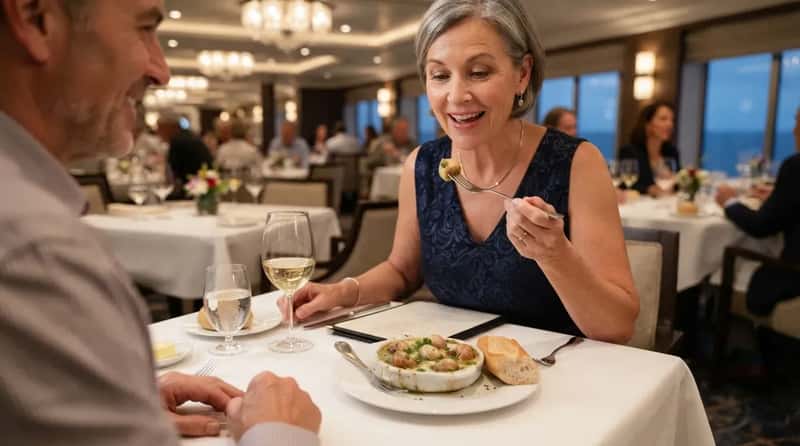
Portion sizes in the main dining room run smaller than most people expect, and veterans use that to their advantage. Smaller plates make it painless to try something unfamiliar, which is exactly why so many cruisers who follow these habits end up saying the main dining room becomes their favorite part of the trip.
This is where a lot of unexpected favorites get discovered – escargot, unusual soups, dishes nobody would order at full size on land. It’s a low-risk way to expand a palate one course at a time.
#16 – They Treat “Resort Casual” as a Real Dress Code, Not a Suggestion
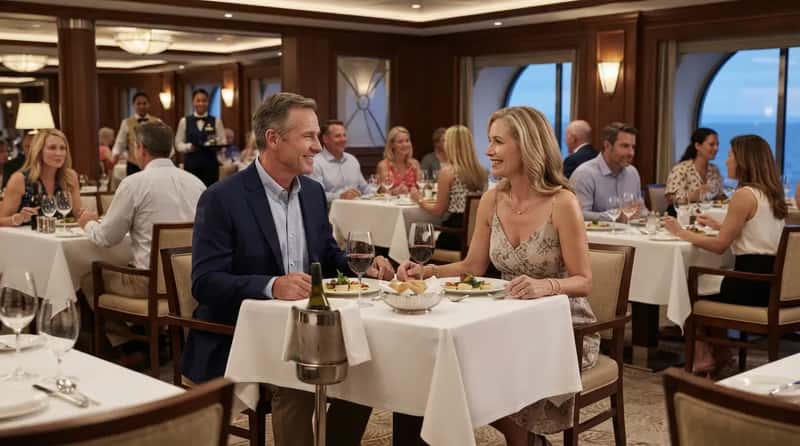
Most nights aren’t formal – they’re something in between, and veterans know exactly what that means. On these nights, “dressy casual” (also called resort or country club casual) means skirts, sundresses, nice slacks, and collared shirts, not gym clothes with a nicer shirt thrown over them.
Many lines now allow jeans, but shorts and flip-flops still aren’t welcome after dark. Seasoned cruisers pack around this rule instead of guessing at it. It’s a small ritual that saves an awkward turn-away at the dining room door.
#15 – They Never Book Late Seating on a Packed Port Schedule

This is a controversial opinion among cruisers, but experienced ones stand by it: late fixed seating and heavy port days don’t mix. Long excursions run late, tenders back up, and a 7:45 dinner slot suddenly feels like a countdown clock instead of a relaxing meal.
Veterans build their seating choice around the itinerary, not personal preference alone. On sea-day-heavy cruises, late seating is a treat. On port-heavy ones, many argue it’s a scheduling mistake waiting to happen.
#14 – They Save Room the Night Lobster Shows Up
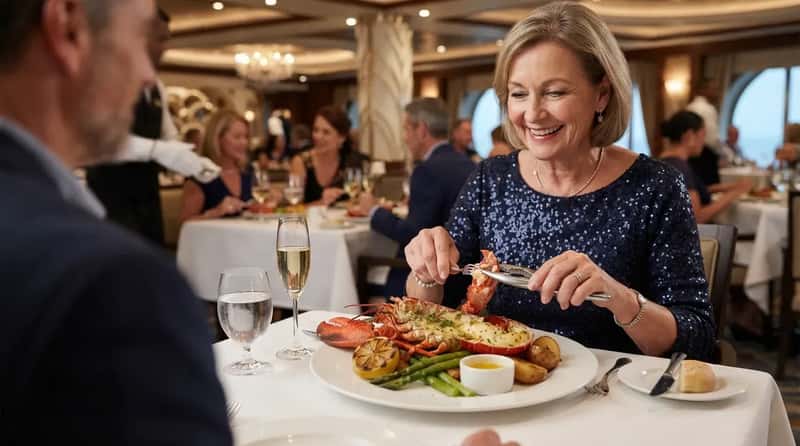
Certain menu items are basically cruise folklore at this point. Elegant Night menus have long featured showcase dishes like lobster, prime rib, and richer desserts, dressed up well beyond a regular cruise dinner.
Veteran cruisers track which night that is before the cruise even starts. It’s not unusual to see someone skip the bread basket two nights early just to “save room” for lobster night. That’s how seriously the ritual is taken.
#13 – They Know Which Ships Still Parade Dessert With Fire, and Which Faked It Out
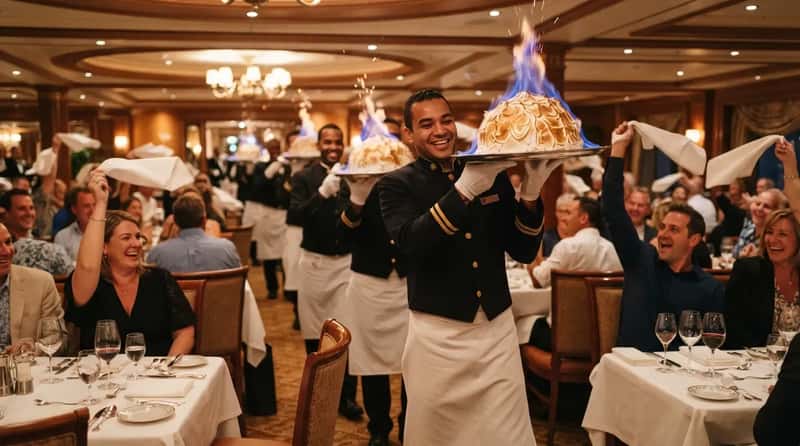
The Baked Alaska Parade is one of cruising’s strangest surviving traditions, but it doesn’t look the same everywhere anymore. Tighter rules about open flames on ships have quietly killed the parade on most lines, with newer versions swapping in a dab of flaming brandy for effect instead of the real thing.
Lines like MSC, Costa, and Ambassador still parade a full Baked Alaska and wave napkins, usually just once per cruise. Veterans know exactly which night to expect it, and exactly which lines have retired the flames altogether.
Quick Compare
- Still torch the real thing: MSC, Costa, and Ambassador keep the full flaming parade alive
- Switched to a safer substitute: many mainstream lines now light a splash of brandy instead of the dessert itself
- Timing: the parade almost always lands on an elegant or formal night, not a random evening
- Frequency: typically just once per sailing, which is why veterans plan around it
#12 – They Chase the Flaming Dessert Parade Like It’s the Main Event
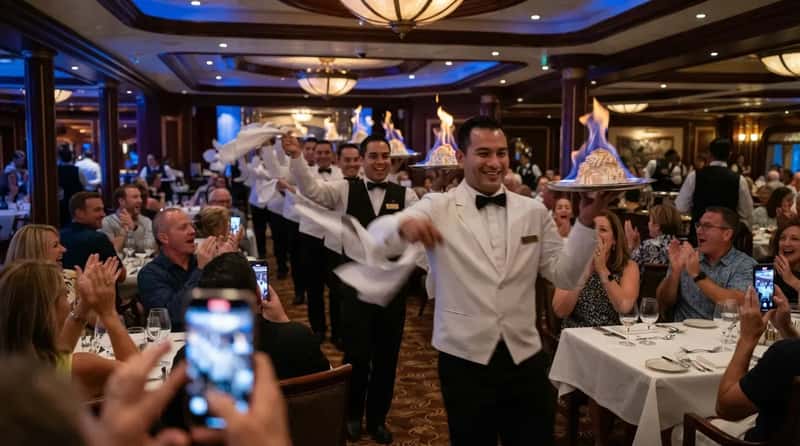
For cruisers who’ve seen it, this ritual isn’t background noise – it’s the highlight of the entire sailing. Suddenly the lights drop, the music swells, and a line of waiters starts dancing through the room, trays of flaming desserts in one hand, twirling napkins in the other.
Baked Alaska’s association with luxury and celebration made it a natural fit for cruise ships striving to create memorable experiences.
Cruise industry historians
Veteran cruisers position themselves near the aisle on purpose that night, phone already out. First-timers usually have no idea it’s coming at all.
#11 – They Know One Line Turned Dancing Waiters Into a Daily Ritual
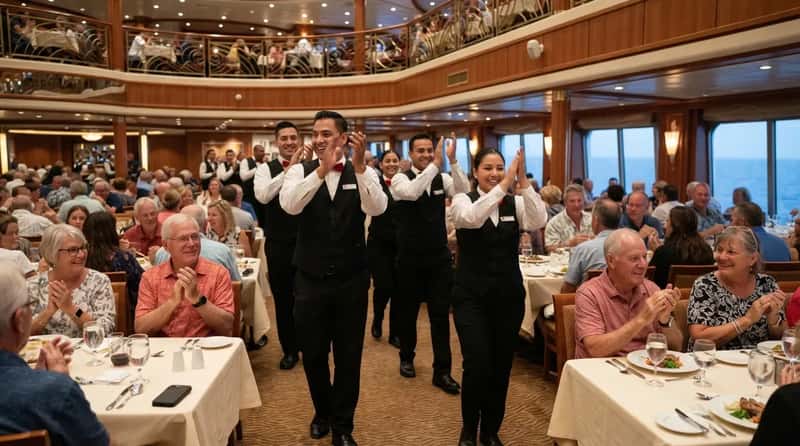
Most ships save the dining room theatrics for one special night. One line doesn’t. Carnival does it daily as a signature move, while most other lines keep dinner a bit quieter, with no dancing waiters in sight.
It’s one of those “only on a cruise” things you’re bound to remember, whether you love it or cringe at it. Seasoned Carnival cruisers either join in every night or claim a table far from the aisle. There’s rarely a middle ground.
#10 – They Splurge on One Specialty Dinner and Call It Nonnegotiable
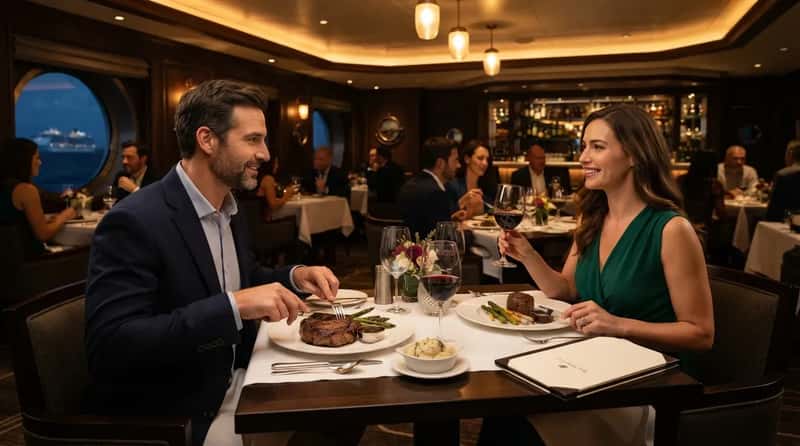
Even loyal main dining room fans make an exception once per cruise. Seasoned cruisers often treat themselves to a night in a specialty restaurant, whether that’s a bustling hibachi spot or an upscale steakhouse tucked away from the main crowd.
It’s not disloyalty to the main dining room – it’s pacing the whole week. One splurge night makes the other six feel even more like a comfortable routine. New cruisers often skip this entirely and regret it once they see what they missed.
#9 – They Know Exactly Why One Line Killed Formal Night on Purpose
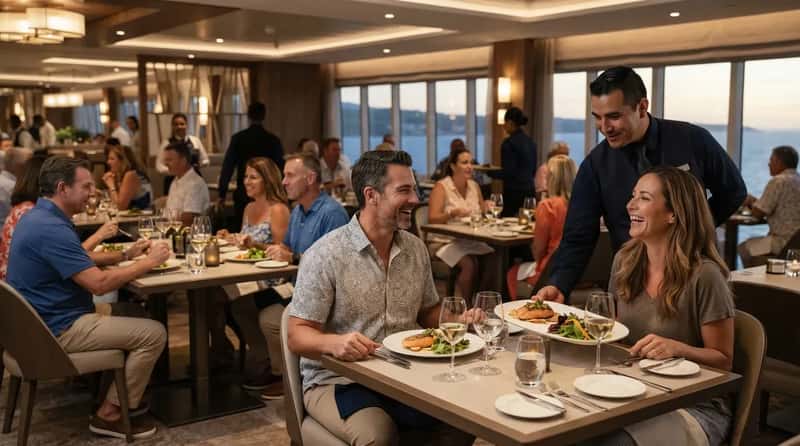
Not every cruise line still does the dress-up ritual, and that’s by design. Norwegian built its entire Freestyle Cruising concept around letting guests skip the formality altogether, ditching dress codes and set dinner times in favor of doing whatever feels right that night.
Veterans booking Norwegian know not to pack a tux. Veterans booking almost anywhere else still do, just in case. This single difference causes more packing confusion than any other cruise ritual on this list.
#8 – They Treat One Cruise Line’s Nightly Dress Code as the Last of a Dying Breed
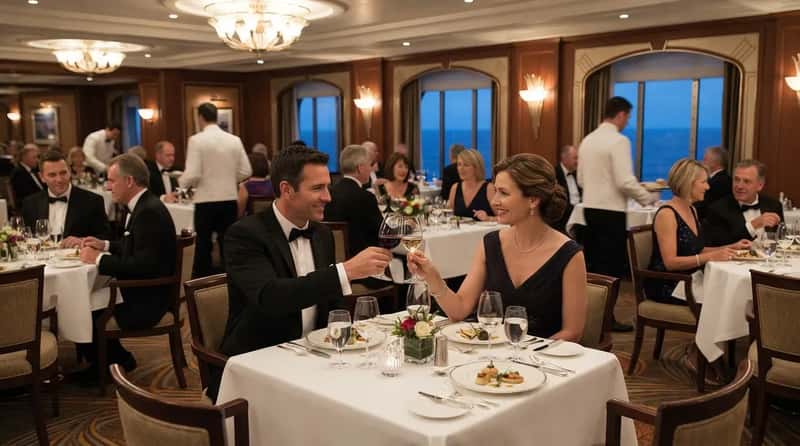
While most of the industry has relaxed, one line hasn’t budged. Cunard remains the most famous defender of formal night, requiring smart dress every single evening in its main dining venues, no exceptions.
For some cruisers, that’s exactly the appeal – a throwback to an era before cruising went casual. For others, it’s a hard pass. Either way, seasoned travelers know exactly what they’re signing up for before they book.
Worth Knowing
- Cunard requires smart dress every evening in its main dining rooms – no casual option at dinner
- Norwegian’s Freestyle Cruising sits at the opposite end, with no set dress code or fixed dinner times
- Most mainstream lines land in between, with one or two formal nights per week
- Checking a line’s dress code before booking saves a lot of last-minute suitcase stress
#7 – They Learn Their Waiter’s Name Before They Learn the Ship Layout
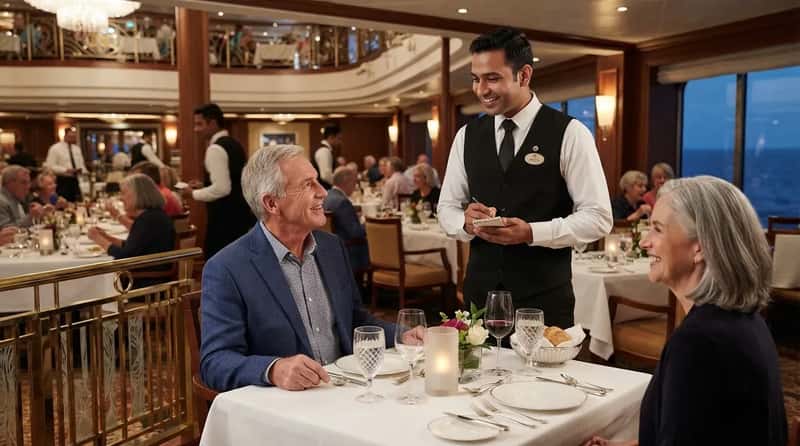
This might be the single most underrated ritual on the list. Crew members work brutally long hours, and they notice – immediately – when a guest shows real gratitude instead of treating them like part of the furniture.
Veteran cruisers greet their server by name at every single meal, not just the first. It sounds small, but it changes the entire tone of the week. Waitstaff remember the guests who bother to remember them, too.
#6 – They Request the Same Section, Even With Flexible Dining
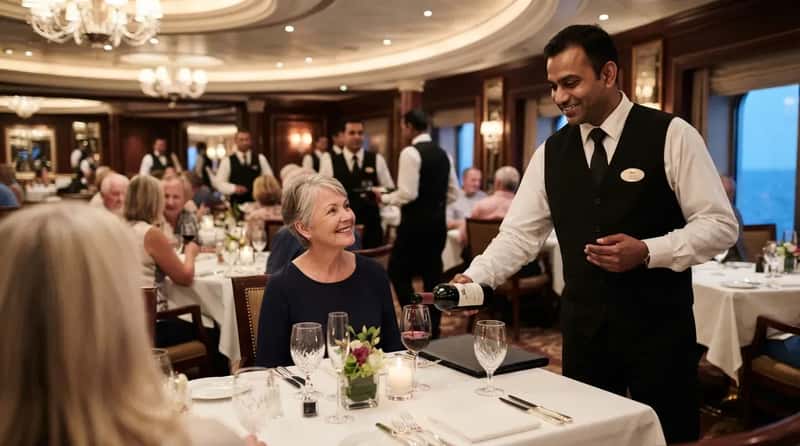
Even on ships without assigned tables, seasoned cruisers find a workaround. Whenever possible, they sit in the same section night after night so the same servers get to know them.
It recreates the consistency of traditional dining inside a flexible system. By mid-cruise, the server already knows their drink order before they sit down. It’s a ritual most first-time cruisers never think to ask for.
#5 – They Bond With Strangers at the Table on Purpose
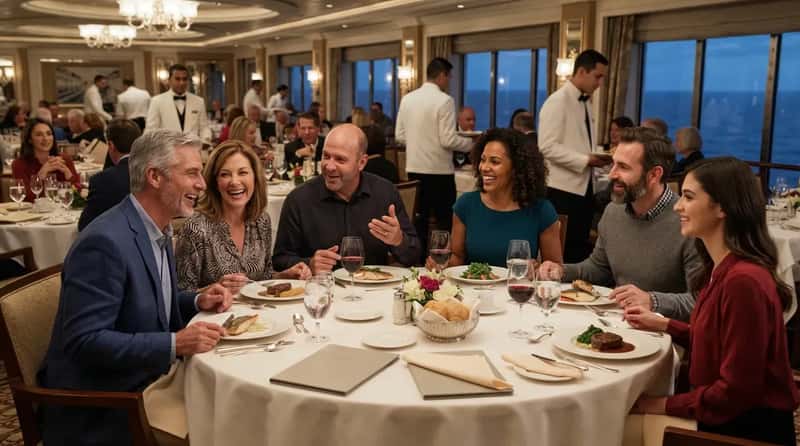
Sharing a table used to be the default, not the exception. Traditional dining still runs on that same idea – the same time, the same table, the same waiters every night, with a rhythm that rewards patience over novelty.
Veteran cruisers who still request shared seating often say the tablemates end up being a highlight of the trip, not an inconvenience. It’s a controversial take in an era obsessed with private dining, but plenty of seasoned travelers won’t book any other way.
#4 – They Know the Fork-and-Knife Code That Says “I’m Done” Without a Word
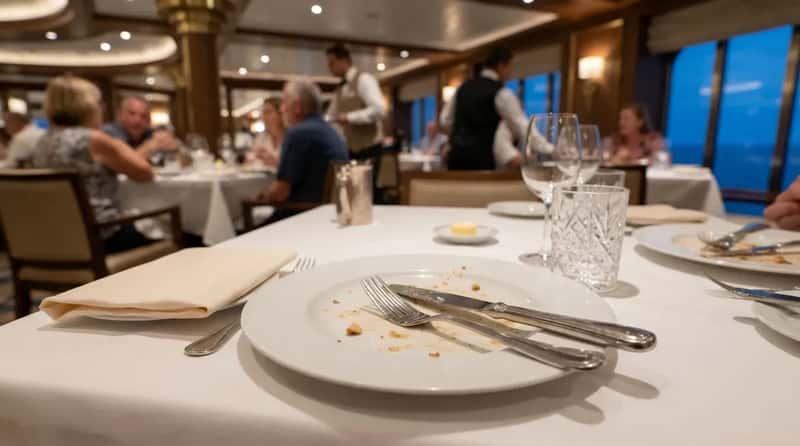
This one separates the cruise veterans from everyone else instantly. When finished with a course, the etiquette is to lay the knife and fork together on the plate, handles pointing toward the center – no flagging down the waiter, no waving.
Servers watch for this signal constantly, especially in a packed dining room where verbal check-ins slow everything down. It’s a tiny, silent ritual, but it keeps a multi-course dinner moving smoothly for everyone at the table.
#3 – They Refuse to Skip Breakfast in the Dining Room
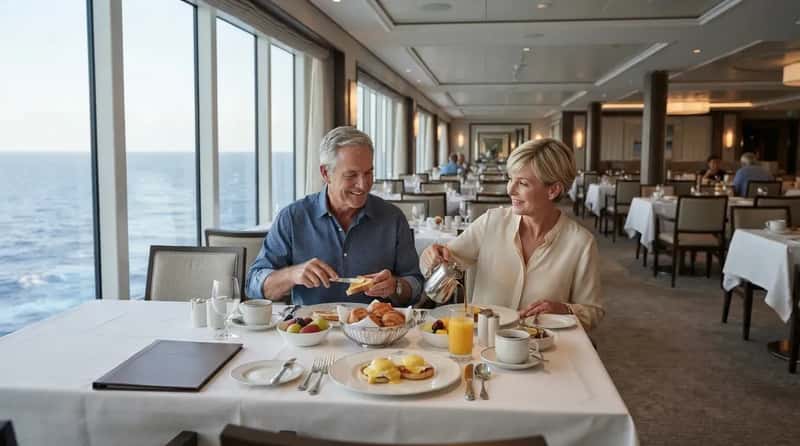
Most guests default to the buffet every morning without a second thought. Veterans know the dining room quietly runs a calmer alternative, with breakfast and dinner served daily and lunch added on sea days.
It’s table service, real plates, and none of the buffet crowding at 8 a.m. Seasoned cruisers treat it as an easy win most passengers never bother to claim, simply because nobody told them it was an option.
#2 – They Save Their Best Outfit for the Last Formal Night, Not the First
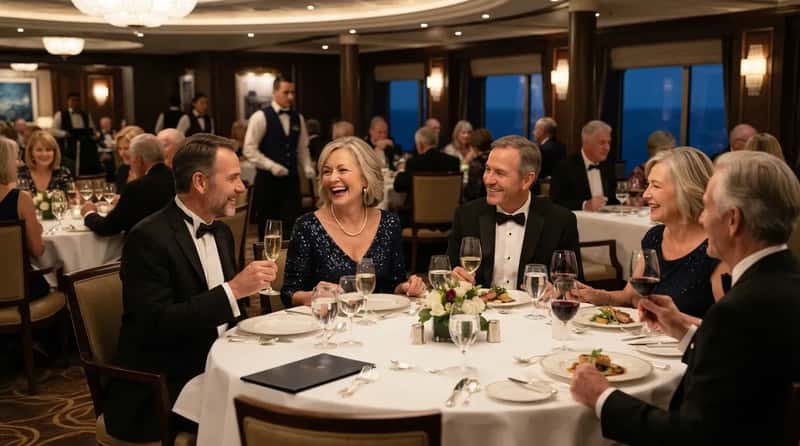
This is a small but genuinely divisive habit among frequent cruisers. Many save their most elaborate formalwear for the final elegant evening instead of the first one, arguing the last night carries more emotional weight than the opener ever could.
Critics call it overthinking a dinner outfit. Veterans call it knowing the room. By the last formal night, tablemates feel like friends, the photos matter more, and the whole evening feels like a proper send-off rather than an early-cruise formality.
#1 – They Say Goodbye to Their Waiter Like Family on the Final Night
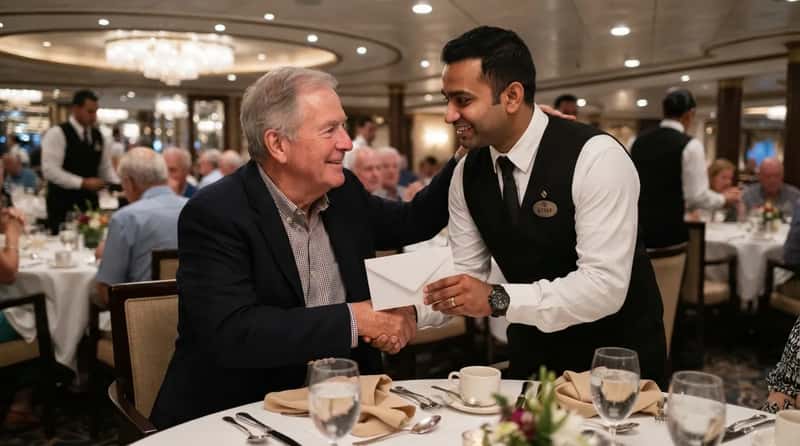
This is the ritual that hits hardest, and almost every longtime cruiser has a version of it. Tipping used to be a deeply personal, end-of-voyage tradition, with passengers tucking cash into envelopes for their cabin steward, dining room waiter, and busboy on the last night.
Even now, with auto-gratuities built into most fares, plenty of seasoned cruisers still hand over a personal envelope, a handwritten note, or both. After a week of shared meals and inside jokes, it doesn’t feel like tipping a stranger – it feels like saying goodbye to someone who became part of the trip.
Fast Facts
- Standard daily gratuities on most major lines now run between roughly $16 and $22 per person, per day
- A handful of upscale lines have started folding gratuities directly into the fare instead of charging separately
- Auto-gratuities are typically pooled and split among dining staff, cabin stewards, and behind-the-scenes crew
- Extra cash or a handwritten note on the last night is a personal add-on, not a replacement for the standard charge
Taken together, these rituals reveal something most new cruisers never expect: the dining room isn’t a formality wedged between excursions – it’s the emotional backbone of the entire sailing. From skipping the embarkation buffet to that last envelope on the final night, the smallest habits end up defining the whole week. Cruise long enough, and you stop noticing you’re doing them at all – they just become how you sail.