Most RV owners think the price on the reservation screen is the whole story. It isn’t. Campground managers routinely hand out perks, upgrades, and quiet favors to guests they recognize – and almost none of it is advertised on the website or mentioned at check-in unless you ask.
Some of these extras are baked into official loyalty programs. Others are just old-fashioned favoritism from a manager who remembers your name and your rig. Either way, the gap between what a first-timer gets and what a “regular” gets is bigger than most campers realize – and the last few on this list might explain why some families keep booking the same park year after year.
#25 – The Firewood Bundle Nobody Mentions at Check-In
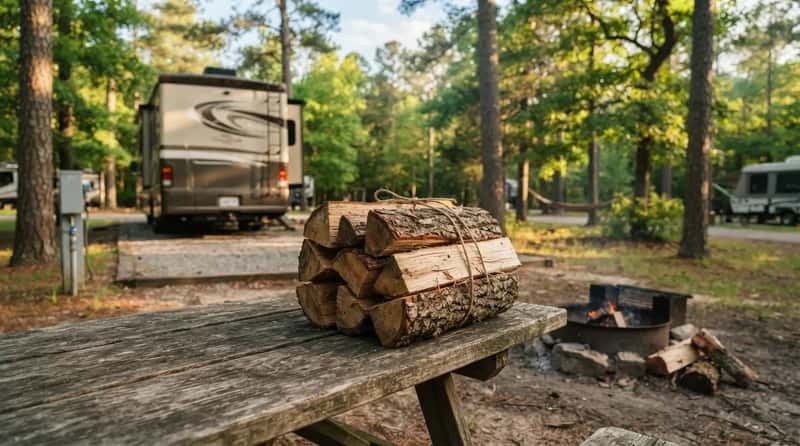
Returning guests at many family-run campgrounds quietly get a free bundle of firewood dropped at their site instead of paying camp-store price. It’s a small gesture, but it adds up over a season of weekend trips. Managers use it as a low-cost way to say “welcome back” without cutting into the nightly rate.
Loyalty perks like free firewood are exactly the kind of small reward campgrounds use to make guests feel appreciated. It rarely appears on any pricing sheet, so most first-time campers never even know to ask. Regulars who’ve built a rapport with the office staff say it’s one of the first things that changes once you’re no longer a stranger.
#24 – Staff Who Remember Your Rig Before You Say a Word
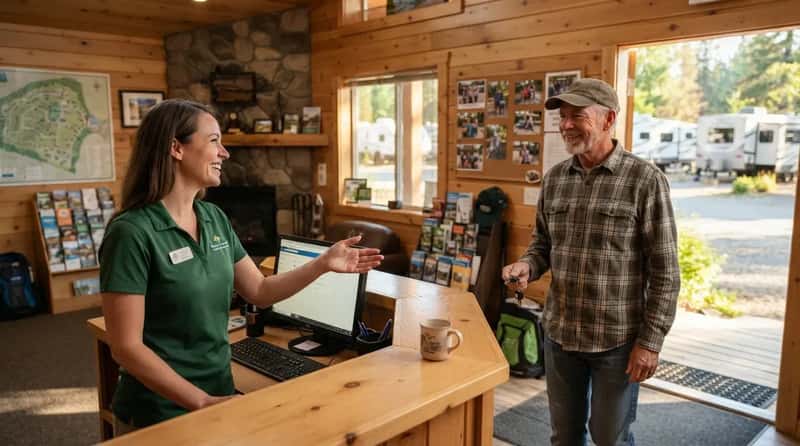
Walk into the office as a regular and staff will often greet you by name before you hand over an ID. That’s not an accident – many parks train employees specifically to spot repeat guests.
Training programs coach housekeepers, maintenance techs, and camp-store clerks to spot a member number at a glance and offer a tier-name welcome, because recognition often eclipses the dollar value of any perk. That recognition is intentional, not sentimental. Parks know a guest who feels remembered books again faster than one chasing a discount code, so front-desk memory is treated like a retention tool, not a courtesy.
#23 – Quietly Reserving “Your” Site Before You Even Ask
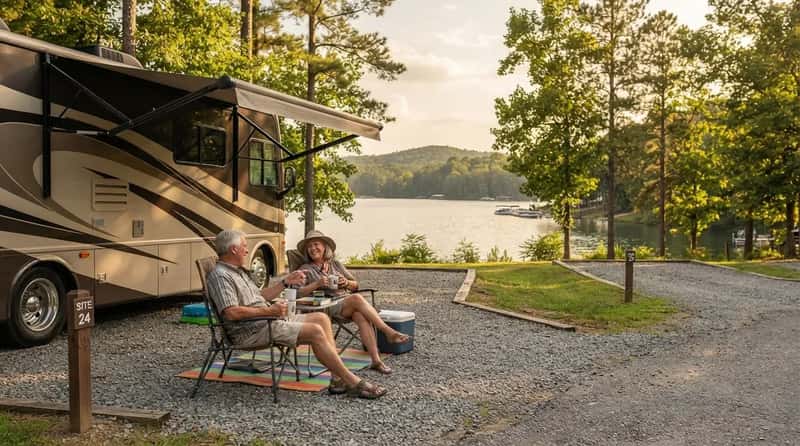
Ask a longtime camper why they keep returning to the same park, and many will say it’s because they always get the same spot. That’s rarely luck.
Managers who recognize a name in the reservation system will sometimes hold a preferred site before the guest even requests it. While the official policy at many resorts assigns any site of the same or better type unless a guest pays to lock one in, staff frequently make exceptions for familiar faces. It’s an unofficial workaround that never shows up in the written rules. New campers who don’t know to ask for a specific site often end up wondering why their favorite spot always seems taken.
#22 – A Heads-Up Text When a Better Site Opens Early
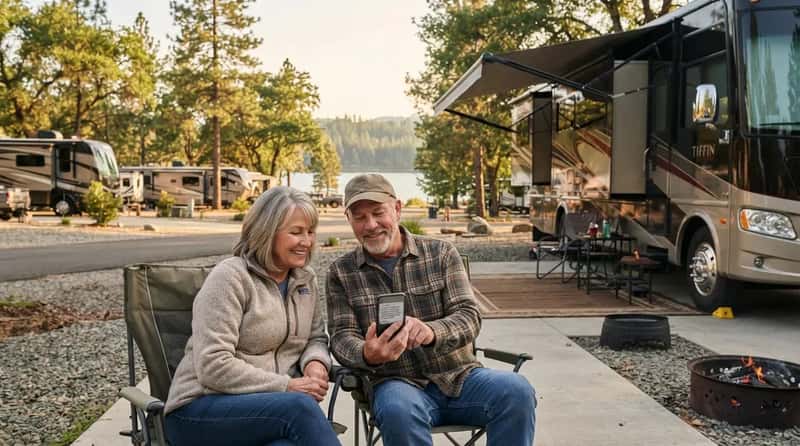
Cancellations happen constantly at busy parks, and someone has to get first crack at the newly open premium site. Increasingly, that someone is a repeat guest, not whoever calls first.
Some parks now send an automated message telling a guest their site is ready early, or asking if they’d like a late checkout or an extra night, before the general public sees the opening. Managers who know a family’s travel habits will text them directly rather than posting the opening publicly. It’s a courtesy that quietly skips the booking queue entirely. Most guests never realize a text like that was even possible until they’ve stayed at a park enough times to earn it.
#21 – Late Checkout Without Having to Beg for It
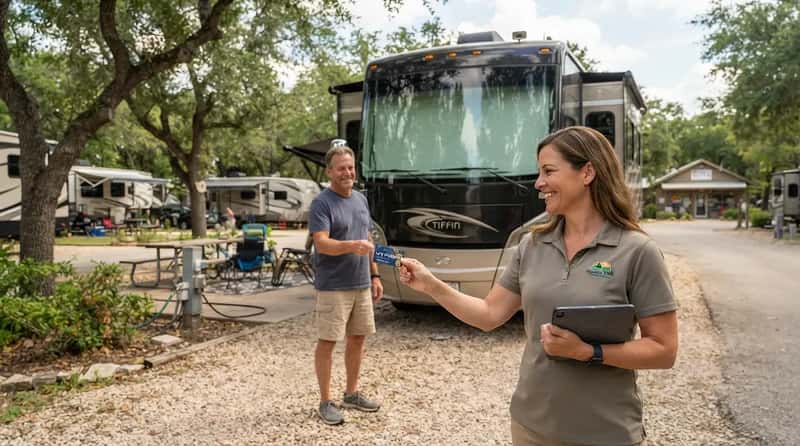
Asking for a late checkout at a busy campground usually feels like asking for a favor nobody wants to grant. For repeat guests, it’s often already built in.
Some operators now hand loyal guests a digital wallet pass specifically for late checkout instead of making them negotiate at the front desk. It removes the awkward “can I stay a little longer” conversation entirely. First-time campers, meanwhile, are usually held to the posted time with little flexibility, which is part of why the two experiences feel so different even at the same park.
#20 – Skipping the Cancellation Fee Entirely
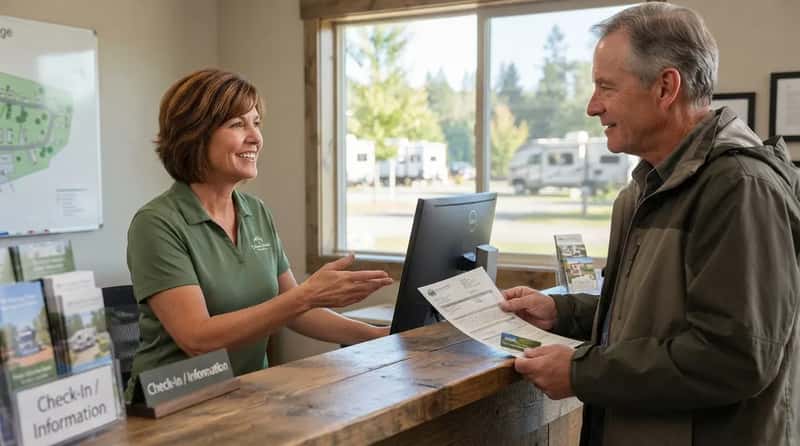
Plans change constantly on the road, and cancellation fees can sting. Loyal guests often don’t pay them at all.
Higher-tier loyalty members at some chains face no cancellation fees when they call to cancel an RV site more than 48 hours in advance, or a cabin more than seven days out. At the same time, other properties waive the usual fee altogether for their top-tier repeat campers as a direct reward for loyalty. It’s one of the more expensive-sounding perks that actually costs the park very little to offer. For families who book several trips a year, avoiding just a couple of those fees can offset an entire membership cost.
Fast Facts
- Top-tier loyalty members can cancel an RV site fee-free if they call more than 48 hours ahead
- Cabin cancellations get the same courtesy with a full week’s notice
- Some properties drop the fee entirely for their top-tier repeat campers
- Skipping just two or three fees a year can quietly cover the cost of joining a loyalty program
#19 – A Golf Cart Escort Instead of a Paper Map
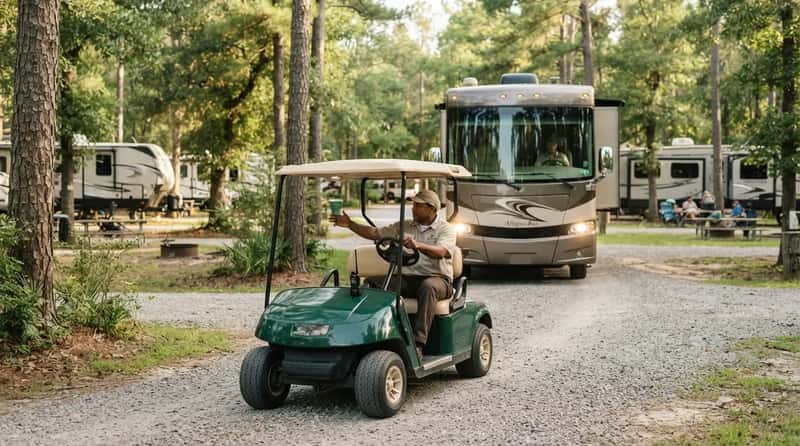
New arrivals typically get handed a photocopied map and told to “follow the numbers.” Regulars sometimes get chauffeured instead.
Staff will occasionally radio ahead to have someone lead a returning guest’s rig directly to their site in a golf cart rather than leaving them to navigate a maze of loops alone. It sounds minor, but it saves the exact moment of arrival stress that ruins a first hour at a new site. Managers reserve it mostly for guests they recognize, since it takes staff time they can’t spare for every single arrival during a packed weekend.
#18 – A Free Night Tucked Into a “Rewards Weekend”
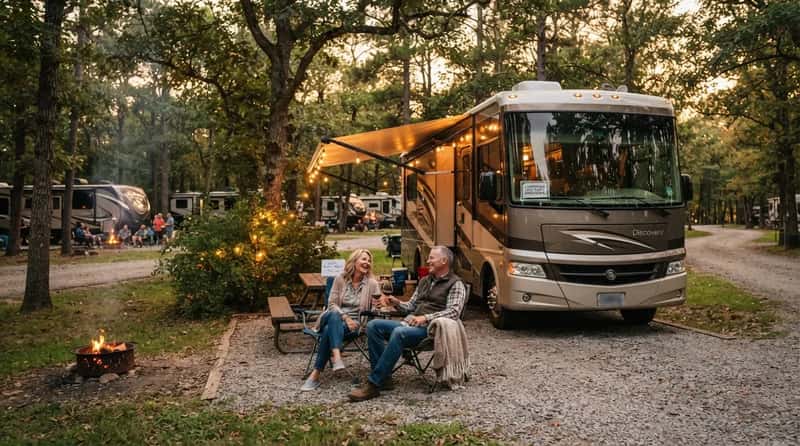
Every so often, an entire night of camping shows up at no charge – but only for members already in the system.
Participating locations host special rewards weekends specifically to thank members of the loyalty program with a free night of camping. These promotional weekends are timed and marketed directly to enrolled campers rather than the general public. It’s essentially an invite-only event hiding inside a normal camping calendar. Guests who never joined the loyalty program in the first place simply never see the invitation land in their inbox.
#17 – Quiet Weekday Discounts That Never Hit the Website

The listed nightly rate is rarely the final word for someone the manager already knows. Weekday pricing especially tends to bend for familiar guests.
Camping during the week can already improve your odds of a better rate, and some locations reduce costs further for campers who stay midweek. Managers often extend that flexibility informally to regulars long before it becomes an official rule. It’s rarely posted anywhere, which means a first-time caller asking about weekday rates might hear a flat “no” while a familiar voice on the phone gets an immediate “let me see what I can do.”
#16 – A Booking Window That Opens Before Everyone Else’s
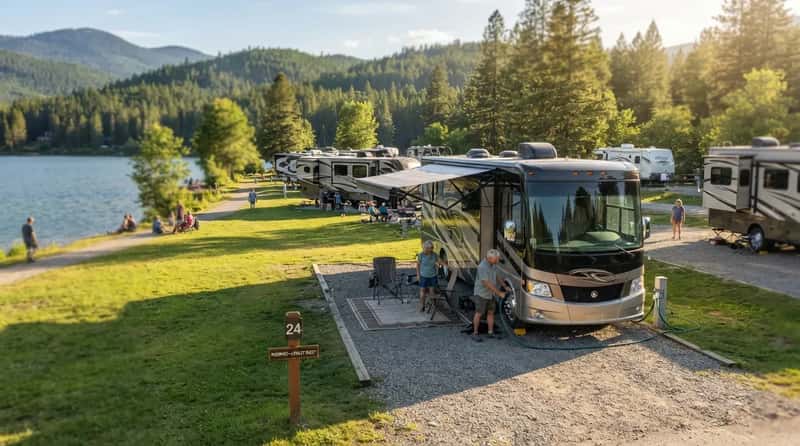
Popular sites at popular parks sell out in minutes once reservations open to the public. Loyal guests often get in the door earlier.
Loyalty programs commonly boost repeat bookings by offering priority booking windows that let returning guests reserve ahead of the general public. That early window is often the real reason a “sold out” park still has room for the right family. It’s rarely announced loudly because parks don’t want casual guests to feel excluded, even though the exclusion is very real.
Quick Compare
- Public booking: reservations open on release day and premium sites vanish within minutes
- Loyalty booking: members get a priority window to claim the same sites first
- Net result: a park showing “sold out” to the public may still have room for members who booked early
#15 – Camp-Store Credit or a Free Breakfast for Regulars
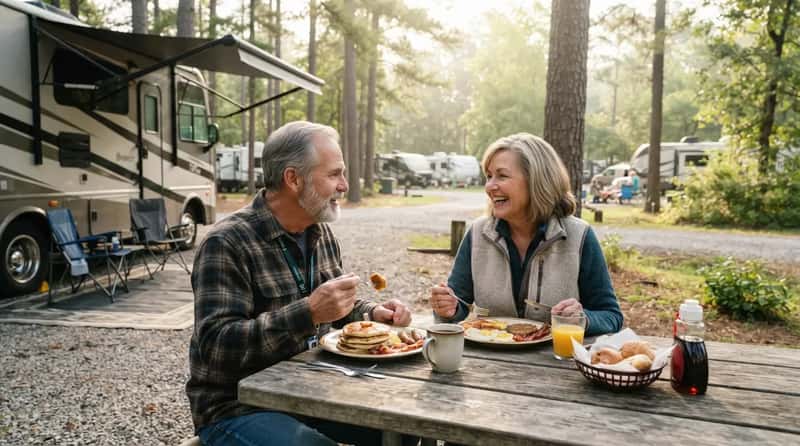
A cup of coffee that mysteriously never shows up on the bill, or a free plate at the pancake breakfast, isn’t always a mistake at the register.
Points earned with each stay are sometimes redeemable for perks like free firewood or a complimentary breakfast, and store credit works the same way at parks that track repeat visits informally. Managers treat it as cheap goodwill compared to what a lost booking would cost them. For guests who’ve never asked about a loyalty tab, the savings simply never materialize, even at parks that quietly offer it to others.
#14 – Discount Bundles With Local Restaurants and Outfitters
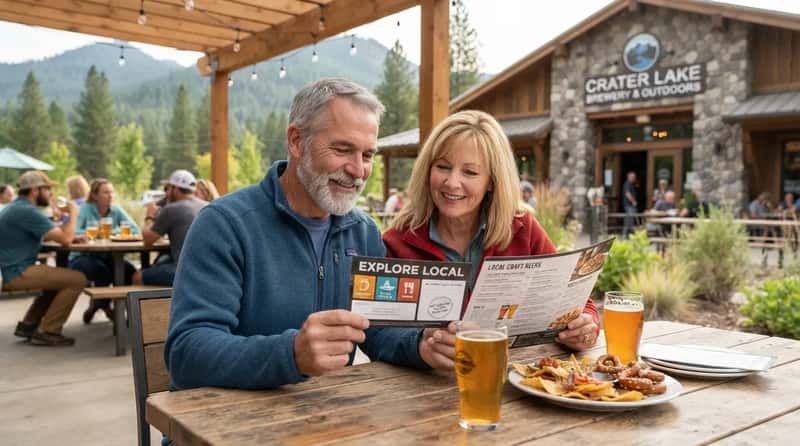
Some of the best deals near a campground never get advertised to the general public – they get handed directly to repeat guests as a loyalty perk.
Campgrounds regularly collaborate with local businesses and tourism boards to offer package deals or discounts with nearby attractions, restaurants, or outdoor gear shops. These bundles are frequently reserved for guests already in a park’s rewards system rather than posted publicly. A family who’s stayed five times might get a coupon for a local brewery tour that a first-time camper checking in the same week never sees.
#13 – A Handwritten or Personalized Welcome Note
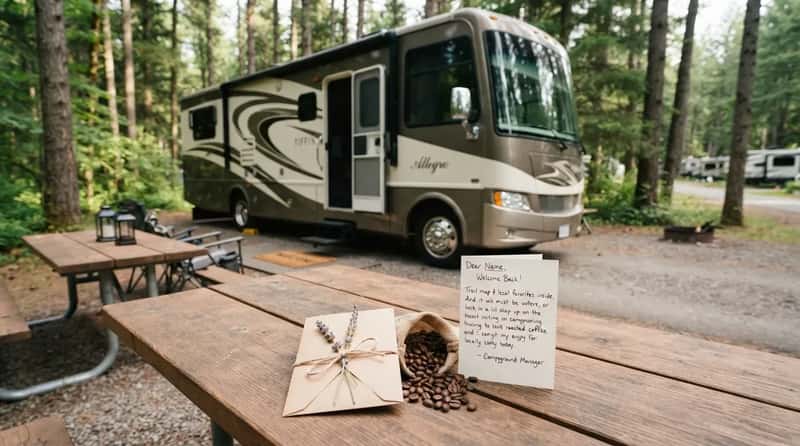
Arriving at a site to find a small note with your name on it feels personal because it is. It’s also a calculated loyalty move.
A personalized welcome message, a custom itinerary, or a small gift upon arrival are the kinds of little touches that make a real difference in guest satisfaction and loyalty. Parks reserve this specifically for guests whose history they can pull up in the reservation system. First-time campers get a standard packet; regulars get something that looks handmade, even when it’s part of a repeatable process behind the scenes.
#12 – Loyalty Points That Never Expire
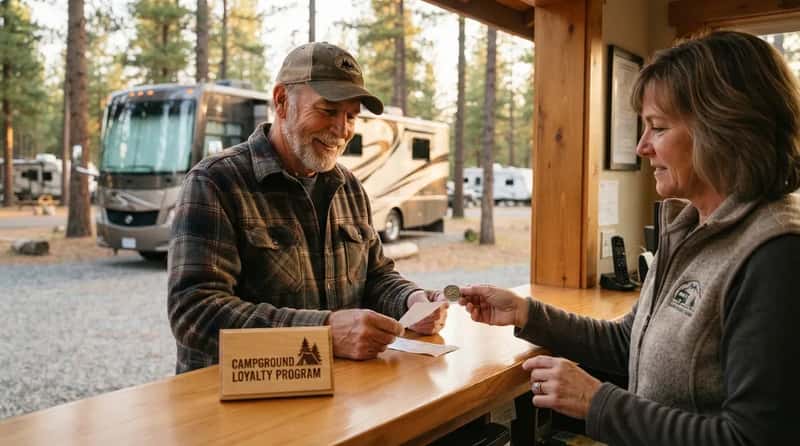
Most reward systems punish you for not using points fast enough. Camping loyalty points often work the opposite way.
Reward points earned through camping stays don’t expire as long as the loyalty account itself stays active. Members earn points for every night stayed, and those points are redeemable for dollars off future stays, with nightly totals ranging widely depending on the price paid. That means a single big trip years ago can still be quietly paying for tonight’s site. Casual campers who never enroll in the first place leave that stored-up value completely untouched.
At a Glance
- Points accumulate for every single night stayed, not just special promotions
- Points don’t expire as long as the loyalty account stays active
- Banked points convert directly into dollars off future stays
- Anyone who skips enrollment leaves that stored-up value completely unused
#11 – VIP Status That Unlocks Without Anyone Announcing It
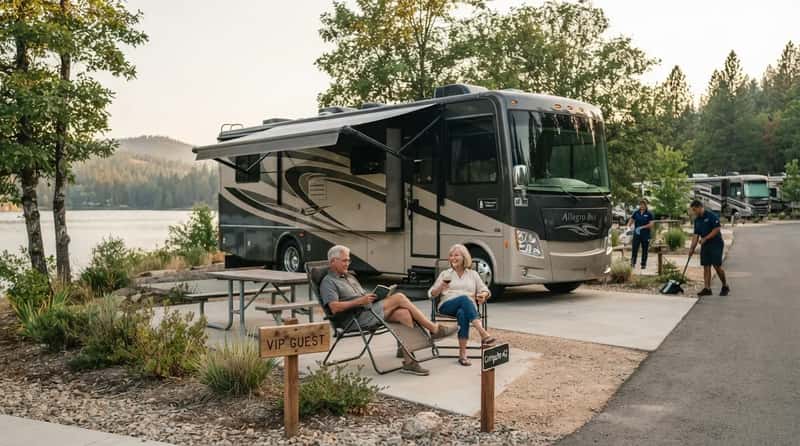
Some guests reach a higher tier of benefits without ever getting an email explaining why their stay suddenly feels smoother.
Guests can advance to Bonus or VIP status based on points accumulated during their enrollment year, unlocking a set of higher-tier perks automatically. Renewals for reaching that top tier are sometimes handled without the guest ever paying the annual fee again. Most campers never realize a status tier even exists until a staff member mentions it out loud. It’s one of the quietest upgrades in the entire camping industry because it happens entirely behind the scenes.
#10 – Getting Pulled Off the Waitlist First
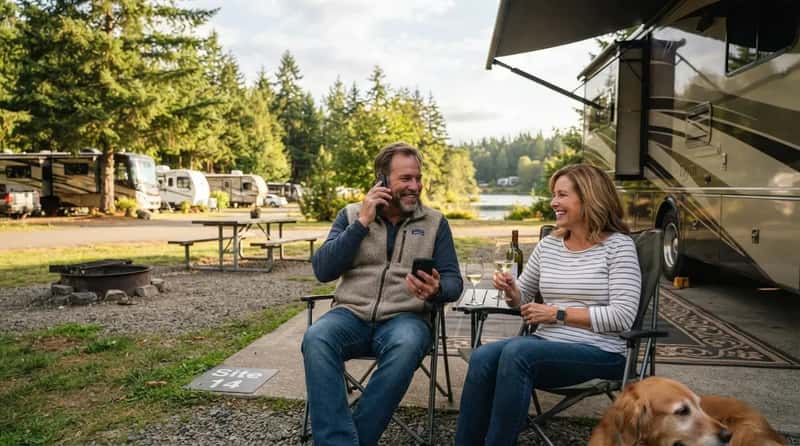
When a fully booked weekend suddenly has an opening, someone gets the call before the general waitlist does.
Parks running informal or app-based rewards programs will notify their most frequent guests about openings before pushing them to the public. Operators running tiered rewards programs report guests returning multiple times a year specifically because of perks like this early access. It’s the difference between finding out a site opened up and finding out it’s already been claimed by someone the office already knew. Regular guests rarely have to compete for last-minute openings the way strangers do.
#9 – Off-Season Perks That Feel Like a Secret Invitation
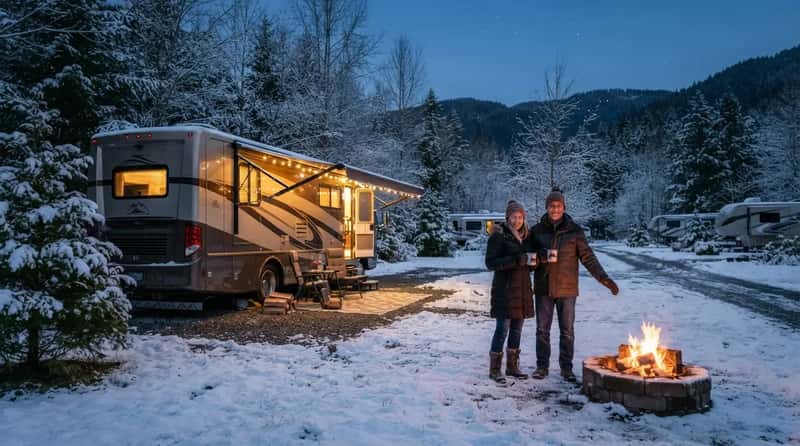
Winter camping sounds unappealing to most people, which is exactly why parks reserve some of their best off-season perks for loyal guests only.
Loyalty incentives for repeat guests are increasingly used to convert a summer visitor into someone who books a special winter weekend as well, with discounts or added perks building a customer base that returns year after year. These invitations rarely go out to the general email list. A manager who knows a family loved their August stay might personally invite them back for a discounted November weekend nobody else hears about.
#8 – Mail Holding and Package Forwarding for Long-Timers
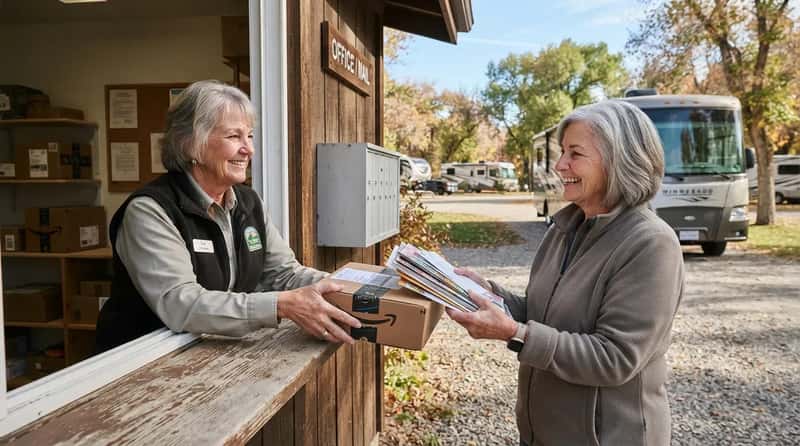
Full-time and snowbird RVers often need a reliable mailing address, and some parks quietly become that address for their most loyal guests.
Managers who trust a returning camper will hold packages, forward mail after departure, or accept deliveries days before check-in without charging a service fee. It’s rarely listed as an official amenity because it depends entirely on staff goodwill rather than policy. New or one-time guests are usually told the park simply “doesn’t do that,” even though it happens regularly for familiar names.
#7 – An Invitation to Join the Park’s Ambassador Program
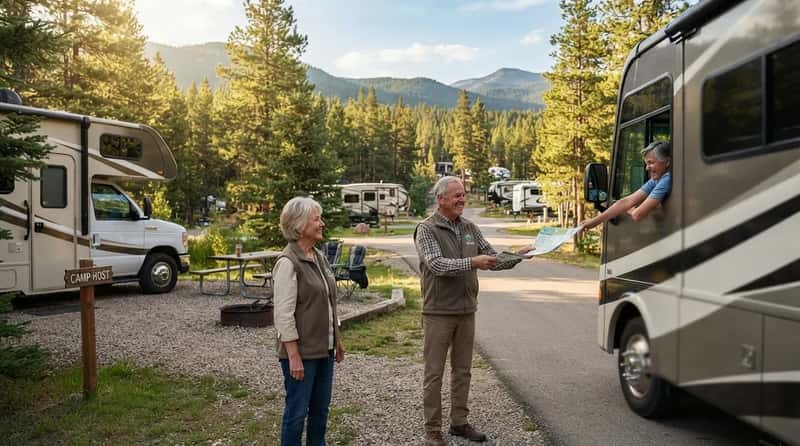
A small number of loyal guests get quietly recruited to help run the place – and get paid in free camping for it.
Parks looking to fill ambassador roles often promote the opening directly to past guests before ever posting it publicly. These ambassadors are loyal guests who work as helpers, storytellers, or sellers without joining payroll, greeting arrivals and guiding hikes in exchange for perks. It’s essentially a hidden loyalty tier that pays in stays instead of points. Most casual campers never learn the program exists because it’s filled through word of mouth long before a job posting ever appears.
Worth Knowing
- Ambassadors act as helpers, storytellers, or informal sellers – without ever going on payroll
- Duties can include greeting new arrivals or guiding group hikes
- Openings are typically pitched to past guests before any public posting exists
- The role is usually filled through word of mouth, so most casual campers never know it’s available
#6 – A Welcome Kit That Quietly Upgrades Itself Over Time
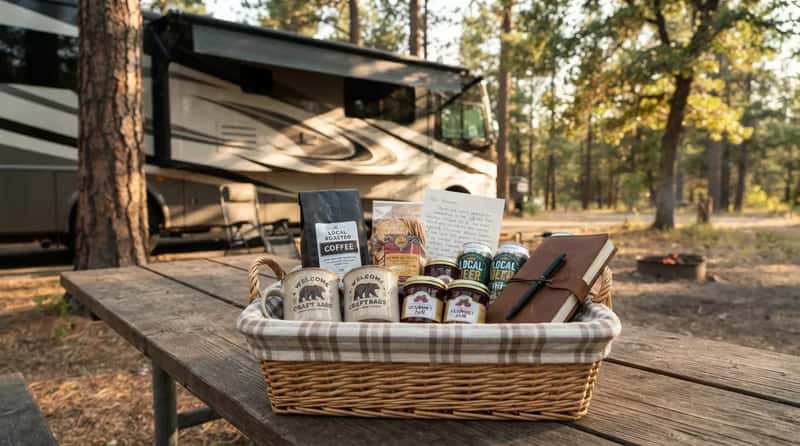
The little basket of goodies at check-in tends to grow more generous the more times a family has stayed.
Parks increasingly focus on experience enhancement by building moments that matter through surprise upgrades and high-touch welcome kits. A first-time guest might get a simple map and a coupon, while a fifth-time guest finds snacks, local gift cards, or a site upgrade note tucked inside. Staff track these details manually in many smaller parks, meaning the upgrade depends entirely on someone remembering your last visit – not a formal rulebook.
#5 – Early Word on Events Before They’re Publicly Announced
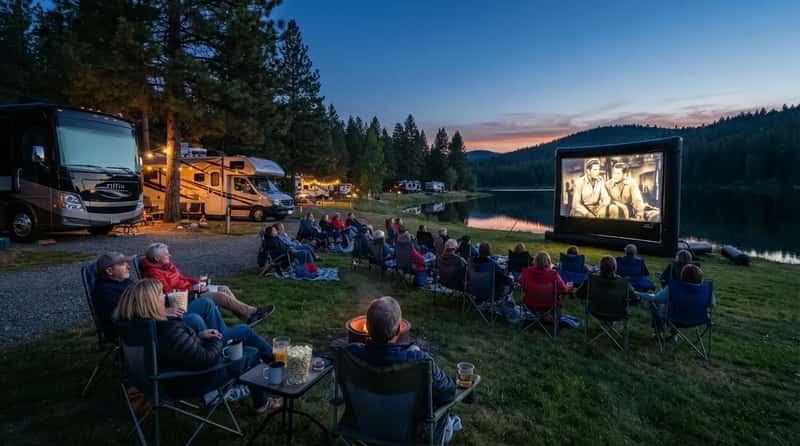
By the time a campground posts about its holiday weekend lineup on social media, its most loyal guests already knew and already booked.
Some parks use targeted, timed notifications to alert specific guests about upcoming events like a lakeside movie night before opening it to everyone else. That early notice is the real reason certain regulars never seem to miss the best weekends of the season. Guests outside that inner loop typically find out only once spots are already filling up fast.
#4 – Flexible Extended-Stay Terms Without the Usual Paperwork Hassle
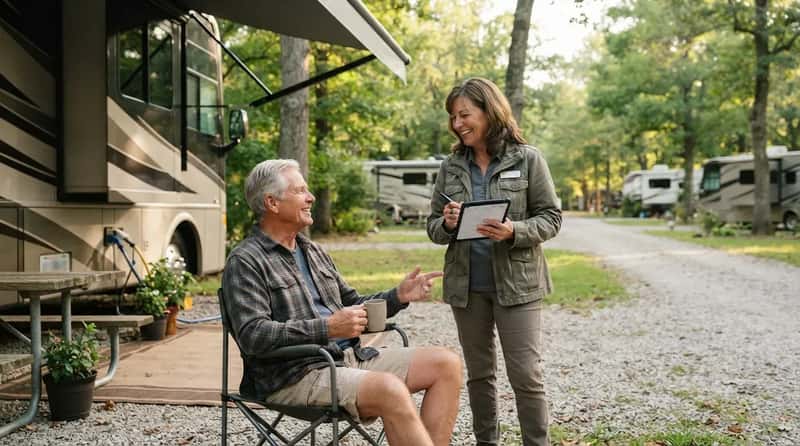
Extending a stay by another week can mean a mountain of new forms for a stranger, and a five-minute conversation for a regular.
Parks generally require a signed agreement for anyone staying a month or longer, with formal terms handled through the office. Managers who already trust a returning guest’s payment history and behavior will often streamline that process considerably, sometimes skipping formalities entirely. New long-term guests, by contrast, are usually walked through every clause before a single extra night is approved.
#3 – Fee Waivers for Extra Guests or a Second Vehicle
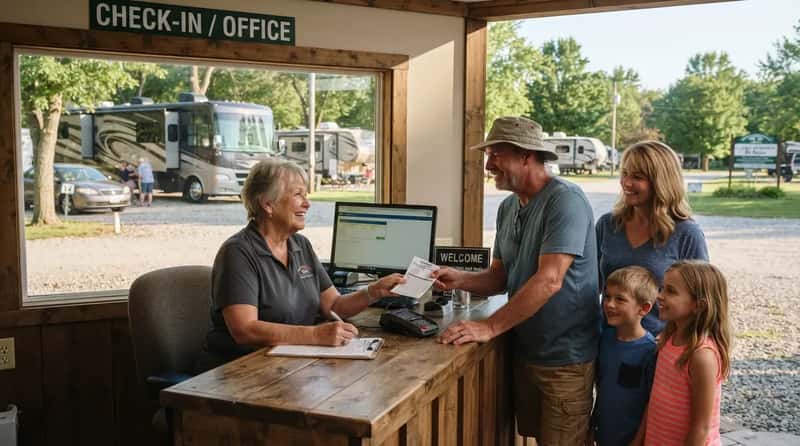
Bringing grandkids or a second car usually triggers an extra charge at the gate. For a known family, that charge sometimes just disappears.
Standard policy at many parks charges extra for additional adults and requires visitor fees for anyone dropping by, but managers frequently waive these small charges for guests they recognize as loyal. It’s rarely a written exception – it’s a judgment call made at the front desk in real time. A first-timer asking for the same courtesy is far more likely to be told the fee is simply non-negotiable.
#2 – Direct Access to the Manager, Not Just the Front Desk
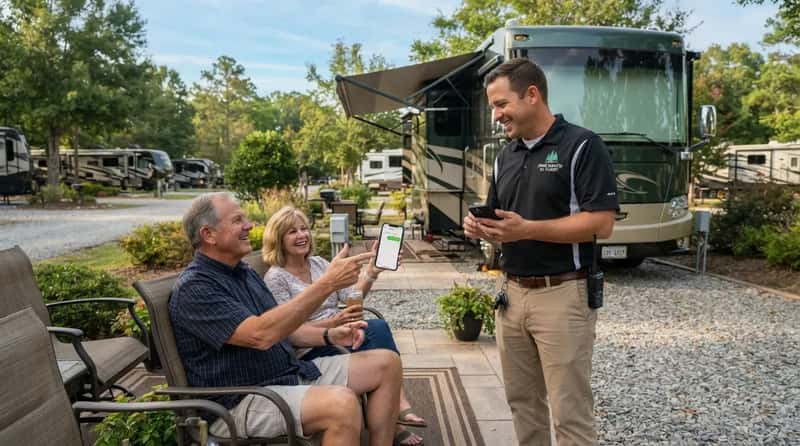
Some returning guests never call the general office line again once they’ve built a relationship – they text the manager directly.
When guests feel recognized, valued, and consistently impressed, they’re more likely to return and tell others to do the same, and managers know that a direct line builds exactly that kind of loyalty. That personal channel means problems get solved in minutes instead of sitting in a queue behind every other guest’s request. It’s an informal perk with real weight, since a fast fix during a stressful travel day can be the entire difference between a good trip and a ruined one.
#1 – Being Treated Like Family Instead of a Transaction
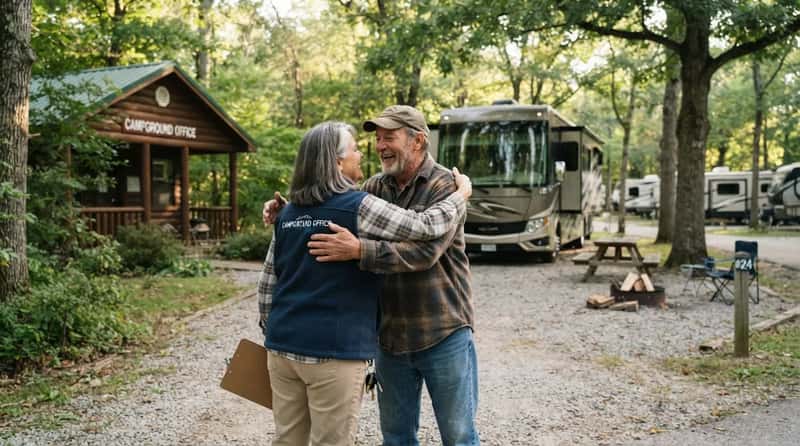
Every other perk on this list is really just a symptom of the biggest one: campgrounds quietly stop treating returning RV owners like customers and start treating them like neighbors.
Attracting a new camper costs more than keeping one who already loves the park, which is exactly why guest retention has become essential to a campground’s long-term success. That shift in mindset is the real engine behind every discount, upgrade, and unofficial favor described above. Once a manager sees a name and thinks “they’re back” instead of “new booking,” almost every rule on the property quietly becomes negotiable.
None of this is written into any brochure, and most first-time campers never notice the gap because they have nothing to compare it to. But ask any family that’s returned to the same park five or six seasons in a row, and they’ll usually admit the free firewood, the familiar face at the office, and the site that’s somehow always available aren’t luck at all.
What’s the best “quiet perk” you’ve ever gotten from a campground manager after becoming a regular? Drop it in the comments – we want to hear the ones that never make it onto any website.