Most passengers assume the crew forgets them by Tuesday. Hundreds of faces a day, a different port every morning, who could keep track? But the first few hours of a sailing often set the tone for the whole week, and the tiny things guests do on day one tend to travel through a ship’s service teams faster than any announcement.
The 25 courtesies below are mostly free, mostly quick, and mostly ignored by the crowd. A few will make you nod. One or two might start an argument in your group chat. Start with a move that takes five seconds and costs nothing.
#25 – Learning Your Cabin Steward’s Name Before the Bags Even Arrive

Your steward will walk into your room twice a day all week, yet plenty of guests never read the name on the tag. Using that name on the first day is one of the fastest ways to be remembered. It takes five seconds and changes how the whole week feels.
Stewards notice who greets them in the hallway and who looks straight through them. A simple “Hi, Maria, nice to meet you” tends to get a real smile back. But that’s nothing compared to the next courtesy, which most people skip entirely…
#24 – The Hallway “Good Morning” That Crew Quietly Keep Score Of
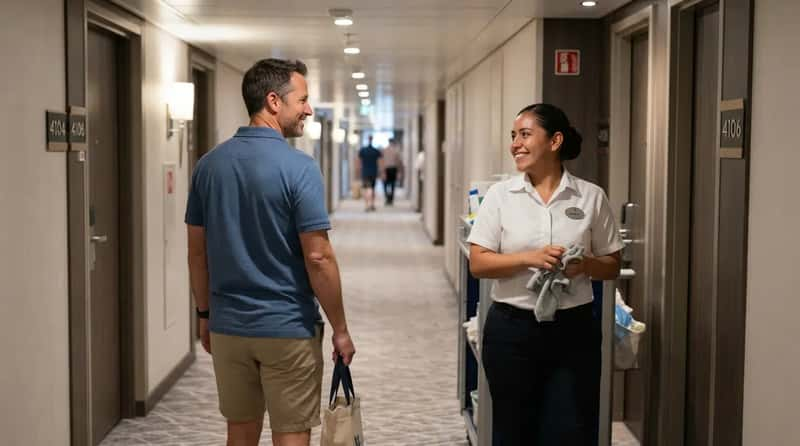
To guests, a ship’s corridors are shortcuts to the pool. To the crew, they’re the office. A friendly nod to a passing housekeeper or server is the kind of thing most people never realize gets noticed.
Many crew members work long shifts for months at a stretch. Being greeted as a person instead of furniture is a real lift in the middle of a long day. And the guests who do it? They stick out in a crowd of hundreds.
#23 – Telling the Steward Your Preferences on Day One, Not Day Five
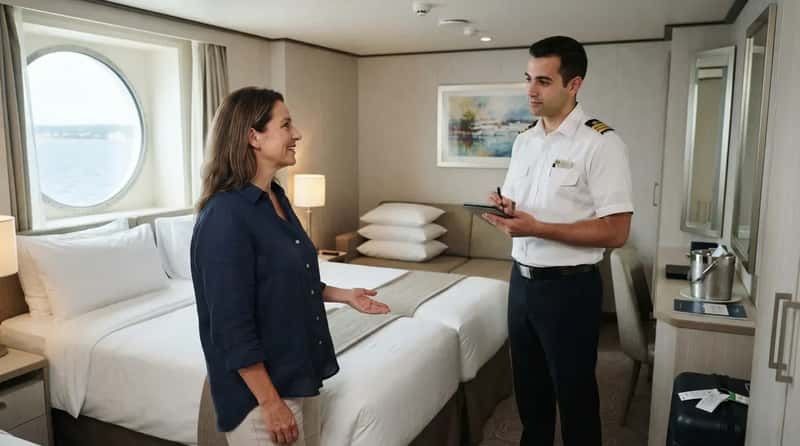
Want extra pillows, no ice bucket, or the beds split into two twins? Say so in the first hours. Stewards can reshape a cabin fast when they know what you want, but they can’t read your mind.
Guests who ask clearly and politely often end up with the most tailored service. It’s one big reason crews remember the polite, specific ones. The next courtesy happens at the very first dinner…
#22 – Thanking the Dining Team at the First Meal
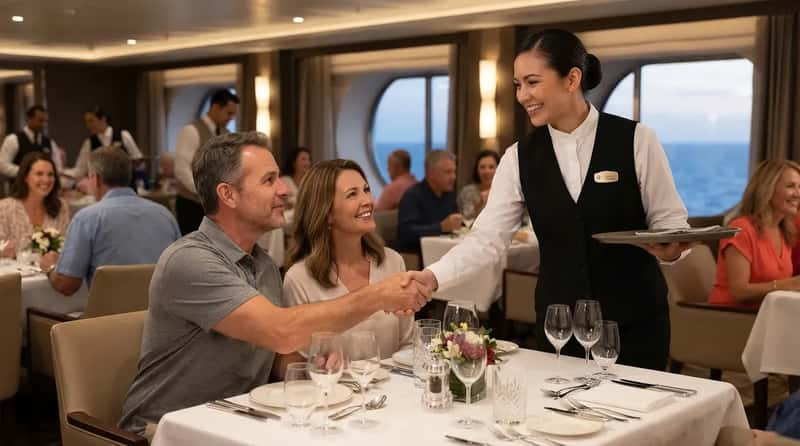
Dining room servers on cruise ships often serve the same guests all week. Saying thank you at the first dinner, and asking your server’s name, starts that relationship early. Servers who feel appreciated from night one often go the extra mile on night two.
Travel advisors often say crew members light up for guests who remember their names or make the cruise feel a little special for them. That kind of attention goes both ways. Up next is a mistake that costs bartenders real money…
#21 – Carrying Small Bills So a $20 Doesn’t Become an Awkward Moment

Cash is still useful on ships, even in a mostly cashless world. Cruise travel sites like The Points Guy note that singles, fives and tens are easiest for crew to use. A crisp $20 can be surprisingly hard to break at 11 p.m.
Worth Knowing
- Singles, fives and tens are the easiest bills for crew to use.
- A $20 can be hard to break late in the evening.
- Guest services is the place to swap big bills for small ones.
- Doing it on day one means you’re ready before the first drink order.
Break your cash at the guest services desk on day one so you’re ready. It’s a little planning that keeps a thank-you from turning into a transaction. The next courtesy is one bartenders swear by…
#20 – The Upfront Tip That Gets You Remembered at the Bar
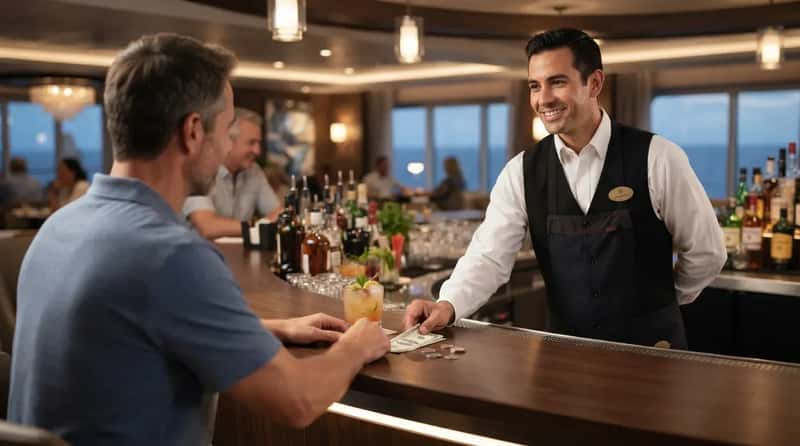
Many travel guides say the bartenders you plan to visit all week are the ones worth tipping early. About Luxury Cruising says an upfront tip “works wonders” if you’ll frequent the same bar. Some call it bribery. Plenty of crew call it a thank-you that lands before the rush.
Whether it’s strictly necessary is debatable. Some experts say it’s optional, since many ships add gratuity to drink checks anyway. But the following courtesy is one nobody can argue with…
#19 – Showing Up on Time for the Safety Drill

The muster drill is the first thing every guest has to do, and the crew run the whole show. Guests who arrive on time, put the phone away and actually listen make a tough job easier. It’s one of the few moments when every single guest is required to be in the same place.
Crew spend this time counting heads and making sure everyone knows where to go. Late arrivals hold up the entire group. It’s an easy win on day one, and the next one is just as simple…
#18 – Giving Real Feedback to Guest Services Early, Not on the Last Night

Cruise travel guides note that guest relations staff genuinely want to hear about service issues. Raising a problem politely on day one gives the crew a chance to fix it. Saving it for the survey gives them no chance at all.
Crew tend to respect the guests who speak up early, because it means someone is trying to solve a problem rather than collect grievances. But there’s a more visible courtesy waiting at the buffet…
#17 – Washing Hands Before the Buffet, Not Just Using the Sanitizer

You’ll often see crew standing at the dining room entrance, offering sanitizer. Many guests wave them off or squirt and run. The CDC says handwashing with soap and water is a key way to help prevent the spread of norovirus, the stomach bug cruise lines work hardest to keep out.
Crew members don’t take it personally when guests skip it, but they do notice. It’s a quiet courtesy toward everyone on board, and the people serving that buffet are on board too. Now for a polite habit that involves your tray…
#16 – Bussing Your Own Mess Without Being Asked
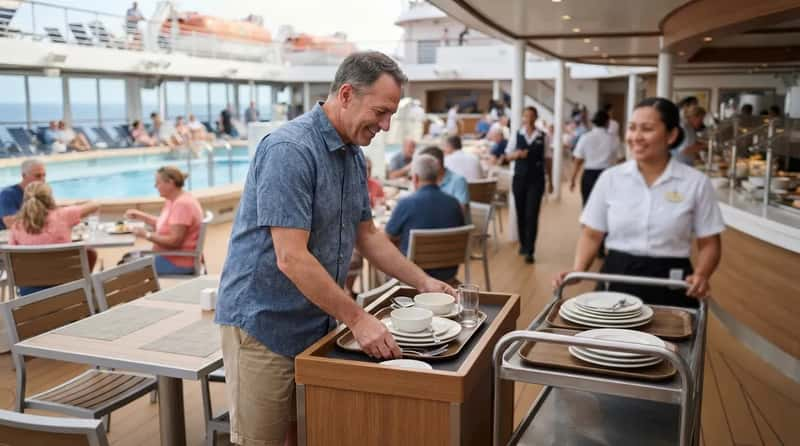
Stacking plates, moving cups and wiping up a spill at the buffet makes a visible difference. Crew clean constantly, but a pile of trays baking in the pool deck sun is still one more chore. Even small cleanup helps the whole team keep up.
Some guests argue this is the crew’s job and they paid for service. Fair enough. But many crew members say they’d still rather have help with the small stuff, and they remember who offered. The next courtesy involves the thing most of us spend half our cruise staring at…
#15 – Putting the Phone Down When Someone Is Talking to You

It’s easy to give a crew member half your attention while scrolling. But servers, stewards and attendants notice who looks them in the eye. A moment of eye contact on day one tells them what kind of week to expect.
Guests who look up and smile tend to get a warmer greeting the next time. That’s not policy, just a very human reaction. Another thing crew notice is where guests leave their belongings…
#14 – Skipping the Deck-Chair Reservation Game

Towel-on-a-chair holds are a famous cruise irritation. Many cruise lines have policies that let staff remove items from unattended chairs after a set time. That puts crew in the middle of a fight they didn’t start.
Quick Compare
- Towel-and-vanish: an empty chair, a growing line of annoyed guests, and a crew member stuck enforcing the policy.
- Use it while you’re there: a turning-over pool deck, fewer complaints, and no awkward conversations.
Guests who simply use a chair while they’re there, and leave when they’re done, make the pool deck calmer for everyone. It means fewer awkward conversations for the crew. Some argue that holding a couple of chairs is harmless, but the staff who have to police it would likely disagree. The next tip is about a conversation most guests never start…
#13 – Reading the Name Tag for the Hometown, Then Asking About It
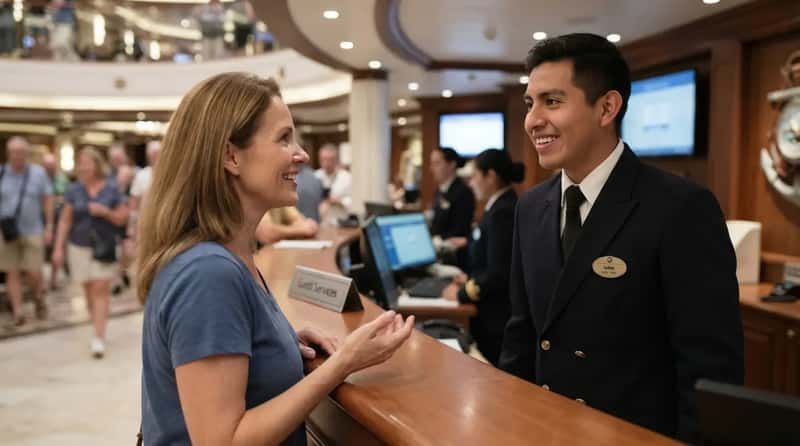
On most cruise lines, name tags show not only a name but also the crew member’s home country. That’s an instant, polite conversation starter. Crew often say the best moments are when a guest asks about their hometown and actually listens.
Cruise ships often employ crew from dozens of countries, so the conversations can be wonderfully varied. Guests who ask early usually enjoy those chats all week. And now for a courtesy that involves your credit card…
#12 – Not Removing the Automatic Gratuity Without a Plan
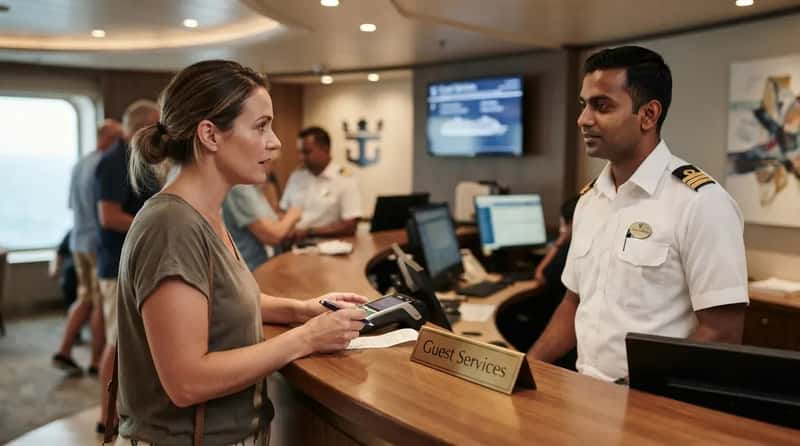
Automatic gratuities are daily charges added to your bill. U.S. News reports they typically run around $14 to $23 per person per day, depending on the line. You can ask Guest Services to remove them, but one expert quoted there says that’s only fine if you still plan to tip.
Some people say removing the charge and tipping directly is fairer. Others say it’s a headache for everyone. Either way, crew remember the guests who strip the charge and clearly never plan to tip at all. The next point is about people you’ll never see…
#11 – Remembering the Crew You Never Meet
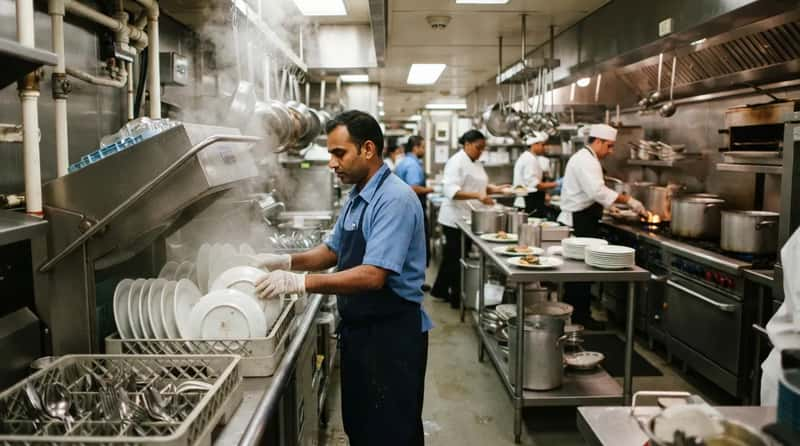
Automatic gratuities typically also go to behind-the-scenes staff, such as dishwashers and kitchen crew. These are the people who never get a thank-you in person. Most guests don’t realize they exist, yet they keep every dining room running.
You can’t thank them by name, but you can thank the servers who carry their work to your table. A kind word to the head waiter or a manager can reach the kitchen too. And speaking of the kitchen, the next courtesy could matter a lot…
#10 – Mentioning Allergies and Dietary Needs the First Night
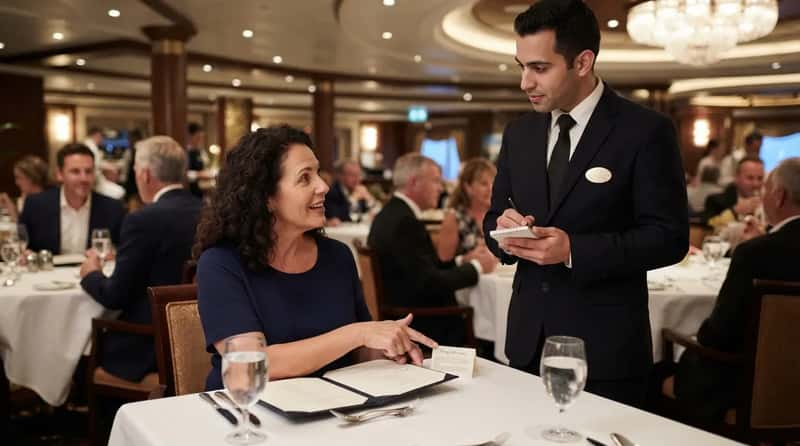
If you have a food allergy, tell the dining team early and clearly. Waiters and chefs can plan around it, but only if they know. A guest who speaks up the first evening gets a smoother week than one who waits for a problem.
Crew take allergies seriously. They also remember who made their job easier by being clear and calm. The next courtesy happens before you even step on board…
#9 – Tipping the Porter Who Isn’t Even on the Ship’s Payroll
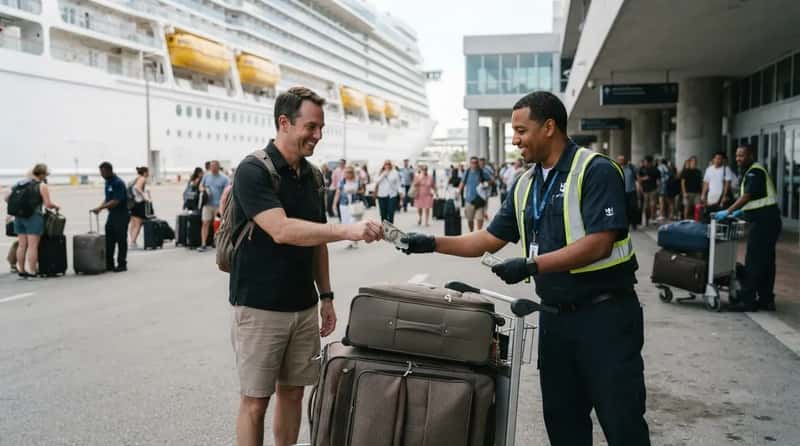
Porters at the cruise terminal often aren’t employees of the cruise line. U.S. News notes they aren’t covered by automatic gratuity charges. A few dollars per bag is the usual advice, though the exact figure varies by source.
At a Glance
- Who: terminal porters, who often work for the port rather than the ship.
- The catch: automatic gratuity charges don’t cover them.
- The usual advice: a few dollars per bag, handed over at the curb.
- Why now: it’s the very first interaction of your trip.
Handing over a tip at the curb is the very first interaction of the whole trip, so it sets the mood. Most people forget the porters entirely, and the next group is even easier to overlook…
#8 – Telling the Crew About a Birthday or Anniversary Early
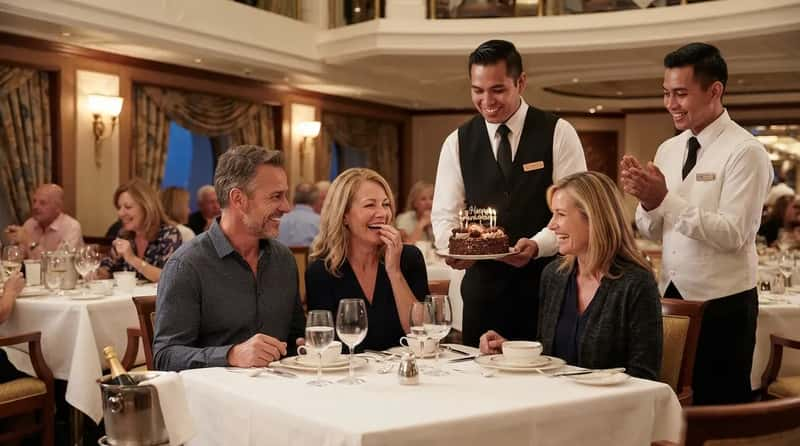
Crew can’t plan a celebration they don’t know about. Mentioning a special occasion on day one gives your steward and dining team time to do something about it. Many ships will bring a small cake or sing at dinner if they have notice.
Guests who share this tend to feel more included, and crew like being part of the memory. The next courtesy is about patience on the busiest day of the cruise…
#7 – Not Demanding the Cabin Early on Embarkation Day
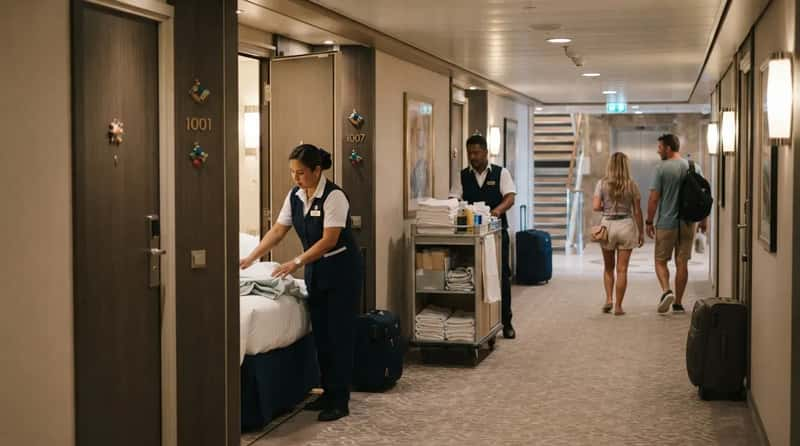
Embarkation day is a scramble. The ship has just unloaded one set of guests and has to board the next in a matter of hours. Cabins often aren’t ready until early afternoon, and stewards are racing the clock.
Guests who accept that and head to lunch or a drink instead of hovering at the door are remembered fondly. Nobody posts about it, but the crew feel the difference. The next courtesy is one few people think about…
#6 – Keeping Room Service Trays Out of the Hallway

Leaving a tray outside your cabin door is common. It’s also a trip hazard and an extra chore for the crew. Putting the tray where staff can collect it, or calling for pickup, saves them a second trip.
It’s a small thing, but it counts. Cruise guides like ReadyGoCruise also suggest tipping room service staff a few dollars per order. Next up is a courtesy built from one little word…
#5 – Saying “Please” and “Thank You” Even When You’re Paying for It

Some guests treat cruise staff like servants. They’ve paid for the trip, so they feel entitled. But crew members remember who is polite and who isn’t, and the difference shows in the service.
It’s basic, and yet it separates the guests staff love from the ones they quietly dread. Manners don’t cost a cent. The next courtesy is subtler, and crew spot it right away…
#4 – Giving a Compliment to a Supervisor, Not Just the Crew Member

Telling a staff member “you’re great” is kind. Telling their manager exactly what they did is better. Many crew members say guest comments can be part of how they’re recognized, though policies vary by line.
It takes thirty seconds on day one or any day after. Guests rarely do it. And it brings us to something more personal…
#3 – Asking How Long They’ve Been Away From Home

Many crew members sign contracts that last months, working long days with few days off. Asking how long they’ve been at sea shows real interest. It’s an easy, kind question, as long as you listen to the answer.
Why It Stands Out
- It treats the crew member as a person, not a uniform.
- It costs nothing and takes less than a minute.
- It invites a real story instead of a scripted “fine, thank you.”
- It’s the kind of chat that can stay with someone for the rest of a long shift.
Crew often say the best guests are the ones who see them as people, not just uniforms. A genuine question can lead to a conversation they carry with them all week. But the final two are the courtesies crew talk about most…
#2 – Thanking Staff Specifically for What They Did
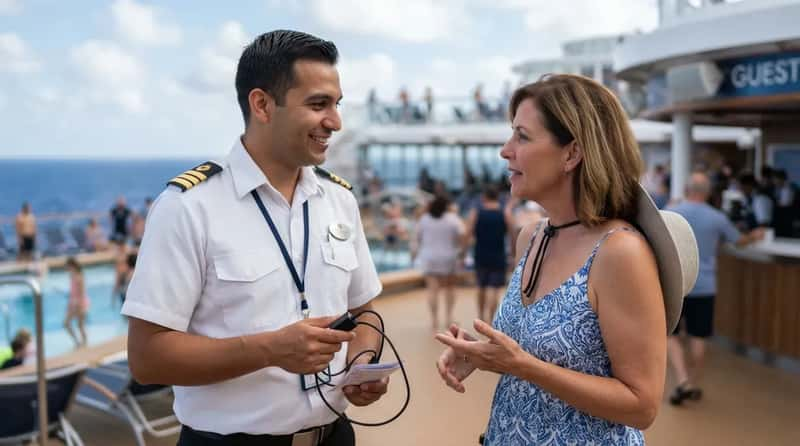
“Thanks, great job” is fine. “Thanks for finding my lost charger so fast” is better. Specific thanks tells a crew member exactly what you noticed.
Crew members say it makes the long hours feel worth it. Guests who do this are the ones crew point out to colleagues. And the number one courtesy is the one most likely to spark a debate…
#1 – The Small Cash Thank-You on Day One, Before Anything Has Happened
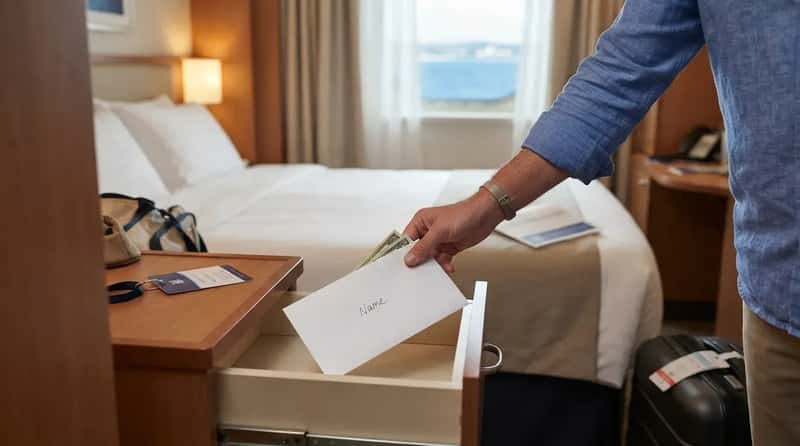
Some seasoned cruisers leave a little tip for their steward at the start of the trip, not at the end. A reader comment on ReadyGoCruise describes leaving tip money in the safe on boarding day and handing out envelopes on the last night. Other guides advise tipping on the final full day, so this one comes down to personal style.
Daily gratuities already cover the core team, and extra tips aren’t required. But a small, early thank-you is the kind of gesture crew say they remember. If you do it, keep it modest and sincere, and treat it as a courtesy, not a deal.
Look back over the list and notice what’s missing: nothing here is expensive. A name, a greeting, a clear request, a specific thank-you.
Crew members spend months far from home, and they notice who treats them like people. The guests they remember on Saturday are almost always the ones who showed up kind on day one, before anyone had done a thing for them.