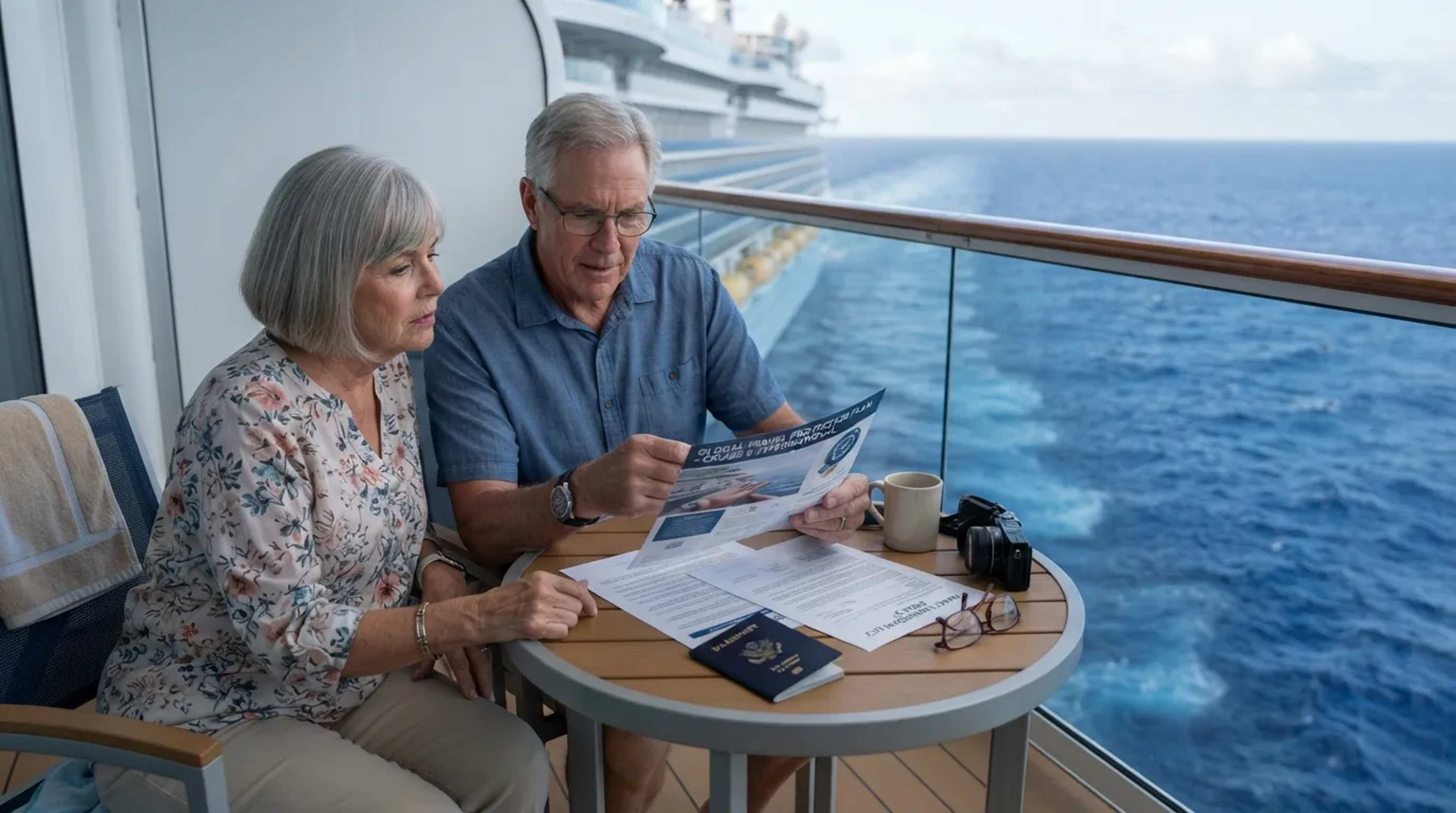
You feel it before you even turn around. The slow shuffle, the sigh from three people back, the phone that dings while everyone waits for a stranger to find their boarding pass. Airport queues have a strange way of turning ordinary travelers into unwilling performers, and the crowd behind them is always watching, always judging, always remembering.
Most of these habits feel invisible to the person doing them. To everyone else, they’re the whole show. By the time we get to the very last entry on this list, you’ll probably recognize at least one version of yourself standing in that line.
#25 – Digging for Their ID at the Very Last Second
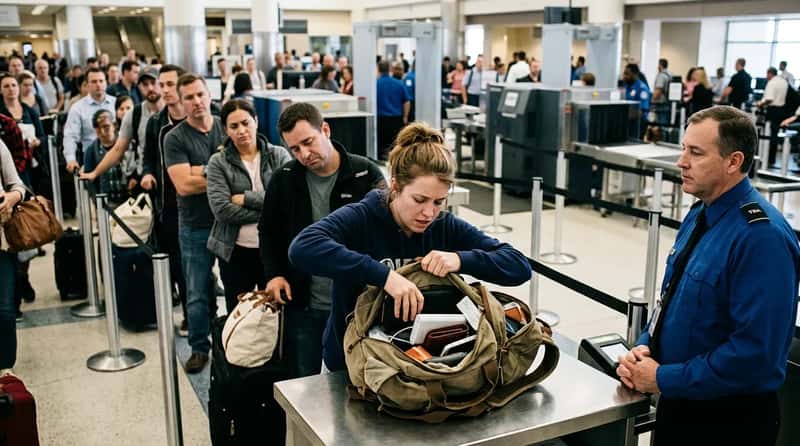
Nothing tests a queue’s patience quite like watching someone reach the podium and only then start excavating their bag like it’s a dig site. Wallets get flipped inside out, phones get patted down, and the outer pockets get checked twice out of pure panic. The agent waits with a practiced blank expression. The line behind waits with a much less patient one.
This one sticks because it’s so avoidable. Everyone standing there has known for the last twenty minutes that an ID would eventually be needed, yet the search only starts the second it actually matters. It’s a small moment, but it’s the kind that gets a group eye-roll passed silently down the row.
#24 – Letting Toddlers Run Full Laps Around the Stanchions
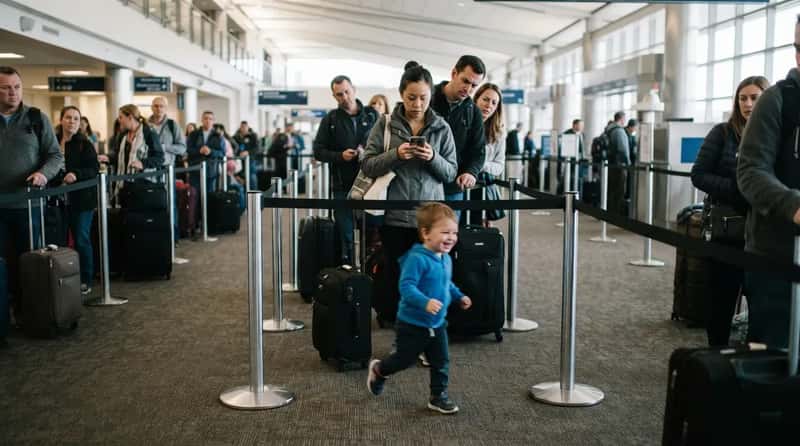
Kids treat queue ropes like a built-in obstacle course, weaving under and around them with the kind of energy every adult in that line wishes they still had. It’s genuinely a little impressive to watch. But when a parent is deep in their phone instead of tracking their kid, everyone else quietly becomes the backup lookout.
People rarely blame the toddler in this scenario. They blame the adult who seems totally checked out while a four-year-old darts between rolling suitcases and strangers’ ankles. It only takes one near-collision with a stranger’s carry-on for the whole line to start side-eyeing the same direction.
#23 – Wearing Every Piece of Metal They Own Through Security
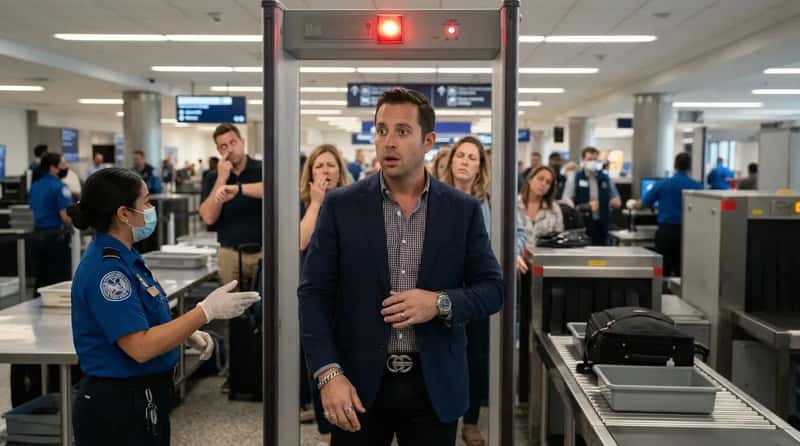
Belts, watches, layered rings, that one bracelet from a trip back in 2014 – some travelers walk up to the scanner looking like a walking hardware display. The alarm goes off right on cue, and the re-screening process begins in full view of everyone waiting. It’s rarely a surprise to anyone but the person wearing it.
Everyone behind has already guessed what’s coming before the beep even happens. There’s a very specific, very shared sigh that ripples through a line when the metal detector goes off for the third time in a row, because now the whole queue has to reset.
#22 – Treating the Boarding Pass Like It’s Optional Reading
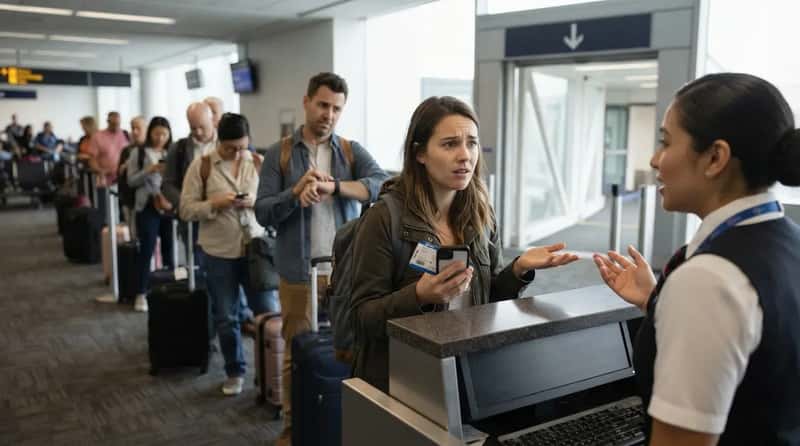
Some travelers glance at their phone screen, forget the gate number almost instantly, and then ask the agent to repeat it two more times before it sticks. It’s a small moment on its own, but it lands at exactly the wrong pressure point, right when everyone else is trying to keep boarding moving.
The line notices because boarding is one of the rare moments where everybody is silently counting down the minutes until wheels-up. A few extra seconds of confusion at the front feels like a full delay to the fifty people stacked up behind it.
#21 – Blocking the Aisle to Argue About Overhead Bin Space
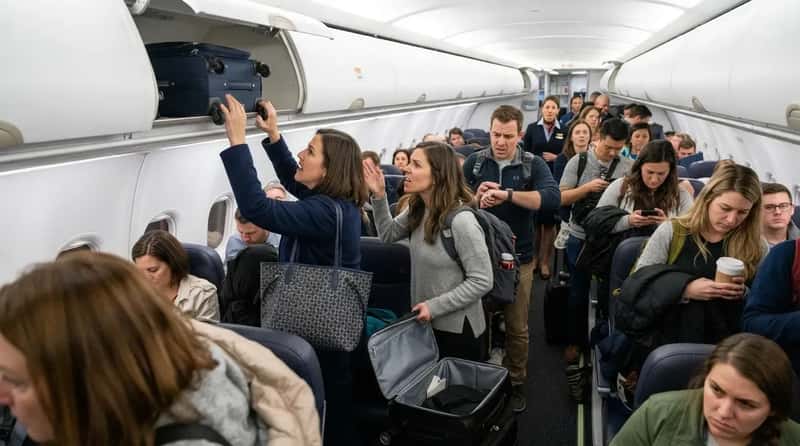
Once boarding actually starts, some passengers turn the narrow aisle into a full debate stage over whose roller bag deserves the last few inches of bin space. Meanwhile, twenty people are frozen behind them, holding backpacks, cold coffee, and dwindling patience. Nobody wins these standoffs quickly.
This is one of the more openly frustrating moments in modern air travel, mostly because it almost never resolves fast. Bin-space disputes are widely recognized as one of the biggest drags on boarding speed, and every passenger stuck behind one feels every extra second of it.
Why It Stands Out
- Overhead bin standoffs are consistently one of the top reasons boarding runs behind its scheduled time.
- Fuller flights mean less spare bin space than ever on most domestic routes.
- One stubborn debate can freeze dozens of passengers still stuck waiting in the aisle behind it.
- Gate agents usually only step in once the argument has already eaten up real time.
#20 – Pretending Not to Notice the “Line Ends Here” Sign
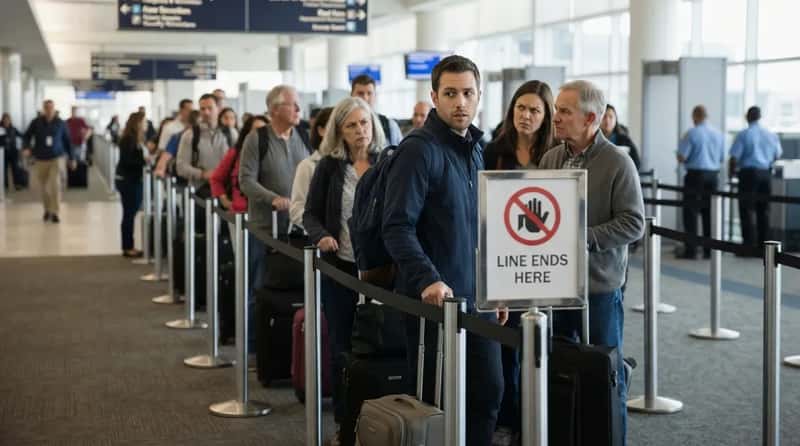
There’s always one person who drifts just close enough to a shorter-looking line to make everyone wonder if they’re cutting or just genuinely confused. Either way, eyes narrow immediately, and conversations quietly pause mid-sentence. The tension is instant and unmistakable.
Queue-cutting, even the accidental, half-innocent kind, is one of the fastest ways to turn a calm line tense. People clock it right away, even when nobody actually says anything out loud, and the mental note gets filed for the rest of the wait.
#19 – Taking a Phone Call on Speaker
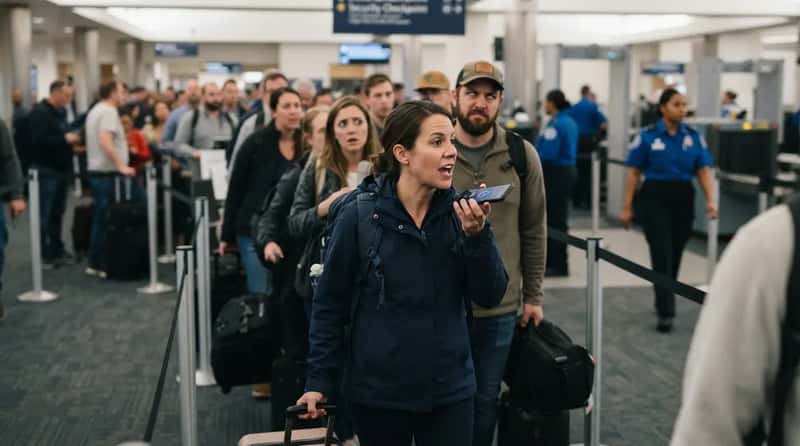
Somewhere in every terminal, someone decides the whole queue needs to hear both sides of their phone conversation. It’s rarely intentional rudeness; it’s usually just autopilot, the kind of habit that carries over from an empty living room straight into a crowded checkpoint line.
Still, everyone behind hears every single word, whether they want to or not. There’s always a flicker of secondhand embarrassment that spreads through the line the moment the call turns personal, and suddenly a dozen strangers know way more than they signed up for.
#18 – Trying to Board With a Bag That’s Clearly Too Big
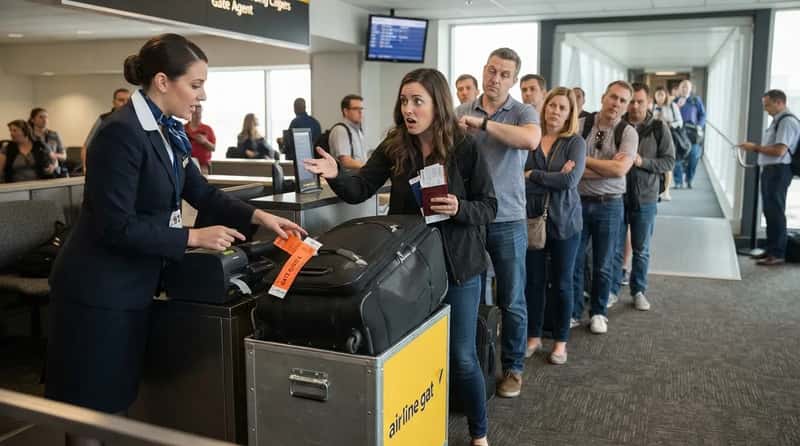
The gate-side sizer box exists for exactly one reason, yet certain bags seem to visibly shrink the second their owner glances away from it. Gate agents catch most of these attempts, but not always, and the ones that slip through create their own small drama later.
When a bag finally has to be gate-checked at the last second, it creates a visible bottleneck the entire boarding line feels immediately. The whole process grinds to a stop while tags get printed and the bag gets hauled back out the jet bridge.
#17 – Standing Directly on the Moving Walkway Instead of Walking
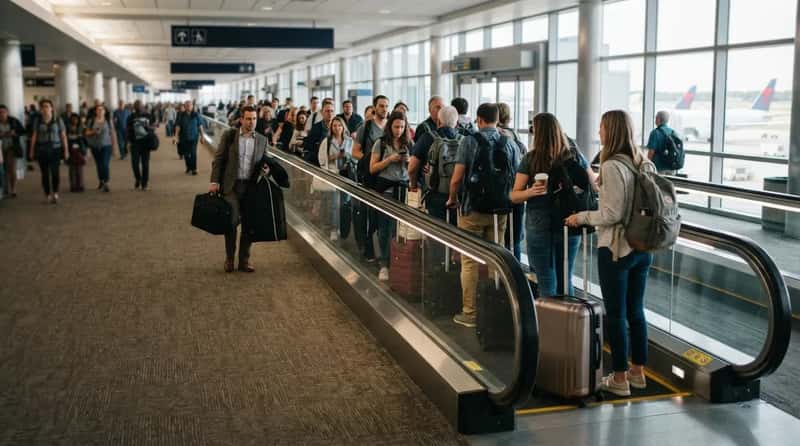
Moving walkways were built to speed people up, not to replace walking entirely, yet plenty of travelers treat them like a personal mid-terminal escalator break. That’s fine and even understandable after a long flight, until someone in a real hurry gets stuck behind a solid wall of stationary bodies.
This tension is common enough that most major U.S. airports post explicit signage asking travelers to keep one side clear for walking. Almost nobody reads it, and the same quiet standoff plays out in terminal after terminal, every single day.
#16 – Repacking Their Entire Suitcase at the X-Ray Belt
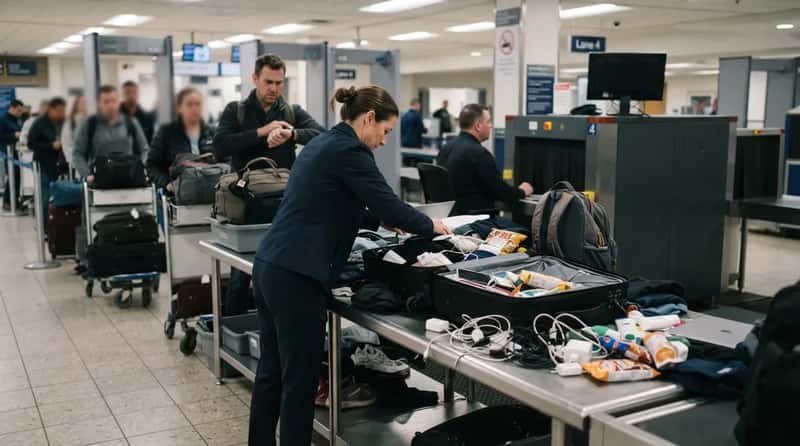
Once bags come through the scanner, some travelers decide it’s the perfect moment for a full reorganization. Shoes, chargers, snacks, and a tangle of cables get spread across the table like a garage sale while the belt behind them quietly backs up.
Security checkpoints often have a designated area set aside for exactly this reason, but not everyone bothers using it. The queue behind feels every extra second, especially during the early-morning rush when patience is already running thin.
#15 – Wearing Shoes That Take Forever to Remove and Reattach
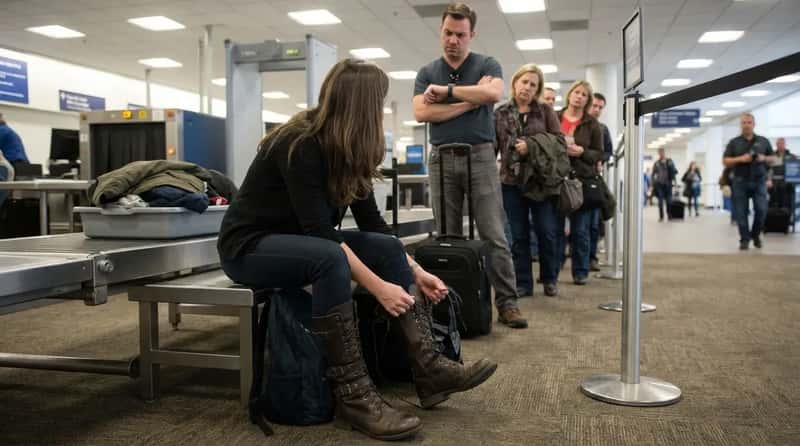
Combat boots, tall lace-ups, and complicated buckle straps can turn a ten-second shoe removal into a two-minute production. TSA agents have seen every version of this, and so has everyone else stuck waiting in line behind it.
This one earns a strange mix of respect and frustration at the same time. The shoes are usually genuinely great-looking, just terribly timed for a checkpoint, and the whole line ends up silently rooting for faster lacing technique.
#14 – Bringing a Full Liquid Arsenal That Ignores the 3-1-1 Rule
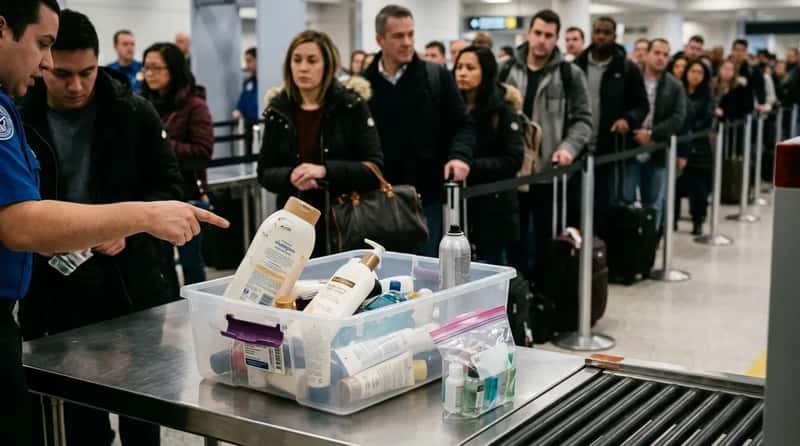
The TSA’s liquids rule has been around for two decades now, yet someone always shows up with a family-sized shampoo bottle expecting it to slide through anyway. It never does, and the confiscation bin at most checkpoints proves it daily.
The TSA still enforces its long-standing 3-1-1 liquids policy at checkpoints nationwide, meaning containers over 3.4 ounces get pulled aside constantly. It usually happens right in front of a growing, increasingly impatient line.
At a Glance
- Liquids, gels, and aerosols must be 3.4 ounces (100 milliliters) or smaller per container.
- All containers need to fit inside one quart-sized clear bag.
- Each passenger gets just one of those bags through the checkpoint.
- Anything larger gets surrendered on the spot, no matter how the conversation with the officer goes.
#13 – Hovering Too Close Instead of Respecting the Gap
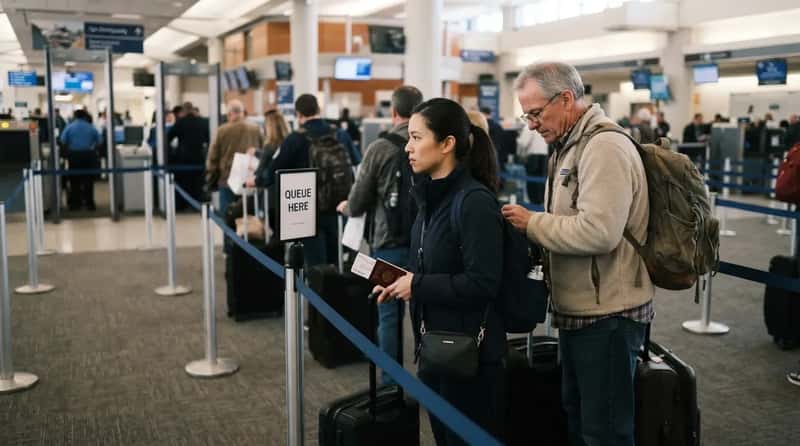
There’s an unspoken buffer zone in every queue, and some people simply don’t seem to notice it exists. Standing close enough to read someone’s phone screen over their shoulder tends to get noticed fast, and the discomfort is instant.
It’s rarely aggressive, just oblivious. But the person in front always feels it, and often shuffles forward the second there’s even a foot of open space, just to reclaim a little personal room.
#12 – Asking Loudly Which Line Moves Faster
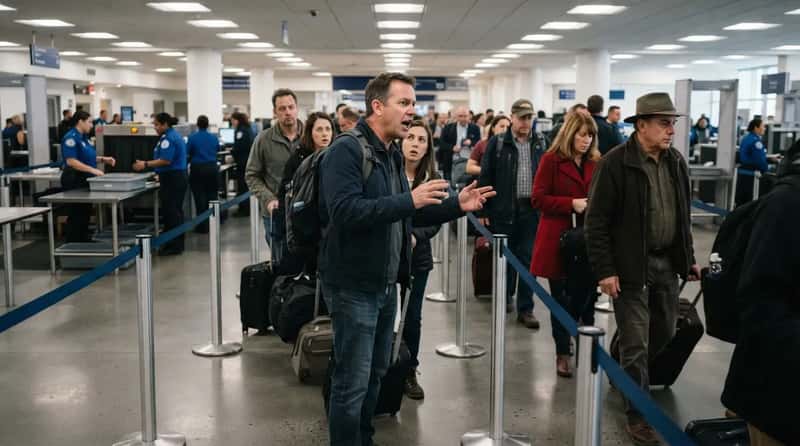
Every queue has one person convinced the neighboring line is secretly moving quicker, and they tend to announce it to no one in particular. Sometimes they’re right. More often, they switch lines and somehow end up even further back than before.
This behavior is oddly universal across airports, grocery stores, and amusement parks alike. Humans consistently overestimate how much faster the “other” line really is, and that miscalculation plays out at security checkpoints across the country every single day.
Worth Knowing
- People consistently misjudge queue speed, a well-documented quirk of how humans perceive waiting.
- Switching lines rarely pays off, since the new line has already been moving for a while without you in it.
- Single, snaking lines that feed several agents tend to feel fairer and faster than a row of separate lines.
- Most modern security checkpoints already use that snaking-line design specifically to cut down on this exact impulse.
#11 – Letting Their Carry-On Roll Backward Into Someone’s Ankles
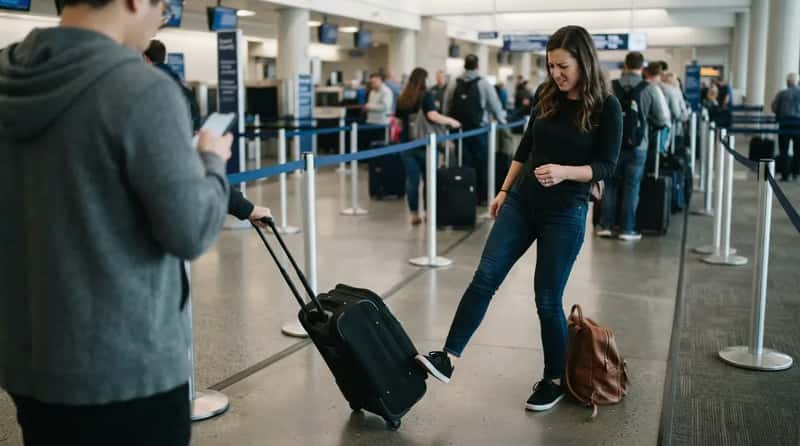
A distracted traveler checking their phone often forgets they’re still holding a suitcase handle, and that bag slowly drifts backward with real momentum behind it. The person behind either dodges it in time or absorbs the impact directly on their shins.
It’s a small collision in the grand scheme of things, but it happens often enough that frequent flyers develop an almost reflexive side-step for it. Regulars can spot the drifting-bag warning signs from ten feet away.
#10 – Trying to Sneak a Pet Carrier Past Size Limits
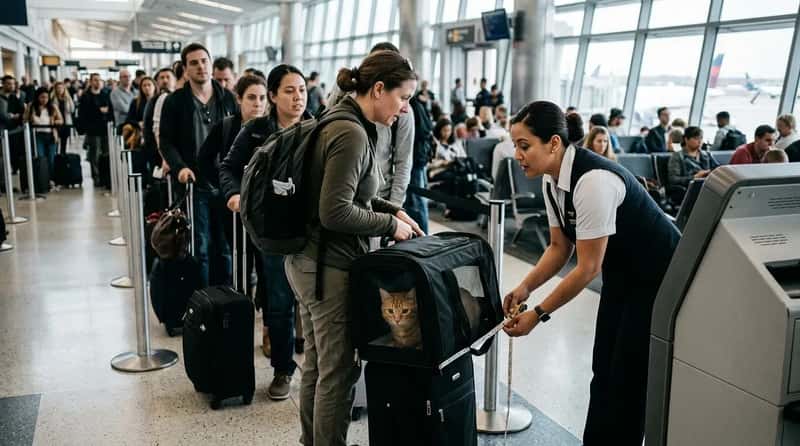
Airlines publish exact under-seat dimensions for pet carriers, yet some travelers show up with something noticeably larger, hoping nobody measures too closely. Gate agents usually do measure, especially now that the issue has become more visible.
Multiple U.S. carriers have tightened pet carrier enforcement in recent years after a rise in oversized carriers showing up at the gate. That means more public back-and-forth for everyone waiting to board, plus the occasional very stressed, very vocal cat.
#9 – Refusing to Put the Phone Down for TikTok Content Mid-Queue
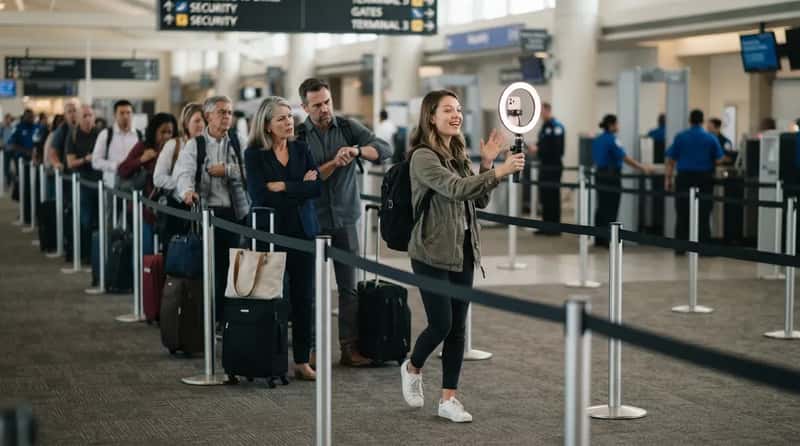
Filming a quick “day in my life” clip is fine, right up until it involves multiple retakes of walking through the queue while everyone behind waits patiently for the scene to wrap. The line becomes an unpaid extra in someone else’s content.
Most bystanders don’t mind a quick photo or a single pass. Repeated takes in a moving line is one of the more openly irritating habits people quietly complain about later, usually to whoever they’re traveling with.
#8 – Arguing With Security Over Rules They Clearly Know
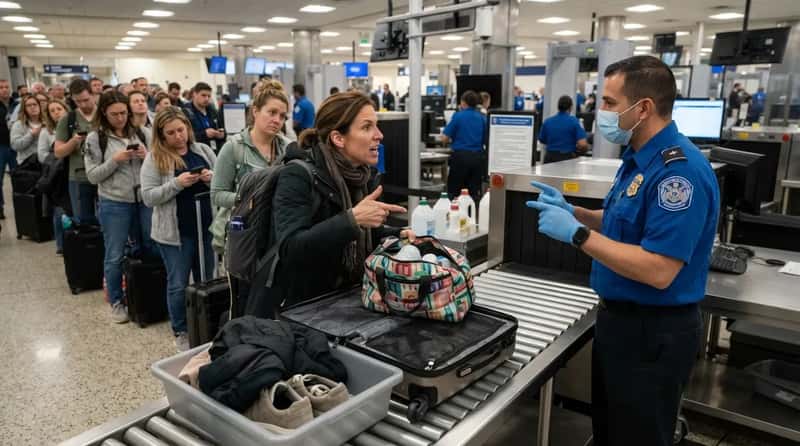
Every checkpoint has someone who insists their oversized liquid or extra bag should be a special exception, despite knowing the rule perfectly well already. TSA officers rarely bend on this, and the standoff eats real time out of the line.
These same disputes play out at checkpoints in every major U.S. hub, and the outcome is almost always identical. The item gets surrendered anyway, the argument accomplished nothing, and the line simply had to wait it out.
#7 – Zoning Out and Missing the “Next” Call Completely
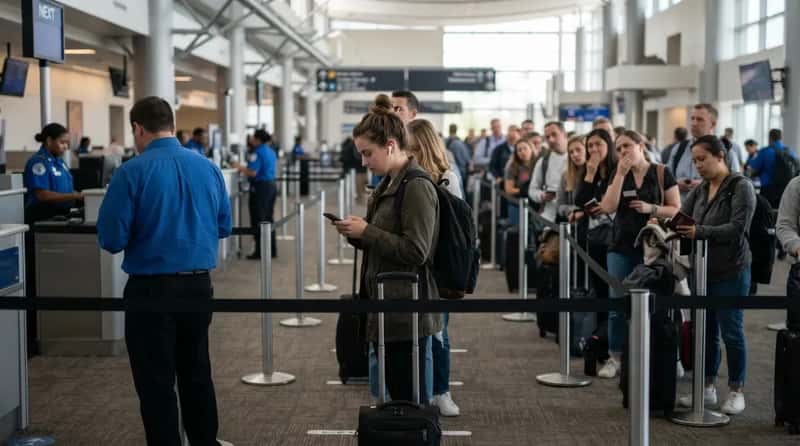
There’s always a beat of silence where the agent says “next” and absolutely nothing happens, because someone’s earbuds are in and their eyes are somewhere else entirely. The whole line inches forward except that one frozen person.
It’s harmless, but it’s one of the most universally recognized queue moments out there. It’s a tiny freeze-frame that nearly everyone has both caused once and witnessed a dozen other times.
#6 – Trying to Board During Zones That Aren’t Theirs Yet
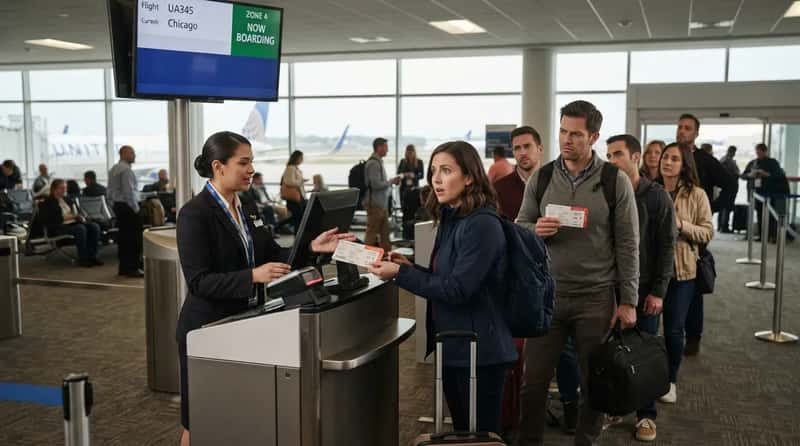
Boarding groups exist for a reason, yet plenty of travelers drift toward the gate the moment any zone gets called, hoping nobody checks too closely. Gate agents almost always do check, and the mismatch usually gets caught right at the scanner.
This creates a small clog exactly where the line is already tightest. The people who actually belong in that zone feel the extra wait most directly, since they’re the ones stuck standing behind the confusion.
#5 – Complaining Loudly About Wait Times to No One in Particular
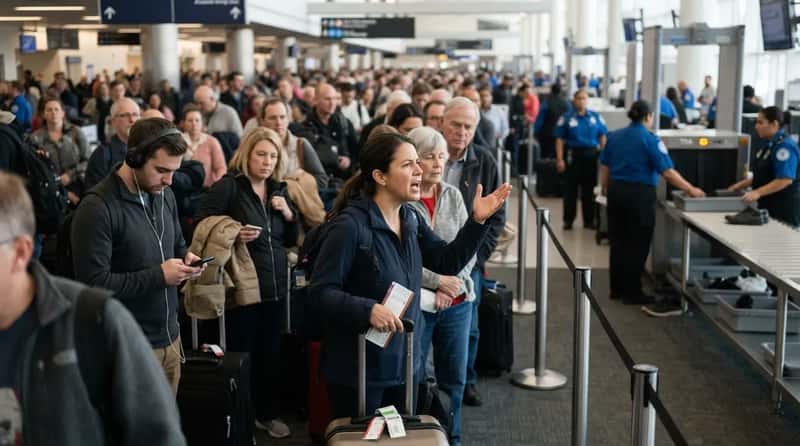
Some travelers narrate their frustration out loud, hoping for a little solidarity from strangers who are, frankly, just as tired and just as stuck. It rarely lands the way they’re hoping it will.
Airport wait time complaints spike heavily during peak U.S. travel periods like Thanksgiving and the week around July 4th, when checkpoint volume genuinely does slow everything down. The venting is understandable, but it rarely speeds anything up.
Fast Facts
- In 2025 the Transportation Security Administration screened roughly 906.7 million people at airport checkpoints, the most in its history and the second straight year above 900 million.
- The single busiest day in TSA history was 30 November 2025, with 3,133,924 travelers screened, the Sunday after Thanksgiving.
- All 10 of TSA’s busiest days ever have topped 3 million and every one has fallen since July 2024.
- Peak travel windows like Thanksgiving, July 4th, and Memorial Day weekend reliably push checkpoint wait times to their yearly high.
#4 – Letting Kids’ Tablets Play Videos Without Headphones
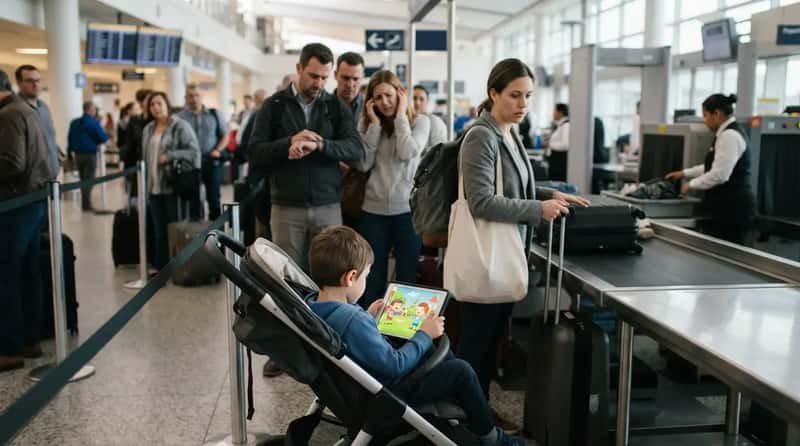
A cartoon blasting at full volume in an otherwise quiet queue is impossible to ignore, and everyone within earshot notices almost instantly. Most parents catch it fast once they realize; some genuinely don’t notice at all.
It’s rarely malicious, just distracted. But in the tight, echoing acoustics of an airport corridor, unmuted video sound travels much further than most people expect it to.
#3 – Trying to Preboard Without Actually Qualifying
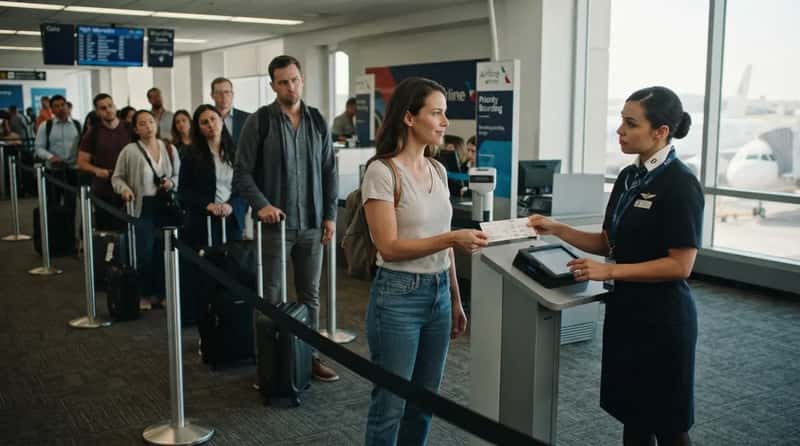
Preboarding exists for travelers who genuinely need extra time, but a noticeable number of people drift up early just to grab better overhead bin space for themselves. Gate agents have gotten noticeably sharper about catching this lately.
Regular boarders standing behind often notice the mismatch instantly, especially when the “preboarder” moves with zero visible need for any extra time at all. The quiet judgment in the line is almost audible.
#2 – Holding Up the Whole Line to Renegotiate a Seat Assignment
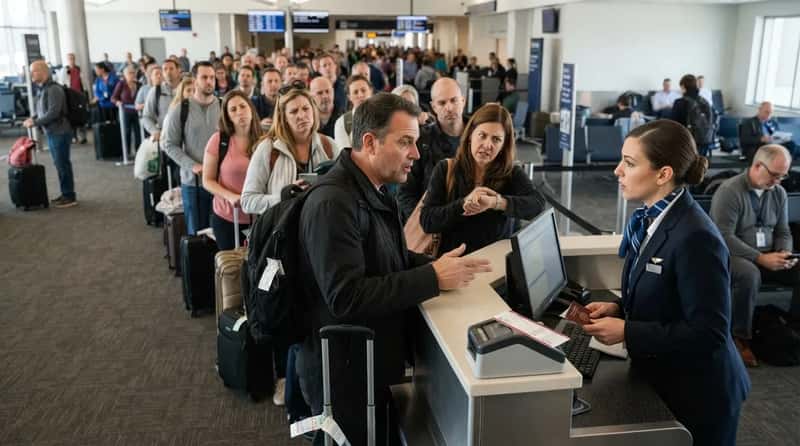
Right at the gate, some travelers choose that exact moment to ask about upgrades, seat swaps, or whether anything better happens to be available. It’s a reasonable question with genuinely terrible timing, since fifty people are already lined up behind them.
Gate agents typically need only seconds per boarding pass scan under normal conditions. A single drawn-out seat negotiation can visibly stall that entire line in a way everyone notices right away.
#1 – Sprinting Past Everyone After Ignoring Every Earlier Boarding Call
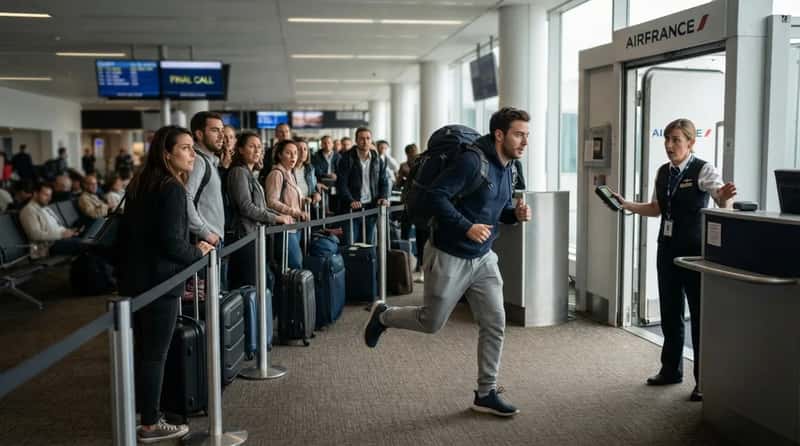
This is the one everyone remembers most clearly. Someone skips every single boarding announcement, stays parked at a distant charging station the whole time, and then sprints toward the gate the moment “final call” finally gets announced.
The whole line watches this unfold in real time, half-annoyed and half-entertained, because it’s one of the most consistently repeated scenes in American air travel. It’s less about rule-breaking and more about the sheer visibility of it, everyone waiting patiently gets to witness someone else’s poor time management play out like a mini spectacle right before boarding finally closes.
Airport queues are strange little pressure cookers. Everyone’s tired, everyone’s watching the clock, and somehow everyone ends up noticing the exact same small habits in total strangers. None of these moments are dramatic on their own, but stacked together, they explain why airport lines feel so much longer than the minutes on the clock actually suggest.
Which one hits closest to home? Chances are you’ve done at least one of these without ever realizing anyone behind you noticed a thing.