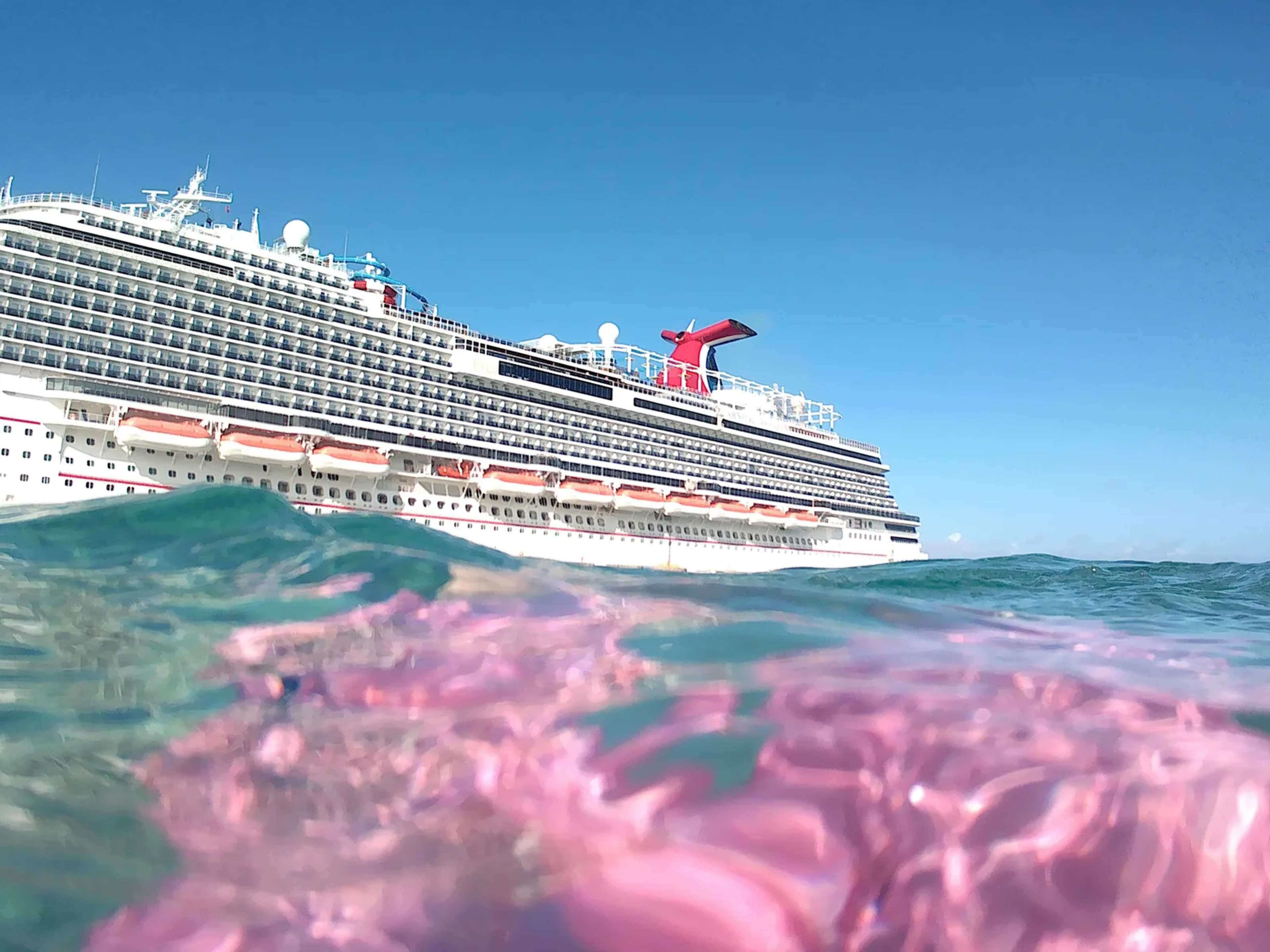
Most cruisers picture the onboard medical center as an afterthought – a door on Deck 2 they’ll never actually open. Cruise ship doctors tell a very different story. By the time most passengers finally show up, the problem has already gotten worse than it ever needed to be.
A visit that could’ve taken ten minutes on day one turns into a medevac, an isolation order, or a missed port on day four. And the pattern isn’t random – the same symptoms show up again and again in ship infirmaries, almost always reported hours or days later than they should’ve been. Here’s what onboard physicians actually say passengers wait too long to bring in.
#25 – The “New Shoe” Blister Nobody Mentions Until It’s Oozing

A blister from a new pair of sandals sounds too small to bother the ship’s doctor with, so most people just slap on a bandage and keep walking miles of tile decking. In humid port cities and chlorinated pool areas, that’s exactly the environment bacteria love. What starts as a hot spot on day one is often a visibly infected wound by day three.
Cruise medical staff see this constantly during Caribbean and Mediterranean itineraries, where passengers rack up 15,000+ steps a day in flip-flops. A simple foot blister can turn into cellulitis within 48 hours in warm, humid conditions. Left untreated, it sometimes requires antibiotics strong enough to interact with seasickness medication. But #24 is where things get harder to laugh off.
#24 – Fudging the Pre-Boarding Health Questionnaire

Every passenger fills out a form at check-in asking about recent vomiting, diarrhea, and fever, and doctors say a surprising number of people just lie. The instinct makes sense – nobody wants to be pulled aside before the cruise even starts. But passengers are asked to verify they don’t have serious symptoms for a reason, and honesty here matters more than it looks.
The honor-system approach only works if people use it correctly. Ship doctors say the questionnaire is often the first and last chance to stop an outbreak before it starts spreading through a dining room. Passengers who downplay symptoms at boarding almost always end up in the infirmary within 48 hours anyway – except now dozens of other guests have been exposed too. Still, #23 is the one everyone blames on the wrong thing.
#23 – The Hot Tub Rash Everyone Blames on “Sensitive Skin”

Red, itchy bumps after a soak in the ship’s hot tub get written off as heat rash or a sunscreen reaction almost every single time. In reality, it’s frequently a bacterial skin infection tied to pool chemistry, and it spreads faster the longer someone waits. Doctors say passengers often try three or four over-the-counter creams before finally coming in.
Public whirlpools that aren’t perfectly balanced can breed bacteria that cause folliculitis within 24 hours of exposure. It’s uncomfortable, not dangerous, but it worsens fast in the humid cabin environment. Waiting means a longer course of treatment and, often, a week of avoiding pools entirely. Compare that to #22, which usually starts underwater.
Fast Facts
- Chlorine and pH levels in ship hot tubs can drift within hours during peak usage
- Folliculitis symptoms typically show up within 24 hours of exposure to imbalanced water
- Most cases clear up in under a week with early topical treatment
- Waiting too long often means switching to oral antibiotics and skipping the pool deck entirely
#22 – Ear Pain After Snorkeling That Passengers Assume Will “Just Clear”

Snorkeling and diving excursions are a highlight of most itineraries, but the ear pain that follows is one of the most delayed complaints on any ship. Passengers assume it’s leftover water and wait it out, sometimes for the rest of the cruise. By the time they finally show up, what could’ve been a quick check often turns into barotrauma or a middle-ear infection.
Untreated ear barotrauma can cause temporary hearing loss that lasts well beyond disembarkation. Ship doctors keep basic ear irrigation and antibiotic drops on hand for exactly this reason, but only if passengers actually walk in. Waiting until the flight home means dealing with it at an urgent care instead of a two-minute onboard fix. #21 sneaks up in a very different way.
#21 – The Sunburn That Quietly Becomes Heat Exhaustion

A bad sunburn on sea day feels like a self-inflicted problem, so most passengers just avoid the pool deck and tough it out. What they miss is that severe sunburn disrupts the body’s ability to regulate temperature, setting the stage for heat exhaustion the very next day at a hot, humid port. Nausea and dizziness get blamed on the cruise food instead.
Ship doctors say this combination – sunburn plus a full day walking a tropical port – is one of the most predictable, and most avoidable, reasons people end up needing IV fluids. Severe sunburn can raise skin temperature enough to interfere with normal sweating and cooling. A five-minute stop at the medical center for burn treatment the day before could prevent the whole chain reaction. But #20 is the one passengers try to power through alone.
#20 – The Toothache Passengers Save for “When I Get Home”

Dental pain is one of the most commonly delayed complaints on any ship, mostly because passengers assume there’s nothing a cruise doctor can do about it. Most infirmaries can’t perform dental work, but they can prescribe antibiotics and pain management to stop an infection from spreading while at sea. Waiting the full week means the swelling has time to travel toward the jaw and neck.
Doctors say abscessed teeth are particularly risky because the infection has nowhere obvious to drain on a moving ship far from a dentist. A dental abscess left untreated for a full week-long cruise can spread into surrounding tissue and require emergency care on arrival. A same-day visit for pain control buys crucial time. Yet #19 is even easier to talk yourself out of reporting.
#19 – The “Rolled Ankle” That’s Actually a Fracture

Slips near the pool deck and stumbles on stairs are among the most common injuries cruise doctors treat, but plenty of passengers wait it out with ice from the bar instead of coming in. The problem is that hairline fractures don’t always swell dramatically on day one, so people convince themselves it’s just a sprain. By the third day of walking on it, the damage is measurably worse.
Modern ships carry X-ray equipment specifically for this reason, and onboard imaging can catch a fracture before it shifts out of place from continued walking. Doctors say the passengers who wait longest are usually the ones who end up needing a medevac for surgery instead of a simple splint. Still, #18 is the one nobody wants to admit is a medical issue.
#18 – The Drinking Binge Nobody Reports Until Someone Passes Out
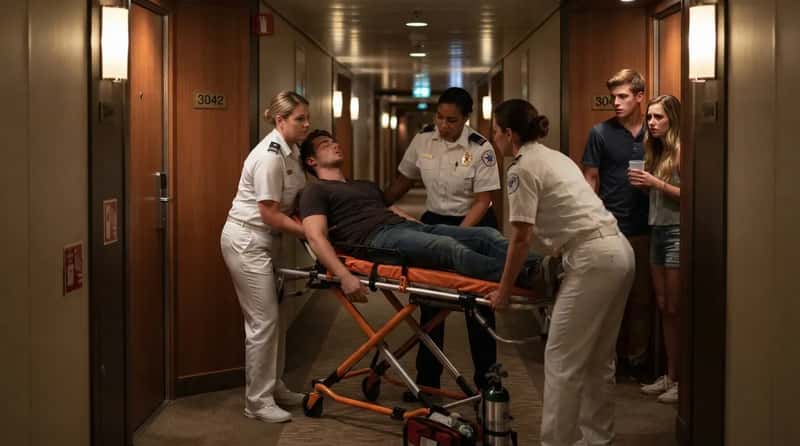
Free-flowing drink packages mean alcohol-related incidents are a steady stream in every ship’s infirmary, and doctors say the warning signs almost always get ignored by friends first. Slurred speech, stumbling, and vomiting get treated as a funny story instead of a medical situation, right up until someone doesn’t wake up easily. By then, it’s a much bigger response than it needed to be.
Cruise ship physicians report that alcohol-related complaints are among the most frequent reasons for a late-night medical call, and most could’ve been de-escalated hours earlier with a simple check-in. The friction point here is real: many passengers see drink packages as “part of the deal” and resent any suggestion of moderation. But #17 is the one that starts almost every cruise, for almost everyone.
#17 – Seasickness That’s Quietly Turned Into Dehydration

Seasickness is by far the number one reason passengers visit the ship’s medical center, especially first-time cruisers still finding their sea legs. Most people try to power through it with saltines and ginger ale for days before finally giving in. The problem is that repeated vomiting from motion sickness causes real dehydration, not just discomfort.
Doctors say passengers often wait until they can’t keep water down for a full 24 hours before asking for help, at which point they need IV fluids instead of a simple patch or pill. Over-the-counter options like Dramamine and Bonine work far better as prevention than as a cure once symptoms peak. A same-day visit almost always means a faster recovery. Even so, #16 is the one people brush off as just travel puffiness.
Quick Compare
- Dramamine: Fast-acting, works best taken before symptoms start, can cause drowsiness
- Bonine (meclizine): Once-a-day dosing, generally less drowsy than Dramamine
- Ginger candy or tea: Mild relief for early queasiness, not strong enough once vomiting starts
- Scopolamine patch: Prescription-only, worn behind the ear, prevents symptoms rather than treating them after the fact
#16 – Swollen Ankles Passengers Blame on “Too Much Walking”

Long flights followed by days of sitting at the pool or in a theater seat create the exact conditions for leg swelling, and most passengers assume it’s just fluid retention from salty ship food. Doctors say this is one of the more concerning complaints to see delayed, because sudden one-sided swelling can signal a blood clot rather than simple bloating. Cruises involve more prolonged sitting than people realize, especially on sea days.
One-sided leg swelling combined with warmth or pain is treated as a possible clot risk, not a cosmetic issue, by onboard medical teams. The advice is simple: get up and walk regularly, and don’t wait more than a day to mention swelling that feels different from normal travel puffiness. That’s nothing compared to #15, which hides in plain sight.
#15 – The Panic Attack Mistaken for Seasickness

Chest tightness, rapid breathing, and a racing heart in the middle of the ocean get chalked up to motion sickness far more often than they should. Ship doctors say anxiety and panic attacks are genuinely common at sea – new environment, no easy exit, unfamiliar noises – but passengers rarely name it that way when they finally come in. Instead, they describe it purely as a physical problem.
This is one of the more candid admissions from cruise medical staff: many say passengers are more comfortable requesting motion sickness pills than admitting they’re having a panic attack, which delays the right treatment. Being upfront about anxiety symptoms gets a faster, more accurate response than describing it as seasickness. But #14 has nothing to do with feeling sick at all.
#14 – Running Out of Prescription Medication Mid-Cruise

Passengers on blood pressure medication, insulin, or blood thinners regularly miscalculate how many days their cruise actually is, especially with pre- and post-cruise travel days added on. Rather than telling the medical center immediately, many wait until they’ve already missed a dose or two, hoping to stretch what’s left. That gap is exactly when complications show up.
Ship infirmaries stock some common medications, but not every dosage or brand, and coordinating an emergency prescription refill at a foreign port takes far longer than most passengers expect. Doctors say the fix is almost always available if passengers ask on day one instead of day four. Waiting shrinks the options dramatically. Compare that to #13, where the buffet becomes the real threat.
#13 – Diabetic Passengers Riding Out Blood Sugar Swings

Cruise buffets and irregular excursion schedules throw off even a carefully managed diabetic routine, and doctors say many passengers try to self-correct for days rather than flagging it early. Skipped meals before a long shore excursion, combined with extra walking, can send blood sugar crashing in a way that’s hard to reverse alone. By the time someone feels genuinely unwell, it’s often already an emergency.
Onboard medical teams keep glucose monitoring equipment specifically because this pattern repeats on almost every sailing. A same-day check-in when blood sugar first feels “off” takes minutes; waiting until symptoms are severe can mean an IV and a delayed excursion. Passengers managing diabetes are encouraged to treat the infirmary as a first stop, not a last resort. Still, #12 is one doctors say gets hidden out of embarrassment more than logic.
#12 – The Cough That’s Actually Pneumonia, Not “Just a Cold”

Respiratory complaints are among the most common issues cruise doctors treat, alongside indigestion, foodborne illness, and injuries from slips or activities. A cough that lingers past day two on the ship almost always gets self-treated with lozenges and naps instead of a doctor’s visit. Close quarters – shared elevators, dining rooms, theaters – make respiratory illness spread fast, and a mild cold can tip into something worse in someone with underlying lung issues.
Doctors say persistent chest congestion that comes with fever is one of the most under-reported complaints on any sailing, largely because passengers don’t want to be isolated to their cabin. Ironically, waiting longer often makes isolation more likely, not less, because the illness has time to fully develop. Early reporting is almost always the shorter path back to enjoying the cruise. Yet #11 gets waved off for the opposite reason.
At a Glance
- Respiratory illness spreads fastest in shared spaces like elevators, theaters, and dining rooms
- A cough paired with fever lasting more than 48 hours is treated differently than a routine cold
- Isolation periods tend to be shorter when illness is reported and treated early
- Ships carry basic respiratory treatment, but not equipment for severe pneumonia cases
#11 – Dizzy Spells Written Off as “Just Finding My Sea Legs”

New cruisers expect a little wobbliness the first day or two, so genuine dizzy spells often get lumped in with normal adjustment to life on a moving ship. The problem is that true vertigo – the room spinning, not just mild unsteadiness – doesn’t resolve the way sea legs do, and it can point to inner ear issues, medication side effects, or blood pressure problems. Passengers frequently wait several days before mentioning it.
Ship doctors say the key difference is whether symptoms improve as the cruise goes on; sea legs get better, true vertigo usually doesn’t. Waiting to find out the hard way – often during a shore excursion involving stairs or uneven ground – is when these cases turn into injuries. A quick check on day two saves a lot of guesswork. That’s nothing next to #10, which patients try to sleep off entirely.
#10 – The “Worst Headache of My Life” Passengers Sleep Off

Headaches are common at sea, tied to dehydration, sun exposure, and even the hum of engine vibration in certain cabin locations. But doctors say there’s a specific type of complaint they wish came in sooner: a sudden, severe headache unlike any the person has had before. Most passengers reach for ibuprofen and try to sleep it off for a full day before mentioning it to anyone.
A headache described as the worst of someone’s life, especially with vision changes or neck stiffness, is treated as a red flag, not a routine complaint, by onboard physicians. Most of these cases turn out to be benign – but the rare ones that aren’t need speed, not patience. Reporting it immediately costs nothing and rules out the scary possibilities fast. But #9 starts as something so minor people don’t even call it a symptom.
#9 – The Allergic Reaction That Starts “Just a Little Itchy”

Buffet dining and unfamiliar regional dishes mean allergic reactions are a steady presence in ship medical logs. Doctors say the danger isn’t the first reaction – it’s the second one, minutes or hours later, that passengers don’t see coming because the first round of itching seemed to fade on its own. Waiting to see if it “gets worse” is exactly the wrong instinct with food allergies.
Mild allergic symptoms can escalate to a full reaction requiring epinephrine within the same hour, which is why medical teams stress reporting even minor hives immediately rather than watching and waiting. Ships carry epinephrine and antihistamines specifically for this reason, but only help if passengers show up before symptoms peak. Early reporting turns a possible emergency into a five-minute treatment. Even that pales next to #8, the one doctors bring up unprompted every single time.
#8 – Not Reporting Vomiting or Diarrhea “To Avoid Being Isolated”

This is the single biggest source of frustration among cruise medical staff, and it’s almost entirely avoidable. Passengers who develop stomach symptoms frequently keep quiet to avoid cabin isolation, not realizing that if a child is vomiting or having diarrhea, they should be taken to the medical center so staff can evaluate their symptoms, since assuming it’s just seasickness could spread a contagious illness to others. The same logic applies to adults.
The math here is stark: rates of GI illness among passengers on longer voyages fell significantly between 2006 and 2019, largely because reporting and containment improved. A single unreported case of norovirus can spread through a dining room within a day if the person keeps eating in public areas. Doctors say honest, immediate reporting is the single biggest lever passengers have over whether an outbreak happens at all. But #7 is the one nobody thinks to mention because it doesn’t feel connected.
#7 – Chest Congestion After a Day in the Pool or Hot Tub

Respiratory symptoms that show up specifically after time in a ship’s pool or whirlpool area get treated as coincidence far too often. Ship sanitation programs specifically monitor for issues like Legionella, and CDC’s Vessel Sanitation Program addresses public health issues beyond GI illness, including controlling Legionella, managing pests, and ensuring clean air and water. Passengers who develop a cough or fever within days of pool exposure often don’t connect the two.
Reporting the timing and location of exposure helps doctors rule out water-related respiratory illness fast, rather than treating it as a generic cold. It’s a detail most passengers wouldn’t think to mention unless directly asked, which is exactly why doctors say it gets missed. A quick mention of “I was in the hot tub two days ago” can change the whole diagnosis. Still, #6 is far more urgent than almost anything on this list.
#6 – Numbness or Slurred Words Brushed Off as Fatigue

Sudden numbness on one side of the body, or words that suddenly come out wrong, are among the most time-sensitive symptoms a ship’s medical team can see – and also among the most delayed. Passengers, especially older travelers already tired from a day of excursions, assume it’s exhaustion and decide to nap it off. On land, this delay is dangerous; at sea, hundreds of miles from a stroke unit, it’s even more critical.
Cruise ship physicians are highly qualified, typically trained in emergency medicine, and often trained in advanced trauma life support, cardiovascular emergencies, sedation, and even minor surgical procedures, precisely so they can stabilize a stroke case immediately. Every hour of delay in reporting stroke-like symptoms reduces the treatment options available once the patient reaches land. This is the fastest possible medevac call a ship will make, but only if someone reports the symptoms right away. But #5 is the one people are talking themselves out of every single day.
#5 – The Racing Heartbeat People Blame on “Too Much Coffee”

An irregular or unusually fast heartbeat gets explained away constantly – too much caffeine, too much excitement about the itinerary, too much sun. Doctors say passengers with a history of heart issues are especially prone to normalizing new palpitations rather than reporting them the same day they start. On a ship, cardiac monitoring equipment is sitting a few decks away, unused, while people wait it out in their cabin.
The stakes here are unusually high: approximately 3% of medical center visits are for cardiovascular reasons, yet 80% of onboard deaths are due to cardiovascular events. That gap between how rarely people report heart symptoms and how often heart problems actually kill onboard is the single biggest disconnect ship doctors describe. A same-day EKG takes minutes and can catch a dangerous rhythm before it becomes a crisis. Compare that to #4, which gets waved off with a joke.
Worth Knowing
- About 3% of onboard medical visits involve cardiovascular complaints
- Yet cardiovascular events cause roughly 80% of all onboard deaths
- A same-day EKG takes only a few minutes with no advance appointment needed
- Cardiac monitoring equipment is standard on nearly every major cruise ship’s medical deck
#4 – Fainting Spells Explained Away as “Just the Heat”

A brief fainting spell on a hot pool deck feels easy to explain, and most passengers wave off concerned crew members with a joke about the sun. Doctors say this is one of the more dangerous assumptions on a ship, because fainting has dozens of causes – from simple dehydration to serious cardiac rhythm problems – and only an evaluation can tell the difference. Waiting to see if it happens again means waiting to find out the hard way.
A single unexplained fainting episode is treated as a mandatory medical evaluation on most ships, not an optional one, precisely because the underlying cause can be so varied. Retirees who spend significant time cruising are watched especially closely here, since they often lack regular land-based care and account for many onboard patients. A same-day check rules out the serious causes fast. Yet #3 changes the entire calculation for one specific group of passengers.
#3 – Hiding a Pregnancy Complication Past the Cutoff Point
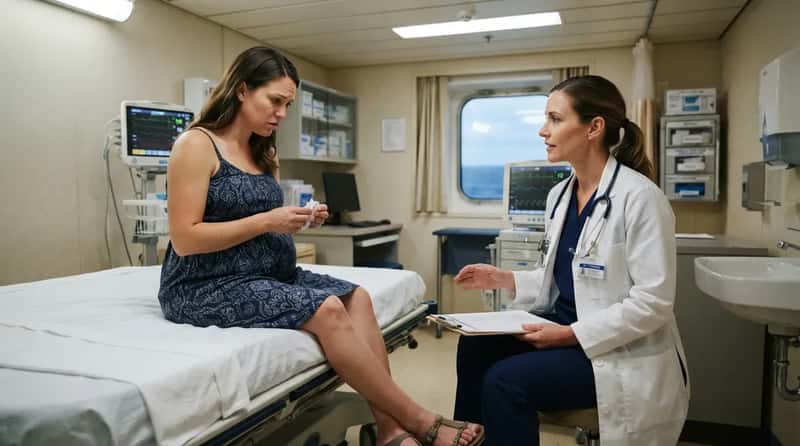
Cruise lines enforce strict pregnancy policies for a reason most passengers don’t fully appreciate until it’s relevant to them. Pregnancy policies are strict on any cruise line, with most barring women beyond 24 weeks gestation at the end of the cruise, since there’s no NICU onboard and medevacs are far more complicated at sea. Some passengers who develop complications mid-cruise delay reporting them, worried about being disembarked early or losing the trip entirely.
That delay is exactly what doctors warn against, because the policy is mostly honor-system based, with a doctor’s note sometimes required – meaning early, honest communication actually protects the passenger’s options rather than limiting them. Waiting to report pregnancy-related pain or bleeding until a symptom becomes severe removes the easier, earlier intervention options entirely. A same-day conversation with the medical team, even an uncomfortable one, keeps far more choices on the table. None of that compares to #2, which starts as something you’d barely call an injury.
#2 – The Small Wound That Quietly Turns Septic
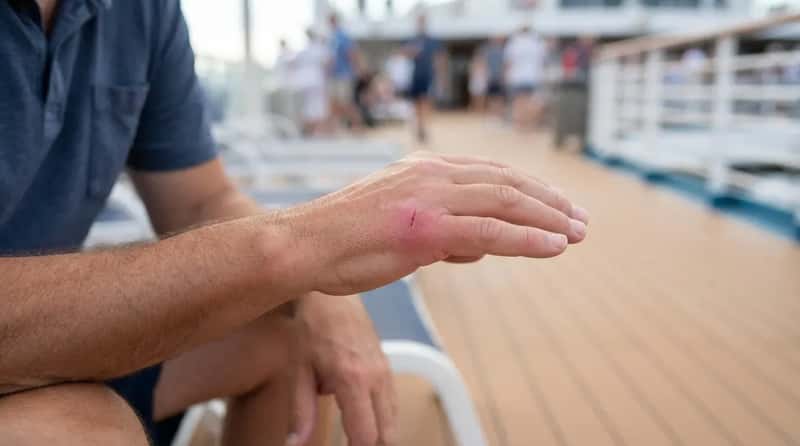
A minor cut from a coral reef, a rusty railing, or even a shaving nick sounds too small to matter, and most passengers clean it themselves and move on with the vacation. Ship doctors say this is one of the most consistently underestimated risks onboard, because warm ocean water and humid air are ideal conditions for infection to take hold fast. By the time redness spreads or fever sets in, days have often already passed.
A wound that looks fine on day one can show signs of a serious infection by day three, especially after any contact with seawater. Cruise medical centers carry the antibiotics and wound care supplies to stop this early, but a delayed visit sometimes means the difference between a topical treatment and an IV antibiotic course. Ship doctors consistently name untreated wounds as one of their most preventable serious cases. But #1 is the one every single ship doctor agrees on, without exception.
#1 – Chest Pain Explained Away as “Probably Just Indigestion”
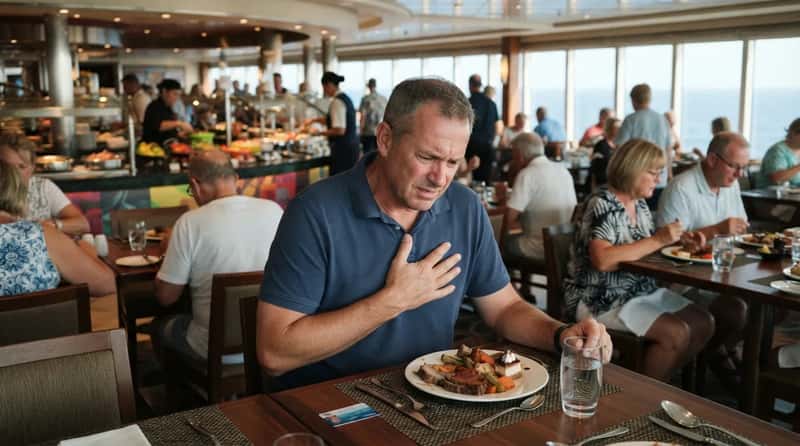
This is the one ship doctors say they wish passengers reported faster than anything else on this list, and the numbers back up why. Chest pain and pressure get blamed on rich buffet food, too much sun, or anxiety about a rocky sea day far more often than they get reported as a possible cardiac event. Because cardiovascular events account for the vast majority of onboard deaths despite making up only a small share of medical visits, this single symptom carries more weight than any other on the ship.
The passengers who wait the longest to report chest pain are disproportionately represented in the most serious outcomes doctors see at sea. Onboard teams have defibrillators, cardiac monitors, and doctors trained specifically for this scenario, but every one of those tools only helps if someone walks through the door in time. Ship physicians are blunt about this: no cruise vacation is worth gambling on “probably nothing.” Reporting chest pain immediately, every single time, is the one piece of advice every ship doctor agrees on without exception.
Across all 25 of these, the pattern is the same: the delay, not the symptom itself, is usually what turns a minor visit into a real problem. Most issues cruise doctors see are genuinely routine, and about 95% of acute illnesses or injuries are treated or managed entirely onboard. The passengers who fare best aren’t the ones who never get sick – they’re the ones who walk down to Deck 2 the same day something feels off, instead of the day it becomes undeniable.
Have you ever waited too long to see a ship doctor, or watched someone else brush off a symptom that turned out to be serious? Drop your story in the comments.