Most people assume campground etiquette is just common sense: keep it down, keep it clean, keep to yourself. But talk to anyone who’s spent 200-plus nights hooked up at RV parks and you’ll hear a different story – one where the real rules are unwritten, unspoken, and learned the hard way after a ranger knocks on the door at 11 p.m.
The gap between what beginners think campground etiquette looks like and what veteran RVers actually practice is bigger than most newcomers realize. Here’s what the pros actually do, night after night, that separates a peaceful stay from becoming “that camper” everyone talks about at the next site over.
#26 – Quiet Hours Aren’t a Suggestion, They’re a Contract
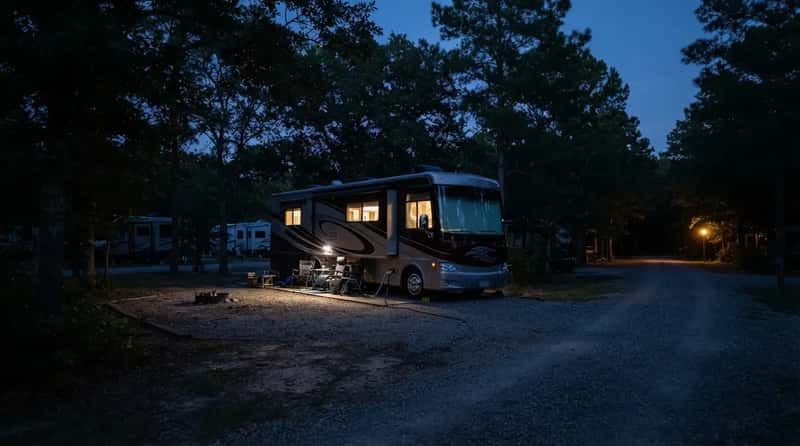
Most first-timers treat quiet hours like a polite guideline they can bend if the campfire conversation is good. Seasoned RVers know better: at most state parks, national forests, and private campgrounds, quiet hours are strictly enforced, most commonly from 10:00 PM to 6:00 AM, though some parks push it later into the morning.
Break it and you’re not just annoying a neighbor – ignoring these rules can earn you a warning, a fine, or even an eviction. Veteran campers don’t wait for a lecture. They wind everything down ten minutes early, every single night, because they’ve seen what happens to the people who don’t.
#25 – Generator Hours Are a Totally Separate Rulebook
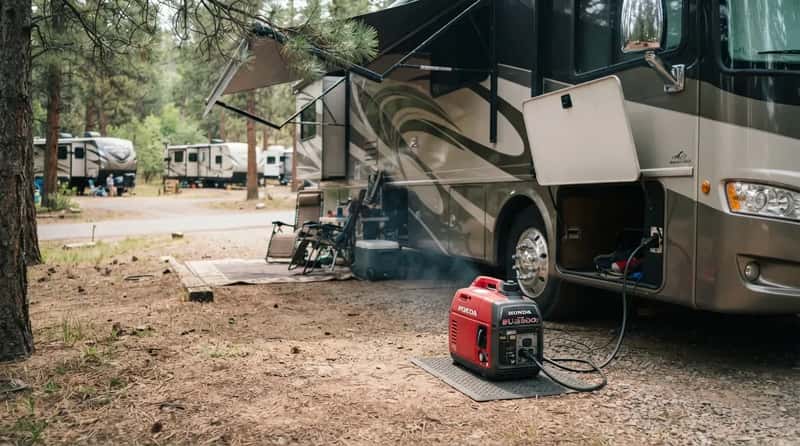
Here’s the mistake almost every new RVer makes: they assume generator rules and quiet hours are the same thing. They’re not. Campground generator policies vary by land management agency, but the most common pattern is run hours from 8 a.m. to 8 p.m.
Some parks are looser, some are stricter. A few loosen that to 7 a.m. to 10 p.m., while others tighten it to 9 a.m. to 7 p.m. Experienced RVers never assume – they confirm the specific window for their site instead of guessing. That single habit avoids the single most common complaint filed with camp hosts.
Quick Compare
- National forests & BLM land: often 8 a.m. to 8 p.m.
- Looser private campgrounds: sometimes 7 a.m. to 10 p.m.
- Stricter resort-style parks: as tight as 9 a.m. to 7 p.m.
- Rule of thumb: confirm the exact window at check-in, never assume it matches your last stop.
#24 – Real RVers Shut the Generator Off Early, Not on the Dot
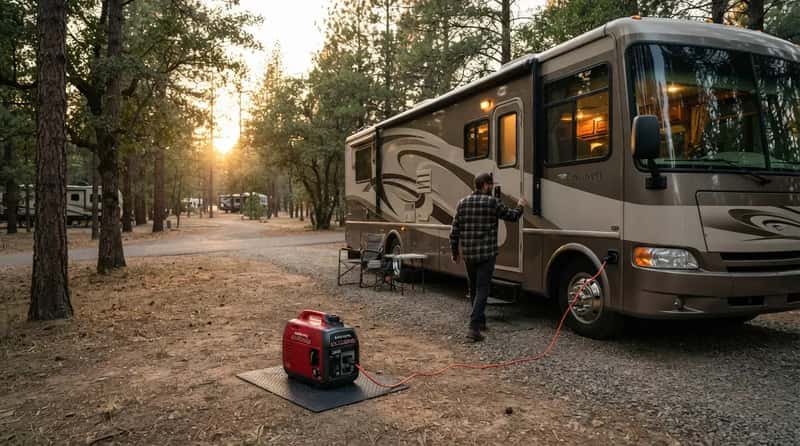
Turns out, running your generator right up to the exact second quiet hours begin is a rookie move. Keeping it running until the last minute is a common mistake, because residual noise like engine clatter or a final horn can still trigger complaints even after the clock hits ten.
Veterans build in a buffer, shutting down at least 10 minutes early. Some parks have even codified this instinct into hard science – California state parks cap generators at 60 dB measured 30 feet from the unit, a limit that rules out nearly all conventional open-frame models. But that’s nothing compared to what seasoned campers do with where they actually place the thing.
#23 – Generator Placement Is Basically a Science Now
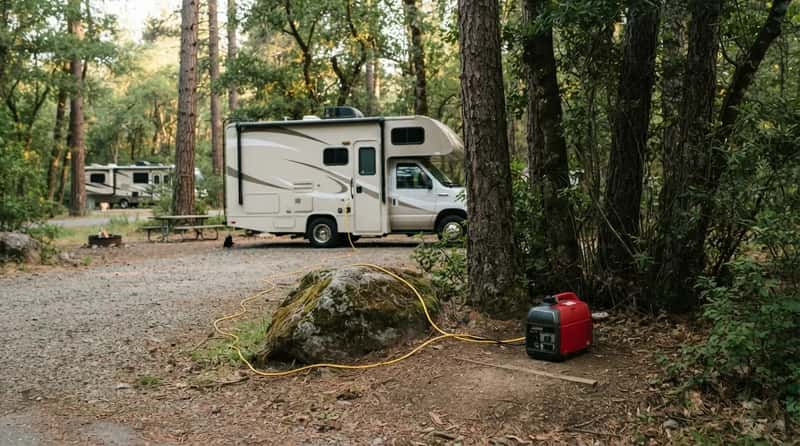
Most beginners plug in a generator and forget about it. Seasoned owners treat placement like a small engineering project, positioning the unit at least 15 to 20 feet from their own site and farther from neighboring sites whenever possible.
They’ll run a long cord to hide it behind something solid – a 50-foot extension cord tucked behind a tree, a vehicle, or a big rock. Exhaust direction matters just as much as volume, since pointing fumes and noise away from other campsites and trails keeps both from drifting downwind. It’s a small habit, but it’s the difference between a neighbor who waves and one who complains to the office.
#22 – Bright Lights at Night Are the Silent Campground Sin
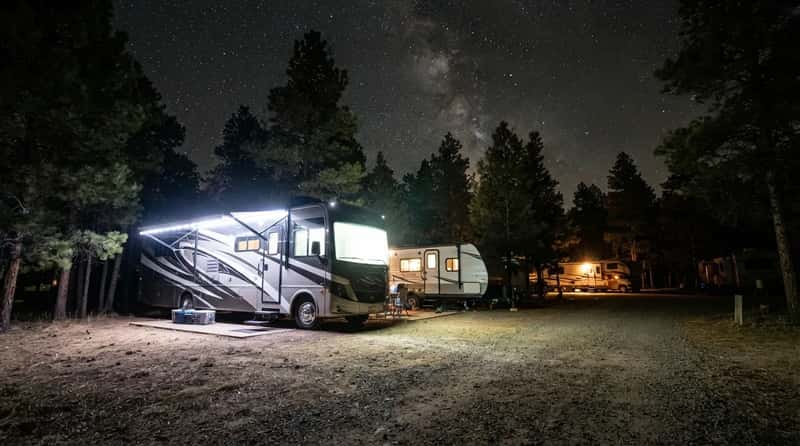
Nobody talks about light pollution at campgrounds, but ask any full-timer and they’ll tell you it’s a bigger issue than noise on some nights. Bright, unshielded lights spill into neighboring rigs and wash out the stars many campers came out here to see in the first place.
Even the National Park Service has weighed in on this one, suggesting campers keep lights shielded and pointed down, or switch them off entirely once settled in for the night. Seasoned RVers treat their string lights and porch lamps the same way they treat their stereo – off, dimmed, or aimed at the ground the second the sun goes down.
#21 – Rolling In Late Means Going Full Stealth Mode
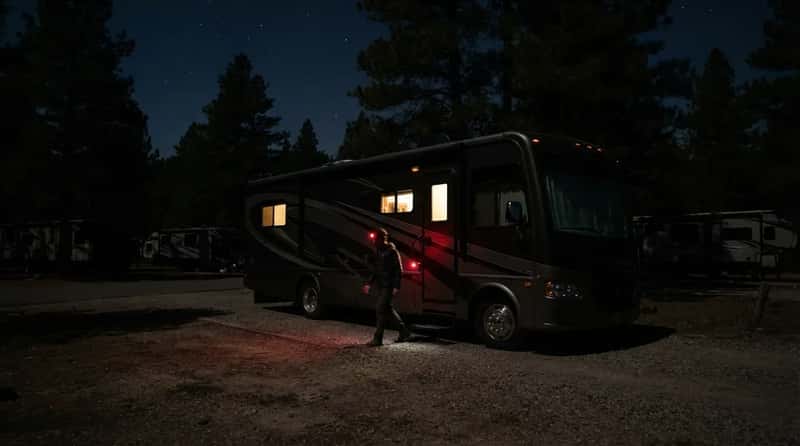
Traffic happens. Ferry delays happen. Every veteran RVer has arrived at a campground well after dark at least once, and the ones who’ve done it right know the drill: park in designated late-arrival bays if available, dim your headlights, use a low red headlamp to navigate, and keep everything as quiet as possible.
The unpacking can wait. Full setup and organization gets left for morning instead of being rushed at 10 p.m. with clattering totes and slamming doors. It sounds obvious, but it’s the rule most newcomers break without even realizing it.
#20 – Leaving Early Means Packing the Night Before
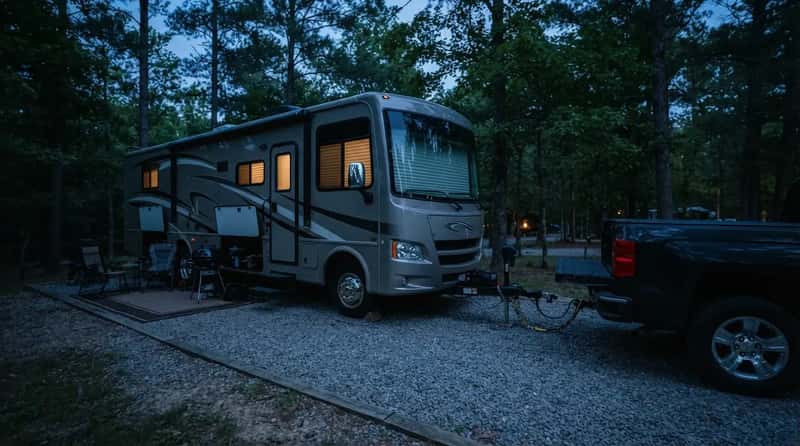
The flip side of a stealthy arrival is a stealthy exit, and seasoned campers plan for it a full day ahead. If they plan to leave before daybreak, they pack and clean up the previous evening instead of scrambling at dawn.
That means the awning is down, the chairs are stowed, and the hitch is hooked up before anyone’s alarm even goes off. A truck idling for ten minutes at 5 a.m. while someone finishes their coffee is one of the fastest ways to earn a dirty look through a neighbor’s window. Veterans do their goodbyes the evening before, so the morning is just a quiet roll-out.
#19 – Knocking on Someone’s RV Door Is a Bigger Deal Than You Think
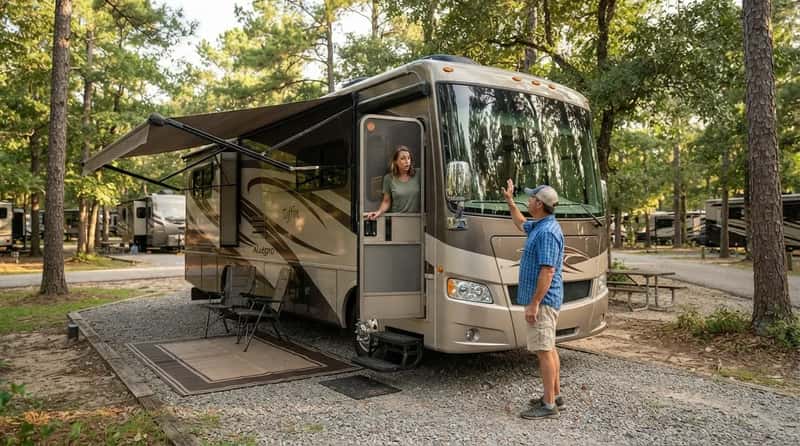
This one surprises a lot of newcomers: unannounced visits are treated like a genuine breach of etiquette, not a friendly gesture. It’s good campsite etiquette to avoid knocking on the door of anyone’s RV, unless they’re friends and family who are expecting you.
The reasoning makes sense once you hear it. Many RVers use camping as an escape from daily life, and an unexpected knock can feel like an unwanted incursion – for some, it’s an outright invasion of privacy. Veteran campers wave from a distance and let the other person decide if they want to close that gap.
#18 – “My Dog Is Friendly” Doesn’t Excuse the Leash Rule
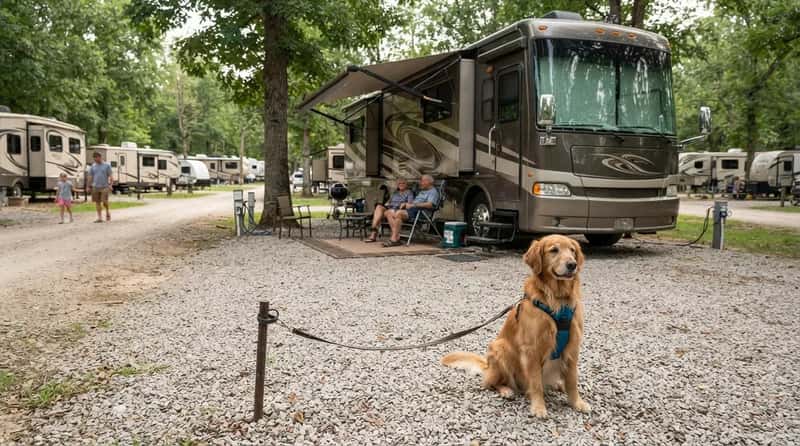
Experienced campground staff will tell you this is the single most-violated rule in America’s RV parks. Almost every campground has a posted leash rule, and it gets ignored constantly by people who’ve decided their dog is the exception.
The truth most dog owners don’t want to hear: nobody else knows that your dog is friendly. Seasoned RVers keep the leash on even for the calmest, most well-trained dog, because the goal isn’t proving their pet is safe – it’s making sure every stranger walking past never has to find out the hard way.
Fast Facts
- About 55 percent of campers now bring a pet along on their trips, a share that keeps climbing as pet-friendly sites expand.
- Many campgrounds hold dogs to a leash no longer than 6 feet, even outside the owner’s own rig.
- Constant barking is treated as a real problem, not a quirky nuisance, and repeat offenders can be asked to find other accommodations.
#17 – Barking Dogs Left Alone Outside Ruin More Trips Than You’d Guess
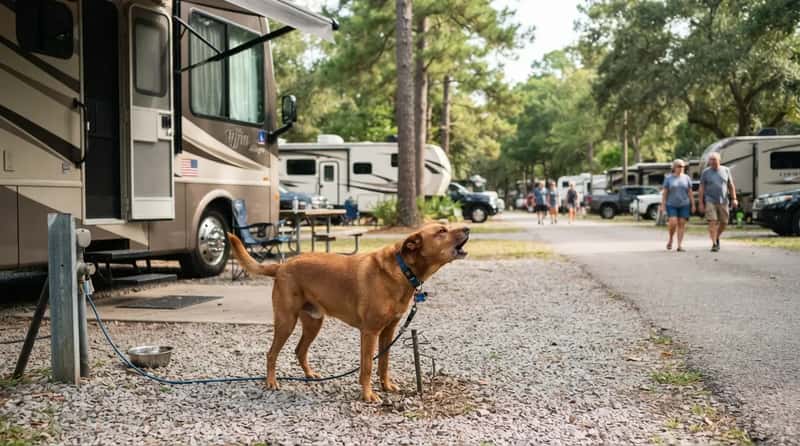
Thin walls make this one worse than most owners realize. A dog howling every time a squirrel twitches or another camper walks by can turn a peaceful weekend into a long one for everyone within earshot, since RV walls don’t offer much soundproofing.
Veteran RVers never treat their rig as a kennel. If the dog has to stay behind for a few hours, it goes inside with airflow and water, not chained outside where every passerby sets off another round of barking. Campgrounds are typically full of pet lovers, but everyone appreciates the owners who keep things clean, quiet, and respectful – that last part is what most beginners forget.
#16 – The Dump Station Has Its Own Unspoken Speed Limit
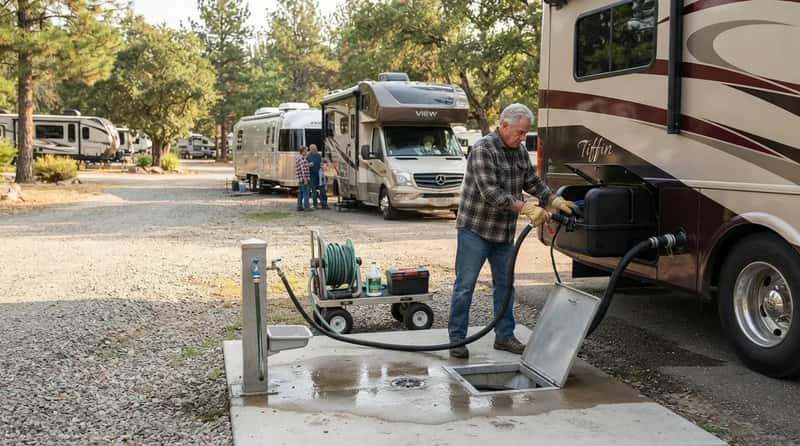
Nothing exposes a rookie faster than fumbling at the dump station while a line forms behind them. Veteran RVers treat it like a pit stop: have what you need ready before you pull up, know how your system works before you’re in line, get in, do what you need to do, rinse down the station, and get out – because the people behind you have full tanks too.
It’s not about rushing the process unsafely; it’s about not turning a two-minute job into a fifteen-minute one because you’re searching for gloves in a side compartment. Seasoned campers stage everything the night before, so the dump station is never the place they reorganize their basement storage.
#15 – Dumping the Black Tank Has a “Polite Hour,” Too
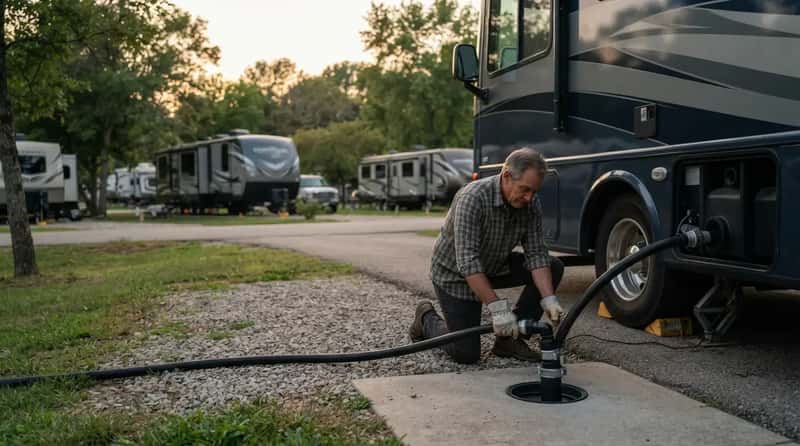
Timing matters just as much as speed. Experienced RVers avoid dumping when the whole campground is awake and outside, saving the job for quieter hours or moments when their neighbor isn’t around.
They also treat their equipment like it’s on display, because in a sense it is. Keeping sewer hoses in good shape is good RV etiquette, since it ensures they won’t leak and create a nasty mess. A cracked hose at 3 p.m. on a Saturday, in full view of every family walking to the pool, is the kind of memory that follows a camper around a park for the rest of the week.
#14 – Laundry Room Etiquette Is Where Grudges Actually Form
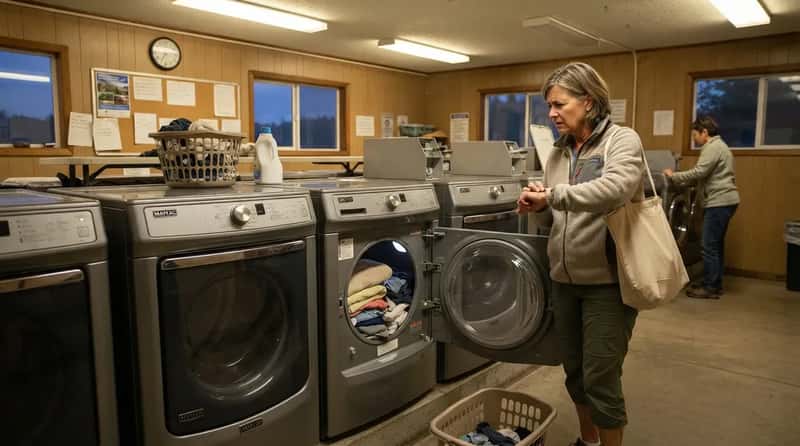
Small shared spaces breed big resentment, and nowhere is that more true than the campground laundry room. Leaving clothes sitting in a machine for two hours after the cycle finishes is one of the fastest ways to make an enemy over a folding table.
Seasoned full-timers set a phone timer the second they load the washer, then switch loads promptly to make space for the next person. It sounds minor until you’re the one standing there at 7 p.m. waiting on a dryer that finished at 4.
#13 – The Bathhouse Rule Nobody Posts a Sign For

There’s no official policy taped to the shower door, but veteran RVers follow one anyway: leave it cleaner than you found it. Wipe down surfaces, don’t spread products across the counter, and don’t monopolize a single shower for forty-five minutes during peak morning hours when people are waiting.
It’s a small courtesy that says a lot about the kind of camper you are. The campers who’ve been doing this for years treat the bathhouse like a rest stop, not a spa day – in and out, tidy, and considerate of the six other people waiting outside.
#12 – Overloading the Power Pedestal Is More Common Than You’d Think
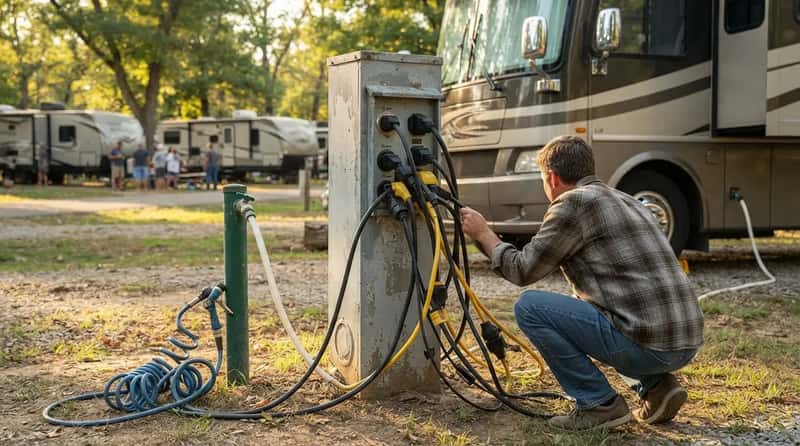
Shared electrical hookups and water spigots seem like small things until someone hogs them. Good etiquette means not overloading campground power pedestals or monopolizing a shared water faucet while three other rigs wait their turn.
Veteran RVers know their rig’s amperage draw and plan around it, instead of daisy-chaining every appliance at once and tripping a breaker for the whole loop. Filling water jugs, rinsing gear, or topping off a fresh tank gets done quickly, especially during the morning rush.
#11 – That 5 MPH Speed Limit Sign Isn’t Decorative
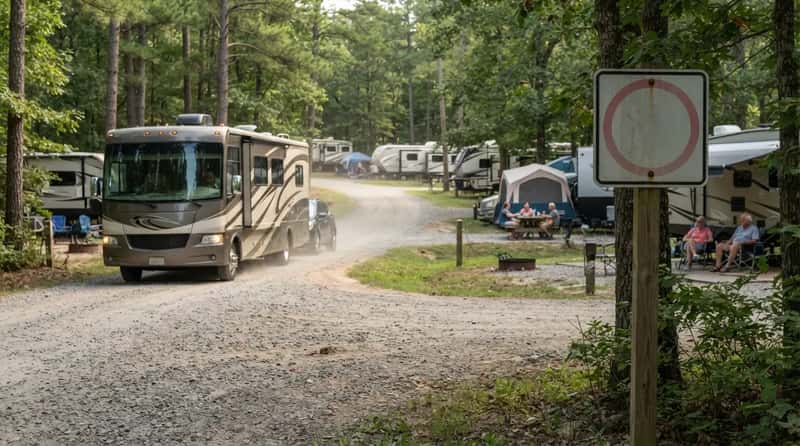
Most campgrounds post a crawling speed limit, and most newcomers assume it’s overly cautious. It’s not – most parks set that 5 mph limit for a very deliberate safety reason.
There’s a social cost to ignoring it, too. Driving slowly matters especially on gravel roads, since dust clouds aren’t fun for the folks sitting outside and kids or pets could dart into the road without warning. Seasoned RVers roll through the loop at a near-idle crawl even when there’s not another soul in sight, because the one time there is, the stakes are too high to gamble on.
Worth Knowing
- Kids and pets can dart out from behind a parked rig without warning – a 5 mph crawl leaves room to actually stop.
- Gravel and dirt loops kick up dust fast, and nobody enjoys eating it while relaxing in a lawn chair.
- Golf carts, bikes, and strollers often share the exact same narrow lanes as trucks and trailers.
- Veterans keep the crawl even on an empty loop, since that habit is what makes it automatic when it matters.
#10 – Cutting Through a Neighbor’s Site Is a Bigger Insult Than It Seems
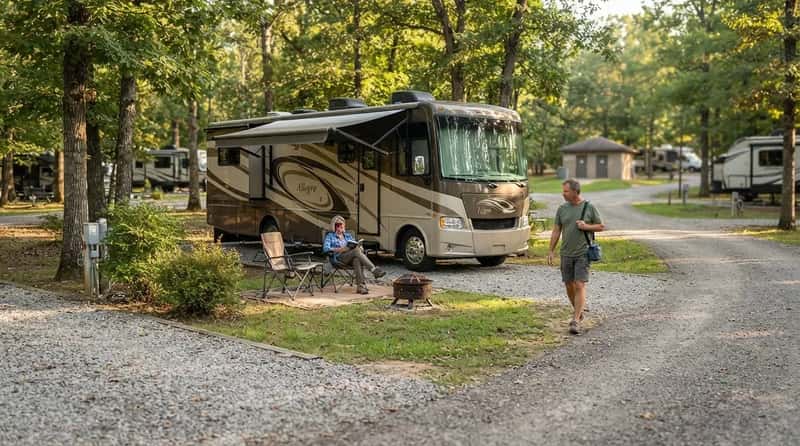
It might feel like a harmless shortcut to the bathhouse or the trash bins. Veteran RVers know it reads very differently to the people camped there – even if it’s the shortest route, walking through someone else’s site is a rule not worth breaking.
An RV site is the closest thing to a front yard many campers get all year, and treating it like a public sidewalk removes that sense of privacy fast. The workaround is simple: walk the long way around the loop road, even if it costs an extra thirty seconds. Nobody’s ever complained about a neighbor who took the long way around.
#9 – Your Awning Isn’t Supposed to Cross the Property Line
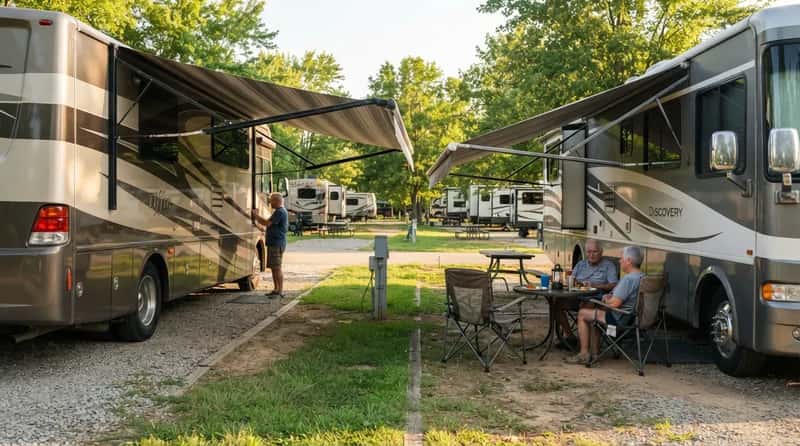
Sites at most parks are tighter than people expect, and awnings, slide-outs, and folding chairs have a way of creeping into the neighbor’s space without anyone noticing. Veteran campers treat that invisible boundary line as sacred, whether it’s a pet wandering over or a slide-out extending into someone else’s shade.
It seems minor until two rigs are parked twenty feet apart and one family’s dinner table is suddenly sitting in the other family’s yard. Experienced RVers measure the gap before they extend anything, and when in doubt, they simply ask.
#8 – Snapping Photos of Other Campers Isn’t as Harmless as It Looks
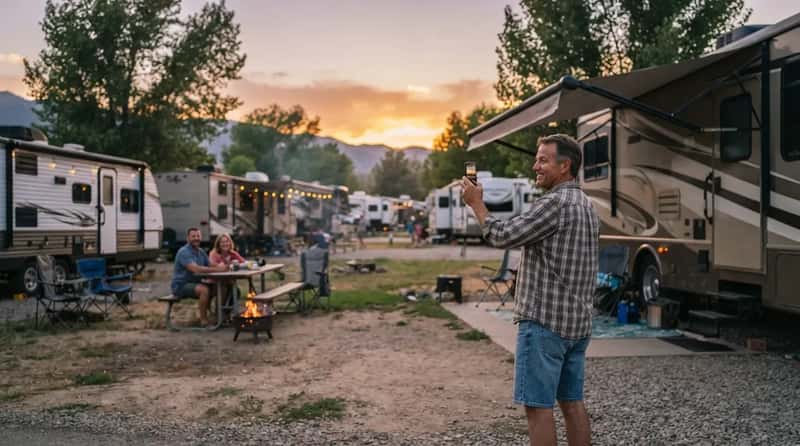
With phones out constantly for sunset shots and campfire content, this one catches a lot of people off guard. Seasoned RVers ask first, every time, because not everyone is comfortable with strangers having photos of them – even in the background of a pretty sunset.
It’s an easy rule to forget in a beautiful setting, but it’s exactly the kind of overlooked courtesy that separates a considerate camper from an oblivious one. A quick “mind if I get this shot?” costs nothing and avoids an awkward confrontation later.
#7 – Political Flags Are the Fastest Way to Split a Campground
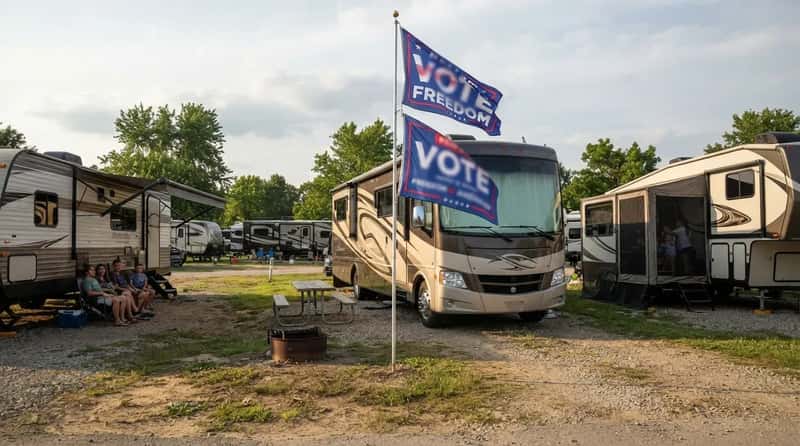
This is one of the more controversial unwritten rules, and plenty of campers disagree with it – but veteran RVers largely stick to it anyway. Political flags, banners, and signs risk alienating or annoying neighbors who never signed up for a debate on their night off.
Campgrounds are meant to be neutral ground where strangers become temporary neighbors for a night or a week. Seasoned RVers who’ve traveled through dozens of states tend to save the statements for home and keep the campsite focused on the thing everyone actually came for – the outdoors.
#6 – Campfires Have More Rules Than Most People Follow
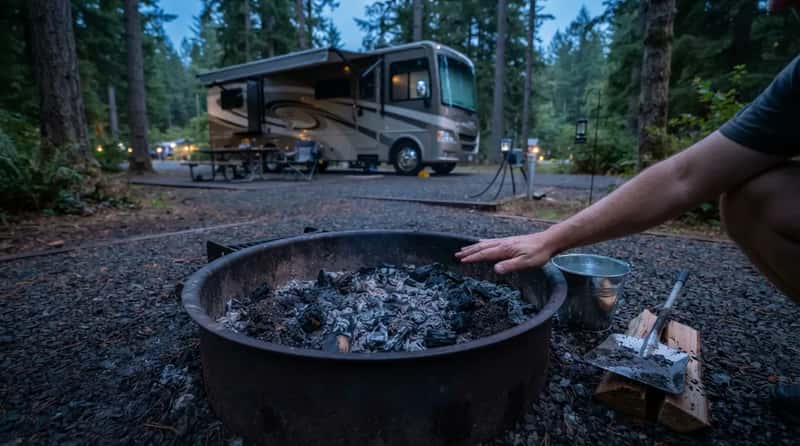
Everyone loves a campfire, but experienced RVers treat fire safety as non-negotiable, not optional ambiance. Checking current fire restrictions on arrival matters, since a campfire might be banned altogether during dry conditions, and even when permitted, it needs to stay contained in a designated fire ring or pit.
The extinguishing part is where most people cut corners. A fire should always be kept to a manageable size and fully put out before anyone heads to bed. Veteran campers don’t just let the flames die down – they douse, stir, and check for heat with a bare hand before ever walking away.
Leave the campsite better than you found it.
Woodcraft camping proverb
#5 – Not Every Wave Deserves a Conversation, and That’s Fine
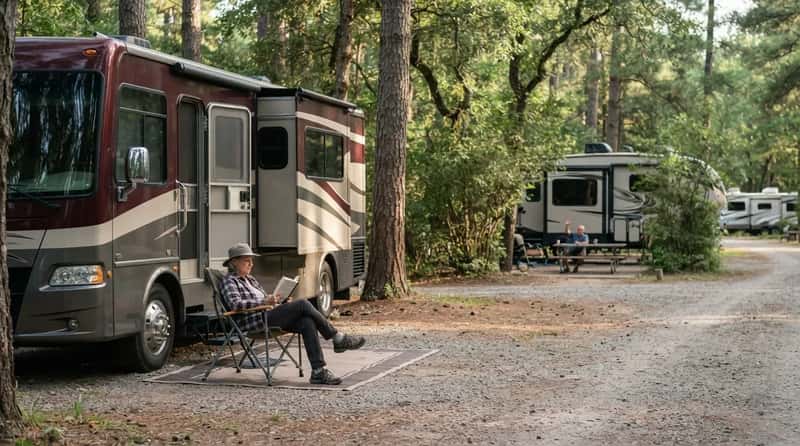
Here’s a truth that surprises a lot of newer, more social RVers: campground friendliness has limits, and respecting those limits is its own form of etiquette. A friendly wave or nod is always welcome, but not everyone wants to chat – someone reading quietly outside their rig may simply prefer solitude.
Full-time RVers who work remotely feel this one especially hard, since more people are running businesses and jobs from their campsites than ever before. Seasoned campers read the room fast: some people are there to unplug, not socialize, and a nod from a distance respects that just as much as a chat would.
#4 – Overstaying Your Site Blocks More Than Just Pavement
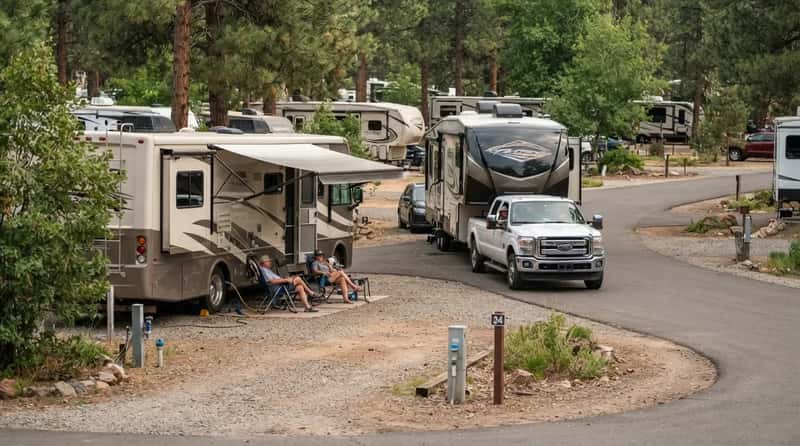
Checkout time feels like a small detail until you’re the incoming camper sitting in a truck stop parking lot waiting on a site. Veteran RVers treat their departure window seriously for exactly that reason, knowing that overstaying can strand the next family with nowhere to park.
A five-minute grace period is normal. Turning it into two hours because the coffee was good isn’t. Seasoned RVers who need extra time simply call the office and ask, rather than letting the next family circle the loop wondering where they’re supposed to go.
At a Glance
- Check-out times for most RV parks and campgrounds are between 11 a.m. and 2 p.m.
- Campground check-in times are typically between 2 and 4 p.m., giving staff a window to prep the site.
- Some parks charge an early check-in or late checkout fee instead of offering it for free.
- A quick call to the office is almost always faster than negotiating extra time in person.
#3 – An Empty Site Isn’t Automatically Up for Grabs
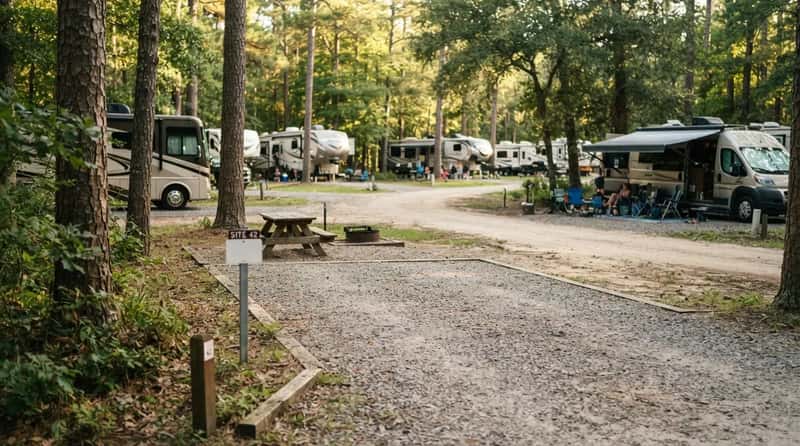
This one trips up more people than you’d expect, especially at busy parks where sites sit empty for a few hours. Veteran RVers never assume a vacant spot is fair game, because some campers check in after dark, and rolling in to find someone parked on your paid site is more than annoying – it’s disrespectful.
The fix is simple but often skipped. If a camper needs overflow parking or a temporary spot, the move is to ask the campground office instead of assuming a “vacant” site is open. A two-minute walk to the office prevents an entire evening of awkward tension between two families who both think they’re right.
#2 – Leaving a Site Cleaner Than You Found It Is the Real Golden Rule
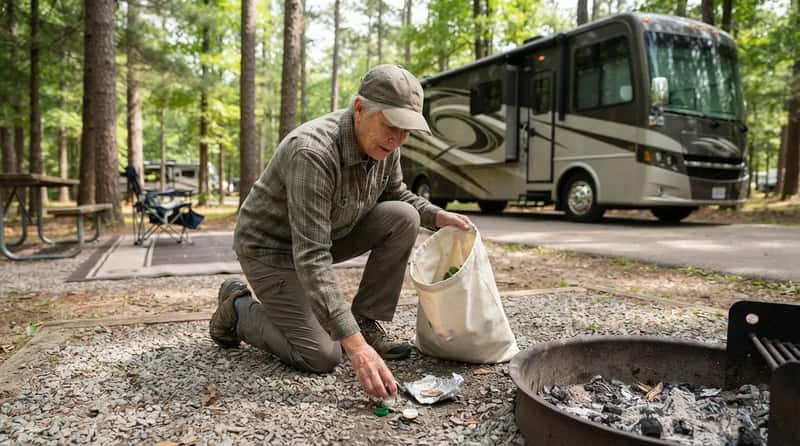
Nearly every veteran RVer repeats a version of this same line, because it’s the one habit that quietly protects the entire hobby. Nothing ruins nature faster than litter, and the simple standard they hold themselves to is leaving the site cleaner than they found it.
It’s not just about trash bags. It’s about pulling a stray bottle cap out of the gravel, packing out someone else’s forgotten tent stake, and treating the site like it belongs to the next family, not just the current one. Respecting the land and fellow campers is the difference between a campground that stays open for another twenty years and one that gets shut down after complaints pile up.
#1 – Treat Every Neighbor Like You’ll See Them Again, Because You Might
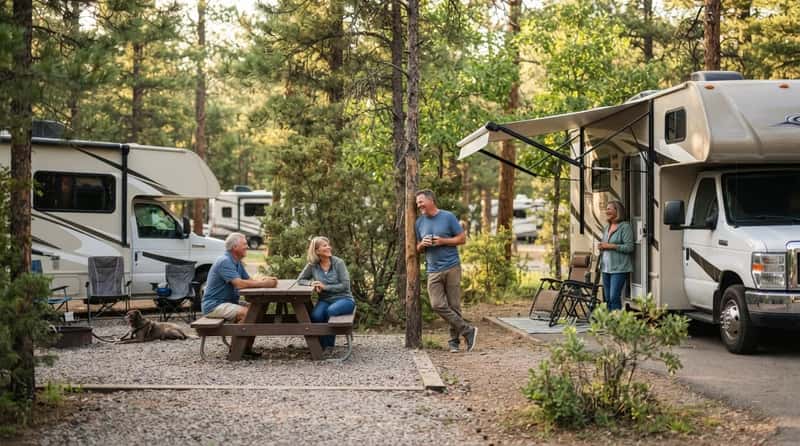
After years on the road, this is the rule that veteran RVers say matters more than any posted sign: when in doubt, think about how you’d want to be treated if the roles were reversed.
It sounds simple because it is. Every rule on this list – the leash, the generator, the lights, the awning line – traces back to this one instinct. The campers who’ve been doing this the longest aren’t the ones with the fanciest rigs. They’re the ones every neighbor hopes shows up at the site next door.
None of these rules are complicated on their own. What surprises most beginners is how many of them are unwritten – never posted on a sign, never handed out at check-in, just quietly enforced by the community of people who’ve been doing this for years. Break one and you might not hear about it. Break several and you’ll find out fast, usually in the form of a colder wave the next morning.
The RVers who never seem to have a bad night at a campground aren’t lucky. They’re just running through this list without even thinking about it anymore. Which one of these did you learn the hard way? Drop it in the comments.