Most casual travelers treat hotel breakfast like an afterthought – grab a muffin, grab some coffee, done. But guests who rack up 50, 100, even 200 nights a year treat that buffet like a small strategic operation, and it shows the second you watch them move through the room.
They know the loopholes, the restock timing, and the exact moment the trays come back out hot. What separates a rookie traveler from a road warrior isn’t the room, the loyalty card, or even lounge access – it’s what happens between 6:30 and 9 a.m. Here’s what veteran hotel guests actually do differently, and why most casual travelers are leaving money and calories on the table.
#27 – They Scout The Entire Buffet Before Touching A Plate

Veteran guests never grab the first plate they see and start piling food on. Instead, they walk the full length of the buffet once, empty-handed, to see everything on offer before committing anything to a plate.
This single lap prevents the classic rookie mistake of filling up on pastries near the entrance and missing the hot protein station tucked in the back. A quick scouting lap means fewer wasted calories on food that isn’t actually worth eating. They treat the walk-through like a menu preview, not a wasted trip.
#26 – They Skip The Juice Machine And Head Straight For Coffee
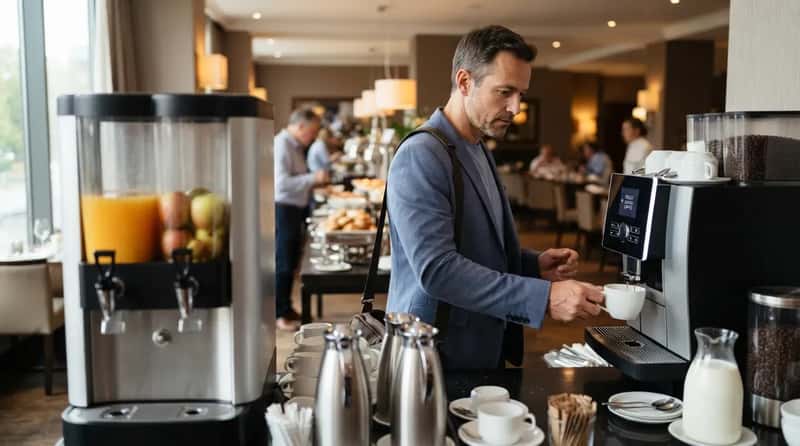
Ask any frequent hotel guest and they’ll tell you the same thing: hotel juice dispensers are the last stop, not the first. Between hygiene concerns around shared nozzles and the sugar content of reconstituted juice, most experienced travelers bypass it completely.
Instead, they go straight for the coffee station, often before it even finishes its first brew cycle. The earliest cup is almost always the freshest one of the day. Frequent flyers with elite status treat this as non-negotiable – caffeine first, everything else second.
#25 – They Time Their Entrance For The “Second Wave”
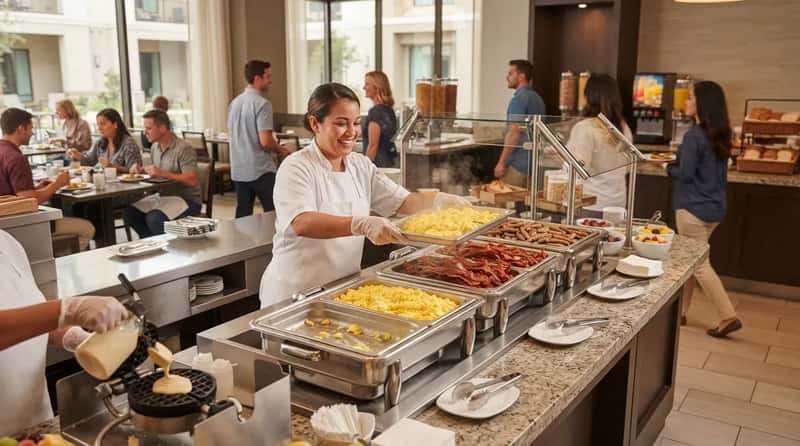
Breakfast attendants restock trays in waves, not once. Veteran guests have learned exactly when that second wave hits – usually 20 to 30 minutes after doors open – and they time their entrance accordingly.
Arrive too early and you get whatever sat overnight; arrive during the second wave and you get eggs, bacon, and waffle batter that’s actually fresh. Regulars insist the difference between the first and second tray is night and day.
#24 – They Never Trust The Word “Continental”
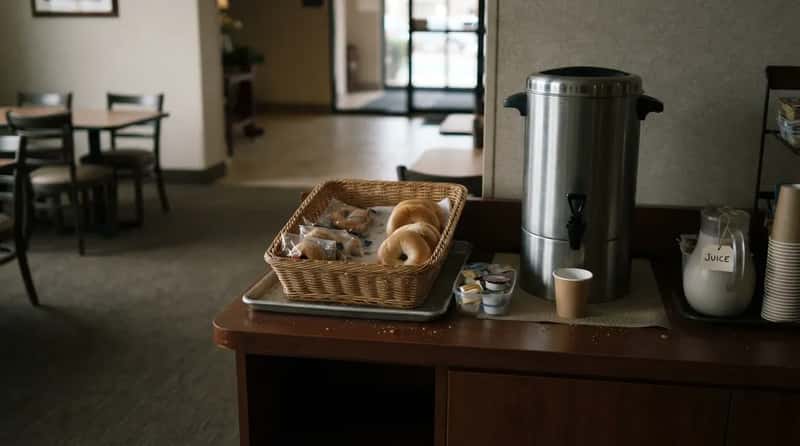
Nothing burns a frequent traveler faster than booking a room advertised with breakfast, only to find a single basket of stale bagels and a coffee urn. Experienced guests have learned that “continental breakfast” can mean anything from a full hot spread to literally two pastries and orange juice.
So before they even check in, veterans dig into recent guest photos and reviews specifically searching for the breakfast section. The word “continental” alone tells you almost nothing about what you’ll actually get. It’s become a running joke among road warriors: trust the pictures, not the brochure description.
#23 – They Turn Breakfast Into Lunch With A To-Go Container

This is one of the more controversial habits, and it splits opinion hard. Some frequent guests openly grab an extra bagel, a banana, and a handful of nuts to wrap up and take along for a midday snack, treating it as fair use of an included amenity.
Critics call it freeloading; veterans call it smart budgeting on a long road trip or work stay. Many longtime travelers argue this one habit alone saves them real money on multi-day trips. Either way, it’s common enough that some hotels have started posting subtle signs discouraging it.
#22 – They Book Brands That Guarantee Breakfast To Everyone
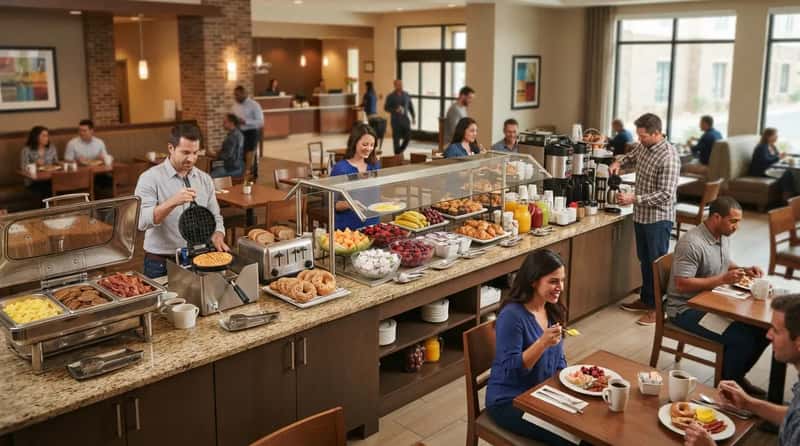
Rather than gambling on elite status rules, plenty of veteran guests simply choose brands known to include breakfast for every guest, no card or status required. Several brands offer free breakfast regardless of status, including City Express by Marriott, Element by Westin, and Fairfield Inn & Suites.
On the Hilton side, the same logic applies. Multiple Hilton brands offer free breakfast to all guests, including Embassy Suites, Hampton Inn, Homewood Suites, and Home2 Suites. Frequent travelers keep a mental shortlist of these brands specifically so breakfast is never a gamble.
At a Glance
- Marriott family: City Express, Element by Westin, Fairfield Inn & Suites
- Hilton family: Embassy Suites, Hampton Inn, Homewood Suites, Home2 Suites
- No elite status or loyalty card needed at any of these brands
#21 – They Chase Elite Status Purely For The Free Meal
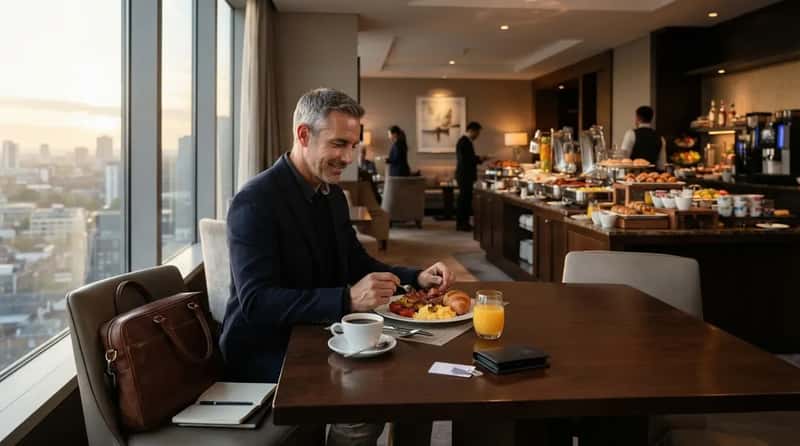
Plenty of business travelers admit, off the record, that status chasing isn’t about upgrades – it’s about breakfast. Free breakfast is a simple perk that can save $20 to $50 per day, which adds up fast across a multi-night stay.
That’s a meaningful number when you’re on the road weekly. A single elite tier can quietly save a frequent traveler hundreds of dollars a year in food costs alone. Veterans track their qualifying nights obsessively, sometimes booking extra stays specifically to protect that status before renewal.
#20 – They Use A Credit Card As A Breakfast Shortcut

Earning enough nights for top-tier status the old-fashioned way can take years. Veteran travelers found a faster route: certain co-branded credit cards hand you elite status automatically, no stays required at all.
This has quietly become one of the most popular “hacks” in frequent-traveler circles. A single credit card application can unlock the same breakfast perk that used to require dozens of nights on the road. No waiting period – just approval and activation.
#19 – They Read The Fine Print Before Trusting Any “Credit”
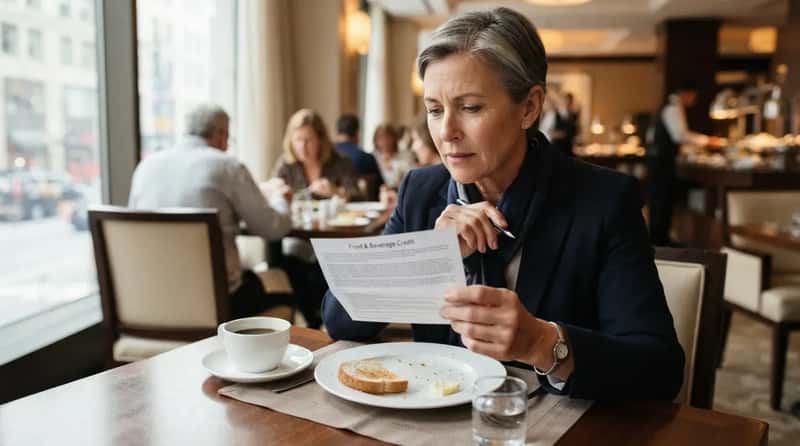
Not all breakfast perks are created equal, and veteran guests have learned this the hard way. Some properties don’t hand you a full breakfast at all – instead, they issue a food and beverage credit that barely covers a plate, sometimes as little as $10 per day or even $10 per entire stay.
That’s barely enough for coffee and toast at a full-service hotel. A $10 credit can vanish before you’ve even ordered a real entree. So experienced travelers always ask the front desk to clarify exactly what the “benefit” includes before assuming it’s a full meal.
#18 – They Know Exactly Which Tiers Get Shut Out

Here’s something most casual guests never realize: not every level of elite status actually gets breakfast. Top-tier members can often select either a complimentary breakfast or a food-and-beverage credit at check-in, while mid-tier members are frequently excluded entirely.
That surprises a lot of members who assumed any status meant free food. Entire elite tiers can get completely excluded from the breakfast perk, even at the same hotel. Veteran travelers know this cold, so they never build a trip around a benefit they don’t actually qualify for.
Quick Compare
- Top-tier elite: choice of full breakfast or a food-and-beverage credit
- Mid-tier elite: frequently excluded from the perk entirely
- Base loyalty membership: rarely includes any breakfast benefit at all
#17 – They Status-Match Right Before A Big Trip

Rather than starting from zero with a new hotel brand, savvy travelers exploit status matching. Several major chains periodically offer fast-track status matches from competing programs, letting a loyal guest at one brand jump straight into elite status at another.
It’s a well-timed move before a trip to a brand they don’t normally use, unlocking free breakfast and sometimes lounge access simply by matching status they already hold elsewhere. A five-minute application can unlock the same perks that normally take a year of stays to earn.
#16 – They Load Up On Protein First, Carbs Last
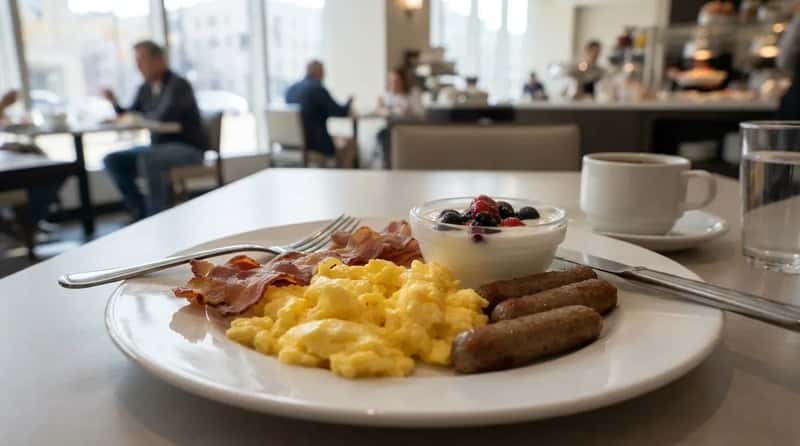
Ask a road warrior how they plate their food and you’ll notice a pattern: eggs, meat, and yogurt go on first, carbs go on last – if at all. The logic is simple. Protein keeps them full through back-to-back meetings; a plate of pastries has them crashing by 10 a.m.
This isn’t a diet trend among frequent travelers – it’s survival math for long travel days. Skipping the bread basket entirely is one of the most common habits among people who fly for a living. It’s also one of the easiest habits for casual travelers to steal immediately.
#15 – They Request Made-To-Order Eggs Over The Steam Tray
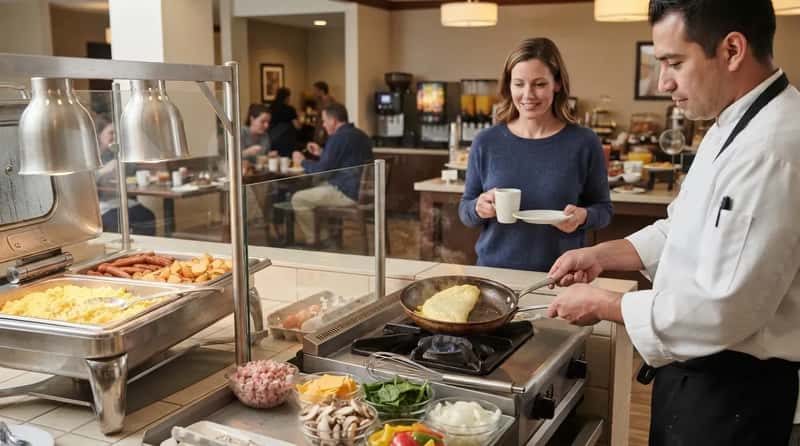
If a property has an omelet or egg station, veteran guests almost never touch the pre-scrambled eggs sitting under heat lamps. They wait the extra three minutes for something cooked fresh in front of them.
It’s not snobbery – it’s texture and taste. Steam-tray eggs turn rubbery fast under prolonged heat, while made-to-order eggs come out the way they’re supposed to. A three-minute wait at the omelet station beats ten minutes of regret with a rubbery scramble.
#14 – They Build A Custom Bowl From The Toppings Bar
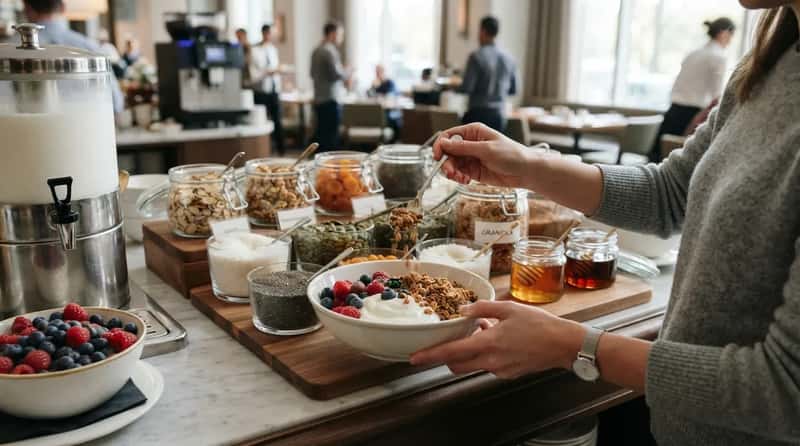
Plain oatmeal or yogurt sitting in a dispenser doesn’t excite anyone. Veteran guests treat the toppings bar – nuts, berries, granola, honey – as the real main event, mixing their own combination instead of settling for the default.
It’s a small habit, but it turns a boring bowl into something that actually feels worth eating. A five-second addition of fresh berries and granola can completely change a mediocre breakfast. It’s also one of the few genuinely healthy options at most buffet spreads.
#13 – They Ask What Isn’t On The Printed Sign
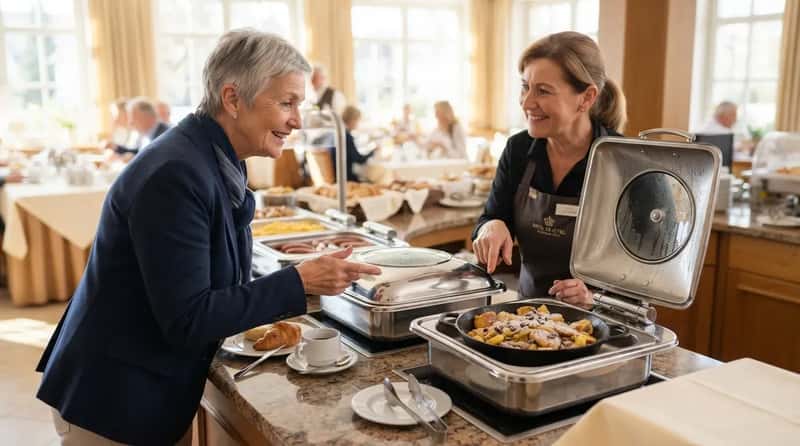
Regional hotels often quietly rotate in a local specialty that never makes it onto the standard laminated menu card. Veteran guests know to simply ask the attendant what’s cooking that isn’t listed.
This habit has led frequent travelers to discover everything from regional breakfast meats to local pastry traditions they’d never have found otherwise. The best item on the buffet is frequently the one with no sign at all.
#12 – They Bring Their Own Oversized Mug
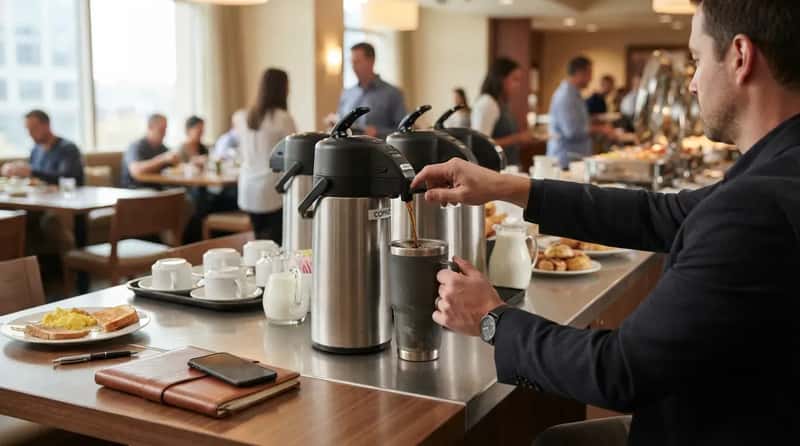
Hotel coffee cups are notoriously small, and refilling constantly eats into limited breakfast time. So plenty of frequent travelers simply pack a large travel mug and fill it once instead of making six trips to the pot.
It’s a tiny habit that saves real time on a tight schedule. One oversized mug can replace four or five trips back to the coffee station. Business travelers treat this as essential gear, right up there with a phone charger.
#11 – They Treat The Waffle Line As A Timing Game
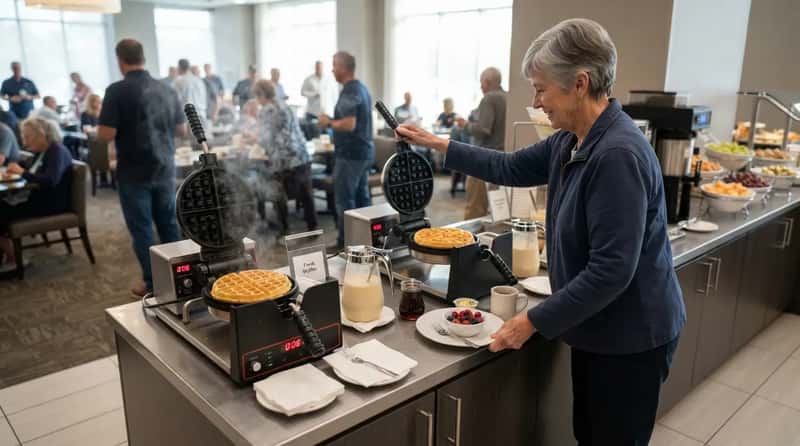
Waffle irons are the single biggest bottleneck at almost every hotel breakfast, and veteran guests have learned to work the timing instead of standing in a growing line. They pour the batter, walk away to grab coffee and fruit, then return right as the timer goes off.
It sounds obvious once you see someone do it, but most casual guests just stand there watching the iron. Multitasking during the waffle cycle can save several minutes of dead standing time.
#10 – They Double-Check If A Third-Party Booking Dropped The Perk

Booking through a third-party site instead of directly with the hotel can sometimes strip out perks that would otherwise be included, including breakfast. Veteran guests have been burned by this enough times that they now confirm breakfast inclusion directly with the property before arrival.
It only takes one phone call to avoid an unpleasant surprise at check-in. A single unconfirmed booking detail can turn a “free breakfast” trip into a paid one. This habit alone has saved plenty of frequent travelers from an awkward conversation at the front desk.
#9 – They Eat Before The Front Desk Even Gets Busy
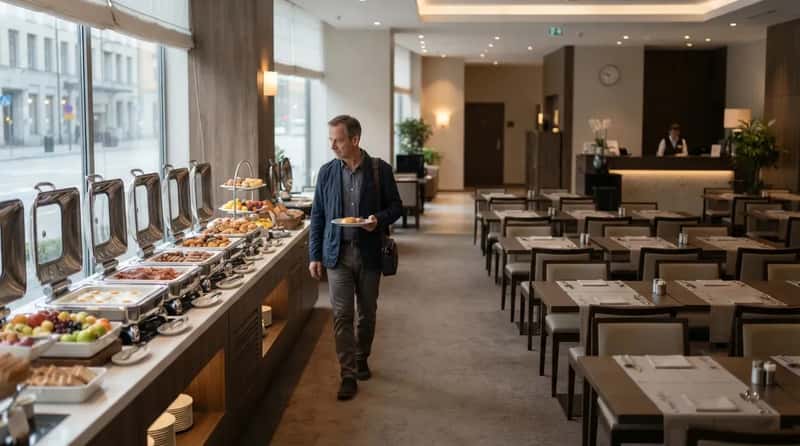
Early risers among frequent travelers aren’t just morning people – they’re strategic. Eating right at opening means shorter lines, hotter food straight off the first cook, and a quieter room to actually sit and relax before a long day.
By 8 a.m., the same buffet can feel like a completely different, more chaotic experience. The first fifteen minutes after opening are consistently the calmest window of the entire morning. Veteran guests protect that window fiercely, especially on weekdays.
Fast Facts
- Weekday breakfast service often wraps up by 9 or 9:30 a.m.
- Weekend hours can stretch to 10:30 or 11 a.m. at many properties
- The first fifteen minutes after opening are typically the quietest of the day
#8 – They Pack Protein Bars As A Backup Plan
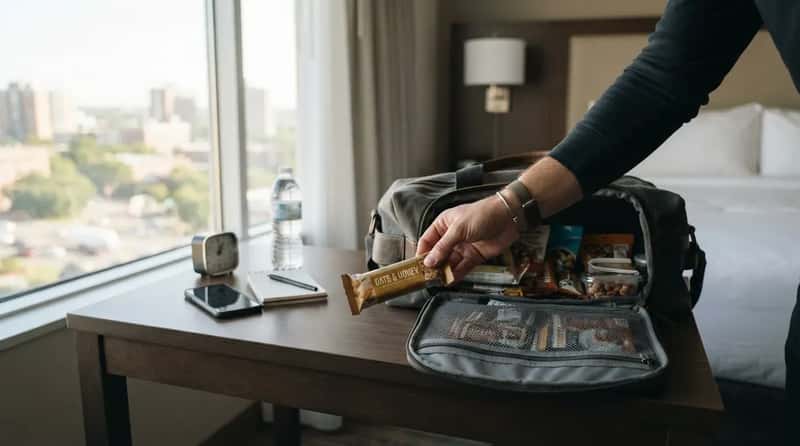
Even the most loyal buffet fans know some mornings the spread just isn’t good. Rather than gamble every single day, frequent travelers keep a stash of protein bars or nuts in their bag as insurance against a disappointing continental setup.
It’s not about distrust of hotels in general – it’s about consistency on the road. A backup snack means a bad breakfast never derails an entire travel day. This habit is especially common among guests who’ve stayed at hundreds of properties and know quality varies wildly, even within the same brand.
#7 – They Confirm The Cutoff Time The Night Before
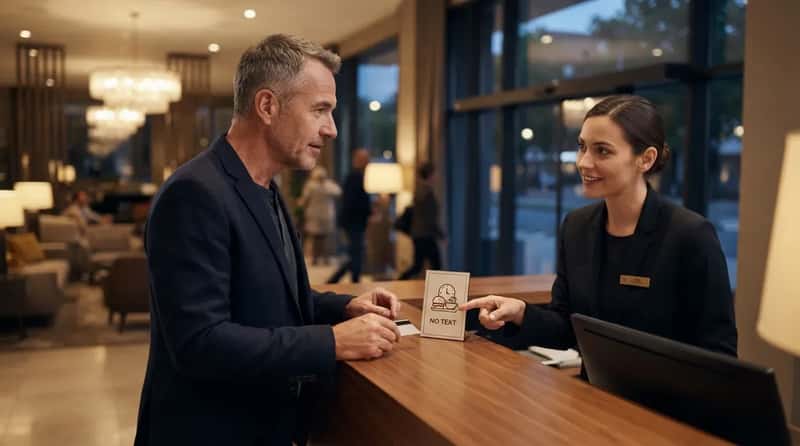
Breakfast service windows vary wildly by property, and missing the cutoff by ten minutes is a classic rookie mistake. Veteran guests always check the exact closing time at check-in the night before, not the morning of, especially when an early flight or meeting is on the schedule.
This one habit alone has saved countless frequent travelers from showing up to an empty, already-cleared buffet room. Missing a cutoff by even a few minutes can mean a completely empty dining room.
#6 – They Choose Proximity To Breakfast Over A Better View
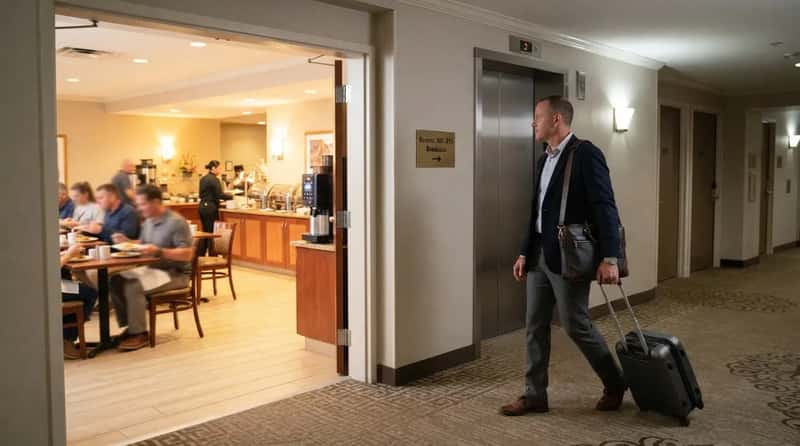
Given the choice between a room with a nicer view and one closer to the breakfast area, plenty of veteran guests pick proximity every time – especially on short business trips where every minute matters. A shorter walk means more sleep and less rushing.
Casual travelers rarely think about this when requesting a room, but frequent guests specifically ask for it. A room near the elevator by the breakfast room can be worth more than a scenic view on a tight schedule.
#5 – They Tip The Attendant Even When It’s “Free”
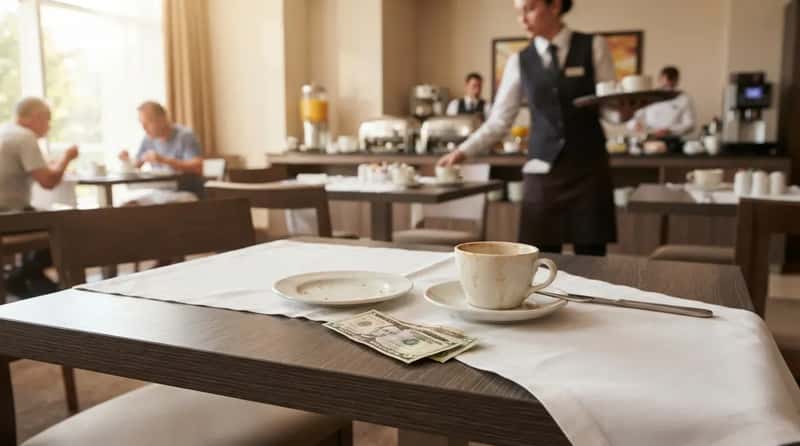
Just because breakfast is included doesn’t mean the staff running it worked for free. Veteran guests, especially those who travel constantly, make a habit of leaving a small tip for attendants who restock trays, clear tables, and keep the room running smoothly.
It’s a habit rooted in genuine appreciation, not obligation. A couple of dollars left quietly on the table can make a real difference to breakfast staff working an early shift. Frequent guests say it also tends to get them friendlier, faster service on future stays.
#4 – They Watch Which Trays Get Restocked First
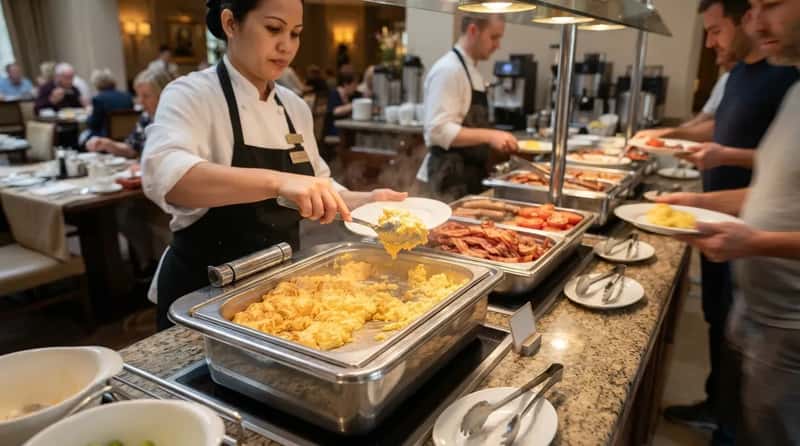
Attendants restock the most popular items first, which means the fastest-refilled tray is basically a live poll of what’s actually good that morning. Veteran guests pay attention to this pattern and follow the crowd instead of guessing.
It’s a surprisingly reliable signal. The tray getting refilled every ten minutes is almost always the best thing on the buffet. Meanwhile, food that sits untouched for an hour is usually a pretty clear warning sign.
#3 – They Skip The Pastry Table Entirely

This is one of the more controversial habits, but plenty of veteran travelers openly admit they walk right past the muffins, danishes, and cinnamon rolls without a second glance. Their argument: sugar-heavy carbs lead to an energy crash right when meetings or long drives are starting.
Not everyone agrees, and plenty of leisure travelers see the pastry table as half the fun of a hotel breakfast. Frequent business travelers increasingly treat the pastry table as the biggest trap on the entire buffet. It’s one of the few genuinely divisive opinions in the hotel breakfast world.
#2 – They Check Breakfast Reviews Before Booking Anything Else

Long before checking pool photos or room size, veteran guests search recent reviews specifically for mentions of breakfast quality. A hotel can have a stunning lobby and still serve a genuinely disappointing morning spread, and frequent travelers have learned not to assume otherwise.
This single search habit has saved plenty of road warriors from booking a property that looked great in photos but fell apart at 7 a.m. A hotel’s breakfast reputation often says more about the stay than its star rating does.
#1 – They Never Skip Breakfast, Period
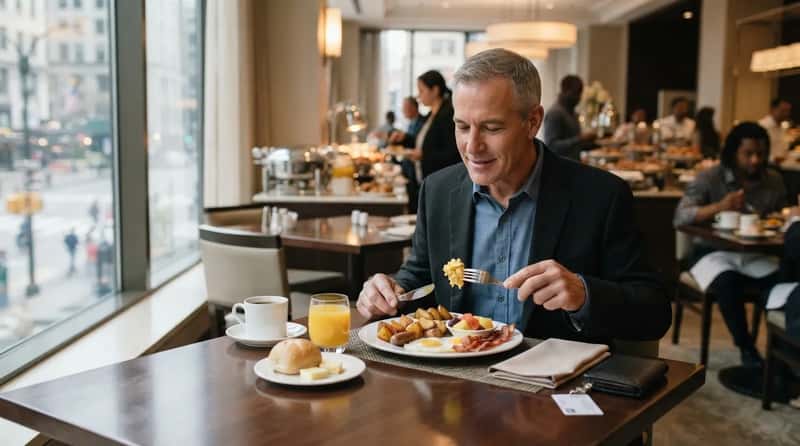
Above every other habit on this list, one rule stands above the rest among veteran hotel guests: never skip it. When breakfast is included, it enhances the stay and saves real money, and frequent travelers treat that value as too good to waste by sleeping in or rushing past it.
Even on the busiest travel mornings, seasoned guests carve out fifteen minutes for it, because they know exactly what it’s worth in dollars and energy. The single most consistent habit among frequent hotel guests isn’t a trick at all – it’s simply showing up. Every other habit on this list only matters if you actually make it to the table.
Worth Knowing
- Free breakfast can save an estimated $20 to $50 per day per traveler
- A $10 food-and-beverage credit often covers only coffee and toast, not a full meal
- Certain co-branded credit cards grant instant elite status, breakfast perk included
Put together, these 27 habits reveal something most casual travelers never think about: hotel breakfast isn’t an afterthought for people who live on the road, it’s a genuine skill set built from hundreds of mornings in hundreds of dining rooms.
None of it requires status, money, or insider connections – just attention. Which of these habits do you already do without thinking about it?