Most people picture ocean liner dining as pure glamour – string quartets, sparkling gowns, endless caviar. That part is true. What almost nobody remembers is how rigid, controlled, and almost military the whole experience actually was, right down to when the lights got shut off.
Before jets took over the Atlantic, dinner on a liner wasn’t really a meal. It was a nightly performance with rules nobody wrote down but everybody followed – and breaking them could get you quietly, politely, permanently uninvited.
#27 – Your Seat Was Chosen For You, and Changing It Took an Act of Diplomacy
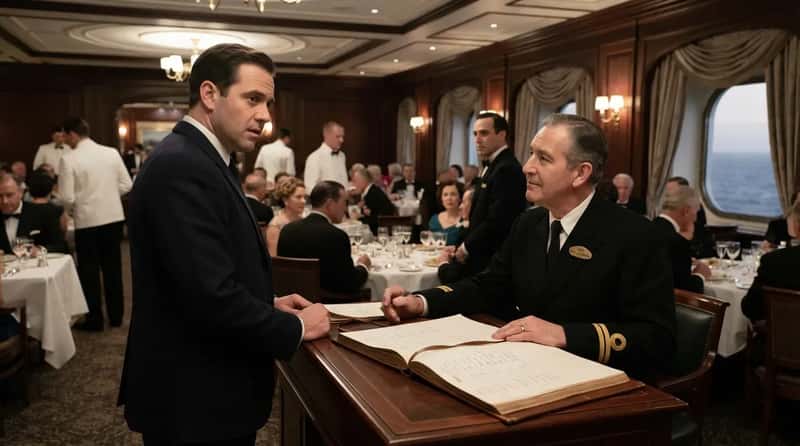
Passengers had to apply to the chief steward for their seats at table, and the chief steward assigned all seats. There was no walking in and picking a spot near a window or away from strangers you didn’t like.
If you wanted to move, you didn’t just switch chairs. You petitioned the steward directly, and a “yes” often depended on how well you tipped or how much fuss you were willing to make in front of other passengers.
#26 – The Doors Actually Locked, and Latecomers Missed Out Entirely
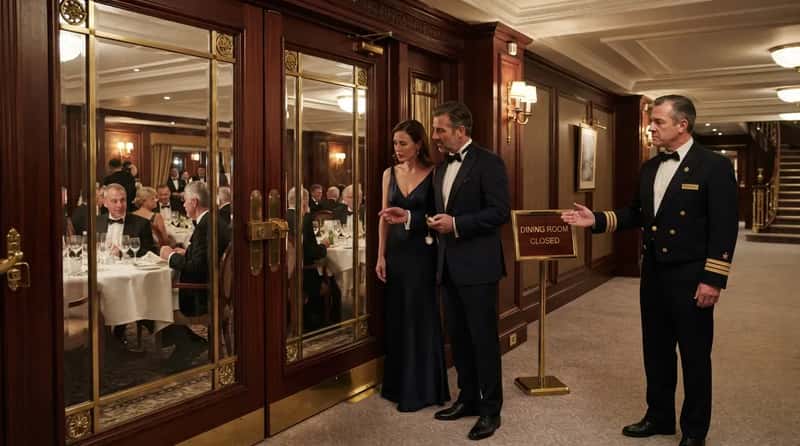
Dining rooms ran on a strict schedule, and that schedule was enforced. Meal hours varied by line, but breakfast typically ran eight to nine, lunch one to two, and dinner around seven, with a second seating shifting those times.
Wander in after the doors closed and you weren’t quietly seated in the back. You were turned away, full stop, and sent to find crackers or bouillon elsewhere on the ship instead.
#25 – Kids Got Exiled to an Earlier “Sitting” So Adults Could Eat in Peace
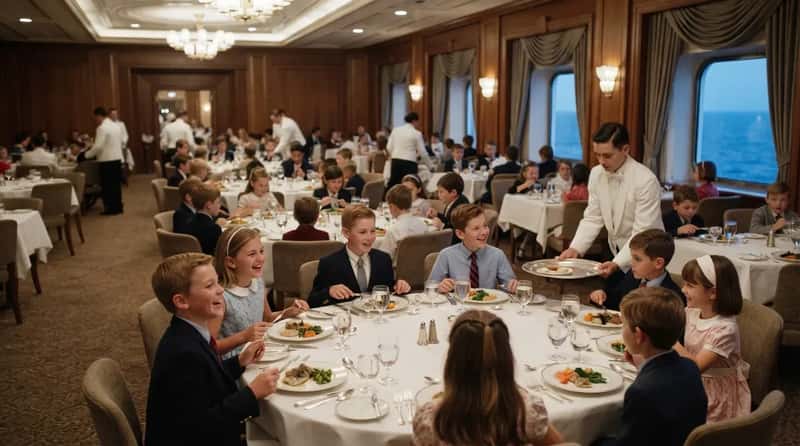
Children were required to dine at the first sitting, no exceptions made for age, class, or how badly a toddler wanted to stay up with mom and dad. The late, formal dinner belonged to adults only.
Afternoon tea was served on deck and in the public rooms at four o’clock, but children were routed to the Dining Saloon instead. Families ate together at breakfast and lunch. Dinner, the most theatrical meal of the day, was not for kids.
#24 – Lights Out in the Dining Saloon Wasn’t a Suggestion
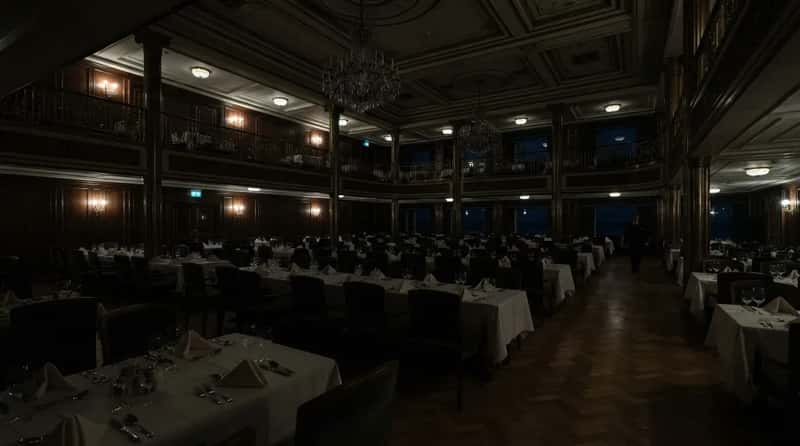
Ocean liners ran their public rooms like a boarding school with a curfew. Lights were extinguished in the Saloon at 11 p.m., the Music Room and Drawing Room at 11:30, and the Smoke Room at midnight.
The bar shut down right along with it. There was no lingering over a nightcap indefinitely – the ship’s schedule decided when your evening ended, not you.
#23 – Third Class Never Saw the Menu First Class Was Eating
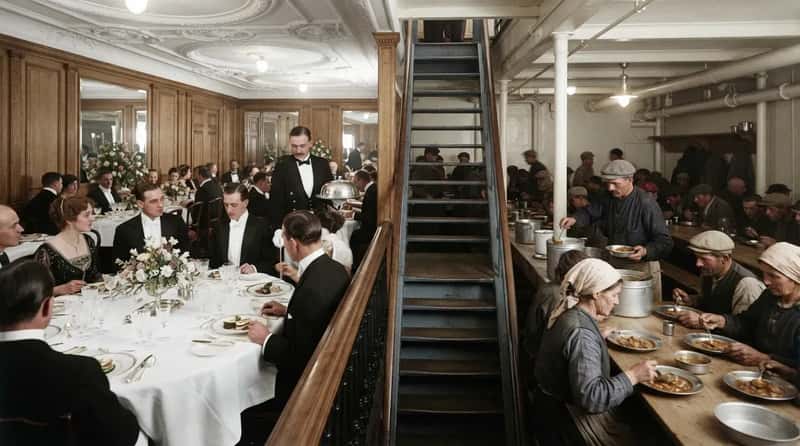
The dining divide wasn’t subtle. Until the 1920s, passengers were either wealthy travelers in first and second class or emigrants in third class, and each had entirely separate dining rooms and kitchens, with class affecting the food, décor, and comfort level.
This wasn’t a minor difference in tablecloths. First class ate dishes built to signal status; third class ate simpler, heartier fare in a completely different room, often several decks away.
Quick Compare
- First Class: Multi-course tasting menus, a private dining saloon, and signature dishes like caviar and turtle soup
- Third Class: Simple, hearty meals served in a separate hall, often several decks below the action
- What They Shared: Fixed meal times and assigned seating – discipline was universal, luxury wasn’t
#22 – A Bugle or Steward, Not a Clock, Told You Dinner Was Ready
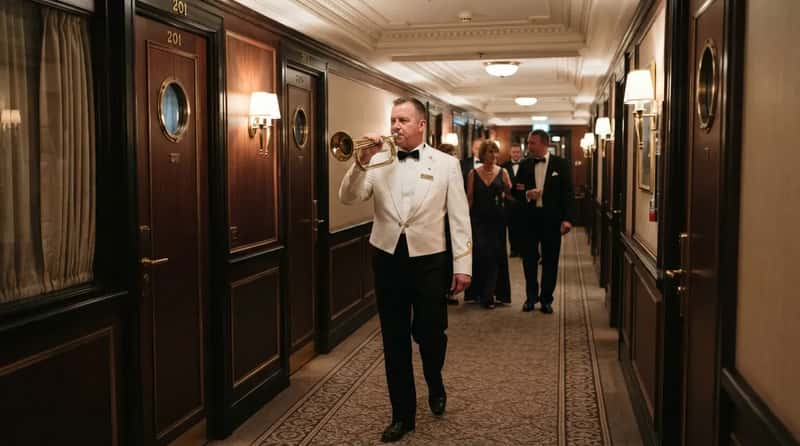
There were no phone alerts or ship-wide announcements the way modern cruises use them. Dinner was formally signaled – a bugle call, a gong, or a steward moving through the corridors – and passengers were expected to respond promptly.
Ignoring the signal wasn’t an option if you wanted your seat. The whole rhythm of the evening depended on everyone showing up roughly at once, since the dining room couldn’t run smoothly with stragglers trickling in over an hour.
#21 – Seasick Passengers Ate on the Deck, Not at the Table
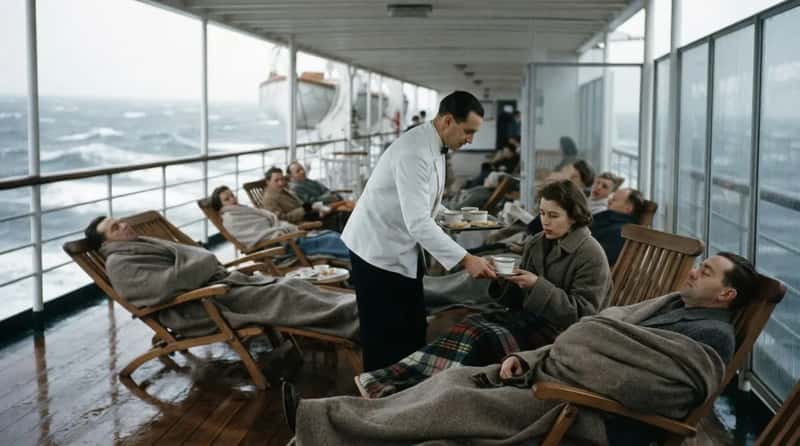
Ocean liners had a built-in workaround for rough seas. Bouillon and crackers were served on deck and in the companionways specifically for passengers too queasy to sit through a formal, multi-course meal.
Passengers hungry at any time could get something simply by asking a steward, since no one was meant to go hungry at sea, and steamship companies expected to serve very full meals to anyone not incapacitated by seasickness. But that food never touched the formal dining room during rough crossings.
#20 – Smoking at the Dinner Table Was Basically Forbidden
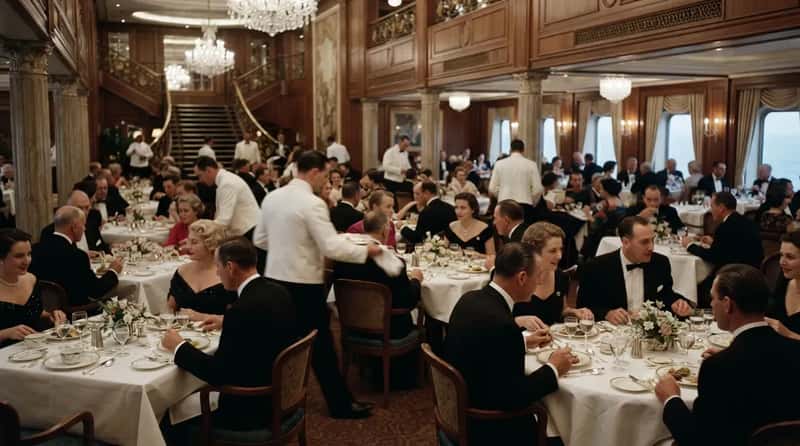
Smoking wasn’t banned outright on ocean liners, but it was heavily zoned. Separate smoking rooms existed specifically because the main dining saloon was treated as a smoke-free space where the food and the atmosphere came first.
The Smoke Room itself had its own curfew, with lights out at midnight and the bar closing at 11 p.m. Lighting up mid-meal in the main saloon simply wasn’t done, and stewards would have quietly discouraged it.
#19 – Wine Wasn’t Something You Grabbed Yourself, a Steward Handled Every Pour
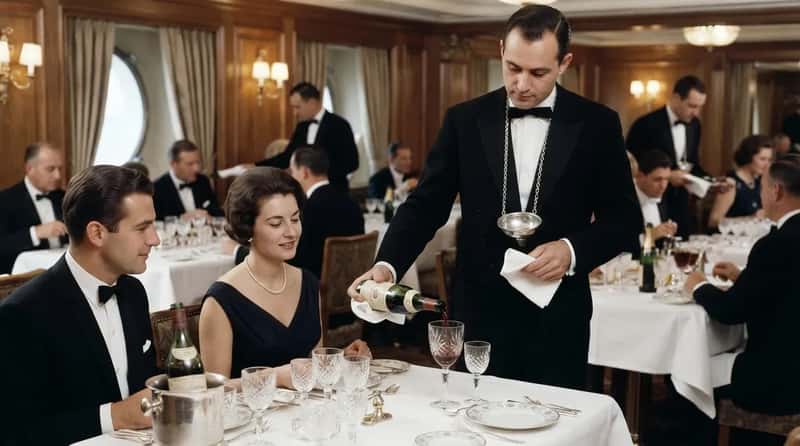
Self-service wine at dinner would have been unthinkable. Every bottle, every pour, and every recommendation ran through a dedicated wine steward who managed the entire beverage side of the meal from start to finish.
Menus on the grander lines featured items like iced beluga caviar and clear green turtle soup, and the wine service was treated with the same ceremony. You didn’t order a glass – you consulted an expert about it.
#18 – Wearing Too Much Jewelry Got You Side-Eyed by the Whole Room
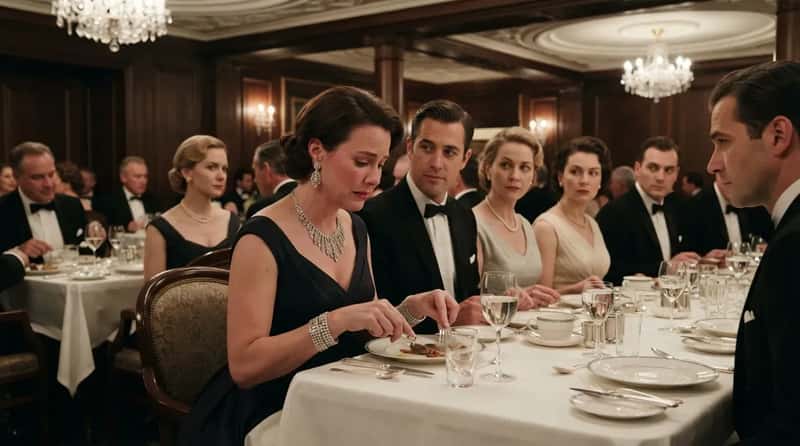
Understatement was the actual power move at dinner, not sparkle. Etiquette writer Emily Holt made clear that a bit of decorative jewelry could be worn, but any real display of jewels crossed a line few were willing to cross in public.
The logic wasn’t just style – it was safety and social positioning. Flashing obvious wealth marked you as new money or, worse, careless, in a room where old money prided itself on restraint.
Any display of jewels was “at once vulgar and dangerous.”
Emily Holt, etiquette writer
#17 – Men Who Skipped the Tailcoat Had Exactly One Backup Option
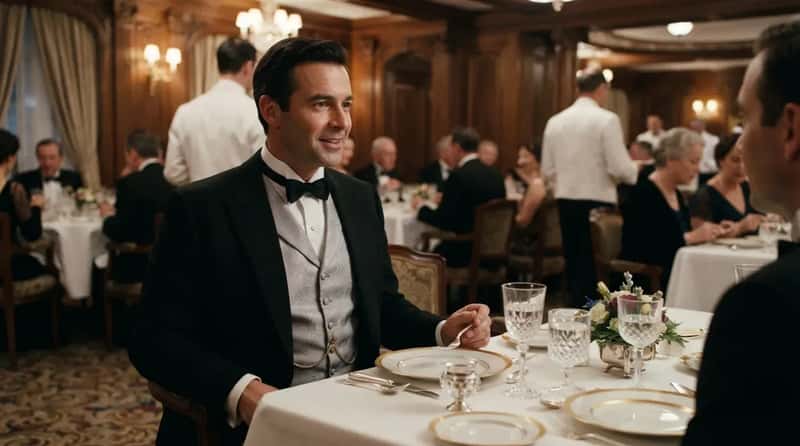
Full formal dress meant a swallow-tail coat, but not every man wore one, and there was an accepted substitute. Fashion editor Anne Rittenhouse observed men wearing dinner jackets with grey silk vests instead of the formal swallow tail.
That was the ceiling for casual, though – not shirtsleeves, not a sport coat. The grey silk vest was the one sanctioned shortcut, and even that was cutting it close for some rooms.
#16 – The Captain’s Table Was an Invitation, Never a Request
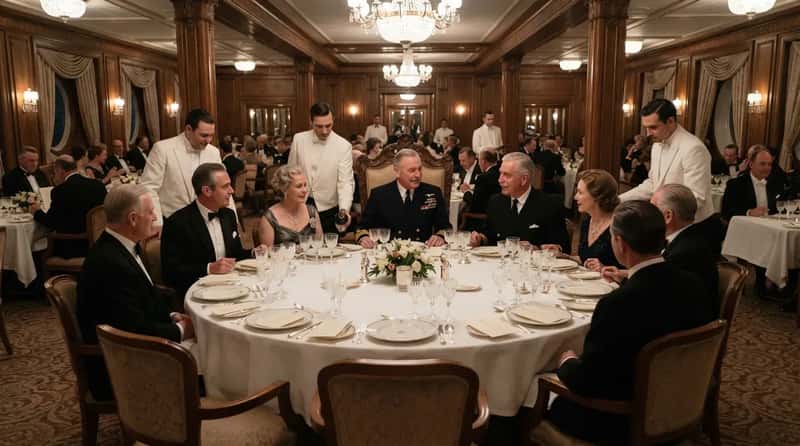
You couldn’t ask to sit at the captain’s table, and asking anyway marked you as an outsider who didn’t understand the game. Seats there went to the socially prominent, the famous, or passengers the line wanted to impress.
Sitting there wasn’t about food quality – the menu was identical to the rest of first class. It was pure status, a nightly reminder of exactly where you ranked among your fellow passengers.
#15 – Formal Dress Was Required Every Night, With Only Two Exceptions
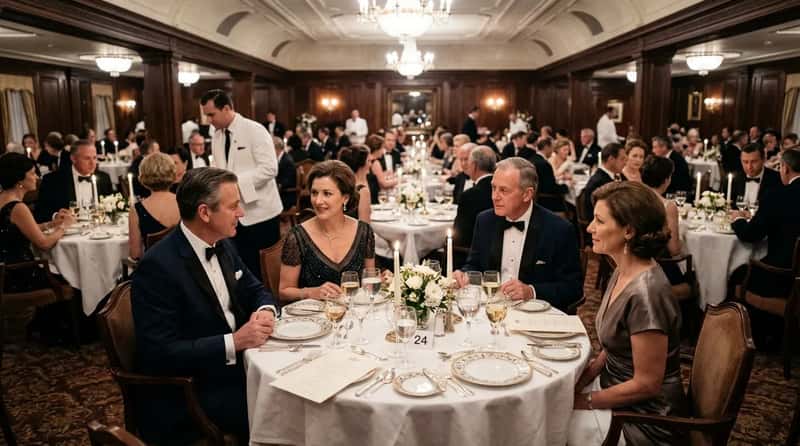
The rule was strict but consistent. In the golden age of ocean travel, especially in first class, there was latitude to dress down only on embarkation day and the night before arrival – every other night was formal.
Before the 1970s, passengers dressed formally except for sailing nights and the night before landing, full stop. That meant weeks, on some crossings, of nightly tuxedos and gowns with zero built-in casual nights in between.
#14 – Your Waiter Never Changed for the Entire Crossing
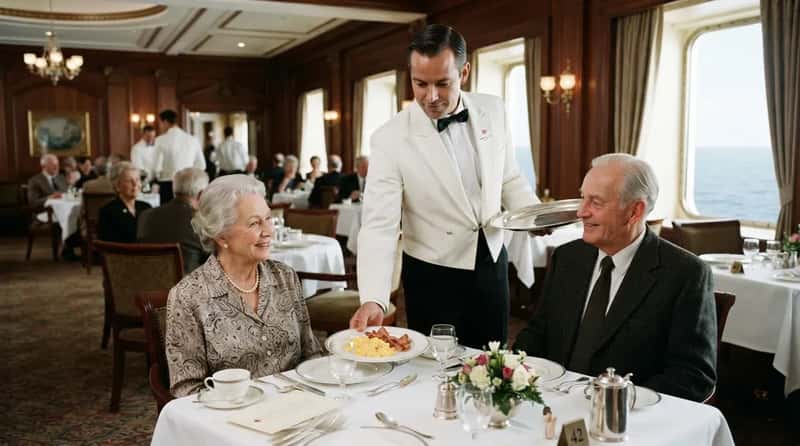
The same table steward served you breakfast, lunch, and dinner for the whole voyage, which meant they learned your preferences fast – and expected to be tipped accordingly at the end.
Dining was a genteel, orchestrated event, with assigned seating and waiters recruited from Europe’s finest hotels. That continuity was part of the luxury – and part of the pressure to tip generously, since you’d see that same steward every single day.
#13 – Dinner Could Stretch to 12 Courses, and Skipping Any Was Frowned On
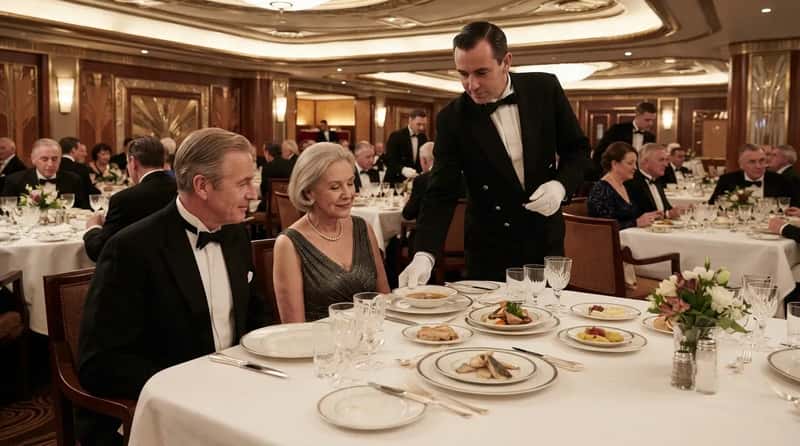
This wasn’t a three-course affair with dessert. On ships like the SS Europa, RMS Queen Mary, and the SS United States, dinner might have had 12 courses, with 8 to 10 options for each course.
A 1935 first-class dinner menu from the Normandie offered three kinds of consommé, six types of ham, and five choices of ice cream alone. Declining courses outright wasn’t rude, exactly, but it was noticed, especially by a steward keeping pace with everyone else’s plates.
Fast Facts
- The Normandie’s 1935 dinner menu offered three separate consommé options alone
- Diners could choose from six different types of ham on the same night
- Dessert brought five distinct ice cream flavors to pick from
- Liners like the Queen Mary and SS United States regularly served up to 12 courses a night
#12 – You Sat With the Same Strangers Every Night, Whether You Liked Them or Not
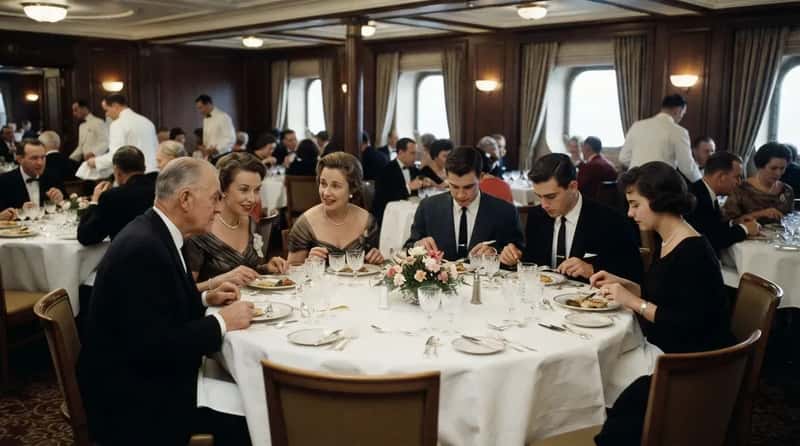
There was no rotating dining, no request for a table for two away from the crowd. Tables were assigned, and diners ate with the same group for the entire voyage.
Some passengers loved this – it built real friendships over a five-day crossing. Others were simply stuck making conversation with the same tablemates for a full week, awkward silences included.
#11 – Some Lines Made You Order Tomorrow’s Dinner Today
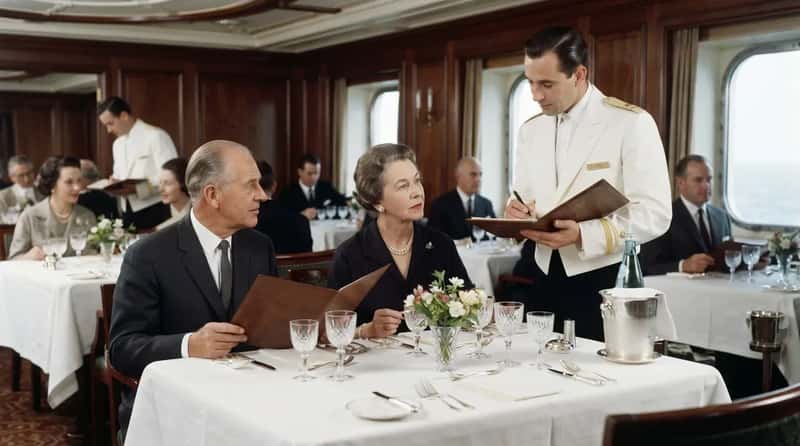
First and second class passengers were reminded they could select any dish they desired, and stewards would take dinner orders at any time during the day. On some lines, that meant deciding your evening meal well before the evening arrived.
It sounds indulgent, and it was – but it also meant no last-minute cravings. Once you committed to the roast instead of the sole, that was largely the plan for the night.
#10 – Officers Were Ordered to Dine With Passengers, Whether They Wanted to or Not
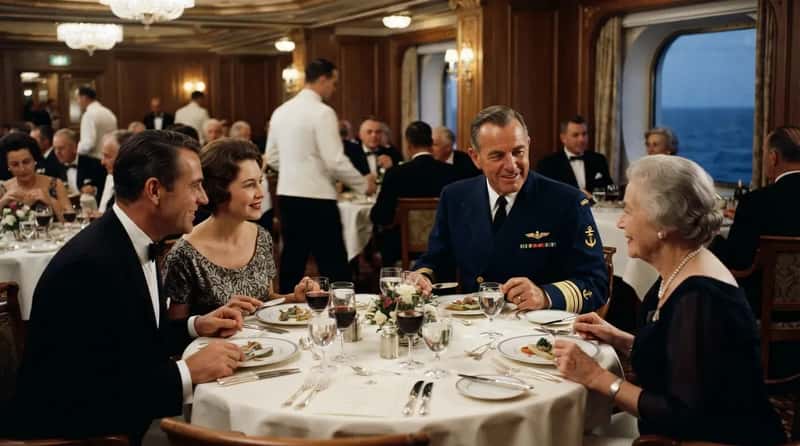
Rotating dinner duty with first-class passengers wasn’t optional for ship’s officers. It was part of the job, a way for the line to add prestige and conversation to the passenger experience regardless of whether an officer felt like socializing that night.
Passengers, in turn, treated an officer’s presence at the table as a small honor. It reinforced the idea that dinner wasn’t just a meal – it was the social centerpiece of the entire crossing.
#9 – Missing Your Sitting Meant No Formal Dinner at All
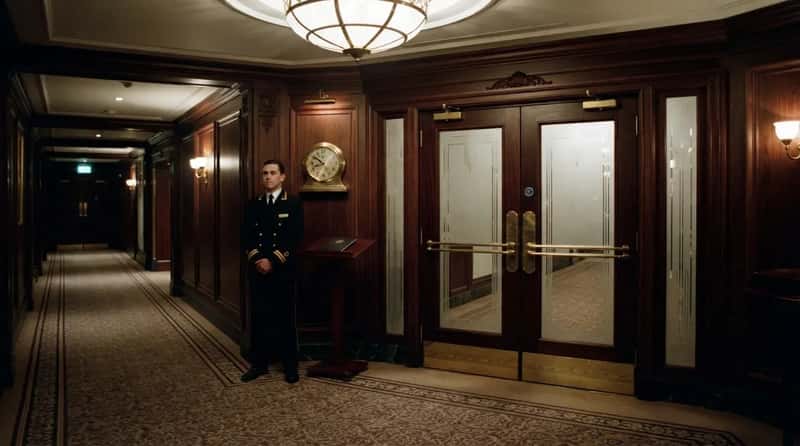
There was no “we’ll squeeze you in.” Where there was a second seating, meal hours could vary, and times were posted in staterooms or given by stewards – but showing up outside your assigned window simply wasn’t accommodated in the main saloon.
Passengers who overslept, lingered too long in the smoking room, or simply lost track of time paid for it with a missed formal meal, not a warm plate held aside.
#8 – Tipping the Right Steward Quietly Bought You a Better Table
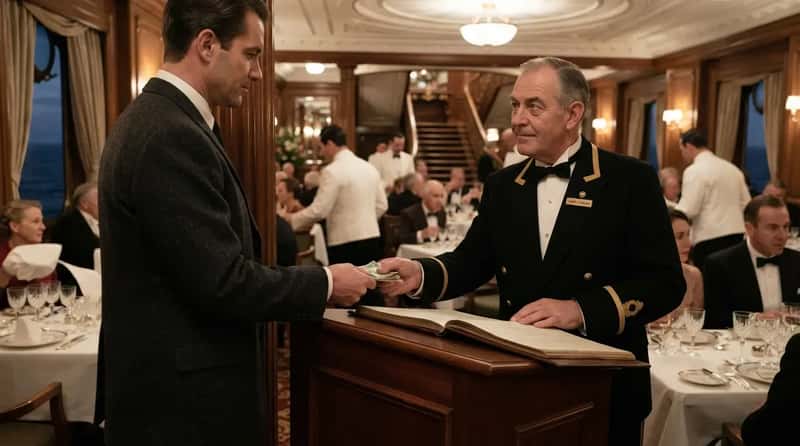
Officially, seating was assigned strictly by the chief steward’s judgment. Unofficially, everyone on board understood that a generous early tip could nudge you toward a better table, a better view, or a friendlier group of tablemates.
It was never written down anywhere, but it was one of the worst-kept secrets of transatlantic travel – money moved seating charts just as effectively as connections did.
#7 – Breakfast Wasn’t Delivered, Even in First Class
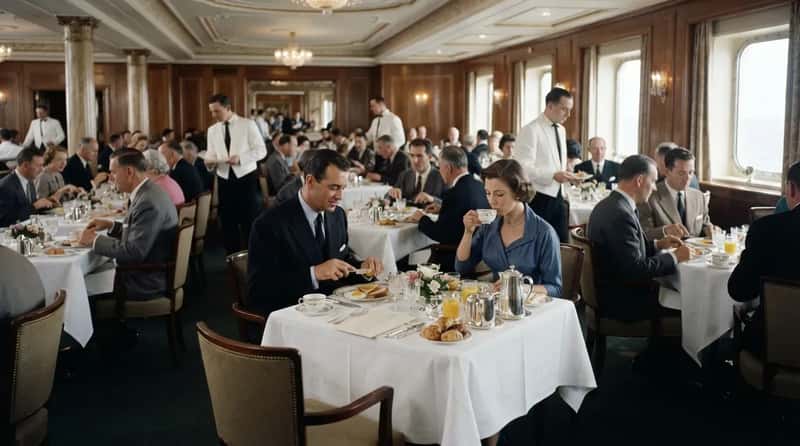
Room service, in the modern sense, simply didn’t exist yet. Morning tea and pastries were served in staterooms, but there was no real room service – passengers had to go to the dining room for full breakfasts and other meals.
That meant even wealthy first-class passengers with private suites got dressed and walked to a communal room every single morning. Luxury didn’t mean staying in bed with a tray.
#6 – The Menu Itself Was Designed to Be Kept Forever
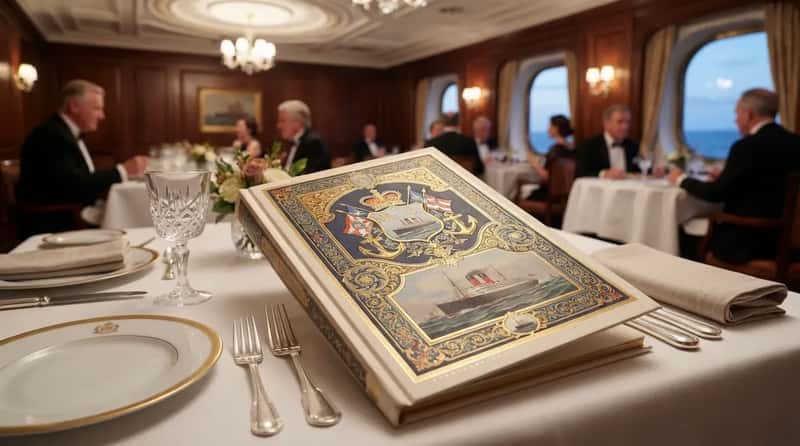
Brochures and menus were often elaborate, showcasing fine dining at sea with breakfast options like fresh fruit, grilled ham, and eggs printed in detail. These weren’t disposable slips of paper.
Lines decorated menus with flags, crests, and artwork specifically because they knew passengers would take them home. A daily dinner menu doubled as a souvenir before souvenirs were even a marketing category.
#5 – Passengers Signed Each Other’s Menus Like Yearbooks on the Last Night
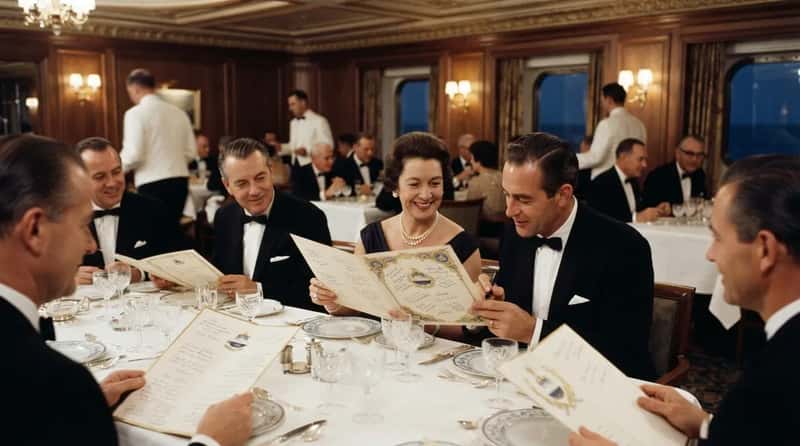
The final dinner had its own unwritten ritual. Tables were assigned for the entire voyage, and passengers often had dining companions autograph their menus at the voyage’s farewell dinner.
It was a small, sentimental gesture that closed out days of shared meals with total strangers. You would meet interesting people, who were going places and doing interesting things – and the signed menu was proof you’d been there with them.
#4 – Green Turtle Soup and Caviar Weren’t Food, They Were a Message
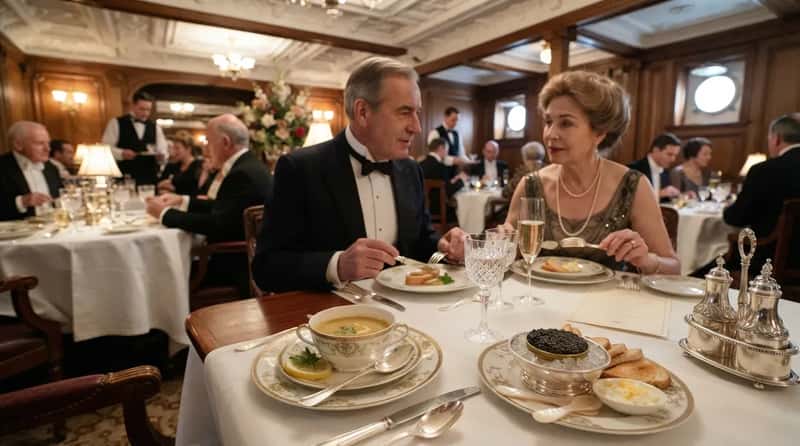
Certain dishes existed purely to signal status, not to feed hunger. Dishes like green turtle soup and Russian caviar, served to first-class passengers on the RMS Campania in 1905, symbolized wealth and reinforced passengers’ views of themselves as members of an elite class.
Ordering these dishes wasn’t really about taste preference. It was a nightly reaffirmation that you belonged in first class, surrounded by people who could afford the same statement on their own plates.
#3 – The Farewell Dinner Was Built to Be the Most Extravagant Meal of the Voyage
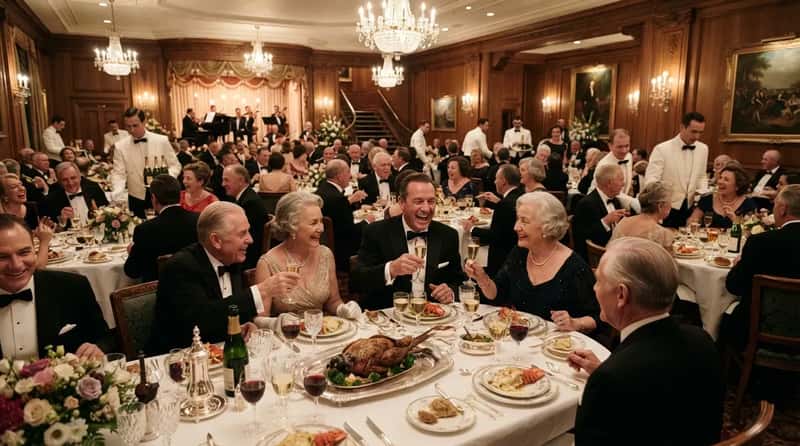
Every crossing built toward one final blowout. The Farewell Dinner, or “Captain’s Dinner,” was a grand affair, a sumptuous meal with all the delicacies of the season, enhanced by a wide array of liquors and wine.
It was the last dinner on board before the end of the voyage, and lines treated it as the emotional climax of the whole trip – bigger portions, more courses, and more ceremony than any other night.
#2 – The Jet Age Killed These Rules Almost Overnight
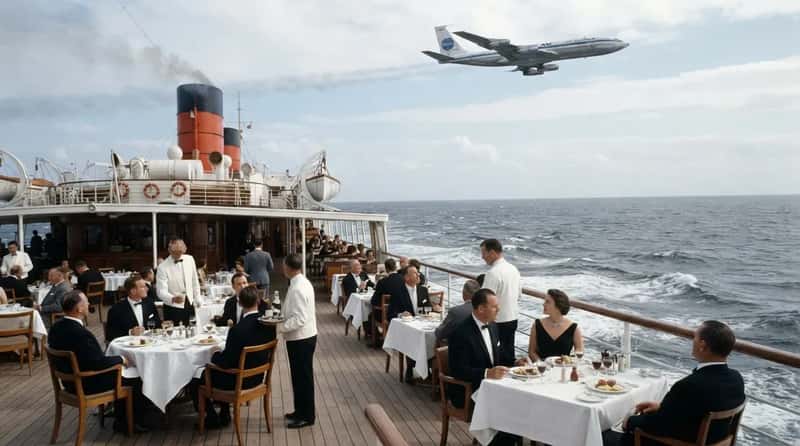
These weren’t traditions that faded slowly. Until 1958, most North Atlantic travelers still crossed by sea, and that year alone carried nearly 1.2 million passengers – but it was also the year of the first nonstop transatlantic jet service.
Within a year, airlines had claimed almost two-thirds of the market with 1.5 million passengers, and shipping’s share kept shrinking from there. Formal dining rules built for a captive five-day audience simply couldn’t survive a world where the same trip took six hours by air.
Fast Facts
- 1958 was the last full year ships dominated the North Atlantic, carrying nearly 1.2 million passengers
- That same year marked the first nonstop transatlantic jet service
- Within a single year, airlines had claimed almost two-thirds of the market with 1.5 million passengers
#1 – Nobody Ever Voted These Rules Out, They Just Quietly Vanished With the Ocean Liner Itself
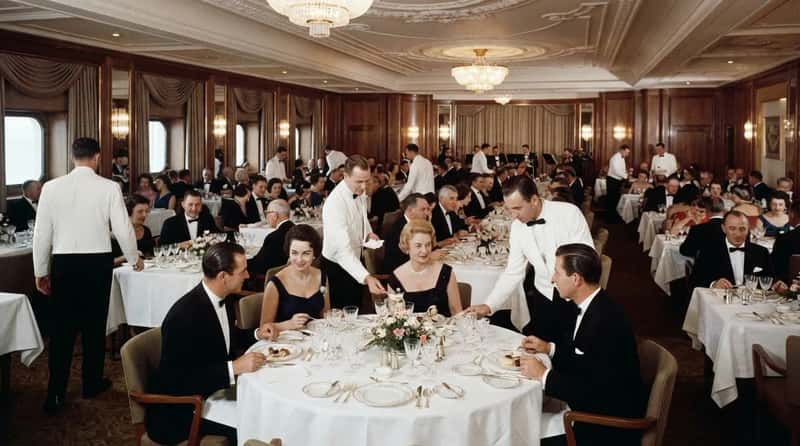
There was no single announcement ending fixed sittings, nightly formalwear, or chief-steward-assigned tables. The rise of commercial air travel in the 1950s and 60s forced ocean travel to compete with the convenience and speed of air liners by selling the experience itself – and formal dining slowly stopped being a requirement and became a nostalgic option instead.
Today’s cruise lines echo fragments of it. Cunard still runs “Gala Evenings” built around themes like Black and White or Roaring ’20s, one of the only major lines still expecting passengers to dress the part every night. Everything else – the strict seatings, the locked doors, the bugle calls – simply disappeared with the ships that enforced them.
What’s striking looking back is how little of this was ever legally required. No government mandated the tailcoats or the assigned tables. Passengers followed these rules because breaking them meant standing out in a room built entirely around fitting in.
The ocean liner didn’t just move people across the Atlantic – it moved them through a nightly ritual most modern travelers would find almost unbearably rigid today. Which of these rules do you think would survive if a cruise line brought it back tomorrow? Tell us in the comments.