

Most people assume a truly welcoming home is about great furniture, freshly mopped floors, or a carefully curated Pinterest aesthetic. Turns out, they’re almost entirely wrong. The homes people remember for years – the ones they describe to their friends, the ones that feel like a long exhale – earn that feeling through tiny, almost invisible details that cost next to nothing. It’s the throw blanket that looks actually used. The handwritten Wi-Fi password on the nightstand. The smell that hits you before the door even fully opens. These aren’t accidents. They’re the quiet signatures of someone who genuinely thought about you before you arrived.
Here’s what makes this list different: many of these comforts are so subtle that guests can’t even name them on the spot. They just leave feeling like that house was somehow different. Warmer. Easier. Like somewhere they belonged. A few of the entries below are deeply obvious in hindsight – and completely absent from most homes. The last three will probably make you rethink what hospitality actually is.
#27 – A Doormat That Actually Means It
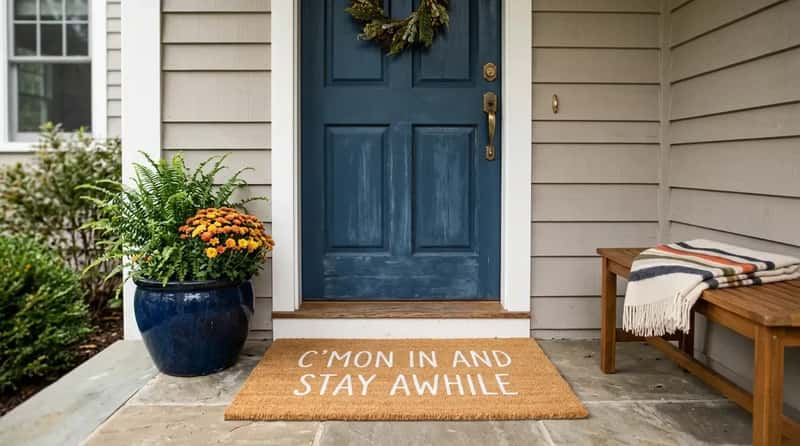
The front door is the first sentence of your home’s story, and most people underwrite it completely. A faded, cracked, or generic “WELCOME” mat from the clearance bin does the opposite of what it promises – it tells guests the welcome is performative, not real. The homes that nail this detail go one step further: a mat that’s clean, season-appropriate, and maybe a little personal. A funny phrase, a bold color, a pattern that says someone made a deliberate choice.
It sounds trivial until you realize guests form their first impression before the door even opens. That mat is the handshake. Pair it with a swept porch – no dead leaves, no Amazon boxes stacked to the side – and you’ve already told visitors they were expected. The hospitality experience begins outside, and a clean, inviting entrance sets the tone for everything that follows.
At a Glance
- Replace your doormat at least once a year – worn mats signal neglect before a word is spoken
- A swept, clear porch multiplies the impact of even a simple mat
- Seasonal swaps (a bright summer color, a cozy fall pattern) signal active attention to the space
- One potted plant or lantern beside the door is enough to make the entry feel intentional
#26 – The Scent That Hits Before Anything Else

Walk into any home and your nose makes up its mind in about three seconds. Unlike sight or sound, scent has a direct pathway to the brain’s memory and emotion centers – bypassing the thalamus entirely and landing straight in the amygdala and hippocampus. A home that greets you with a soft trace of vanilla, fresh linen, or lightly toasted bread doesn’t just smell pleasant – it signals safety, care, and intention. The homes that get this right don’t drown visitors in synthetic sprays. They simply smell like someone lives there and takes care of the place.
Real ingredients create the most lasting welcome – simmering citrus peels and cinnamon sticks on low heat, a sprig of rosemary tucked near a window, beeswax candles lit a few minutes before guests arrive. The trap most hosts fall into is overcorrecting. Chemical-heavy sprays often trigger headaches or allergies, undermining the very comfort they’re meant to create. Subtle always wins.
#25 – The Throw Blanket That Looks Actually Used
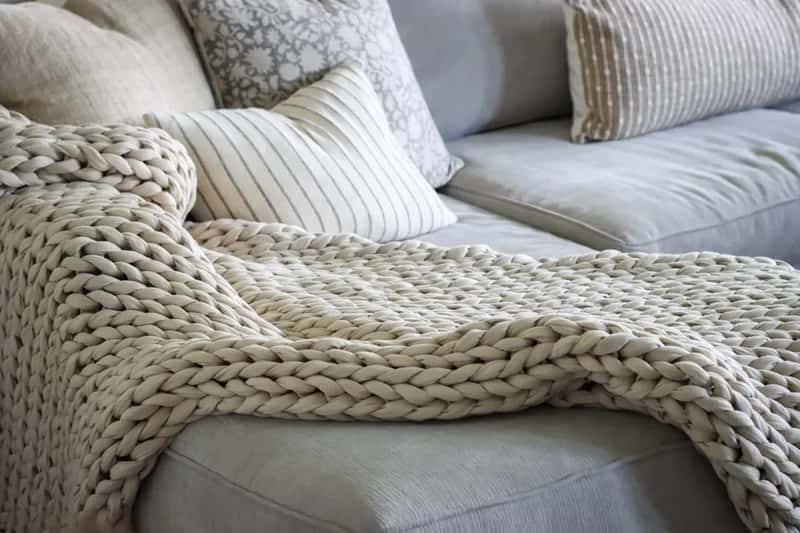
Almost every living room in America has a throw blanket draped over something. But there’s a version of this that completely backfires: the decorative throw arranged so perfectly it looks like a museum exhibit. Guests won’t touch it. They’ll sit there cold rather than disturb the composition. A throw folded casually over a couch arm is one of the most universally understood signals of comfort in the American home – but only if it looks like it belongs to real life, not a catalog shoot.
The best versions are slightly imperfect – casually draped rather than architectural. A blanket that looks like it was used this morning is more welcoming than one that’s never been touched. Lived-in beats pristine every single time. The most thoughtful hosts keep at least two on the main sofa – one on each end – so nobody has to reach across someone else to grab it. That’s the difference between a prop and an actual comfort.
#24 – Seating Arranged for Conversation, Not Just the Screen
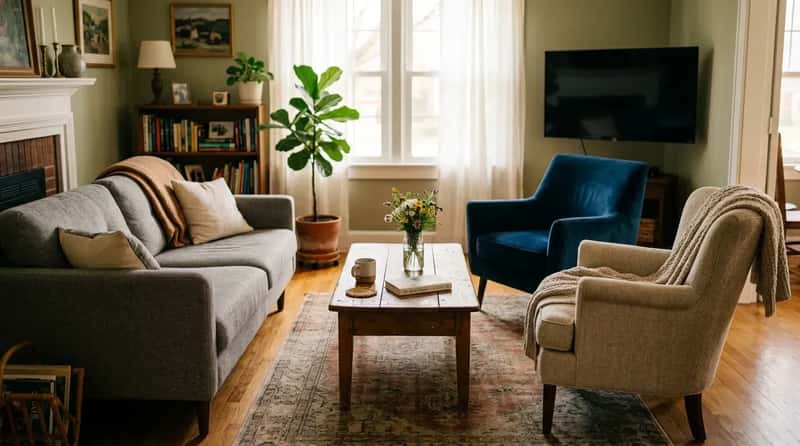
Walk into most American living rooms and every seat faces the television. It’s a subtle but real message: the screen is the point, not the people. Truly welcoming homes position at least some seating so that guests face each other. It doesn’t mean pulling the TV off the wall. It means the room was designed with real human interaction in mind, not just passive viewing.
If guests have to awkwardly maneuver around furniture just to find a seat, they notice – even if they can’t say why. The most hospitable rooms do both: they accommodate the TV and the conversation. An ottoman in the center, two chairs angled toward each other, or a loveseat facing the main sofa – small moves that completely change the energy of a room without changing a single piece of furniture.
#23 – A Rug That Anchors the Space
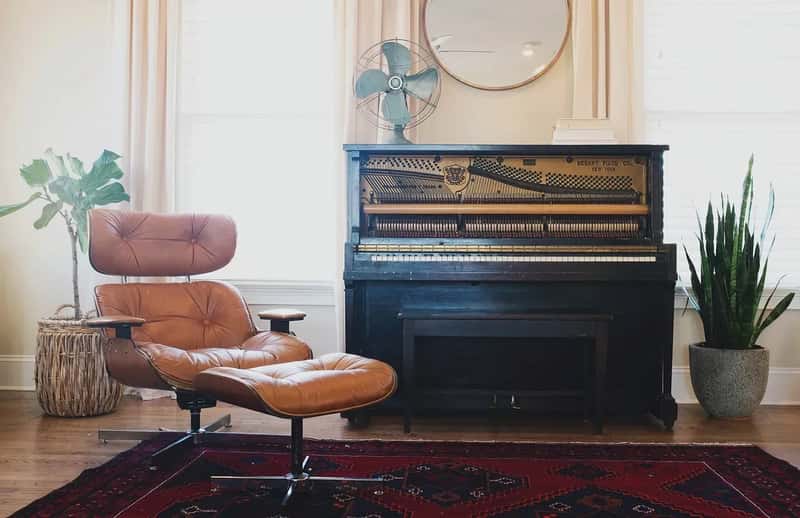
Most people don’t notice a good rug. They only feel it. Rooms without rugs feel like waiting rooms – technically furnished but missing something fundamental. A rug defines the seating area, softens footstep sounds, adds warmth underfoot, and visually signals that this space was intentionally designed for people to be comfortable in it. The right rug is felt before it’s consciously registered – which is exactly how the best hospitality details work.
The size mistake is the one that kills the warmth fastest. A rug that’s too small floats in the center like an afterthought, with all the furniture legs hanging off the edges. The front legs of every sofa and chair should at minimum touch the rug – ideally sit fully on it. That single correction transforms a cold, choppy room into one that feels pulled-together and genuinely cozy. It’s the difference between a room that was decorated and a room that was designed for people.
Quick Compare
- Too small: Furniture legs float off the edges – room feels disconnected and cold
- Right size: Front legs of all seating touch or sit on the rug – room feels anchored and intentional
- No rug at all: Hard floors read as unfinished or transient, not cozy
- Layered rugs: A smaller rug over a larger one adds visual depth and tactile warmth instantly
#22 – Soft, Layered Lighting Instead of One Harsh Overhead Bulb
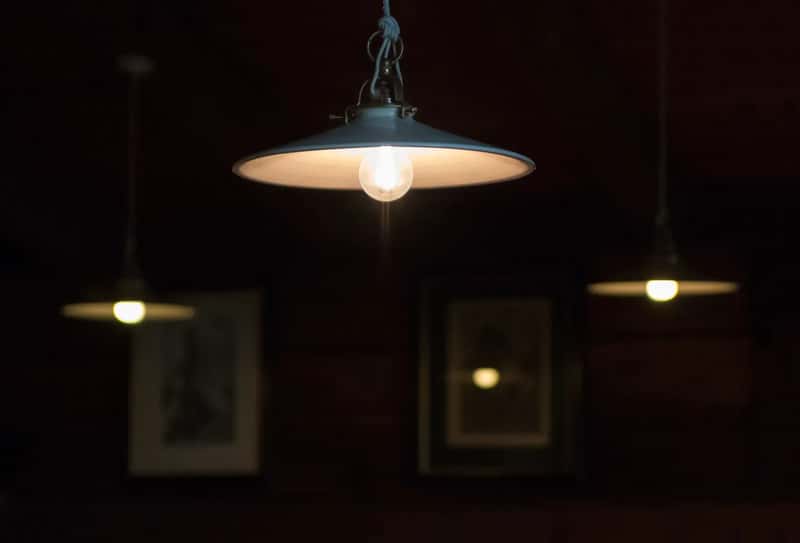
Harsh overhead lighting flattens a room, stripping it of depth and warmth. What shifts the mood dramatically is light coming from multiple levels – floor lamps casting gentle pools, table lights glowing at conversation height, sconces brushing walls with amber. Almost no single upgrade transforms a room’s hospitality factor faster than swapping one glaring overhead fixture for two lamps. It’s instant. Guests physically relax. The room goes from clinical to human.
Welcoming homes also understand the difference between daytime and evening light. During the day, they let natural light in – sheer curtains instead of blackout panels in common areas. At night, they dim the overhead and let the lamps take over. It’s a level of intentionality that guests feel even when they can’t articulate what changed. The room just feels easier to be in.
#21 – A Self-Serve Drink Station
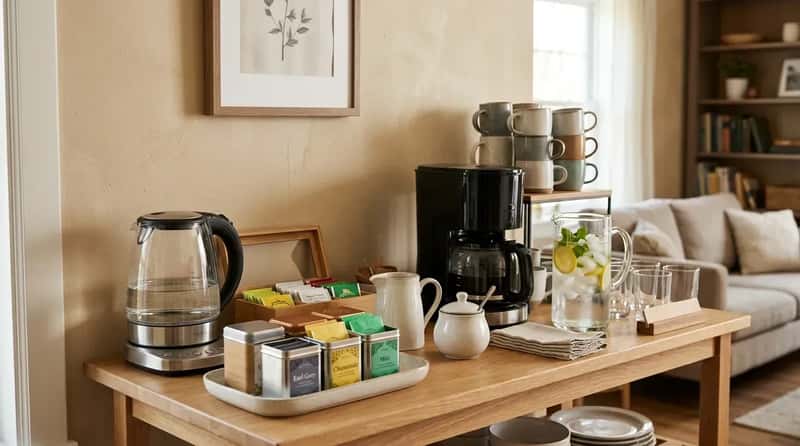
There’s something almost magical about a home where you don’t have to ask for anything. The self-serve drink station is the physical embodiment of “make yourself at home” – and it’s one of the most underrated hospitality moves in the American household. It could be as simple as a coffee maker with mugs nearby, a water pitcher with glasses, or a small basket of tea bags next to an electric kettle. The setup doesn’t need to be elaborate. It needs to exist.
The psychological effect runs deeper than convenience. When a host sets up a drink station, they’re essentially handing over a piece of the kitchen – saying, “You don’t need to wait for me. You live here right now.” Bonus points if there’s a small handwritten card listing the options. Guests who feel independent feel comfortable. Guests who feel comfortable come back.
#20 – Fresh Flowers or a Single Living Plant
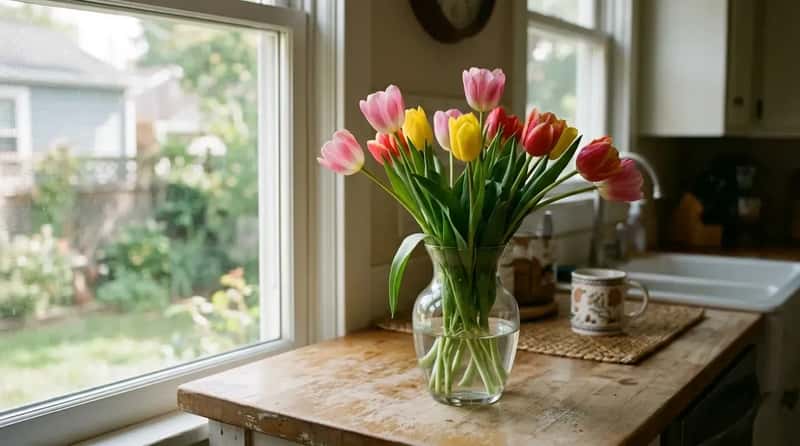
A home with something living in it feels different than one without – and the research backs this up clearly. A University of Technology Sydney study found that indoor plants brought measurable reductions in tension and anxiety, as well as decreases in depression and anger among people spending time around them. You don’t need a greenhouse to get the effect. A single vase of grocery store tulips on the kitchen table accomplishes the same psychological lift as a full arrangement.
What matters is that it’s fresh and cared for. A dead or wilting plant communicates the opposite of welcome – it says nobody’s paying attention. Even a single stem in a mason jar on the bathroom sink lands differently than an empty counter. It tells guests that someone noticed the small details, the easy-to-miss ones. That noticing is what hospitality actually is.
#19 – Personal Photos and Meaningful Objects on Display
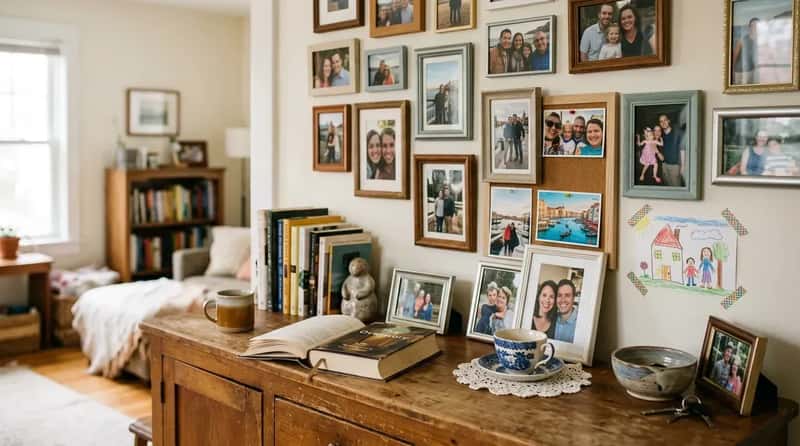
Walk into a home with walls full of family photos, travel mementos, and handmade objects, and you immediately feel something shift. You’re not in a rental. You’re in someone’s life. A chipped teacup from your grandmother’s kitchen, a postcard pinned above the desk, a child’s crayon drawing taped to the fridge – these are not clutter. They are quiet declarations of who lives here, and they signal to visitors that this space belongs to a real person, not a catalog spread.
The counterintuitive truth: a perfectly styled shelf with matching books and curated ceramics might impress, but it rarely invites. What draws people in is the slightly crooked frame, the well-worn novel left open on the armchair, the stack of records with a handwritten label. These details suggest a life lived, not staged. They give guests something to ask about – and that question is often the beginning of the best conversation of the night.
Worth Knowing
- Personal objects are conversation starters – they give guests a natural entry point without any effort from the host
- A single well-loved item (a vintage map, a handmade bowl) signals character more powerfully than a dozen matching decorative pieces
- Framed photos at eye level on a hallway wall turn a transition space into a warm storytelling moment
- Guests remember the story behind the object far longer than the object itself
#18 – A Fully Stocked Guest Bathroom
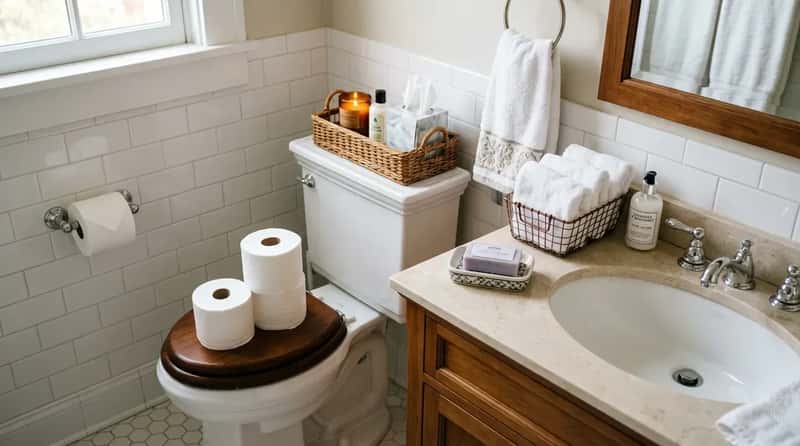
The bathroom is where guests go to feel human again – and it’s where a host’s real thoughtfulness either shows up or doesn’t. A sparkling clean toilet and sink are the bare minimum. The welcoming homes go further: clean hand towels folded and visible, a full roll of toilet paper already in place, hand soap that doesn’t require a search. A small basket with a scented candle, lotion, or extra tissue takes the gesture from adequate to genuinely considerate.
One of the most overlooked details: a second roll of toilet paper sitting visibly on the back of the tank. It sounds almost too simple. But the alternative – a guest discovering an empty roll mid-visit and having to call out for help – is genuinely mortifying for everyone involved. Tucking away pain relievers or allergy meds in an accessible spot is the kind of quiet foresight that guests notice immediately, even if they never mention it.
#17 – The Wi-Fi Password Written Down and Left Out
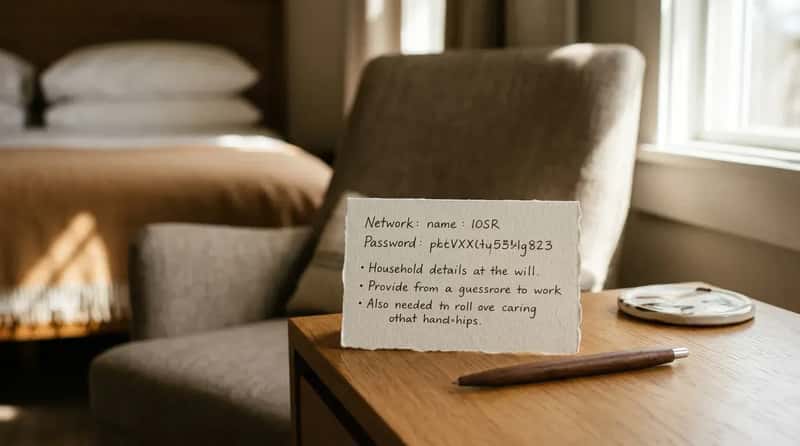
Nothing deflates arrival energy faster than a guest having to immediately ask, “Hey, what’s your Wi-Fi password?” It puts them in the awkward position of requesting something before they’ve even sat down, and it subtly signals that the host didn’t think quite that far ahead. The homes that feel most effortlessly welcoming solve this before it becomes a question – a small printed or handwritten card on the nightstand or coffee table, right where anyone would naturally look.
The best versions of this card go further: network name, password, and a few household quirks. Which faucet runs hot slowly. How to work the TV remote. Where the extra blankets are. That card is worth more than most decorative objects in the room. It’s the difference between a guest feeling like a visitor and feeling like they temporarily live there – and the difference between those two feelings is enormous.
#16 – A Nightstand With Real Function
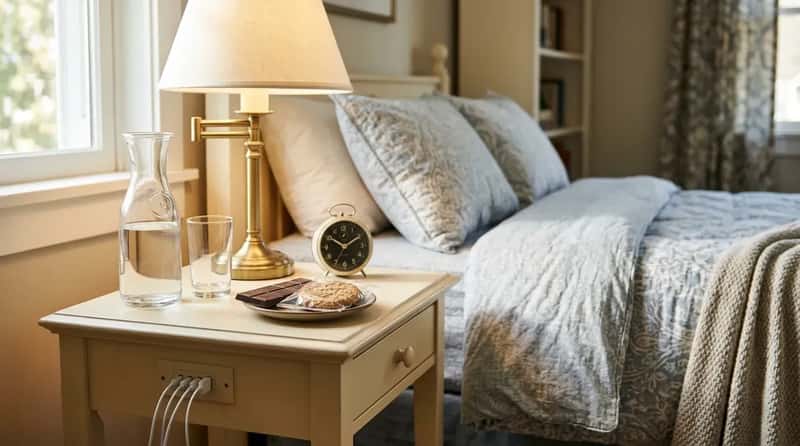
Hospitality in the guest room starts before anyone lies down. It begins with the room feeling intentional. The nightstand is the most functional piece of furniture in a guest room and the one most often left empty, dusty, or quietly piled with the host’s own overflow. A welcoming home clears it completely and stocks it deliberately: a bottle of water, a working reading lamp, a small clock, and a charging cable near a visible outlet.
A small snack on the nightstand – chocolates, mints, a wrapped cookie – is the kind of touch that communicates genuine care rather than just competence. Guests spend the most intimate, private moments of their stay in that room, and they notice every detail at that scale. A thoughtfully set nightstand says more about a host’s warmth than any amount of interior decorating in the rest of the house combined.
Fast Facts
- A charged phone cable on the nightstand is consistently ranked among the most appreciated overnight guest gestures
- A bottle of water requires no effort and eliminates a late-night kitchen trip many guests are too polite to make
- A working reading lamp (not just an overhead) signals that the room was set up for a real person, not a photo
- A small clock removes the need to reach for a phone – and keeps the room feeling restful rather than connected
#15 – Extra Pillows With Different Firmness Levels
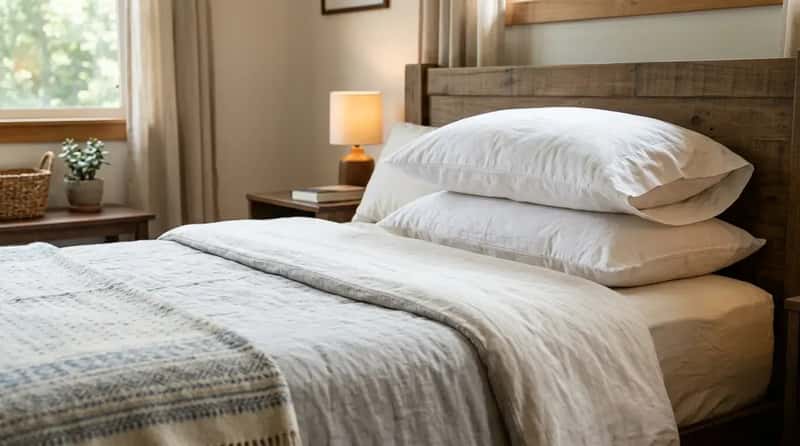
This one sounds fussy until you’ve spent a night on someone’s guest bed with a single rock-hard pillow. Sleep quality makes or breaks an overnight visit, and pillow preference is deeply personal – some people need firm support, others want to sink into something soft. The homes that consistently get rave reviews for overnight stays almost always offer at least two pillow options per guest, stacked at the head of the bed without explanation or ceremony.
Guests naturally choose the one that works for them, and that silent freedom to self-customize is itself an act of hospitality. Layer in quality sheets and an extra blanket folded at the foot of the bed and you’ve covered every sleeping preference without a single conversation about it. The guest wakes up rested. They associate that feeling with your home. That association is how houses earn the reputation of being somewhere people always want to come back to.
#14 – Towels Set Out in Plain Sight
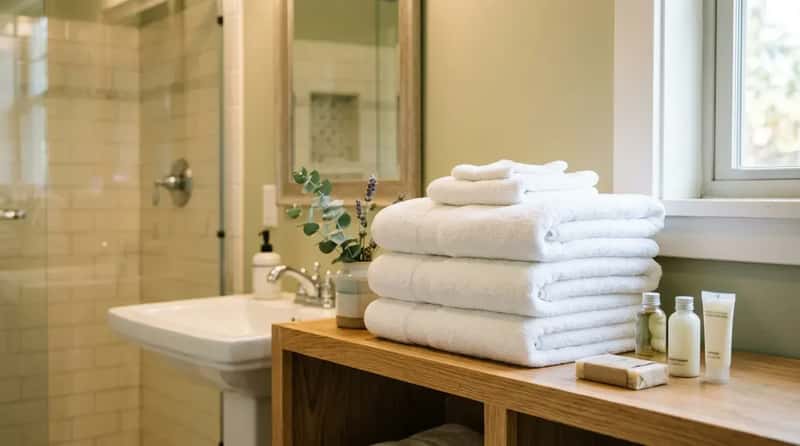
Almost every guest who’s ever stayed somewhere has had this experience: the bath towels are in the hall closet, but nobody said which closet, which shelf, or whether those were the nice towels or the “don’t touch those” towels. It creates a small but real anxiety. Welcoming homes eliminate this entirely by placing fresh towels somewhere unmistakably obvious – folded on the bed, on an open shelf in the bathroom, or draped over the towel bar with a washcloth on top.
Laying out shampoo, conditioner, soap, and lotion alongside those towels takes the gesture from practical to genuinely thoughtful. The whole point is anticipation – solving a problem the guest didn’t yet realize they were going to have. When a host does that consistently, the house stops feeling like a place you’re visiting and starts feeling like a place where you already know where everything is. That’s a rare and valuable feeling to give someone.
#13 – A Spot to Put Their Things
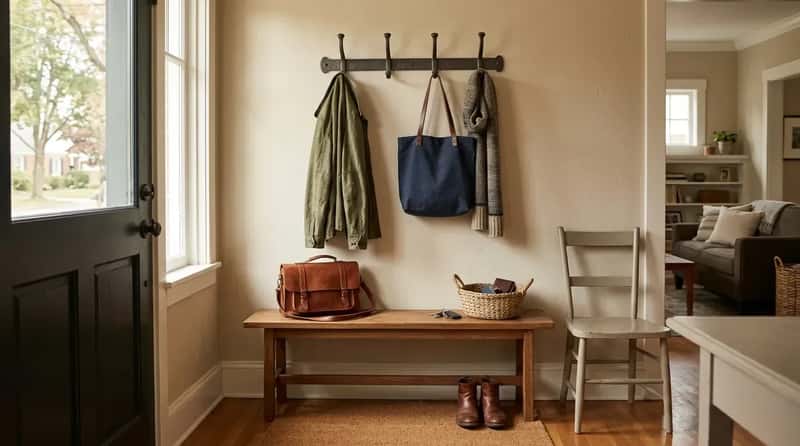
It sounds deceptively minor, but the moment guests walk through the door, their brain is quietly scanning for two things: somewhere to sit and somewhere to put their stuff. Homes that don’t provide either create a low-grade tension guests carry the entire visit. A hook by the door, an empty chair near the entry, a clear surface where a bag can land without displacing anything – these are the three elements that tell a guest their presence is not an inconvenience.
When there’s no white space in a home, guests can’t add their own belongings without feeling like a disruption. That disruption feeling is the quiet enemy of genuine hospitality, and it operates entirely below the surface – guests rarely identify it, but they feel it the whole time. The hosts who get this right don’t have perfect homes. They just leave room in them, literally and figuratively, for other people to exist.
#12 – The Smell of Something Baked
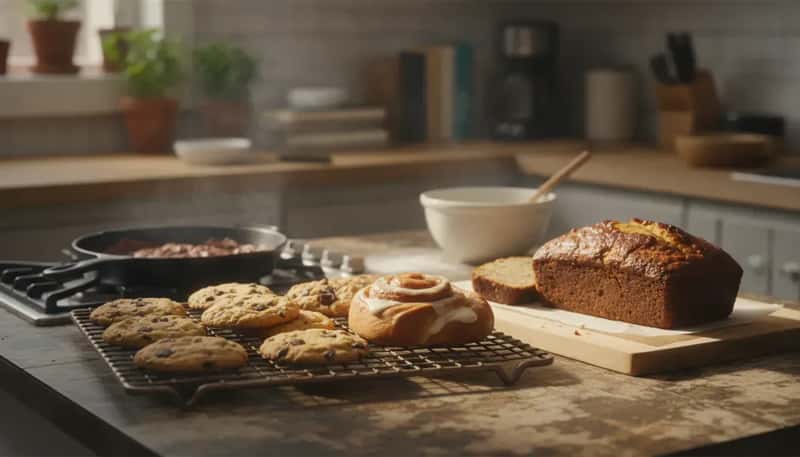
It’s one of the oldest tricks in the real estate playbook – bake cookies before an open house – because it works on a level that completely bypasses logic. The smell of cookies, bread, or cinnamon rolls creates an instant sense of home and comfort. Your brain associates that scent with safety, nourishment, and someone who cared enough to make something in anticipation of your arrival – even if what they made came from a tube of Pillsbury dough. The specifics don’t matter. The warmth of the scent is what registers.
It doesn’t have to be a production. A tray of brownies from a box mix, banana bread, even store-bought cookies warmed briefly in the oven – the scent is what does the work. It greets guests before you do. In a world where most people feel like they’re slightly imposing when they visit, walking into the smell of something baked in your honor is a profoundly reassuring message. It says: we were getting ready for you.
#11 – A Clear, Open Entryway
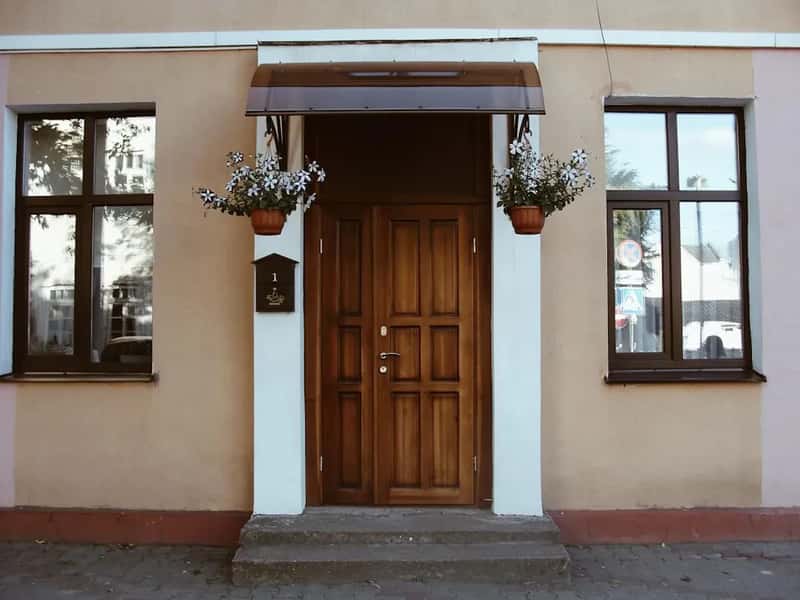
The entryway sets the emotional tone before guests have seen a single other room. A cramped or cluttered entry creates a subtle but real tension – the brain reads blocked passages as mild threat and open paths as safety. This isn’t preference; it’s psychology. Yet it’s staggering how many homes greet guests with a wall of coats, a pile of shoes, a stack of unopened mail, and a dog bowl pushed against the only walkable path.
The most welcoming entryways have exactly three things: a place to hang a coat, a place to remove shoes, and a clear path forward. The entry doesn’t need to be big. It needs to be ready. Guests who can walk directly into a home without navigating an obstacle course immediately feel like they belong there – like the space opened up to receive them rather than accommodate them grudgingly. Those first five steps matter more than everything else in the house combined.
#10 – A Genuinely Comfortable Place to Sit
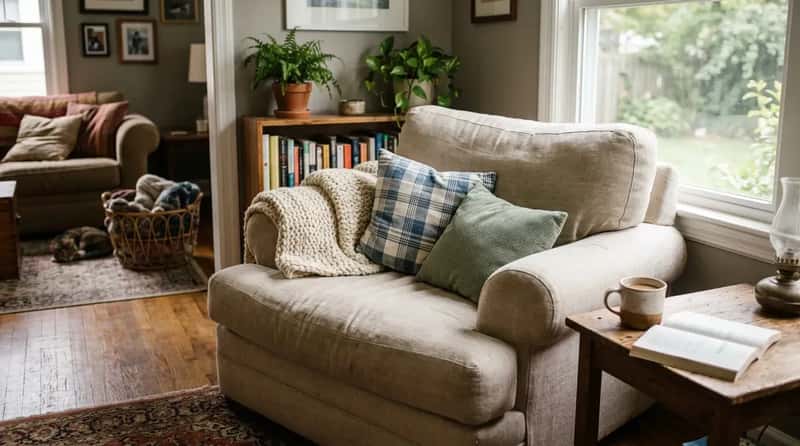
This gets overlooked more than you’d think. Plenty of homes have seating that photographs beautifully but is genuinely uncomfortable to sit in for more than twenty minutes – rigid accent chairs, sofas so deep you need help getting out, cushions that flatten to nothing under any real body weight. The most welcoming homes prioritize sit-ability over style. Comfort is not a design concession. It’s the whole point.
The homes where guests linger for hours longer than planned almost always have one ridiculously comfortable chair or corner of the sofa that becomes a gravitational center. It doesn’t need to be expensive. It needs to be soft, supportive, and positioned somewhere that feels like it was put there for a person, not a photo. That spot becomes the place guests return to every visit – and they start thinking of it as theirs. That’s when a house becomes someone’s second home.
#9 – Handwritten Local Recommendations

This is the detail that separates good hosts from the ones people describe for years. When guests are visiting from out of town, they want to explore – but they don’t want to feel like tourists. A handwritten list of the host’s actual favorite local spots is worth more than any guidebook or Yelp search, because it comes with context: “This taco truck only opens Thursday through Sunday,” or “Ask for a window table at the back – the view is worth it.”
A few brochures for local attractions are a nice touch, but a handwritten note beats a printed brochure every time. It communicates that you thought specifically about this person’s visit, not guests in general. That specificity is the whole game in hospitality – the difference between making someone feel managed and making them feel seen. The list takes ten minutes to write and gets remembered for years.
#8 – A Working Nightlight Between the Bedroom and Bathroom
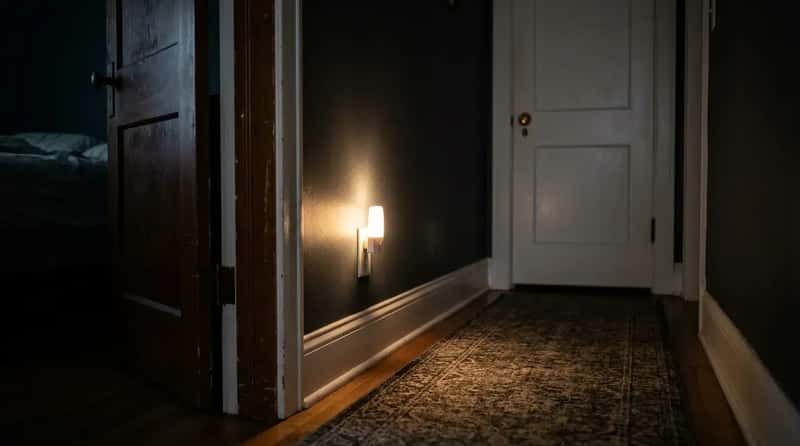
It’s 2 AM. A guest wakes up needing the bathroom. They don’t know which light switch does what. They don’t want to wake anyone. And they definitely don’t want to find furniture with their shin in a completely dark hallway. This is one of those scenarios that never comes up during daytime planning and becomes urgent the first night. The homes that have already thought of it have a soft plug-in nightlight glowing in the hallway or near the bathroom door – a two-dollar fix that prevents a genuinely unpleasant experience.
Walking guests through the lights, the thermostat, and how to work the coffee machine in the morning are the practical, unsexy acts of hospitality that nobody writes think-pieces about – but they matter enormously at 2 AM when nobody wants to knock on a door to ask. The hosts who cover this during the arrival walkthrough, quietly and without making a production of it, are the ones guests describe as “the most thoughtful people I’ve ever stayed with.”
#7 – Baskets That Organize Without Hiding

There’s a version of hospitality that prioritizes the illusion of perfection – every surface bare, every item hidden behind a cabinet door. And then there’s the version that actually serves guests: a home organized just enough to be clear, but accessible enough to feel real. Baskets are the single most effective tool for threading that needle. They contain the chaos without creating the sterile, don’t-touch energy of a home that’s been staged rather than lived in.
The best placements in genuinely welcoming homes: one in the living room with extra throws, one in the guest room with spare toiletries, one near the front door for miscellaneous items, one in the bathroom with backup supplies. When guests can see where things are – and those things look organized rather than dumped – they feel both comfortable and confident enough to help themselves. That confidence, the ability to take what you need without asking, is what it actually feels like to be at home somewhere.
#6 – A Warm Welcome Drink on Arrival

In American hospitality culture, the offer of a drink the moment someone walks through the door is one of the most deeply coded acts of welcome. It says: you’re here, you matter, let’s slow down together. The homes that do this consistently – not just for formal dinner parties, but for casual drop-ins – create an immediate shift in energy. The visit has officially begun. The guest is no longer just standing in a foyer with their coat on; they’re somewhere they belong.
The beverage is almost irrelevant – sparkling water, sweet tea, a glass of wine, hot cider in winter. What matters is the act of handing someone something the moment they arrive, sitting down with them, and not immediately pivoting to logistics. These are the moments guests carry home with them. Long after they forget what was served for dinner, they remember the feeling of that first five minutes – unhurried, warm, and genuinely glad.
Why It Stands Out
- Offering a drink before removing coats or giving a house tour is the universal American signal that a guest has truly arrived
- It creates a natural pause – a shared moment that shifts the energy from arrival to belonging
- Non-alcoholic options matter: sparkling water, lemonade, or hot tea ensure every guest feels included without awkwardness
- Sitting down together for even five minutes with that first drink is more memorable than a full dinner in most cases
#5 – Evidence of Real Life Left Visible
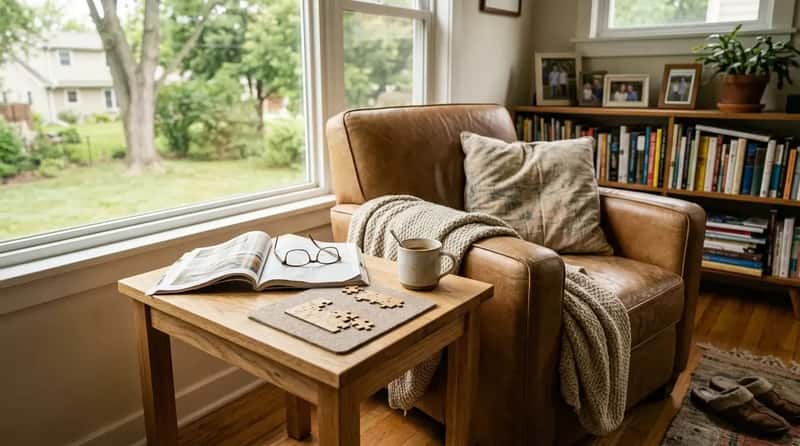
Here’s the counterintuitive truth the most welcoming homes have already figured out: a home that looks like no one has ever actually lived in it makes guests feel like they shouldn’t be the first. The homes that feel most inviting aren’t spotless – they have a book left open on the coffee table, a half-finished puzzle, a dog-eared magazine on the side table. These are quiet signals that a real human being occupies this space and is comfortable enough to leave a trace of themselves in it.
Perfection reads as unwelcoming – and this is one of the most underappreciated dynamics in all of American hospitality. When every surface is bare and every pillow is geometrically placed, guests sense that the house has been prepared for inspection, not for them. The slightly crooked picture frame and the half-read novel are doing more hospitality work than most hosts realize. They give guests permission to exhale. And exhaling is the whole point.
#4 – A Snack Basket or Bowl That’s Actually Replenished
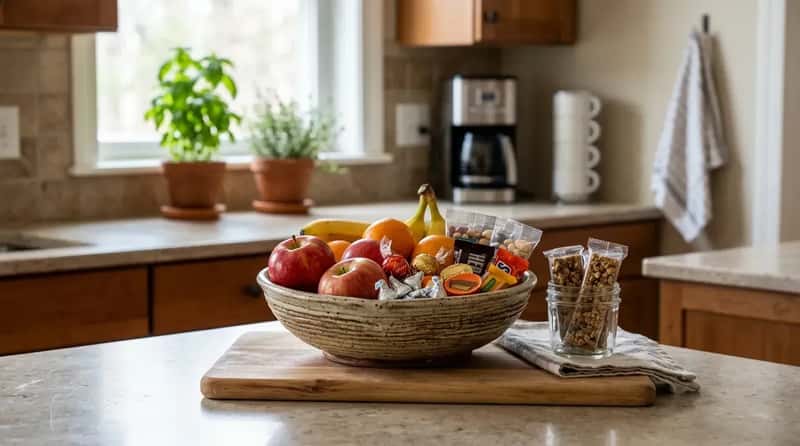
A simple bowl of apples, wrapped chocolates, or mixed nuts on the countertop signals hospitality in a way that’s immediate and universal. But the key word is signals – because a dusty bowl with one sad granola bar and a forgotten ketchup packet does the opposite. The snack display only works when it looks genuinely curated and maintained. Welcoming American homes keep the fruit bowl fresh, the candy dish filled, the cookie jar stocked. It’s never elaborate. It’s always intentional.
There’s a democratic quality to a snack station that formal hosting lacks – it requires no ceremony and no asking. Anyone can grab something at any point without interrupting anything. The best hosts refresh it before guests arrive and don’t draw attention to it. It’s just there, the way it always is, because this is a home where people are always welcome and always fed. That quiet abundance communicates something that no amount of nice furniture can.
#3 – Genuine Warmth at the Door
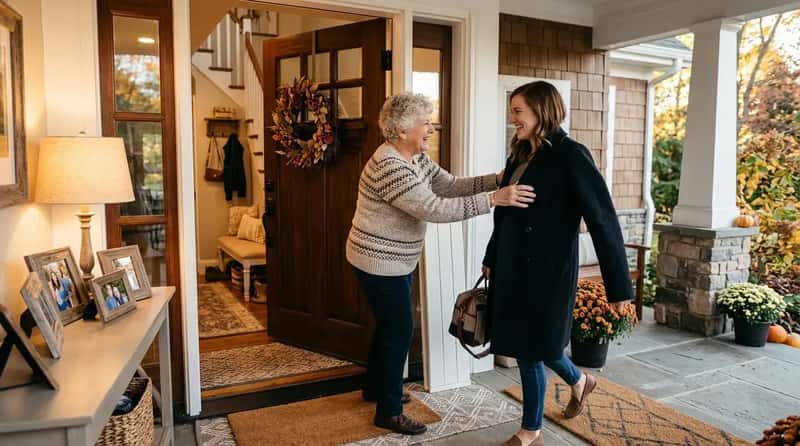
All 24 items above this one matter. But they are, in the end, staging. The single most irreplaceable comfort in any welcoming American home is the moment the door opens and the person inside is visibly, genuinely glad to see you. No amount of interior design substitutes for a host who is actually happy you’re there – and guests can tell the difference between performance and the real thing within about four seconds of crossing the threshold.
Greeting guests by name, helping carry their bags, taking their coat without being asked – these aren’t grand gestures. They’re small, quiet signals that say “we thought about you before you got here” and “your presence makes this house better, not more complicated.” The homes that live rent-free in your memory years later aren’t always the most beautiful ones. They’re the ones where you never felt like a burden. The house is the stage. The host is the reason you remember the night.
The ornament of a house is the friends who frequent it.
Ralph Waldo Emerson
#2 – A Home That Anticipates What You Forgot
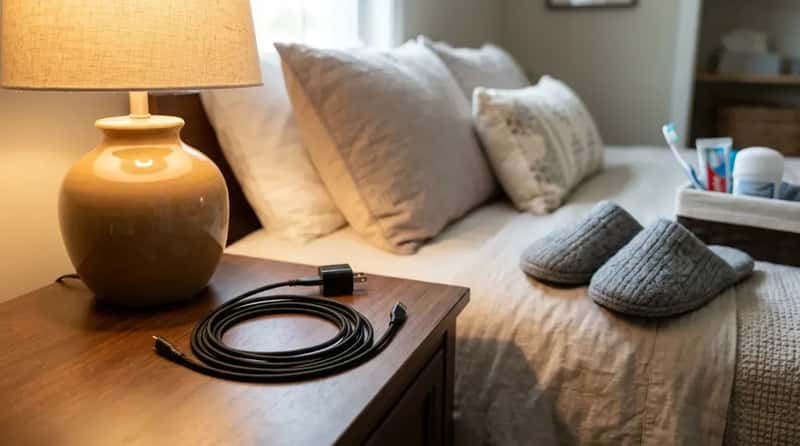
The truly welcoming home doesn’t wait for you to realize you need something – it already thought of it. This is the host who put an extra phone charger on the nightstand before you mentioned your battery was dying. Who left a pair of house slippers at the foot of the guest bed. Who stocked the bathroom with travel-sized toiletries knowing that someone always forgets deodorant or a toothbrush. Anticipatory hospitality is the rarest form – and the most remembered.
It doesn’t require mind-reading. It requires a simple mental exercise: imagine your guest’s first sixteen hours in your home, from arrival to morning coffee, and ask what they might need at each stage. The hosts who do this aren’t necessarily the most experienced or design-savvy. They’re the ones who think one step ahead, who consider what would make a specific friend feel seen and at ease. That kind of thoughtfulness is felt immediately and remembered long after the visit ends.
Fast Facts
- Travel-sized toiletries cost under $10 at most drugstores and eliminate one of the most common guest anxieties
- A spare phone charger (especially a multi-port one that fits multiple cable types) is the single most universally appreciated surprise in any guest room
- House slippers left at the foot of the bed signal warmth and ease without a single word spoken
- Running through a guest’s first 16 hours mentally – arrival, sleep, morning coffee – covers 90% of what they’ll quietly need
#1 – The Feeling That There’s Always Room for You Here
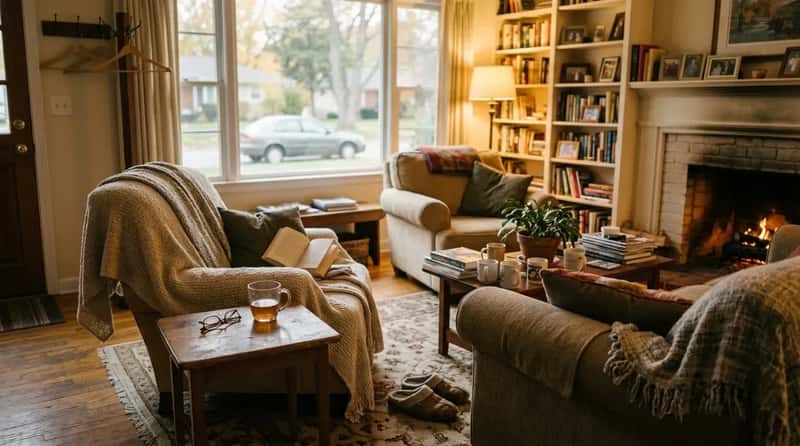
Everything on this list adds up to one thing – one feeling that the most welcoming American homes quietly broadcast from the moment you pull into the driveway. Not luxury. Not perfection. Not a staged interior. The feeling that this house was built for people, and that you are one of the people it was built for. Some spaces give off an effortless comfort while others feel cold despite looking beautiful – and the difference almost always comes down to whether a home looks genuinely loved: a little worn at the edges, unmistakably inhabited, and completely at ease with itself.
You can have every item on this list and miss the whole point, or you can have almost none of them and nail it completely. When you create an environment where people feel welcome, accepted, and comfortable, you create a place for relationships to grow. That’s not a design philosophy. That’s not a hosting strategy. That’s just love, made physical, expressed through hundreds of small daily choices about how you share the space you live in.
Which one of these did you recognize from a home you’ve visited – or wish you had in your own? The best ones are almost always free. Drop it in the comments.