For anyone earning money from clients, employers, or investments outside their new home country, a handful of nations still offer something increasingly rare: the ability to keep foreign-sourced earnings completely untouched by local tax authorities. These territorial tax systems tax only what’s earned inside their borders, leaving income from abroad in a separate, often exempt category.
The landscape has shifted quite a bit over the past two years, with some once-popular destinations tightening their rules while others have doubled down on their expat-friendly stance. Below are five countries where, as of 2026, foreign income can still be earned and kept largely or entirely tax-free, provided you understand the specific conditions each country attaches to that benefit.
1. Panama
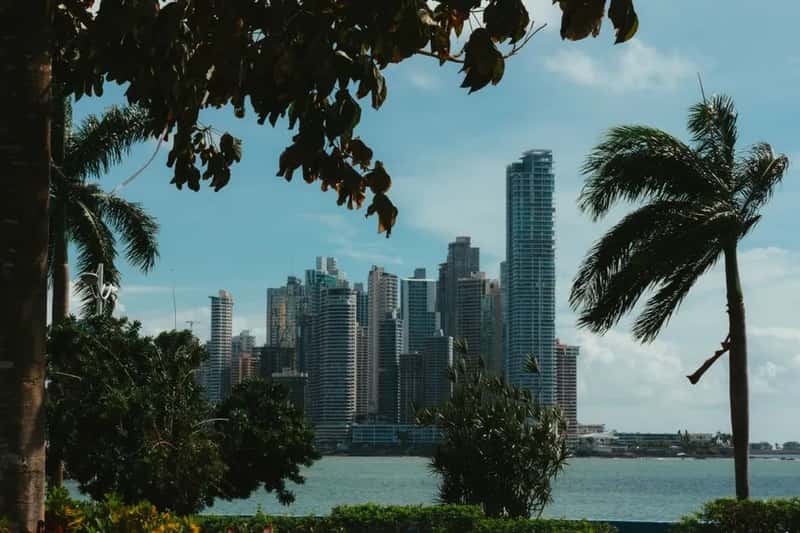
Panama runs one of the cleanest territorial tax systems in the world, meaning residents are taxed only on income generated from Panamanian sources. A resident of Panama who earns consulting fees from clients in Europe, receives dividends from a Singapore holding company, or realises capital gains on US-listed securities owes zero Panamanian tax on any of those amounts. This makes it a favorite among consultants, remote employees, and online business owners who bill clients abroad.
Qualifying isn’t just about showing up either. Panamanian tax residency is separately triggered by 183 or more days of presence in a calendar year or by having a center of vital interests in Panama. For those pursuing the country’s popular Friendly Nations Visa route tied to foreign income, the minimum income requirement is USD 36,000 per year, or USD 3,000 per month, from foreign sources, not the widely-circulated USD 50,000 figure that many outdated guides still repeat.
2. Costa Rica

Costa Rica has long attracted remote workers and retirees with its territorial approach, though the rules have grown more nuanced for businesses since a 2023 legal change. Individuals working remotely still benefit enormously, however. Costa Rica’s digital nomad framework is considered one of the cleanest setups globally, offering total income tax exemption on foreign earnings for up to two years, with no requirement to incorporate locally and no corporate substance tests.
It’s worth noting that the exemption isn’t unlimited for every type of income anymore. A 2023 law change means Costa Rica still applies territorial treatment to active business income, but now taxes certain foreign-sourced passive income such as dividends, interest, royalties, and capital gains when the entity belongs to a multinational group and fails an economic substance test. For most individual remote workers on the nomad visa, though, the digital nomad framework remains one of the cleanest in the world, granting a full income tax exemption on all foreign-earned income and extending stays to one year, renewable for a second, with proof of three thousand dollars a month in income for individuals or four thousand for families.
3. Paraguay

Paraguay is frequently cited as the purest and lowest-maintenance territorial tax system left standing. It offers zero percent taxation on a pure territorial basis, with no minimum stay requirement and living costs between roughly eight hundred and fifteen hundred dollars a month, all in a timezone convenient for serving US and European clients. Foreign income simply isn’t part of the local tax equation, which keeps compliance refreshingly simple compared to remittance-based systems elsewhere.
The cost of living is a major draw on its own. Asunción offers comfortable living for a fraction of what Panama, Costa Rica, or Dubai charge, coming in around seventy-two percent cheaper than New York City. Paraguay also happens to offer one of the fastest paths to permanent residency and citizenship in the Americas, and it holds the fastest citizenship timeline in the region, with a Paraguayan passport granting visa-free access to around one hundred forty-six countries.
4. Georgia

Georgia doesn’t run a pure territorial system in the strictest sense, but it achieves a similar outcome through specialized tax regimes that many expats and freelancers find just as attractive. Georgia’s special regimes, including a one percent small business tax and a zero percent rate under its Virtual Zone IT program, achieve results similar to territorial taxation through different mechanisms. For freelancers, consultants, and small online business owners, this can mean an effective tax rate close to nothing on income earned from foreign clients.
The appeal goes beyond the tax code itself. Georgia’s Small Business status applies a one percent tax on roughly the first one hundred eighty-five thousand dollars of turnover, and the country is visa-free for many nationalities while offering a genuinely low cost of living. Combined with straightforward company registration and a banking system that’s grown more accustomed to foreign entrepreneurs, Georgia has become a go-to base for location-independent workers who want simplicity over complexity.
5. United Arab Emirates

The UAE takes a different route to the same destination. Rather than running a territorial system that separates local from foreign income, it simply doesn’t levy personal income tax on individuals at all, regardless of where the money comes from. Dubai in particular offers zero percent personal income tax alongside world-class infrastructure and free zones that allow one hundred percent foreign ownership of businesses.
That zero-tax status applies uniformly and isn’t contingent on parsing what counts as domestic versus foreign income, which simplifies life considerably for residents. Among countries built for passive income specifically, the UAE stands out for taxing absolutely nothing, whether it’s salary, dividends, or foreign business profits. The tradeoff tends to be cost of living and, for company owners, the need to structure operations carefully around free zone rules and substance requirements as global tax transparency standards tighten.
None of these five destinations offer a free pass without homework. Tax residency rules, day-count thresholds, and evolving substance requirements mean the details matter just as much as the headline zero percent rate. It’s also worth remembering that the United States is one of the few countries that taxes its citizens on worldwide income regardless of residency, so American expats moving to any of these countries still need to file at home, even if the Foreign Earned Income Exclusion can reduce much of that US liability.
Global reporting standards like CRS and FATCA have also made it far harder to simply disappear from a home country’s tax radar, which means proper planning, honest residency changes, and good record-keeping matter more than ever. Still, for those willing to do things correctly, Panama, Costa Rica, Paraguay, Georgia, and the UAE remain five of the strongest options left for anyone hoping to earn abroad and keep what they make.