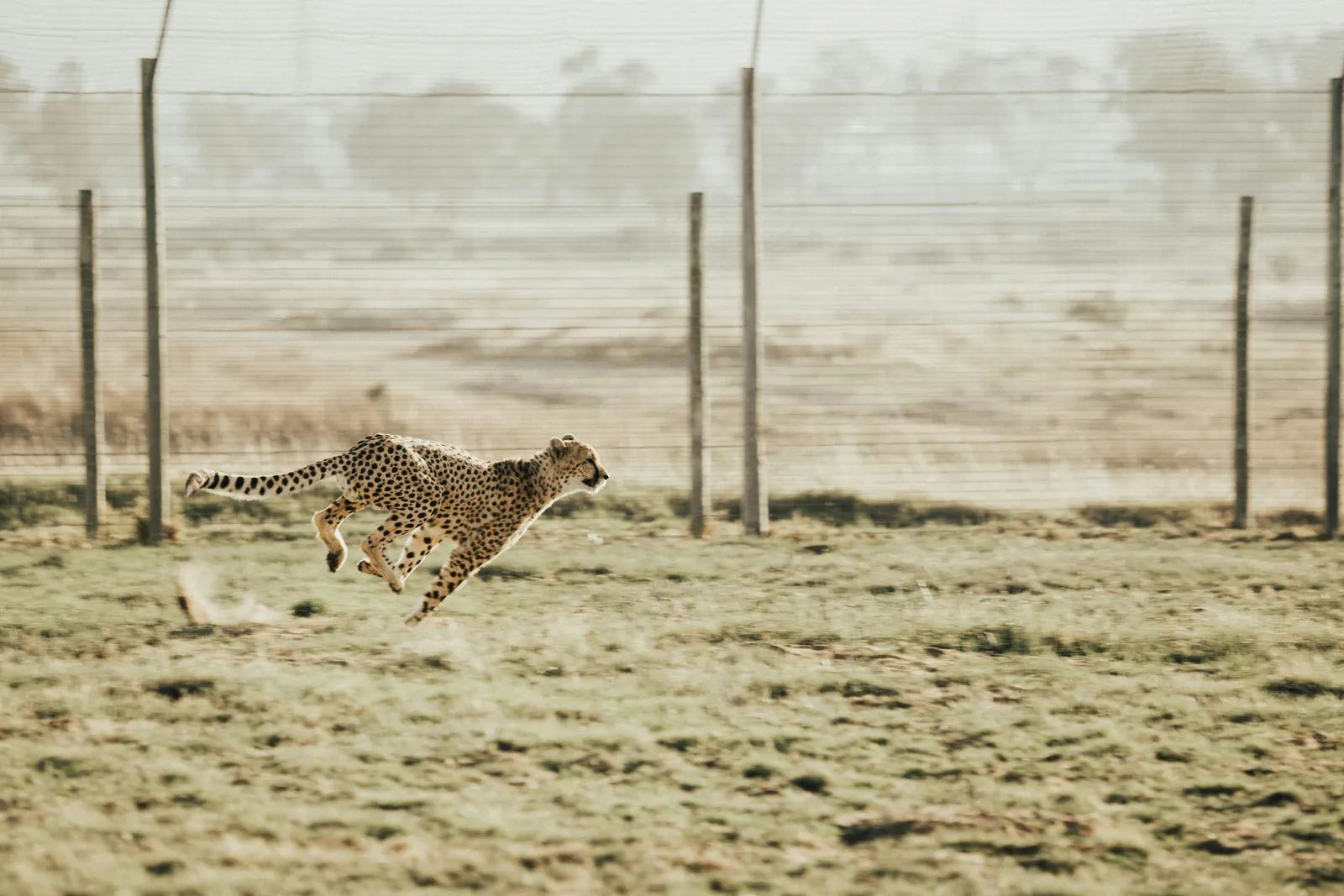
Researchers have completed the most detailed count yet of cheetahs living outside protected zones in South Africa. The effort covered nearly 100,000 square kilometers and turned up just 83 mature adults. The findings point to mounting pressure on a population that still moves across international borders but faces growing barriers to its survival.
Scale of the Free-Roaming Cheetah Census
The project, known as the Free-Roaming Cheetah Census, examined vast stretches of land where cheetahs are not confined to reserves. Teams documented animals that travel naturally between South Africa, Botswana, Namibia, and Zimbabwe. This cross-border movement has long supported genetic exchange among groups. The survey stands as the most comprehensive effort of its kind in the region. Results showed the animals remain thinly spread. With only 83 confirmed mature adults across such a large area, the data underscore how few individuals occupy the unprotected landscapes that once supported larger numbers.
Barriers to Movement and Genetic Health
Farming, construction, and new fences increasingly fragment the terrain these cats require. Cheetahs depend on expansive, connected habitats to hunt and to find mates from different groups. When pathways close, isolated populations lose genetic diversity over time. The census makes clear that maintaining open corridors remains essential for long-term viability. Development projects continue to add obstacles. Without coordinated planning across borders, the remaining animals risk becoming further separated from one another.
Conflict With Livestock Farmers
Farmers sometimes kill cheetahs when they suspect livestock losses. The census, however, found that the cats primarily target wild prey rather than domestic animals. This distinction matters for conflict-reduction efforts. Better information on actual hunting patterns could help ease tensions between landowners and conservation groups. The species holds a vulnerable listing at the global level. The new South African data suggest a stronger case for an endangered designation within the country, where free-roaming numbers appear especially low.
- 83 mature adults recorded across nearly 100,000 square kilometers
- Cross-border movement between four countries still occurs
- Habitat fragmentation and human conflict remain primary threats
- Reclassification to endangered status in South Africa may be warranted
Next Steps for Conservation
The census supplies a clearer baseline for future work. Officials and organizations can now target specific corridors for protection and work with farmers on non-lethal deterrents. Continued monitoring will show whether these steps slow further declines. The data also reinforce the need for regional cooperation if the population is to remain connected and genetically healthy.