Taxes shape more life decisions than most people admit, and for a growing number of remote workers, retirees, and entrepreneurs, the question isn’t just where to live but where to legally keep more of what they earn. The good news is that several countries offer real, legitimate pathways to dramatically lower tax bills, whether through zero personal income tax, territorial systems that ignore foreign earnings, or generous non-domicile regimes. None of this involves loopholes or shady offshore schemes; these are established legal frameworks that governments actively use to attract foreign residents and their money.
What follows are five countries that consistently rank among the most tax-friendly for expats in 2026. Each has its own quirks, costs, and residency requirements, so what works brilliantly for one person’s situation might be less ideal for another. Still, if minimizing your tax burden is a priority, these five destinations deserve a serious look.
1. United Arab Emirates
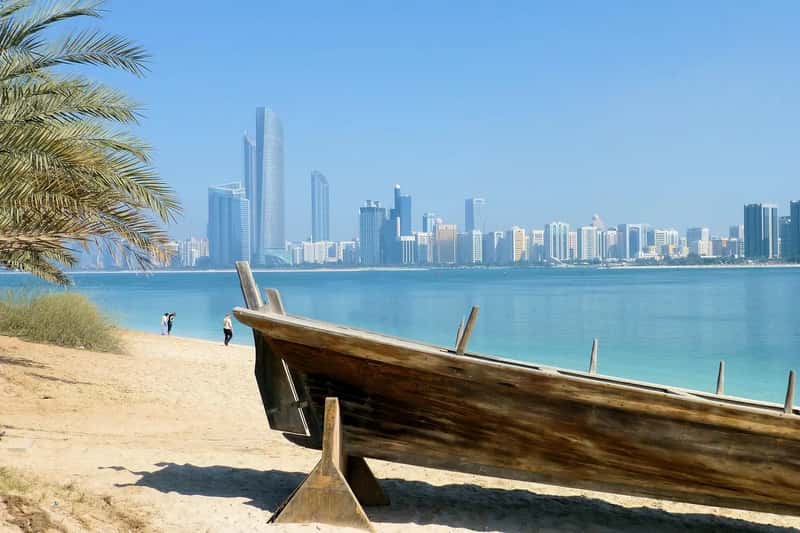
The UAE remains the gold standard for tax-free living among expats, and for good reason. In 2026, the UAE still doesn’t charge personal income tax on individuals, and salaries, dividends, rental income, and capital gains are all received in full, with no capital gains, wealth, or inheritance tax either. For someone drawing a regular salary, that translates into take-home pay that’s essentially the full paycheck. The nuances sit on the business side, where a 9% corporate tax applies to business profits above AED 375,000, though employment and personal investment income are not affected, and VAT sits at 5%.
The country also backs this up with serious infrastructure for newcomers. For most relocating professionals and families, the UAE is the most practical of the zero-tax jurisdictions, pairing a 0% personal income tax rate with a clear residency route, over 140 tax treaties, and deep expat infrastructure that smaller island economies can’t match. The tradeoffs are real too: your home country may still tax you depending on your nationality and remaining ties, and the cost of living in the prime districts is high. For Britons and many other Western nationals without citizenship-based taxation, though, it’s hard to find a more practical zero-tax base.
2. Monaco

Monaco has built its entire identity around being a tax haven for the wealthy, and it remains one of the few places in Europe where residents genuinely pay zero personal income tax. Monaco is the only European jurisdiction with zero personal income tax. That single fact, combined with its location on the French Riviera, explains why so many high-net-worth individuals and entrepreneurs have made it their base over the decades.
The appeal goes beyond just the tax rate. Monaco is characterized by luxury, exclusivity, political stability, and financial privacy, making it an appealing low-tax destination for high-net-worth individuals and entrepreneurs seeking a base in Europe. There’s an important exception worth knowing, however: French nationals living in Monaco are still subject to French income tax under a bilateral agreement. For everyone else, Monaco offers a legitimate and long-standing zero-tax residency, though the cost of actually living there, particularly housing, is among the steepest on the planet.
3. Panama
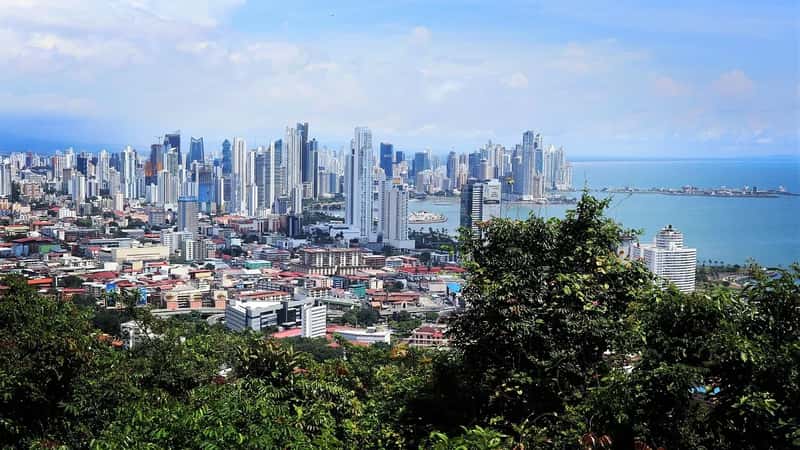
Panama runs on a territorial tax system, meaning only income earned inside the country gets taxed, while everything sourced abroad stays untouched. Panama’s low-tax, territorial system has been in place since the early 90s. That stability matters. It’s not some new experimental policy but a decades-old framework that foreign residents have relied on for generations. Many wealthy US citizens have moved there to reduce taxes on remote salaries, overseas investments, or pensions.
Beyond the tax benefits, Panama offers practical advantages that make relocation genuinely feasible. Strategically located in Central America with a well-connected international airport and a three-hour flight time to the US, Panama’s low taxes and straightforward residency programs, such as the Panama Qualified Investor Visa, have drawn a sizable expat community. The territorial approach works best for people whose income comes entirely from foreign sources; anyone earning money locally within Panama will still face standard domestic taxation on those earnings.
4. Paraguay

Paraguay has quietly become one of the easiest and cheapest places to establish a low-tax residency, and it’s increasingly popular among digital nomads and remote entrepreneurs looking for a straightforward option. Paraguay offers the best combination of low cost, ranging from roughly 2,290 to 3,190 dollars for residency, minimal requirements with no investment or bank deposit needed, and flexibility, requiring just one visit per year. That combination of affordability and low commitment sets it apart from many competing programs that demand large deposits or lengthy physical presence.
Like Panama, Paraguay taxes on a territorial basis rather than worldwide income. Paraguay-derived income is subject to taxation, regardless of an individual’s residency or citizenship status and location, while income earned elsewhere generally escapes the net. This makes it particularly attractive for freelancers, consultants, and anyone whose paychecks arrive from clients or employers based outside the country. It won’t suit everyone, since the country lacks some of the polish and infrastructure of pricier alternatives, but for pure tax efficiency at minimal cost, it’s hard to beat.
5. Georgia

Georgia, the country in the Caucasus rather than the US state, has built a reputation as one of the friendliest tax environments for foreign entrepreneurs and remote workers. It operates on a territorial taxation principle, meaning Georgian taxes apply only to income generated within Georgia, while income earned outside the country is generally not subject to Georgian tax for residents. Becoming a tax resident is also refreshingly simple: an individual becomes a Georgian tax resident by spending 183 or more days in Georgia within any 12-month period.
What really sets Georgia apart, though, is its small business regime for freelancers and solo entrepreneurs. Georgia offers special tax regimes designed to dramatically reduce the tax burden for small operators, with Micro Business Status applying to annual turnover under 30,000 GEL and income tax set at just 1% on gross revenue. The country also makes entry easy for a huge range of nationalities. Georgia allows citizens of 95 or more countries, including the USA, UK, EU, Canada, and Australia, to stay visa-free for 365 days, one of the most generous visa policies in the world. It’s worth noting that scrutiny has increased in recent years, with authorities cross-checking foreign income claims more carefully, so anyone relying on this system should keep clean, well-documented records.
None of these five countries offer a free lunch. Every one of them comes with tradeoffs, whether that’s Monaco’s astronomical property prices, the UAE’s high cost of living in fashionable neighborhoods, or the increased paperwork scrutiny now facing digital nomads in Georgia. Nationality matters enormously too. US citizens, unlike almost everyone else in the world, remain taxed on worldwide income no matter where they live, which means territorial systems only offer partial relief unless paired with tools like the Foreign Earned Income Exclusion.
Still, for those willing to do the homework, establish genuine residency, and structure their finances properly, these five destinations represent some of the most legitimate and effective ways to legally reduce a tax bill to nearly nothing. The key word there is legally. Every strategy described here relies on established, government-sanctioned frameworks rather than gray-area tricks, which is exactly why they’ve proven durable over time. Anyone seriously considering a move for tax reasons should still consult a cross-border tax professional first, since individual circumstances, from citizenship to existing assets, can change the calculation considerably.