Drive long enough across America and you’ll eventually spot something that makes you slow down. It might be a row of cars stuck in the dirt, a gray circle of sedans on the plains, or a hillside painted like a candy shop. None of these stops were built for any practical reason.
Most of them survive on stubborn locals, volunteer crews, and visitors who can’t resist a detour. Here are five that keep going, along with the facts that explain why.
Cadillac Ranch, Amarillo, Texas
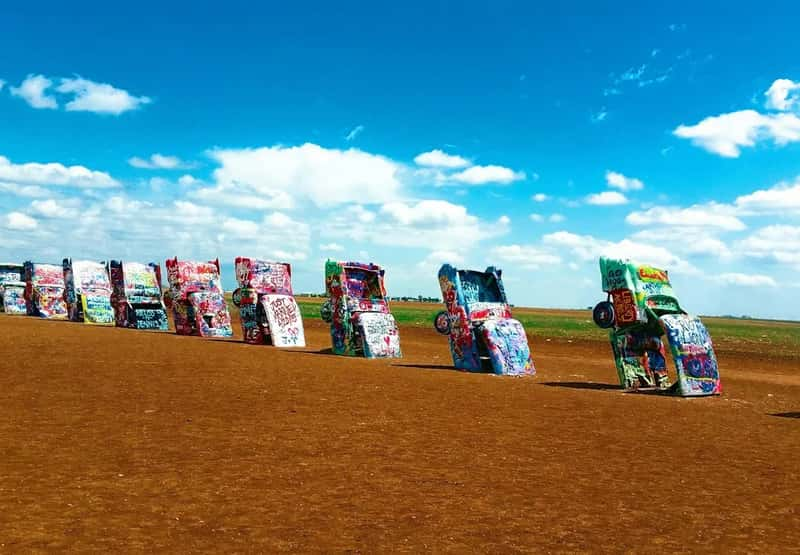
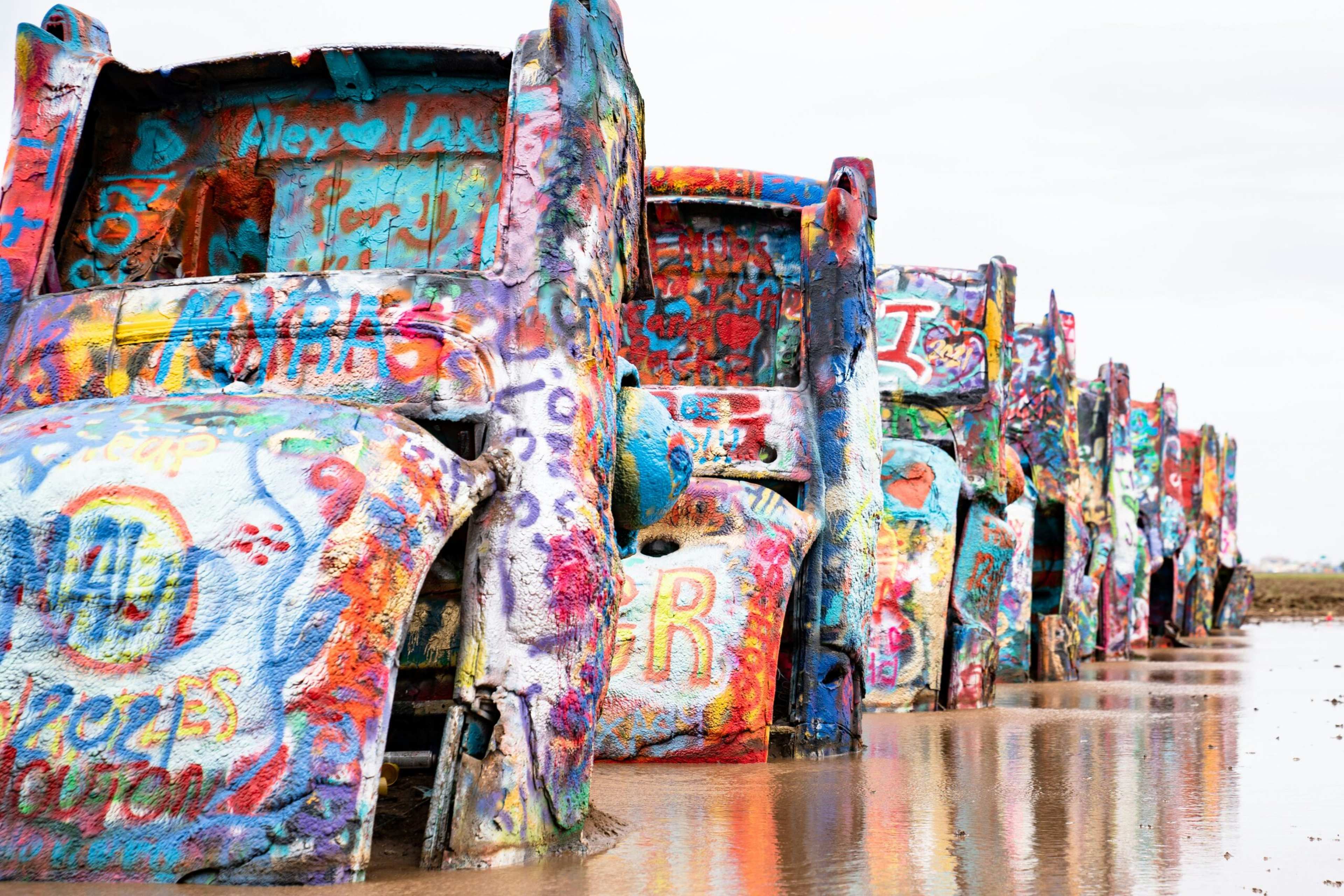
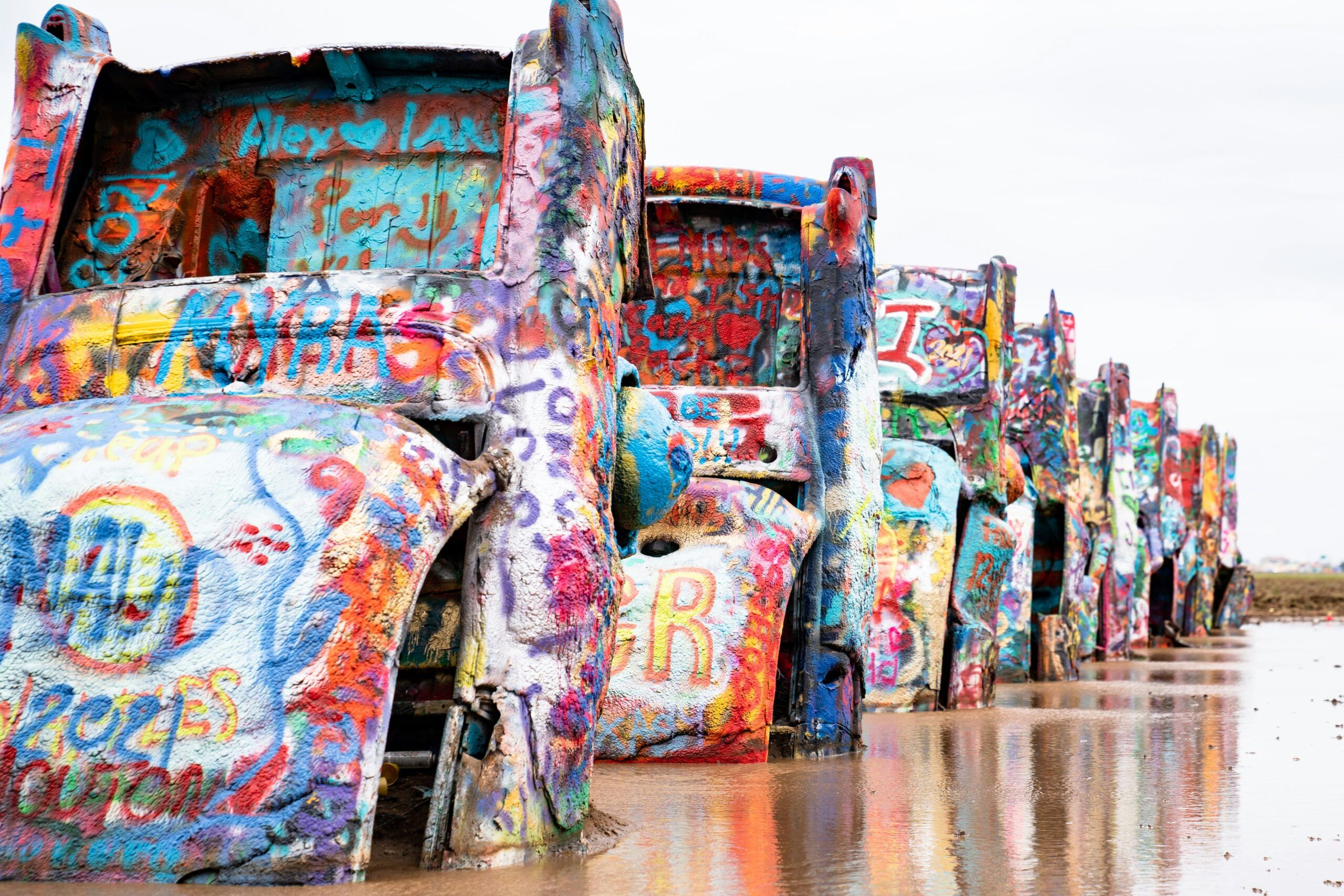
Ten Cadillacs stand with their noses buried in a Texas field, tail fins up. The installation dates to 1974 and consists of 10 Cadillacs planted nose first in the ground.[1] It was created by Stanley Marsh III and the Ant Farm collective.[2] The artists reportedly bought the junked cars for about $300 each and finished the whole job in under a week.[3]
Part of the reason it survives is that nobody guards it. It’s open around the clock, every day of the year, with no entry fee.[4] One estimate puts annual visitors at around a million.[4] Visitors spray paint the cars, and even when the cars are repainted for a theme, they’re usually covered in spray paint again within days.[4] In 2024, for the 50th anniversary, co-founder Chip Lord led a ceremonial repainting of all ten cars in gray primer.[5] In April 2025, they were painted blue for Child Abuse Prevention Month.[6]
Carhenge, Alliance, Nebraska
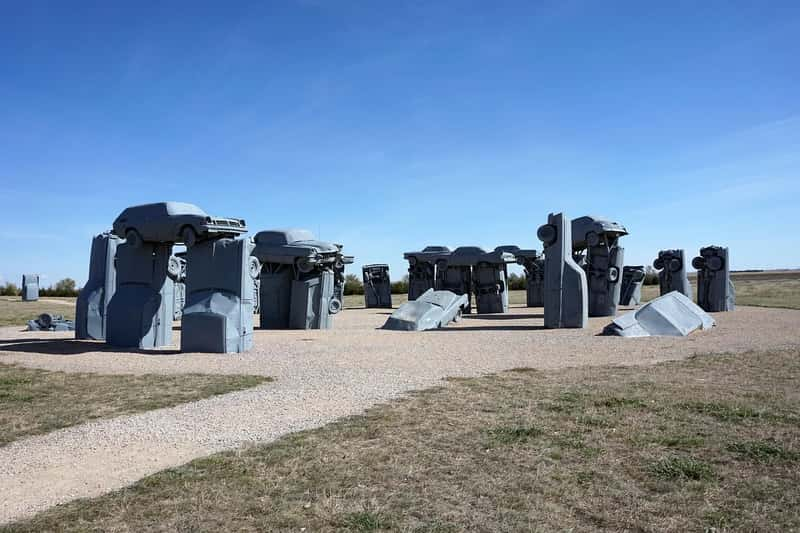
Carhenge copies Stonehenge, only with cars instead of stones. It uses 38 real vehicles, rescued from nearby farms and dumps.[7] Builder Jim Reinders noticed that cars from the 1950s and 1960s were about the size of Stonehenge’s weathered stones, so he gave his circle a 96 foot diameter to match the original’s proportions.[7] It was built in 1987.[8]
A town decision kept it alive. In August 2013, Alliance voted to become Carhenge’s owner, which guaranteed its preservation.[7] It still draws more than 100,000 visitors from around the world.[9] Upkeep is a constant job, since Carhenge needs repainting every three to five years.[7] In 2025, a first mural festival brought eight muralists to Alliance and put new murals at Carhenge and 15 downtown sites.[8] Not everyone approves of the color change, as one 2025 reviewer on Tripadvisor wanted the original gray restored.
The World’s Largest Ball of Twine, Cawker City, Kansas
This one began with a farmer and some leftover string. Frank Stoeber started winding twine on December 24, 1953, and neighbors soon began bringing their own.[10] The ball didn’t stop when he died. The community still adds to it at an annual twine festival held the third weekend of every August.[10]
The size is hard to picture. A sign at the site in March 2025 showed a circumference of 46 feet, about 8.5 million feet of twine, and a weight of over 27,000 pounds.[11] The title is contested, though. Darwin, Minnesota, claims the largest ball made by a single person, rolled entirely by Francis Johnson.[12] Some purists argue that Cawker City’s group effort doesn’t count the same way.[12] Still, the town has fewer than 500 residents[13], and a growing ball of string has given it an outsized reputation.
Salvation Mountain, Niland, California
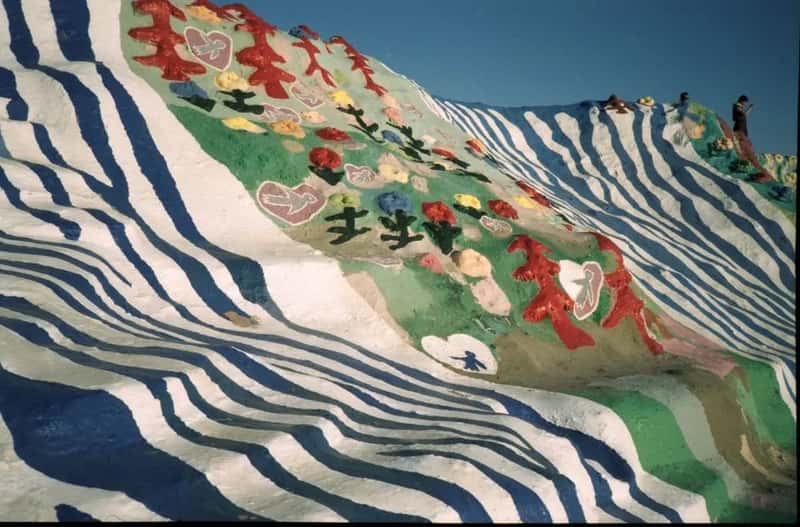
Salvation Mountain is a hillside covered in paint, scripture, and painted flowers in the California desert. Leonard Knight spent almost 30 years on it, starting in 1984 with a few buckets of paint, cement, and hay bales.[14] The original mountain collapsed in 1988 after he used too much sand in the concrete.[15] The current version, built from adobe packed straw bales, found objects, and latex paint, measures roughly 50 by 250 feet.[16]
Knight died in 2014, and the desert isn’t kind to folk art. Salvation Mountain Inc., a nonprofit run by volunteers, now looks after the site.[17] In 2024, Imperial County gave it a designation that could help with preservation and restoration.[18] Visitors from around the world still arrive.[19]
The Corn Palace, Mitchell, South Dakota
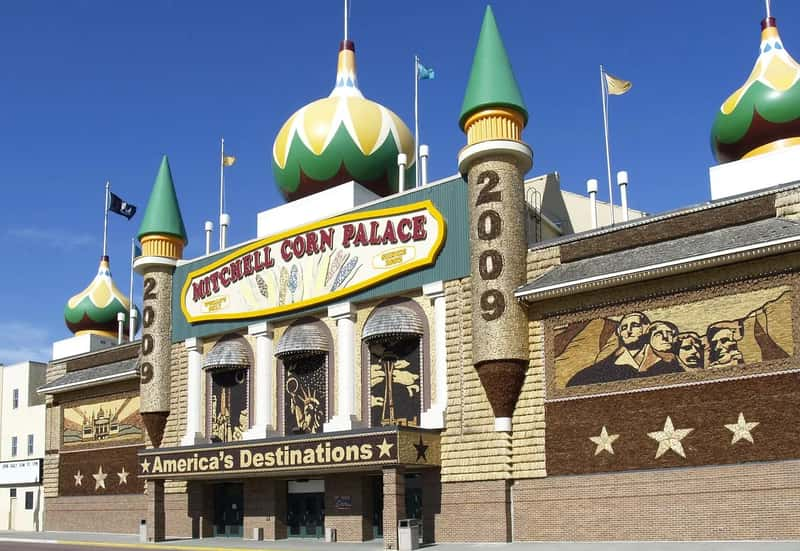
The Corn Palace is a working civic building in Mitchell, South Dakota, covered in murals made of corn and other grains. Its onion domes and minarets look like they belong in a fairy tale. The building dates back to the late nineteenth century in its earliest form, and the current structure has stood since the early 1920s.
What makes it odd is that the artwork never stays finished. The murals are stripped and redone with fresh, naturally colored corn and grain on a yearly cycle, with a new theme each time. Visiting is free, and the palace doubles as an events venue for the town. I couldn’t pull up the latest theme or attendance figures for this article, so check the official Corn Palace site before you go.