Flying after fifty comes with its own rhythm. Many travelers in this group have decades of airport experience, know their airline status inside and out, and often fly with more patience than the passenger fumbling through security for the first time. Yet flight attendants who work these cabins every day say a handful of habits keep showing up among older flyers, and these habits create more friction than most people realize. None of it comes from bad intentions. It just comes from old assumptions about how flying works, assumptions that haven’t quite caught up with how airlines operate in 2026.
1. Tapping, poking, or grabbing a flight attendant for attention
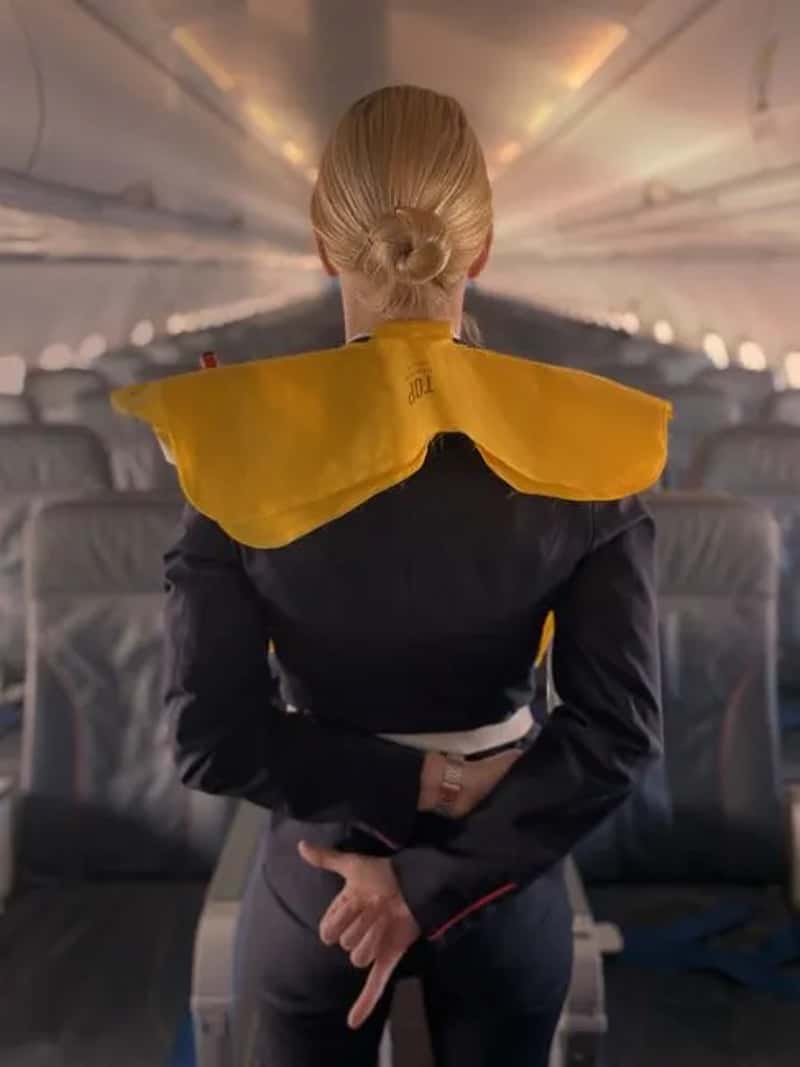
Physical contact tops the list of complaints flight crews mention most often, and it is not a minor annoyance. Physical contact with a flight attendant, even a light tap or a friendly wave of the hand near their sleeve, is more common than most passengers assume, and it’s genuinely one of the more disruptive habits in the cabin.[1] Crew members have described being touched dozens of times a flight, often on the arm, the side, or even lower on the back.
One flight attendant put it plainly, noting that being “poked or my apron gets pulled pretty much every flight” is “one of my biggest pet peeves.”[1] The fix is simple enough. A polite wave, raising your hand, or a simple “excuse me” works, since flight attendants are trained for cues like that, and if that fails, there’s always the call button above your head or on your screen.[1]
2. Treating the call button like a hotel concierge bell

The call button exists for real needs, not casual requests. The call button exists for genuine emergencies and mobility needs, not for flagging down a snack before the cart rolls out, or getting rid of a cup while the crew is mid-service on the other side of the plane, and both uses genuinely irritate cabin crew in a way that’s hard to overstate.[2] Passengers over fifty who grew up flying in an era of more attentive service sometimes lean on the button out of habit rather than urgency.
Crews do pass by regularly, so waiting rarely costs much time. Flight attendants pass by your seat roughly every ten to fifteen minutes during normal cruising, and you can wait your turn like everyone else.[2] A flight attendant quoted in one report summed up the industry sentiment directly, saying “Ringing it just to ring it, I would say is probably not favorable to most flight attendants.”[3]
3. Staying quiet about mobility needs until there’s already a problem

Many older travelers do not want to draw attention to themselves, so they skip mentioning a knee replacement, a bad hip, or slower walking speed until they’re already struggling at the gate. Flight attendants say this backfires more than passengers expect. Flight attendants receive a passenger manifest before boarding even starts, and that document flags anyone who requested special assistance[1], which means the system only works if the traveler uses it ahead of time.
Speaking up early also changes how crews respond in the moment. Flight attendants are trained to prioritize passengers who need assistance, but only if they know ahead of time, and a quick heads-up to the gate agent before boarding tends to translate into a crew member being ready to step in without being asked twice.[4] Waiting until you’re stuck in the aisle rarely gets you the same smooth handling.
4. Rushing the gate instead of waiting for a boarding group

Crowding near the door the moment boarding opens is a habit that shows up across every age group, but crews say it’s especially common among travelers who remember an older, less structured boarding process. It rarely saves time and often creates the opposite effect. One former flight attendant recalled seeing “passengers push others to be first in line, only to spend twenty minutes standing in the aisle waiting for everyone else,” noting that “experienced travelers understand that calm beats speed.”[1]
Standing near the gate before your zone is called doesn’t actually help board faster. Getting on the plane sooner doesn’t mean you’ll get to your destination any faster, so it helps to listen for your row, zone, or group to be called and avoid crowding the gate, which can actually make the process take longer.[5] A calmer approach at the gate tends to make the whole cabin move more smoothly, crew included.
5. Expecting a flight attendant to lift a heavy carry-on overhead

This one surprises a lot of travelers, but it’s rooted in real workplace injury data rather than crew reluctance to help. “Flight attendants are trained never to lift baggage for passengers because it’s a leading cause of injury,” says a spokesperson for the Association of Flight Attendants-CWA, adding that beyond the health risks, it “could lead to a delay or even cancellation of a flight.”[6] Passengers who assume a crew member will simply hoist their bag overhead, especially a heavier one packed for a longer trip, are often met with an unexpected no.
Airline policy backs this up directly. Delta’s own policy notes that “flight attendants are unable to proactively assist customers placing carry-on baggage into overhead bins, with certain exceptions.”[6] The better move, according to the same union spokesperson, is straightforward: “If a passenger is not able to lift a bag into the overhead bin, then the bag should be checked.”[6]
None of these five habits come from rudeness. They come from decades-old expectations about what flying used to look like, expectations that haven’t fully adjusted to how cabins run now, from staffing levels to injury policies to the sheer pace of modern boarding. Flight attendants notice all of it, quietly, within the first few seconds of a passenger stepping through the door. A little advance communication, and a bit less reliance on old habits, tends to smooth out nearly every one of these friction points before they start.