Not everyone has the time or the budget for a transatlantic flight, yet the craving for cobblestone streets, half-timbered facades, and a good plate of schnitzel doesn’t care about your vacation days. Across the United States, a handful of towns have leaned so hard into their European roots or reinventions that visitors genuinely forget which side of the Atlantic they’re standing on. Some of these places trace back to actual immigrant communities from the 1800s, while others are more recent reinventions born out of economic necessity. Either way, they offer a surprisingly convincing slice of the Old World without the jet lag.
Here are five American towns that pull off the European illusion with remarkable commitment, each backed by real history rather than just a themed gift shop or two.
1. Leavenworth, Washington: A Bavarian Village Born From Reinvention
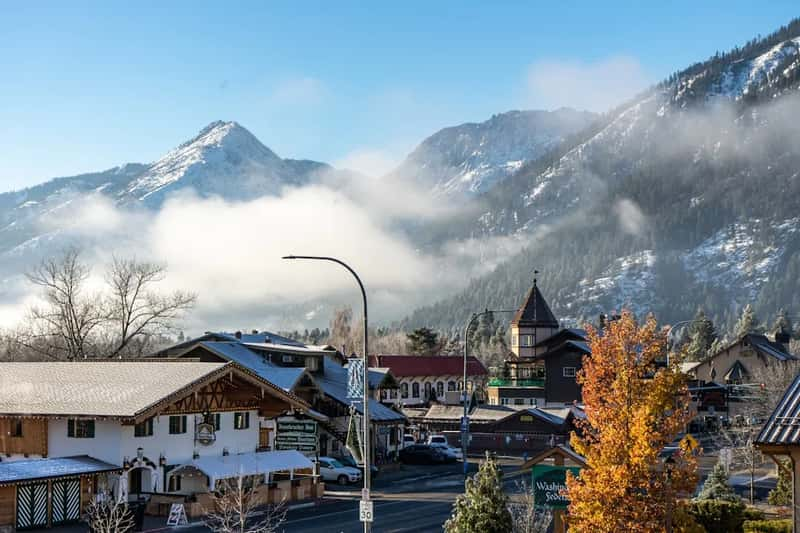
Leavenworth sits in the Cascade Mountains and looks, at first glance, like it was airlifted straight out of southern Germany. The twist is that Leavenworth was founded in 1889 as a timber and railroad town, but the railroad eventually moved away and the town struggled. Rather than fade into obscurity, in 1962 community leaders approached the University of Washington Bureau of Community Development looking for ways to save the town, and out of this work came the idea to use the town’s natural surroundings and a Bavarian theme to attract visitors.
The transformation was remarkably grassroots. One of the most impressive facts about the entire project is that it was financed with private money, no federal assistance at all, simply dedicated people mortgaging everything they had. The gamble paid off in a big way. Today, Leavenworth is a major tourist attraction, drawing about 3 million visitors annually, drawn in by events including the Christmas season and an Oktoberfest that runs over three consecutive weekends starting in late September. Front Street’s balconies, painted trim, and flower boxes now feel less like theater and more like a genuine alpine escape tucked into Washington’s mountain pass corridor.
2. Solvang, California: The Danish Capital of America
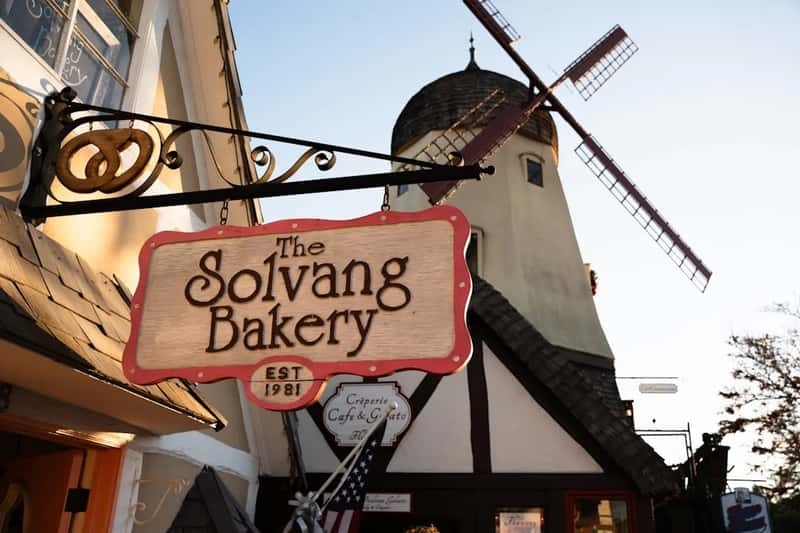
Windmills spinning against a backdrop of Central Coast vineyards might sound like a mismatch, but Solvang makes it work. On January 12, 1911, a group of Danish-American educators established Solvang on 9,000 acres of land surrounding the historic Old Mission Santa Ines, choosing the spot specifically because they wanted a Danish community away from harsh Midwestern winters. The founders weren’t just building a farming settlement either; they were preserving a culture, and from the beginning there was a deep interest in preserving Danish traditions, with Atterdag College and the Bethania Lutheran Church serving as the two keys to that effort.
Interestingly, the town didn’t always look the part. The community took on its distinctive Danish-themed architecture beginning in 1947 and has since become a prominent tourist destination. National attention arrived that same era, since on January 18, 1947, the Saturday Evening Post published an article about this Danish enclave in California, illustrated with stunning photographs, and this coverage attracted enthusiastic tourists. These days, over one million visitors come each year to experience the northern European culture, cuisine, and unique boutique shopping, wandering past half-timbered buildings and stopping for kringle at bakeries with genuine Danish roots.
3. New Glarus, Wisconsin: America’s Little Switzerland
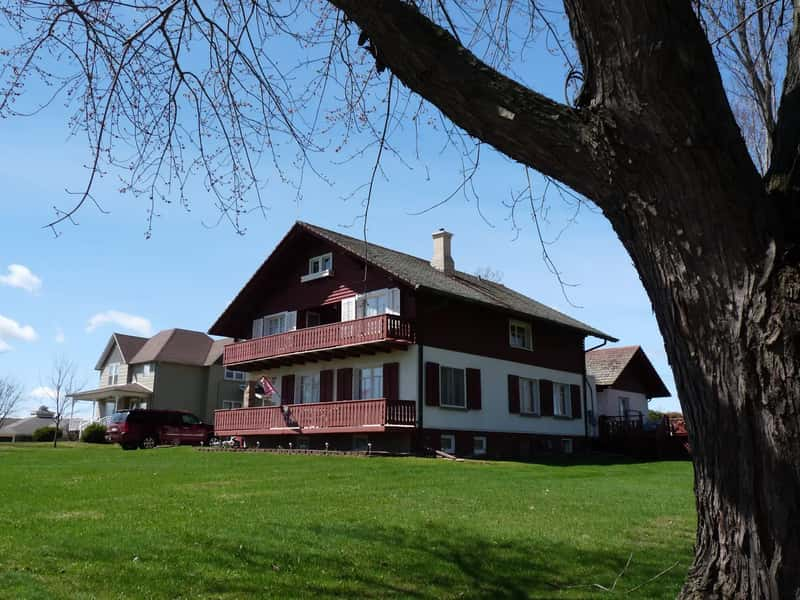
Tucked into the rolling hills of Green County, New Glarus wasn’t manufactured for tourists the way some entries on this list were. New Glarus was founded in 1845 by Swiss immigrants from the canton of Glarus, fleeing economic hardship, and roughly 108 Swiss settlers came to this area in 1845 and were happy to discover that the rolling countryside dotted with small towns and farms reminded them of home. That authenticity still shows in the chalet-style architecture and dairy traditions that never had to be invented, only preserved.
Visitors today can step into that pioneer past directly. The Swiss Historical Village and Museum features 14 original and replica buildings, including a one-room cabin built in the 1850s, a blacksmith’s shop, cheese factory, schoolhouse, and church, each filled with genuine artifacts from the era. The town’s Swiss identity has never really faded either. The village remains largely populated by people of Swiss heritage and is known for its cheese production, and events like Polkafest keep the alpine soundtrack alive year after year.
4. Helen, Georgia: An Alpine Village in the Appalachians
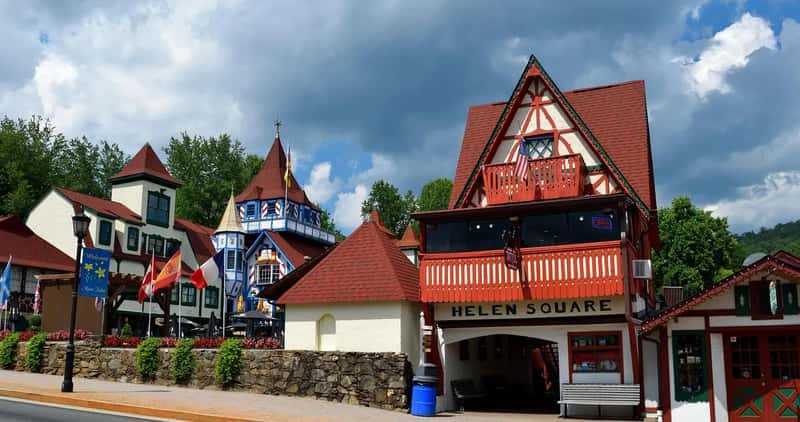
If Leavenworth proved the Bavarian-makeover concept could work, Helen borrowed the playbook wholesale, and did it with striking success. The town’s transformation began with a single artist’s memory. In 1969, North Georgia artist John Kollock, remembering his time as a soldier in Germany during the Second World War, envisioned transforming sleepy Helen into an idealized alpine village. What had been a logging town since 1912 that wasn’t doing well, so in 1968 the townsfolk transformed the city into the German-inspired Alpine Helen we know today.
The commitment to the theme is baked into local law, which is unusual for a town this size. Formerly a logging town in decline, Helen resurrected itself by becoming a replica of a Bavarian alpine town in the Appalachians instead of the Alps, a design mandated through zoning first adopted in 1969 so that the classic southern German style is present on every building. The strategy clearly worked, since Helen is now described as Georgia’s third most visited city, pulling in crowds for its lengthy Oktoberfest and a Bavarian-style Christmas lighting ceremony each winter.
5. St. Augustine, Florida: America’s Oldest Spanish Colonial City
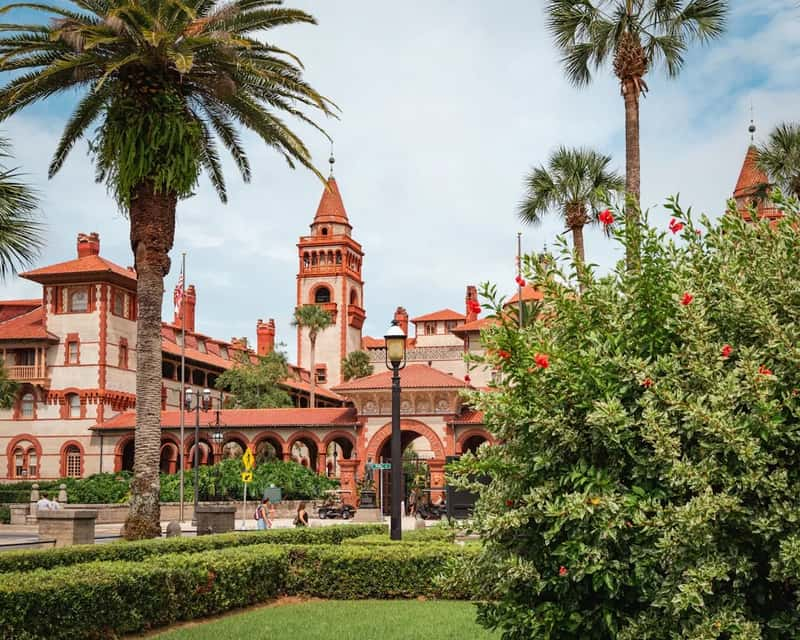
Unlike the other entries here, St. Augustine doesn’t need a themed makeover to feel European, because its Spanish colonial character is centuries old and entirely genuine. Established in 1565 by Spanish explorer Pedro Menéndez de Avilés, St. Augustine is the oldest continuously occupied European-founded settlement in the continental United States. That makes it older than Jamestown or Plymouth by decades, and the layers of Spanish, British, and later American rule left behind an architectural mix you simply can’t fabricate.
Walking the historic district today means tracing that lineage street by street. Aviles Street is recognized as the oldest street in the United States, offering a glimpse into the Spanish colonial era, while the imposing Castillo de San Marcos National Monument stands as the oldest standing fort in the U.S., alongside a preserved Spanish colonial historic district that reflects the city’s early architectural heritage. Narrow lanes, coquina-stone walls, and red-tiled roofs give the whole downtown a Mediterranean warmth that feels far removed from the rest of Florida’s coastline.
What ties these five towns together isn’t just their European facades, but the very American stories behind them. Some, like New Glarus and St. Augustine, carry genuine centuries-old roots planted by actual immigrants and colonists. Others, like Leavenworth and Helen, represent something distinctly American in its own right: struggling communities reinventing themselves through sheer creativity and stubborn resolve. Solvang lands somewhere in between, a real Danish settlement that later doubled down on its heritage once it realized tourists loved it. Whichever version of “Europe” you’re chasing, from Bavarian alpine charm to Spanish colonial gravitas, you can find a convincing dose of it without ever needing a passport.