Ask any serious traveler where to find the best meal of their life, and there’s a good chance they’ll point you toward a plastic stool on an Asian sidewalk rather than a white-tablecloth restaurant. Street food across Asia isn’t a budget fallback, it’s often the main event, shaped by generations of family recipes, brutal competition between neighboring stalls, and a culture that treats eating well as a daily right rather than an occasional treat.
From UNESCO-recognized hawker traditions to night markets that never seem to sleep, these six cities have earned their reputations the hard way, through decades of feeding locals first and tourists second. Here’s a closer look at what makes each one stand out on the world’s street food map.
1. Bangkok, Thailand
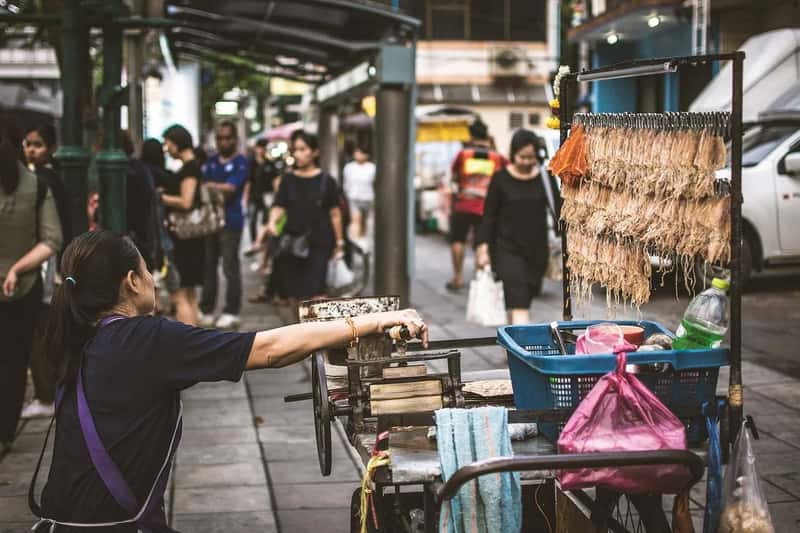
Bangkok is frequently treated as the benchmark against which every other street food city gets measured, and recent surveys back that reputation up. Sixty-six percent of Bangkok locals said eating out remains affordable in the Thai capital, and 81% rated their hometown highly for the quality and diversity of its food, with the majority recognizing the city’s world-renowned street food culture as its strongest culinary offering.[1] That kind of local pride, backed by hard numbers, is rare for a cuisine so closely tied to roadside carts.
What sets Bangkok apart is sheer density and variety packed into small spaces. Its diversity, density, and quality are unmatched, with a single street in Chinatown’s Yaowarat district able to yield pad thai, crispy oyster omelets, mango sticky rice, char siu pork, crab-stuffed omelets, and grilled satay within a hundred metres.[2] Younger chefs are now reinterpreting these old staples for new audiences, but the classic wok-fired, sidewalk version remains the soul of the city’s food scene.
2. Singapore
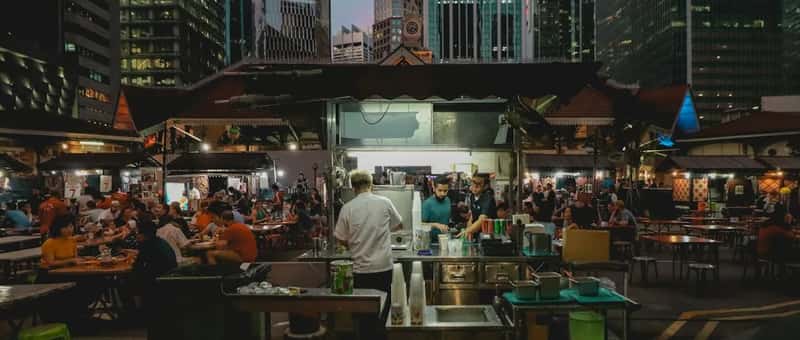
Singapore took the unusual step of turning its street food into an internationally protected tradition. Hawkers are so central to Singapore life that the country recently led a successful campaign to have the practice inscribed on the 2020 UNESCO Representative List of the Intangible Cultural Heritage of Humanity.[3] The recognition wasn’t just symbolic bureaucracy either; it reflected something UNESCO itself described in detail about how these spaces function day to day.
The centres serve as far more than eating halls. Hawkers prepare a variety of food for people who dine and mingle at hawker centres, which serve as community dining rooms where people from diverse backgrounds gather and share the experience of dining over breakfast, lunch and dinner.[4] Singapore also made global headlines back in 2016 when, as one industry review noted, a Singapore hawker named Chan Hon Meng won the first-ever Michelin star awarded to a street-food stall[5], proving that world-class cooking doesn’t require white napkins or a wine list.
3. George Town, Penang, Malaysia
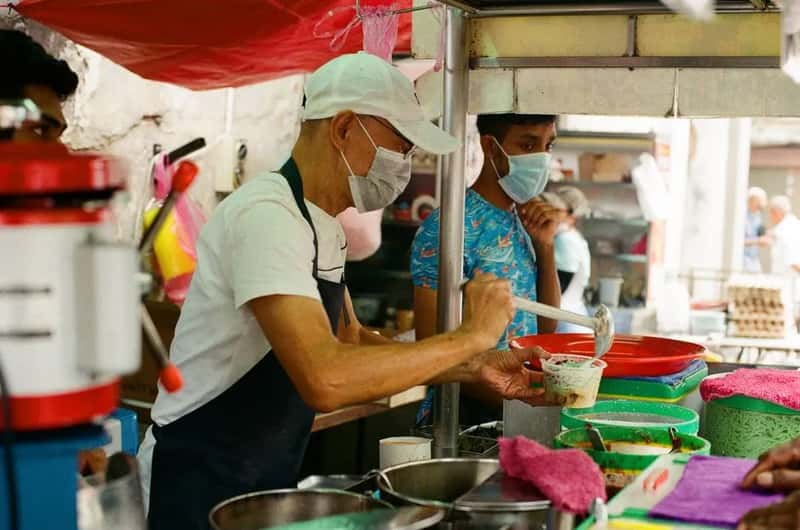
Penang punches well above its geographic size, and locals there don’t take that reputation lightly. Penang punches so far above its weight as a food destination that seasoned travelers routinely rank it above cities ten times its size, and the residents of George Town take a pride in their culinary heritage that borders on fierce.[6] Much of that pride comes down to one dish in particular that sparks genuine regional rivalry.
Char kway teow here is a point of local honor, distinct from versions found elsewhere in the region. Char kway teow in Penang, and Penang residents will insist it is nothing like Singapore’s version, is wok-fried with duck eggs, Chinese lap cheong sausage, and a generous handful of cockles over the kind of ferocious flame that creates the smoky wok hei that defines great hawker cooking.[6] Beyond that single dish, Penang’s food scene draws real institutional recognition too, since Bangkok has built a global image around lively streets filled with food stalls, while George Town offers another powerful example of food, heritage and tourism working together, as the historic city became part of a UNESCO World Heritage Site in 2008.[7] The assam laksa found in its hawker stalls has also earned serious international praise, with assam laksa, a sour, spicy noodle soup made with tamarind and flaked mackerel, ranked among the world’s top 50 foods by CNN Travel[2].
4. Taipei, Taiwan
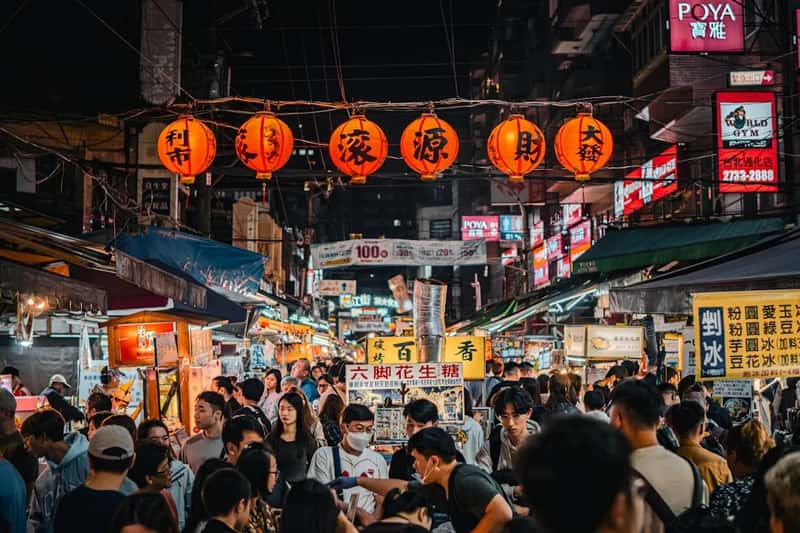
Taipei’s night markets operate almost like a parallel food economy, running late into the night across dozens of dedicated venues throughout the city. Taipei’s vibrant street food scene is heavily influenced by its night markets, with Shilin Night Market standing as one of the most famous, offering everything from stinky tofu to bubble tea.[8] The city’s approach to street food leans more polished and food-safety conscious than some of its Southeast Asian counterparts, which is part of why it consistently ranks among Asia’s most beloved food capitals.
Two dishes anchor the entire experience: a beloved noodle soup and a famously pungent fried snack. Beef noodle soup is often considered Taiwan’s national dish, with authentic versions representing the pinnacle of Taiwanese comfort food culture.[9] Meanwhile, stinky tofu remains the city’s most talked-about culinary dare, and several vendors have earned serious recognition for it, since stinky tofu can be found at night markets across Taiwan, with Shenkeng Old Street in New Taipei City dedicated entirely to the dish while Nanjichang, Tonghua, and Raohe Night Markets host Michelin-rated stinky tofu stalls.[10]
5. Hanoi, Vietnam
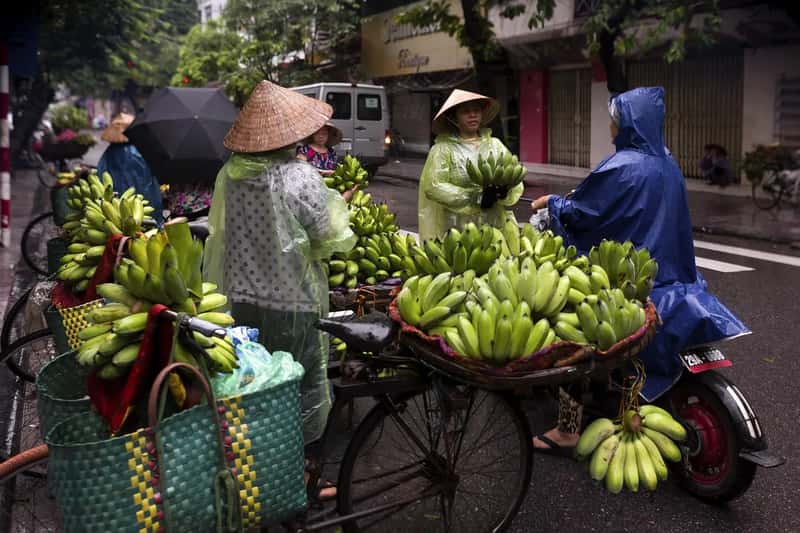
Hanoi’s street food reputation got a global boost from an unlikely dinner date in 2016. In May 2016, the Vietnamese noodle store Bún Chả Hương Liên went from relative obscurity to being on television screens all over the world, after two of the world’s most famous men chose it as their dinner spot in Hanoi, with Anthony Bourdain and President Barack Obama coming for the slippery noodles and fragrant pork patties.[11] That single meal, filmed for a CNN travel series, did more for the international profile of Vietnamese street food than almost any marketing campaign could have.
The dish itself is humble but deeply rooted in the city’s identity. Bún chả is a traditional Hanoi dish made with marinated pork patties, grilled pork belly, vermicelli noodles, broth, and herbs.[12] What makes Hanoi special beyond that one famous meal is a broader habit of specialization, since many street food restaurants in the city focus on just one dish and do it exceptionally well, whether it’s phở, bánh cuốn, or bún chả, often having cooked the same thing for decades.[13]
6. Osaka, Japan
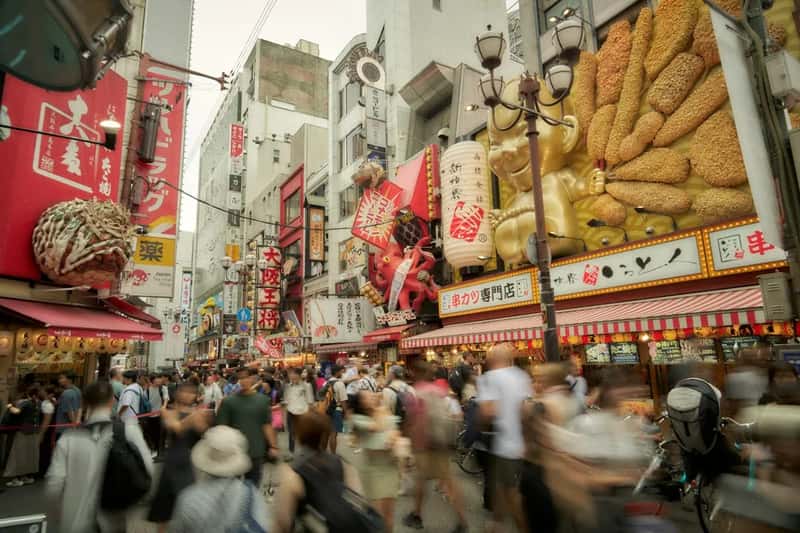
Osaka carries an old nickname, kuidaore, roughly translating to “eat until you drop,” and it lives up to that reputation nightly around the neon-lit Dotonbori canal district. This is the birthplace of takoyaki, the golf ball-sized octopus dumplings griddled in special molded pans, and okonomiyaki, the savory cabbage pancake that Osakans consider a point of civic pride against rival versions from Hiroshima. Street vendors and tiny standing-room stalls here treat these dishes with the same seriousness Tokyo reserves for sushi counters, and the city’s food culture has increasingly caught the attention of international guides expanding their coverage of Japan’s regional cities.
What separates Osaka from flashier food capitals is its unpretentious, working-class energy, where fried skewers called kushikatsu are eaten standing up, dipped once into a shared sauce under a strict no-double-dipping rule enforced by regulars and staff alike. Kuromon Ichiba Market functions as both a working produce market and a grazing destination, letting visitors sample fresh seafood, wagyu skewers, and seasonal fruit within a few footsteps. The city’s street food identity is less about spectacle and more about a genuine, decades-old habit of eating well without ceremony, which is exactly why so many food travelers consider a trip through Japan incomplete without a stop in Osaka.
Six cities, six completely different relationships with the humble food stall, yet all of them share a common thread: street food here isn’t an afterthought or a tourist gimmick, it’s the backbone of daily life. Whether it’s a Michelin-starred hawker in Singapore, a smoky wok in Penang, or a noodle shop in Hanoi that once hosted a president, these places prove that some of the world’s finest cooking happens far from any dining room. The real lesson for any traveler is simple: bring cash, find the longest line, and trust that the plastic stool is usually where the good stuff is happening.