Most people picture national parks as a summer thing: crowded overlooks, packed parking lots, kids running toward waterfalls. Winter flips that script entirely, and in some parks it reveals a completely different personality that summer crowds never get to see.
The parks below aren’t necessarily easier to visit in the cold months. Some require extra gear, extra planning, or an entirely different mode of transportation. What they offer in return is space, quiet, and scenery that looks nothing like the postcard version most travelers already know.
Yellowstone National Park, Wyoming and Montana
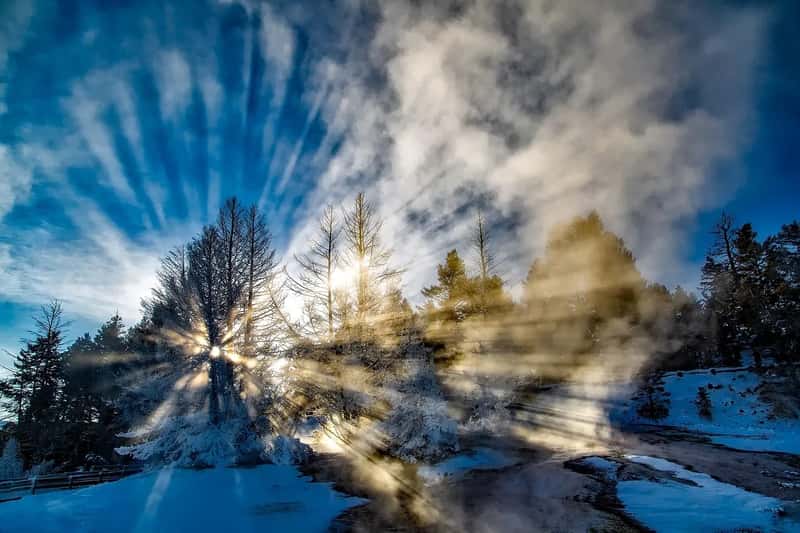
Once heavy snow settles in, most of Yellowstone’s interior roads close to regular cars, and the only way to reach the geyser basins and Old Faithful is by snowcoach or snowmobile. From mid-December until mid-March, visitors can travel most of the park’s roads by approved commercially guided snowmobiles and snowcoaches, as well as through a non-commercially guided snowmobile access program.[1] It’s an unusual way to explore a national park, but it fits the landscape perfectly.
Two lodges stay open through the season, and they serve very different purposes. Mammoth Hot Springs Hotel is only five miles from the North Entrance and remains accessible by personal vehicle, while Old Faithful Snow Lodge sits deep in the park and can only be reached by snowcoach.[2] Bison and elk tend to gather near thermal features for warmth, so wildlife sightings are often easier in winter than in the crowded summer months.
Yosemite National Park, California
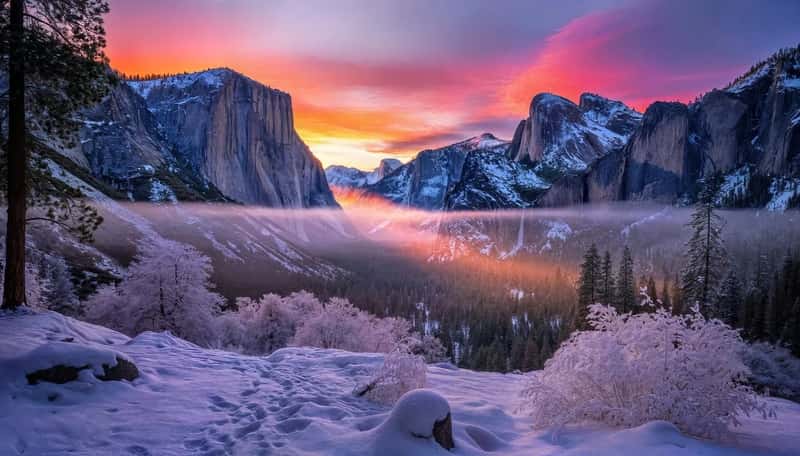
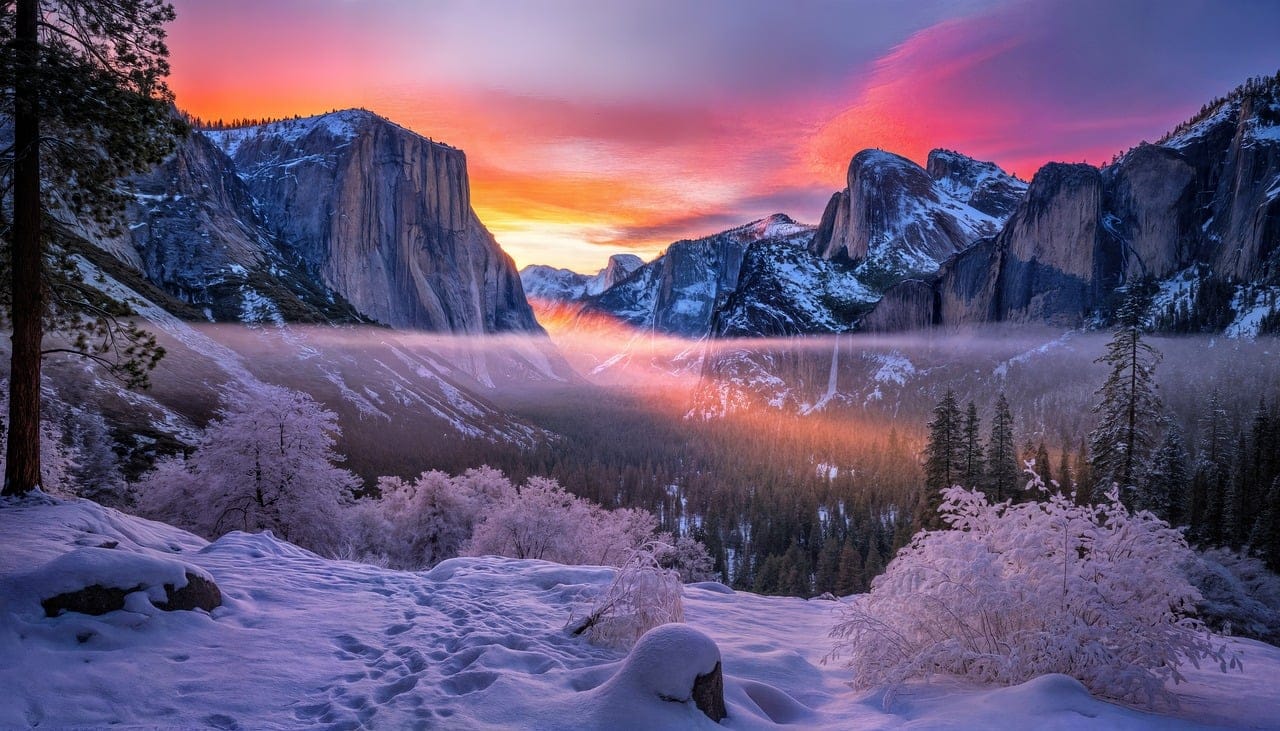
Yosemite Valley itself stays open and accessible all winter, even as the park’s high country effectively shuts down. Tioga Road typically opens in late May or June and closes in October or November,[3] which means the eastern high country becomes unreachable by car for months at a time. That closure, though, is what gives the valley floor its quiet, snow-hushed atmosphere.
Glacier Point Road follows a similar pattern but with a twist for winter recreation. When Glacier Point Road is closed for the winter, the first five miles are plowed to provide access to Badger Pass Ski Area, and the road beyond is groomed for cross-country skiing.[3] Snow-draped granite walls, quieter trails, and the chance to see Half Dome and El Capitan without a single tour bus in sight make the tradeoff worthwhile.
Grand Canyon National Park, Arizona
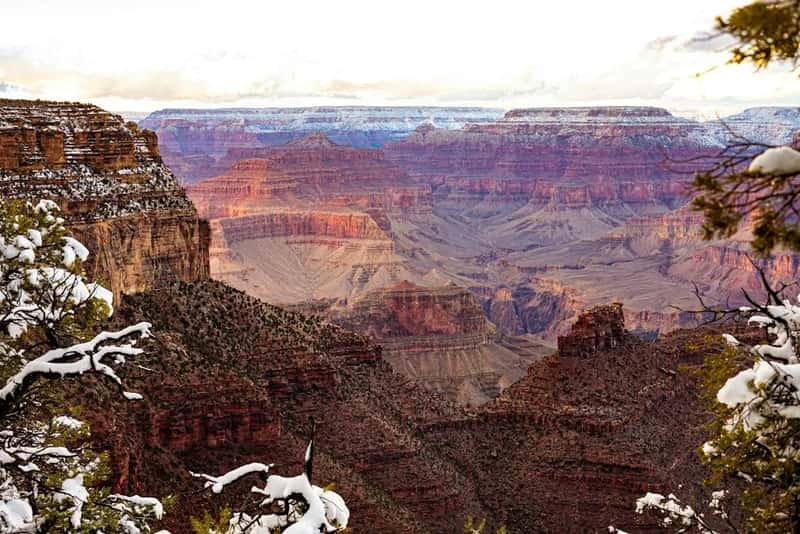
The Grand Canyon essentially becomes two different parks depending on the season, and winter makes that split obvious. The South Rim stays open 24 hours a day, 365 days a year, while the North Rim closes to all vehicles between December 1st and May 14th with no services offered.[4] For winter travelers, that means the South Rim is really the only practical option, and it happens to be the more developed side anyway.
One small perk shows up specifically in winter months. During December, January, and February, Hermit Road, a scenic seven mile drive along the canyon rim, opens to private vehicles, while the Hermit Road shuttle stops running for the season.[5] Snow along the rim, combined with the canyon’s layered rock in cold morning light, creates a version of the view that summer visitors rarely see.
Zion National Park, Utah
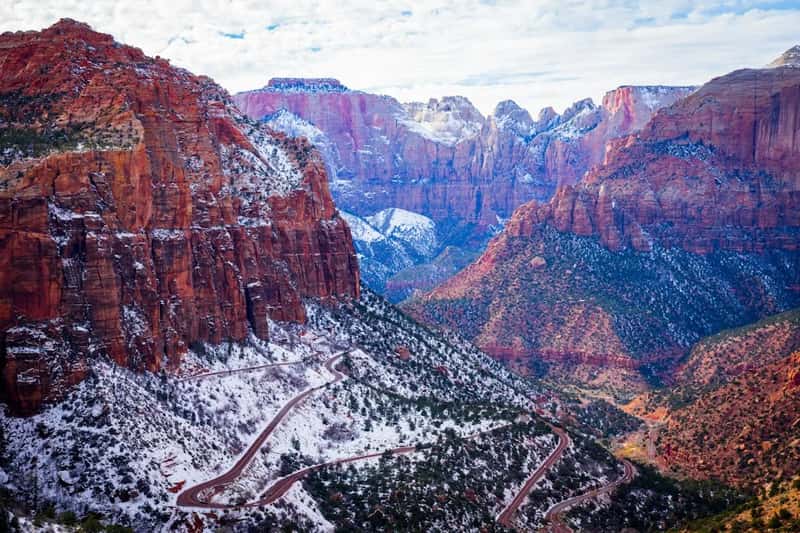
Zion trades its famous summer bottlenecks for something calmer once temperatures drop. The shuttle system that normally controls traffic through Zion Canyon typically pauses for the coldest months, which means visitors can drive their own vehicles along the Zion Canyon Scenic Drive again, weather permitting. Snow dusting the sandstone cliffs above the Virgin River gives the canyon a different color palette entirely, somewhere between rust red and pale white.
Trails like the Riverside Walk and lower sections of the Emerald Pools remain accessible in winter, though ice is a real concern on shaded, north-facing paths. Angels Landing and other high-exposure routes demand extra caution, and traction devices are often necessary rather than optional. The tradeoff for that caution is a canyon with a fraction of its usual foot traffic and none of the shuttle waits.
Joshua Tree National Park, California
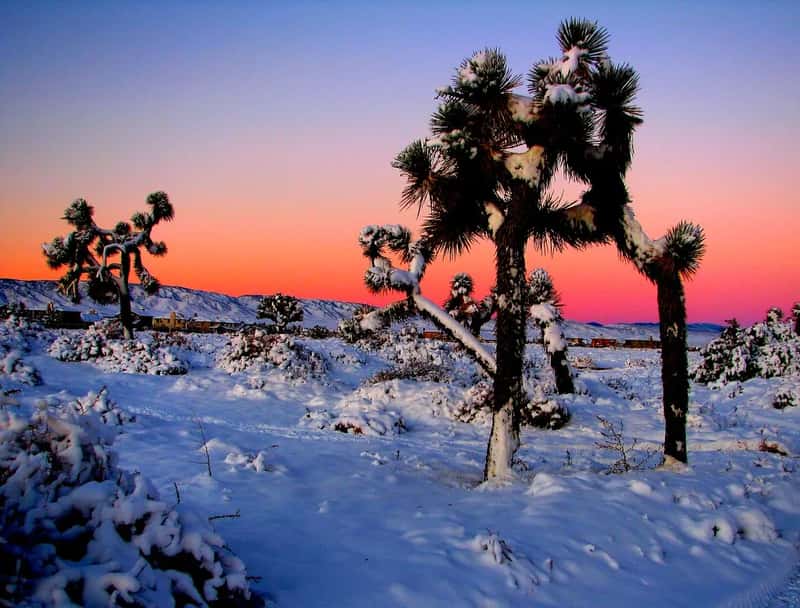
Desert parks flip the usual seasonal logic, and Joshua Tree is a clear example. Summer temperatures there regularly climb past the point of comfortable hiking, while winter days settle into a far more pleasant range, often comfortable enough for full days outdoors without heat exhaustion as a constant worry. Nights still drop close to freezing, so layering matters even if the afternoons feel mild.
The park’s rock formations and Joshua trees look striking against clear winter skies, and the reduced heat makes longer hikes through areas like the Wonderland of Rocks genuinely enjoyable rather than punishing. Stargazing conditions also tend to improve, since winter nights are longer and the desert air stays notably dry and clear. It’s one of the rare parks where winter is arguably the better season, not just a tolerable one.
Great Smoky Mountains National Park, Tennessee and North Carolina
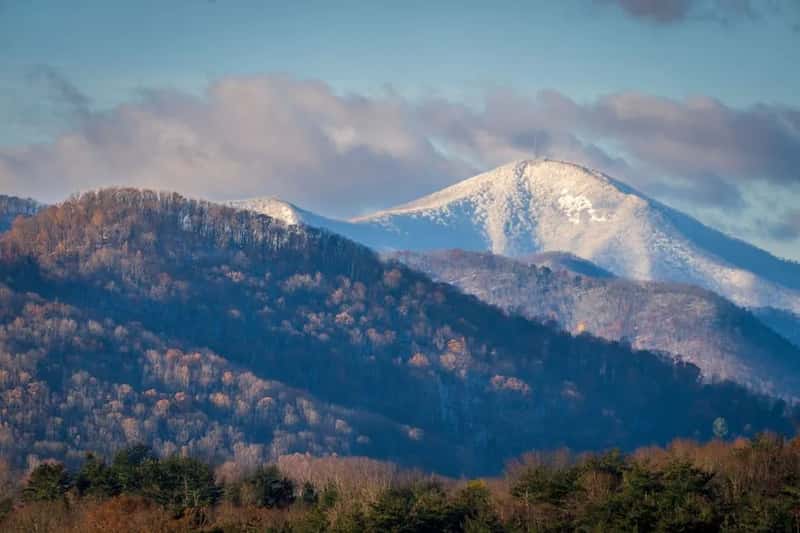
The Smokies lose their leaves and their crowds at roughly the same time, and the two changes together create a park that feels almost unrecognizable from its busy autumn version. Lower elevation trails and most park roads generally stay open through winter, though sections of higher routes like Clingmans Dome Road typically close once snow accumulates. Waterfalls along trails such as Laurel Falls or Abrams Falls often look more dramatic in winter, framed by bare trees and occasional ice formations along the rock.
Wildlife becomes easier to spot without dense summer foliage blocking sightlines, and elk herds in the Cataloochee Valley area are frequently visible against the winter landscape. Fog and mist, the park’s namesake feature, still form regularly in colder months, sometimes settling into valleys in a way that feels almost cinematic. Visitor numbers drop sharply compared to peak fall foliage season, which makes parking and trailhead access far less stressful.
Visiting any of these parks in winter takes a bit more preparation than a typical summer trip. Road closures, tire chain requirements, and limited services are all part of the deal, and checking current conditions before heading out is not optional so much as essential. For travelers willing to plan around those limits, though, winter often turns out to be the season that shows these landscapes at their most striking.