There’s a particular moment every US traveler eventually has in Europe, usually somewhere between the airport and the first meal, when a small habit from home suddenly feels out of place. It might be a waiter’s puzzled look, a quieter train car than expected, or a hotel room that never quite cools down. None of these moments are dramatic, but they add up, and travelers who notice them early tend to move through their trip with a little more ease.
The good news is that most of these adjustments are simple once you know they’re coming. Below are six everyday American habits worth reconsidering before a European trip, based on how locals and travel experts actually describe the gap between US and European norms.
The reflex to tip like you’re still at home

Tipping is probably the single habit that separates American travelers from everyone else the fastest. Unlike in the U.S., where tipping 20-25% is standard and sometimes expected, most European countries operate under a whole different set of rules around gratuity.[1] That’s largely because in most European countries, the restaurant experience differs fundamentally from the American system, with service charges typically included in menu prices and staff receiving proper wages rather than relying on tips, which makes tipping a bonus rather than an obligation.[1]
The specific gesture of leaving coins and walking away also does not translate well. Rick Steves has long warned that one very American habit, dropping coins on the table and walking away, can come off as clumsy or somewhat impolite in parts of Europe, especially in Germanic countries.[2] In Germany or Austria specifically, the better move is to have cash ready and tell the server how much you’d like to pay once they bring you the bill, so if paying for a ten euro meal with a twenty euro bill you’d say “eleven, please” while handing over the money, and the server will thank you, keep a one euro tip, and give you nine euros in change.[2] A tip in the range of five to ten percent, offered with a bit more intention, generally lands better than an automatic twenty percent.
The expectation of free flowing ice

Ice water on demand is such a given in American restaurants that most travelers never think about it until it’s missing. In much of Europe, that assumption falls apart fast. The need for ice is another little American trait that Europeans don’t fully understand, and many restaurants don’t offer it, or they might bring a cube or two if you ask.[3]
This isn’t rudeness on the part of European servers, it’s just a different baseline for what a cold drink is supposed to look like. In many places, ice may be limited.[4] Travelers who ask for a full glass of ice cubes are, fairly or not, giving themselves away instantly, since the hunt for ice is a dead giveaway, and while many countries serve drinks cool or at room temperature, Americans often ask for more ice, especially in water.[5] Packing a bit of patience for room temperature drinks makes the whole dining experience smoother.
The assumption that air conditioning is a given

Summer heat waves have made this one especially relevant in recent years. Unlike in Canada and the United States, most European homes and apartments, and even lots of smaller hotels, don’t have air conditioning.[6] Even when a listing mentions AC, it’s worth not presuming every European hotel has it, especially in older buildings, since even when it’s listed it may not be individually controlled or as powerful as the systems many Americans are used to.[7]
Some properties that do have air conditioning still limit when it runs. Most places don’t turn on the A/C until a certain date, no matter how hot it is outside, so a heat wave in mid April won’t help if the system doesn’t switch on until mid May.[3] The pattern is widely enough recognized that Americans arriving at a European hotel sometimes discover, to their surprise, that air conditioning is either weak, absent, or simply not part of the building’s design, which is a genuine structural difference rather than a service failure.[8] Checking recent guest reviews before booking, rather than trusting the amenities list alone, is a small step that saves a lot of frustration in July and August.
Conversations pitched at full volume

Loud speech is the one trait that both sides of the Atlantic agree on. In a recent survey covering more than twenty European countries, Americans actually had a much harsher view of themselves as tourists than the European respondents did, though the one matter on which both groups agreed was that American travelers can be loud, with seventy percent of Europeans saying loudness was a typical trait of US tourists, and sixty nine percent of Americans agreeing.[9]
Part of this comes down to physical space and habit rather than any real intent to be disruptive. Europeans prefer to be two to three feet away in conversation, which isn’t much farther, but what you say at two feet will likely be heard from four feet as well, and that can cause people to slightly raise their voice without noticing.[10] The fix is less about staying silent and more about awareness, since the goal isn’t to hide your personality or stay silent altogether, but to adapt, paying closer attention to how locals interact and adjusting your voice accordingly shows both awareness and respect.[11] A quieter register in restaurants, trains, and museums tends to blend in far better than most people expect.
Athleisure as an all day uniform
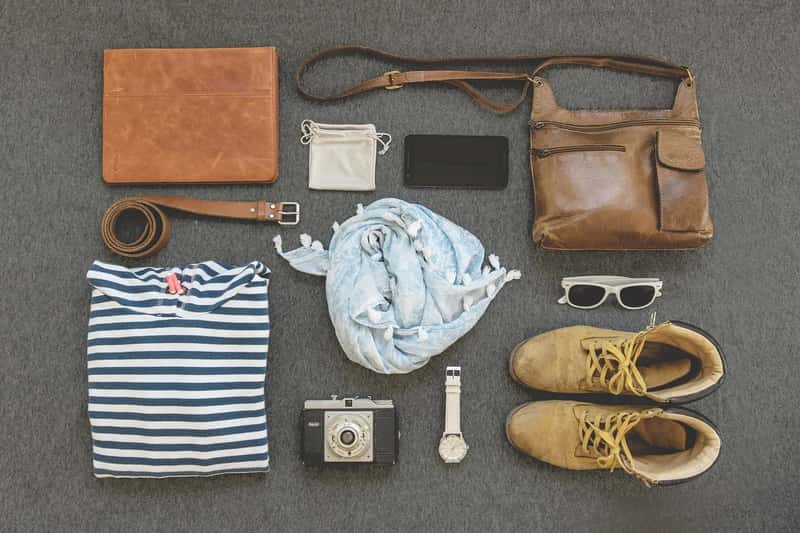
Comfort driven dressing is practically the default in the US, but it reads very differently abroad. While leggings, sweatpants, and matching athleisure sets are staples of everyday American streetwear, it’s rare to see them outside of a Pilates class or a jogging path in places like Milan, Vienna, and Rome.[12] That’s because, as one guide puts it, in much of Europe these items are still viewed primarily as gym clothes or loungewear, not as outfits for sightseeing, shopping, or dining, so wearing a complete workout ensemble while exploring a city is likely to single someone out as an American tourist almost immediately.[12]
Footwear tells a similar story. Comfort wins every time for American travelers, and nothing announces a US tourist like a bright pair of spotless white sneakers, since locals might opt for sleek boots or stylish loafers instead.[5] This doesn’t mean sacrificing comfortable walking shoes entirely, since Europeans walk plenty too. It simply means favoring cleaner, less overtly athletic styles over bright running shoes and full logo heavy gym sets when heading out for the day.
The rush for the check and constant refills

American dining moves at a certain speed: quick greetings, fast refills, and a check that appears the moment the plates are cleared. European restaurants generally do not operate on that rhythm. A waiter does not bring the check without being asked, and a restaurant may close right when a traveler is ready for lunch.[13]
The pace difference extends to the whole meal, not just its ending. Service may feel less rushed and less performative than what Americans are used to.[4] That isn’t a sign of poor service, it reflects a different idea of what a meal is for, one built around lingering rather than turning tables quickly. Travelers who plan for a slower, unhurried lunch or dinner, rather than expecting American style efficiency, tend to enjoy the meal far more than those who keep glancing around for the bill.
None of these six habits are dealbreakers, and none of them will ruin a trip if a traveler forgets and asks for extra ice or tips a bit too generously on the first night. They’re simply small signals of a different rhythm, one shaped by different wages, different climates, different mealtime customs, and different ideas about personal space. Travelers who notice these differences early, rather than fighting them, generally find that the trip settles into its own comfortable pace within a day or two.