Ask any hotel concierge, tour guide, or long-time expat what they tell newcomers first, and you will hear the same handful of warnings again and again. These are not obscure tricks dreamed up to catch the unlucky few. They are patterns so predictable that people who live in tourist-heavy cities often mention them before visitors even unpack their bags. The scams below have been reported across multiple continents and continue to evolve alongside technology, but the core mechanics have barely changed in years.
What makes these schemes so persistent is simple. They exploit the exact gap between a traveler’s unfamiliarity and a local’s knowledge of prices, customs, and geography. Once you recognize the pattern, though, the same scam becomes almost impossible to fall for twice.
1. The Rigged or Refused Taxi Meter

This is arguably the most universal scam in travel, and locals in dozens of cities bring it up unprompted. Some drivers quietly switch to a pricier “night and weekend” rate on an otherwise legitimate meter, while others in cities like Bucharest, Budapest, or Kraków rig meters entirely so fares jump unusually fast or take unnecessarily long routes. One travel researcher went so far as to call it “the single most widespread travel scam globally, operating in virtually every tourist destination.” Unlicensed cabs waiting near airports and train stations add another layer of risk, since they lack insurance, meters, and accountability, and some have rigged meters that run at double speed.
The fix locals recommend is almost always the same: agree on a price before the ride starts, or better yet, skip the negotiation entirely. Ride-hailing apps lock in a price before the trip starts, along with a driver name and license plate that can be checked against the app. When a meter is used, insist it starts the moment you get in, and if a driver refuses, treat that refusal as your cue to walk away and find another car.
2. The Friendship Bracelet and “Free Gift” Trick

Near major landmarks in cities like Paris, a stranger will approach with a seemingly harmless gesture, tying a bracelet onto your wrist or pressing a small trinket into your hand before you can react. The infamous version near Sacré-Cœur has been running for years, where someone quickly ties a bracelet onto your wrist, then aggressively demands payment. A close cousin is the “gold ring” trick, in which a stranger pretends to find a ring on the ground and pressures you into paying for it.
Locals warn that the discomfort of confrontation is the entire strategy here. Many visitors simply pay to end the awkward exchange rather than argue in public. The advice from residents is consistently blunt: never let anyone touch your hands or wrist in the first place, since that contact is how the scam begins, and keep walking without engaging if someone tries to hand you anything unsolicited.
3. The Fake Petition and Distraction Pickpocket

At crowded plazas and tourist sites, a person, often a woman or child pretending to be deaf or a student, approaches with a clipboard asking for a signature on a petition. While you are focused on reading or signing, the real objective plays out. This scam operates heavily around the Eiffel Tower in Paris, outside the Colosseum in Rome, and at major squares in Barcelona, where an accomplice picks a pocket or unzips a bag while attention is diverted. In other versions, the petitioner simply demands a cash donation once you have signed, and refusing can escalate into a confrontation.
Locals who deal with this daily give one piece of advice above all else: never stop moving. Ignoring the approach entirely, without eye contact or a paused step, defuses the entire setup before it can begin, and it is especially important when petitioners appear in groups trying to surround you.
4. The “Let’s Have a Drink” Bar Invitation

This one specifically targets solo travelers, often men, and has been documented from European capitals to parts of Southeast Asia. A friendly, well-dressed local strikes up a conversation and suggests heading to a nearby bar for a drink. In one commonly cited version, described as a friendly local, often well-dressed and speaking perfect English, approaches a solo male traveler, strikes up a conversation and suggests heading to a specific bar for a beer, then the bill arrives for hundreds of euros. If the target hesitates to pay, large bouncers appear to escort you to an ATM, leaving little room to argue.
Locals in areas where this scam is common will often mention it within the first conversation about nightlife safety. The pattern to watch for is an overly friendly stranger steering you toward one specific venue rather than letting you choose. If someone insists on a particular bar you have never heard of, treat that insistence itself as the warning sign, and settle any bill immediately rather than running a tab.
5. The Fake Police Officer Check

Increasingly common and increasingly convincing, this scam involves someone posing as a plainclothes or uniformed officer who stops tourists under the pretext of a document check. Security experts describe how criminals are impersonating police officers to steal money, passports and valuables, most commonly by stopping tourists under the pretext of checking their documents or claiming they are investigating counterfeit banknotes. The scam has been reported in Barcelona, Prague, Bogotá, and many other cities, and it can happen surprisingly close to legitimate authority, since such incidents can happen almost anywhere, even just a few steps from an airport or a genuine police station.
The advice locals give is consistent across every source on this scam: real officers do not need to hold your wallet to check your identity. As one safety expert put it, real police officers will not ask to inspect your wallet on the street, so ask for their badge number and offer to walk to the nearest police station together. Scammers typically abandon the attempt the moment you propose moving to an official location with witnesses present.
6. The No-Price Restaurant Menu
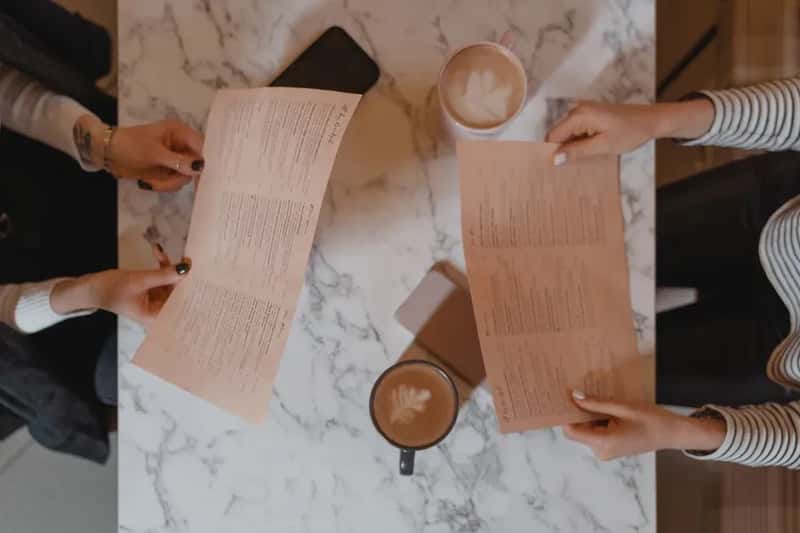
This scam hides in plain sight, often at a table you chose yourself. It typically unfolds when a restaurant near a major attraction hands over a menu with no listed prices, or quotes prices verbally that turn out to be wildly different once the bill arrives. It is described as one of the clearest warning signs of a tourist trap, since restaurants or shops that do not display prices openly may adjust charges based on the customer’s appearance or nationality, a pattern especially common in busy tourist districts. In some cases the markup is severe, with one report noting bills reaching 900+ euro for lunch after diners assumed prices were reasonable.
Locals who eat out regularly in these cities recommend a simple habit: always ask for a printed menu with prices before ordering anything, including drinks, and confirm the final bill matches what was actually served. It also helps to walk a few streets away from the main monument or plaza, where prices drop and quality rises, since restaurants relying on foot traffic from famous sights have the least incentive to compete on price or transparency.
None of these scams require paranoia to avoid, just a bit of pattern recognition. Locals repeat the same warnings on arrival not because visitors are careless, but because scammers count on the fact that unfamiliar surroundings make people slower to question a stranger’s confidence. A driver who refuses a meter, a stranger who won’t let go of your wrist, a petition that appears out of nowhere, an overly persuasive invitation to a bar, an officer who wants your wallet on the street, or a menu with no prices in sight: these are the signals locals learn to spot instantly and the ones every traveler can learn just as fast. Awareness, more than luck, is what keeps a vacation story from turning into a cautionary tale.