You budgeted 25 minutes for security. Ninety minutes later, you’re still standing in the exact same spot, phone dying, boarding group already called twice over the intercom.
Most travelers blame “someone slow up front” and move on. But the real story is bigger and stranger than one fumbling passenger – in 2026, tiny personal habits and massive federal staffing failures are colliding at the same checkpoints, and most flyers have no idea which one just torched their morning. Here’s what’s actually happening, ranked from annoying to catastrophic.
#6 – The Boots That Turn One Bin Into Three
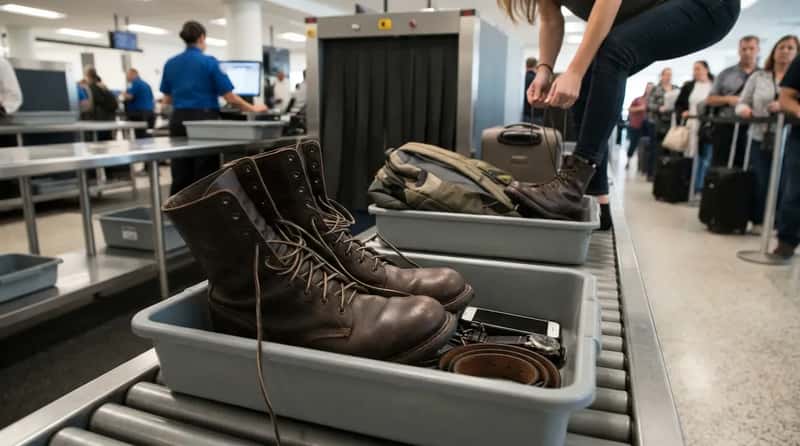
Footwear sounds too small to matter, until it’s the reason the whole line grinds to a halt behind you. Tall boots and complicated laces take real time to remove, and if they trigger a secondary check, that single traveler can eat up several extra minutes at the belt.
Multiply that by dozens of people an hour and you’ve got a backup that has nothing to do with staffing or rules – just shoes. It’s why frequent flyers quietly switch to slip-ons before travel days. Socks over bare feet, easy on and off, zero drama at the scanner.
Worth Knowing
- Standard screening requires most travelers ages 12 to 75 to remove their shoes for X-ray.
- TSA PreCheck members can typically keep shoes on entirely, which is one of the program’s biggest hidden time-savers.
- Boots with metal shanks, underwire, or thick soles are far more likely to trigger a secondary pat-down.
- Thin socks and slip-on shoes clear the belt fastest, with almost no fumbling at the bin.
#5 – The Alarm That Won’t Stop Beeping Because of Loose Change
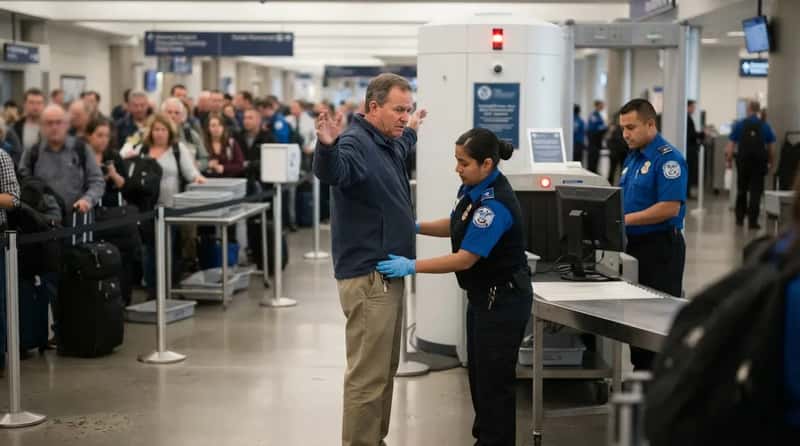
This blunder repeats hundreds of times a day at every checkpoint in the country, and it’s almost always avoidable. Coins, keys, and phones left in a pocket trip the body scanner instantly, and that single beep means a pat-down, a second scan, and a frozen line stacking up behind you.
Officers see it constantly, and it’s rarely intentional – just rushed mornings and forgotten habits. Emptying every pocket into your bag or bin before you reach the checkpoint takes ten seconds. Skipping it can cost the next fifteen people in line five minutes each.
#4 – The Water Bottle Hiding at the Bottom of Your Bag
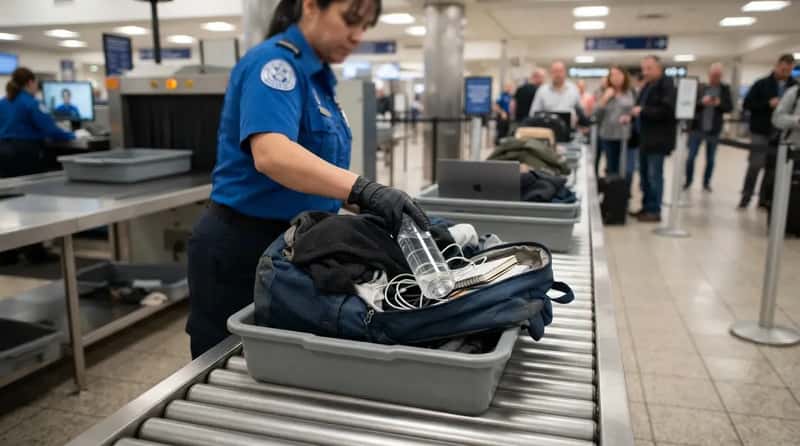
This is the classic mistake, and it still happens constantly. A bag packed the night before, a rushed exit, a forgotten bottle or laptop buried under clothes – and suddenly your bin gets pulled for a manual search that stalls the entire X-ray belt.
One overlooked bottle doesn’t just delay you. It freezes everyone stacked up behind your bag while an officer digs through it by hand. A two-minute check before you leave the house prevents a twenty-minute standstill for a dozen strangers who did nothing wrong.
Fast Facts
- The 3-1-1 rule still applies: containers must be 3.4 ounces or less, all packed into a single quart-size bag.
- Full-size shampoo bottles, snow globes, and forgotten water bottles are among the most common bag-check triggers.
- TSA PreCheck does not exempt travelers from the liquids rule – it only speeds up shoes, belts, and laptops.
- Medically necessary liquids over 3.4 ounces are allowed, but they must be declared to the officer separately.
#3 – The One-Letter Name Mismatch That Pulls You Aside
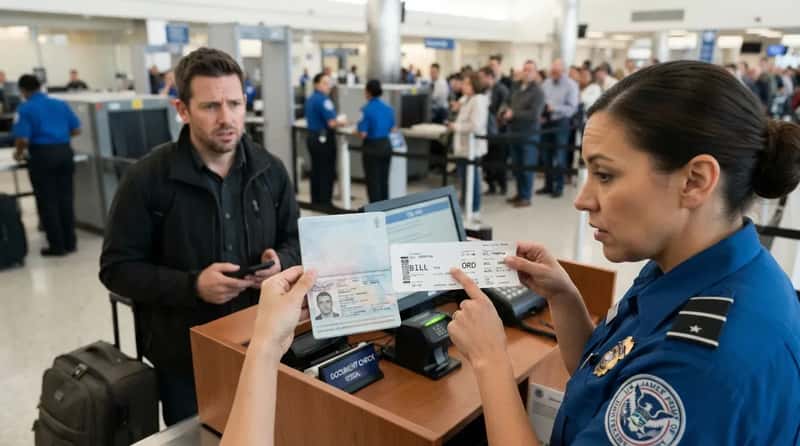
This one catches even seasoned travelers off guard, because it feels like it shouldn’t matter. TSA requires your ticket name to match your ID exactly – book as “Bill” when your license says “William,” and you’ve just volunteered for extra screening.
What feels like a harmless nickname turns into a full identity check, sometimes with a supervisor called over to confirm you’re not a risk. The fix costs nothing. Just book every flight exactly the way your ID reads, no shortcuts, no nicknames.
#2 – Skipping REAL ID and Walking Into a $45 Surprise
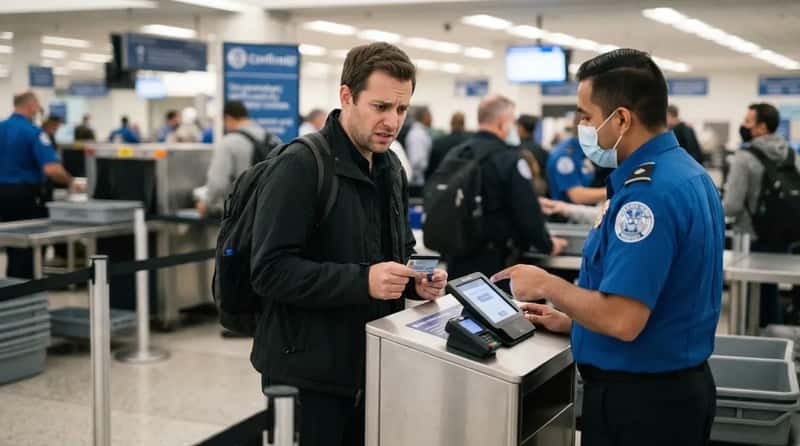
As of 2026, this blunder doesn’t just cost time – it costs cash. Flying domestically without a REAL ID-compliant license after February 1, 2026 means paying a non-refundable $45 fee and submitting to TSA’s ConfirmID identity verification process on the spot.
TSA itself warns travelers to expect delays of 30 minutes or more during that verification, and even a successful check only clears you for 10 days, not permanently. More than 94% of passengers already carry compliant ID, which means the remaining few percent are the ones quietly wrecking their own morning at the checkpoint.
At a Glance
- Fee: a flat $45, charged through pay.gov, and it is non-refundable even if verification fails.
- Time limit: one payment only covers 10 days, so a longer round trip can mean paying twice – roughly $90 total.
- Processing time: TSA says the manual verification step alone can take up to 30 minutes.
- The easy skip: a passport, passport card, or REAL ID-compliant license avoids the fee completely.
#1 – The Year TSA Ran Out of Staff and Waits Hit Four Hours
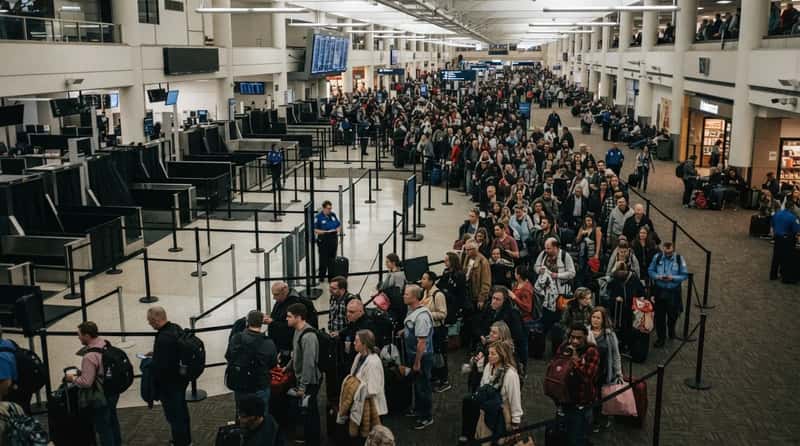
This is the blunder nobody saw coming, and it dwarfs everything else on this list. TSA logged the longest wait times in its 24-year history, with some major airports crossing the four-hour mark while employees called out of work at rates between 40% and 50%. This wasn’t a passenger mistake – it was a funding crisis that gutted the checkpoints themselves.
Officers had been working without pay, and more than 480 quit outright, after federal funding lapsed and staffing collapsed almost overnight. Things got bad enough that ICE agents were sent to help at roughly 14 airports, including Bush Intercontinental, Hartsfield-Jackson Atlanta, and JFK. Travelers who checked live wait-time apps before leaving home dodged the worst of it. Everyone else got a two-hour lesson in why staffing, not shoelaces, is the real threat to your boarding time.
The highest wait times in TSA history, with some wait times greater than four and a half hours.
Ha Nguyen McNeill, TSA Deputy Administrator
None of these blunders happen in isolation anymore. A traveler with an expired ID walks into a checkpoint already missing 40% of its staff, and a five-minute line quietly becomes a missed flight.
The lesson isn’t panic – it’s control what you can. Pack smart, book under your legal name, get REAL ID compliant now, and check live wait times before you leave the house. The rest is out of your hands, and lately, that’s exactly where the real chaos has been hiding.