Travel has changed dramatically over the past few decades, yet not everyone has updated their playbook. Baby boomers, many of whom learned to explore the world long before smartphones and instant booking apps existed, still carry habits that feel completely normal to them but leave their Gen Z and millennial travel companions wincing. From the airport to the hotel lobby, these generational quirks keep showing up on trips, and they are becoming a running joke among younger travelers who document them online.
None of this means boomers are doing anything fundamentally wrong. Many of these habits actually come from decades of hard-earned travel experience, back when phones died, apps did not exist, and a paper backup really could save a trip. Still, that does not stop younger tourists from cringing when the habits show up in real time.
1. Printing Every Boarding Pass and Confirmation on Paper
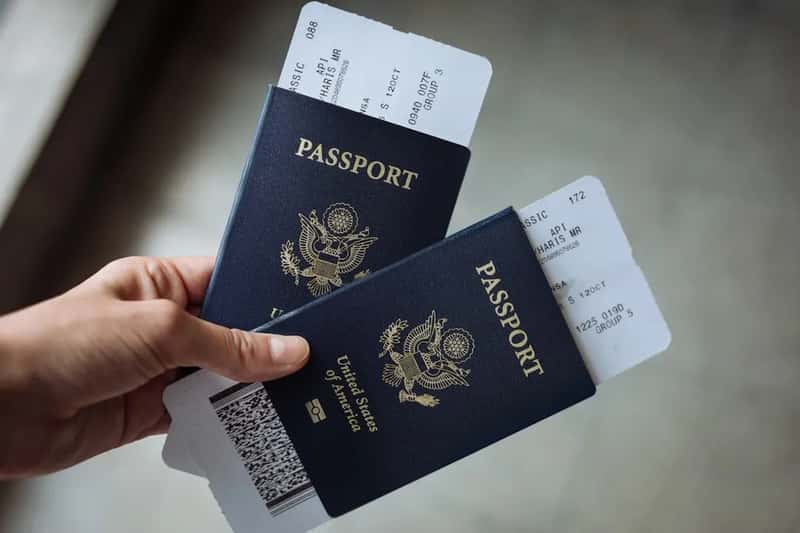
Walk into a boomer’s home a week before a trip and you will likely find a stack of papers piling up on the kitchen counter. Walk into any boomer’s house a week before vacation and you’ll find a neat stack of papers on the kitchen counter, including hotel confirmations, flight itineraries, car rental receipts, and restaurant reservations, all printed, highlighted, and organized in a color-coded folder.[1] There is often an entire inch-thick folder dedicated to nothing but hard copies of things that already exist digitally.
Younger travelers, who are perfectly comfortable relying on a single screenshot buried somewhere in their camera roll, find this level of physical preparation almost baffling. There’s something reassuring about having a physical backup, but younger travelers are perfectly content with screenshots and email confirmations stored on their phones.[1] There is also often a photocopy of a passport tucked in for good measure, just in case disaster strikes somewhere between the airport and the hotel front desk.
2. Calling Hotels Instead of Booking Online

While most travelers under 40 can research, compare, and book a hotel room in the time it takes to brew a coffee, many boomers still prefer to pick up the phone. One traveler recounted watching her mother spend three hours on a call with a hotel before a family trip, asking about room types, amenities, nearby restaurants, check-in procedures, and even whether the room had an iron, despite asking about room types, amenities, nearby restaurants, check-in procedures, and whether they had an iron, all information available on their website in about five minutes.[2]
For younger tourists watching this unfold, the instinct is always the same: just look it up online. Yet many boomers insist on the human connection because, as one shared, she wanted to talk to a real person because she wanted to “get a feel” for the place.[2] It is a habit rooted less in stubbornness and more in a genuine preference for the reassurance a real conversation can provide.
3. Arriving at the Airport Absurdly Early
Ask any younger traveler about flying with their boomer parents and airport timing will almost certainly come up first. Boomers will insist on leaving for the airport at dawn for a noon flight because they want time to park, check bags, grab coffee, browse the terminal shops, and settle in at the gate with a good two hours to spare.[1] To a generation raised on mobile boarding passes and TSA PreCheck, that level of buffer time feels almost comical.
Meanwhile, younger travelers tend to treat airport timing as a precise science, cutting arrival windows much closer than their parents ever would. The early arrival habit drives younger travelers crazy when they’re traveling with Boomer parents, since all that waiting feels unnecessary.[2] Still, given how often flight disruptions have made headlines lately, the extra caution is not entirely without merit.
4. Returning to the Same Destination Year After Year

Loyalty to a favorite beach town or resort might sound charming, but for younger travelers chasing new stamps in their passports, it can look like a missed opportunity. Data backs up the pattern: a 2024 study by the market research company Mintel found that almost 50% of baby boomers plan to travel to a place they’ve already been to.[3] That repetition stands in sharp contrast to how younger generations approach a vacation.
The gap becomes even clearer when looking at international trips specifically. Kantar, another market research group, found that 77% of boomers stick to a single destination during international trips, while only 48% of Gen Zers do.[3] For a generation raised on the idea that travel should mean fresh experiences and new content, that kind of repeat loyalty can be hard to understand.
5. Spending Freely Without Tracking the Budget
Few things make a budget-conscious younger tourist more uneasy than watching an older relative spend without seeming to keep score. Few things make a budget-conscious Gen Z traveler more uneasy than watching a boomer parent spend freely on excursions, dinners, and souvenirs without seeming to track it at all.[4] The numbers support the observation rather than dismiss it as exaggeration.
Spending surveys consistently show boomers outspending every other generation once they actually reach their destination. According to a 2025 survey, baby boomers are more likely than any other generation to spend $6,000 or more while at their destination, with 23% of boomer respondents reporting this level of expenditure, compared to just 16% of Gen X and 17% of millennials and younger travelers.[4] Younger travelers, many of whom are stretching tighter budgets, tend to approach every purchase with far more hesitation, which only makes the contrast more noticeable in the moment.
6. Loud Phone Calls and Speakerphone Conversations in Public

Poolside relaxation has a way of getting interrupted the instant someone decides a speakerphone call is the best way to catch up with family back home. From speakerphone FaceTime sessions by the pool to monopolizing entire breakfast areas, these cringe-worthy vacation habits are creating an invisible barrier between generations at hotels, beaches, and tourist spots worldwide.[5] It is the kind of moment that instantly signals which generation is nearby without anyone needing to turn around.
The scenario tends to repeat itself in slightly different forms across a trip, whether at the breakfast buffet or the hotel lobby. Ever been sitting poolside, trying to enjoy your vacation book, when suddenly the peaceful atmosphere gets shattered by someone FaceTiming at full volume?[5] For younger travelers who tend to keep phone conversations private and brief, the volume alone is often enough to trigger a wince.
7. Over-Planning Every Meal, Ticket, and Transfer

Some boomers approach vacation planning with the precision of a military operation, and when younger relatives get pulled along, it can feel less like a holiday and more like an assignment. When boomers travel with their younger counterparts, millennials often feel like their own vacation has turned into an admin crash course, where they’re expected to have every meal, journey, ticket, and transfer planned well in advance.[6] The intention is usually good, but the execution can feel stifling.
Part of the appeal of travel for younger generations is the freedom to wander and stumble upon something unplanned. An evening wander around Paris is a delight, and you could find yourself stumbling into your own little gem of a restaurant or uncovering an arrondissement you knew nothing about, but feeling obligated to plan well ahead for your boomer parents takes away some of that magic.[6] That heavy structure also lines up with broader industry data showing a strong preference among boomers for bundled, all-in-one arrangements. Seventy-four percent of Baby Boomers like to bundle reservations and services with their hotel bookings, seeking comprehensive travel packages.[7]
It’s worth remembering that generational habits rarely tell the whole story. Interestingly, younger travelers actually admit to feeling more guilt over their own travel behaviors than boomers do, with younger travelers admitting the most guilt about some travel behaviors compared to just 7% of boomers, speaking to a broader issue of self-awareness[6] across the board. So while paper folders, speakerphone calls, and dawn airport arrivals might make younger tourists cringe, every generation has its own travel quirks worth a little side-eye. The real trick, as always, is learning to laugh about it and still enjoy the trip together.