America’s national parks were meant to be sanctuaries, wide open spaces where visitors could escape the noise of daily life. These days, though, a handful of the most famous parks feel more like theme parks during a holiday weekend. Traffic jams stretch for miles, parking lots fill before sunrise, and rangers spend more time directing cars than protecting wildlife.
The numbers help explain why. The National Park Service system as a whole is still drawing enormous crowds, and even with a slight dip nationally, dozens of individual sites set all-time visitation records. According to a March 13 dataset, the U.S. national park system welcomed 323 million visitors in 2025, and despite a drop from the previous year, 26 of the 433 sites in the NPS system broke all-time records for visitation.[1] That concentration of crowds into a small number of beloved destinations is exactly what’s pushing several parks past their breaking point.
1. Great Smoky Mountains National Park
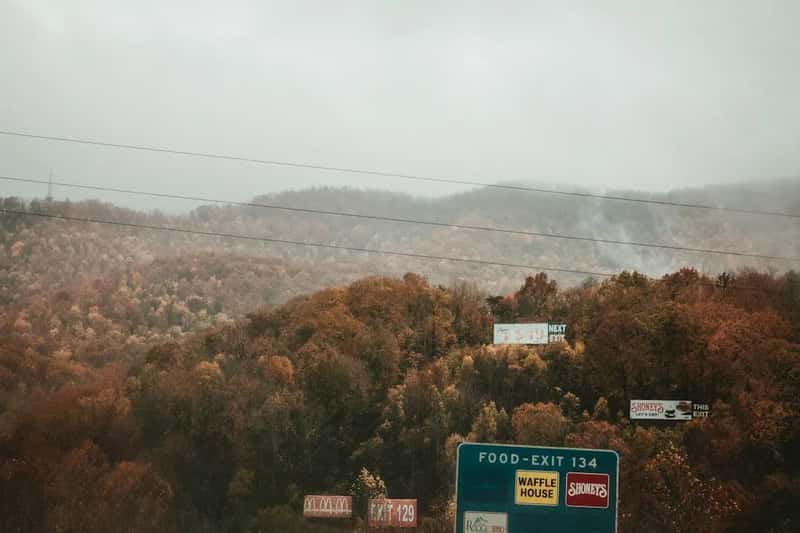
No park in the country deals with sheer volume quite like the Smokies. Great Smoky Mountains National Park welcomed roughly 11.5 million recreation visits during 2025, which is more than twice as many as the country’s second-most-visited national park.[2] Because the park sits close to Knoxville, Asheville, and the tourist corridor running through Gatlinburg and Pigeon Forge, most of that traffic arrives by personal vehicle rather than shuttle. That creates long backups at popular destinations like Cades Cove, Newfound Gap Road, and Kuwohi, formerly known as Clingmans Dome.[2]
The park has tried to manage the flood of cars with a parking fee program launched a few years back. In March 2023, the NPS enacted the requirement for parking tags in Great Smoky Mountains National Park, and while the Smokies continues to be one of the only national parks in the country without an entrance fee, this small parking fee is required for vehicles parked longer than 15 minutes.[3] Even so, the fundamental problem hasn’t gone away. The park has seen a steady increase in visitors over the past several years, recording its busiest year to date with over 14 million guests, a visitation increase of over 57 percent over the past decade.[4] Roads built decades ago simply weren’t designed for that kind of traffic.
2. Zion National Park
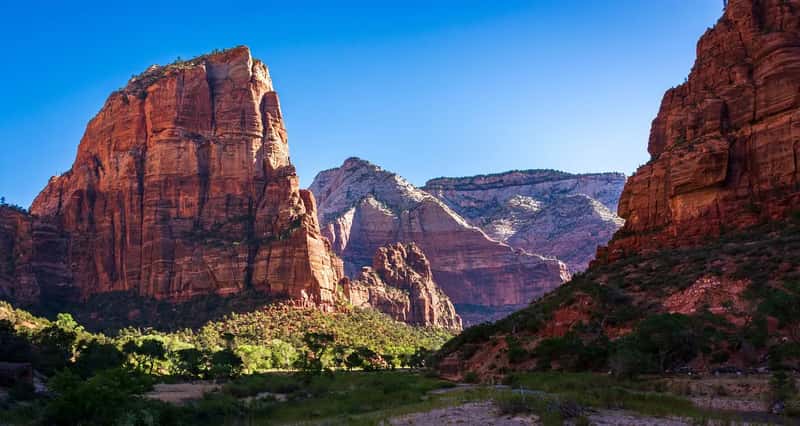
Zion’s narrow canyon is both its greatest asset and its biggest liability when it comes to crowding. Zion National Park is one of the most popular national parks in the USA, and in 2024 it received 4.9 million visitors, making it the second most visited park that year.[5] The geography compounds the problem, since almost everyone wants to experience the same narrow stretch of canyon floor. The shuttle stop at Big Bend puts visitors 50 feet from the Virgin River with 2,000-foot sandstone walls on both sides, and that accessibility is also Zion’s problem because millions of people figured out the same shortcut, forcing the park to spend the last decade trying to manage them.[6]
Parking has become such a scarce resource that showing up mid-morning is often pointless. Lots inside the park fill by eight to nine in the morning most days from March through November.[6] The park has also turned to permits for its most dangerous trail. In 2021, Zion welcomed over 5 million visitors for the first time in its history, a record high and part of a longer trend that has seen visitation double since 2010, prompting the park to begin issuing permits for the route to Angels Landing, a pilot program that has improved visitor experiences by decreasing crowding and congestion on the precipitous trail.[7]
3. Yosemite National Park
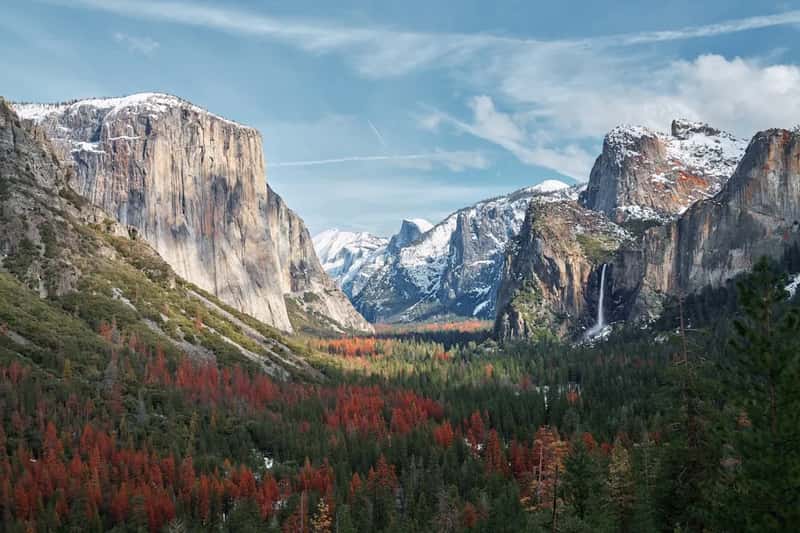
Yosemite Valley covers only a tiny fraction of the park’s total acreage, yet it absorbs nearly all of the visitor pressure. Yosemite drew 4,278,413 visits in 2025, up from 4,121,807 in 2024, with visitors per square mile reaching about 3,700, nearly all of it crammed into one valley.[8] That density explains why summer days in the valley can feel more like a crowded parking lot than a wilderness escape. Visitors are generally advised to visit in the off-season or during windows when a reservation system is in place, because the overcrowding is severe, with summer meaning timed entry or arriving very early or late in the day.[8]
Park managers have flip-flopped on how to handle the crush of cars. Yosemite tried reservations off and on starting in 2020, and when the park paused them in 2023 some visitors waited nearly three hours at the gate, but for 2026 Yosemite will not require advance reservations, including during peak summer months, and will instead rely on real-time traffic management measures.[9] Whether that gamble pays off remains an open question, especially during the popular firefall season in February.
4. Grand Canyon National Park
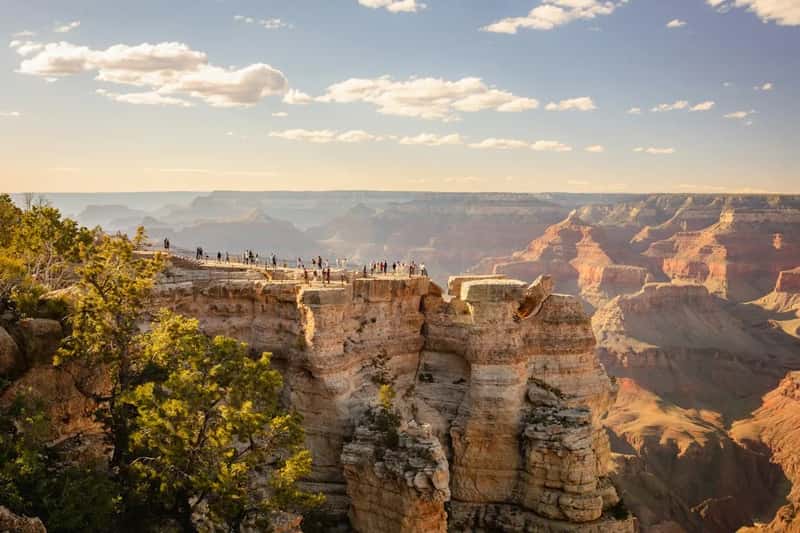
The Grand Canyon’s scale creates a strange illusion. Visitors assume that a park stretching for hundreds of square miles must swallow up crowds easily, but the reality on the ground looks different. The Grand Canyon’s size often creates the illusion that crowds simply disappear into the landscape, but in reality, many of the park’s roughly 4.4 million guests in 2025 concentrated along just a few miles of the South Rim.[2] That narrow band of overlooks, shuttle stops, and trailheads takes a beating during peak months.
Timing your visit matters enormously here. Summer vacation season, particularly June through August, produces the Arizona park’s heaviest visitation, while spring and fall remain busy thanks to milder temperatures.[2] Winter offers a genuine reprieve for those willing to brave colder weather. Visitors willing to trade warmer weather for quieter viewpoints should consider January or February, when visitation falls dramatically, and NPS preliminary data for 2026 show both months received fewer than 200,000 recreational visitors each.[2]
5. Arches National Park
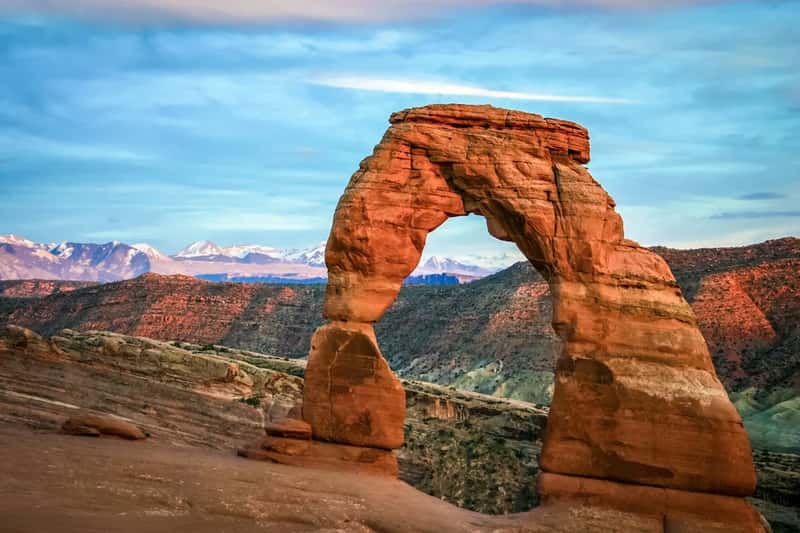
Arches packs an astonishing concentration of iconic sandstone formations into a relatively compact footprint, and visitors have taken notice in a big way. Visitation to Arches increased 74 percent between 2011 and 2021, when it hit a record 1.8 million visitors, and it hasn’t slowed down much, attracting 1.4 million people in 2024.[10] For a park this size, that level of traffic overwhelms the limited road network and parking areas near trailheads like Delicate Arch and the Windows section.
The response has been a mix of access restrictions and, more recently, budget-driven cutbacks that make crowding even harder to manage. That popularity led the Park Service to implement a reservation system for all visitors, extended through 2025, though staff cuts and delayed hirings have caused changes to the visitor experience.[10] Notably, though, the reservation requirement itself has since been dropped. In 2026, Arches National Park is not requiring timed entry reservations.[5] That leaves crowding largely to chance during the busiest weeks of spring and fall.
6. Rocky Mountain National Park
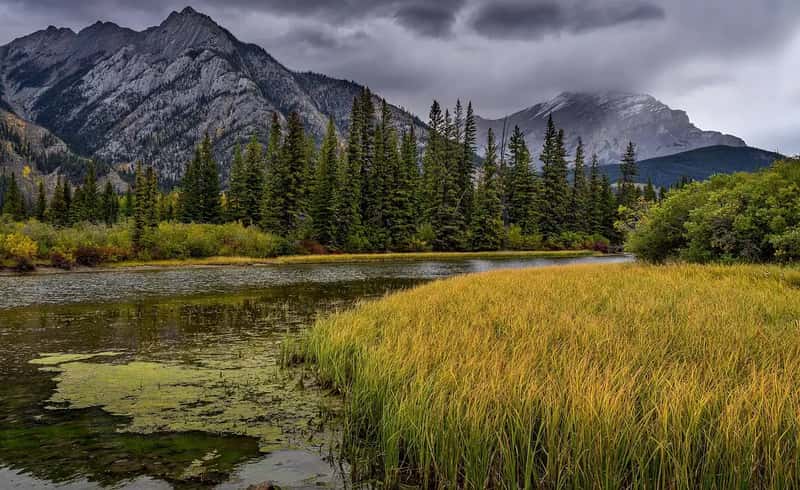
Rocky Mountain has become something of a holdout among major parks, sticking with strict entry controls even as neighbors loosen theirs. Right now, only Rocky Mountain National Park runs a timed entry program in 2026, while Arches, Yosemite, Glacier, and Mount Rainier have all stepped back from systems they used in recent years.[9] That decision reflects just how persistent the congestion problem has been along Bear Lake Road and the park’s high-alpine corridors, where parking lots simply can’t expand without damaging fragile alpine terrain.
The timed entry system isn’t going anywhere for the 2026 season. Rocky Mountain plans to run timed entry again in 2026, beginning May 22, with reserved access during peak hours and a separate option tied to the Bear Lake corridor.[11] International visitors now face additional costs on top of that reservation requirement. An international visitor driving into Rocky Mountain pays the two dollar timed entry processing fee, the thirty five dollar vehicle entrance fee, and the hundred dollar surcharge, adding up to 137 dollars per vehicle before even parking.[12] Few parks illustrate more clearly how overcrowding has reshaped the basic cost and logistics of a visit.
7. Acadia National Park
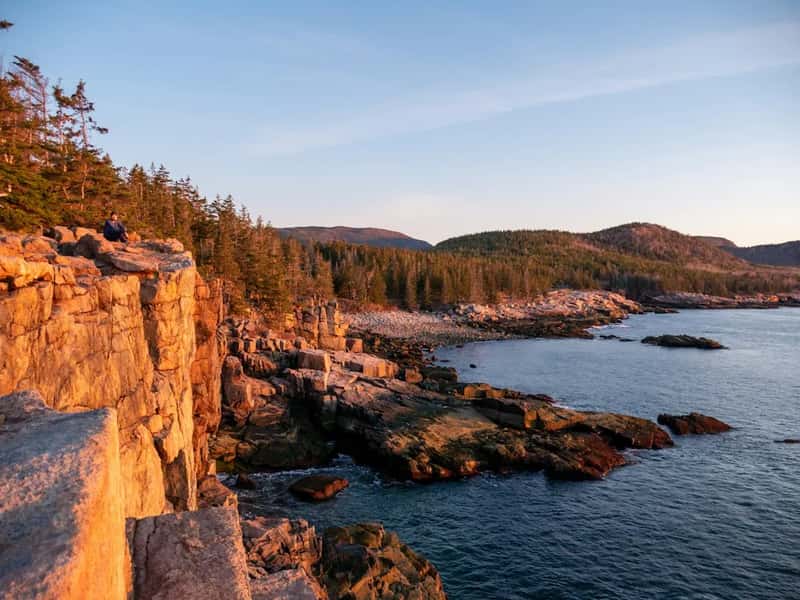
Acadia may be smaller than the sprawling Western parks on this list, but its popularity has grown at a startling pace relative to its size. Acadia now draws over 4 million visits a year, a 60 percent surge in ten years, causing severe congestion at popular spots.[9] Packed into roughly 49,000 acres of coastline and mountain terrain, that volume of visitors creates bottlenecks unlike almost anywhere else in the park system. Acadia squeezes 4 million visits into 49,000 acres.[8]
Cadillac Mountain has become the park’s flashpoint, and officials have responded with one of the most tightly controlled access systems in the country. Between May 20 and October 25, a vehicle reservation is required to drive Cadillac Summit Road, a scenic 3.5-mile paved road leading to the 1,530-foot summit.[13] The park is also investing in infrastructure to spread out arrivals rather than simply capping them. The park has responded with infrastructure rather than restrictions so far, including a new 26 million dollar Acadia Gateway Center in Trenton with 300 free parking spaces and Island Explorer bus connections.[9] Whether that’s enough to keep pace with continued growth is still an open question.
Overcrowding at these seven parks isn’t a temporary blip tied to a single busy summer. It’s the product of years of steadily rising visitation running into aging infrastructure, tight federal budgets, and, in some cases, shrinking ranger staffs. Reservation systems, parking fees, and shuttle programs have all helped at the margins, but none of them fully solve the underlying math of too many cars trying to reach too few trailheads.
For travelers, the practical takeaway is straightforward even if it’s not always convenient. Visiting these parks well outside peak summer months, arriving before sunrise, or choosing lesser known entrances and trails can make the difference between a frustrating day stuck in traffic and the kind of quiet, awe-inspiring experience these places were set aside to protect in the first place.