A family of four living in New York City spends roughly $14,474 a year just to keep the refrigerator stocked, and in neighborhoods like Manhattan that figure climbs even higher once you factor in higher grocery prices citywide. It’s an unremarkable number by local standards, the kind of expense most residents budget for without much thought. Yet in several countries around the world, that same dollar figure exceeds what even the wealthiest one percent of the population earns in an entire year.
The gap says less about grocery prices in New York and more about how unevenly income is spread across the planet. Using World Bank income classifications alongside inequality data from the World Inequality Database, it becomes possible to estimate roughly how much the top earners in the world’s poorest, most conflict-affected economies actually take home. What follows is a look at eight nations where that number, by any reasonable calculation, still falls short of a routine New York grocery bill.
1. Yemen
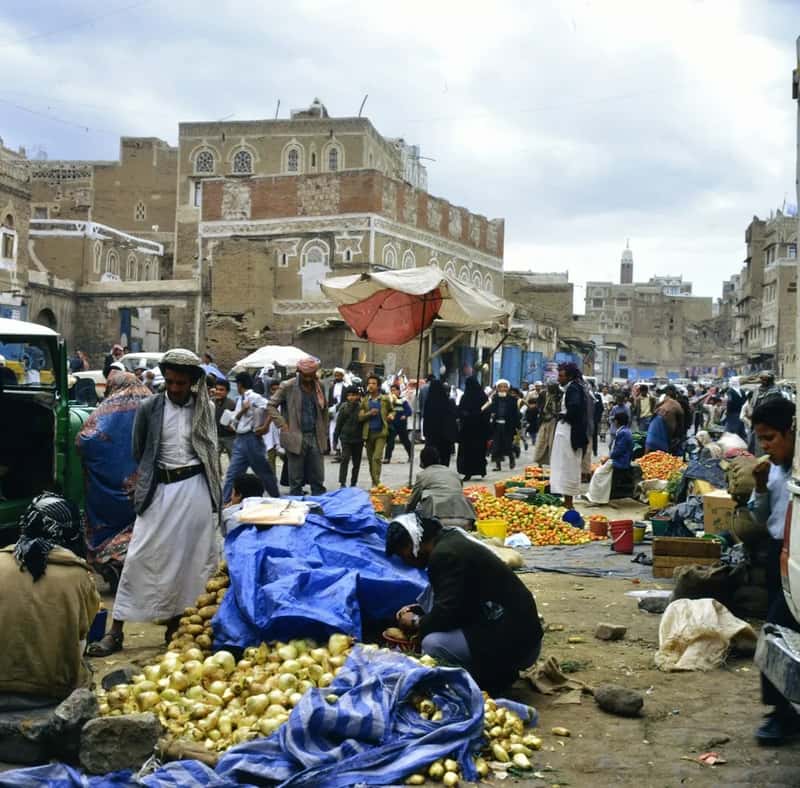
Yemen has been shaped by more than a decade of civil war, and its economy shows it. According to the World Inequality Database, Yemen exhibits significant inequality, with the top 10% earning 59.5% of income and the top 1% alone claiming 25%[1]. That concentration sounds dramatic until you remember it is a quarter of an economy that has been shrinking for years, battered by currency collapse and fractured governance.
Applying the standard method researchers use to estimate top-earner income, which involves multiplying national income per person by the top 1 percent’s income share, the result for Yemen lands well under the New York grocery benchmark. Even the wealthiest sliver of Yemeni society, controlling a full quarter of the nation’s income, is drawing from a pie too small to clear $14,474 a year on average. Humanitarian agencies have repeatedly flagged Yemen as one of the most severe economic crises in the world, and the income data reflects that reality plainly.
2. Sudan
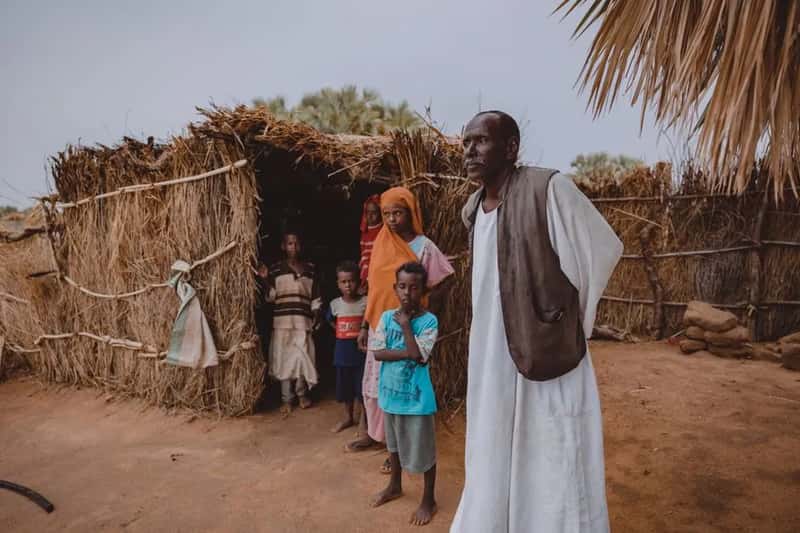
Sudan’s economy went into freefall after fighting broke out between rival military factions in April 2023, displacing millions and gutting the country’s already fragile institutions. The World Bank classifies Sudan among countries in fragile and conflict affected situations alongside Yemen, Ukraine, Gaza, West Bank, Sudan, South Sudan, Somalia, Syria, Niger, Burkina Faso and Afghanistan[2], a designation reserved for the most economically distressed places on earth. Banking systems have been disrupted, exports have stalled, and much of the population survives on subsistence agriculture or informal trade.
With national income per person sitting far below global averages, even a disproportionate share going to Sudan’s elite does not translate into large absolute figures. The math simply does not stretch far enough for the country’s wealthiest residents to out-earn a New York family’s annual grocery spending. It is a stark illustration of how a high inequality ratio in a very poor economy still produces a low dollar amount at the top.
3. South Sudan
South Sudan, the world’s youngest country, has struggled with internal conflict since gaining independence in 2011, and its oil-dependent economy has never fully stabilized. It appears on the same World Bank list of fragile and conflict affected situations[2] as its northern neighbor, a status tied directly to weak institutions and repeated bouts of violence. Oil revenue, the country’s main source of income, has been volatile and frequently disrupted by pipeline disputes and infrastructure damage.
National income per person in South Sudan ranks among the lowest anywhere, which keeps even elite earnings modest in absolute terms. Because the low income classification threshold used by the World Bank tops out at a Gross National Income per capita calculated using the World Bank Atlas method of $1,135 or less in 2024[2], and South Sudan’s economy sits well inside that range, there simply is not enough national wealth generated for the top 1 percent to clear a New York grocery bill on average. The country’s dependence on oil exports has made this gap even more volatile from year to year.
4. Somalia
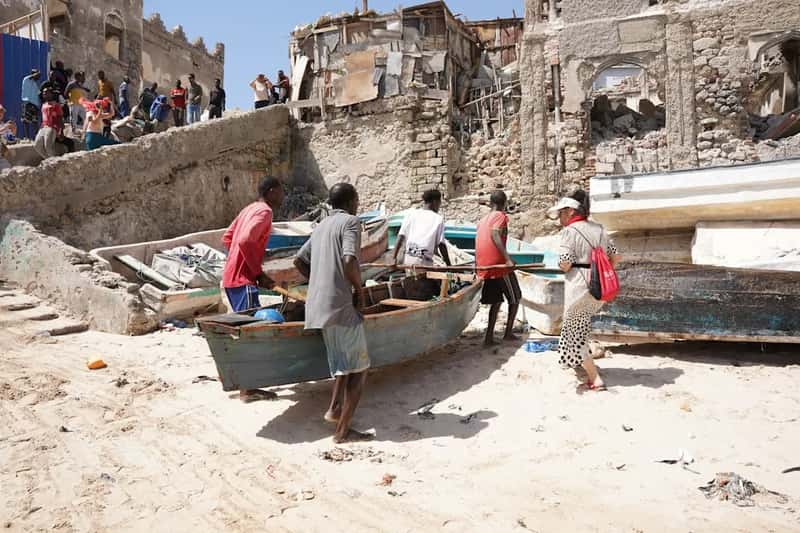
Somalia has operated without a fully centralized government for more than three decades, and its economy runs largely on remittances, livestock exports, and informal trade networks. It sits alongside Sudan, Yemen, and South Sudan on the World Bank’s roster of fragile and conflict affected situations[2], a list that essentially maps the places where formal income data is hardest to collect and poverty runs deepest. Diaspora remittances actually make up a meaningful share of household income for many Somali families, sometimes rivaling formal wages.
Despite pockets of wealth in cities like Mogadishu, tied to trade, telecommunications, and real estate, the overall size of Somalia’s formal economy remains small relative to its population. When researchers apply income-share calculations to countries at this income level, the resulting estimate for top-earner income consistently falls short of $14,000 to $15,000 a year. That puts Somalia’s wealthiest residents, by most reasonable estimates, below the cost of stocking a New York kitchen for twelve months.
5. Syria
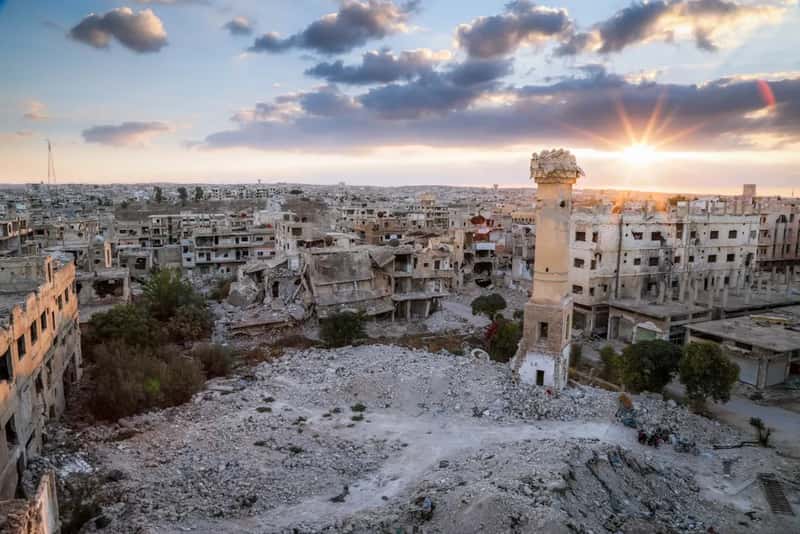
Syria’s economy has been rebuilding since the fall of the Assad government in December 2024, but more than a decade of civil war left deep scars that will take years to repair. Infrastructure, currency stability, and institutional capacity were all severely damaged during the conflict, and the country still appears on the World Bank’s list of fragile and conflict affected situations[2]. Much of the population continues to rely on humanitarian assistance and informal work as formal industries slowly restart.
Wealthy Syrians, including those connected to trade, real estate, or remaining industrial operations, still operate within an economy that has contracted dramatically compared to its pre-war size. Even generous estimates of top 1 percent earnings in this environment struggle to reach the level of a routine grocery expense in a major American city. The rebuilding process may eventually change this picture, but the current numbers reflect a country still climbing out of a deep economic hole.
6. Niger
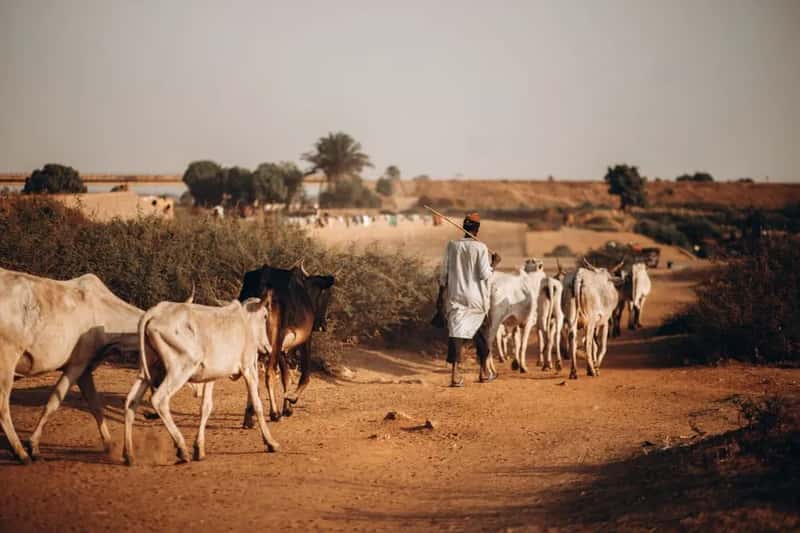
Niger sits in the Sahel region, an area facing overlapping security crises tied to jihadist insurgencies and repeated political instability, including a 2023 coup that further disrupted governance. It ranks among the countries the World Bank flags as fragile and conflict affected[2], and its economy remains heavily dependent on subsistence farming and uranium exports. Droughts and desertification add another layer of pressure on a population that is already among the fastest growing in the world.
With national income per person consistently near the bottom of global rankings, Niger’s top earners, largely concentrated in government, mining, and urban trade, still operate within a very small overall economic base. Estimates built from the country’s income distribution suggest that even its wealthiest residents earn amounts that trail behind the cost of feeding a family in New York for a year. Population growth outpacing economic expansion has made closing this gap an especially difficult, long-term challenge.
7. Burkina Faso
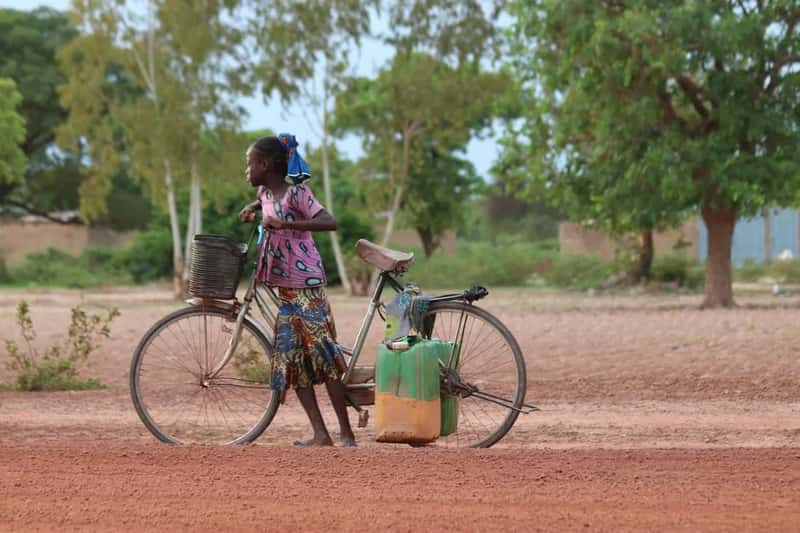
Burkina Faso has endured a wave of political upheaval in recent years, including multiple coups, alongside an escalating insurgency that has displaced large portions of its population. Like its Sahel neighbors, it appears on the World Bank’s list of fragile and conflict affected situations[2], a classification driven by both the security crisis and chronic economic weakness. Gold mining has become an increasingly important export, but instability has complicated efforts to translate that resource wealth into broader income gains.
Displacement has hit rural incomes especially hard, pushing many families toward urban centers that are themselves struggling to absorb the influx. Against this backdrop, income estimates for Burkina Faso’s top 1 percent, even accounting for gains tied to mining and trade, still point to yearly figures well under what a New York household spends on groceries alone. The insurgency shows no sign of resolving quickly, which suggests this gap is unlikely to narrow soon.
8. Afghanistan
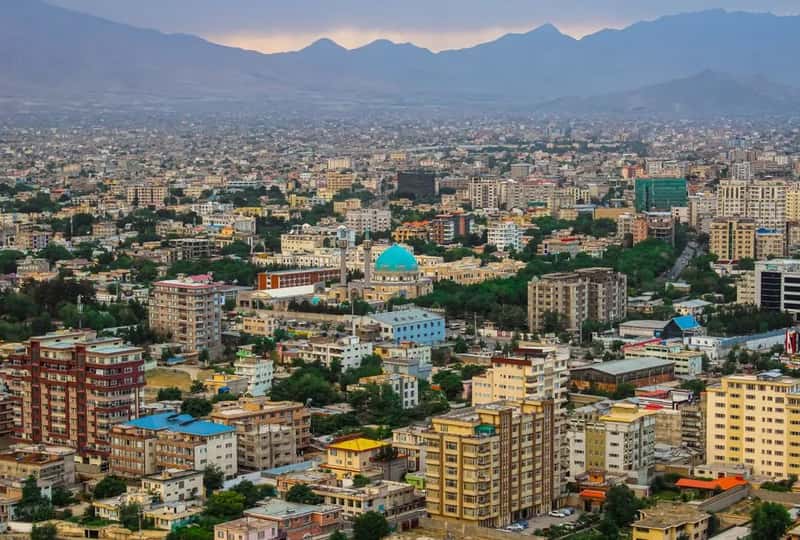
Afghanistan’s economy collapsed sharply after the Taliban took control in August 2021, triggering a freeze in foreign aid, a banking crisis, and the departure of much of the country’s skilled workforce. It remains on the World Bank’s list of fragile and conflict affected situations[2], and international sanctions combined with restricted access to global financial systems have kept the economy isolated. Agriculture, along with a limited amount of mineral extraction, makes up much of what remains of formal economic activity.
Even Afghanistan’s wealthiest residents, many of whom rely on trade networks, land holdings, or connections to the current administration, operate within an economy that has shrunk considerably since 2021. Estimates derived from the country’s national income and inequality data suggest that top 1 percent earnings sit at a fraction of what a New York family spends annually on groceries. Aid organizations continue to describe the humanitarian situation as dire, which underscores just how far this gap stretches across the income spectrum.
These comparisons are not meant to minimize the real hardship faced by ordinary people in these countries, most of whom earn far less than even the modest figures discussed here. They are meant to illustrate, in concrete terms, just how wide the global income gap has become. A grocery bill that barely registers as a line item in a New York household budget represents, in some of the world’s most fragile economies, more money than even the wealthiest residents are likely to see in a year.