A hundred dollars doesn’t stretch far at most American supermarkets these days. It might cover a single week of produce, meat, and pantry staples for a small household, if you’re lucky and skip the name brands.
Yet in several corners of the world, that same bill can carry someone through an entire month of meals. Local markets, shorter supply chains, and lower wage structures all play a role in why grocery bills diverge so sharply from one country to the next. Here’s a look at nine places where a hundred dollars goes remarkably far at the checkout counter.
Vietnam
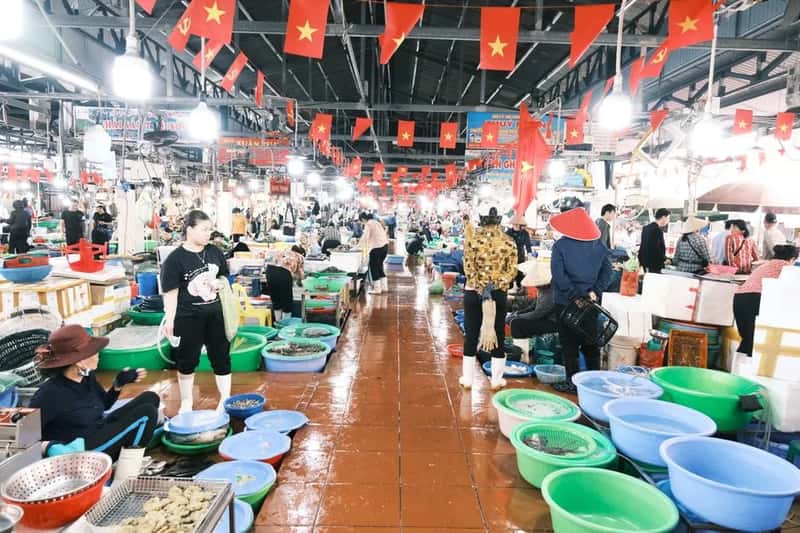
Vietnam has built a reputation among long-term travelers and digital nomads precisely because groceries and dining stay so cheap, and it’s one of the cheapest countries to live in 2026, with a comfortable monthly budget around $800.[1] Wet markets in cities like Hanoi and Ho Chi Minh City sell fresh produce, herbs, and seafood at prices that make home cooking almost effortless on a tight budget. In Vietnam, $75 is enough for two people to eat out every working day of the week, an amount that wouldn’t even cover a single restaurant meal for two in Norway.[2]
Grocery shopping here rarely involves the sticker shock that shoppers in wealthier economies have grown used to. Local wet markets selling fresh produce, herbs, and seafood keep home cooking remarkably affordable in cities like Hanoi and Ho Chi Minh City.[2] A hundred dollars, spread across a month of rice, vegetables, eggs, and fish from these markets, can realistically cover a single person’s grocery needs without much trouble.
Pakistan
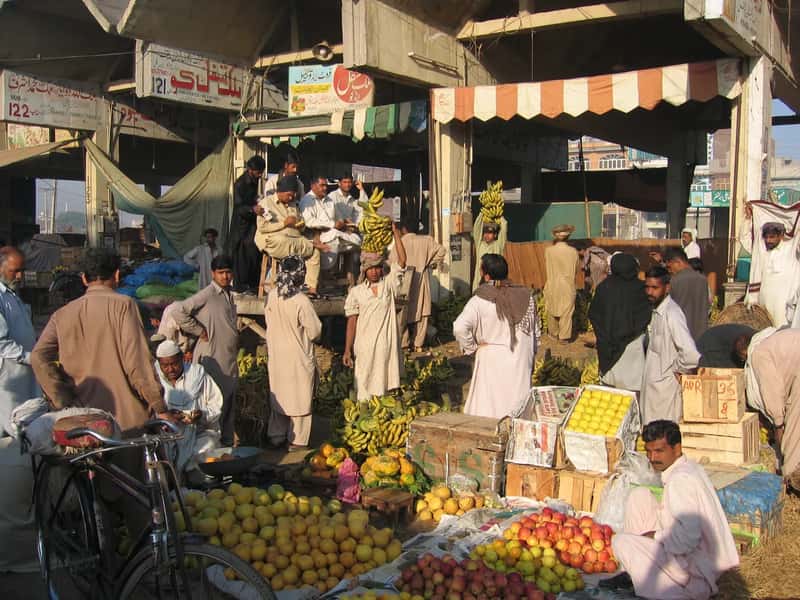
Pakistan consistently shows up at the very bottom of global cost indexes, and groceries are a big reason why, with the cost of living index placing Pakistan at just 19.6, among the lowest values recorded, indicating a significantly lower cost of basic consumption compared with the New York benchmark.[1] That figure isn’t a fluke; it reflects how much cheaper the country’s food supply chain is compared to Western markets. Alongside Egypt and Bhutan, it ranks among the cheapest countries in the world, where a person needs under $400 per month to live comfortably.[1]
Local wheat, rice, and produce markets keep staple prices well below what shoppers in Western Europe or North America are used to.[1] A hundred dollars can easily cover flour, lentils, seasonal vegetables, and cooking oil for a full month, with room left over. For budget-conscious travelers, a market basket that would cost real money elsewhere often barely dents a wallet here.[1]
Egypt

Egypt regularly tops lists of the world’s most affordable places to shop and live, and the cheapest country to live in 2026 is Egypt, at approximately $700 per month for a single expat.[1] Cairo’s bustling produce stalls and neighborhood grocers keep prices low even as the city itself grows more crowded. Rice, beans, flatbread, and seasonal vegetables form the backbone of most household shopping lists, and none of them come with a heavy price tag.
For anyone stretching a travel budget, groceries here go a very long way.[1] A single expat living centrally can expect to cover a full month of basic grocery needs for a fraction of what the same basket would cost in a major European city. That gap between local prices and Western expectations is a big part of why Egypt keeps showing up on affordability rankings year after year.
Bangladesh
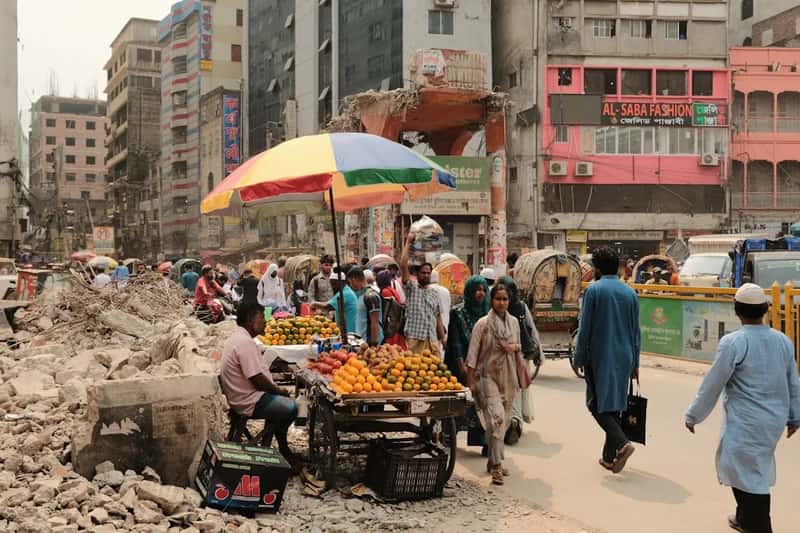
Bangladesh often edges out even its South Asian neighbors when it comes to raw affordability.[1] A meal for two averaged just $9.43 in Bangladesh, the lowest figure recorded in a broad international comparison.[1] That single data point says a lot about how far grocery money stretches across the country.
Rice, lentils, and fish, the backbone of the local diet, remain inexpensive thanks to domestic production and short supply chains.[1] Bangladesh shows up on both Living Cost’s and Numbeo’s lists of the least expensive countries to live in.[1] Shoppers here rarely feel the kind of price pressure that has become common in wealthier economies.[1]
Bhutan
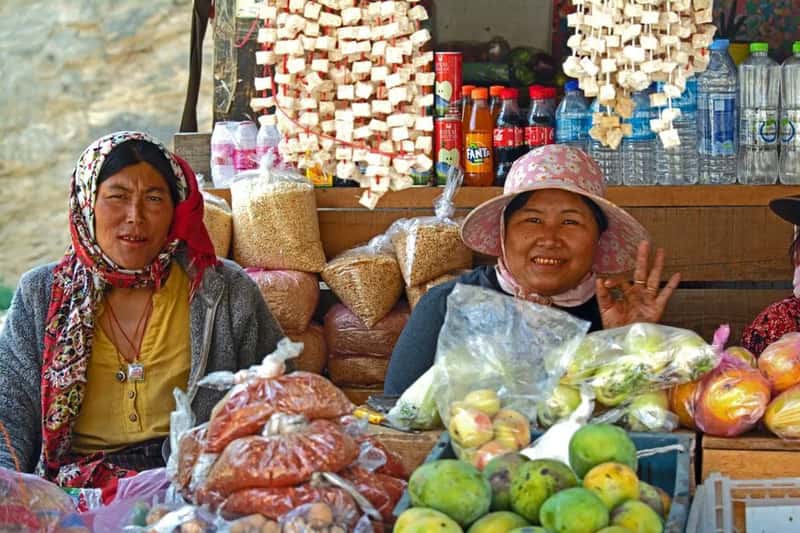
Bhutan rarely makes typical travel-cost headlines, but its grocery prices place it firmly among the world’s cheapest.[2] Alongside Pakistan and Egypt, Bhutan is one of the cheapest countries in the world, where a person needs under $400 per month to live comfortably.[2] Local markets in towns like Thimphu and Paro sell grains, vegetables, and dairy at prices well within reach of a modest budget.
Bhutan sits in a rare and affordable category, and you can expect the monthly cost to be as low as $409.[3] The catch is access rather than price. The only catch is that even though it’s cheap, it’s not open to everyone, due to strict visa regulations, long-term residence for foreigners is more of a fantasy than a plan.[3]
Nepal
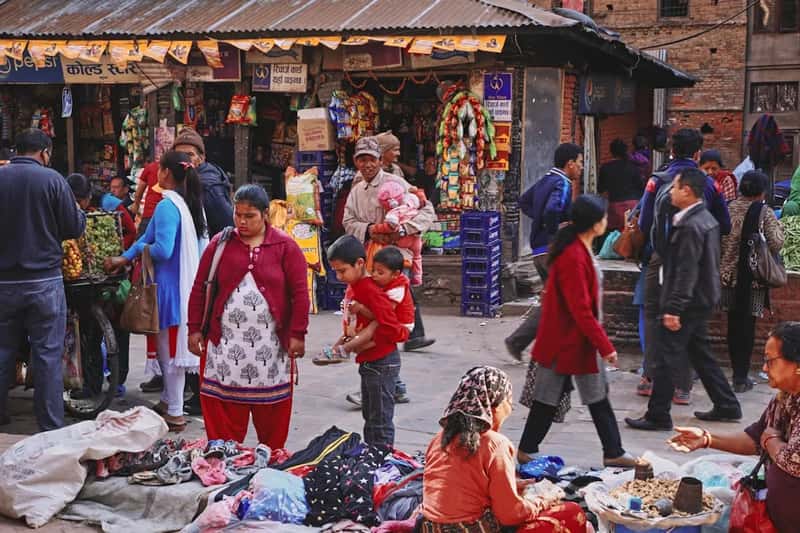
Nepal’s mountainous terrain hasn’t stopped it from becoming one of the most budget-friendly countries for everyday shopping, and it ranks among the cheapest countries to live in 2026, with a comfortable monthly budget of around $600.[1] Grain and vegetable markets in Kathmandu and beyond keep household food bills light. Alongside Pakistan, Egypt, Bhutan, and Burundi, it’s one of the countries where locals spend less than $430 a month to live comfortably.[1]
A hundred dollars in Nepal covers far more than a basic pantry restock. Rice, lentils, seasonal produce, and dairy products from local sellers make up the bulk of a typical grocery list, and none of it strains a modest travel or expat budget. That combination of low prices and reliable local supply is a big reason Nepal keeps appearing on global affordability lists.
Tunisia

Tunisia rounds out the North African contingent of ultra-affordable grocery markets, appearing on both Living Cost’s and Numbeo’s lists of the least expensive countries to live in, alongside Egypt, Pakistan, Libya, Bangladesh, India, and Nepal.[2] Local produce, olive oil, and bread stay inexpensive thanks to a strong domestic agricultural base.[2] Coastal towns and inland souks both offer a similar picture of low, steady prices.
Coastal markets and inland souks offer fresh goods at prices that rarely rattle even the most price-sensitive traveler, and the country’s cost structure mirrors much of the region, where wages and prices sit well below European or North American norms.[2] For visitors used to higher food costs at home, Tunisian markets can feel almost like a discount.[2] A month’s worth of bread, vegetables, olive oil, and dairy rarely comes close to testing a hundred dollar budget.
India
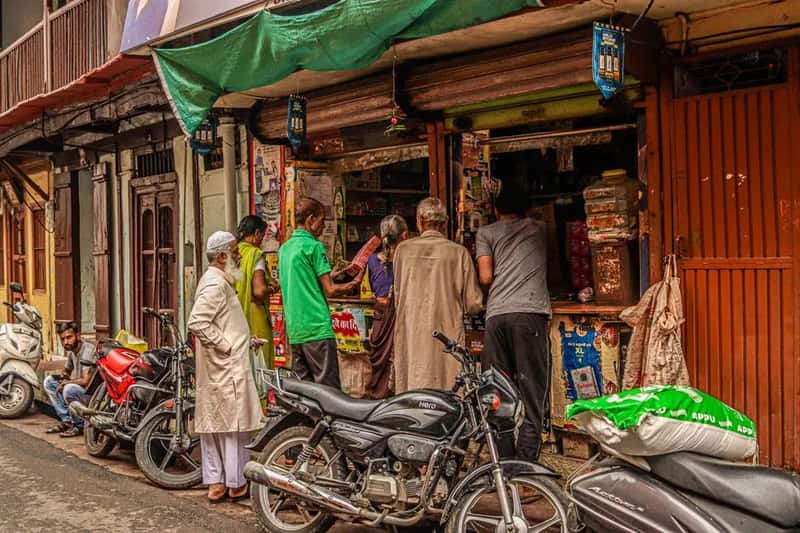
Pakistan, Egypt, and India are among the cheapest countries to live in due to significantly lower grocery prices compared to Western Europe or North America.[4] Local sabzi mandis, or vegetable markets, and neighborhood grocers keep the cost of rice, lentils, spices, and fresh produce well below what shoppers elsewhere are accustomed to paying. Regional variation is real, since prices in a smaller town look quite different from those in Mumbai or Delhi, but the overall pattern holds across most of the country.
Home cooking remains the norm for most households, and that habit keeps grocery bills modest even in cities where rent and other costs have crept upward. A hundred dollars, split across staples like rice, dal, cooking oil, vegetables, and dairy, can comfortably stretch through a full month for a single person shopping at local markets rather than imported goods sections. That price gap is part of why India continues to attract long-term travelers on tight budgets.
Indonesia

Indonesia stands out in recent comparative data as one of the more dramatic examples of how far grocery costs can diverge worldwide. A monthly grocery basket costs more than 5 times as much in Switzerland as in Indonesia, across 69 countries surveyed by WhereNext in 2026.[5] That comparison, built from a basket of milk, eggs, chicken, and rice priced at retail, gives a useful snapshot of just how much cheaper staple foods can be in Southeast Asia.
Local markets across Java, Bali, and Sumatra sell rice, fresh vegetables, and seafood at prices that rarely test a modest monthly budget. Traditional pasar markets, rather than supermarket chains, tend to offer the best value for shoppers cooking most of their own meals. For a single person willing to shop locally and cook at home, a hundred dollars a month for groceries is a realistic and even comfortable figure.
Grocery prices tell a story that goes beyond simple currency conversion. They reflect local wages, domestic agriculture, supply chain length, and how much of a country’s food system still runs through open-air markets rather than imported retail chains. For travelers, expats, and budget planners alike, these nine countries offer a clear reminder that a hundred dollars can mean very different things depending on where you’re standing when you spend it.