Anyone who has spent a season working a cruise ship galley will tell you the same thing: most of what comes out of that kitchen is genuinely good, freshly prepared, and handled with more care than you’d expect from an operation feeding thousands of people three times a day. Still, every line cook has a mental list of dishes they quietly steer clear of themselves, usually because they’ve seen how those particular items are stored, reheated, or left sitting under a heat lamp for hours at a time.
That inside knowledge matters more than ever. Cruise bookings have been climbing steadily, and with more passengers packed onto bigger ships, food safety experts and health agencies have been paying closer attention to what happens at the buffet line. Here are seven dishes that current and former crew members consistently flag as the ones worth skipping, along with the reasoning behind each warning.
1. Buffet Sushi That’s Been Sitting Out
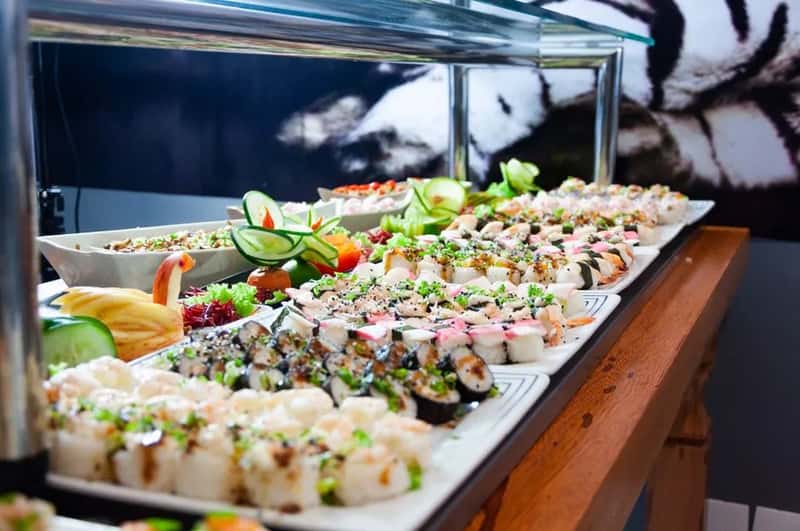
Sushi has become a fixture on many modern cruise ship buffets, and it looks tempting sitting there in neat little rows. The problem is that nobody serving themselves at the buffet actually knows how long that spicy tuna roll has been sitting on ice. Although cruise lines take safe food handling extremely seriously, nothing is foolproof, and it’s not worth gambling with the freshness of that spicy tuna roll.[1]
The safer move is to seek out sushi that’s prepared to order rather than pulled from a display case. If there’s sushi on the buffet and you don’t know exactly how long it’s been there, it’s worth giving it a pass in favor of something you can see being made right in front of you.[1] Raw fish left at room temperature for even a short window can develop bacterial growth, and on a moving ship with variable refrigeration, that risk only grows.
2. Powdered Scrambled Eggs From the Steam Trays
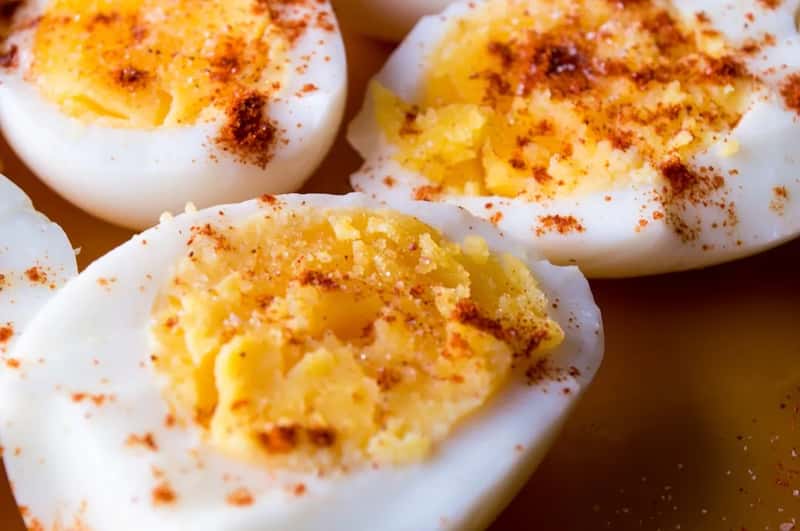
This one isn’t really a safety issue so much as a quality one, but it’s a complaint you’ll hear from crew members constantly. Scrambled eggs in cruise ship buffets are often made from powdered eggs, a processed alternative that’s easier to store, transport, and cook in large batches, and while this makes prepping meals more efficient on board, the result is eggs with a spongy, chewy, and sometimes watery texture if not cooked correctly.[2]
The good news is that powdered eggs pose no real health risk, they just taste noticeably worse than the real thing. Although powdered eggs are safe to eat, they usually don’t taste as good as freshly made eggs, and for many travelers a cruise is an opportunity to enjoy delicious, high-quality meals, so one simple hack to avoid them is to head to the made-to-order omelet station, which prepares freshly cooked food in front of guests.[2] It’s a small adjustment to your breakfast routine that makes a noticeable difference.
3. Pre-Cut Salads Sitting in the Buffet Line

Salad bars look healthy and harmless, but food safety officials have specifically called out this category as a risk point, even outside of cruising. The Centers for Disease Control and Prevention has flagged salads, particularly those containing cut or shredded raw vegetables, as a high-risk item for travelers, warning that they may be contaminated with waste that even clean water can’t wash off.[3]
On a ship, the added variable is how long that lettuce has been sitting under buffet lighting before you get to it. Salads made with vegetables that appear wilted are a surefire sign that they’ve been sitting out for a while, and that’s advice worth applying to any buffet, whether you’re on a cruise or not.[3] A crew member who’s worked the line will usually tell you the same thing passengers already suspect just by looking at it: if the greens look tired, they’ve been out too long.
4. Mayonnaise-Based Salads Left at Room Temperature

Tuna salad, egg salad, and similar mayo-based dishes are a genuine concern once they’ve been sitting out for a stretch, since mayonnaise-based mixtures spoil faster than most people realize in warm conditions. Cruise safety guidance recommends sticking with hot, freshly cooked meals whenever possible and avoiding anything mayo-based, such as tuna salad or egg salad, if it’s been sitting out.[4]
This isn’t unique to ships, but the scale of buffet service at sea makes it a bigger factor than at a typical restaurant. Thousands of passengers move through the same buffet line over several hours, and dishes that should be swapped out every thirty minutes don’t always get refreshed on schedule when a kitchen is short-staffed or slammed during peak service.
5. Raw Oysters and Raw Clams
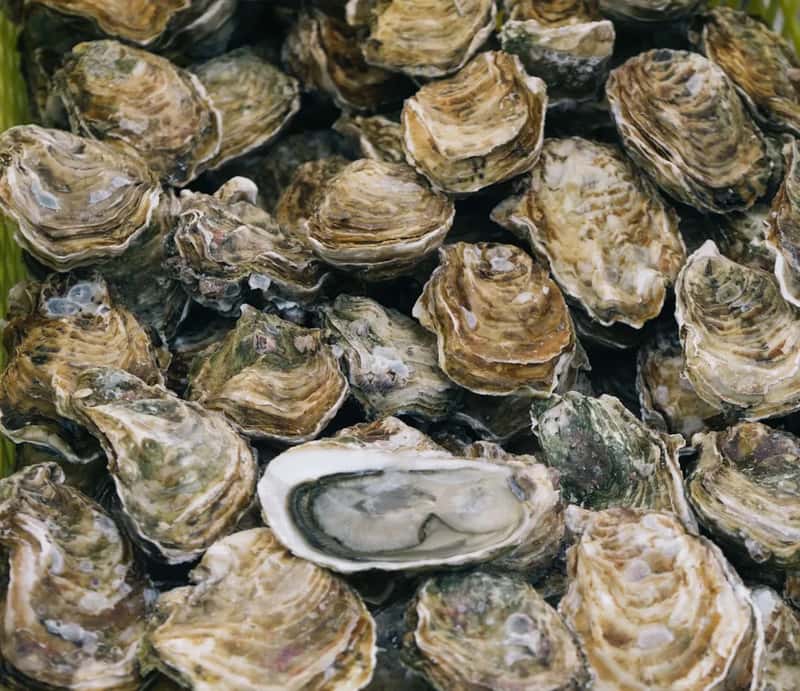
Raw shellfish sits near the top of most experts’ warning lists, and for good reason. The top advice from cruise food safety experts is to steer clear of raw seafood, especially oysters, which have been linked to serious bacterial infections like Vibrio vulnificus, a rare but potentially deadly bug that thrives in warm coastal waters, with even sushi and raw clams posing elevated risk when ships are running at full capacity and galley crews are under pressure.[4]
Vibrio infections are uncommon, but they can be severe, and warm-water itineraries in the Caribbean or Gulf of Mexico are exactly the conditions where the bacteria thrive. A line cook who’s watched a raw bar sit through a hot afternoon on deck knows the temperature control on that ice bed isn’t always perfect. If you love oysters, a cooked preparation is the safer call at sea.
6. Undercooked Meat and Steak Tartare
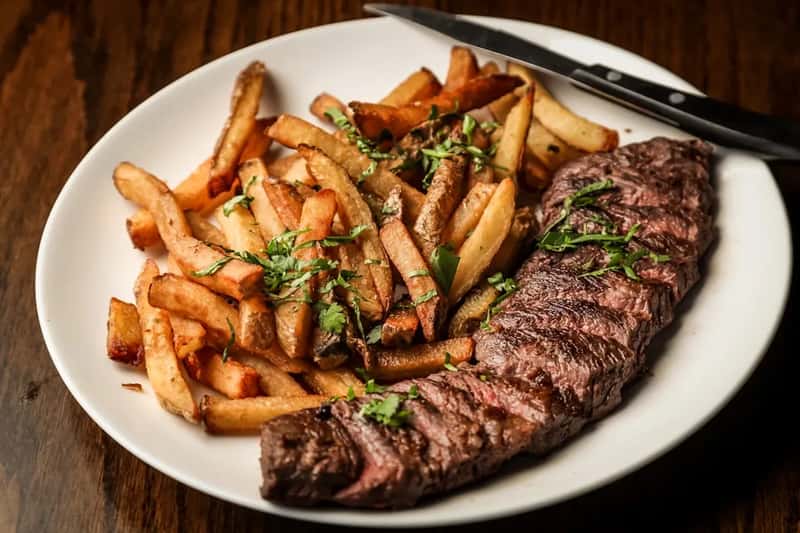
Grilled meats need to hit a safe internal temperature to kill off pathogens, and that’s not always guaranteed when a kitchen is trying to push out hundreds of plates during a dinner rush. Food safety expert Darin Detwiler recommends exerting caution over undercooked meats at sea, noting that grilled or roasted meats must be cooked to a safe internal temperature and that some cruise kitchens may rush service, leading to undercooked poultry, beef, or pork.[3]
Raw preparations are an even bigger gamble. Raw meat dishes, such as steak tartare, are also best avoided if you want to be extra cautious, as they are more likely to be riddled with illness-inducing pathogens.[3] If you’re ordering steak in the main dining room, asking for it cooked through rather than rare isn’t overly cautious, it’s just sensible given how many hands and hours are involved in getting that plate to your table.
7. Anything Touched by Someone Else’s Hands or Utensils

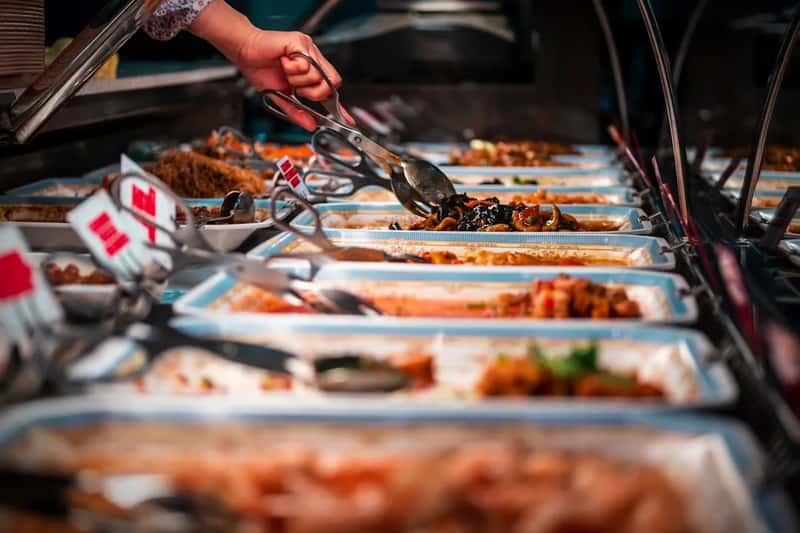
This last one isn’t a specific dish so much as a specific situation, but crew members bring it up constantly because it happens every single day on a busy buffet line. If you notice the person in front of you touching food and putting it back, you should notify a crew member and avoid that dish, and the same applies if someone has contaminated a vegetable-only dish with meat utensils or if the serving tongs have fallen completely into the food, handle and all.[1]
Given that norovirus spreads so easily through contaminated food and surfaces, this kind of cross-contamination is one of the fastest ways an outbreak takes hold on a ship. A person can become infected by having direct contact with someone who is infected and sharing food or utensils with them, touching surfaces or objects contaminated with norovirus and then touching their face or mouth, or consuming contaminated foods or liquids.[5] Speaking up and asking for fresh utensils or a replaced dish isn’t awkward, it’s exactly what crew members want you to do.
Why This Matters More on Today’s Ships

Gastrointestinal outbreaks on cruise ships have been trending upward in recent years, which is part of why crew members have gotten more vocal about sharing these tips publicly. CDC data suggests 2024 was the worst year for cruise ship-based gastrointestinal outbreaks in over a decade, with a total of 16 reported outbreaks, the highest in over a decade.[6] That trend hasn’t reversed. So far in 2025, there have been 16 illness outbreaks reported on cruise ships in the CDC’s jurisdiction, mostly from norovirus, compared with 18 outbreaks in all of 2024 and 14 in 2023.[7]
None of this means you should panic about eating on your next cruise. The vast majority of meals served on the vast majority of ships are perfectly safe, and cruise lines invest heavily in sanitation protocols precisely because outbreaks are bad for business. Over the course of 2024, the CDC conducted 151 inspections, including repeat inspections on 23 ships, and of the more than 100 ships inspected, the average score came to about 95.9, with 27 ships receiving a perfect 100.[8] Still, the numbers explain why crew members bother mentioning these specific dishes at all.
Simple Habits That Make a Real Difference

Beyond avoiding specific dishes, the single most effective thing you can do is wash your hands properly and often, especially before meals. Start with the basics: wash your hands, a lot, before eating, after using the restroom, and anytime you touch shared surfaces, since hand sanitizer is helpful but soap and water are your best defense.[9] This sounds obvious, but it’s consistently the piece of advice that gets skipped by rushed vacationers heading straight from the pool deck to the buffet line.
Timing your buffet visits also helps more than most people realize. Arriving earlier in a meal service means food hasn’t had as much time sitting under heat lamps or on ice, and it also means fewer hands have been near the serving utensils. If something looks like it’s been out for a while, whether that’s a wilted salad, a tired-looking seafood display, or a chafing dish that’s clearly past its prime, trust that instinct and choose something made fresh in front of you instead.
The Bottom Line
Cruise ship dining remains one of the genuine highlights of sailing, and the crew members who’ve shared these warnings aren’t trying to scare anyone away from the buffet. They’re simply passing along the kind of practical, behind-the-scenes knowledge that comes from actually working the line, watching what sits out too long, and seeing which stations turn out consistently fresh food versus which ones rely on convenience shortcuts.
Skip the questionable sushi, the tired eggs, the wilted salad, and the raw oysters that have been sweating in the sun, and you’ll likely enjoy your cruise a lot more, both in terms of taste and peace of mind. Sometimes the best souvenir from a cruise is simply coming home without a stomach bug to remember it by.