

When I first arrived in Santiago, Chile, I felt entirely overwhelmed by the size and sprawl of the metropolitan region. I’d decided to stay near the city center, thinking it’d be best for a tourist like me. And for the first few weeks, I explored the “centro,” taking in the historic vibe. However, after meeting friends through English-speaking groups and exploring other parts of the metropolitan region with them, I realized there was much, much more to Santiago than the city center area. Not only that, but each comuna (subdivision) within the region felt different from the next one.
After more than a year of exploring Santiago and many of its different comunas, I’ve come to know several and understand many of the geographical and demographic differences among them. Here is everything I wish I knew about neighborhoods in Santiago before I arrived.
A City Defined by Neighborhoods
My first impression of Santiago after going straight from the airport to my apartment in the city center, just a 10-minute walk from the famous Plaza de Armas, was that it was historic-looking, very urban, with lots of gray or beige buildings and occasional park areas. I was advised to exercise great caution in this area at night and never to walk around freely with my phone out due to a high rate of theft in the city center.
I noticed that other foreigners I met through various avenues, including hiking and Facebook groups, would look confused when I told them I was living in Santiago Centro. The effect was even more pronounced with the Chileans I met. “What made you decide to live in that area?” was an extremely common question I received. And it took me a few weeks to figure out what people really meant by that question and why they were confused.
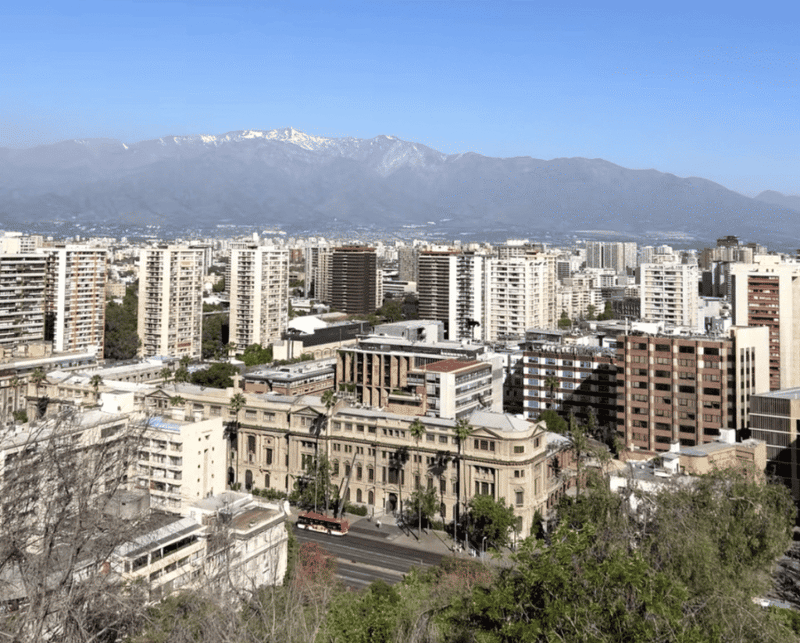
The people in the Santiago metropolitan region are divided by comuna. Based on where you live, you’re immediately labeled as a certain socio-economic class. In my first few months in Santiago, I heard about the class divide from Chileans of different classes, as well as from foreigners who’d been living in Chile for many years.
So, the stereotype for someone living in central Santiago is that they are of a low economic status. People were confused when I told them where I was staying because I didn’t fit the typical stereotype, which, from what I understood, has been in place for decades, of a person living in that comuna. I wasn’t fitting into the neat order of things; I was breaking the rules of the intense class divide that exists here.
I quickly learned of the massive social uprising that occurred in 2019; the fires set by protestors frustrated by the shockingly obvious and rigid division between the upper and lower classes. I visited the area near the Baquedano metro station, where crowds had gathered around the statue of General Baquedano (later removed after repeated damage during the unrest). And due to the level of crime and difference in modernization of certain comunas, going from one to the other can feel like entering a completely different world.
Another Side of Santiago
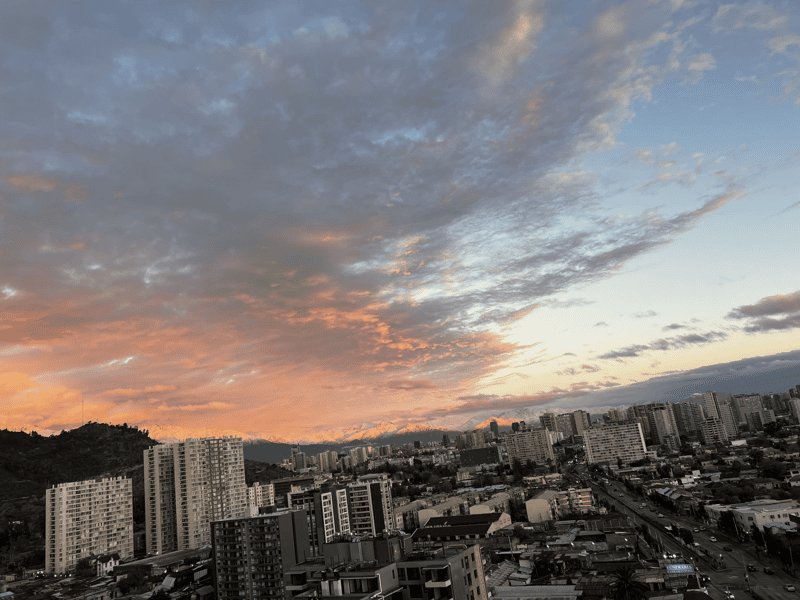
The upper-class comunas are Las Condes, Vitacura, and Lo Barnechea, to name a few. I thought of Providencia as a buffer between the less safe, older city center and the more modern and upscale comuna of Las Condes. Much of Las Condes, in my eyes, seemed sterile, with its shiny business districts that I found similar to many other big cities around the globe or in the U.S.

The advantage of living in Las Condes or Vitacura seemed to me to be the relative tranquility: more open space, more grass, more parks, and more pretty outdoor areas. One thing I found out after several months, to show the difference between comunas, is that the Lime scooters (a well-known international scooter rental brand) only operate in Las Condes and Vitacura, which I can only guess is due to safety concerns or better sidewalk infrastructure.
Other areas like Bellavista, Lastarria, and Barrio Italia have very picturesque architecture and offer wonderful options for souvenir-hunting, dining at unique restaurants or cafes, and viewing local artisanal goods. But as I heard, even areas like those are generally avoided by upper-class members of the eastern parts of Santiago (Las Condes and Vitacura). I heard from Chilean friends that the old-money upper-class society would never—quite literally never—travel farther west than the Costanera Center building, which is at the westernmost edge of Las Condes.

Different Rhythms of the City
When my brother visited me in Santiago, I was living in Las Condes. We drove directly to my place, and the following day we took the metro to visit the city center, including Plaza de Armas, La Moneda, and other historic sites. He put into words something I’d experienced many times before: it’s like entering another world. It feels more tense to walk around Plaza de Armas, having to take precautions, guard your cell phone and other valuables, etc. Then, just a 15-minute metro ride later, you can emerge in Las Condes, where it feels more relaxed, open, and safe.
And outside the business district in Las Condes, with mirrored high-rise corporate buildings, you can travel to Vitacura for a tranquil, charming feel, with low-rise buildings and beautiful homes surrounded by greenery and flower bushes. Traveling to the northeast, up to Lo Curro and Chicureo, I was in awe of massive mansions behind huge gates, among the most expensive in Chile. The economic divide is so strong that Chileans have labels for each extreme: “cuicos” are the wealthy class, and “flaites” are the lower class. As I learned and even heard for myself during my time here, they use different slang and accents. The divide isn’t just between neighborhoods; it’s between almost every aspect of life.

Seeing More of Santiago
Having spent time with a wide variety of people during my time in Chile, it was sobering to hear strong judgments from Chileans toward the opposite class. If you’re someone who’s just visiting Santiago for a few days or a week as part of a longer trip to South America or Chile, the stunning reality of the class divide may escape you entirely.
But after spending plenty of time living in and traveling between various comunas, I can say that Santiago can’t be understood fully by simply sightseeing a couple of neighborhoods. Every neighborhood brings its own historical value and modern-day significance, and the diversity of Santiago and its comunas is what makes it such a remarkable capital city.