For decades, the Farnborough and Paris air shows have been stages for blockbuster jet orders, the kind of splashy announcements that dominate headlines and send stock prices twitching. This year felt different. At the 2026 Farnborough International Airshow, the conversation among the world’s two dominant planemakers centered less on new metal and more on patience, production stability, and a shared sense that the industry simply isn’t ready to gamble on an all-new narrow-body just yet.
Both Boeing and Airbus are quietly sketching out what comes after the 737 MAX and the A320neo, yet neither company is in a hurry to say so definitively. The reasons are surprisingly aligned: overflowing order books, unresolved engine technology, and airlines that would rather see today’s jets arrive on time than gamble on tomorrow’s.
A Rare Moment of Agreement at Farnborough
It isn’t often that Boeing and Airbus sound like they’re reading from the same script, but that’s roughly what happened this week. At the Farnborough International Airshow this week, the usual noise around blockbuster jet orders took a back seat to something quieter and more telling, as executives from both Boeing and Airbus spent as much time talking about patience as they did about progress. For an event that has historically been about splashy order announcements, this year’s gathering felt more like a status update, with the two companies that build nearly every narrow-body jet flying today each thinking hard about what comes after the 737 MAX and the A320neo, yet neither seeming eager to say so out loud just yet.
The tone was set almost immediately when Boeing’s chief executive commented on the state of the market, only for his Airbus counterpart to essentially agree. Boeing CEO Kelly Ortberg told Aviation Week & Space Technology that the market for a next-generation narrowbody is less ready than it was a year ago and that the timeframe for when such an airplane will be available is moving to the right, prompting Airbus CEO Guillaume Faury to respond simply, “Perfect,” when Ortberg’s statement was quoted to him in a separate interview. That exchange, brief as it was, captured the mood of the entire show.
Boeing’s Message: Fix the Finances First
Boeing’s position going into Farnborough was refreshingly candid. Boeing CEO Kelly Ortberg said Monday that the company still needs “a couple more years” to put its finances in a position to support a new commercial aircraft program. That’s not a small caveat for a company that has spent years working through certification setbacks and manufacturing scrutiny.
Ortberg was blunt about what customers are telling him. “The market is not quite ready for the new airplane,” Ortberg said in an interview with Bloomberg Television’s Guy Johnson, adding that customers are telling Boeing to focus on the existing product and that Boeing would need “another couple years” to increase production of the 737, allowing the company to improve its positive cash flow and pay down debt. In other words, Boeing wants to stabilize before it builds, a strategy that makes financial sense even if it means ceding ground to Airbus in the meantime.
Airbus’s Roadmap: A 2030 Launch Target
Airbus, by contrast, has actually put a number on the calendar, something Boeing has been reluctant to do. Airbus CEO Guillaume Faury said the European manufacturer is targeting the launch of a next-generation single-aisle program around 2030, with entry into service in the second half of the following decade. That’s a meaningful commitment, even if it still leaves years of engineering and testing ahead.
Faury has framed the timeline as deliberate rather than rushed, emphasizing that aircraft development simply cannot be hurried without risking costly mistakes. Faury said Airbus is focused on ramping production and delivering aircraft already on order even as it prepares its next generation of commercial aircraft, describing the business as a long-term industry where it takes time to prepare the technologies, launch a program for the product and the production system, and enter into service with the airlines. Interestingly, despite the different tones the two executives struck, they pointed to broadly similar time frames once you line up the details.
Why Airlines Are in No Hurry to Order

Airline customers, it turns out, are the ones setting the pace here, and their message has been consistent. Boeing’s chief executive relayed almost verbatim what carriers have told him directly during recent conversations. The technology also has to be ready, Ortberg said, and airline customers must be ready to move on from Boeing’s current product line, adding that “the market’s got to be ready” and that customers are telling him to focus on the existing product line and see better maturity of it before moving to a new airplane.
This isn’t just Boeing’s framing of the situation either. Ortberg said airline customers are focused on improving the on-wing performance of existing engines rather than on new platforms and that he sees no reason to launch until the market is ready. Airlines have essentially told both manufacturers that reliability and delivery consistency matter more right now than a shinier, more efficient jet that won’t arrive until the late 2030s anyway.
The Backlog Math: A Decade of Waiting Either Way

Part of what explains this collective patience is simple arithmetic. Both manufacturers are sitting on order books so deep that a new jet program wouldn’t change delivery timelines for most airlines even if it launched tomorrow. As of March 31st, 2026, Airbus reported a commercial aircraft backlog of 9,031 aircraft, which based on the company’s 2026 delivery target of 870 aircraft, represents approximately 10.4 years of production coverage.
Boeing’s backlog tells a similar story of a company that is already booked for the better part of a decade. Boeing’s situation looks similar in scale, with the company’s overall order book continuing to provide approximately 10.1 years of production coverage based on current manufacturing paces and 2026 delivery forecasts. Zoom out across the whole industry and the picture only gets more stretched. Industry wide, the latest commercial aircraft orders and deliveries data from ADS showed that 16,683 aircraft were on backlog order at the end of April 2026, up 5% year on year and the highest figure ever recorded by the trade association. With queues that long, an airline placing an order today would likely wait the better part of a decade for delivery anyway, so there is little urgency to lock in a next-generation jet that does not yet exist on paper.
Open Fan Engines: The Technology That Could Decide Everything

Whatever shape the next generation of narrow-bodies eventually takes, the engine underneath the wing will likely define it. CFM International, the joint venture between GE Aerospace and Safran, used the Farnborough show to update progress on its most ambitious propulsion project yet. Ahead of the airshow, CFM announced new design and test milestones reached for the RISE program, noting that in the five years since unveiling it, approximately 500 test campaigns have been conducted on advanced engine architectures such as Open Fan, compact core, and hybrid electric systems.
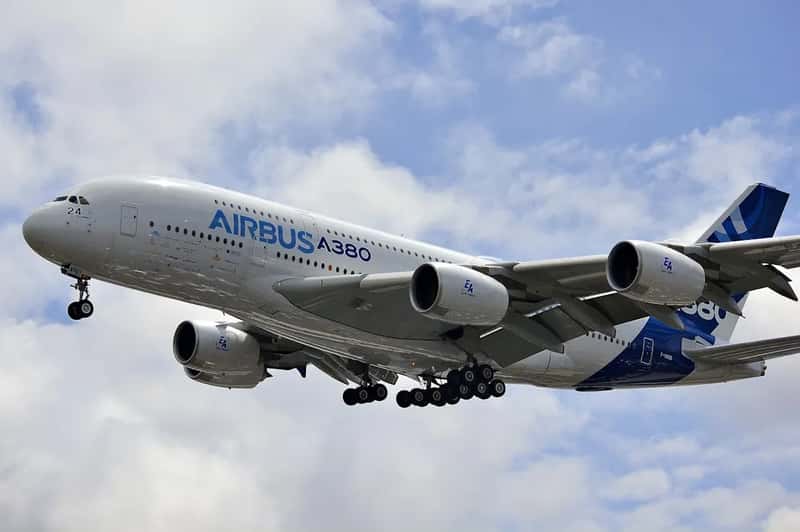
The milestone that generated the most attention was the completion of preliminary design reviews on key components. CFM International is beginning parts manufacture for the first Open Fan ground demonstrator engine following the completion of the preliminary design review for key components including the core, fan blade and outlet guide vanes, with the GE Aerospace-Safran joint venture saying more than 500 tests have been completed since the RISE program was launched in 2021. Airbus has been the more enthusiastic backer of this open fan concept, with plans to fly a demonstrator engine on a converted A380 testbed. That engine will run at some point later this decade, and separately CFM and partner Airbus will fly a product-representative demonstrator aboard a modified A380 around 2029.
Boeing’s Alternative Bets: Ducted Engines and a Bigger 737 Successor
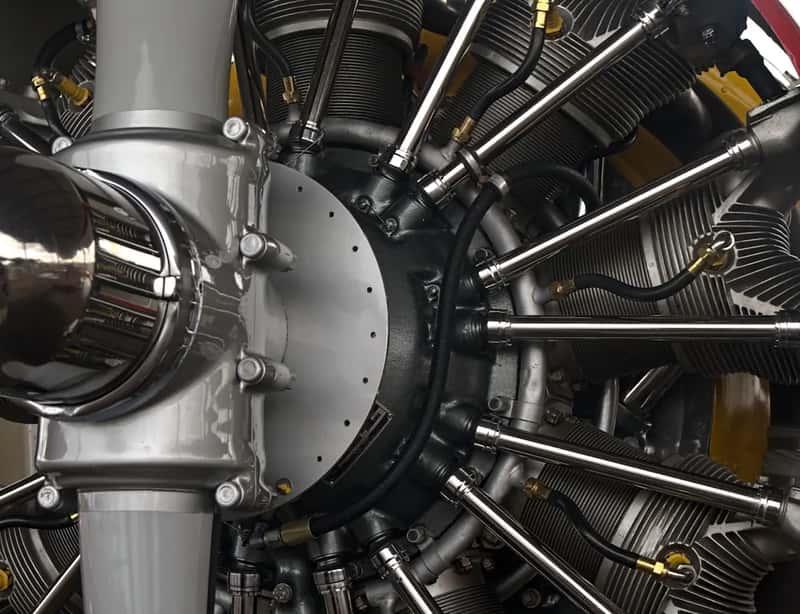
Boeing, notably, hasn’t shown the same enthusiasm for open fan architecture that Airbus has. Reports suggest the American manufacturer is charting a different technical course entirely. Reports indicate the company has little interest in adopting open-fan propulsion concepts such as the CFM RISE demonstrator, a technology supported by Airbus as a possible path for future commercial aircraft programs, and instead Boeing is said to favor ducted engine architectures, including possible future developments derived from RISE technology.
There are also signs Boeing is thinking bigger than a direct 737 replacement, aiming instead at the larger end of the single-aisle market where Airbus’s A321neo has dominated. While one report described the aircraft as a possible successor to the 737, the concept appears more closely aligned with the larger end of the market currently dominated by the Airbus A321neo, with the report suggesting Boeing’s future family could begin near the size of today’s 737 MAX 10 before expanding into additional variants. Engineers are also reportedly exploring more exotic airframe concepts alongside conventional layouts. One is the Transonic Truss-Braced Wing, a high-efficiency design with ultra-slender wings supported by trusses.