Most people assume an RV park host sizes you up by your rig. The size, the shine, the price tag. But the real verdict often lands before you even shut the engine off, somewhere between the gate and the gravel pad.
Hosts watch rigs roll in all day long, and the way you steer, stop, back up, and climb out of the cab can read like a résumé. It shows your experience, your stress level, and how the weekend might go for the neighbors. Some of these tells are funny, some are costly, and a few are surprisingly kind. The one at #1 is the sign hosts trust most, and it is not what you would guess.
#16 – The Walking-Pace Crawl at the Gate Gives Away a First-Timer
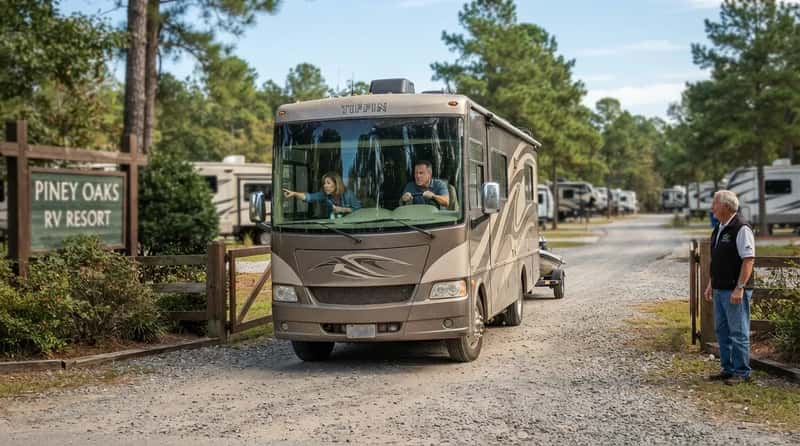
A rig creeping through the entrance with a white-knuckled driver usually means one thing: this is new. The tell is not the slow speed, because careful veterans crawl too. It is the jerky stop-and-go, the wide hesitant turns, and the passenger leaning forward as if that helps.
Hosts see this often, because every season brings new owners who just bought their first camper. Many walk out to greet these arrivals on purpose. A friendly face at the site can turn a shaky first night into a good story instead of a bad memory.
At a Glance
- Jerky stop-and-go instead of a steady, slow roll
- Wide, hesitant turns at the very first corner
- A passenger acting as lookout with no clear signals
- Repeated glances at the site map or a phone
- Usually ends with a host walking out to help
#15 – The Rig Parked Across the Entrance Lane While Checking In
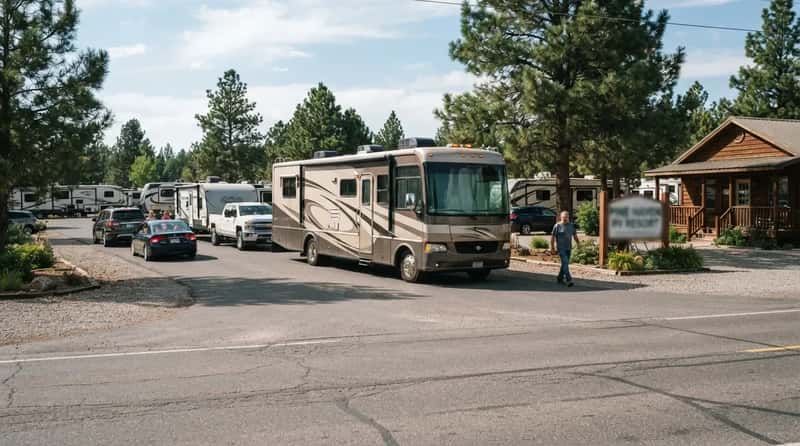
A rig stopped dead in the middle of the road tells a host a lot about how this guest sees everyone else. It happens most on busy Friday afternoons. Behind that one rig, other campers sit idling with tired kids and a long drive behind them.
Experienced travelers pull into a designated check-in spot or ask first, then walk to the office. Hosts quietly notice who does that. Many say it predicts who will also respect quiet hours and speed limits.
#14 – The Driver Who Looks Up Before Turning In Is Secretly a Veteran
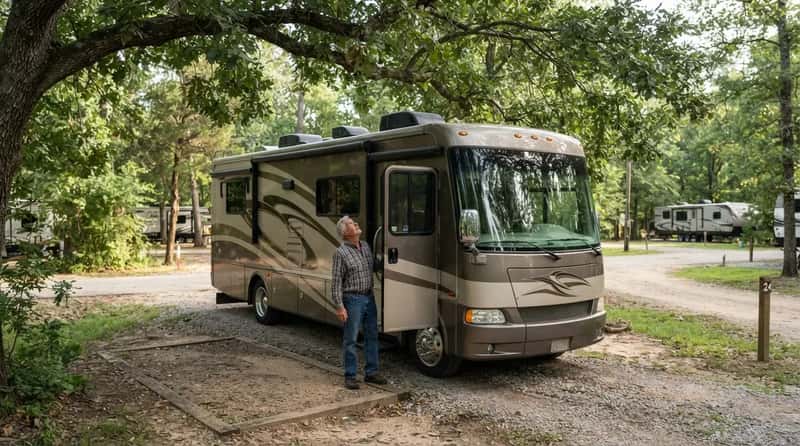
Low branches are among the quiet roof-killers of campground life. A limb scraping across a roof can tear a vent cover or crack an air conditioner shroud. Newer drivers watch the ground and the mirrors. Experienced ones scan the tree line too.
Here’s the part most people miss: hosts often know exactly which sites have the nasty limbs, because they have seen the aftermath. When a driver steps out and looks up before committing, the host relaxes. That is someone who is not about to start a damage-report conversation.
#13 – Hand Signals, Radios, and the Couple That Never Argues
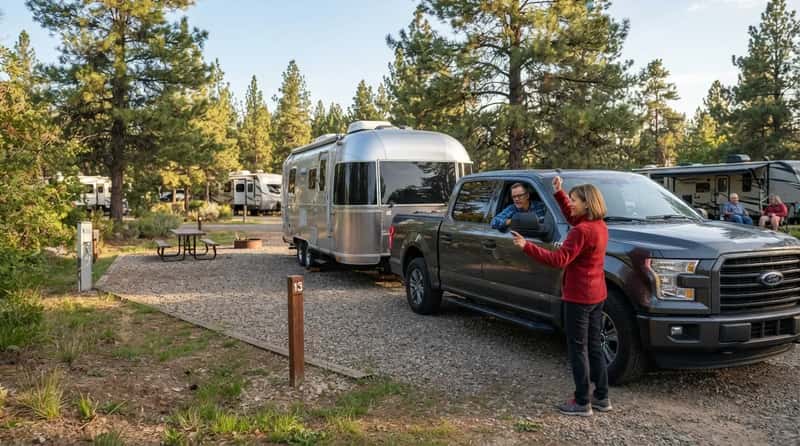
Backing a trailer into a site is famous for testing relationships, and hosts can spot the couples who have a system. One person stands where the driver can see them, and the signals are simple. A raised fist means stop. Nobody yells across a parking lot.
Some couples use two-way radios or a phone call instead. The quietest backing job is usually the best one. The loud ones tend to end with someone sulking by the picnic table while the other pretends to adjust a hose.
#12 – The Swung-Wide Tail That Clips a Pedestal
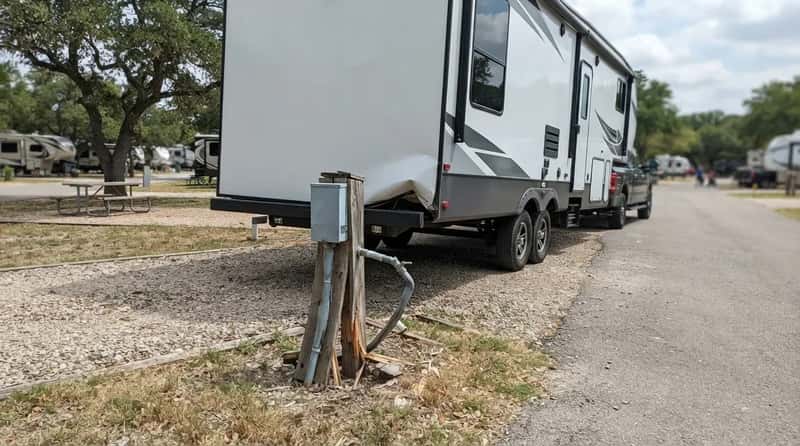
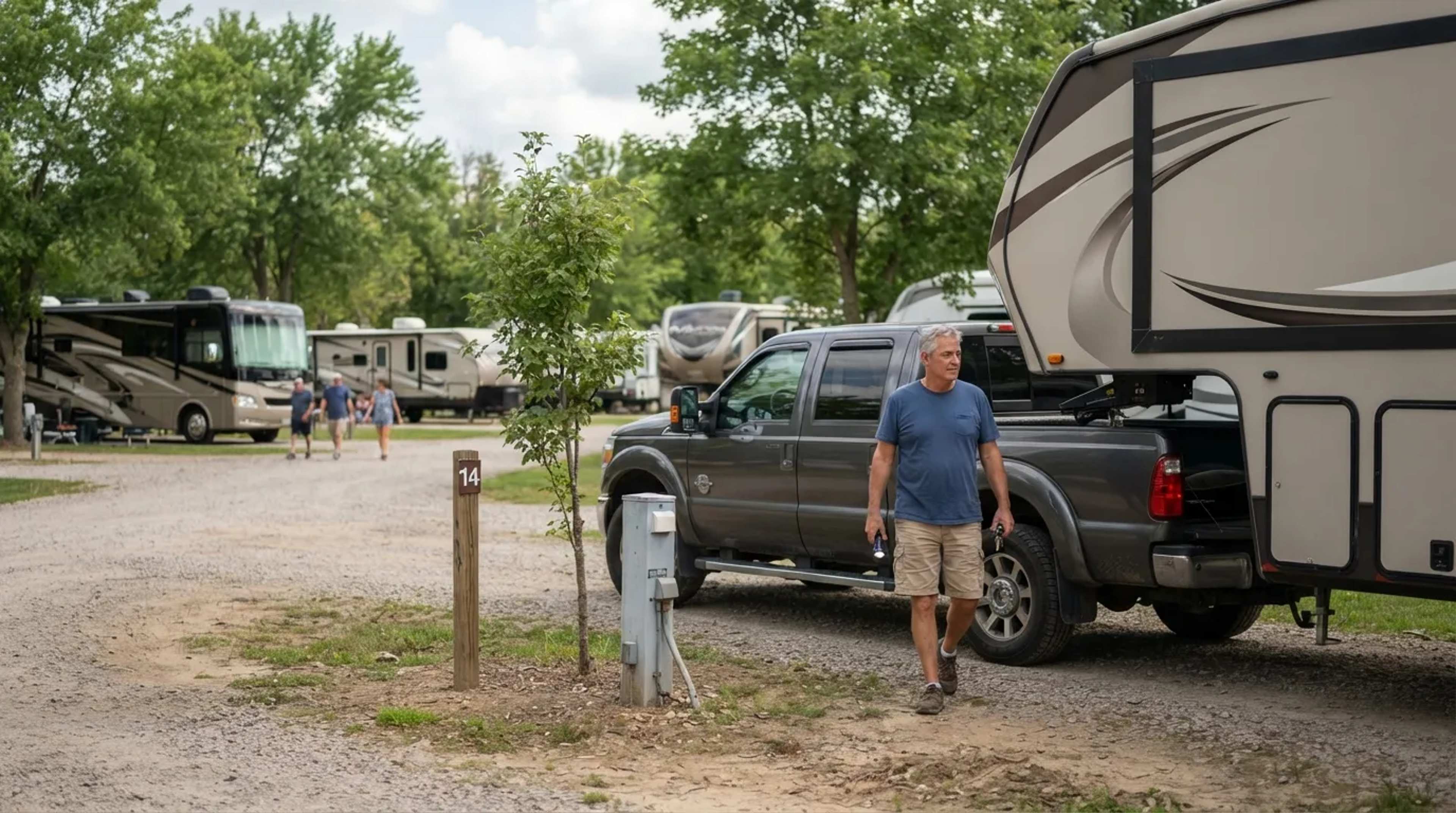
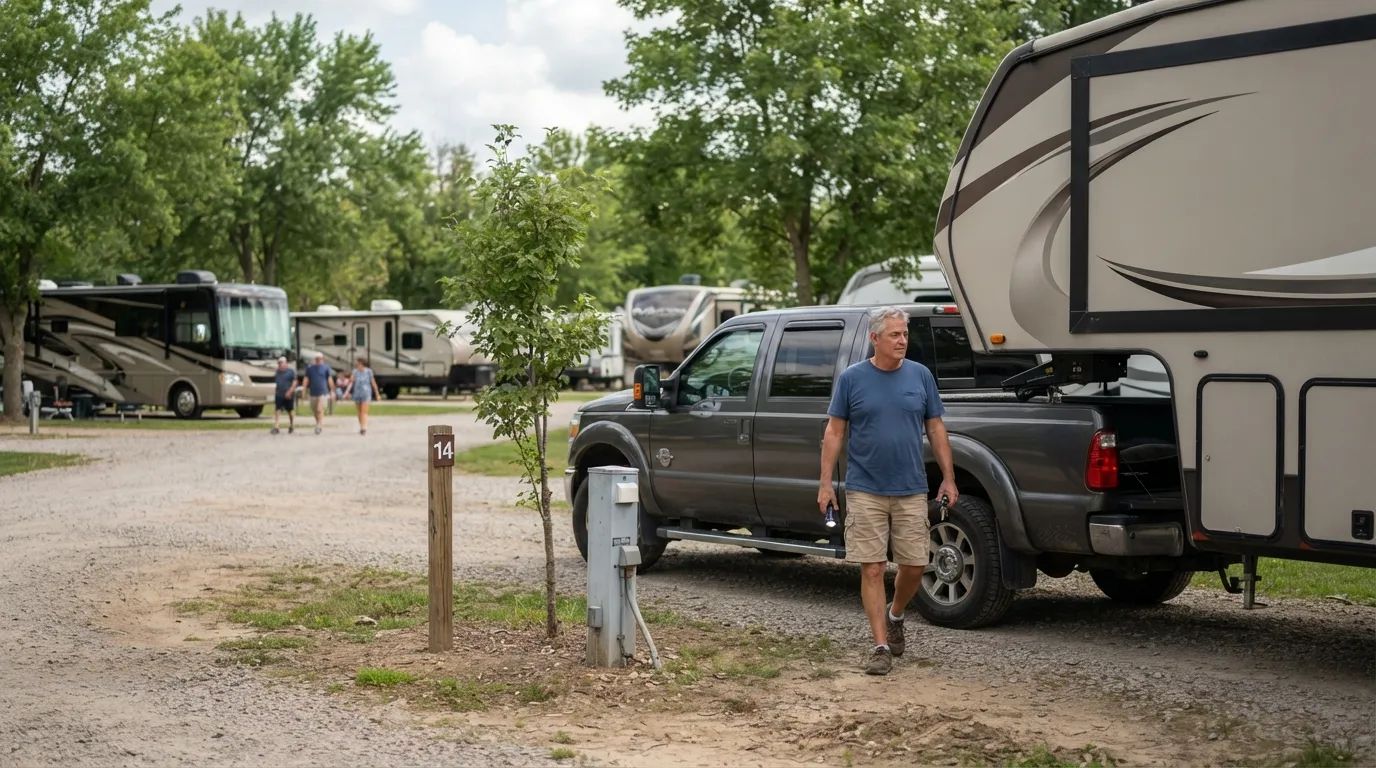
When a long trailer turns tightly, the back end swings out in a way drivers often don’t expect. Hosts walk sites after check-in and sometimes find the evidence: a bent water spigot, a cracked post, a pedestal knocked crooked. The mistake usually happens in the first thirty seconds.
Veterans make wider approaches and use the whole road before turning in. They also pause and get out to look. It is rarely careless. The tail is simply invisible from the cab, and it only takes one corner cut too tight.
Quick Compare
- Tight turn: the tail swings wide, and posts and pedestals pay for it
- Wide approach: the full road gets used, then the rig slides in on a clean line
- Get out and look: a short walk beats a repair bill every time
#11 – The Hookups Facing the Wrong Way
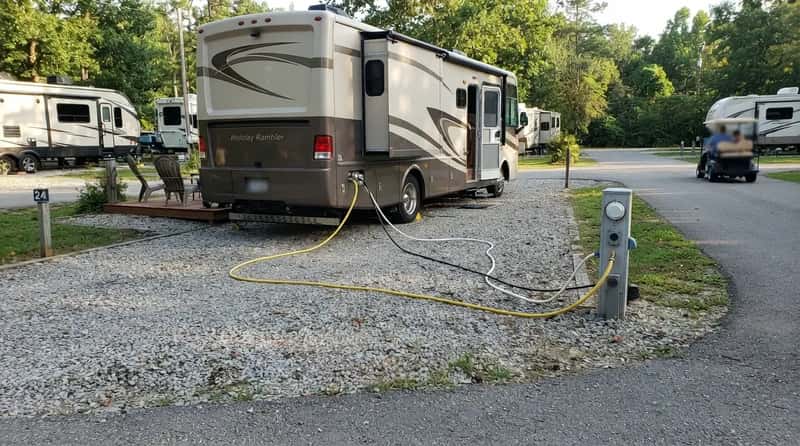
Water, power, and sewer connections sit in different spots on every rig. A driver who backs in the wrong way ends up with cords stretched across the site and a sewer hose that doesn’t quite reach. Hosts can spot that setup from the road.
The fix is often easy. Many parks stock extension hoses and adapters, and some sell them at the office. Veterans, though, check the site layout first and pick the approach that puts their utility side near the pedestal.
#10 – Chocks and Leveling Before Anything Else
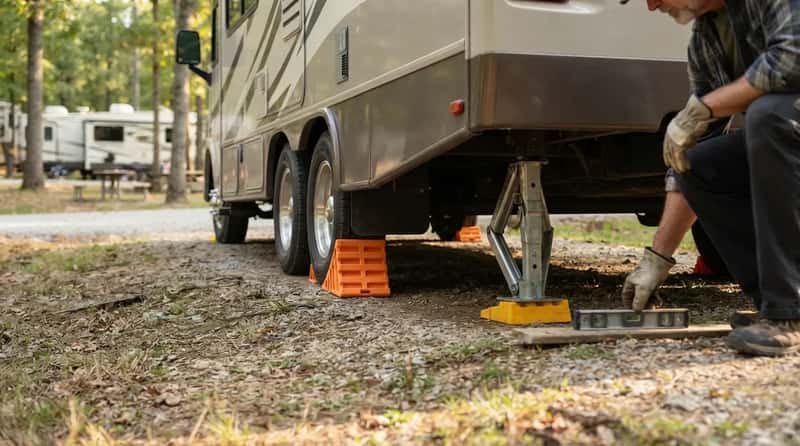
Watch what an experienced RVer does right after parking. They level the rig, chock the wheels, and set the stabilizers. Only then do they hook up. Hosts say that order is a reliable sign of someone who has done this many times, while newer campers tend to dive into hookups and save the leveling for later.
It matters for more than comfort. Many RV absorption refrigerators need to be close to level to work properly, so a slanted rig can mean a warm fridge and spoiled groceries by morning. An unchocked trailer is also a safety problem on any slope, and hosts have seen that go wrong.
#9 – The Awning Cranked Out on a Windy Afternoon
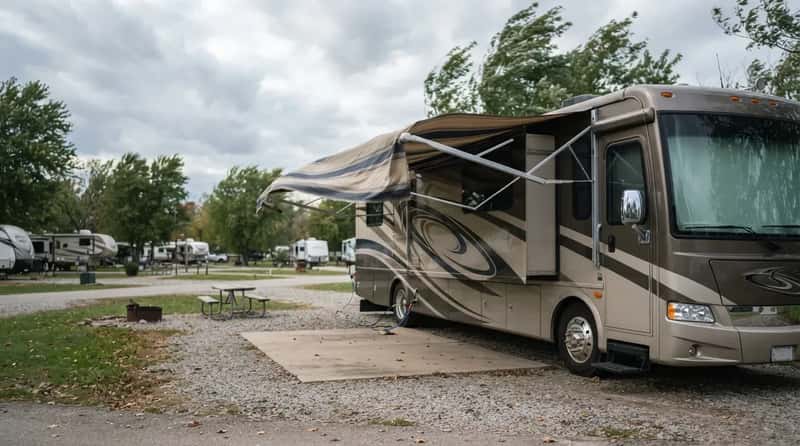
Hosts wince when an awning goes out in gusty weather. It looks welcoming, but wind is one of the biggest enemies of awnings. A sudden gust can bend the arms or tear the fabric, and some of the worst damage happens while the owner is inside or away.
Seasoned campers hold off in questionable weather, and they roll the awning up before leaving the site for the day. It is one of those habits people don’t value until they have paid for a repair. Hosts hear the same story every windy season.
#8 – The Crooked Park Job With the Truck Sticking Into the Road
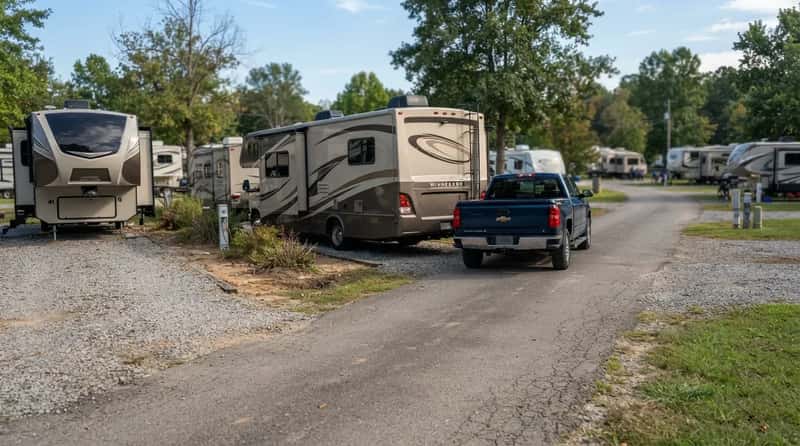
Sites have boundaries for a reason. A rig angled across the gravel, or a pickup left with its tail in the lane, creates problems for the next arrival. Emergency vehicles and delivery trucks also need room to pass.
Some hosts argue this is the clearest preview of how a guest will behave all weekend. If someone can’t be bothered to straighten out their parking, they say, expect shortcuts on trash, pets, and noise. Fair or not, plenty of hosts notice this before they notice rig size.
#7 – The Motorhome Unhooking Its Towed Car in the Middle of the Lane
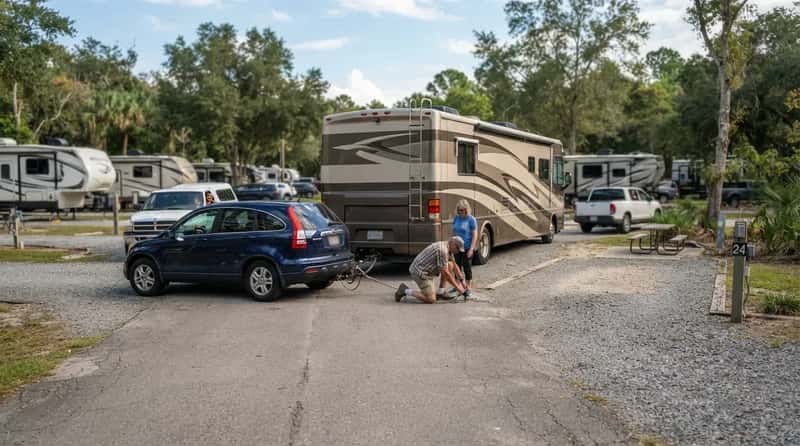
Many motorhome owners tow a car behind them, and hosts can tell who has a routine for unhooking it. The prepared ones pull into the site first, then disconnect. The unprepared ones stop wherever they are, with the whole rig strung out behind them.
That can mean blocking a road for ten minutes. A motorhome plus a towed car can be far longer than the site it is headed for, and hosts take that into account when they assign spots. A good arrival plan gets the unhooking done where it won’t trap anyone.
Worth Knowing
- The towed car adds to your total length, so tell the park about it when you book
- Pulling into the site first lets you unhook off the road
- Some parks have a spot near the office where you can unhook out of traffic
- A long pull-through site can make the whole routine far easier
#6 – The “Big Rig Friendly” Booking That Wasn’t
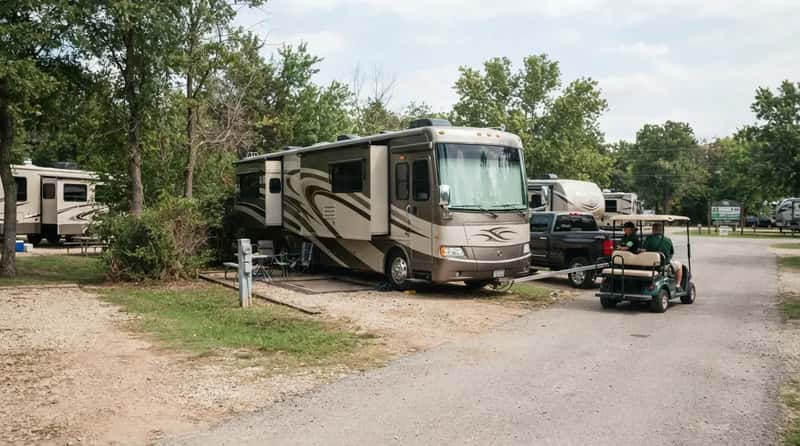
Hosts and seasoned travelers agree on one thing: measure your whole setup before you book. A 40-foot rig squeezed into a smaller site tells a host that the listing got skimmed. “Big rig friendly” may be the most stretched phrase in RV travel, and the comments on that opinion tend to get heated.
Often the gap is in the fine print. Site length may not include the tow vehicle, the hitch, or the slide-outs. A rig that fits on paper can still leave no room for the truck, and hosts end up reassigning guests mid-arrival, which is stressful for everyone.
#5 – Plugging Straight Into the Pedestal With No Surge Protection
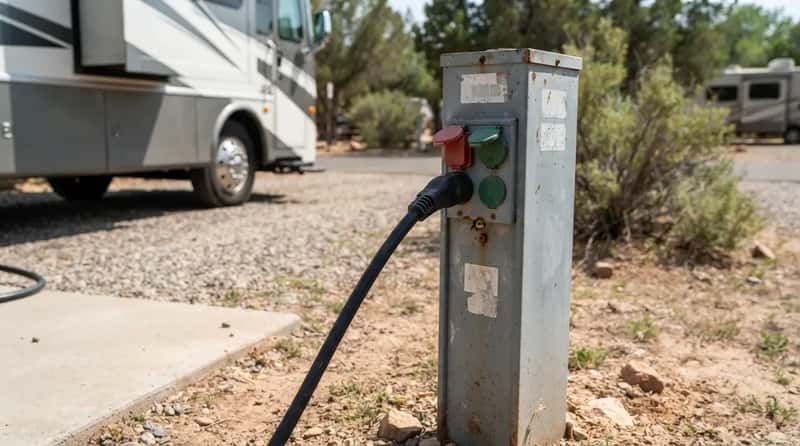
Hosts notice who walks up to the pedestal with a surge protector or energy management device and who just plugs in. Faulty pedestals are a fact of campground life. Wiring can be miswired, worn, or overloaded, and RV electronics are expensive to replace. Veterans test before they trust.
It is also about matching the amp service to what the rig needs. The wrong adapter, or running everything at once, can trip breakers fast. Newcomers often learn after the first tripped breaker, and some learn after a pricier lesson.
#4 – Slides Out Before Checking Clearance
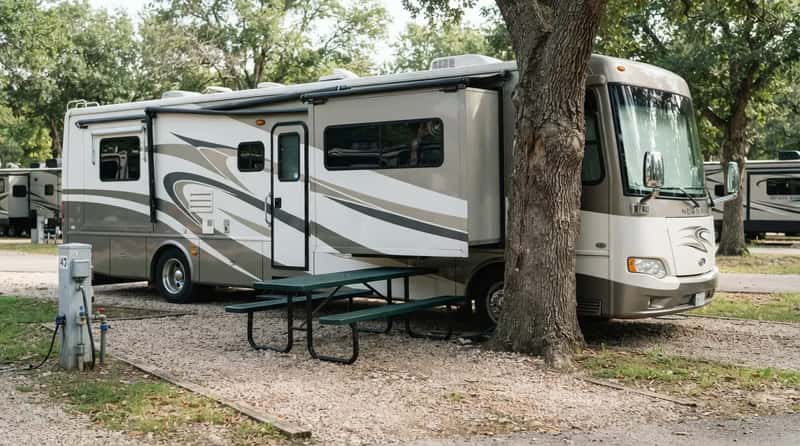
Some drivers push the slide-outs the moment they stop. Then they discover a tree trunk, a neighbor’s picnic table, or a utility box in the way. Slide-outs can extend several feet, and they catch on things that were never visible from the driver’s seat.
They can also snag awning arms and trim. A slide-out meeting a post can mean a costly repair. Experienced campers walk the perimeter first, checking the ground, the overhead space, and the gap to the next site. It takes under a minute.
#3 – The After-Dark Arrival With High Beams and a Backup Beeper
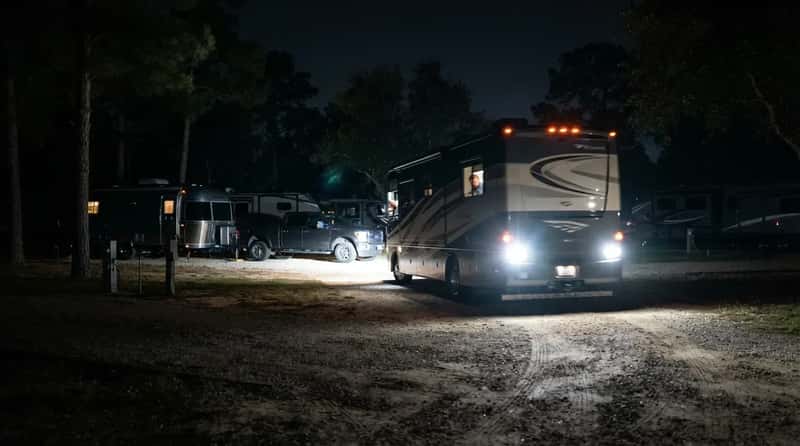
Late arrivals reveal a lot. Hosts say the courteous ones cut their headlights quickly, use a flashlight, and keep their voices low. The inconsiderate ones park with high beams sweeping across sleeping rigs and a backup alarm going off at 10 p.m.
The rig matters less than the manner here. Many parks set quiet hours, and a late arrival is the first test of them. A host who hears a loud idle in the dark often makes a mental note for the next morning.
#2 – The Calm, Wasted-Motion-Free Setup of a Full-Timer
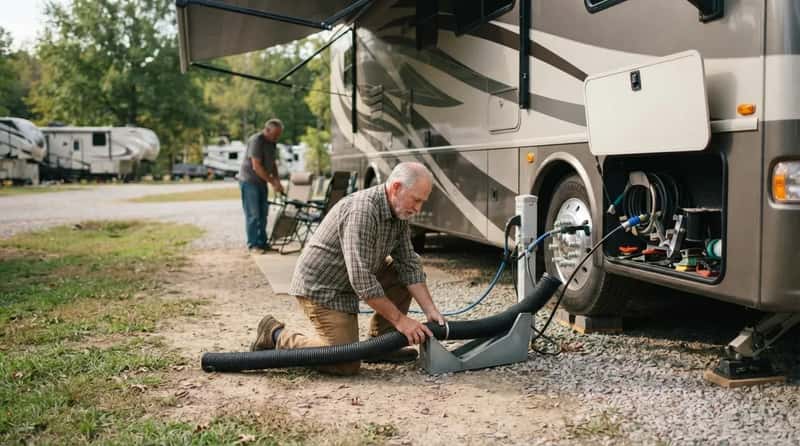
Some parkers don’t look like vacationers at all. They park, level, hook up, and finish in a calm, practiced sequence. Nobody checks the manual. Nobody asks where the sewer connection is.
Hosts often read that smoothness as a sign of someone living on the road, not just visiting it. These guests tend to know the unwritten rules and keep to them, and they often become the quiet backbone of a park. Newcomers could learn a lot just by watching them.
Why It Stands Out
- Every step happens in the same order, every time
- Hoses, blocks, and adapters live in one easy-to-reach spot
- Voices stay low, and nobody shouts directions
- The whole setup looks almost boring, and that is the point
#1 – Pulling Forward and Starting Over Without Embarrassment
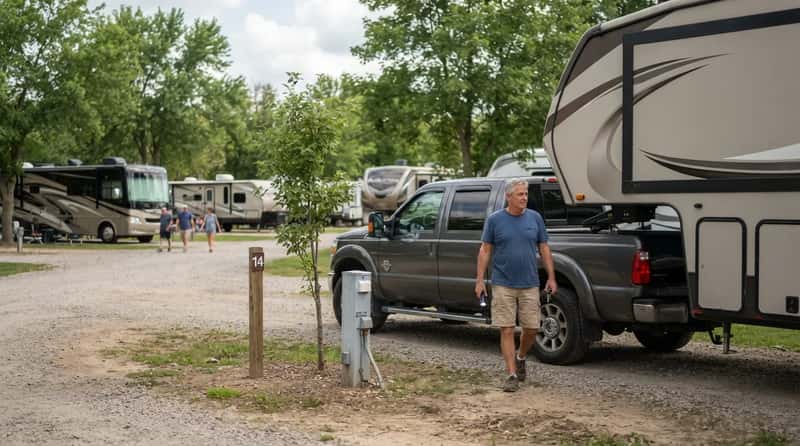
The strongest sign of an expert isn’t a flawless first backing attempt. It’s the driver who stops, pulls forward, and resets without a flinch. RVers have a phrase for it: get out and look. Hosts say it is the habit they trust most.
Here’s the truth: the most experienced campers often take the most tries. They know a third attempt costs nothing, while a rushed one can cost a pedestal or a fender. Hosts remember the calm ones for years. Pride is the real hazard in any RV park, and the veterans left theirs at the gate.
Parking an RV is a public performance, and hosts have a front-row seat. The slow crawl, the blocked lane, the clipped pedestal, and the late-night beeper all tell a story. But the best signals turn out to be small ones, like looking up, checking clearance, and resetting without ego.
Next time you roll into a campground, remember that someone is probably watching. They are not waiting for you to fail. Most of them are quietly hoping you do it right, and ready to help if you don’t. Which parking habit do you think gives people away fastest? Drop it in the comments.