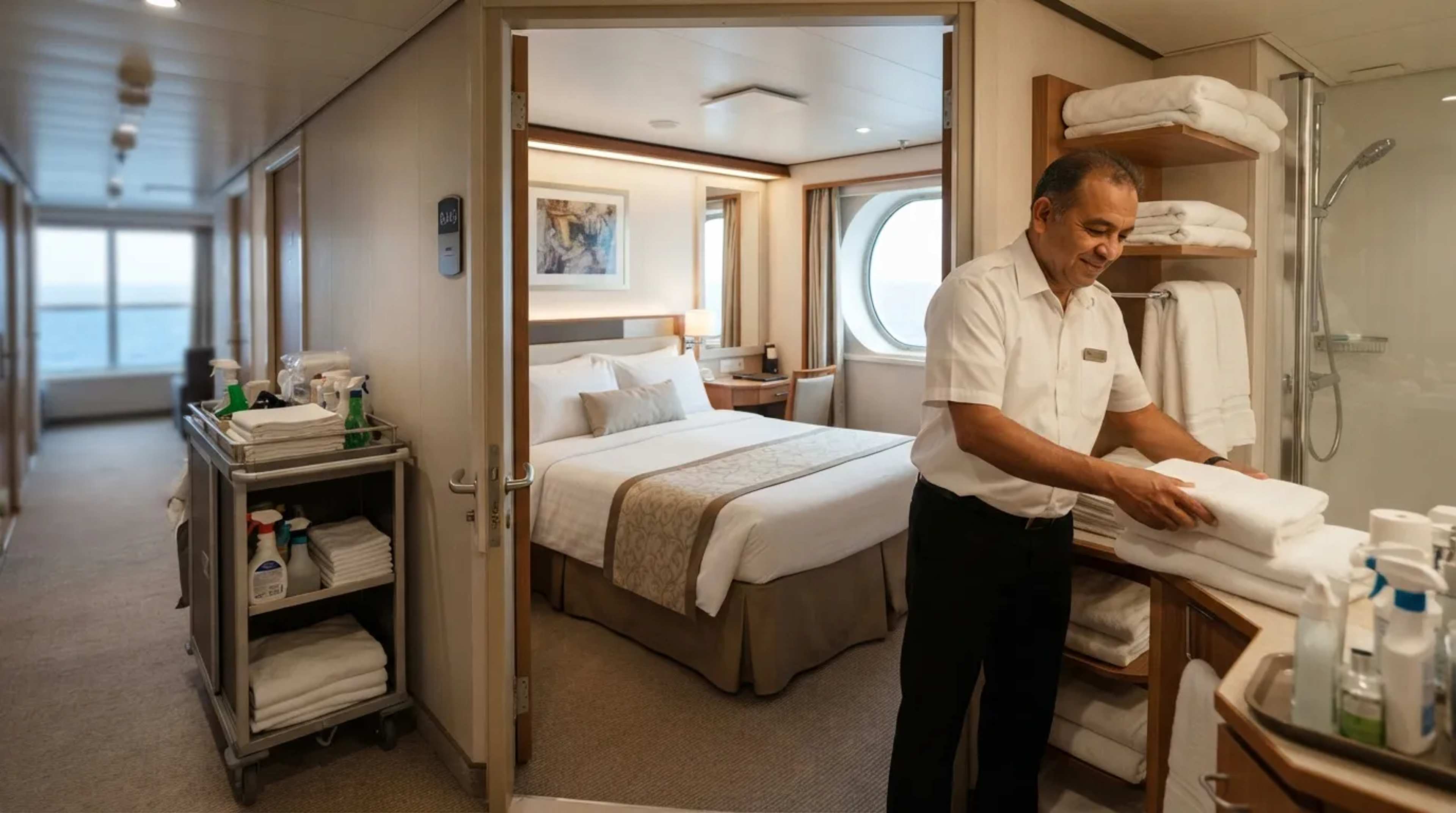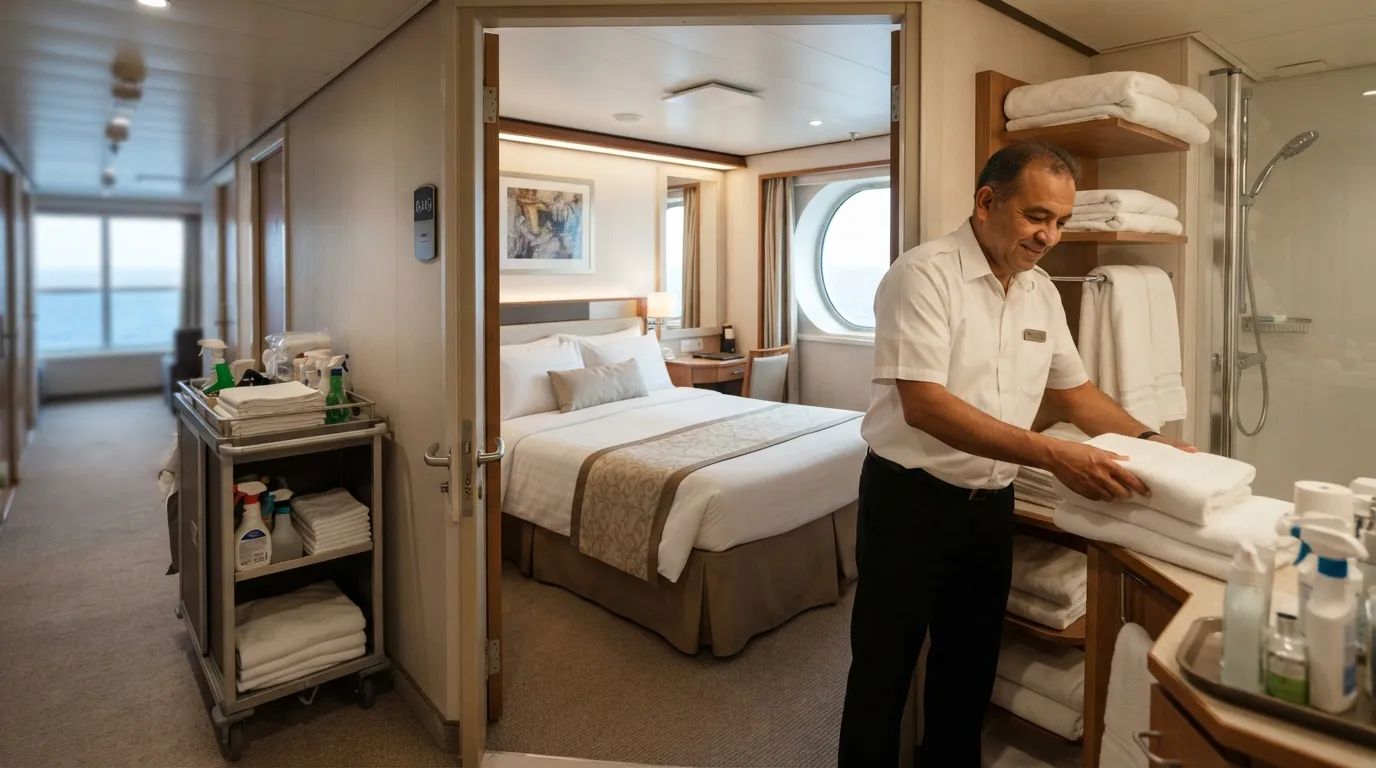
You probably assume the person who makes your bed barely notices who’s sleeping in it. Crew accounts suggest the opposite. A cabin steward can read a room in about the time it takes you to find the bathroom light switch, and a damp towel, a watch by the sink or a suitcase left open can say more than you’d ever guess.
It sounds like a stretch until you see what they’re looking at. Some of these conclusions are practical, a few are a little awkward, and one of them has nothing to do with your towels at all. Here’s what stewards reportedly pick up before you’ve even had your coffee.
#15 – The Bed Request That Quietly Wrecks a Steward’s Whole Shift
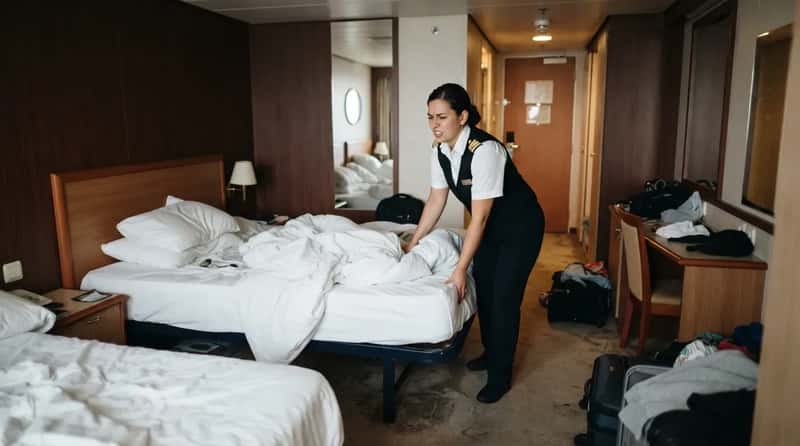
One skipped step can tag you before you’ve said a word. Cruise outlets citing crew accounts say stewards notice which guests never pre-requested their bed setup. Those cabins get a mental flag: likely to ask for changes on day one.
The reason is practical. A guest who boards and asks to rearrange the furniture mid-setup is described as one of the most disruptive moments of a steward’s shift. One furniture request at the wrong time can throw off a steward’s whole route. Experienced cruisers settle it before boarding, so nobody has to improvise.
But that’s nothing compared to what your suitcases say about you in #14…
#14 – The Open Suitcase That Gets You Tagged as “High-Maintenance”

A cluttered cabin is a loud message. Cruise-industry coverage of crew accounts says a room buried in open suitcases signals a guest who may need more hand-holding, and more of the steward’s time.
The bolder claim is that experienced stewards can predict a passenger’s whole week from how the cabin looks at first turndown. Bags still blocking the aisle on day two can reportedly earn you a mental label. Plenty of cruisers will push back on that. Messy isn’t the same as demanding, and many stewards surely see it that way too.
But what stewards say about valuables left in plain sight is even more awkward, and it’s next…
#13 – The Watch and Cash Left on the Nightstand
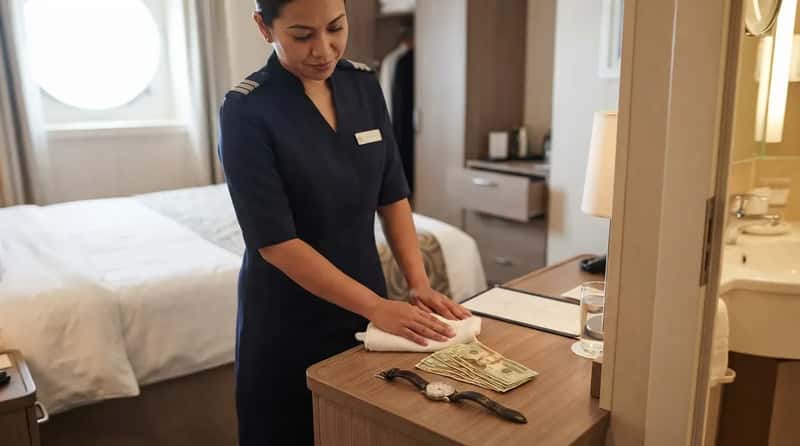
This one makes stewards visibly uneasy. Crew accounts say valuables left in the open put everyone in a bad spot. Cleaning a room with cash on the nightstand or a watch by the sink is described as stressful.
Their conclusion is blunt: you either trust the room or you don’t. Leaving valuables out tells them you haven’t thought about it, and it puts them under suspicion if anything goes missing. Storing them in the dresser, closet or in-room safe is the cleaner move. It’s a two-minute fix.
Quick Compare
- Left on the nightstand: the steward cleans around it nervously, and any later mix-up gets awkward fast.
- Tucked in the safe or dresser: nothing to explain, nothing to worry about.
- The difference: about two minutes of effort for you, and real peace of mind for both sides.
Next, the bathroom gives away something you’d never think to hide…
#12 – The Damp Towels That Reveal Your Exact Shower Schedule
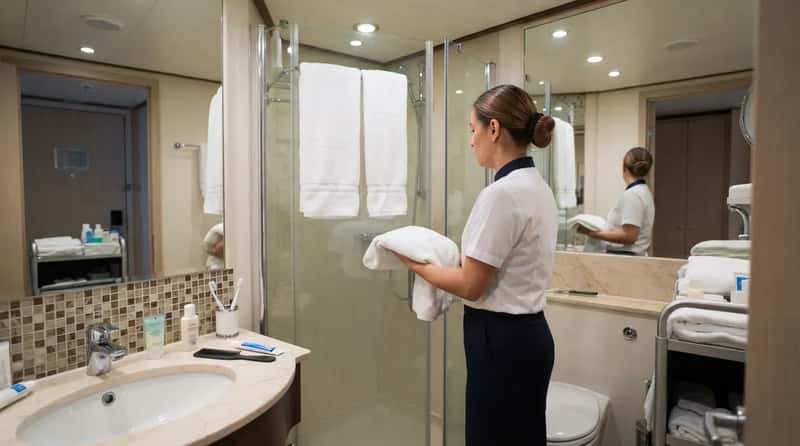
Your bathroom keeps a timetable, and the steward reads it. Damp towels show what time showers happen without you saying a word. After a few mornings, that’s a pattern.
The counter tells its own story. Skincare and grooming products hint at a routine your steward will quietly build service around. Your steward may be timing your restocking to your habits before you’ve even noticed. It’s service at its best when you never see it happen.
Speaking of signals, there’s one on your door that most guests misread…
#11 – The Do Not Disturb Sign Is Actually a Scheduling Message
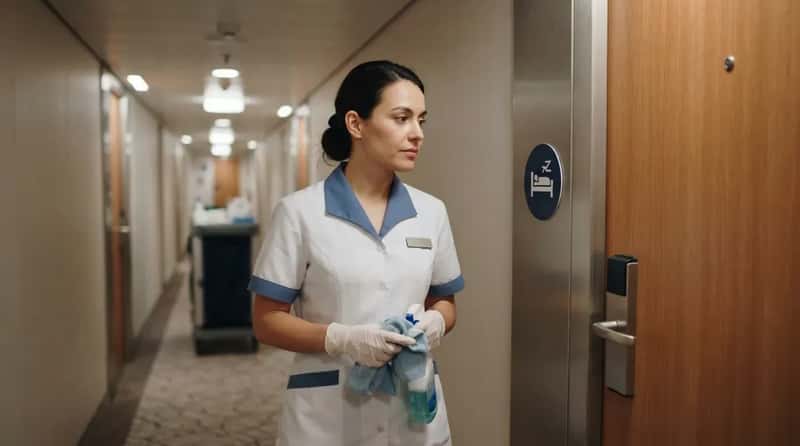
Most guests treat it as a “go away” sign. Stewards treat it as information. Guests in standard cabins can choose whether they want the stateroom attended to in the morning or the evening.
Cruise outlets also note that ships have a magnet, sign or button that tells stewards you’re resting. A sign that stays up all day tells a steward you’re a late riser, a napper or a “do it while I’m at dinner” type. They adjust, and the bed gets made at a time that suits you.
But the next one involves a piece of paper that surprises a lot of passengers…
#10 – The Paper Daily Planner Nobody Leaves Anymore
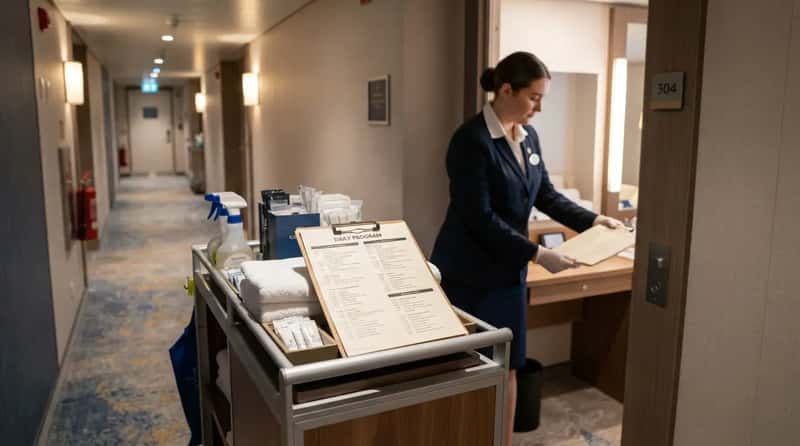
On app-only ships, a printed schedule has become a quiet request. Since most ships now push everything through an app, cabin attendants no longer leave a paper planner by default. If a guest wants one, it shows up.
What the steward concludes is the interesting part. According to one cruise outlet, it marks a guest who trusts paper and routine more than screens, which changes how the steward communicates all week. That can mean fewer app notifications and more face-to-face updates. One small ask can change the whole rhythm of the service.
At a Glance
- The default: on app-only ships, no paper planner appears on its own.
- The ask: request one, and it gets delivered.
- The read: the steward pegs you as a paper-and-routine person.
- The result: more in-person updates, fewer screen pings.
And what stewards notice on your desk can say even more, as #9 shows…
#9 – The Framed Photo That Comes Out Before the Clothes
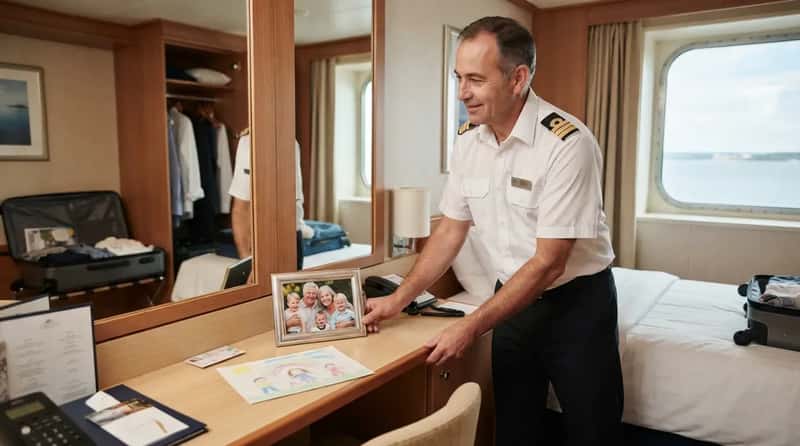
Unpacking order is a tell. Some guests reach for framed photos, grandkids’ drawings or a small memento before anything else comes out of the bag. Stewards say they spot that almost instantly.
The conclusion? This cabin is going to feel like home fast. A steward who learns the names of a guest’s grandchildren tends to remember that guest fondly for the rest of the voyage. A single framed photo can open a conversation that no “How are you?” ever would.
Then there’s the garment bag, and it divides opinion in #8…
#8 – The Garment Bag That Proves Formal Night Isn’t Dead
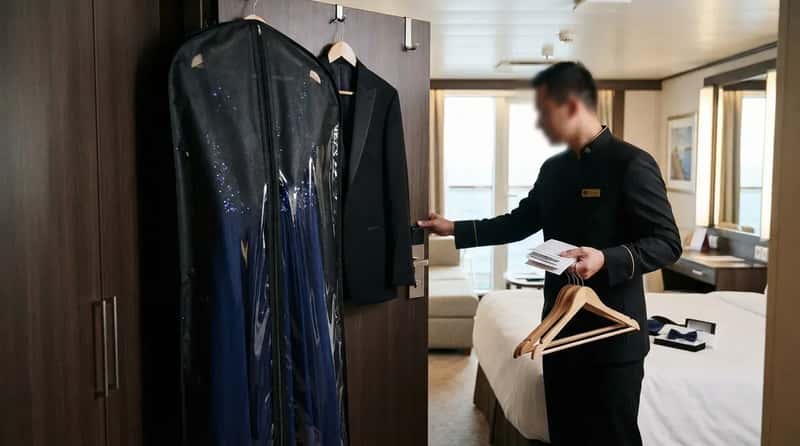
Here’s a hot take: formal night is fading, and plenty of guests won’t admit it. It has quietly turned optional on most ships, but stewards notice exactly who still cares. Some cruisers love that. Others say the dress-up tradition was half the fun.
The morning service gives it away. On ships with a classic dining room or formal night tradition, stewards see which guests send out garment bags for pressing and ask for extra hangers for suits and gowns. A cabin with a pressed gown on the closet door tells a different story from one with flip-flops by the balcony. Stewards just read the difference.
But not every request is about fashion, and the next one is more personal…
#7 – The Quiet Requests Stewards Handle Without a Word
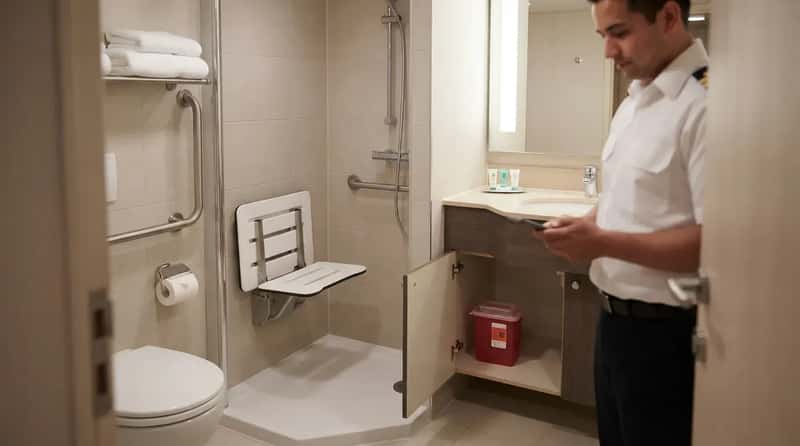
Some of the most important things stewards do never get mentioned. Many cabin bathrooms already have sharps containers under the sink, and stewards can bring one on request just as easily as a shower seat. They keep a mental list of who needs what.
They also restock without making a fuss, so no guest feels singled out. These requests are routine, and stewards reportedly handle dozens each week. Cruise coverage adds that notifying the cruise line before sailing typically gets accommodations installed before you board.
Worth Knowing
- Many cabin bathrooms already have a sharps container under the sink.
- A steward can bring one, or a shower seat, on request.
- Telling the cruise line before sailing usually means it’s in place when you board.
- Restocking is done quietly, so nobody feels singled out.
Next, something as small as a ribbon can solve a surprisingly common problem…
#6 – The Ribbon on the Door That Fixes the Wrong-Cabin Problem
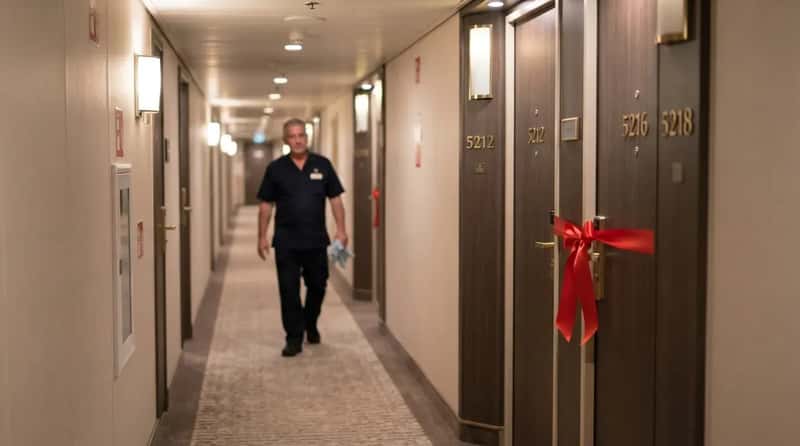
Long cruise corridors all look identical. Stewards notice within the first evening who hesitates at the wrong door, and many quietly suggest a ribbon or small decoration. It’s a hallway scene played out on ships everywhere.
The fix is cheap and it works. It’s also one of the most common quiet requests on embarkation day. The steward’s conclusion: this guest wants help, and it’s easier to give it before frustration sets in. A ribbon or magnet takes seconds. A lost guest at 11 p.m. takes much longer.
And then there’s what your cruise history says about you, which is #5…
#5 – The Loyalty Tier Stewards Check Before Touching Your Bags

Repeat cruising leaves a mark on how a room gets handled. Decades of sailing can quietly reshape how a steward approaches a cabin before a single bag is unpacked. Loyal guests tend to arrive with expectations, and stewards know it.
It sounds unfair, but it’s how service often works. Stewards are said to adjust their approach for guests who know the routine. Veterans tend to ask for what they want clearly and early. Newcomers can do the same, and it often gets them the same treatment.
But the way you ask matters more than you’d think, as #4 shows…
#4 – The Thirty-Second Question That Stewards Remember
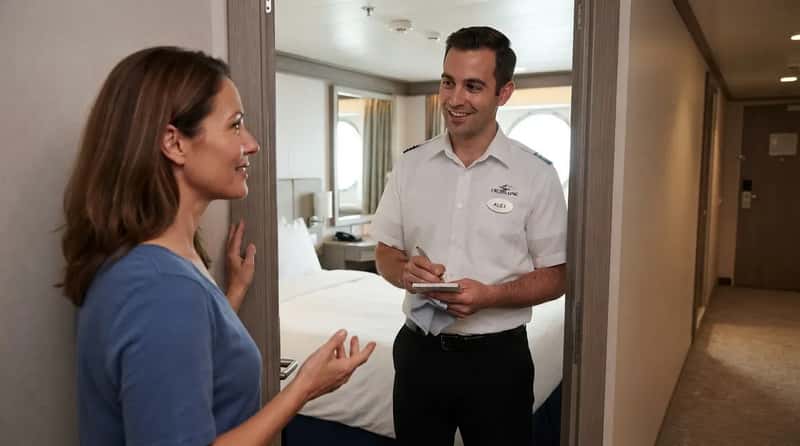
It’s not the big gestures that stick. What cabin staff remember are quick, genuine moments. One example from a cruise outlet is asking how best to reach them if you need something.
That small question tells the steward you see them as a person, and it takes thirty seconds. Guests who open with a clear, friendly request are said to get a smoother week than those who leave notes or complain to the front desk. The tone of that first exchange often sets the tone for everything after it.
Why It Stands Out
- It costs you about thirty seconds and nothing else.
- It treats the steward as a person, not a service button.
- A friendly, direct ask beats a note left on the pillow or a complaint at the front desk.
- That first exchange tends to set the mood for the whole week.
Now for the gesture stewards say almost nobody makes anymore…
#3 – The Handwritten Thank-You Note Stewards Keep
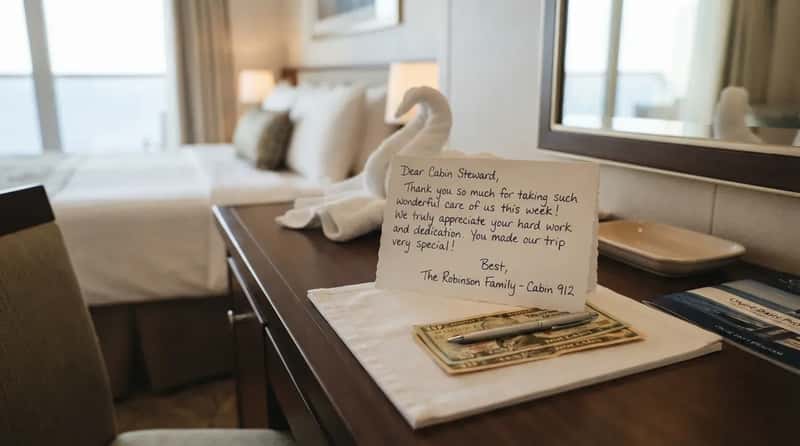
In an age of online survey scores, a paper card means something. Cruise coverage says stewards can keep the physical card long after the cruise ends, unlike an anonymous online rating. It’s a tangible record of a job done well.
Tipping early and in cash gets a similar reaction. One cruise outlet says stewards notice instantly because it’s rare now. A note and an early tip can reportedly change how a steward remembers you. Whether it should matter this much is something cruisers love to argue about.
But the money question is where the real debate begins in #2…
#2 – The Automatic Gratuity Math Every Steward Knows
Here’s an opinion that splits cruisers: tipping on top of automatic charges shouldn’t be necessary, yet many think it’s the right thing to do. One veteran travel writer notes that stewards receive a share of the daily service charge, but still argues you should give them something extra. Others say cruise lines should simply pay more.
The numbers keep creeping up. Carnival raised its daily gratuity to $17 per person for standard cabins starting April 2, 2026. Holland America followed with $18 per person from June 1, 2026. Some lines, including Virgin Voyages, Regent and Seabourn, don’t encourage tipping at all. Those crews are reportedly higher paid and not tip dependent.
And the last one is the conclusion stewards say matters most of all…
#1 – The Moment You Stop Being a Room Number

Everything above points to one idea. Stewards say small personal touches are the fastest way a passenger stops being a room number and becomes a person. That’s the part no brochure mentions.
Travel coverage backs it up. These small interactions often shape how guests remember their vacation, because great service is as much about people as it is about clean sheets. The morning service takes minutes, but what happens in it can color the whole trip. The steward is reading you, and you’re reading them right back.
None of this comes from a formal survey. It comes from cruise outlets and crew accounts, so think of it as a peek behind the cabin door, not a rulebook. Still, the themes repeat: clear requests, early notice and small courtesies seem to help most.
And the reading isn’t meant to judge you. It’s how a stranger gets your week right. So the next time you walk back to a made bed and fresh towels, remember that someone took in your whole morning at a glance, and quietly built your day around it.