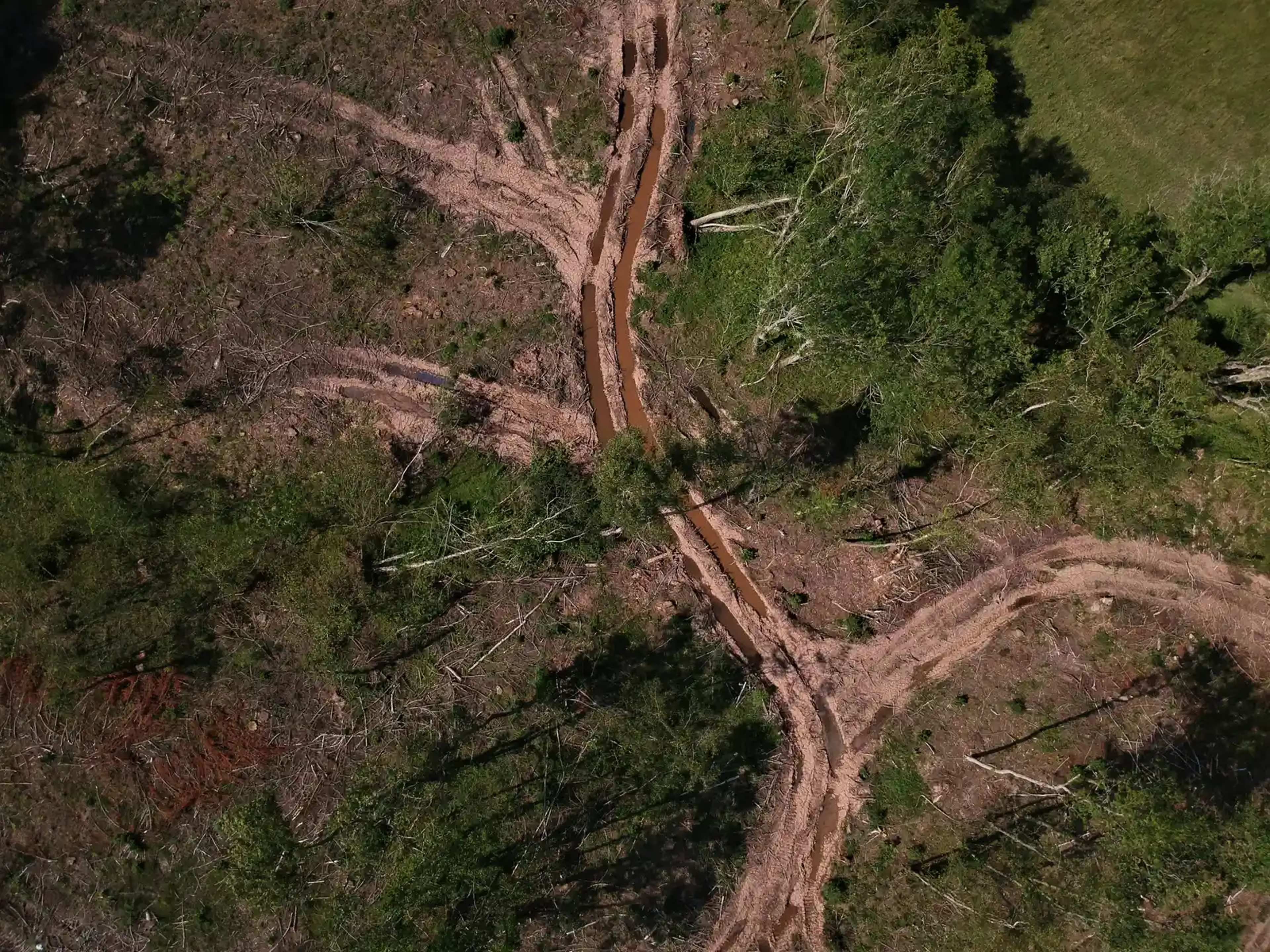
The quest to reconnect imperiled rainforest in West Africa – Image for illustrative purposes only (Image credits: Unsplash)
In the village of Nigré in southwestern Côte d’Ivoire, rice fields and oil palm plantations now dominate a landscape once covered by dense rainforest. Chief Djahi Bertin recently welcomed scientists, conservationists, and park rangers to his compound for discussions on protecting what remains. The group shared slices of kola nut and spices in a traditional gesture of unity before turning to the urgent work ahead.
From Vast Canopy to Fragmented Patches
The Upper Guinean rainforest once extended across several West African countries in a continuous belt. Today only scattered remnants survive, with Taï National Park in Côte d’Ivoire standing as the largest intact block at roughly 5,000 square kilometers. Agricultural expansion has steadily replaced the original forest cover with crops and plantations.
This loss affects more than trees. The remaining patches support unique wildlife and help regulate regional climate patterns. Travelers drawn to nature experiences in West Africa encounter fewer opportunities to witness the full richness of the original ecosystem as fragmentation continues.
Linking Two Parks Across a Border
Conservation teams are now focused on creating an ecological corridor between Taï National Park and Grebo National Park in neighboring Liberia. The two protected areas lie just four kilometers apart at their closest points. Restoring connectivity would allow animals to move more freely and strengthen the long-term viability of both parks.
The effort involves coordination between governments, local communities, and international partners. Practical steps include identifying suitable land for restoration and securing agreements that balance conservation with existing agricultural use. Success depends on sustained funding and clear timelines for implementation.
Stakeholders range from village leaders to national park authorities on both sides of the border. Each group brings different priorities, yet all recognize that isolated forest fragments face greater risks from encroachment and climate stress.
Local Voices Shape the Path Forward
Chief Djahi Bertin hosted the recent meeting in Nigré and emphasized shared purpose through a simple ritual. He poured wine onto the floor, noting that the resulting shape resembled an open palm with fingers extended. The gesture illustrated his view that the community and the visiting team stood united in their goals.
Residents in the area depend on the land for farming and daily livelihoods. Any corridor plan must therefore address how restored forest zones can coexist with productive agriculture. Early conversations focus on mutual benefits rather than restrictions alone.
Why the Outcome Matters Beyond the Region
Intact rainforests in West Africa hold potential for responsible tourism that highlights biodiversity and cultural heritage. Visitors interested in nature travel gain richer experiences when corridors help species populations recover and stabilize. The current push represents a practical response to decades of habitat loss.
Progress will be measured in restored tree cover, reduced isolation between parks, and continued involvement of communities like Nigré. The work remains ongoing, yet the recent gathering signals a shared determination to reverse fragmentation where it is still possible.