You probably think a cruise starts when the gangway opens and the first welcome drink lands in your hand. For the crew, a big chunk of the week may already be written by then. A storm has been tracked, a port has been quietly doubted, and somebody has already worked out how to say “we’re not going there” without starting a riot.
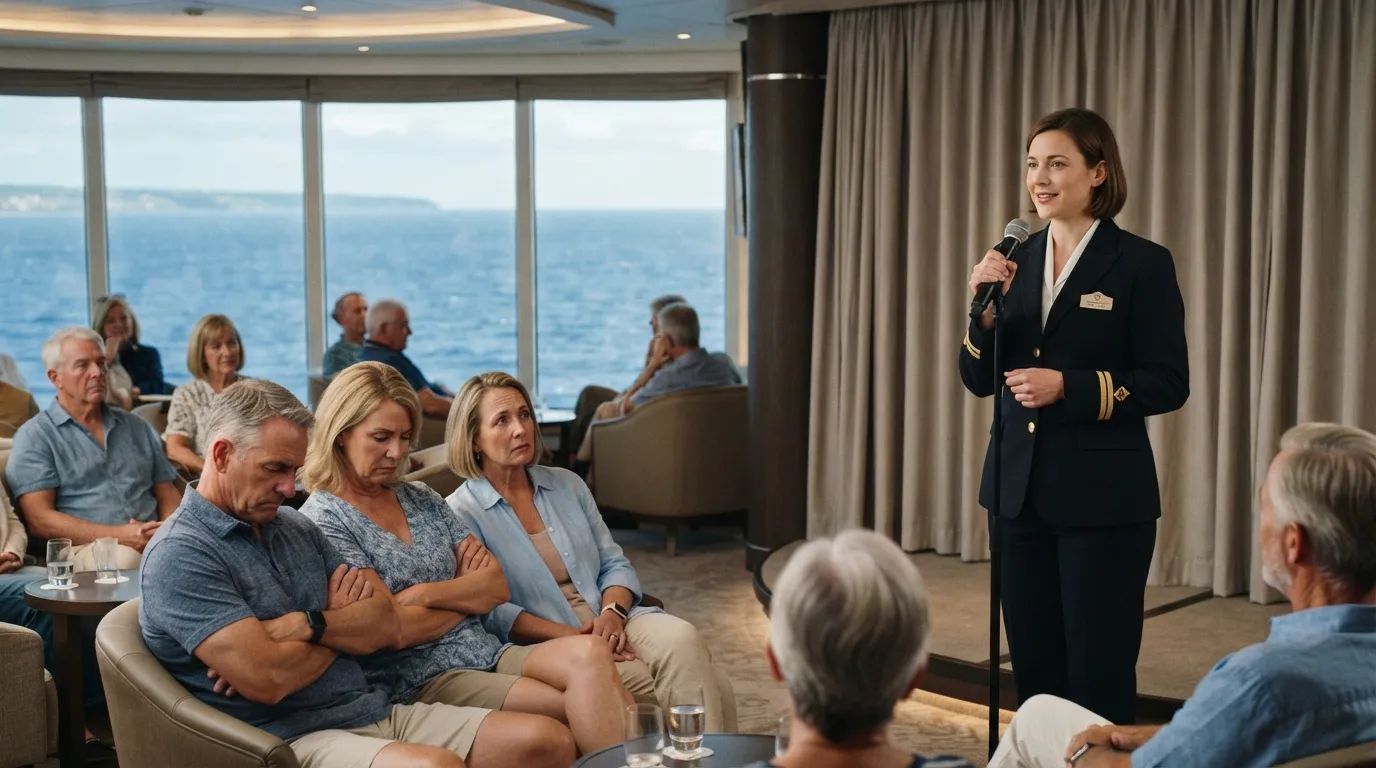
Some of these calls belong to captains, forecasters and shoreside teams. But the cruise director is often the one standing in front of a ship full of vacationers when the news finally lands. Below are 18 of those behind-the-scenes decisions, based on what insiders and the public record say, and one of them is not about weather at all.
#18 – The Storm Check That Starts a Week Before You Pack
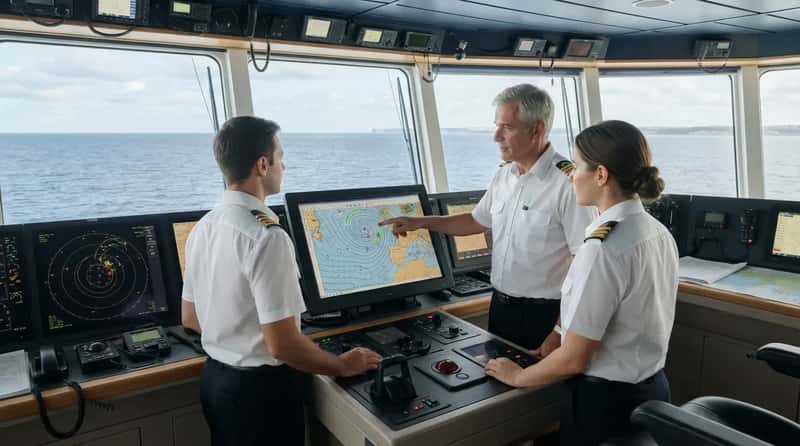
Most passengers assume a ship reacts to whatever it can see out the window. That’s one of the biggest misconceptions. A Silversea captain explained that the company looks much further ahead, sometimes up to a week early.
In his example, the crew spotted a developing low-pressure system in the Atlantic, moving toward the coast of Portugal, ahead of a Lisbon departure. The onboard writer who reported it noted that two ports of call were dropped because of weather before he even boarded. The plan was already redrawn before most guests had found their cabins.
But the way one major line handles a brewing hurricane is stranger than any forecast, and that’s #17…
#17 – The Hurricane Waiting Game One Cruise Line Openly Admits To
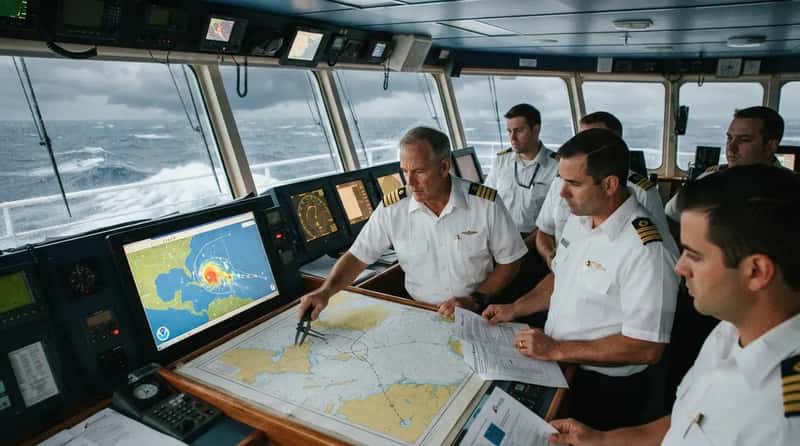
Cruise lines sometimes hold back bad news on purpose. A Carnival spokesperson explained that hurricanes can change tracks suddenly, so the line waits, gathers advice and often acts within a day or so of sailing. The goal is to avoid announcing a change the storm later makes unnecessary.
The line wants to deliver the itinerary you booked, so it holds off until the storm shows its hand. Once a storm forms, experts confer with senior officers and the ship’s captain to pick the safest course. Some cruisers hate the suspense, while others argue an early announcement would cancel stops that might have been fine.
And the person who tracks those storms for one big cruise group may never set foot on a ship, as #16 shows…
#16 – The Meteorologist Guests Never Meet
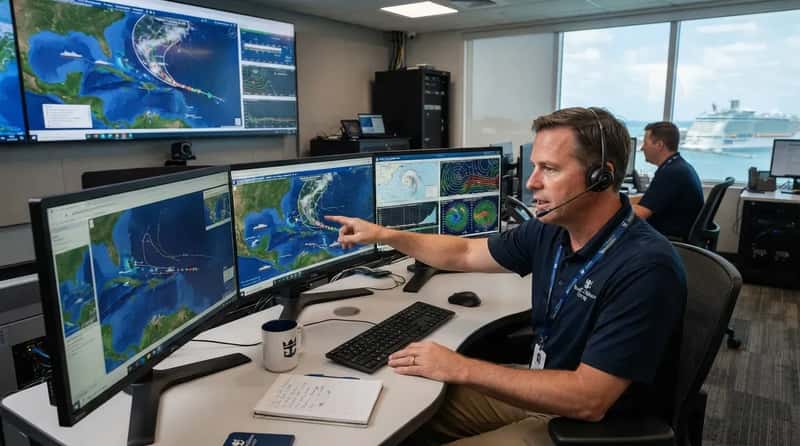
Some of the most influential voices in a weather decision are nowhere near the pool deck. Royal Caribbean Group once advertised a Chief Meteorologist role, and the job involved expert analysis of hurricanes, typhoons and other severe weather that could affect sailings.
That guidance helps ships alter itineraries or take a different route to keep passengers safe and comfortable. Someone watches the weather models and tracks storms, and if something concerning appears, the ship and crew are alerted right away. The call on a change rests with marine and ship leadership, not the entertainment team.
Quick Compare
- Meteorologist: tracks storms and models, then alerts the ship and crew.
- Pilots and port authorities: know the local currents, tides and harbor limits.
- Captain: makes the final decision on whether to change course.
- Cruise director: often the voice guests hear when the news arrives.
Even after the forecasters weigh in, another set of voices can overrule a captain’s plan, and that’s #15…
#15 – The Port That Can Say No Even When the Sky Looks Calm
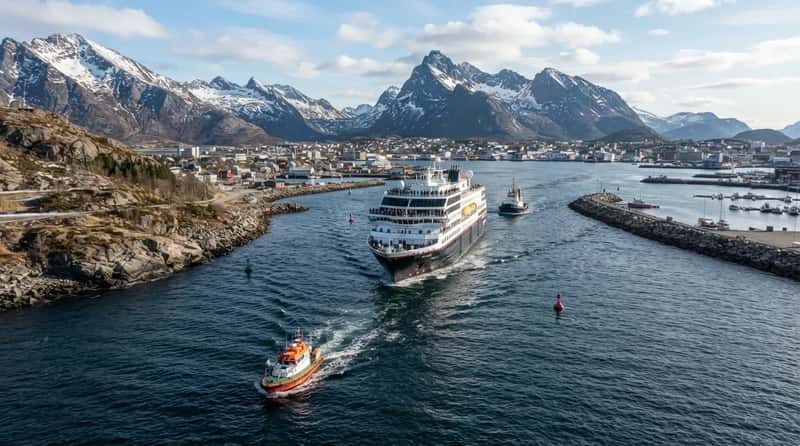
A gorgeous forecast doesn’t guarantee a smooth arrival. The captain’s decision ultimately counts, but local maritime pilots and port authorities also influence it. Those pilots know the currents, tides and harbor limits in their waters better than anyone aboard.
Some harbors are harder than they look. Lisbon often proves challenging because of its exposure to the Atlantic and the tidal influence along the Tagus River. A famous postcard port can be a tougher entry than a quiet, forgettable one. That’s one reason itineraries are plans, not promises.
But what happens in the shoreside control room when ships need rerouting is #14…
#14 – The Command Center That Meets Three Times a Day
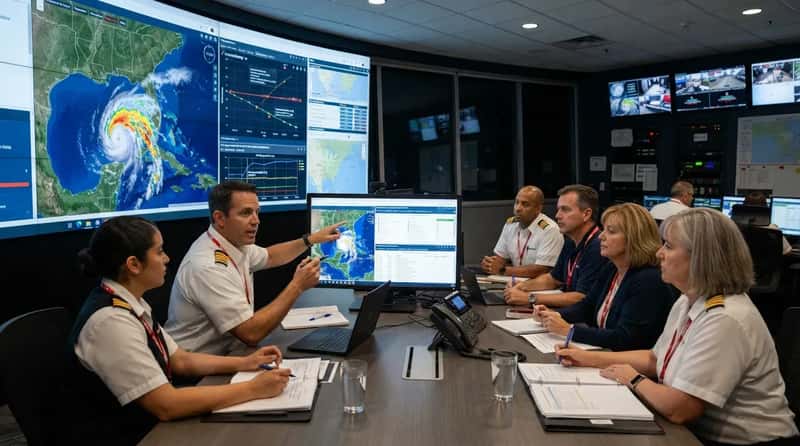
When storms threaten, cruise lines don’t just wing it. In coverage from the Hurricane Ike era, NBC News reported that meetings between various departments were convened three times a day, more if necessary. At Carnival, the port operations team monitors storms, stays in touch with the U.S. Coast Guard and keeps tabs on ports.
The work spreads outward from there. The air/sea department may need to change flights or ground transportation for affected customers. In that same storm, the Carnival Ecstasy sailed on schedule from Galveston, but in a different direction, visiting Veracruz instead of Cozumel. The ship left on time while the destination changed completely.
Fast Facts
- Departments met three times a day during the Ike-era response, and more often if needed.
- Carnival’s port operations team stays in contact with the U.S. Coast Guard.
- The air/sea department may rework flights and ground transportation.
- The Carnival Ecstasy swapped Cozumel for Veracruz without delaying its departure.
Now picture getting that news before you’ve even boarded, because that’s what happened in #13…
#13 – The Itinerary That Changed Before Anyone Boarded
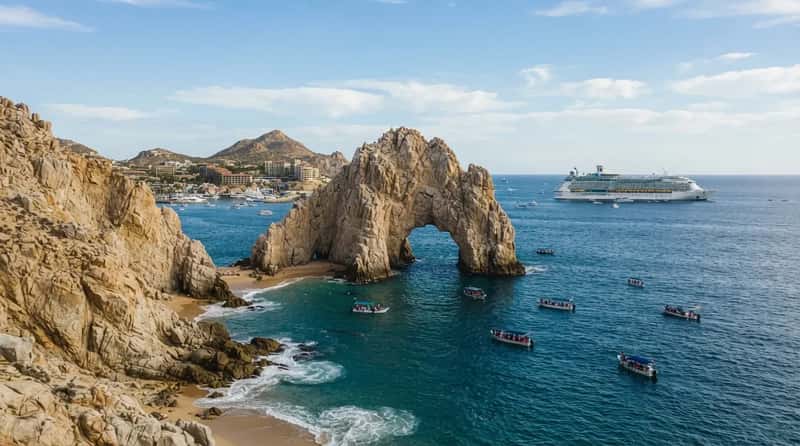
Sometimes the bad news arrives before the cruise even starts. Royal Caribbean’s Voyager of the Seas was set for a seven-night Mexican Riviera cruise from Los Angeles. Before embarkation, passengers were told the itinerary would change because of storms in the Pacific.
The ship called at Cabo San Lucas on Saturday, October 10, from 9:00 a.m. to 5:00 p.m., rather than on October 11 as planned. Then came another shift: a letter to guests said the ship would return to Cabo San Lucas for an additional full day. Passengers got a second apology letter for “another last-minute change.”
Not every change is a surprise, though. Some are planned months ahead, as #12 explains…
#12 – The Changes Planned Months Out That Most Guests Never Notice
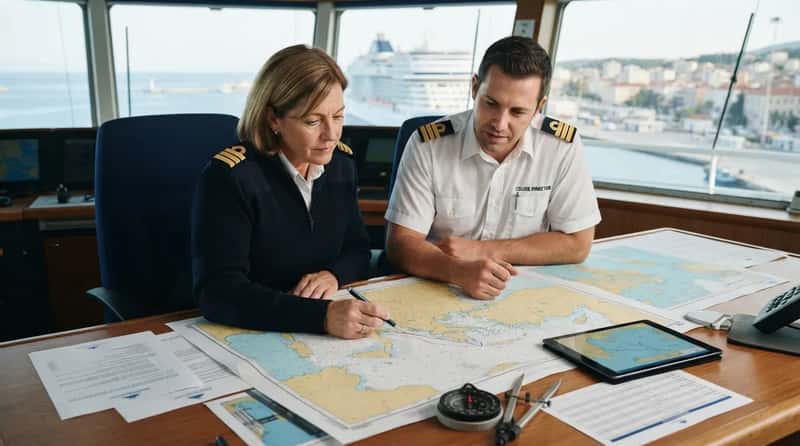
Itinerary edits don’t only happen in a storm. Forbes reported in 2025 that many cruise lines alter itineraries well before sailing. One example involved Carnival adjusting 11 itineraries, giving guests at least four months to modify their plans.
Bigger shifts happen too. Many world cruises planned for 2025 and 2026 saw major changes because ships needed to avoid certain parts of the world, and recent geopolitical events have already affected some Mediterranean sailings in 2026. Most cruise contracts actually allow lines to make these changes when needed.
Then there’s the port stop that can fall apart even when the harbor is open, and that’s #11…
#11 – The Tender Decision That Can Erase a Port Day
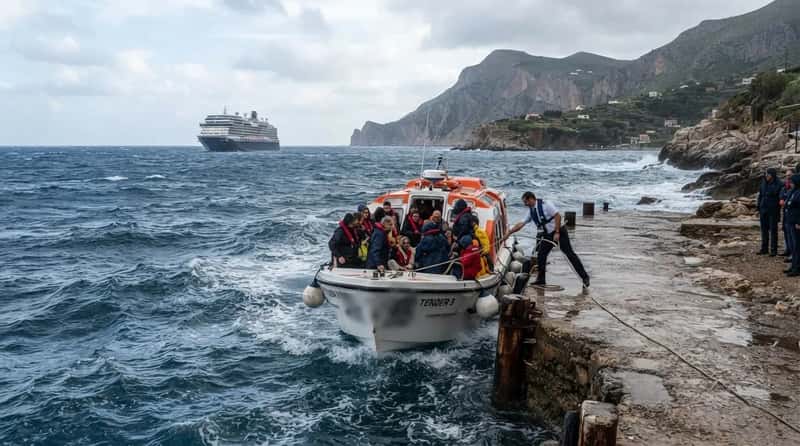
A tender is a small boat that carries guests ashore when a ship can’t dock, and it’s a weak link. According to one cruise guide, if conditions make tenders unsafe to operate, the captain and cruise line can alter the route.
What follows can be a shuffle. The ship might arrive later, leave earlier, change the order of ports, replace one stop with another or add a sea day. The Royal Caribbean blog adds that rain alone isn’t going to change cruise plans. It’s the open ocean, not the drizzle, that worries the captain.
When a stop does vanish, someone has to say it out loud, and who that is may surprise you in #10…
#10 – Who Actually Delivers the Bad News
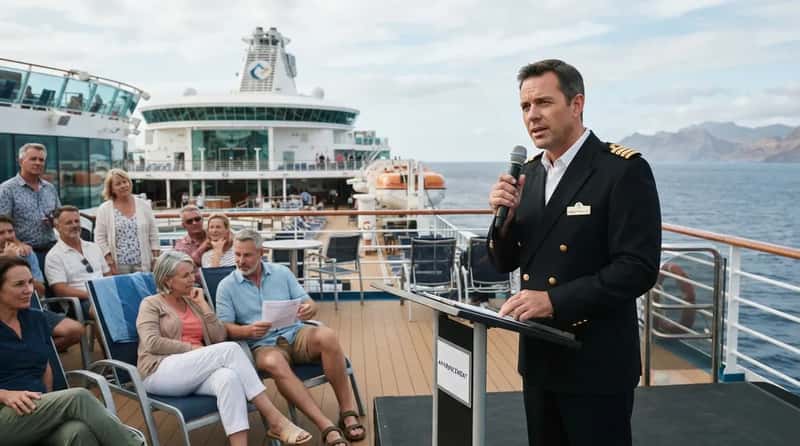
When a port is cancelled mid-cruise, the message doesn’t come from just one place. According to the Cruise Collective, the line will usually confirm the change through the captain, cruise director, daily programme, app, cabin letter or announcement. That puts the cruise director right in the middle of the messaging chain.
The captain’s reasoning is broader than most guests think. It includes weather, sea conditions, port instructions, guest safety and mechanical realities. One booking guide says itinerary changes typically come with compensation such as onboard credit or future cruise discounts. Policies vary, so a credit isn’t automatic.
Worth Knowing
- The news can arrive by captain, cruise director, daily programme, app, cabin letter or announcement.
- The captain weighs weather, sea conditions, port instructions, safety and mechanical issues.
- Compensation may include onboard credit or a future cruise discount.
- Nothing is guaranteed, because policies differ from line to line.
Once the bad news lands, the schedule has to be rebuilt fast, and the answer in #9 is cleverer than you’d expect…
#9 – The Sea Day Backup That Fills the Hole
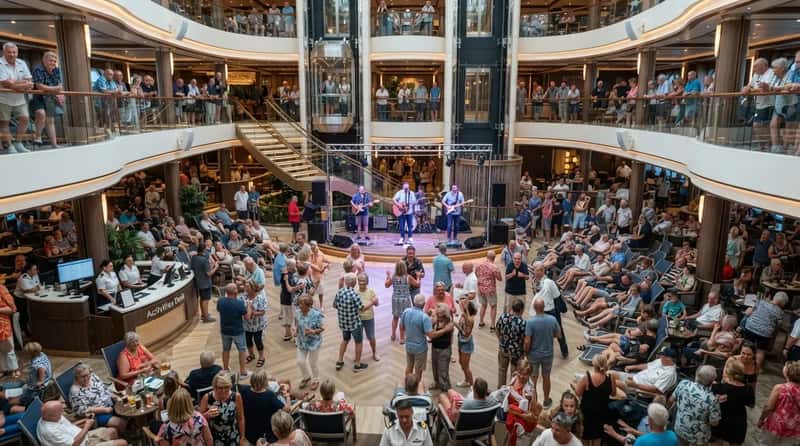
A cancelled port can’t leave a gap in the daily plan. The Cruise Collective says that if the day becomes a sea day, the onboard team will usually add extra activities, talks, entertainment or dining options. If there’s a substitute port, alternative excursions may be arranged.
The captain has a menu of options. A booking guide lists them: sail around the storm, change the order of port stops, skip an affected port and add an alternative, delay departure, or extend time at sea. Delaying departure is an actual tool, not just an excuse. Entertainment staff have to be ready for any of them.
Meanwhile, back at the terminal, a different clock is ticking, and #8 is why your cabin door stays locked…
#8 – The Cabin Clock Behind Your Roped-Off Hallway
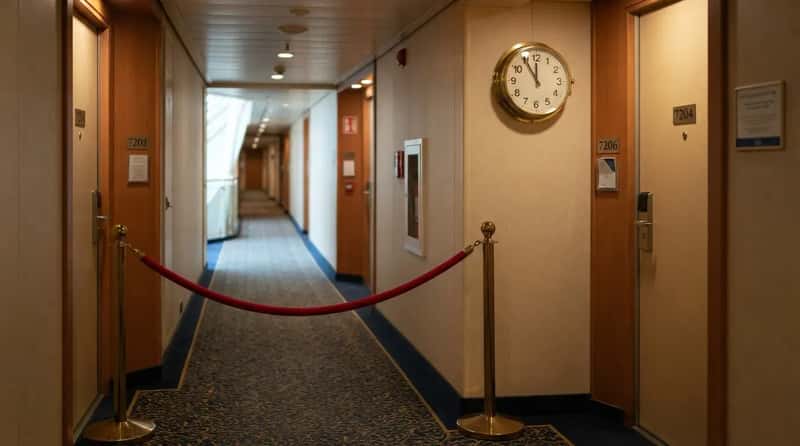
Your cabin isn’t late. It’s on a schedule. The crew spends the morning turning over thousands of cabins after the previous guests leave, and rooms generally aren’t ready until around 1:00 to 2:00 p.m. An announcement tells everyone when they open.
Boarding is staggered too. One guide says most cruisers have a boarding window between roughly 11 a.m. and 1 p.m., while checked bags show up later. Luggage may not reach your cabin until sometime between 3:00 and 6:00 p.m. Sail-away begins in that same window.
While rooms get ready, thousands of hungry people head the same direction, and #7 is what staff see coming…
#7 – The Buffet Stampede Staff Can Predict
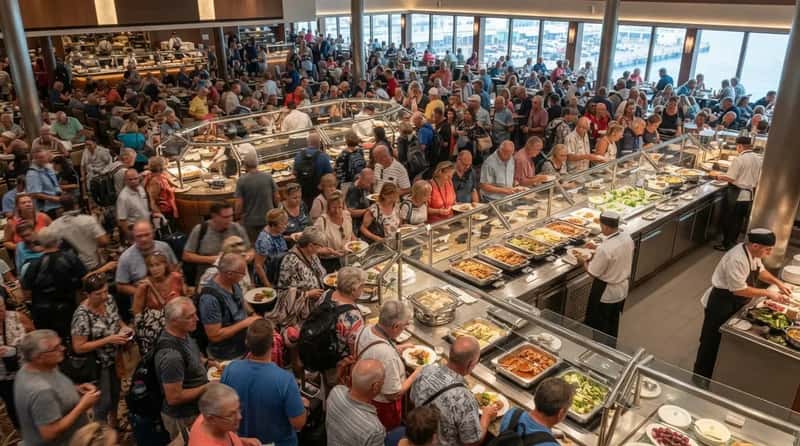
Crew members watch the same scene play out every embarkation day. Hundreds of newly boarded guests, all starving and cabinless, march toward the buffet at once. That predictability shapes how the first afternoon gets organized.
Advice is split. One cruise guide tells travelers to skip the buffet crowds and explore the ship before sail-away. Another, older guide says that when your cabin isn’t ready, the buffet is typically your best bet for lunch. Skipping the first-hour crush is arguably the smarter play, but plenty of cruisers swear by the buffet.
But the biggest rush of all isn’t for food. It’s a safety message, and #6 shows how it’s scheduled…
#6 – The Language Order That Quietly Pushes Your Afternoon Later
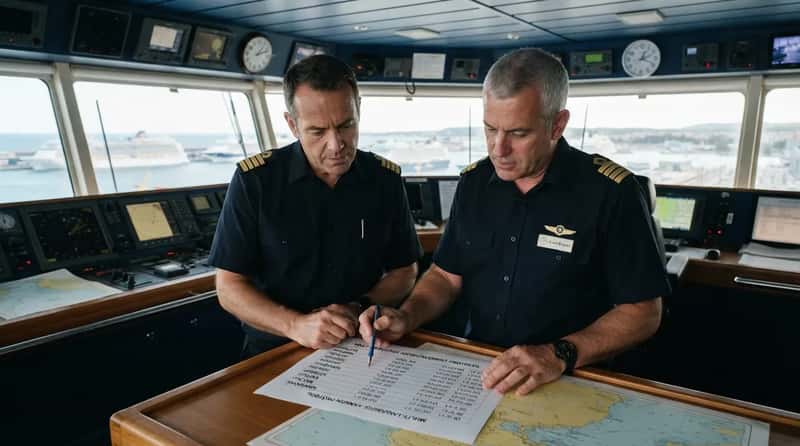
One announcement isn’t always enough. On a ship with many international guests, the drill may take longer because the crew makes announcements in multiple languages. Someone has to plan that order ahead of time.
There’s a hard deadline behind it. Under SOLAS rules, passengers must be mustered before or immediately upon departure. The legal deadline sets the clock, and the language order fills it. That’s why one sailing’s drill feels quick and another seems to drag.
The person calling you to that drill is up against a very specific rival, and #5 names it…
#5 – The Safety Message That Has to Beat Lunch
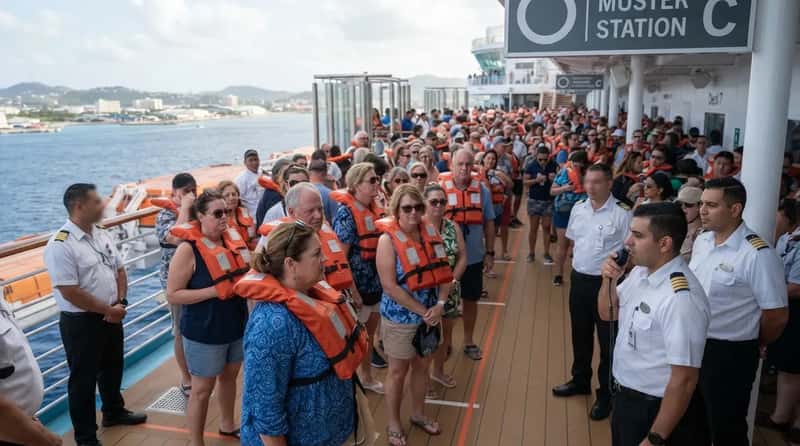
The drill announcement may be the toughest message of the day to sell. A Cruise Hive profile of one cruise director noted that she heads to the bridge to help lead the safety briefing and call guests to muster stations. Her competition? Lunch, cabin exploring and a very strong case of vacation brain.
The old format made it harder. The traditional drill meant everyone gathering at assigned stations at the same time for a 20 to 30 minute briefing, and it could be crowded and hot. The one announcement nobody wants to hear is the one the whole ship must obey.
Think you can skip it because you’re a veteran? Wait until you read #4…
#4 – The “I’ve Done 20 Cruises” Pass That Doesn’t Exist
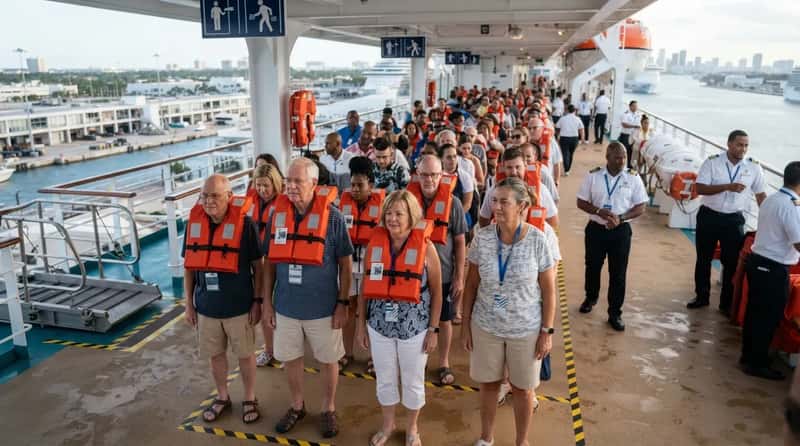
Some guests grumble that the drill is outdated. According to the Travelbinger report, directors can’t make it disappear. They can only decide how smoothly it runs. Under SOLAS safety rules, the U.S. Coast Guard enforces the requirement for ships sailing from American ports.
Veterans don’t get a free pass either. The drill is mandatory for everyone because your assigned location will most likely differ on each sailing. Even a guest on their twentieth cruise has to show up. Your muster station is printed on your cruise card and usually on a sign on the back of your stateroom door.
The way ships run that gathering has quietly been rewritten, and #3 explains how…
#3 – The E-Muster Shift That Rewrote Embarkation Day
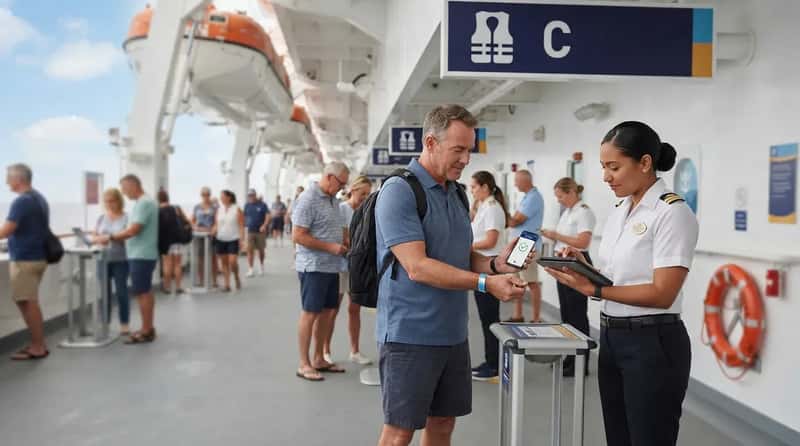
The classic deck-wide gathering is fading. Since 2020, most major cruise lines have switched to an e-muster. Guests watch a short safety video on the stateroom TV or the line’s app, then visit their physical muster station to check in with a crew member.
On Royal Caribbean, guests can watch a few videos in the app, then visit their in-person assembly station for a short briefing. One guide says the whole thing takes about 10 to 15 minutes. That’s down from the 20 to 30 minutes of the old group drill. It changes how entertainment staff schedule everything else.
But the real race starts the moment you step aboard, and #2 reveals what savvy cruisers do first…
#2 – The 30-Minute Booking Window That Shapes Your Whole Week
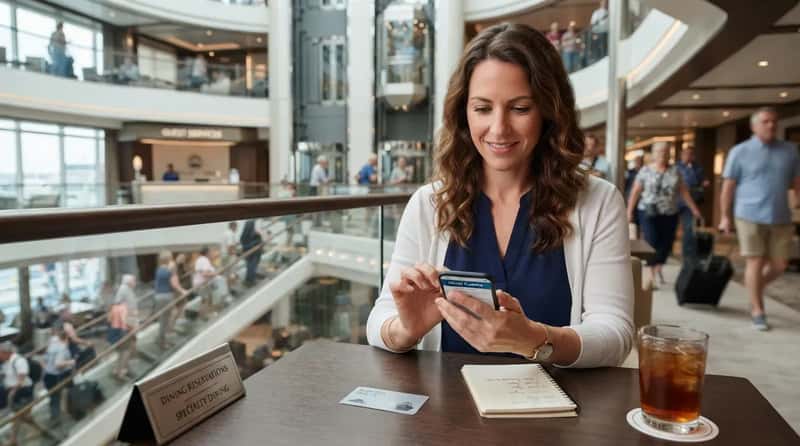
The first half hour aboard can quietly decide your best dinners. One embarkation guide calls it a booking window. The suggestion is to open the app or head to the dining and spa desks to lock in specialty dinners, show times and sea-day treatments.
The same guide lays out a clear order. With bookings handled by noon, you grab lunch at a calmer venue than the buffet, then knock out the app-based muster drill. Some cruisers call that over-planning, while others say it’s the only way to land the table they wanted. It’s one writer’s timeline, not a rule, but it shows how much happens before the ship leaves the dock.
At a Glance
- 11 a.m. to 1 p.m.: the typical boarding window for most cruisers.
- Around noon: the target for finishing dinner, show and spa bookings.
- 1 to 2 p.m.: when cabins are generally ready.
- 3 to 6 p.m.: when checked luggage may finally arrive.
- 10 to 15 minutes: roughly how long the e-muster takes.
Still, the toughest call of all has nothing to do with logistics. It’s #1…
#1 – The Call Nobody Wants: Dropping the Port With a Smile
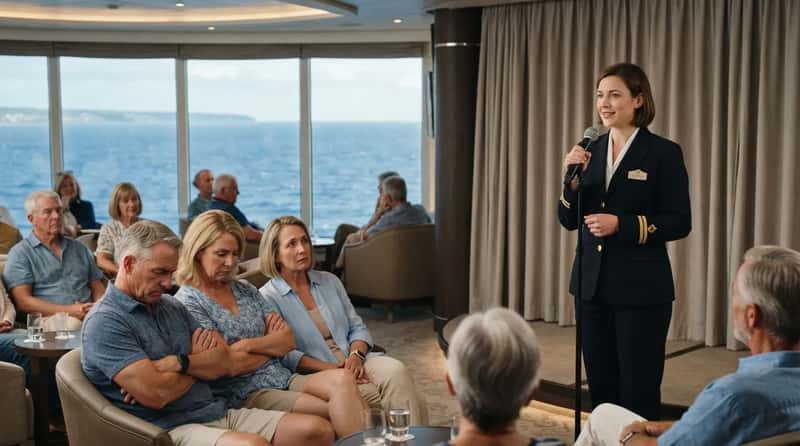
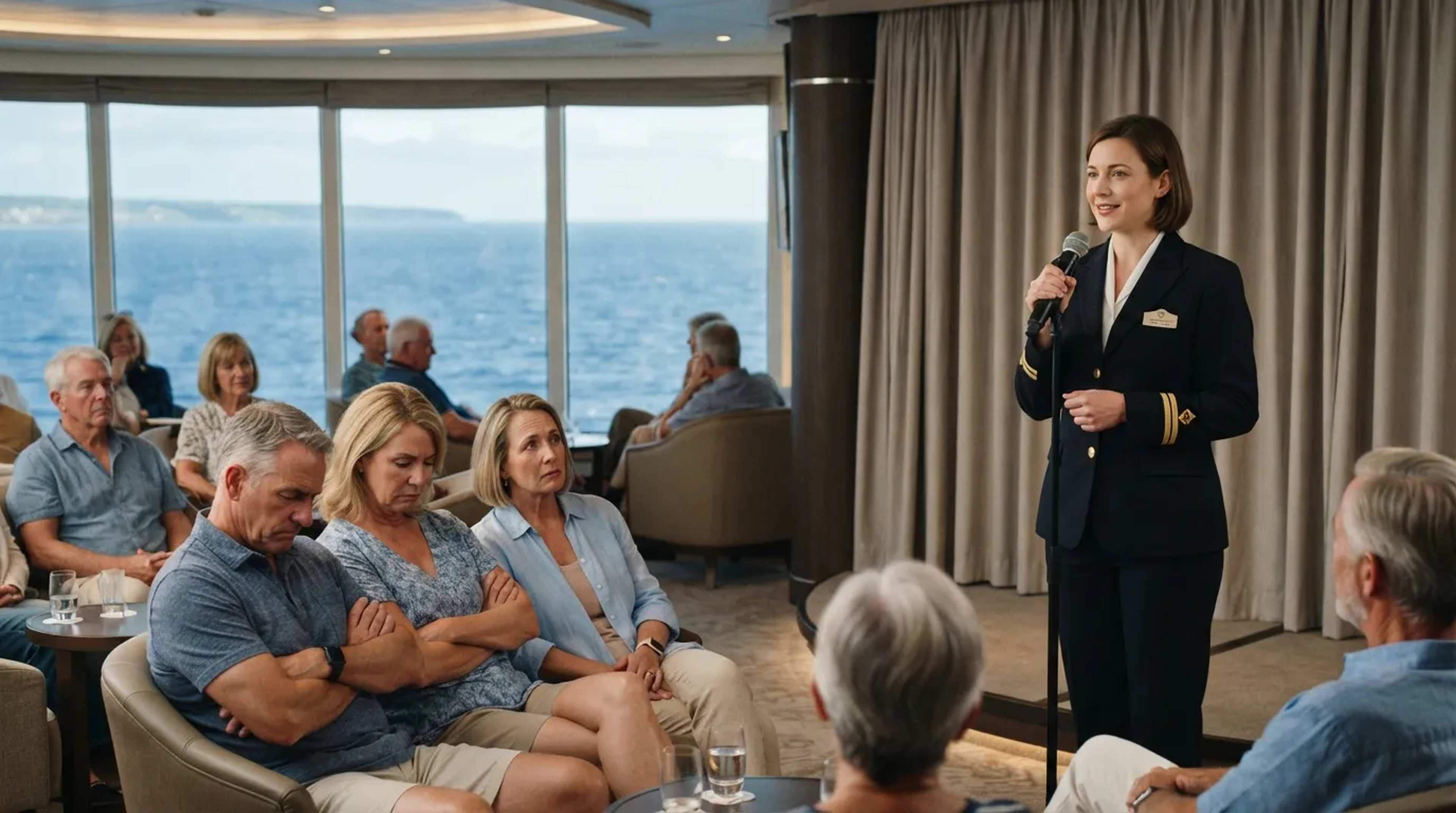
The hardest decision on this list is human, not mechanical. A Carnival spokesperson once urged guests, if ports must change, not to shout at a staff member who had been hosting a Harry Potter themed trivia only 10 minutes before. The person delivering the news may have been running a party moments earlier.
That’s the quiet truth behind everything above. The line wants to deliver the booked trip and waits as long as it safely can. When it can’t, someone has to explain why. On Silversea, the captain held a special event to explain the change in plans and show the dangers had they not shifted, and the message landed better because someone said it face to face.
The gangway is just the visible start. Long before it opens, forecasters have been watching the sky, pilots and port authorities have weighed in, and shoreside teams have been juggling flights and ports. The crew has also planned for lunch stampedes, cabin turnover and a safety drill that every guest has to attend.
Maybe that’s the real surprise. Behind a week of sunshine and trivia nights, a lot of the work is done quietly, by people hoping you never have to think about it.