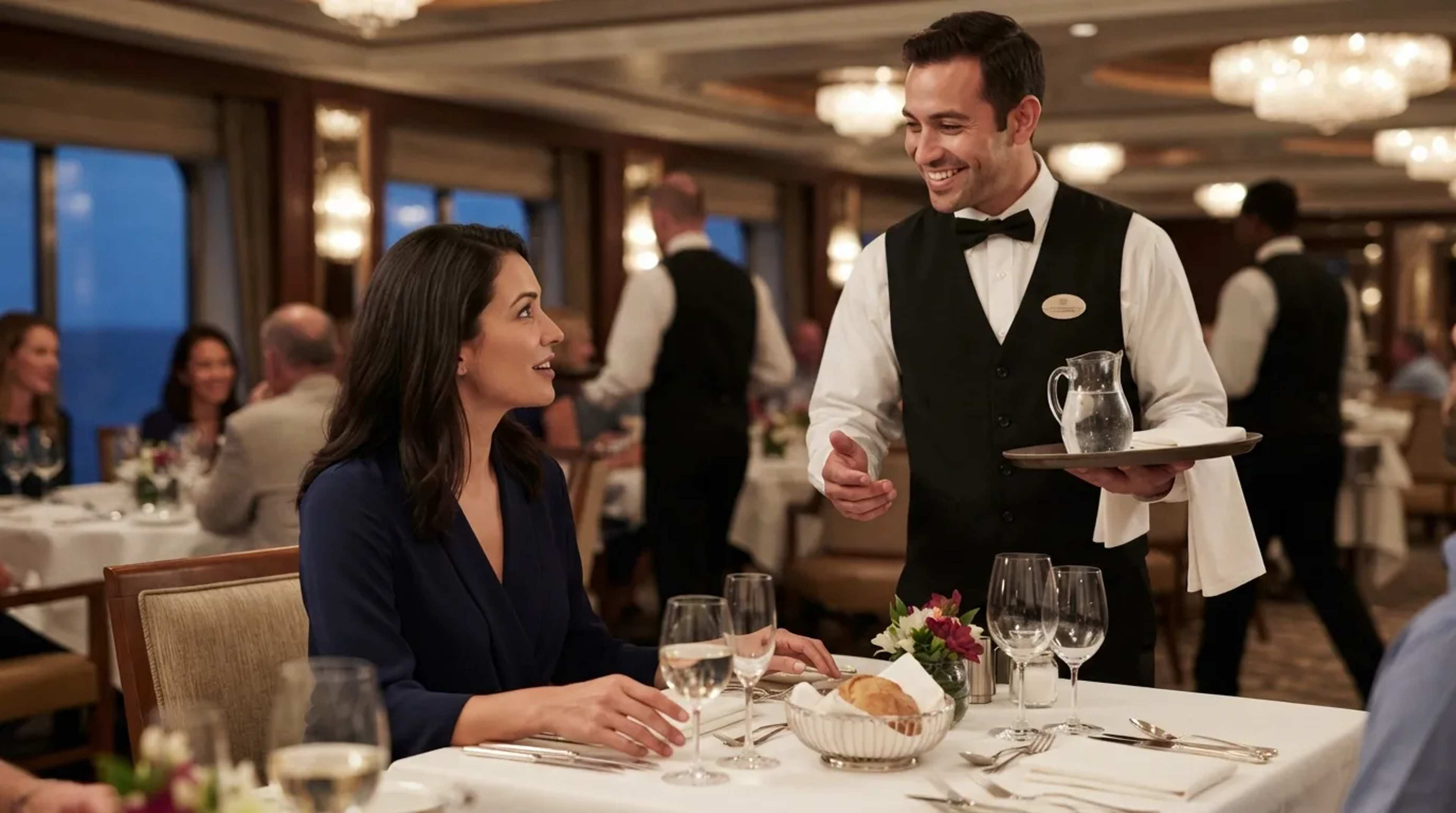
You walk into the main dining room smiling, convinced dinner hasn’t really started. Your waiter has already started reading your table. The Royal Caribbean Blog notes that crew members greet guests, ask about special needs and walk them through the menu, and they also pick up on small things almost immediately.
Most passengers treat night one like a blank slate. It isn’t. A few tiny moves between the bread basket and the first entrée can shape how your whole week at sea feels. Here’s what waiters say they notice first, and a couple of these will surprise you.
#16 – The Finger Snap That Quietly Slows Down Your Whole Week

Nothing says “I’m in a hurry” like snapping at a server. Waiters spot it right away. The Royal Caribbean Blog reports that crew members notice guests who snap their fingers for attention, and that this kind of behavior can get you slower service.
The reason is simple math. Waiters are responsible for a whole group of tables each night and have to take everyone’s order. Your table is one of several competing for attention. A snap doesn’t put you first in line. It makes you memorable for the wrong reason.
But that habit is mild compared to what’s happening with phones at the next table…
#15 – The Video Call That Turns Dinner Into a Conference Room
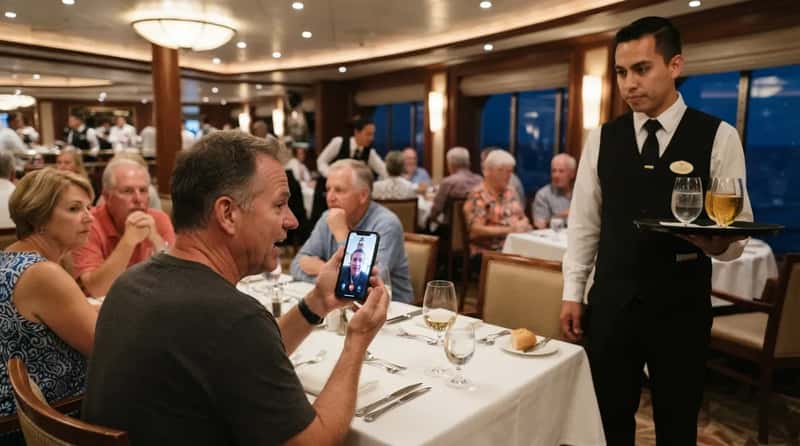
Dining rooms are getting louder, and not because of the music. One passenger complained directly to a cruise line about a growing trend, according to Travel Binger. People were taking long video calls out loud at dinner or watching videos while waiting for their food.
Waiters see this on night one, when everyone is still glued to their phones from boarding. A guest on speakerphone is hard to interrupt. That means the waiter has to hover, wait and try again, while other tables are waiting too.
Worth Knowing
- Night one is when phones are still out from boarding and port-day photos.
- A speakerphone call forces your waiter to hover and retry.
- Every pause adds a little wait for the tables around you.
- Cruisers split on whether the dining room should be fully phone-free.
Many frequent cruisers now argue that the dining room is the one place on the ship that should be phone-free. Not everyone agrees, and that debate gets heated fast. Either way, the waiter’s view is plain: it slows everything down. And the next habit shows up before the bread even arrives…
#14 – Ordering Like It’s a Regular Restaurant
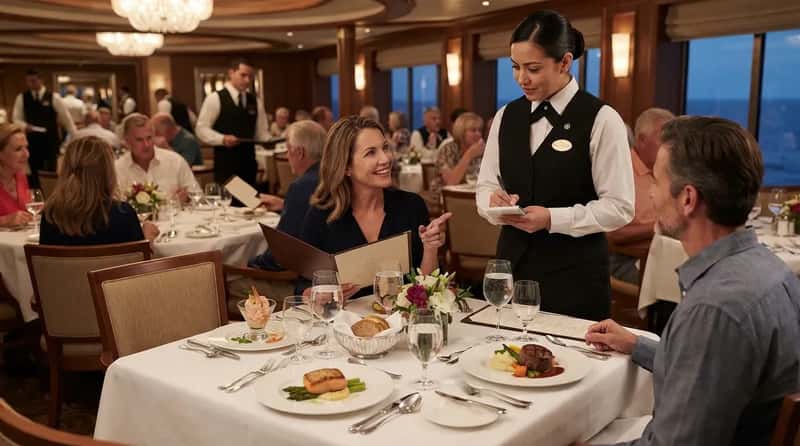
Most first-timers order one appetizer, one entrée and one dessert, just like at home. Waiters watch it happen constantly. According to Travel Binger, guests can usually order two entrées or several desserts at no extra charge on many lines. Servers rarely volunteer it.
Here’s the catch. The same source notes that the rules have tightened a bit in recent years, so policies vary by line and ship. Don’t assume. Check the menu wording or ask politely. Waiters hear the question all the time, and a quick ask beats silently settling for less.
Still, being on time matters even more than what you order…
#13 – The Late Arrival That Freezes the Whole Table
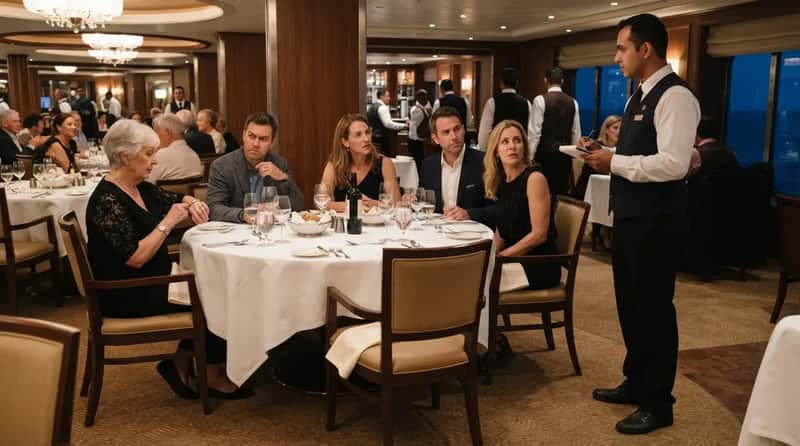
Showing up ten minutes late seems harmless. Waiters know it isn’t. According to All Things Cruise, the waitstaff usually don’t take dinner orders until everyone at the table is seated, so one empty chair can stall the whole group.
That ripple hits everyone. The couple who arrived early sits with bread and water, watching the clock. Your waiter loses time they can’t get back. On the very first night, when you’re meeting tablemates for the first time, that wait is exactly when strangers form an opinion of you.
And if you think arriving late is risky, wait until you hear what happens with food allergies…
#12 – The Allergy Nobody Mentioned Until the Plate Arrived
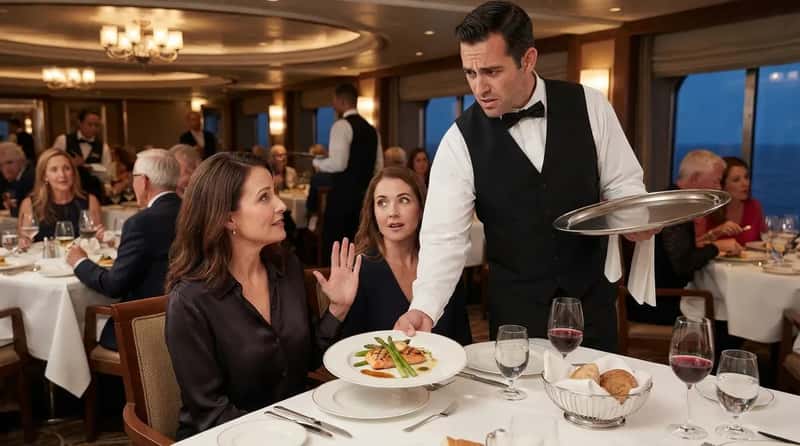
Waiters dread the moment a guest says, “Oh, I can’t eat that.” By then the dish is on the table and the kitchen has moved on. Cruise Critic advises telling the cruise line about dietary restrictions before sailing and reminding the maître d’ and waitstaff once aboard. Many guests skip both steps.
The good news is that your server can usually arrange a lot if you speak up early. Travel Binger says servers can often set up allergy-friendly meals when guests raise it on the first night. The mistake is assuming the kitchen already knows. A reminder at the table costs you ten seconds.
But the biggest dining room debate on any ship is about who skips it entirely…
#11 – The Guest Who Skips the Main Dining Room Altogether

Some passengers never set foot in it. Travel Binger says some guests finish an entire seven-day cruise without entering the main dining room, then miss multi-course meals included in the fare. Waiters notice the empty chairs on their section chart.
The Points Guy notes that eating there on night one is a tradition for many cruisers, partly because those with assigned seating are eager to meet their waiters. It also points out that cruise lines now often save their best dishes for formal night. So the old “lobster on night one” memory doesn’t always match what’s actually served.
Quick Compare
- Main dining room: table service, multiple courses and a waiter who learns your name.
- Buffet: often faster and less fuss, but no server relationship.
- Night one: a tradition for many cruisers, especially with assigned seating.
Skipping it is a choice. Many travelers swear the buffet is faster and less fuss. But waiters say the people who skip it tend to miss the relationship that makes service better. Speaking of choices, here’s one that can make or break your table…
#10 – The Table Swap Demand Before the Soup Is Served
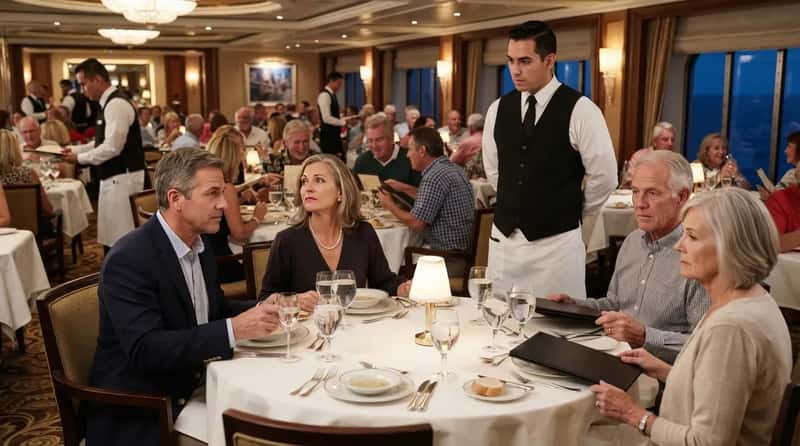
Some guests decide in five minutes that their tablemates aren’t right. Waiters watch them scan the room for a better spot. All Things Cruise recommends waiting until after the first night to change tables, and then asking the maître d’ politely if the mix isn’t working.
That advice makes sense. First impressions on a ship can be wrong. The quiet couple you wrote off may turn out to be the best company of the week. And if you bolt on night one, your waiter has to rebuild their section on the fly.
Next up is a habit you can see from across the room…
#9 – Showing Up in Beach Shorts to a Dinner With a Dress Code

Dress codes on cruises are looser than they used to be, but they haven’t vanished. All Things Cruise calls respecting the dress code a sign of respect for fellow diners. Waiters spot the mismatch from the doorway.
They’re not judging your style. They’re watching the room. When one table is dressed for the pool and the next is dressed for a celebration, it changes how the whole dining room feels. The waiter also hears the comments from neighboring tables.
Many travelers say the dress code is outdated and should be scrapped. Others say it’s the only thing keeping dinner feeling special. Waiters, for the record, usually just hope guests will check the evening’s dress suggestion in the daily schedule. And the next habit decides how the conversation goes…
#8 – The Dinner Table Topic That Ends the Conversation

Night one is when strangers share a table, and the small talk can go sideways fast. Food Republic notes that polite conversation avoids topics known to cause arguments, traditionally politics and religion, and that food-shaming fellow guests is also a no-no.
Waiters hear it all, and they can tell within minutes whether a table will be a good one. A single sharp comment on night one can leave an awkward silence that lasts all seven nights. It’s the one habit nobody at the table can fix by simply passing the salt.
But money talk at the table is a different kind of awkward…
#7 – The Announcement That Gratuities Are “Optional”
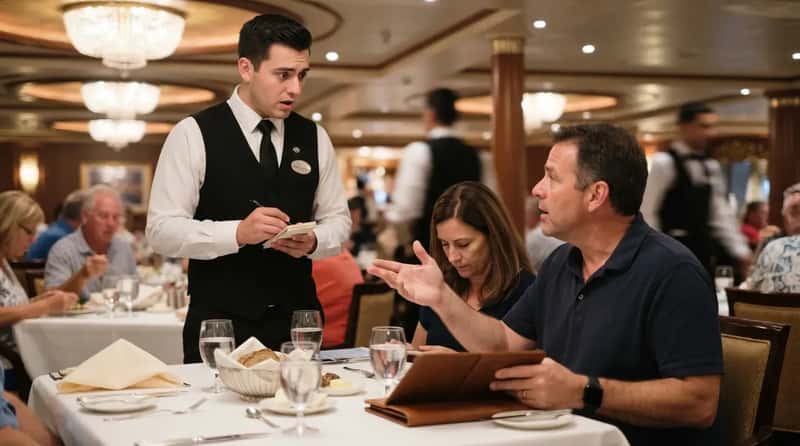
Some guests announce at the table that they plan to remove the daily service charge. Waiters hear this a lot. The Cruise Ship Tracking guide says most lines add roughly $16 to $22 per person per day, shared among dining staff, stateroom stewards and behind-the-scenes crew.
It can be adjusted at Guest Services. But 360 Cruising says doing so is discouraged because crew rely on these tips. If service is truly poor, raising it with management is one thing. Declaring it before the first course is another.
Fast Facts
- Typical daily service charge: roughly $16 to $22 per person.
- Who shares it: dining staff, stateroom stewards and behind-the-scenes crew.
- Where it can be adjusted: Guest Services, not the dining table.
- Best route for real complaints: a manager, not a public announcement.
The line is simple. Real problems belong with the proper channel, not at the table in front of the person carrying your soup. Which brings us to a tipping habit that divides cruisers…
#6 – The First-Night Tip That Waiters Notice Right Away

Here’s a controversial one. Cruise Critic suggests tipping your waiter on the first night for the service you’d like, and says he’ll likely rise to that courtesy. Some cruisers love the idea. Others call it paying for something already covered.
Waiters, of course, notice either way. Plenty of seasoned cruisers say warmth and a clear request go further than cash alone. A handshake, a name and a specific ask often matter just as much.
Now for a move that surprises waiters in a good way…
#5 – Mentioning the Birthday on Night One, Not Night Six
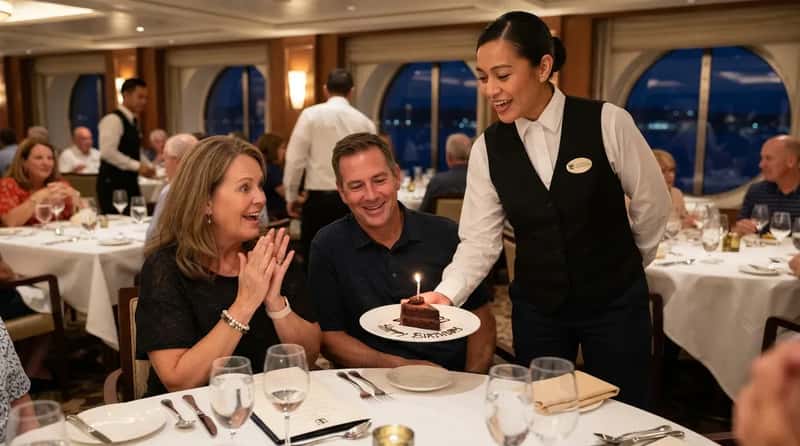
Waiters love a heads-up. Travel Binger reports that on Royal Caribbean, waiters will sing and bring a slice of cake with a candle at no charge if you mention an occasion. It describes this as a casual mention on night one, with your server quietly coordinating.
That timing matters. A waiter who knows on night one has all week to plan something. A waiter who hears on the final night has to scramble, and often can’t pull it off.
But there’s a person on the ship who can do even more for you…
#4 – Skipping the Maître d’ on Embarkation Day

Waiters say the smartest passengers talk to the maître d’ early. Cruise Critic notes that dining plans can often be changed after boarding, and embarkation day is the natural time to request a different seating time or table.
Most people board assuming dining is fixed. It often isn’t. Once the first service starts and tables fill up, there’s simply less room to move people around, so a request made before dinner is much easier to fit in than one made mid-week.
The next habit is smaller, but waiters say it’s the one they remember most…
#3 – Walking in Without Learning a Single Name
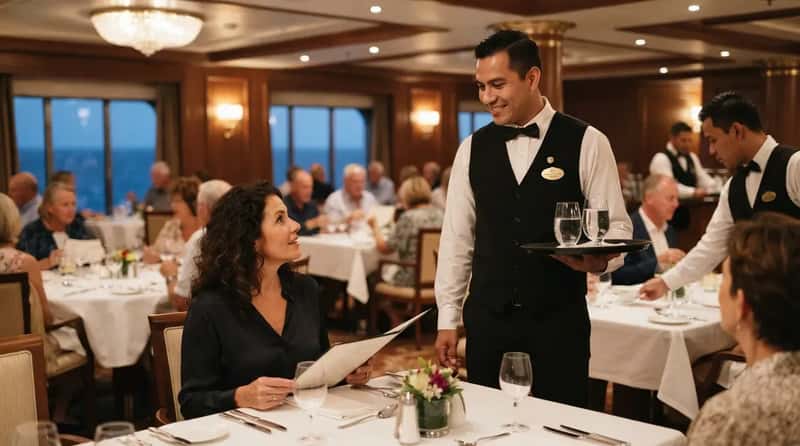
On a ship, your waiter and assistant waiter are often the same two people all week. Yet some guests never learn their names. Waiters notice who glances at the name tag and who doesn’t.
The Points Guy points out that on assigned seating, guests are eager to meet their waiters on night one. That’s the moment to do it. Using a name on the first night turns a stranger with a tray into someone invested in your dinner. It costs nothing and takes two seconds.
Why It Stands Out
- It takes two seconds and costs nothing.
- You’ll likely see the same waiter team every night of the voyage.
- A name turns a transaction into a relationship.
- Waiters notice who looks at the name tag and who doesn’t.
Many frequent cruisers insist this is the cheapest upgrade on board. The ones who skip it rarely realize what they’ve missed. And the next habit is about the person you probably didn’t even see…
#2 – Ignoring the Assistant Waiter Who Does Half the Work
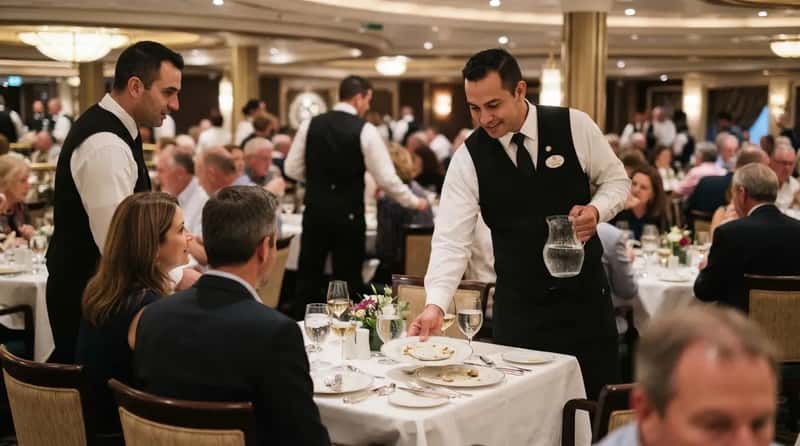
Every guest talks to the waiter. Fewer notice the assistant. According to Disney’s published gratuity details, as reported by Travel Market Report, gratuities are distributed to dining room servers and assistant servers, as well as stateroom stewards.
That tells you something. The people clearing plates, refilling water and running bread are part of the team the daily gratuity supports. Guests who thank only the head of the table miss the hands doing the legwork.
But the habit waiters value most isn’t about service at all…
#1 – Treating the Waiter Like a Person, Not a Plate Delivery System
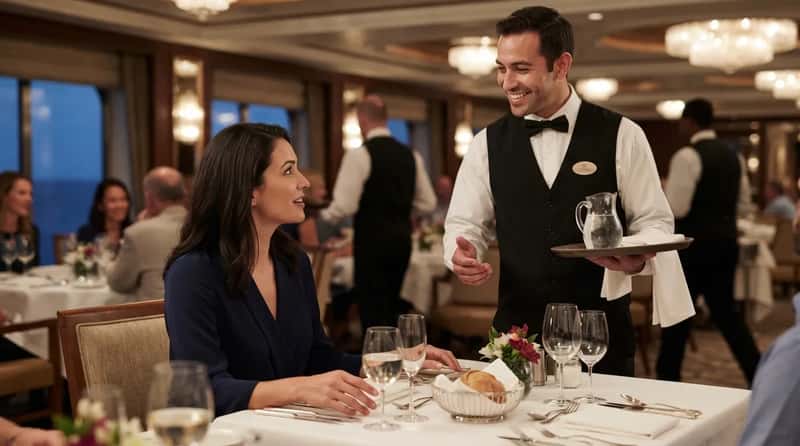
Waiters say the best guests ask a simple question: “Where are you from?” It sounds small. Travel Binger describes the relationship with guests as the biggest “extra” in cruise dining, with waiters saving personal touches for guests they remember.
That makes sense when you consider the setup. Crew often spend months away from home. A guest who shows genuine interest on night one can become the one a waiter goes out of their way for. Not because of a tip, but because they were seen.
It’s the quiet habit waiters recognize in seconds, and the one they remember long after the ship docks.
Across all 16 habits, the pattern is surprisingly simple. Waiters aren’t grading your table manners. They’re reading how you treat people, how you handle small friction and whether you ask for what you want early.
By the time the dessert menu arrives on night one, they’ve usually decided what kind of table you are. The best part is that every one of these habits can be rewritten before the coffee comes.