Most first-timers pack for a cruise like it’s a beach vacation. Then the steamer lands in a security bin, the suitcases don’t turn up until dinnertime, and the only free outlet in the cabin is hiding behind the desk. Veteran cruisers have seen all of it, and their packing lists show it. Every odd-looking item is there because somebody learned the hard way.
Some picks on this list look boring on paper. A few exist because real passengers ended up stuck in airport clothes, sunburned, or hunting for a pharmacy in the middle of the ocean. And the item waiting at #1 is the one experienced cruisers guard most closely. It isn’t anything you’d toss in a beach bag.
#12 – The Cheap Wrinkle Spray That Replaces the Iron Security Will Take Away

Picture the terminal line: a traveler watches a security officer lift a travel steamer out of a suitcase and drop it into a bin. Every major cruise line bans clothing irons and garment steamers. Cabins aren’t wired for the load, and fire risk is the reason. Confiscated items are typically held until the cruise ends, so the steamer sails home without you.
Seasoned passengers skip the fight and pack a small bottle of wrinkle-release spray. Most ships also offer a paid pressing or laundry service for the truly hopeless shirts. For everything else, hang the garment in the bathroom while you shower, spritz it, and let the steam help. By dinner it looks fine, and the formal-night wardrobe panic is mostly settled.
Quick Compare
- Travel steamer: banned on major lines and likely to be confiscated at the terminal.
- Wrinkle-release spray: small, allowed, and best paired with a steamy bathroom.
- Ship pressing service: paid, but handy for the one shirt or dress that’s beyond saving.
But that’s nothing compared to the charging mistake waiting at #11…
#11 – The Charger That Sails Through Security While Power Strips Get Tossed
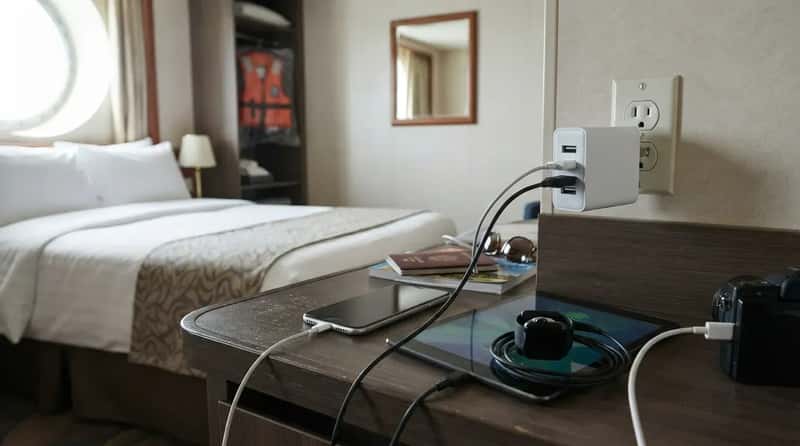
Cruise cabins tend to have fewer outlets than you’d expect, especially on older ships. Meanwhile, you’re charging a phone, a watch, a tablet, and maybe a camera. So plenty of people toss a power strip into the suitcase, and plenty of them watch it get pulled out at the terminal.
Many cruise lines restrict power strips because of fire risk, and some allow only versions without surge protection. The rules have shifted in recent years and differ from line to line. A compact multi-port USB charger is usually the safer bet, since chargers are generally treated differently from multi-outlet AC strips.
Now for a tiny item that turns a plain steel wall into storage, at #10…
#10 – Magnetic Hooks: The Cheap Trick That Fixes the Tiny-Cabin Clutter
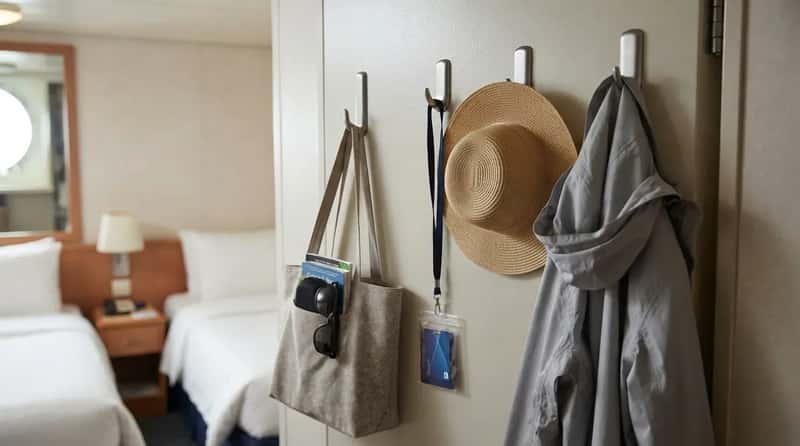
Cruise cabins are compact, and the clutter piles up fast. Hats, lanyards, tote bags, and wet swimsuits end up on the bed or the floor by day two. But cabin walls and doors are often steel, which means magnets stick. A few strong magnetic hooks create instant storage without a single drill hole.
They also work as a quiet organizing system. One hook holds the day bag, another holds the lanyard with your room card. Some lines restrict door decorations, though. Policies vary, so keep the hooks inside the cabin unless you’ve checked your line’s rules, and test one on the wall before you count on it.
But the next item sounds so basic that most people skip it, and they shouldn’t, at #9…
#9 – A Refillable Water Bottle That Saves Your Port Day

Port days are long and often hot. You’re walking, climbing, and waiting in lines for tenders, taxis, and attractions. Dehydration is the sneakiest ruin of a shore excursion. It shows up as a headache and a foul mood around 2 p.m., right when you’re standing in front of the one sight you came to see.
Seasoned passengers don’t count on finding a cheap drink at every stop, so they fill their own bottle before leaving the ship. Many ships offer free water in the buffet or dining areas, so the refill costs nothing. Just keep it to water. Alcohol beyond a line’s allowance can be held until the end of the trip, and a bottle of “water” that smells like something else will get a second look at the scanner.
Worth Knowing
- Top off the bottle right before you walk down the gangway, since that’s the last easy refill until you’re back.
- A bottle with a lid that closes beats an open cup on a bumpy tender or in a taxi.
- An insulated bottle keeps water cold well into the afternoon heat.
- Alcohol rules vary by line, so plain water is the simplest thing to carry off the ship.
But the real regret of day two is waiting for you at #8…
#8 – Seasickness Remedies From Home, Before the First Rough Night
Many people assume big ships don’t move. Then the vessel hits open water on an overnight stretch, and the glass on the dinner table starts to drift. Waiting until you feel sick is the classic mistake, because remedies tend to work best when taken early.
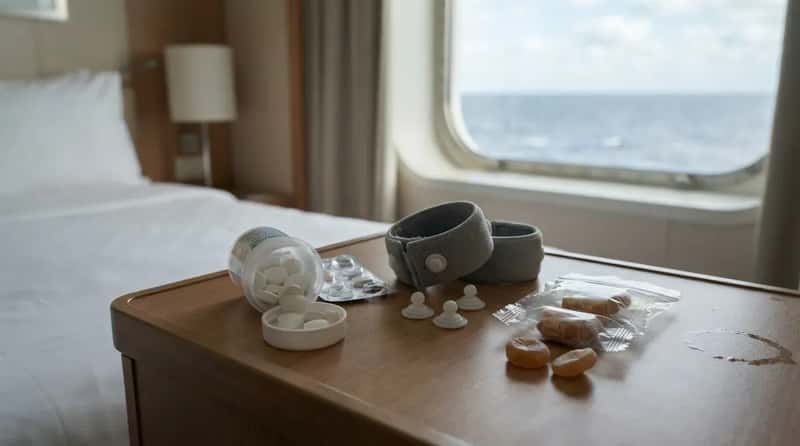
The ship’s shop or medical center usually has something, but you’re buying it at the worst moment and at ship prices. Veterans pack wristbands, ginger chews, or an over-the-counter option their doctor has approved. Ask a pharmacist or physician what suits you, especially if you take other medications or are traveling with kids.
Next up is an item that some destinations are quietly regulating, at #7…
#7 – Mineral Sunscreen, Because Some Ports Have Opinions About Yours

Sun at sea hits harder than people expect. Open decks, bright water, and a constant breeze mean you don’t feel the burn until it’s too late. The breeze hides the heat, so you can burn without noticing. Seasoned cruisers reapply more often than feels necessary, and they pack plenty so they aren’t paying ship-store prices for a bottle.
The twist is the type you pack. Several destinations, including Hawaii, Palau, Aruba, and the U.S. Virgin Islands, have moved against sunscreens with certain chemical filters to protect coral reefs. Mineral sunscreens with zinc oxide or titanium dioxide are a common workaround for snorkeling days. Check the rules for ports on your itinerary, since regulations keep evolving.
Here’s where we get to a packing opinion that will start arguments, at #6…
#6 – One Dressy Outfit, Not Five (Yes, Formal Night Is Overhyped)
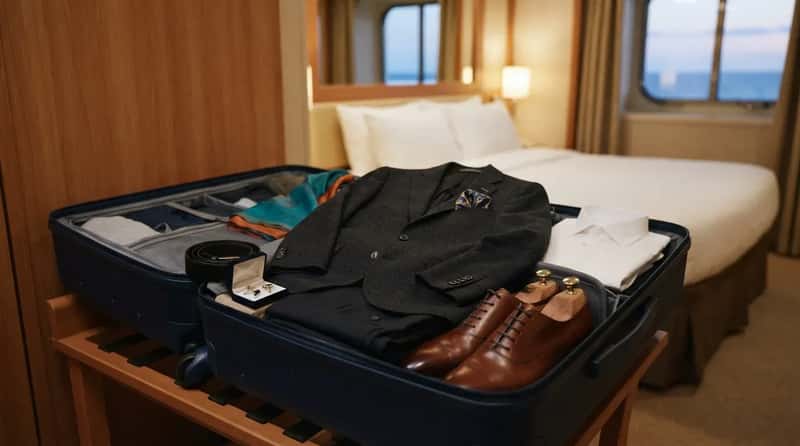
Most guides still tell you to pack a different formal outfit for every evening. Many seasoned cruisers say that’s the biggest waste of suitcase space on the ship. On most big mainstream ships, formal nights are suggestions, not requirements, and plenty of passengers show up in nice casual clothes. Dress codes vary by line and by ship, so read yours before you buy anything.
A single dressy outfit covers the bases. Add a scarf, a tie, or a different pair of earrings, and you can rotate the look across nights. Nobody is keeping score of how many times you wore the same blazer. The saved space matters even more on the way home, when the suitcase is full of souvenirs.
But the shoes you pick can ruin your trip faster than any outfit, at #5…
#5 – Walking Shoes That Survive Cobblestones and Slippery Decks

Ports are rarely flat. Old towns come with cobblestones, steep hills, and long walks from the pier. A full day of exploring can easily add up to miles on your feet. Brand-new shoes, or the cute flats that seemed fine at home, are a recipe for blisters by lunch.
Seasoned passengers pack broken-in walking shoes and one pair of sandals for the pool deck. If they plan to dress up, they add one pair of smart shoes and stop there. Wet decks are slick, so grip matters on board too. Choose soles with some traction, and you’ll thank yourself on the first rainy morning.
At a Glance
- Port days: broken-in walking shoes with a cushioned, grippy sole.
- Pool deck: sandals or slides that won’t skate on wet surfaces.
- Evenings: one smart pair that works with your dressy outfit.
- Before you sail: take any newer pair on a few long walks at home first.
But the biggest embarkation-day surprise has nothing to do with shoes, at #4…
#4 – A Carry-On With a Swimsuit, Because Your Bags Won’t Be There

You board the ship at noon, excited to hit the pool. Your suitcase, however, is somewhere on a cart in a long line of other suitcases. On embarkation day, checked bags often reach cabins hours after you board. The exact timing varies by ship and port, but it’s rarely instant.
That’s why veterans carry a small bag with first-afternoon essentials. A swimsuit, sunscreen, a light cover-up, and a change of clothes keep the day on track. Without them, you’re stuck in airport clothes while everyone else is already floating in the pool. Pack for the first six hours, and the rest of the trip takes care of itself.
But this next one is the item that can stop you at the pier, at #3…
#3 – Paper Copies of Your Documents, Just in Case Your Phone Dies
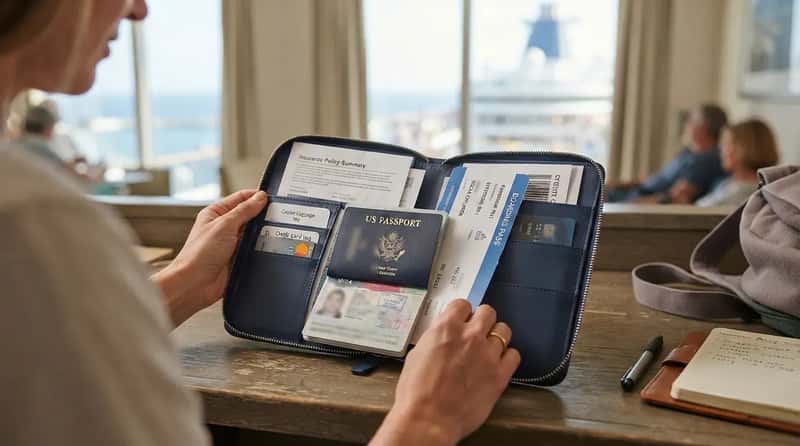
Phones are great until the battery dies or the signal vanishes. Seasoned passengers still print their boarding documents, because a dead screen at the terminal is a very long walk back. A solid folder includes your passport, boarding pass, visas, insurance details, and a payment card. Keep it all together in one slim sleeve.
Even when a sailing technically allows other forms of ID, a passport is the safer choice. A missed port or a missed ship can turn on one missing document. Add a photocopy of the passport and keep it separate from the original. Write down your insurance policy number and emergency contacts too. Digital backups are helpful, but paper doesn’t need Wi-Fi.
Fast Facts
- The folder belongs in your carry-on, never in a checked bag that might arrive late.
- The passport photocopy should live in a different spot than the original.
- Insurance policy numbers and emergency contacts should be written down, not just saved on your phone.
- Check visa and ID requirements for every port on your itinerary before you leave home.
And the top two? Those are the ones people regret skipping most, starting at #2…
#2 – A Small Crossbody or Dry Bag That Keeps Your Hands Free in Port

You’ll carry a lot on port days: phone, room card, sunscreen, water, and cash. A big backpack is overkill and can slow you down at security checks. Seasoned passengers prefer a small crossbody bag, which keeps everything within reach and sits close to the body in crowded markets.
For beach days and tender boats, a dry bag earns its place. Tender rides can mean spray, splashes, and wet seats. A waterproof pouch protects your phone and documents. It also lets you head for the water with just the essentials, instead of leaving valuables in a cabin or hauling them around.
But nothing tops what experienced cruisers guard most closely, at #1…
#1 – Prescriptions in Your Carry-On, Because No Ship Has Your Exact Pharmacy
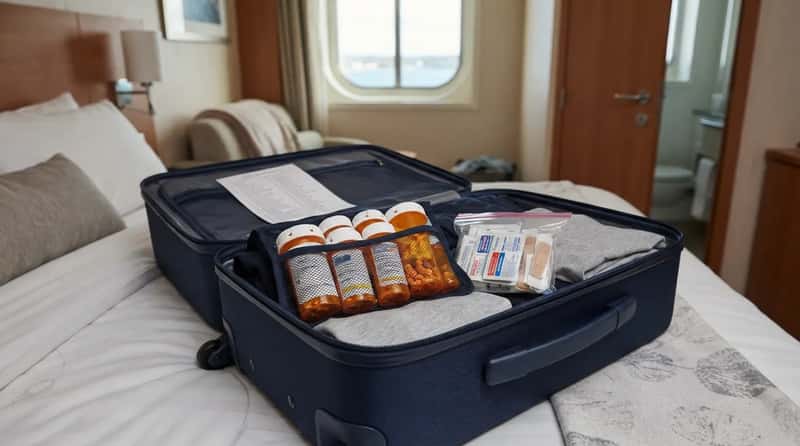
This is the one seasoned passengers never gamble on. A missing prescription at sea can’t be solved with a quick trip to the corner pharmacy. The ship’s medical center is not a replacement for your regular medications. And if checked luggage is late or lost, your pills go with it.
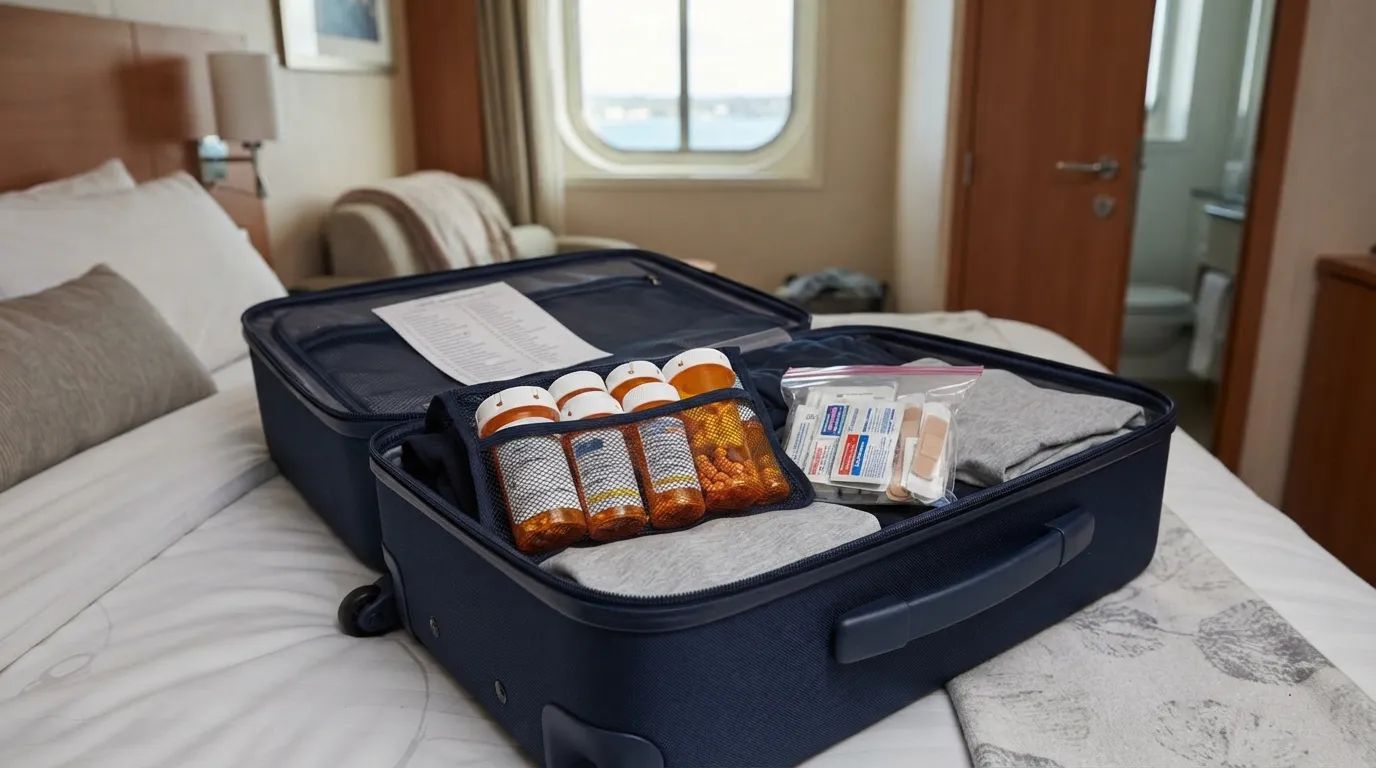
Pack all prescriptions in your carry-on, in their original labeled containers. Bring a few extra days’ worth in case of delays. Medical items like CPAP machines are generally allowed, though policies vary by line, so confirm ahead of time. Add basics such as pain relievers and bandages. It’s the least glamorous item on the list, and the one nobody regrets packing.
That’s the whole list, and it has less to do with gadgets than with dodging the problems that catch first-timers off guard. Irons get confiscated, power strip rules keep changing, and checked bags can show up hours after you board. Medications and documents belong in your hands, not in the cargo hold.
Most of the other items here cost next to nothing. They just spare you the mistakes everyone else makes, and leave you free to enjoy the part that matters: standing on deck with a clear head, a charged phone, and a suitcase that finally caught up.