The quote said $39 a day. The final bill said something very different. One 2026 breakdown found that a car listed at $39 a day can realistically cost $72 to $85 a day once taxes, airport fees, toll programs and optional insurance pile on.
The nastiest surprises often show up after you hand back the keys. They arrive as an email, a text or an app alert while you’re still wheeling a suitcase through the parking lot. Eleven charges keep turning up in traveler complaints and expert warnings, and one of them involves a camera scanner and a bill that landed minutes after drop-off.
#11 – The Under-25 Surcharge That Quietly Adds $20 to $35 a Day

Some renters get billed extra before they even reach the driver’s seat. Young driver fees typically run $20 to $35 per day, and some states and vehicle classes push the charge higher. Rental companies say the fee reflects accident statistics for younger drivers. Over a week, it can add up to more than a night or two in a decent hotel.
The gap gets wild in a few places. Enterprise lists a young renter fee in New York of $68.75 per day for drivers 18 to 20 and $33.25 per day for drivers 21 to 24. That means a 19-year-old in New York could pay nearly $481 in surcharges on a seven-day trip, before gas, tolls or taxes. Memberships can erase some of it, but only if you book the right way.
#10 – The “Additional Driver” Fee for Sharing the Wheel

Handing your partner the keys on a long drive can come with a daily price tag. Expect fees around $10 to $15 per day per additional driver. Other guides put the range higher, and one says most companies charge $15 to $25 per day for each extra driver. The number depends on the brand and the location.
Do the math on a week-long trip. At $15 a day, you’d pay $105 so someone can drive for twenty minutes. Some companies waive the fee for spouses or domestic partners, corporate program members, AAA members and AARP members. Always ask whether your spouse is covered, because the answer varies by company and sometimes by state. Many travelers add a second driver “just in case,” and plenty of experts say that’s wasted money unless the person will truly drive.
Worth Knowing
- Typical add-on: about $10 to $15 per day for each extra driver, though some guides list $15 to $25.
- At $15 a day, a seven-day rental adds $105 to the bill.
- Spouses, domestic partners, corporate accounts, AAA members and AARP members may qualify for a waiver.
- The rules shift by company and sometimes by state, so ask before you sign.
#9 – Airport Fees That Turned a $39 Rental Into $74 a Day

The most expensive part of renting at an airport may be the airport itself. One traveler published a Miami receipt from early 2026. The base rate was $39 a day, and the final checkout was $74 a day. That’s one person’s receipt, not an official average, but the line items are the kind you’ll see on many airport rentals.
The breakdown listed a 10.5% airport concession recovery fee, a $6.50 daily customer facility charge, a $2 daily Florida surcharge and a vehicle licensing recovery charge. The customer facility charge alone came to $45.50 over seven days. One Florida guide claims renting in the city can be 20 to 30% cheaper because of fewer taxes and facility fees. That’s a blog’s estimate, so compare actual quotes for your dates and decide whether the shuttle ride is worth the savings.
#8 – The Early Return Penalty Nobody Warns You About

Here’s a twist that stings: bringing the car back early can cost you more, not less. Enterprise doesn’t refund you for unused days if you had a prepaid reservation. Most vacationers assume that returning a car a day sooner is a freebie, and it often isn’t.
Other companies, such as Thrifty, charge an early return fee if you drop off the car a full day early. There’s a second trap too. A company may charge a higher per-day rate because your shorter rental no longer qualifies for a discount. So cutting your trip short can raise the price of the days you actually used. Late returns carry their own risks, since many contracts add hourly or full-day charges after a short grace period.
Quick Compare
- Enterprise, prepaid reservation: no refund for unused days.
- Thrifty: an early return fee may apply if you drop off a full day early.
- Rate repricing: a shorter rental can lose its discount and raise the daily rate.
#7 – The Refueling Rate That Can Top $9 a Gallon
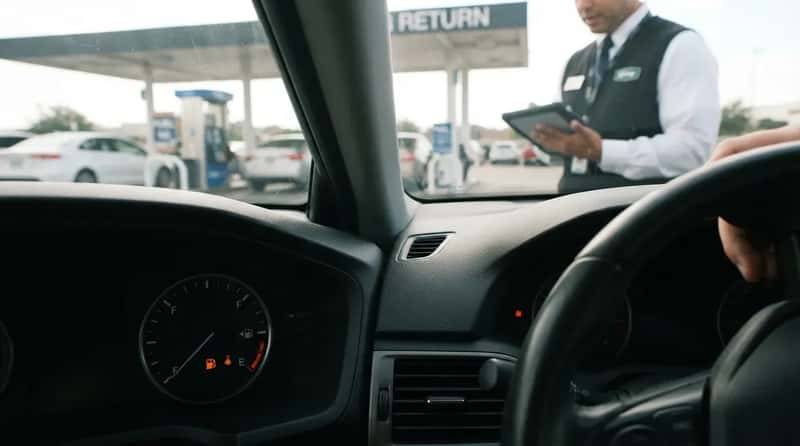
Forget to fill up and the rental counter turns into a gas station with no competition. If the car comes back without a full tank, the company will usually charge a $6 to $8 per gallon service fee in addition to the cost of the gas. Some companies charge as much as $9 per gallon for refueling.
Put that next to the pump. With U.S. regular gas mostly hovering around $3 to $4 a gallon in recent years, a refuel charge can run double or more what the same gas costs at a station. It’s the classic “I’ll fill up near the airport” mistake, except the stations closest to airports are rarely where you expect them. Snap a photo of the full gauge and the fuel receipt as proof.
#6 – The “Excessive Cleaning” Bill That Has Gotten Broader

You’d think a quick shake-out of the floor mats solves it. Not always. Smoking fees have existed for years, but what’s changed in 2025 and 2026 is how broadly some rental companies define “excessive cleaning” in their contracts. That’s one analysis of rental agreements, so read your own contract rather than assuming.
Beach sand, pet hair, spilled drinks and muddy hiking boots can all land in a gray zone. Smoking or vaping penalties are often several hundred dollars, and the contract usually says so in the fine print. The scariest part is how little proof you’ll have if the company says the interior was dirty. Take a quick set of timestamped interior photos at pickup and again at return. It takes two minutes and costs nothing.
Fast Facts
- Smoking or vaping penalties are often several hundred dollars.
- Sand, pet hair, spills and mud are the usual gray-zone offenders.
- Timestamped interior photos at pickup and return take about two minutes.
- Look for the cleaning clause in your own agreement before you drive off.
#5 – The One-Way Drop Fee That Can Differ by Hundreds

The dreamiest road trip can turn expensive at the return counter. One-way rentals can come with drop-off fees of $200 to $600. Other guides cite a lower range, so treat any single number as a ballpark. The base daily rate you were shown often doesn’t include it.
Direction matters, too. According to 2025 pricing data, drop fees can vary by hundreds of dollars depending on destination supply and demand. That means the same two cities can cost very different amounts depending on which one you start from. Some popular routes are friendlier. Miami to Orlando and Tampa to Fort Lauderdale often waive these charges, according to one Florida guide, though you should confirm before booking.
#4 – The Prepaid Fuel Deal That Isn’t a Deal
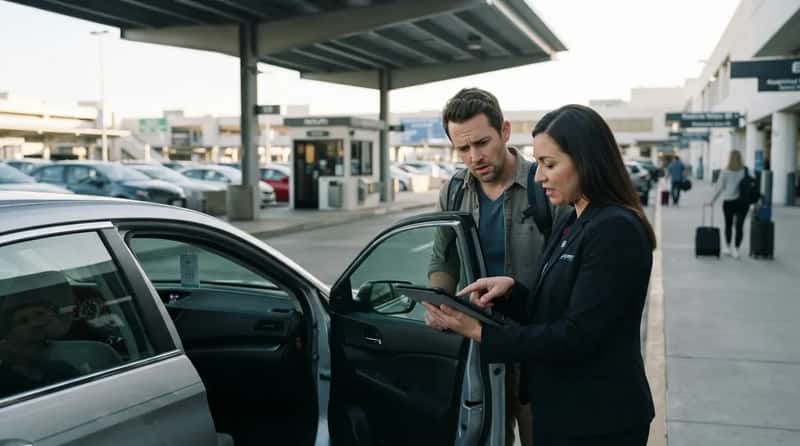
The “skip the gas station” offer sounds like a vacation perk. Here’s the catch. Prepaid fuel means you pay for a full tank upfront so you can return the car without filling it. You’re buying the whole tank, and you almost never bring it back truly empty.
Pricing is the other problem. One 2026 guide lists prepaid fuel at up to double the local pump price. Every gallon left in the tank is a gallon you paid for and handed back, since credit for unused fuel is typically not offered. Booking.com’s guide says it can be economical only if you time your gas usage just right. A 5 a.m. flight with no open gas stations might justify it. For most trips, many experts say the full-to-full option wins.
At a Glance
- Prepaid fuel: you pay for a full tank upfront and can return the car at any level.
- Price risk: one 2026 guide lists it at up to double the local pump price.
- Leftover gas: credit for unused fuel is typically not offered.
- Full-to-full: you pay only for the fuel you actually use, at pump prices.
#3 – “Loss of Use”: Paying for a Car You Aren’t Driving
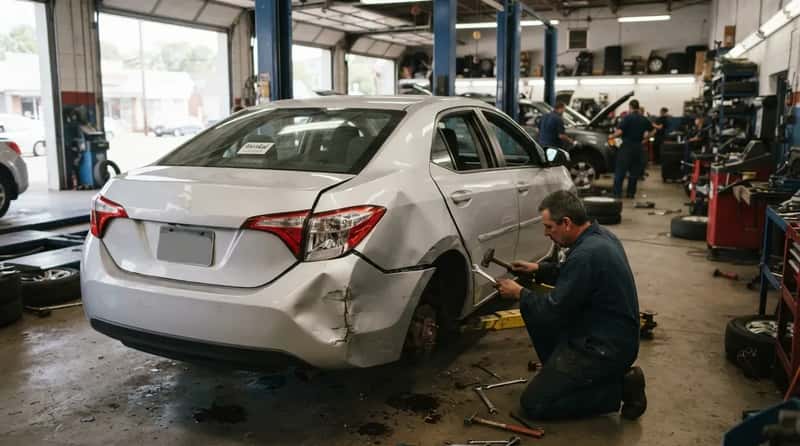
This one shows up after a fender bender, and it blindsides people who thought insurance covered everything. “Loss of use” charges are fees the rental company bills while a damaged car is being repaired and can’t be rented. The company argues it lost rental income for those days.
Here’s the trap. A damage waiver or credit card benefit may or may not include it. You can pay for the repair, then also pay for every day the car sat in the shop. Check the exact coverage limit of the CDW and whether it includes loss of use. Coverage differs between waivers, cards and personal policies, so ask your card issuer in advance.
#2 – The $1 Toll That Triggered a $519 Bill
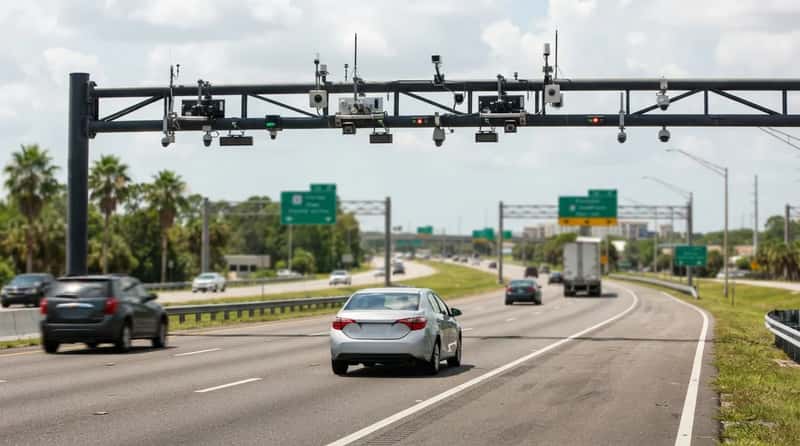
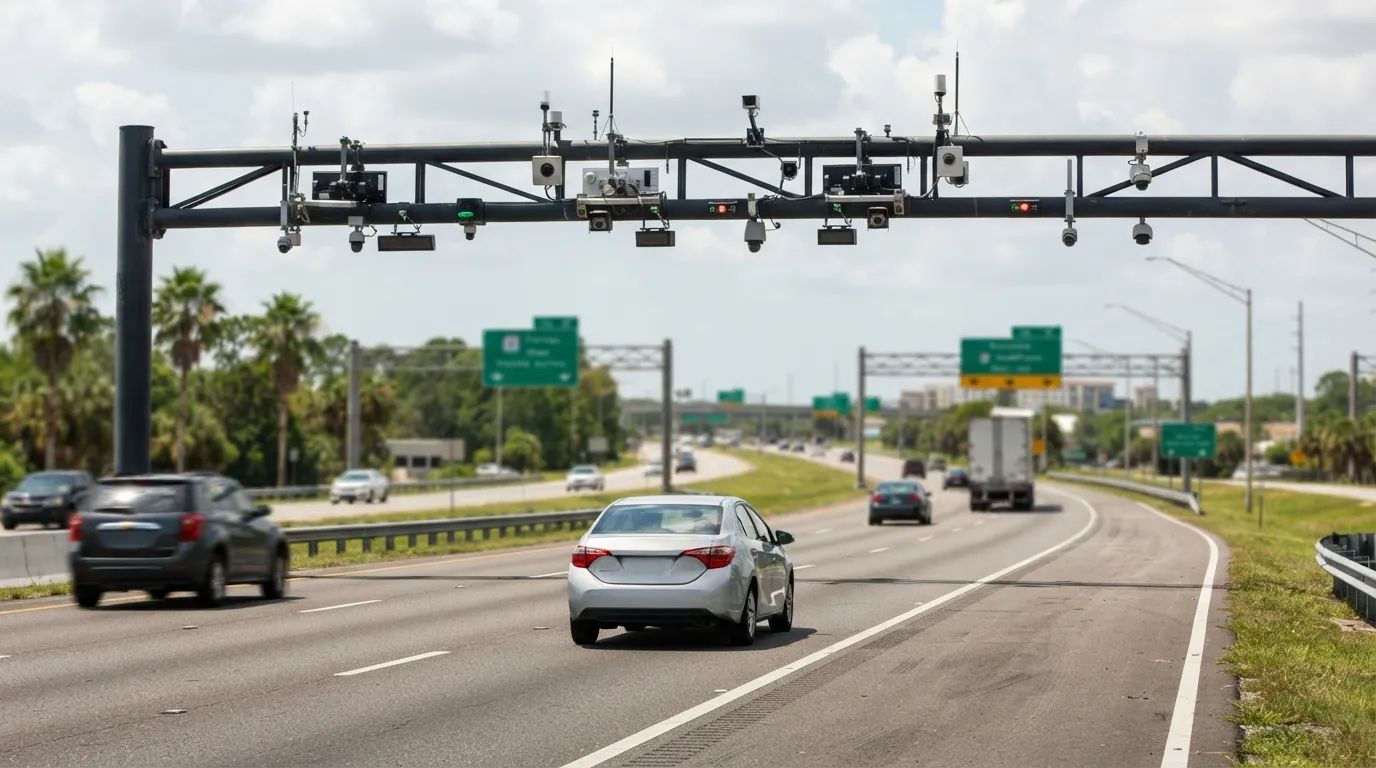
Tolls are where rental companies earn their worst reputation. One widely shared report said Hertz charged a customer $519.80 for driving through a single $1 toll. The renter had a four-week rental, and the toll activated Hertz’s PlatePass system, which charged him for every single day of the rental. That was a 2023 report, and policies change, but the pattern persists.
Fees now vary by brand. Hertz has listed a $9.99 daily convenience fee plus the undiscounted toll for renters who skip PlatePass but use a toll road. Avis has listed a standard e-Toll fee of $6.95 on each day you incur a toll, up to $34.95 per rental. Cashless toll gantries give you no booth and no moment to say no, yet the fee clock may already be running. Check current rates before you book, because they change.
#1 – The AI Scanner Bill That Hits Before You Reach the Shuttle
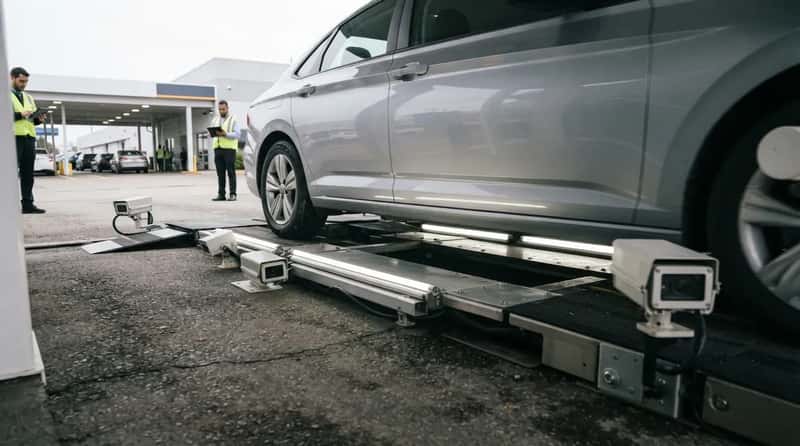
Imagine a damage bill that arrives minutes after you leave the lot. One Hertz renter said he was alerted minutes after dropping off a VW, with charges of $250 for repair, $125 for processing and a $65 administrative fee. That’s $440 total for curb rash on a wheel.
Hertz’s scanners, built by UVeye, use bright lights and high-resolution cameras to image the vehicle on exit and again on return. AI then flags differences. The backlash reached Washington, where a House Oversight subcommittee chair wrote to Hertz’s CEO, saying Hertz was apparently the only U.S. rental company issuing AI damage assessments without human review. Hertz says over 97 percent of scanned cars showed no billable damage and that disputes are decided by humans.
Meanwhile, Sixt says its employees review all AI-detected damage before charging renters. These reports date to 2025, so check current policies. Walk around the car and film it at pickup and drop-off.
The scariest rental car charges aren’t the ones on the quote. They’re the ones that appear later: surcharges, fuel markups, toll fees and damage bills with vague “processing” labels. Most of them are avoidable if you read the agreement, use memberships that waive fees, and document the car at pickup and drop-off. Some of these rules vary by brand and city, so verify before you book.
The AI scanner stories show how fast the rules are changing. The car may be the cheapest part of the trip, right up until the keys leave your hand.